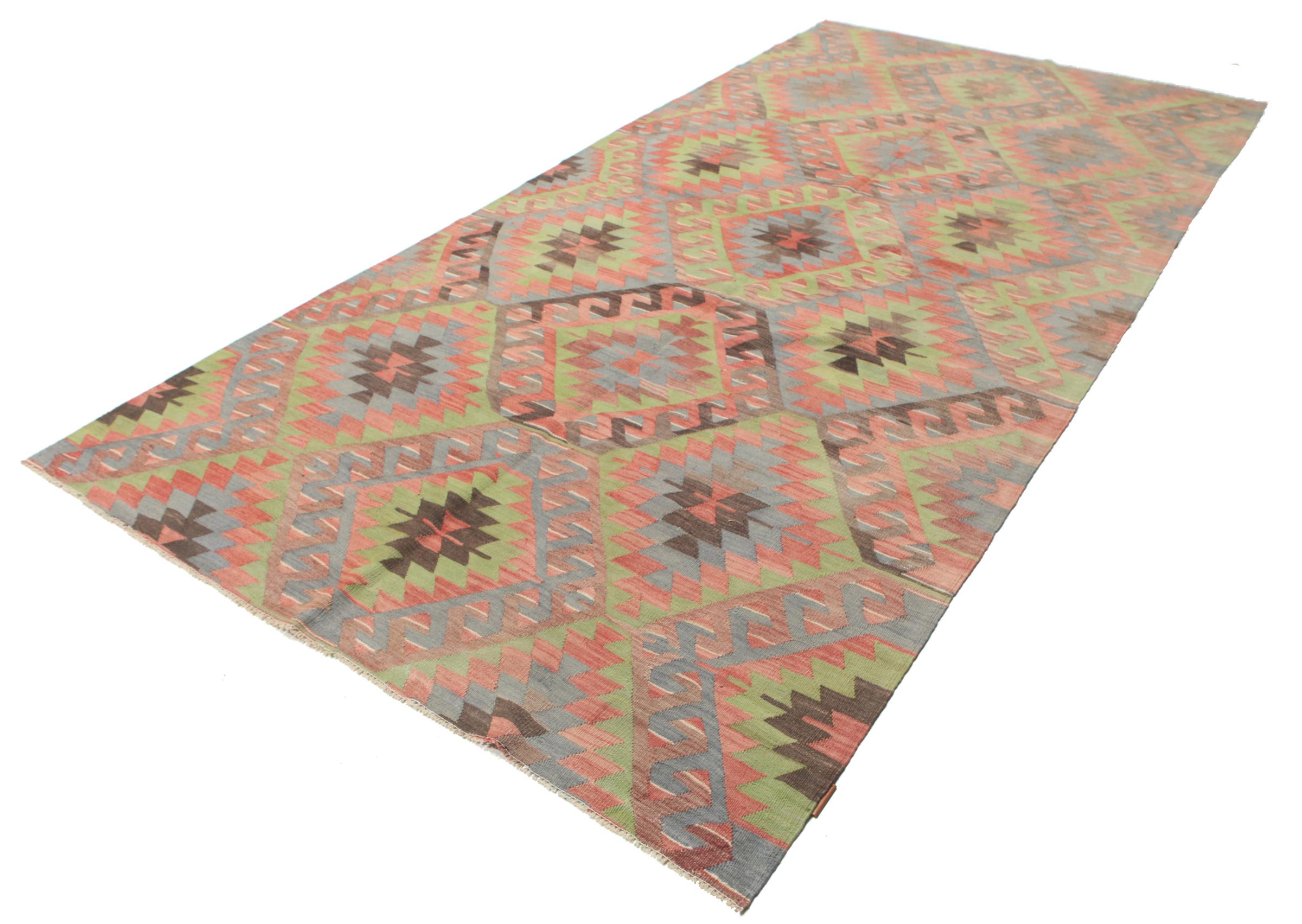
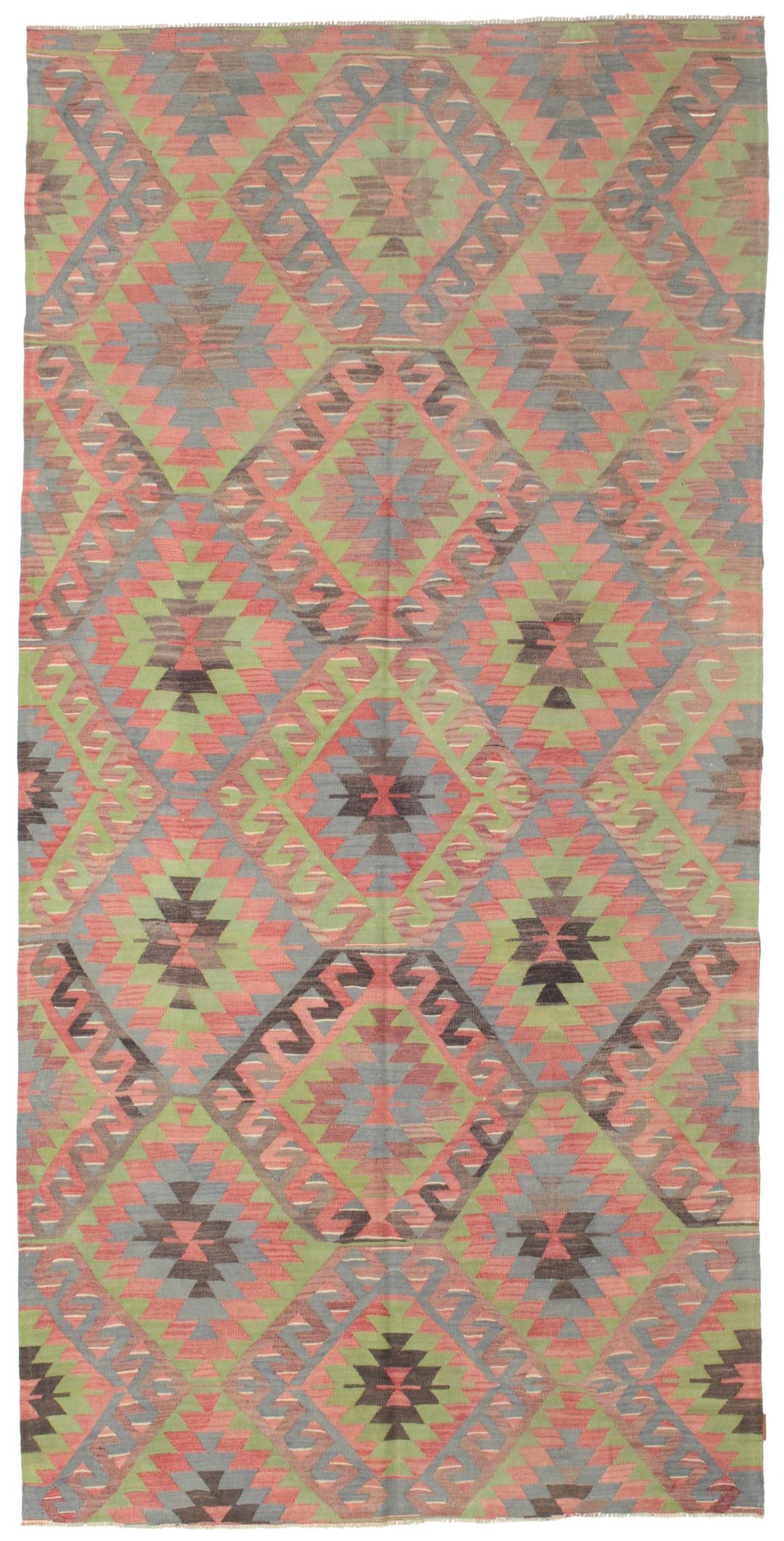
The term Kilim refers to a specific style of flat-woven rug that has been a central part of Middle Eastern and Central Asian culture for centuries. These textiles were traditionally created by nomadic and semi-nomadic tribes for practical use as floor coverings, wall hangings, or storage bags, with each region developing its own distinct visual vocabulary.
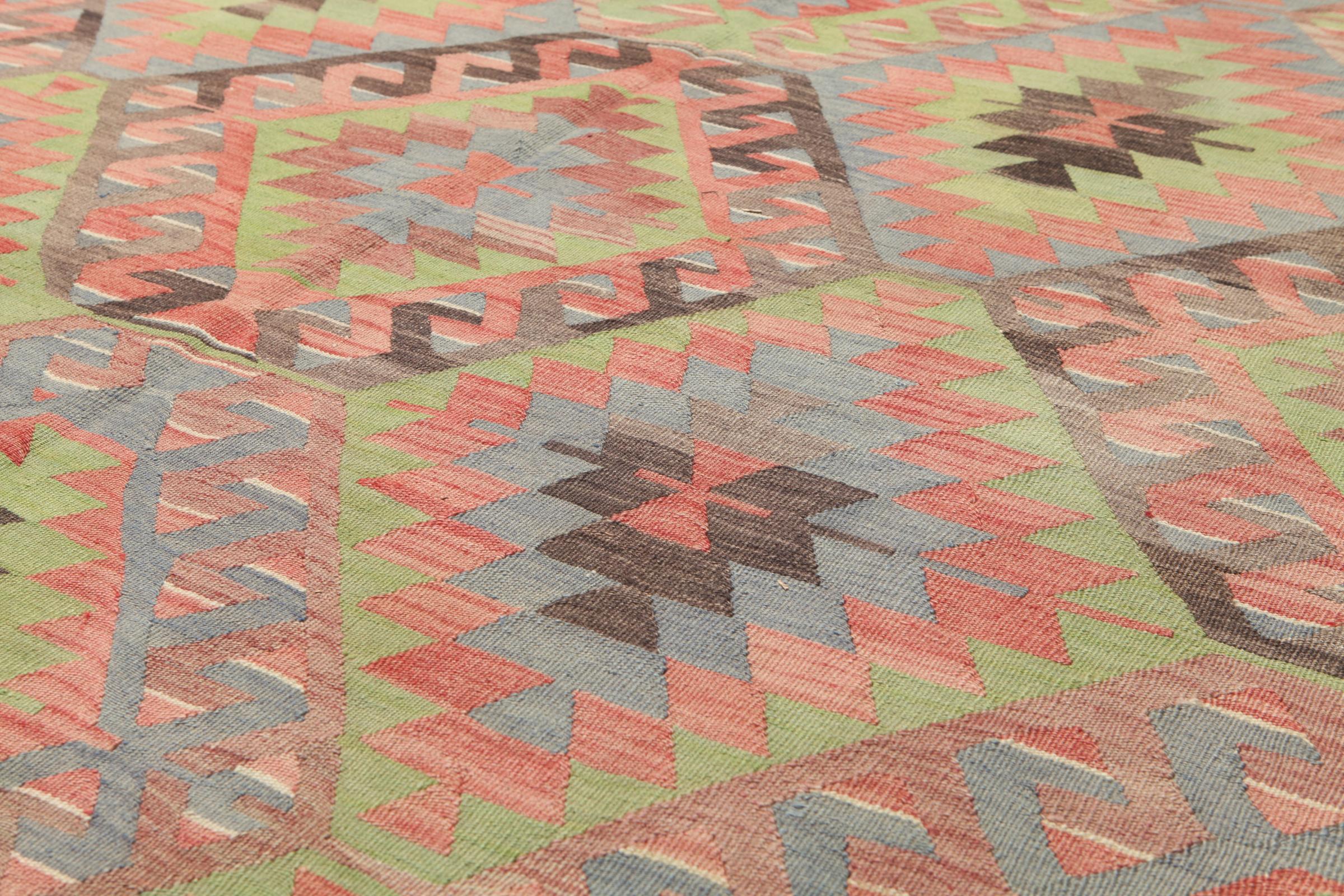
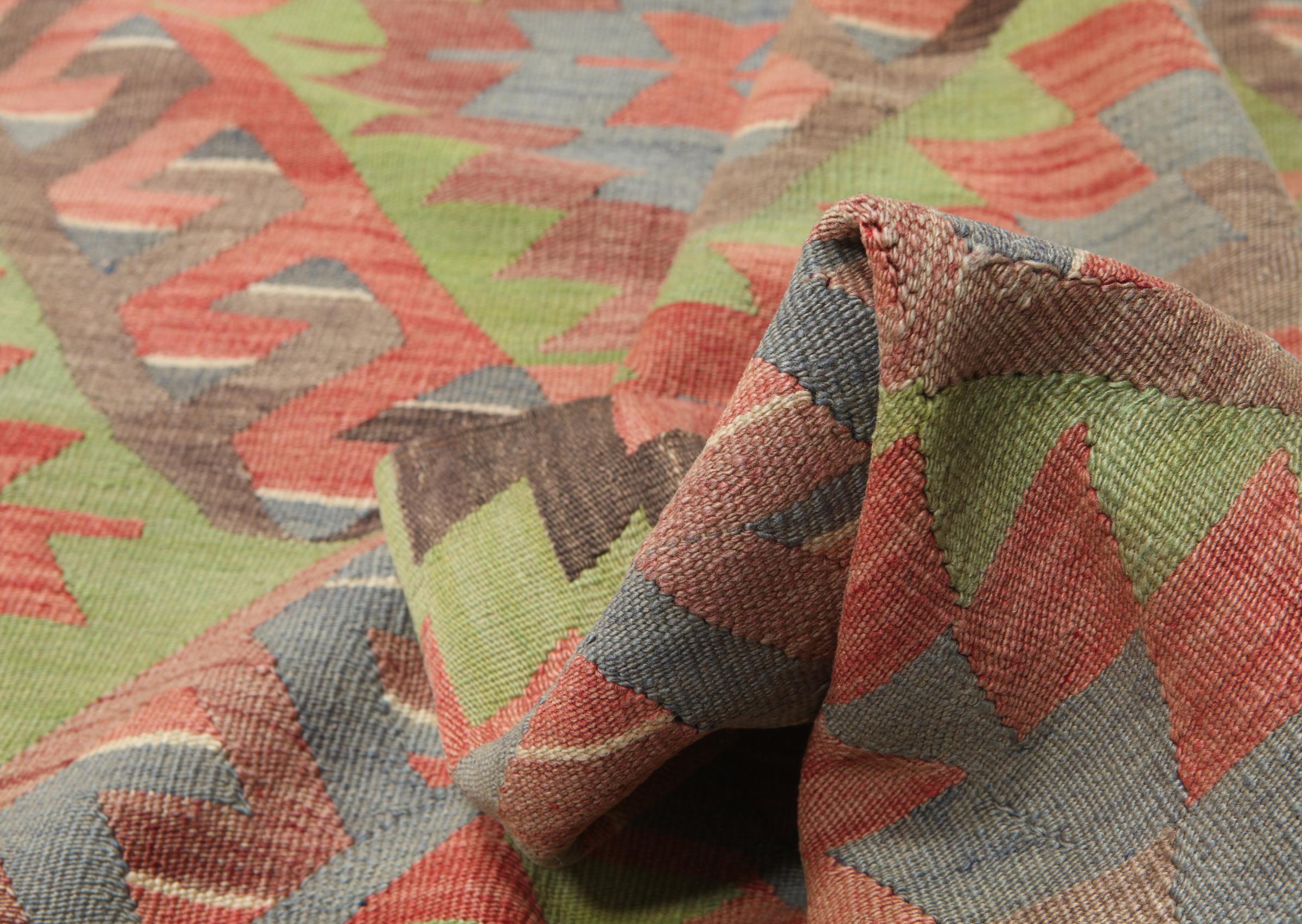
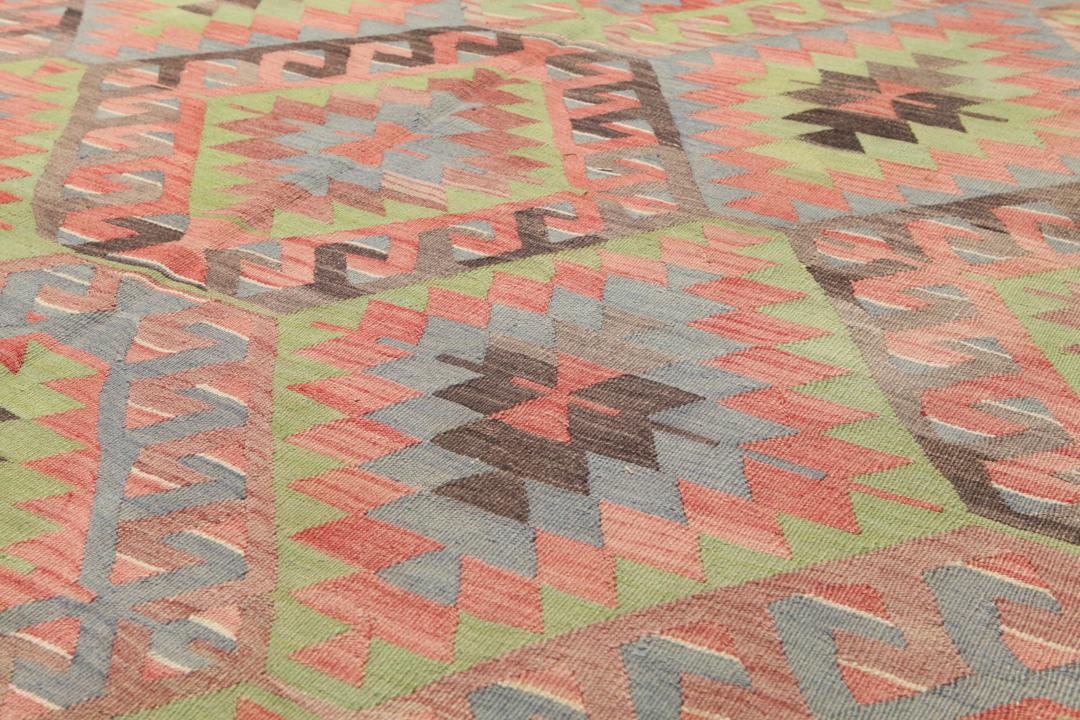
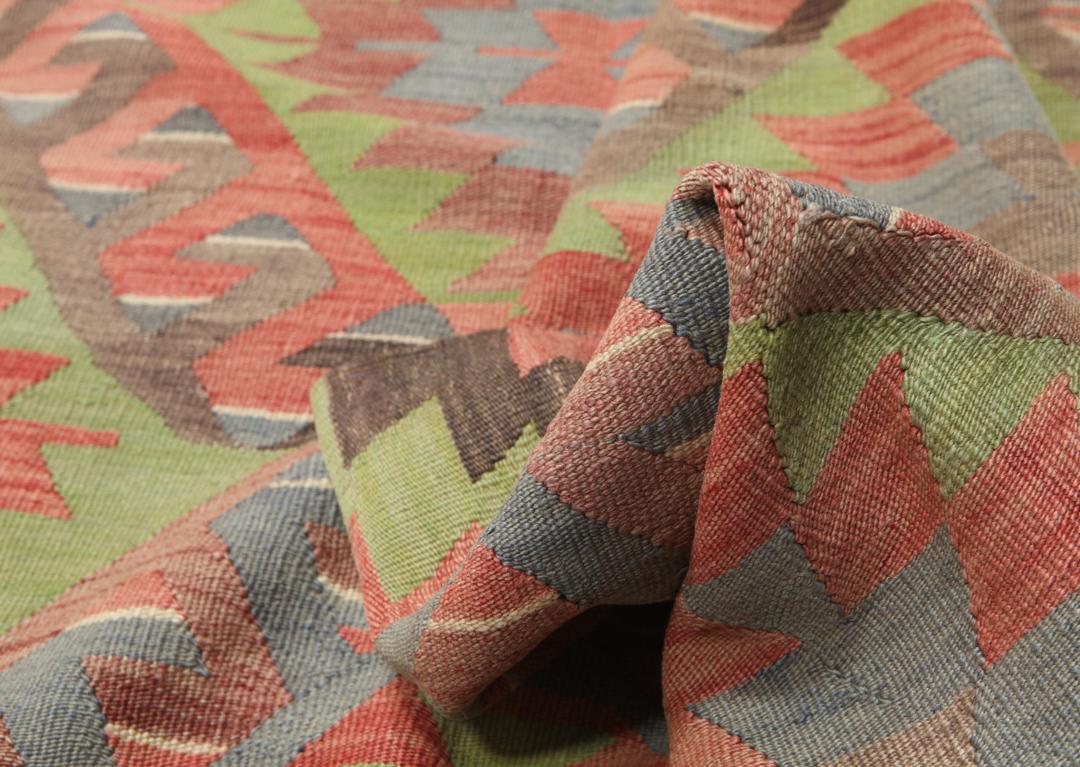
Kilim weaving is defined by the absence of a pile, which is achieved by interlocking the weft threads tightly around the warp threads. This technique creates a lightweight, reversible textile that is both incredibly strong and portable, allowing it to withstand the demands of nomadic life while showcasing complex, crisp geometric designs that are far more difficult to achieve in knotted-pile rugs.
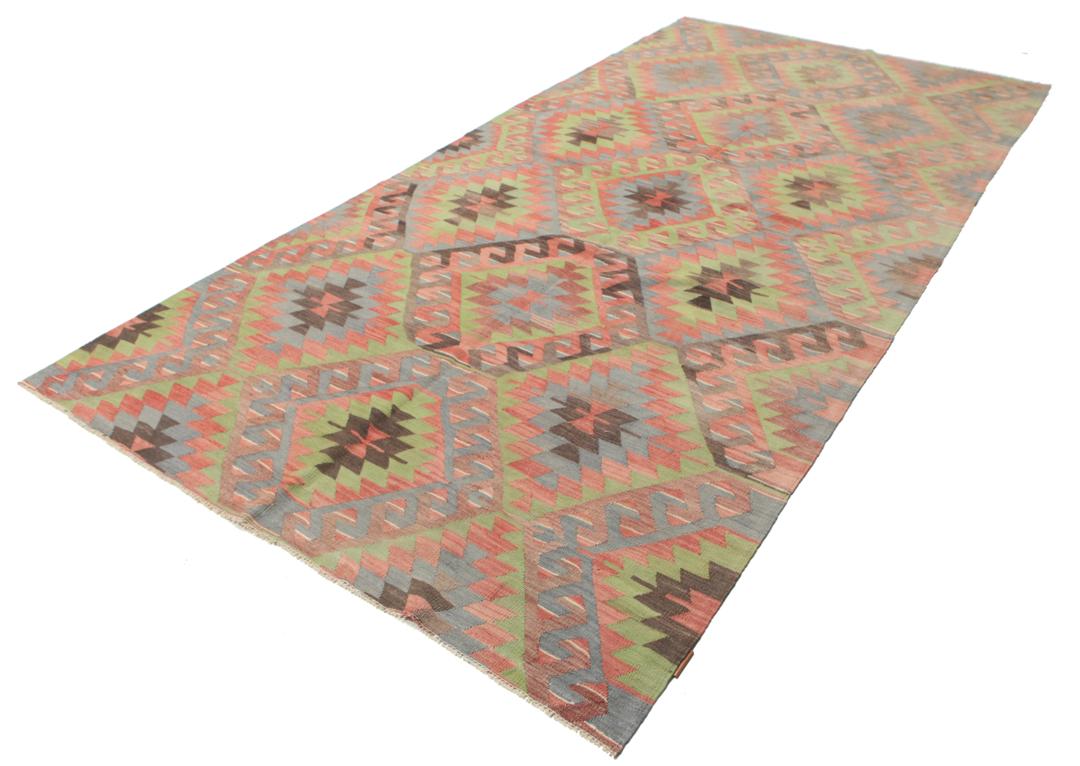
The signature design elements of Turkish Kilims are deeply rooted in symbolism, with motifs often representing protection, fertility, or family identity. The geometric patterns seen in this piece, characterised by sharp diamonds and repeating shapes, are a hallmark of the Anatolian tradition, where symmetry and colour balance are used to create a harmonious and rhythmic visual experience.
Collecting vintage Kilims is an act of preserving cultural heritage. These rugs are valued not only for their aesthetic beauty but for the stories they carry from the hands of the weavers who created them. Owning such a piece connects you to a long-standing tradition of skill and artistic expression, ensuring that the legacy of these remarkable textiles continues to thrive.