Kilim rugs represent one of the most storied traditions in Middle Eastern textile history. These flat-woven rugs have been produced for centuries by nomadic and semi-nomadic tribes, serving not just as floor coverings, but as essential, multi-functional tools for daily life. Historically, they were used as storage sacks, tent dividers, and blankets, making them incredibly versatile and durable.
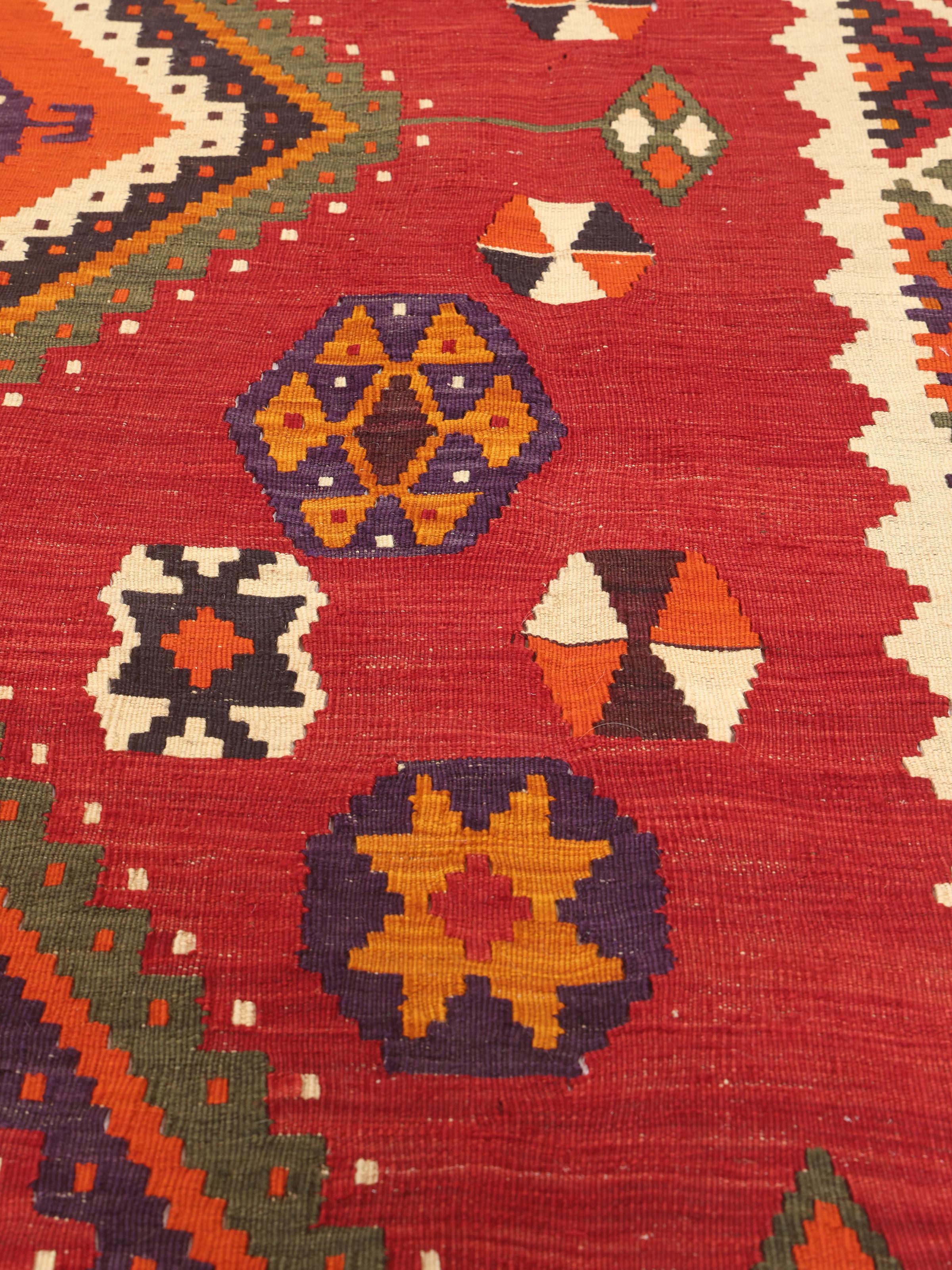
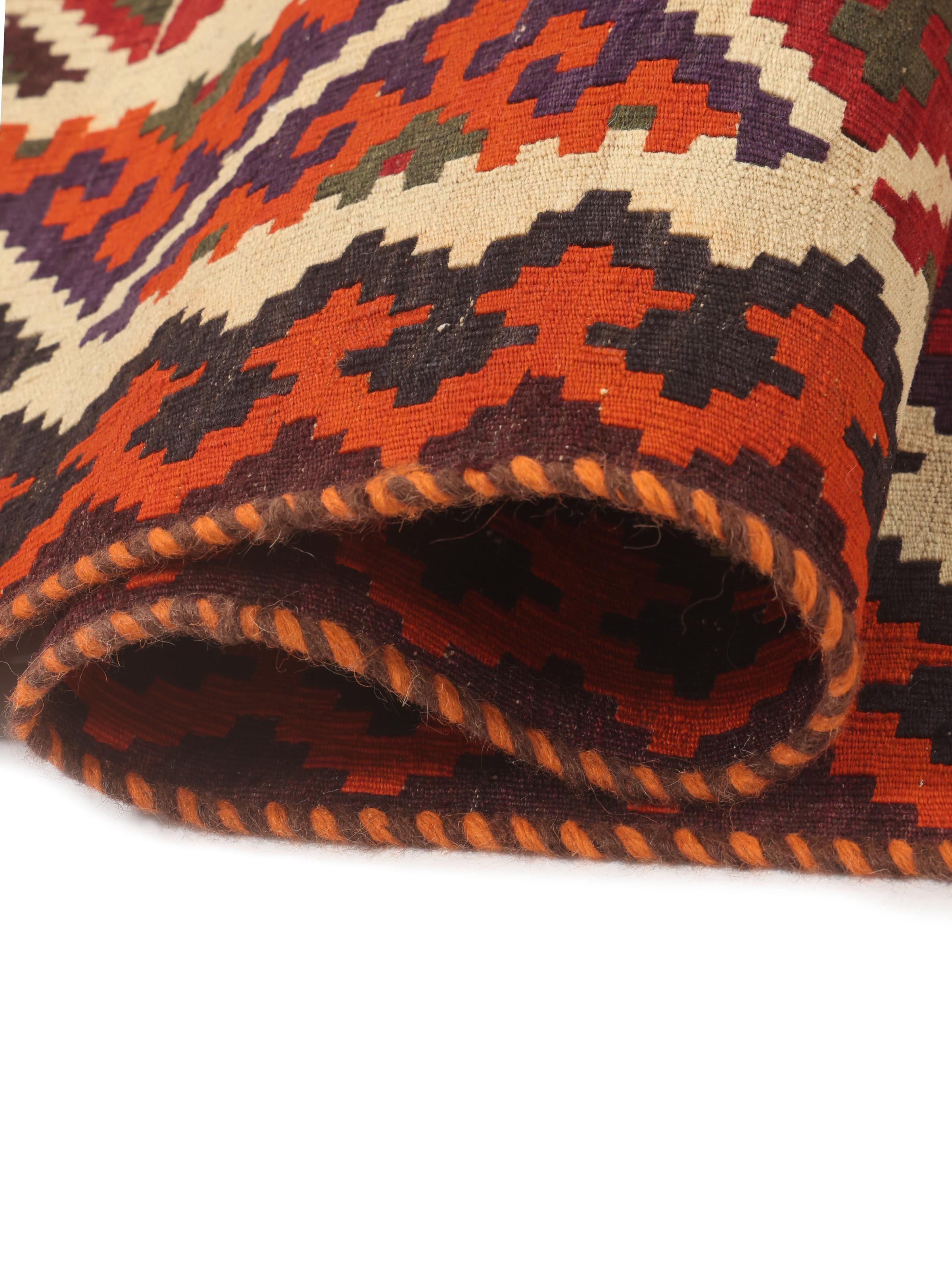
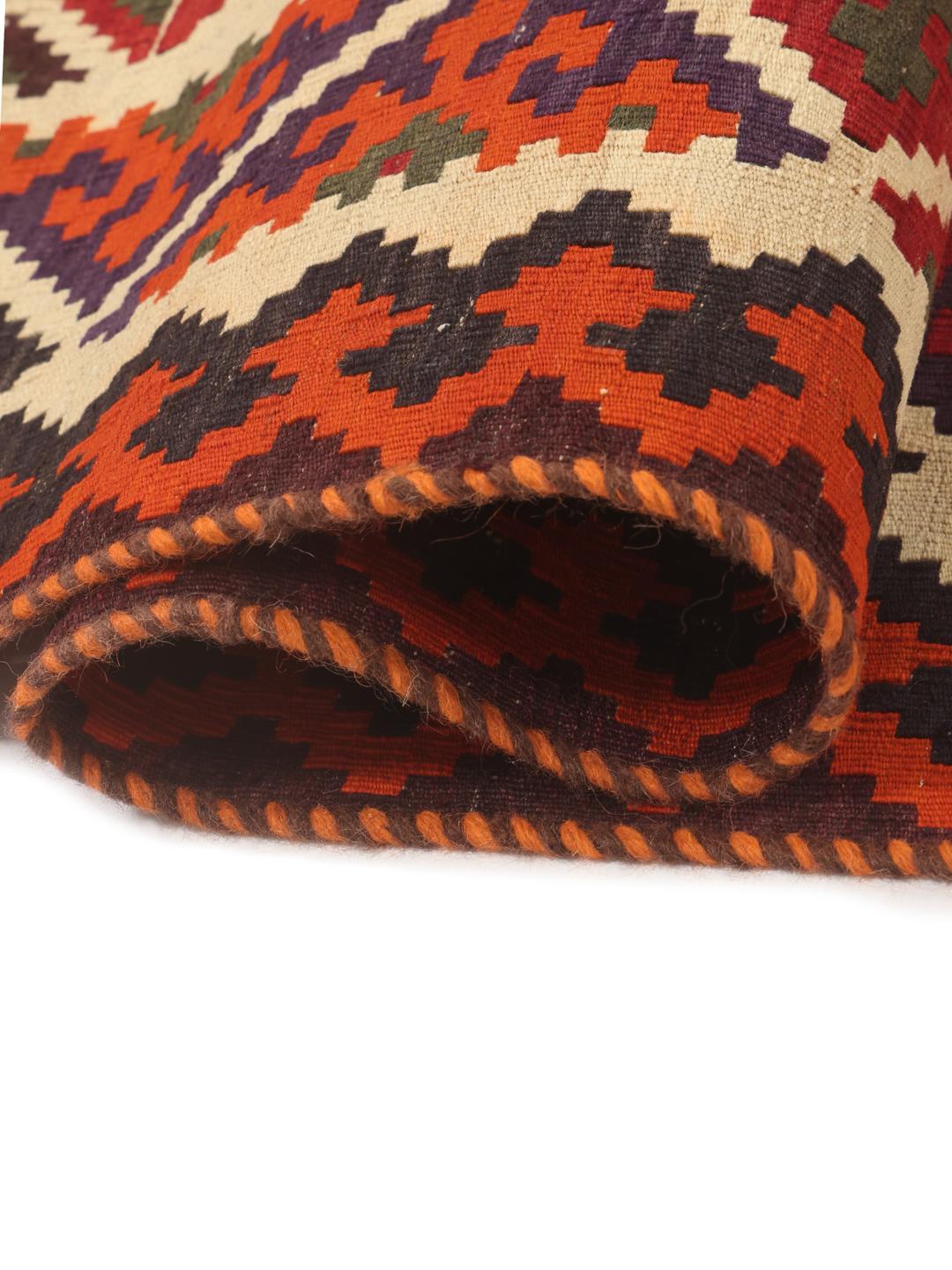
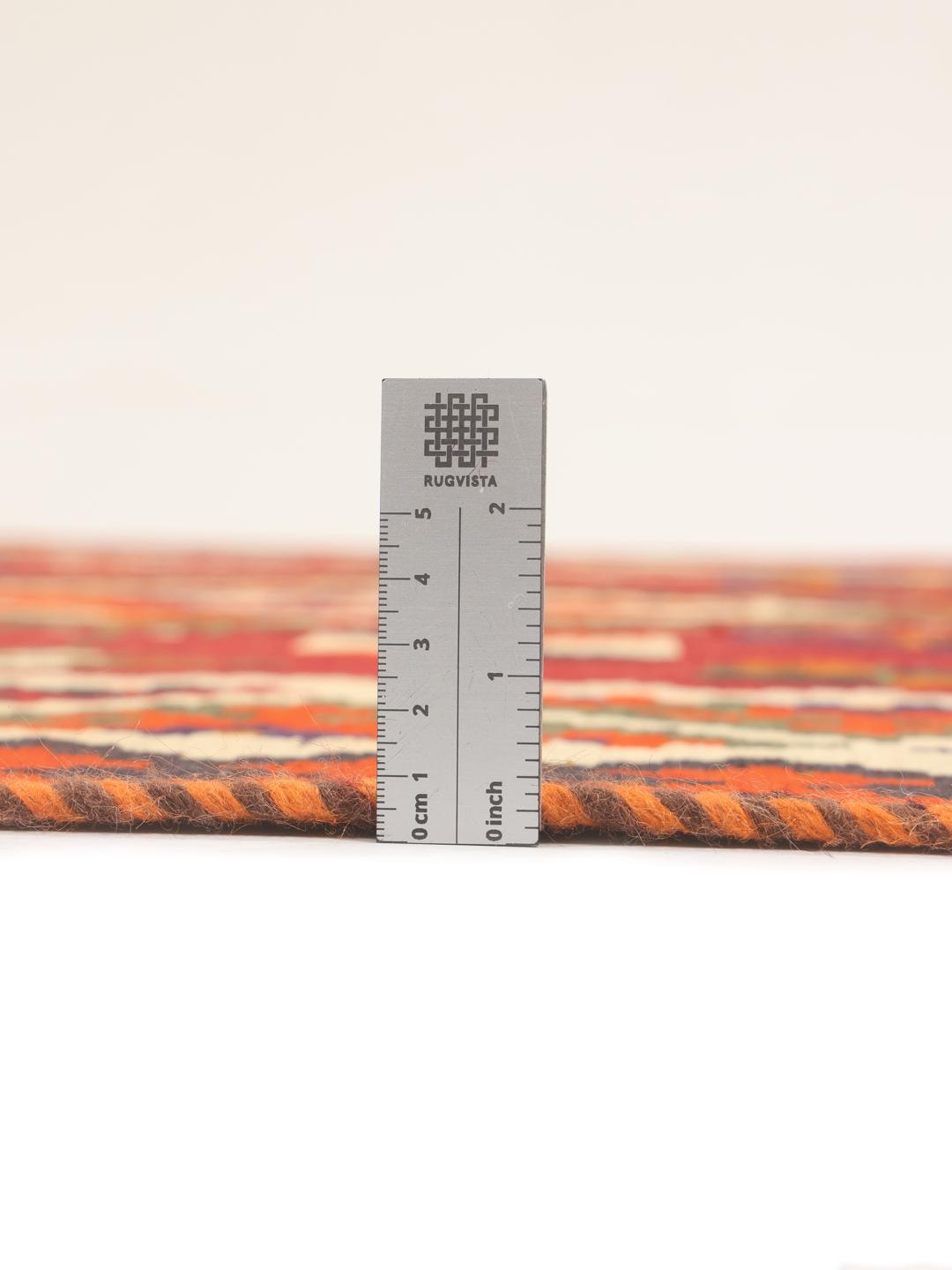
The term kilim refers specifically to the slit-weave technique used to create them. Unlike pile rugs, which use knots, kilims are made by interweaving the coloured weft strands through the warp strands. This produces a flat surface on both sides, allowing the rug to be reversible. This technique requires exceptional accuracy, as the weaver must manage the tension of every thread to maintain the rug's shape and structural integrity.
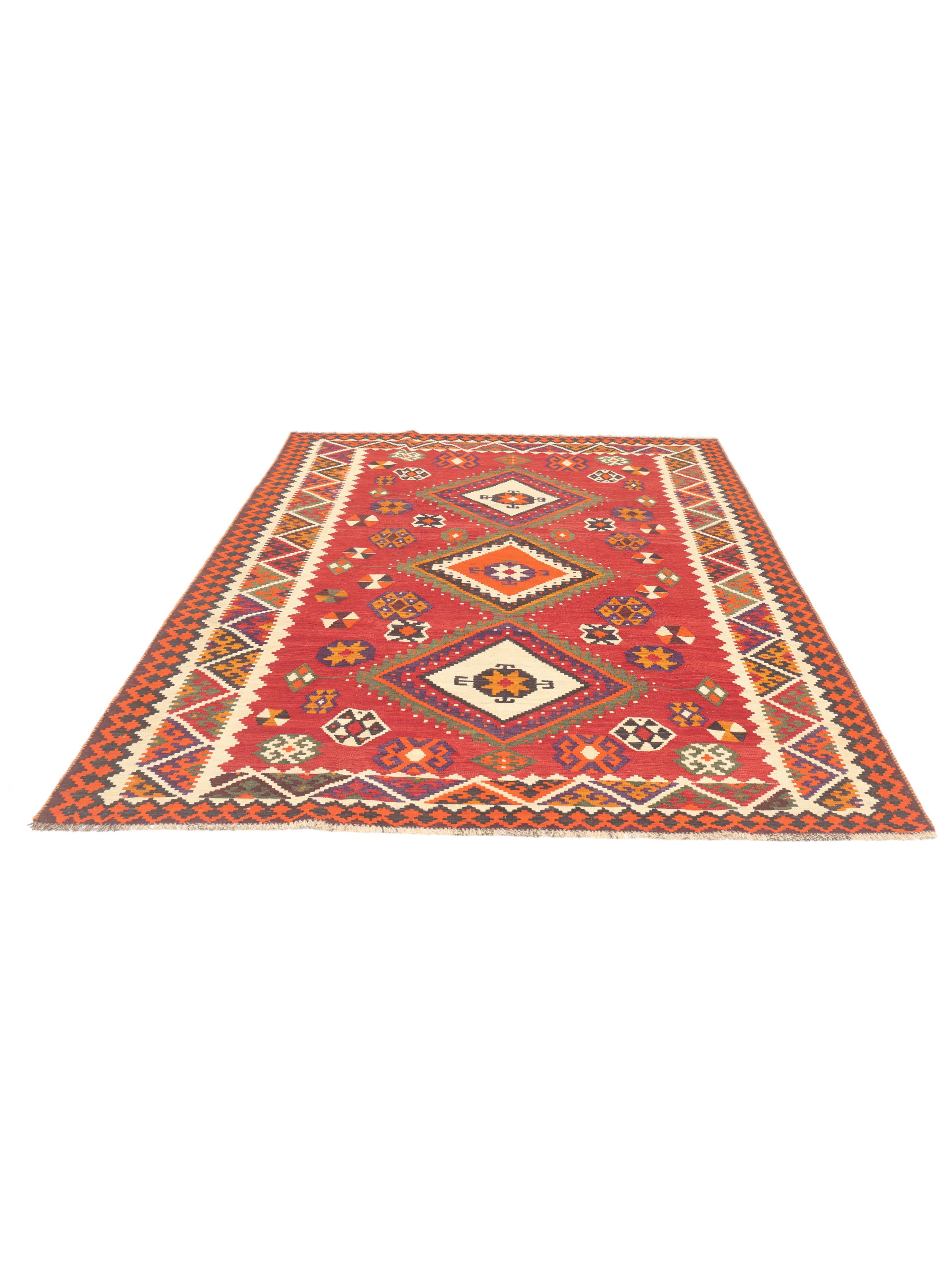
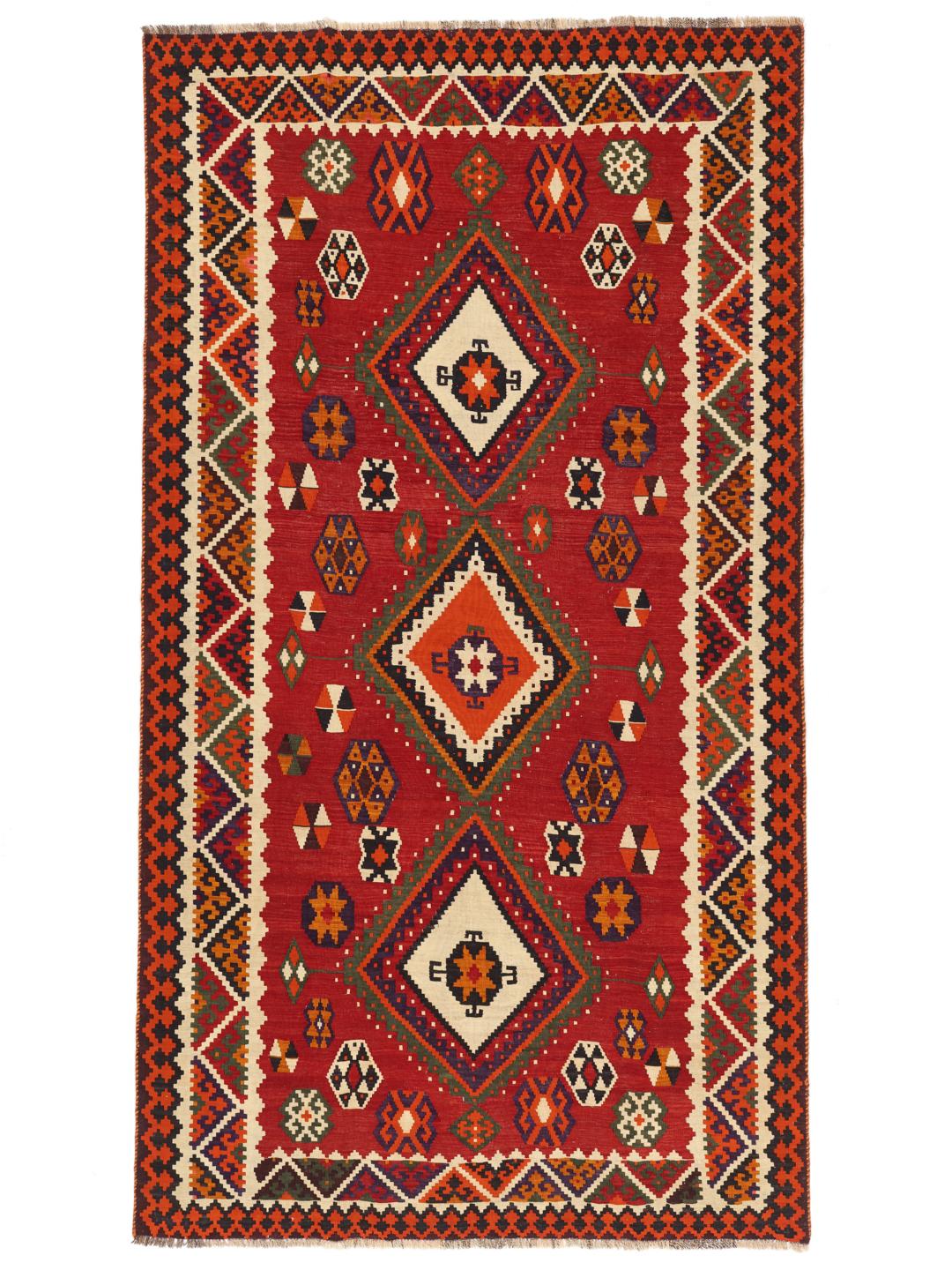
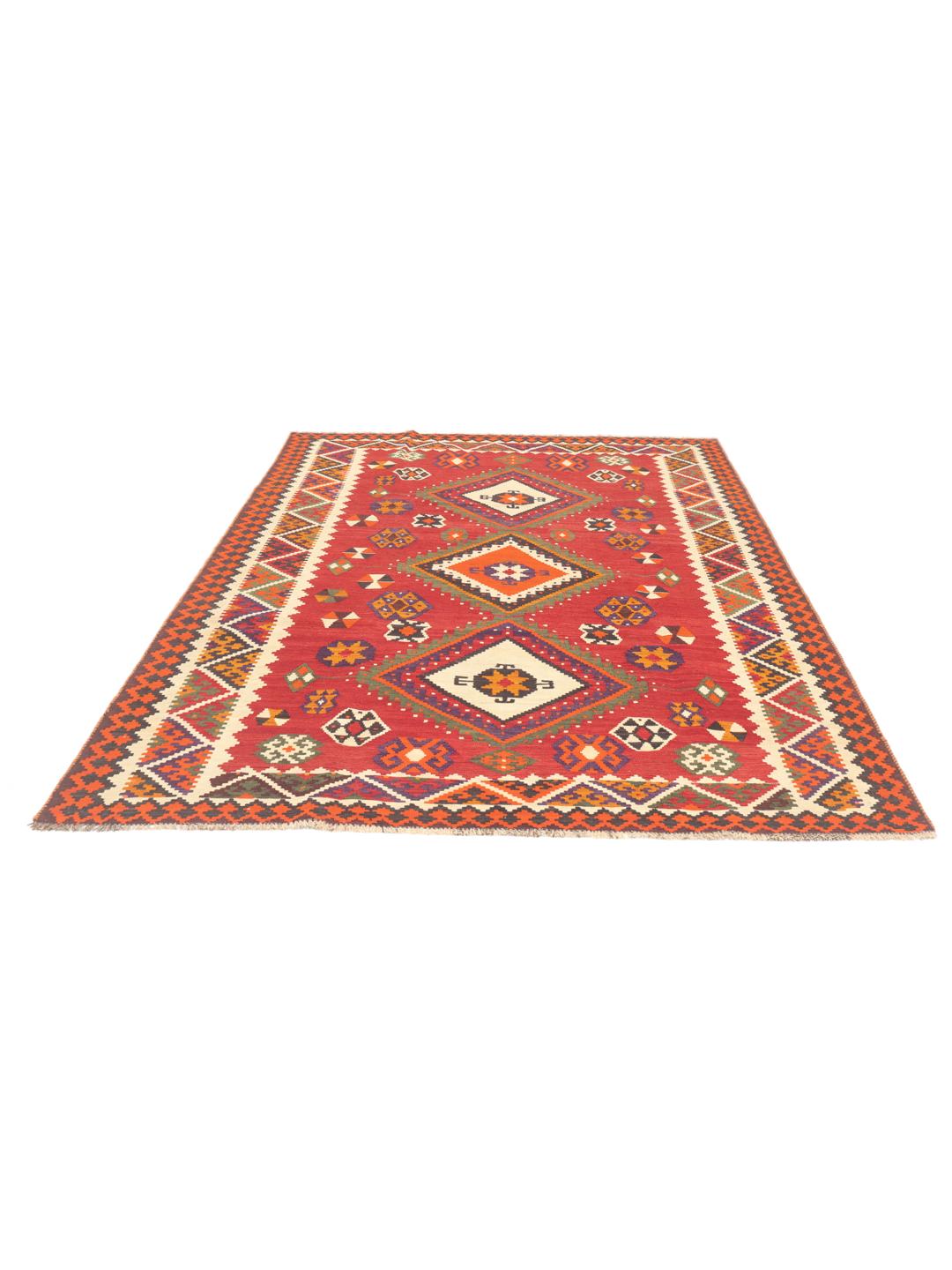
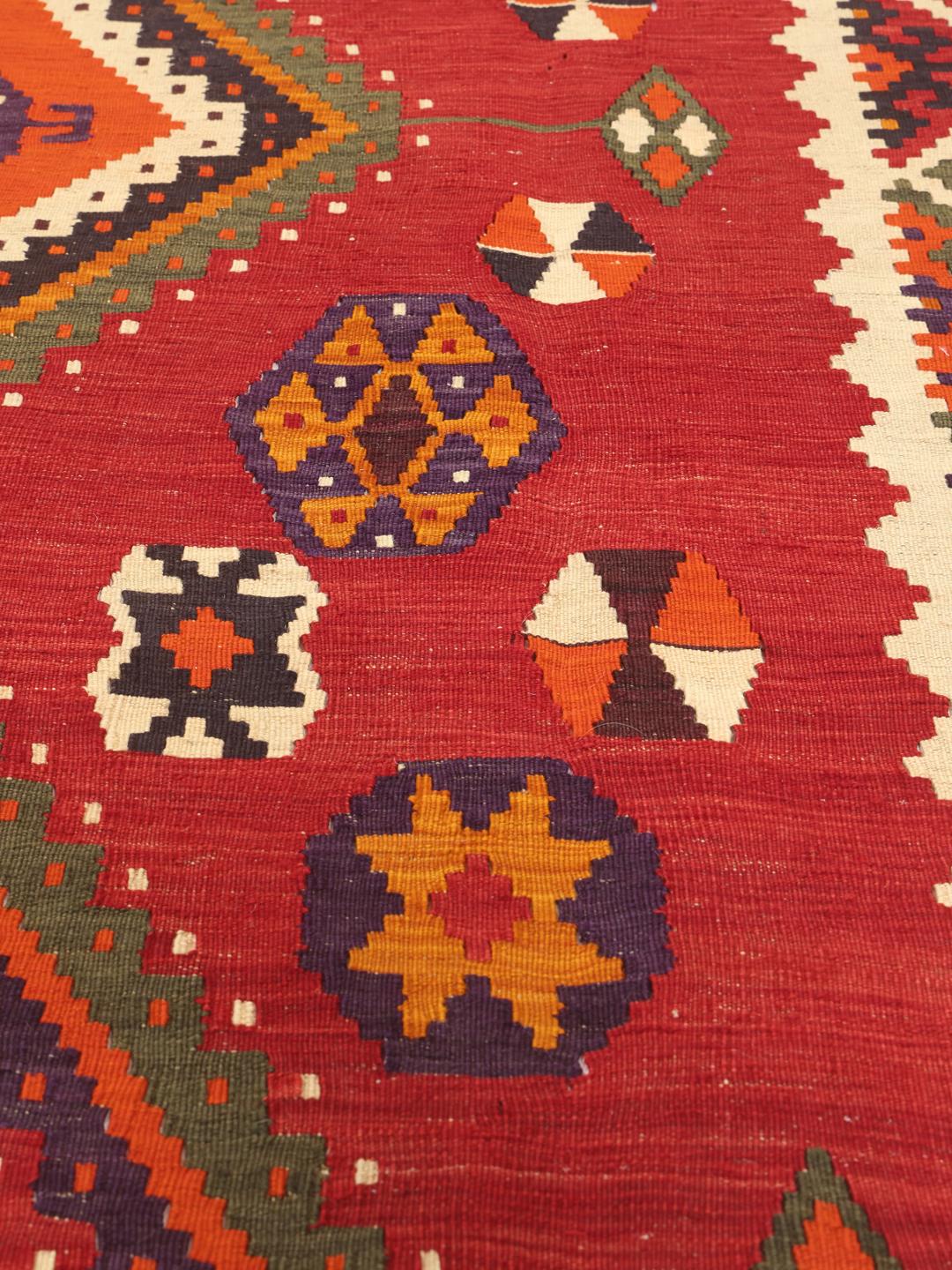
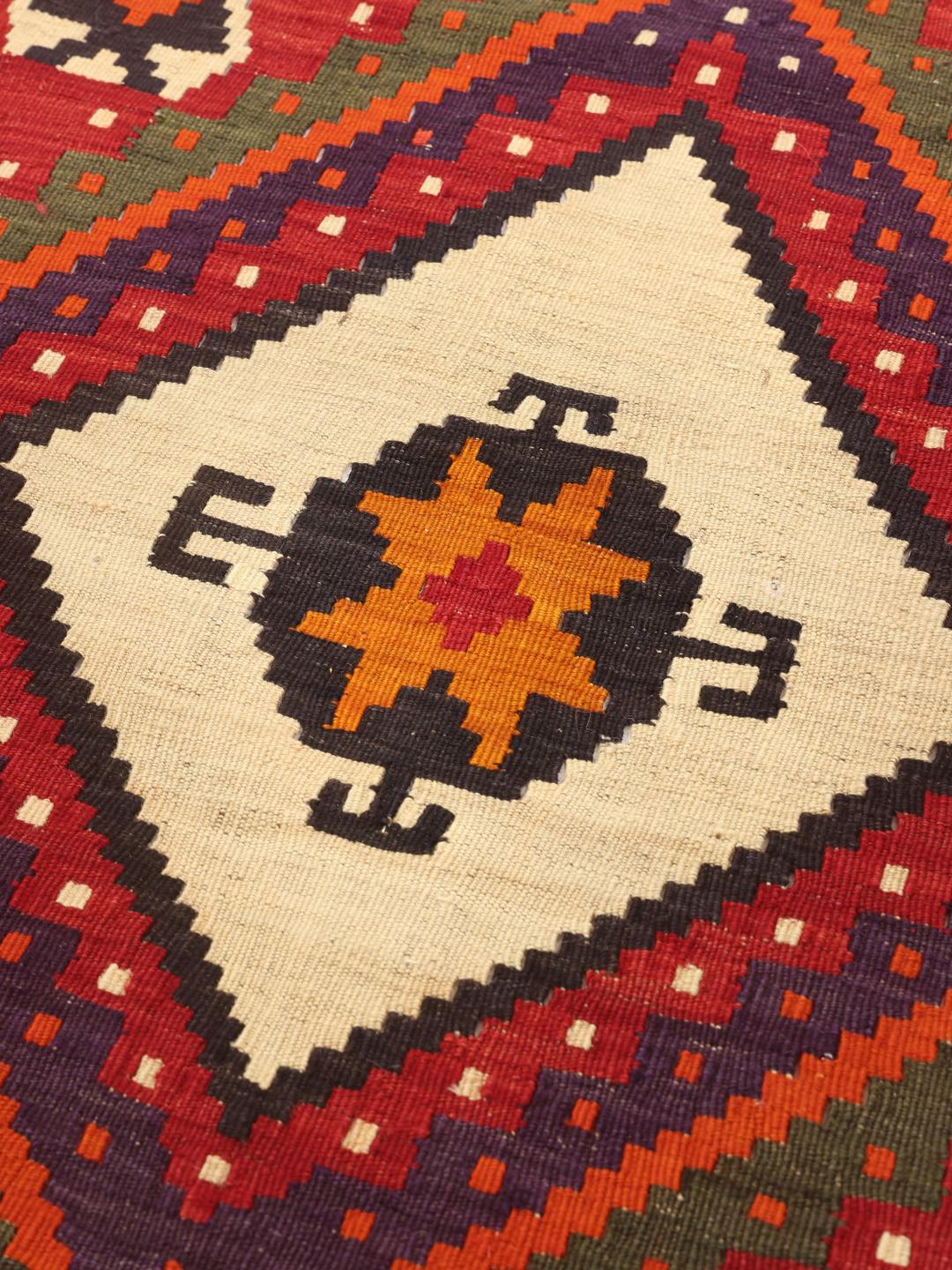
The design of this kilim is rooted in ancient tribal symbolism. The bold geometric shapes, such as the large central medallions and repeating border motifs, are traditional expressions of the weaver's environment and beliefs. These patterns often serve as a visual language, with various shapes representing protection, fertility, or the natural world, passed down through generations of families.
Today, vintage kilims are highly sought after by collectors and enthusiasts for their authentic, lived-in character. Each piece offers a glimpse into a specific time and place, capturing the artistic vision of the person who wove it. By bringing a vintage kilim into your home, you are not only adding a beautiful, durable element to your space but also preserving a rich cultural legacy that continues to resonate in the modern world.