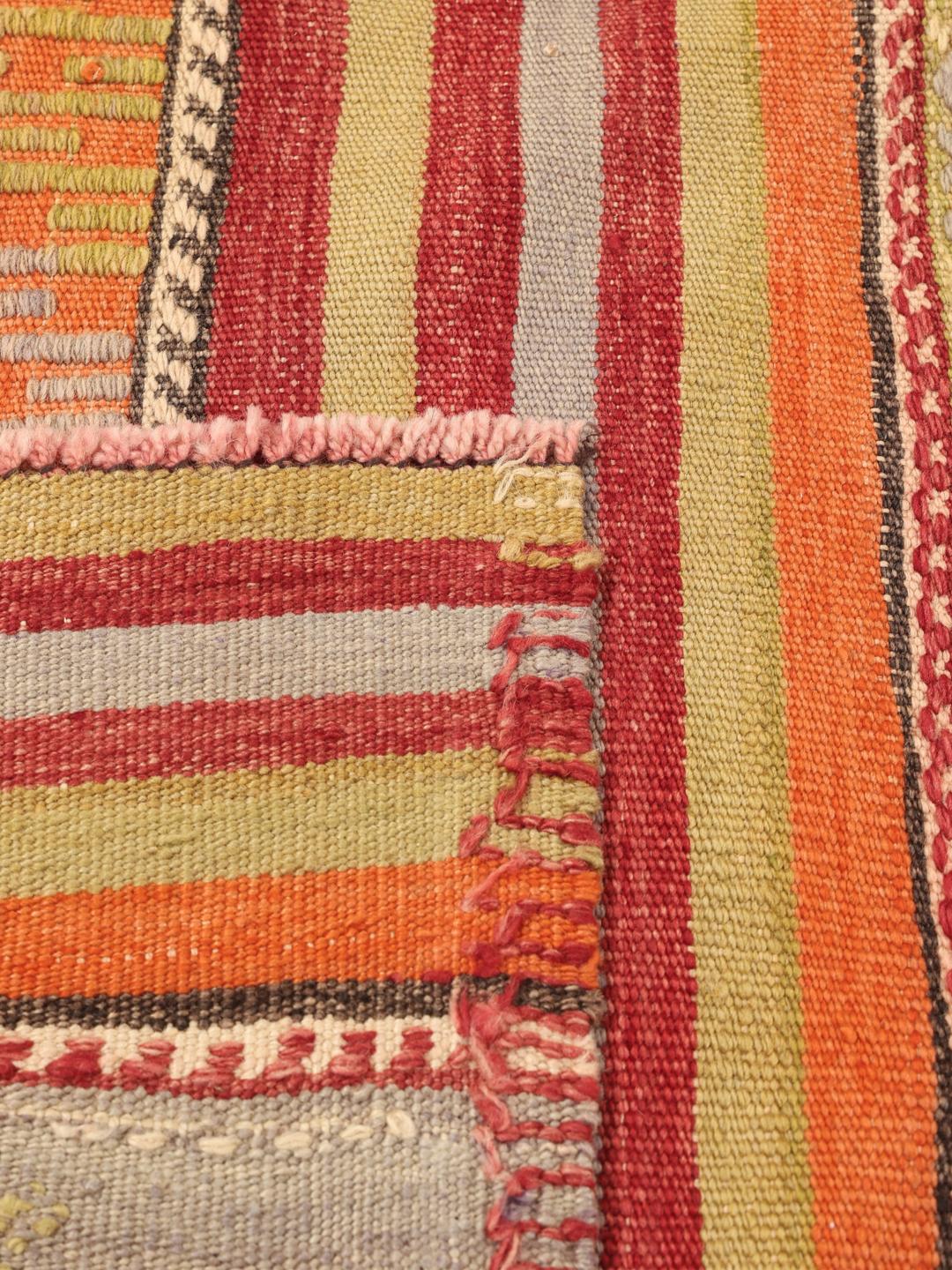
Kilim rugs are a cornerstone of Middle Eastern textile history, with their roots reaching back centuries across the Anatolian plateau. These flat-woven treasures were originally crafted by nomadic and semi-nomadic tribes in Turkey as functional items, serving as blankets, saddlebags, and floor coverings that could easily be packed and moved across the landscape.
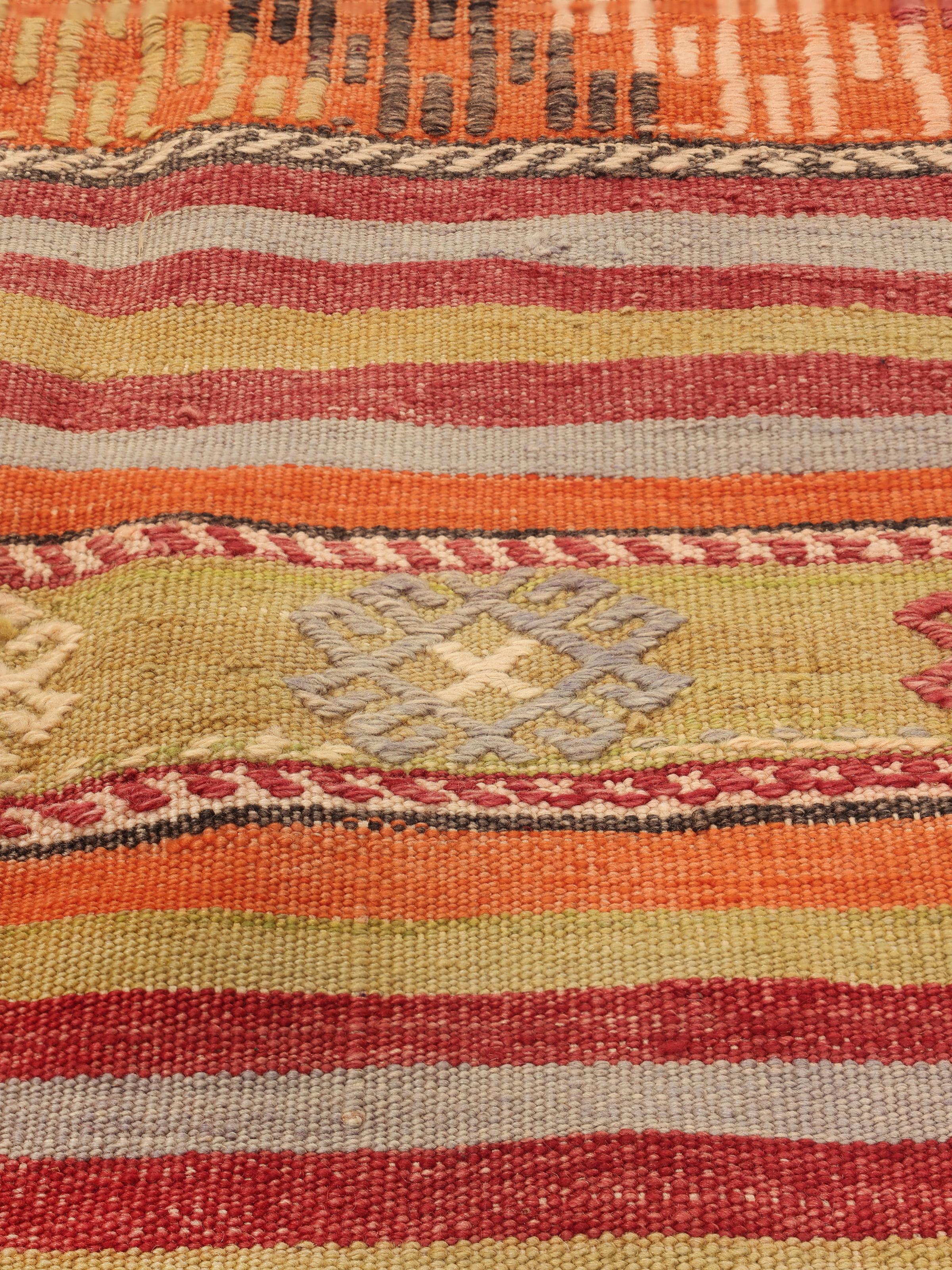
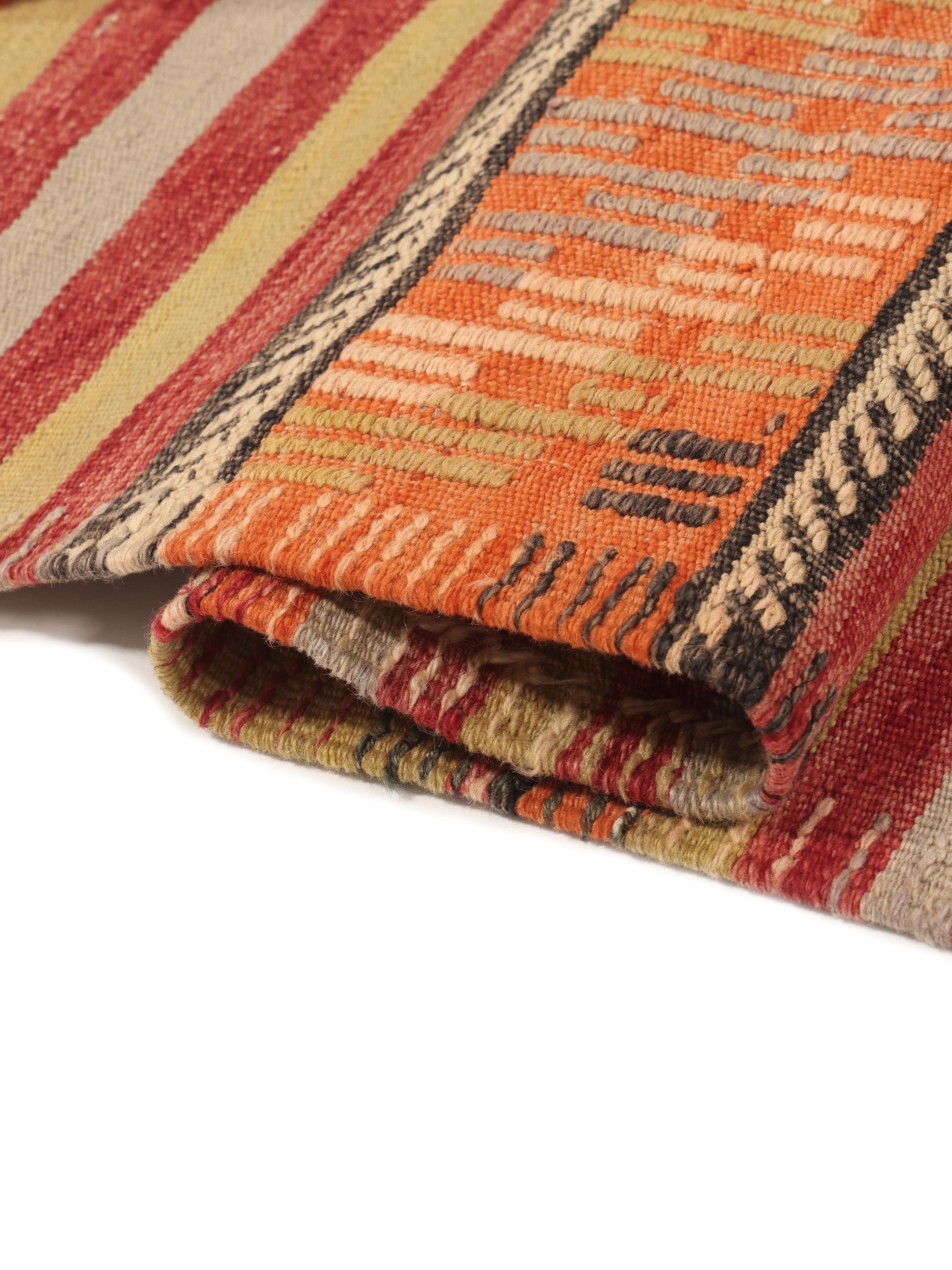
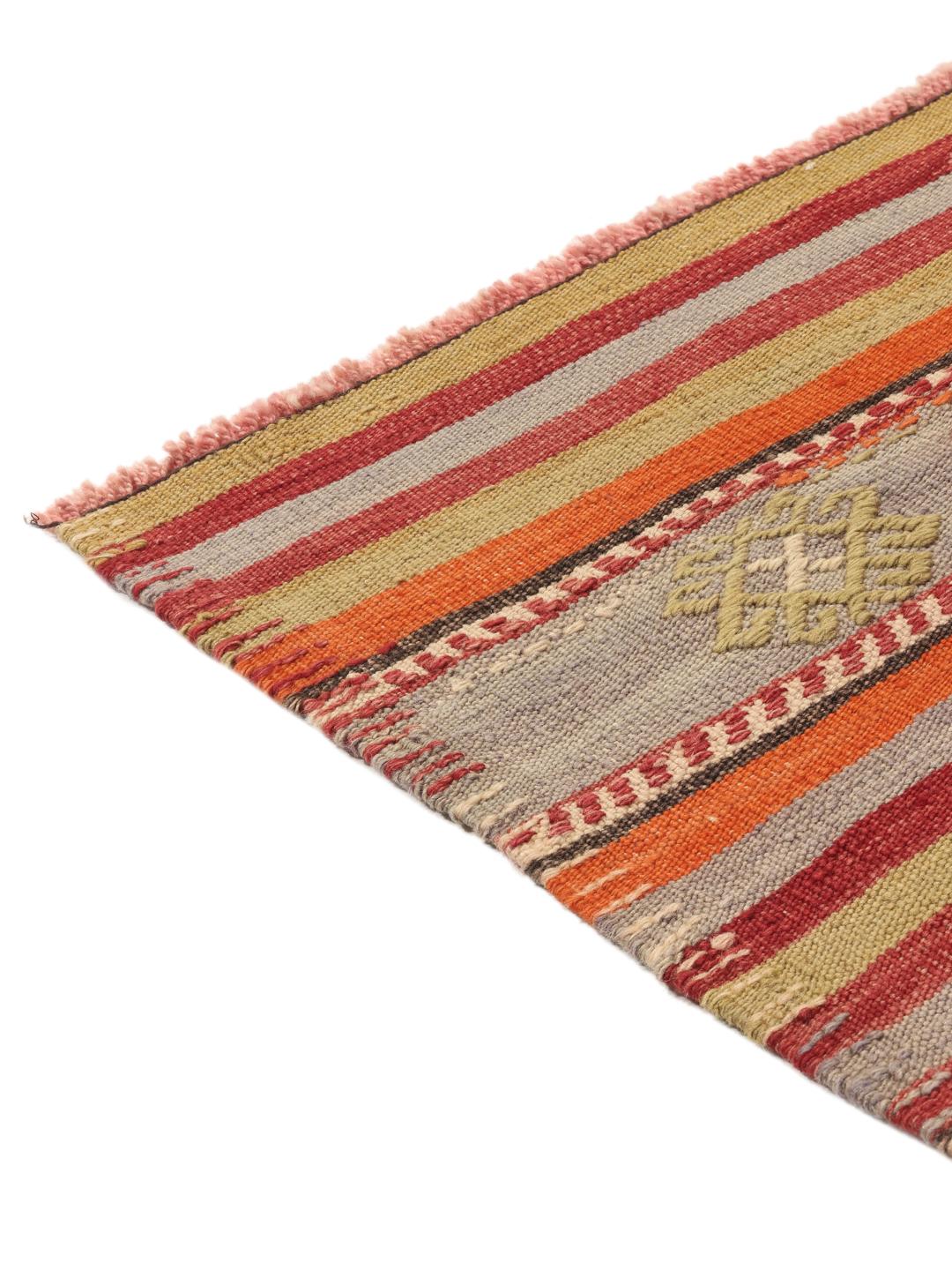
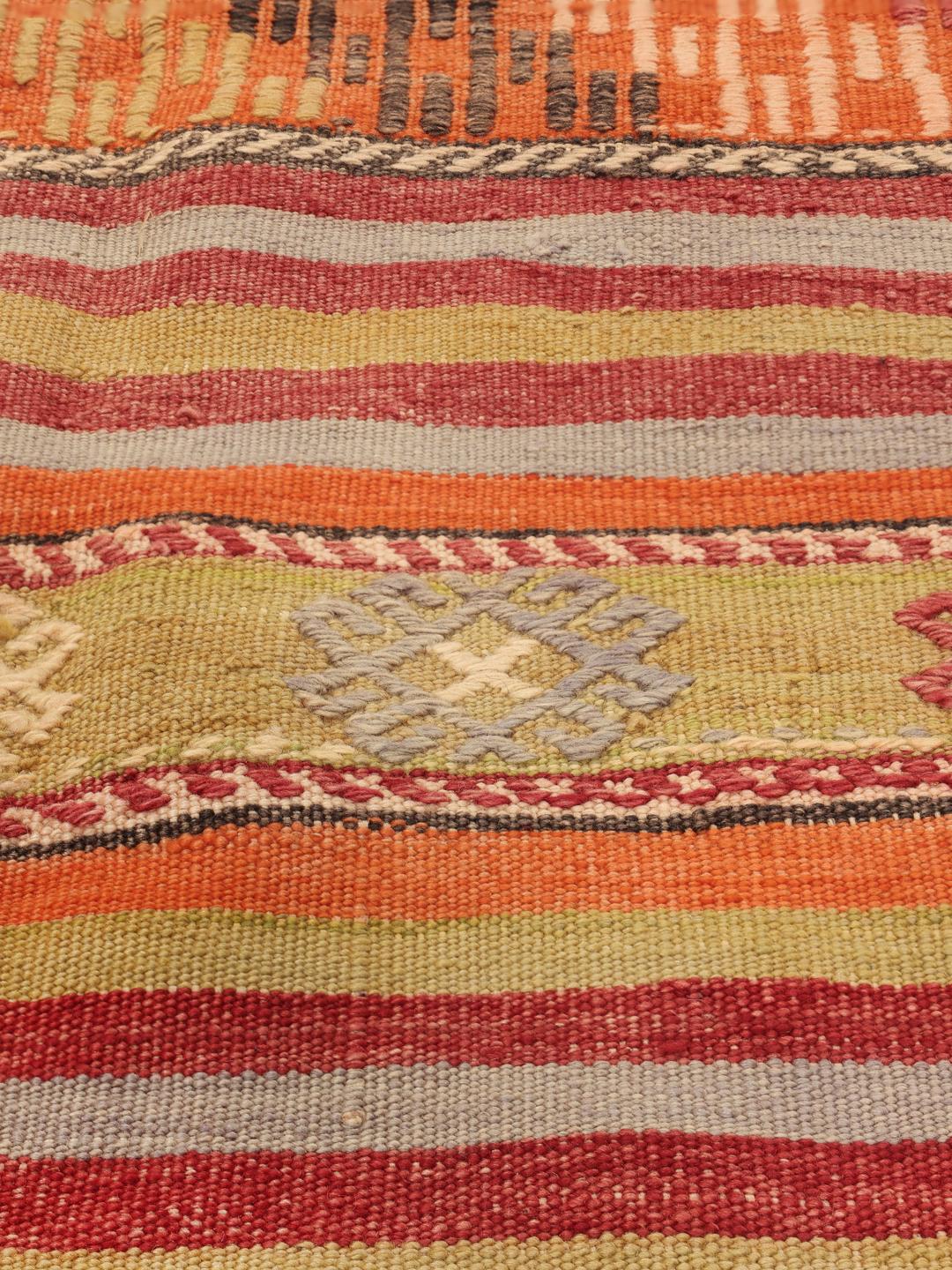
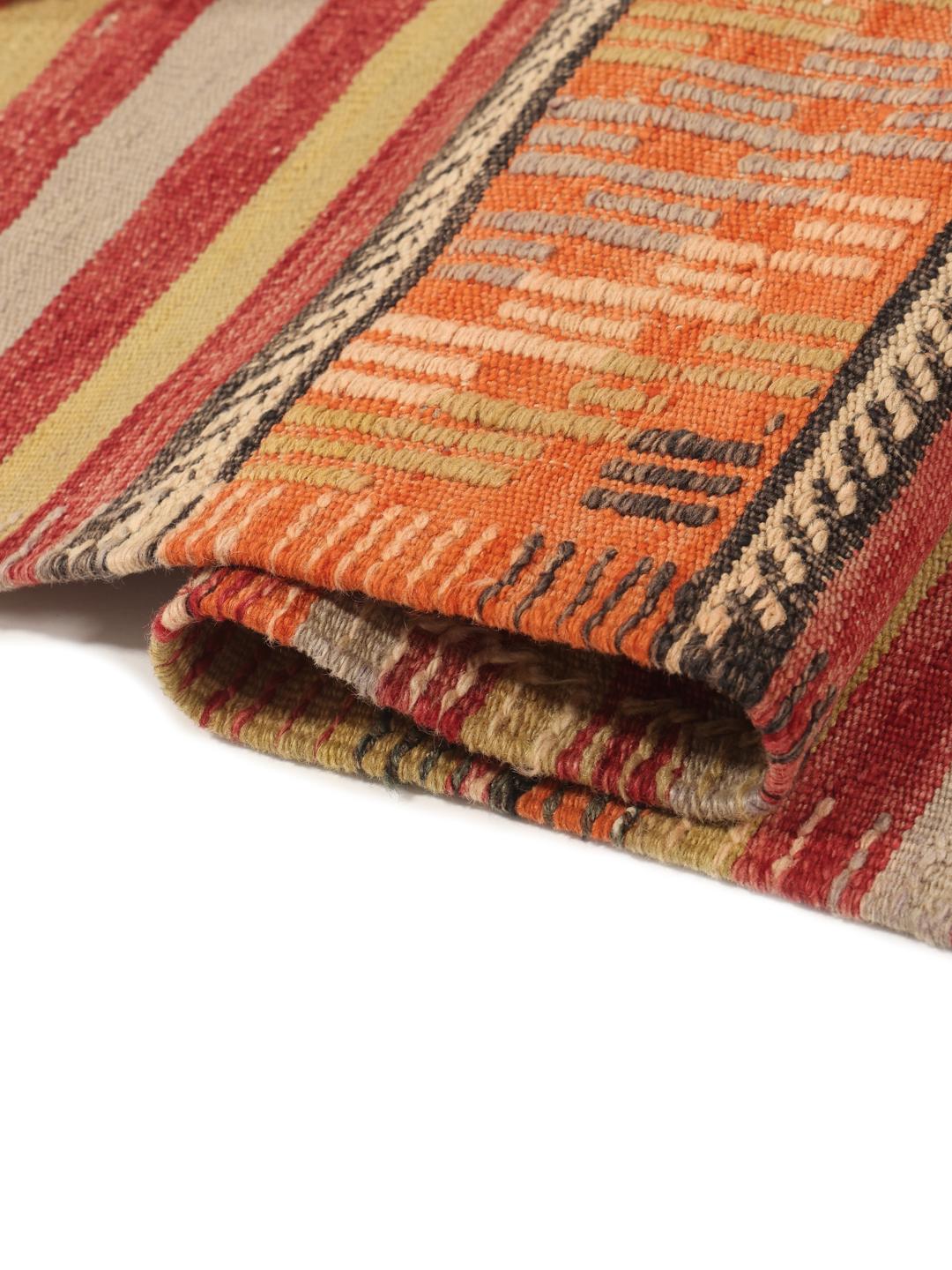
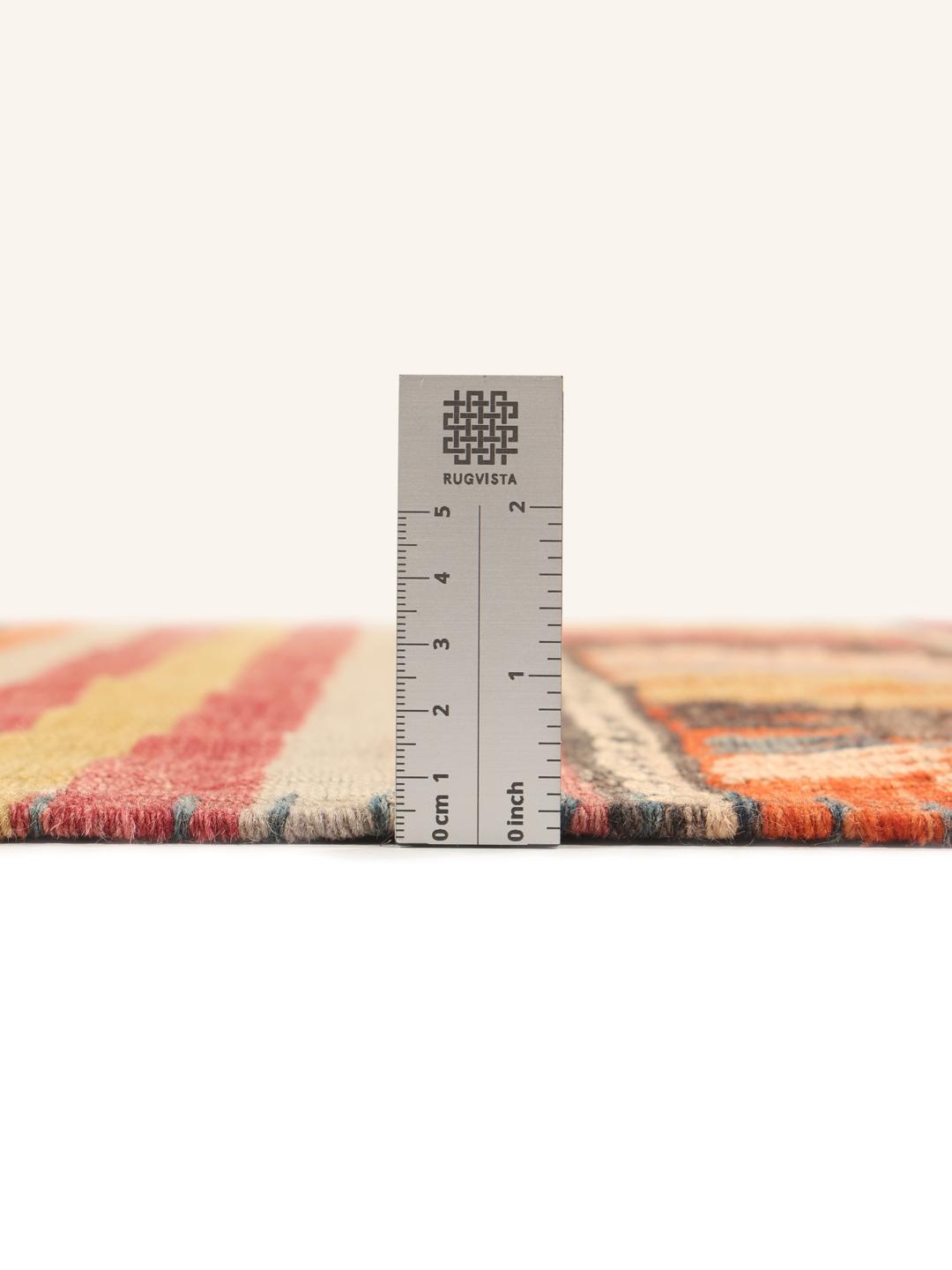
The term kilim refers specifically to the slit-weave technique used to create them. This method involves passing the weft threads back and forth through the warp, creating small vertical slits where different colours meet. This technique is what gives kilims their signature crisp, geometric patterns and their lightweight, durable profile, which remains a hallmark of high-quality flat-weave production.
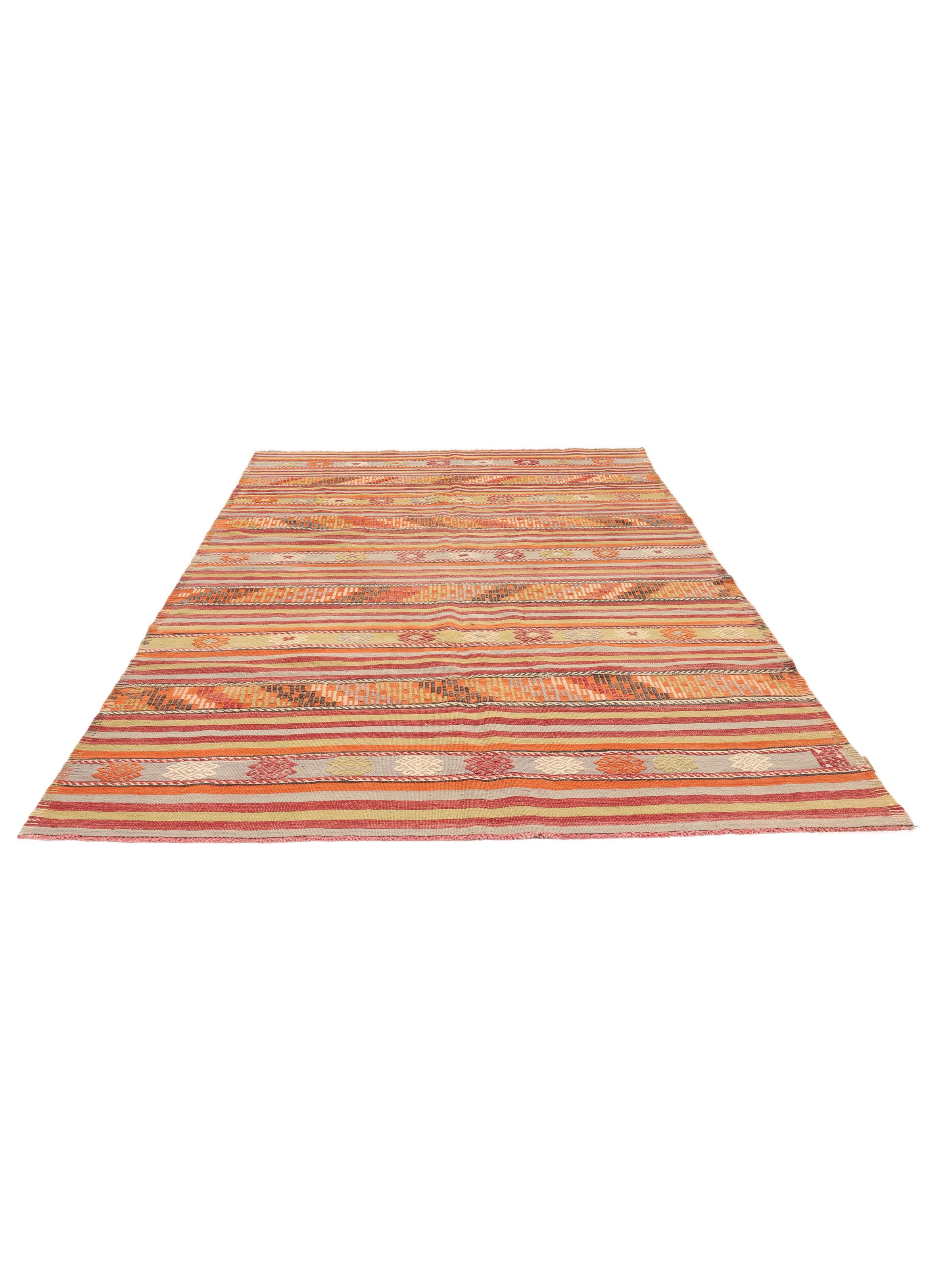
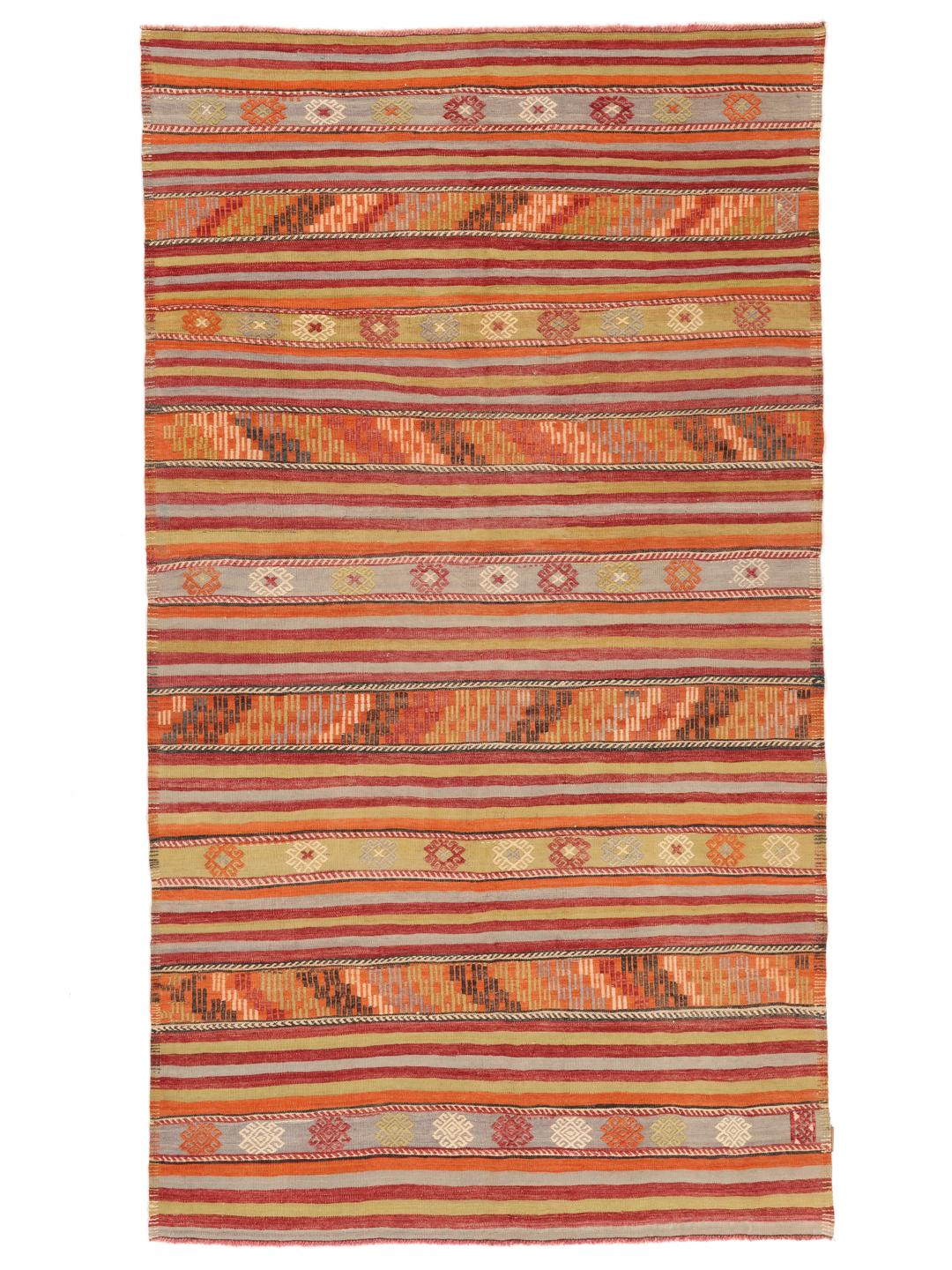
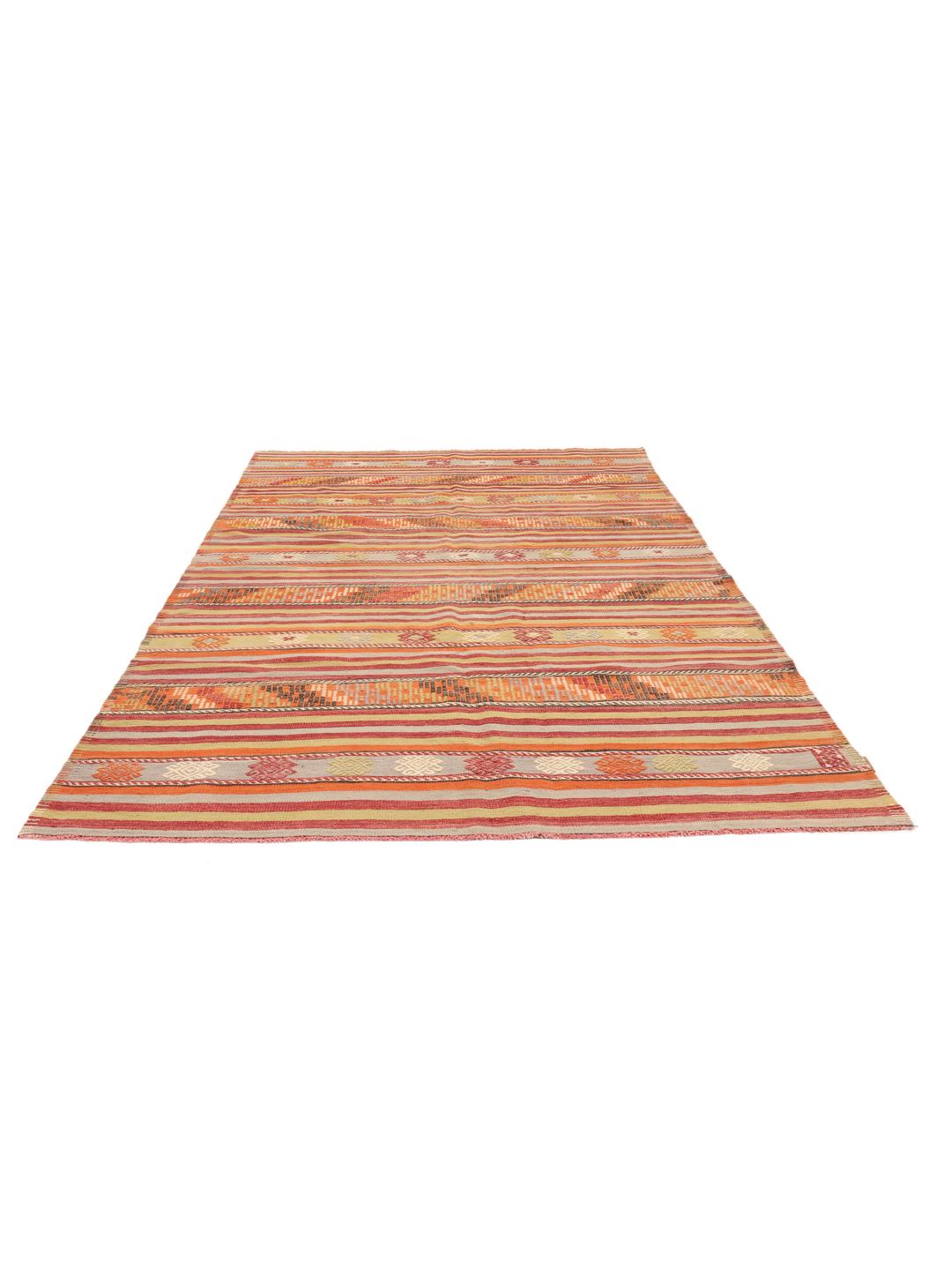
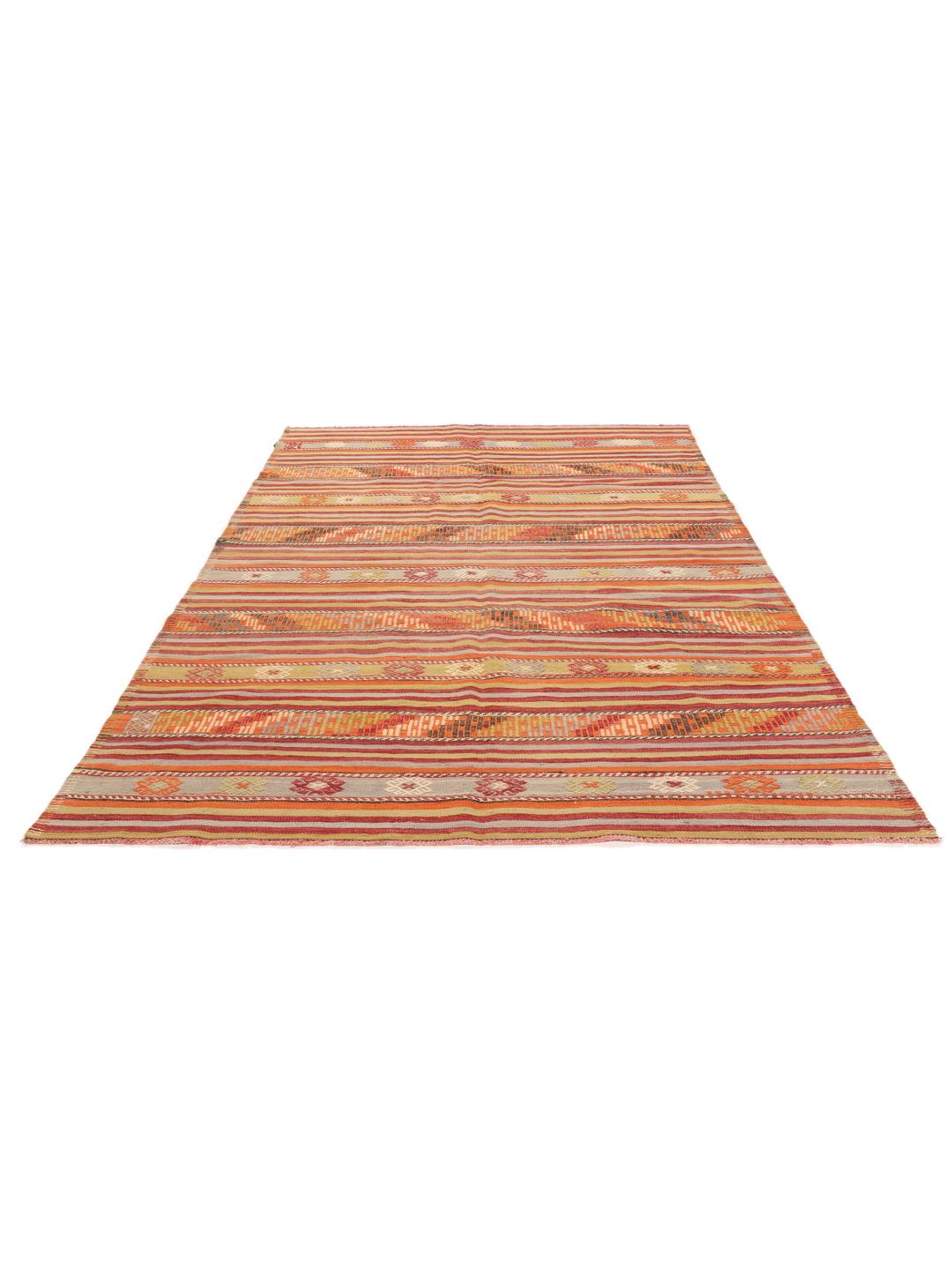
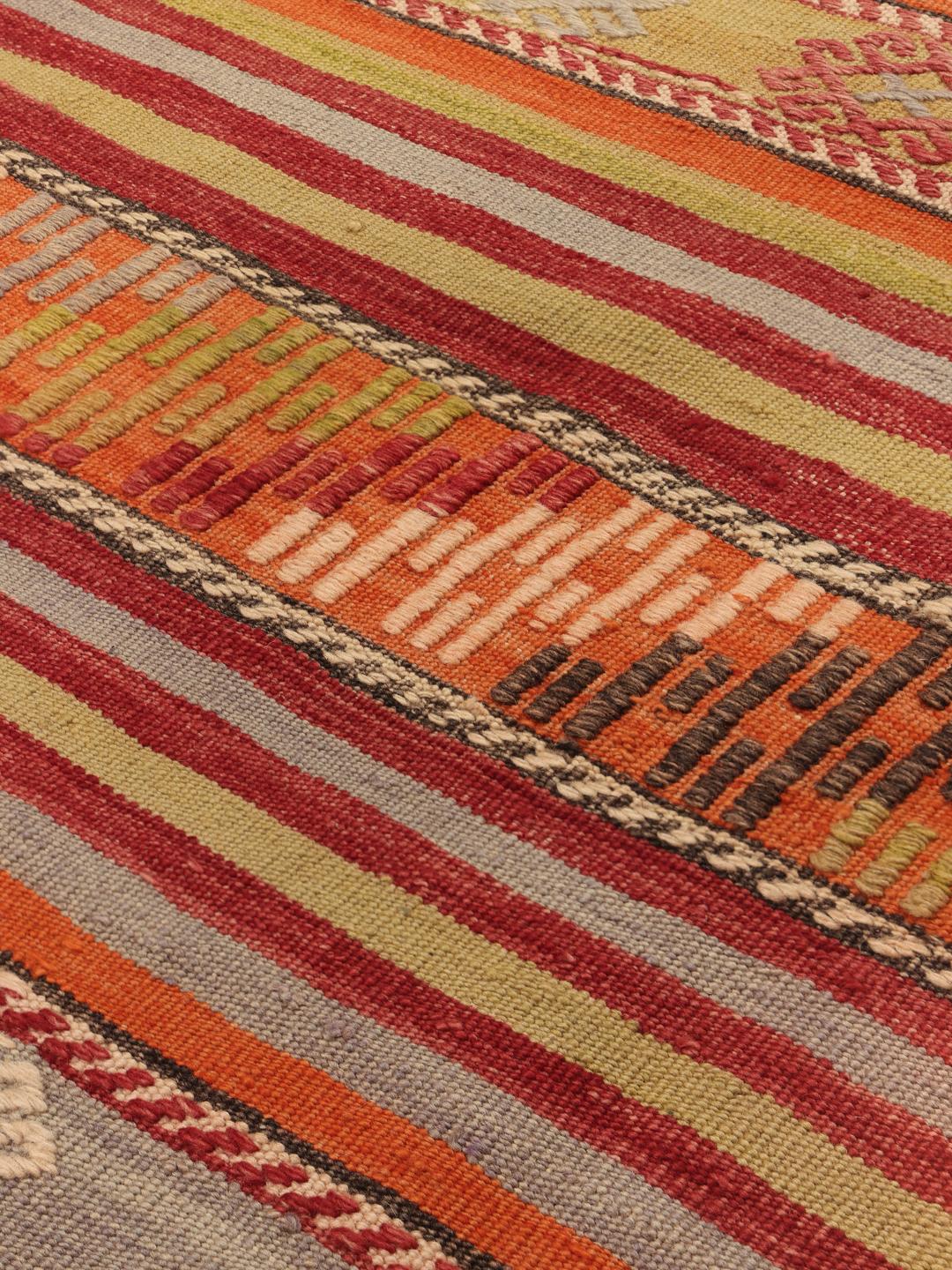
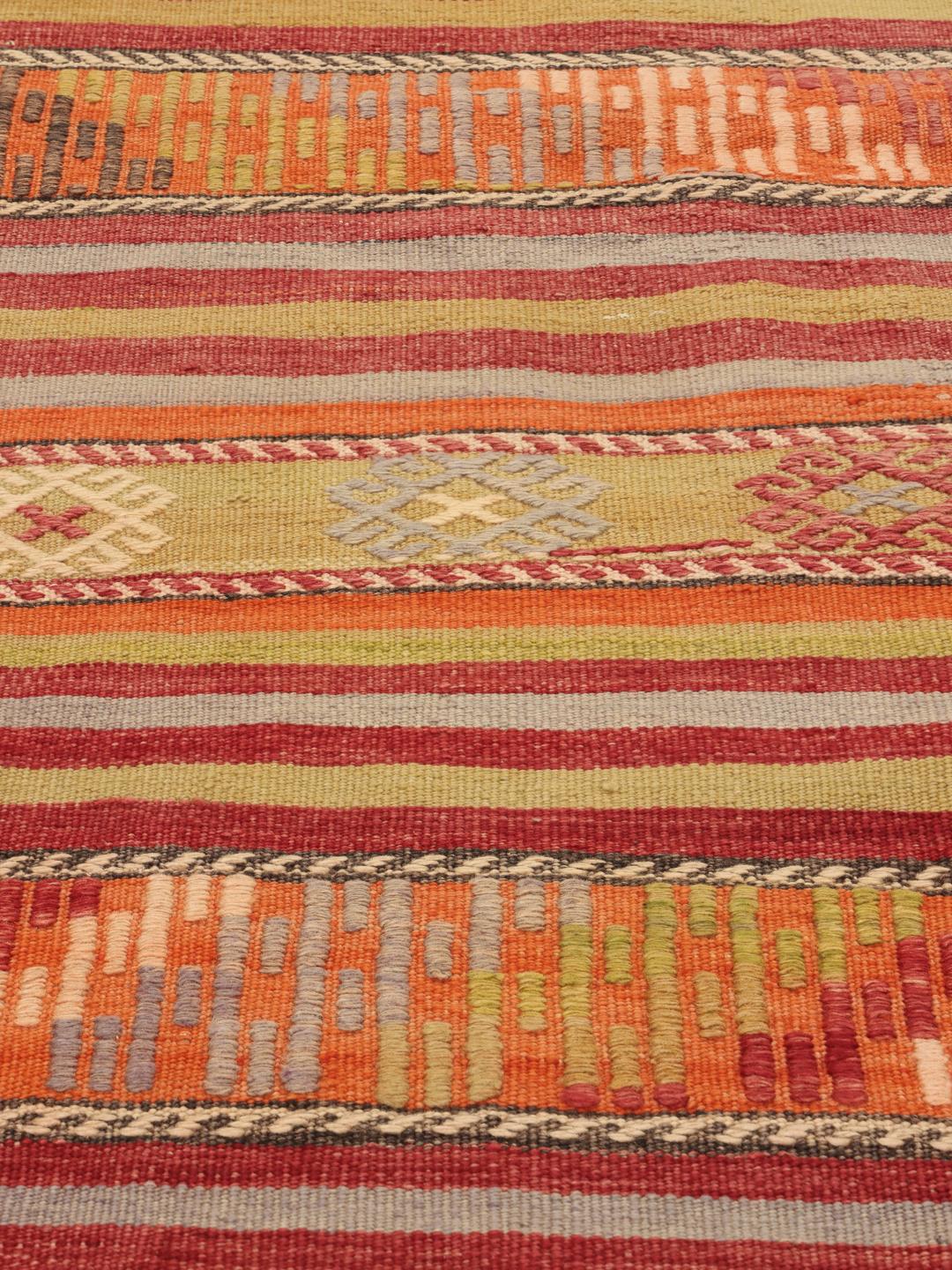
Visually, this rug draws on traditional Anatolian design language, where horizontal bands are often used to segment the field, populated by protective or symbolic geometric motifs. The use of warm, rich dyes—often sourced from local plants and minerals—gives these rugs an organic depth that modern synthetic dyes struggle to replicate, making vintage examples highly sought after by collectors.
Owning a vintage kilim is an investment in cultural heritage and human skill. Each piece tells the story of the artisan who made it, capturing the regional aesthetics and traditional knowledge passed down through generations. By bringing such a rug into your home, you are preserving a craft tradition that values slow, considered creation over mass production.