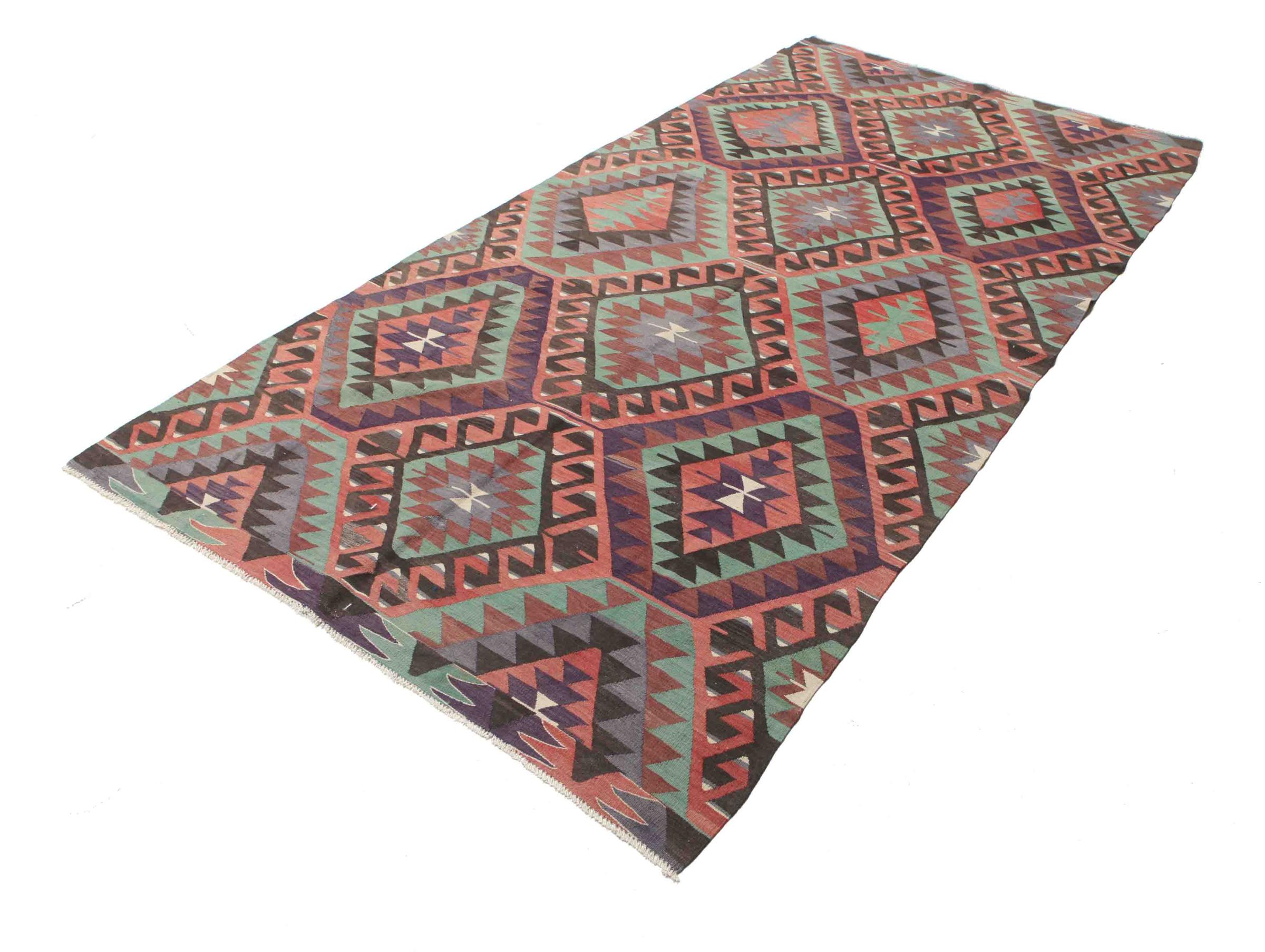
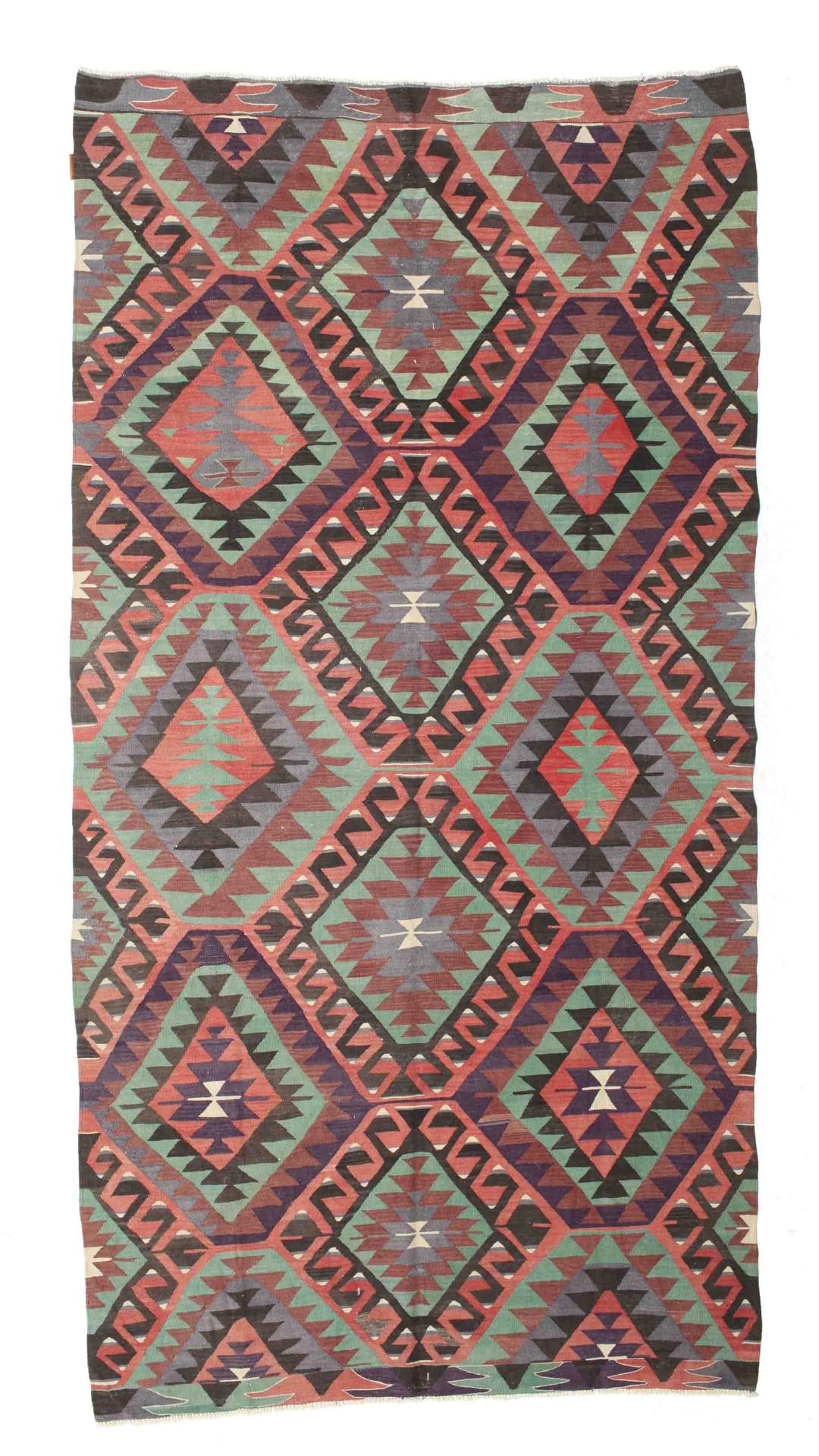
Kilim rugs are deeply rooted in the textile traditions of the Middle East and Central Asia, with Turkey being one of the most significant regions for their development. Historically, these rugs were woven by nomadic tribes as functional items for tents, serving as floor coverings, blankets, and storage sacks. The craft evolved over centuries, with each tribe developing distinct motifs that reflected their environment and heritage.
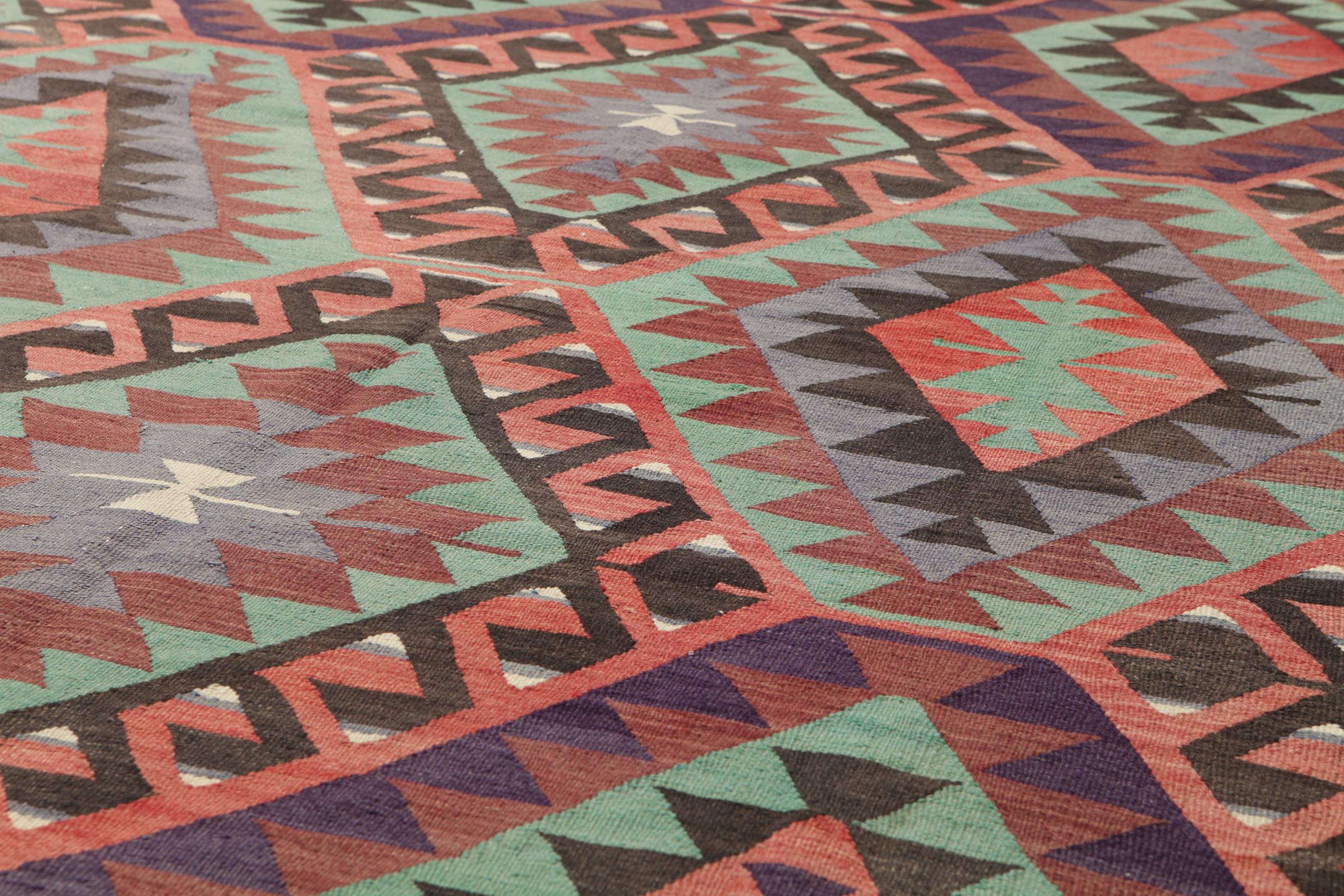
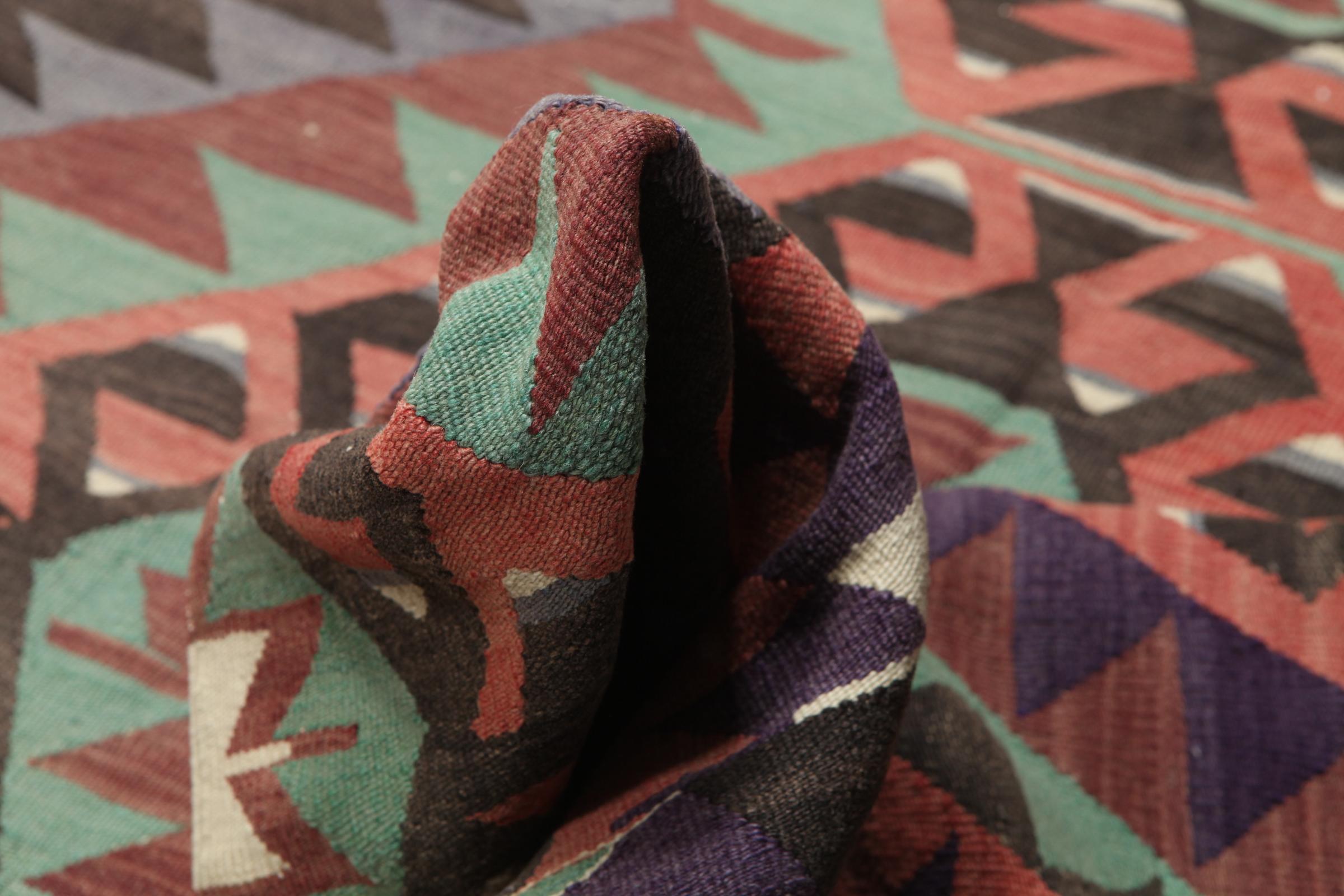
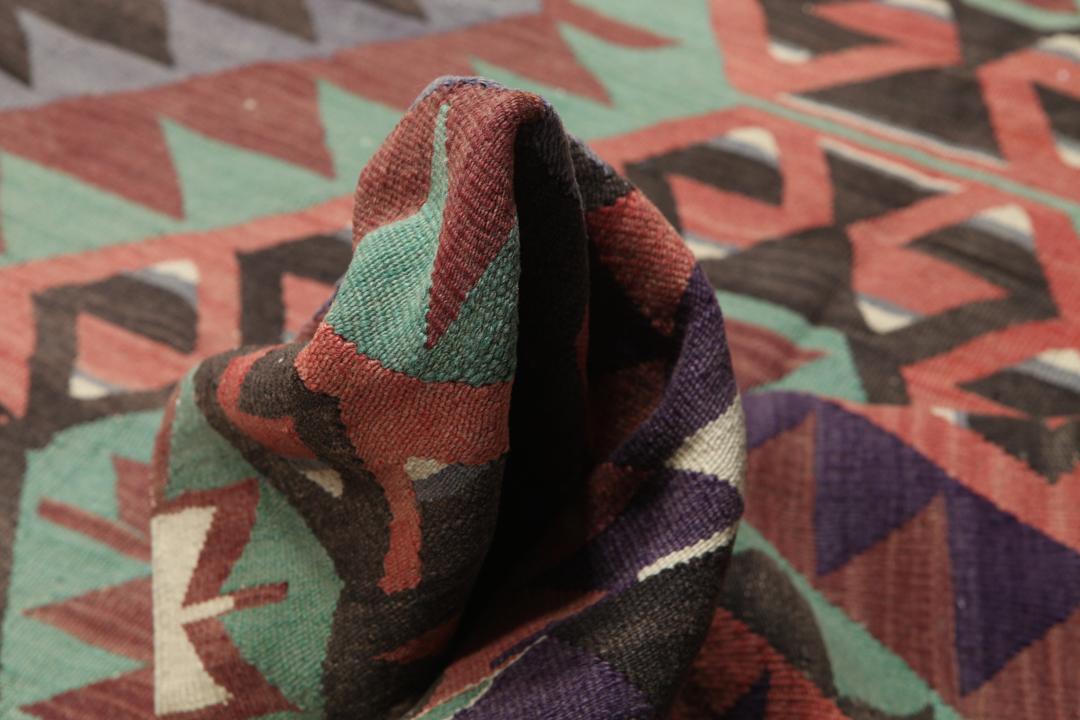
The term 'Kilim' refers specifically to the tapestry-weaving technique, where the warp and weft threads are woven tightly together to create a flat, durable surface. Unlike pile rugs, which use knots, Kilims are created by passing the weft threads over and under the warp threads. This method produces a reversible, robust textile that is both light and exceptionally strong, making it a masterpiece of utilitarian design.
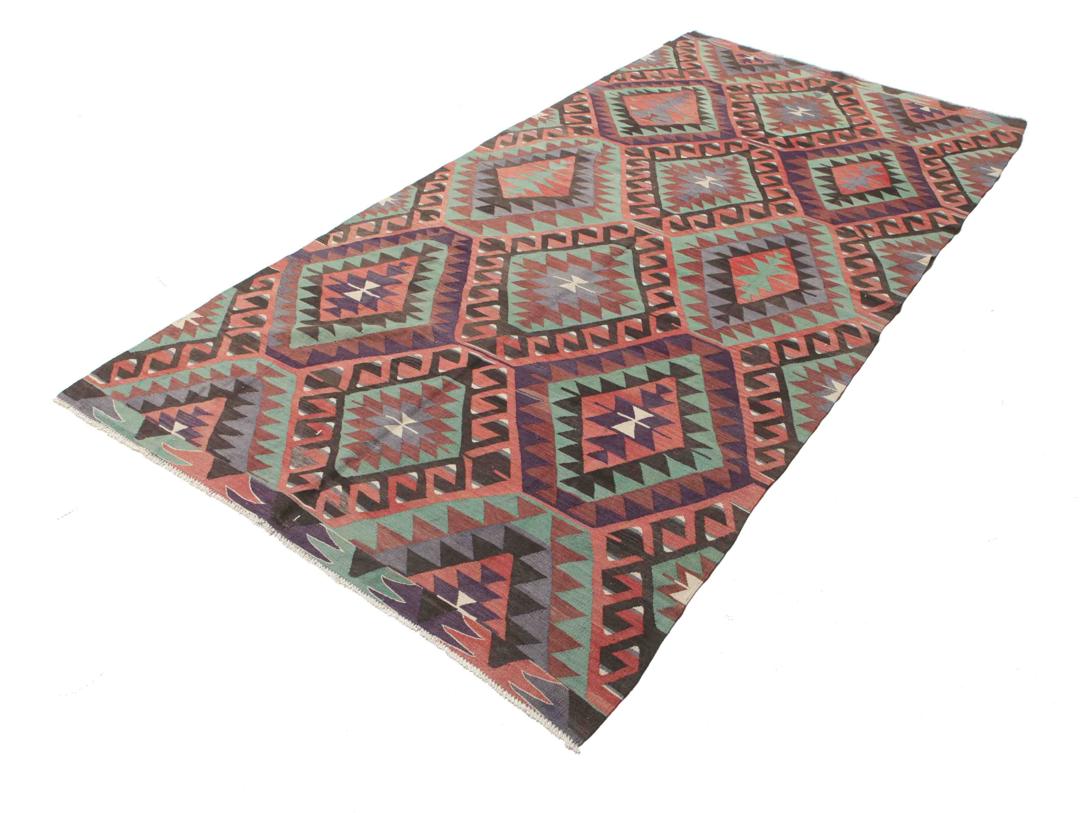
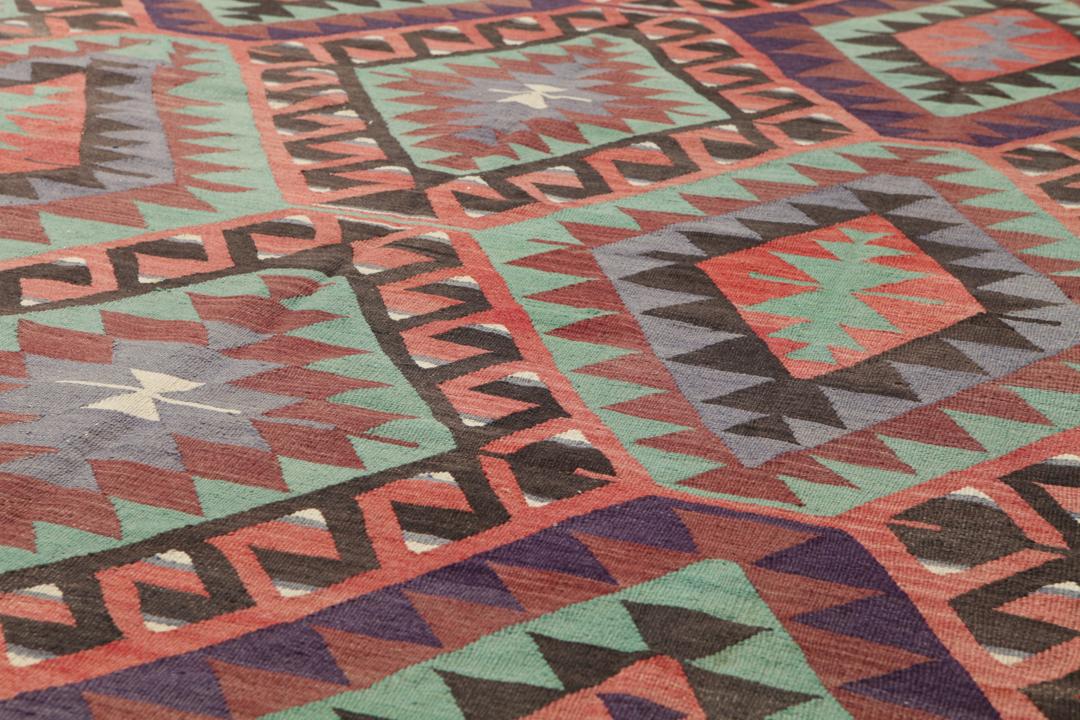
The design of this rug is defined by the classic geometric motif, specifically the diamond or 'elibelinde' influences often found in Anatolian weaving. These patterns are not merely decorative but often carry symbolic meanings related to fertility, protection, and the natural world. The use of repeating shapes creates a balanced, rhythmic field that has been a hallmark of Turkish weaving for generations.
Owning a vintage Kilim is a way of preserving a piece of cultural history. These rugs are highly valued by collectors for their authenticity, the organic nature of the Wool, and the natural dyes traditionally used. Each piece represents a connection to the lives and stories of the weavers, making it a meaningful addition to any home that values heritage and skilled manual labour.