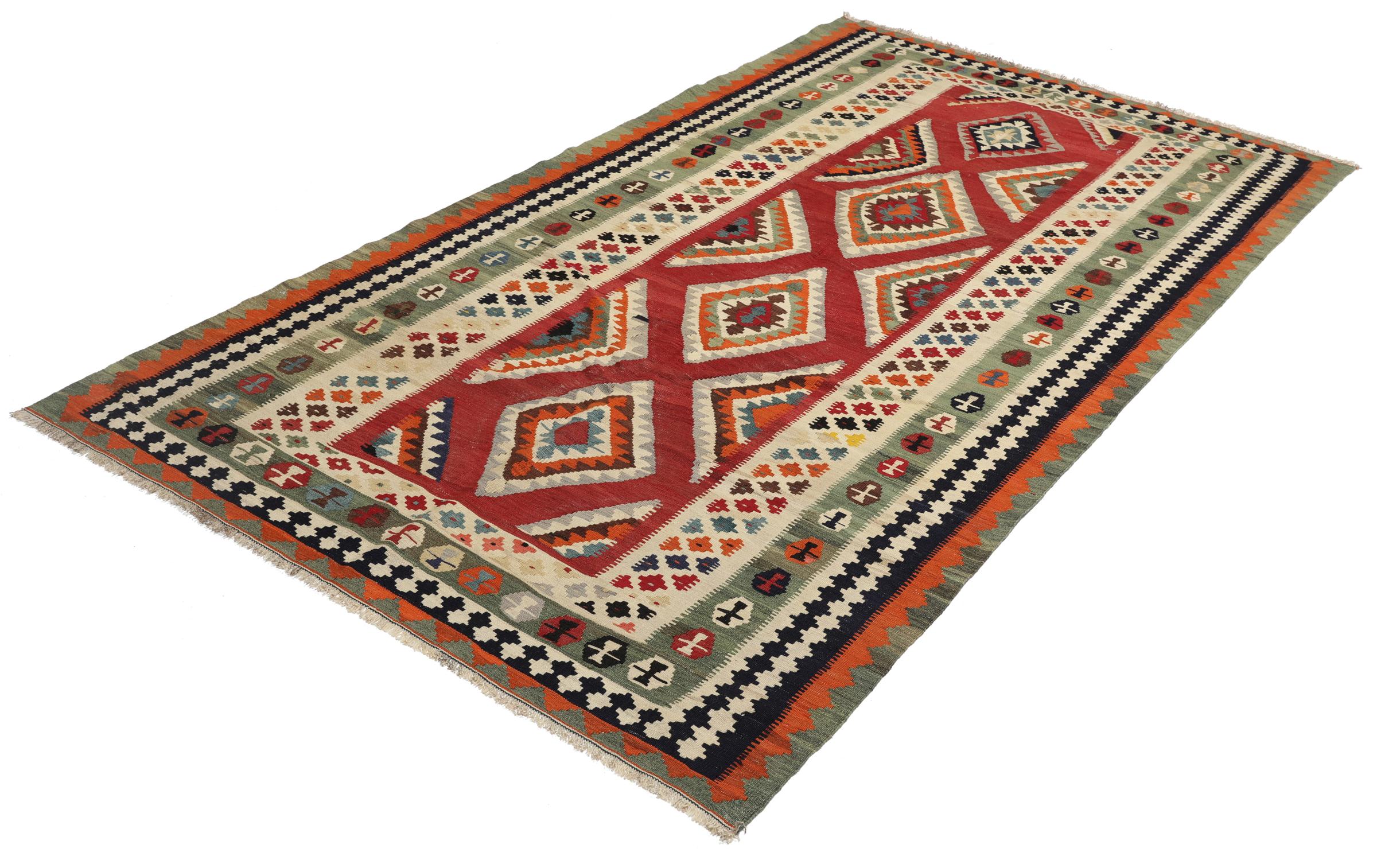
The tradition of Kilim weaving is deeply rooted in the history of the Middle East, where these flat-woven textiles have served as essential household items for centuries. Historically, these rugs were created by nomadic tribes and village weavers to serve practical purposes, such as floor coverings, wall hangings, and storage bags. The migration of these weaving traditions across the region has led to a rich diversity of styles, each reflecting the local environment and cultural influences of the weavers.
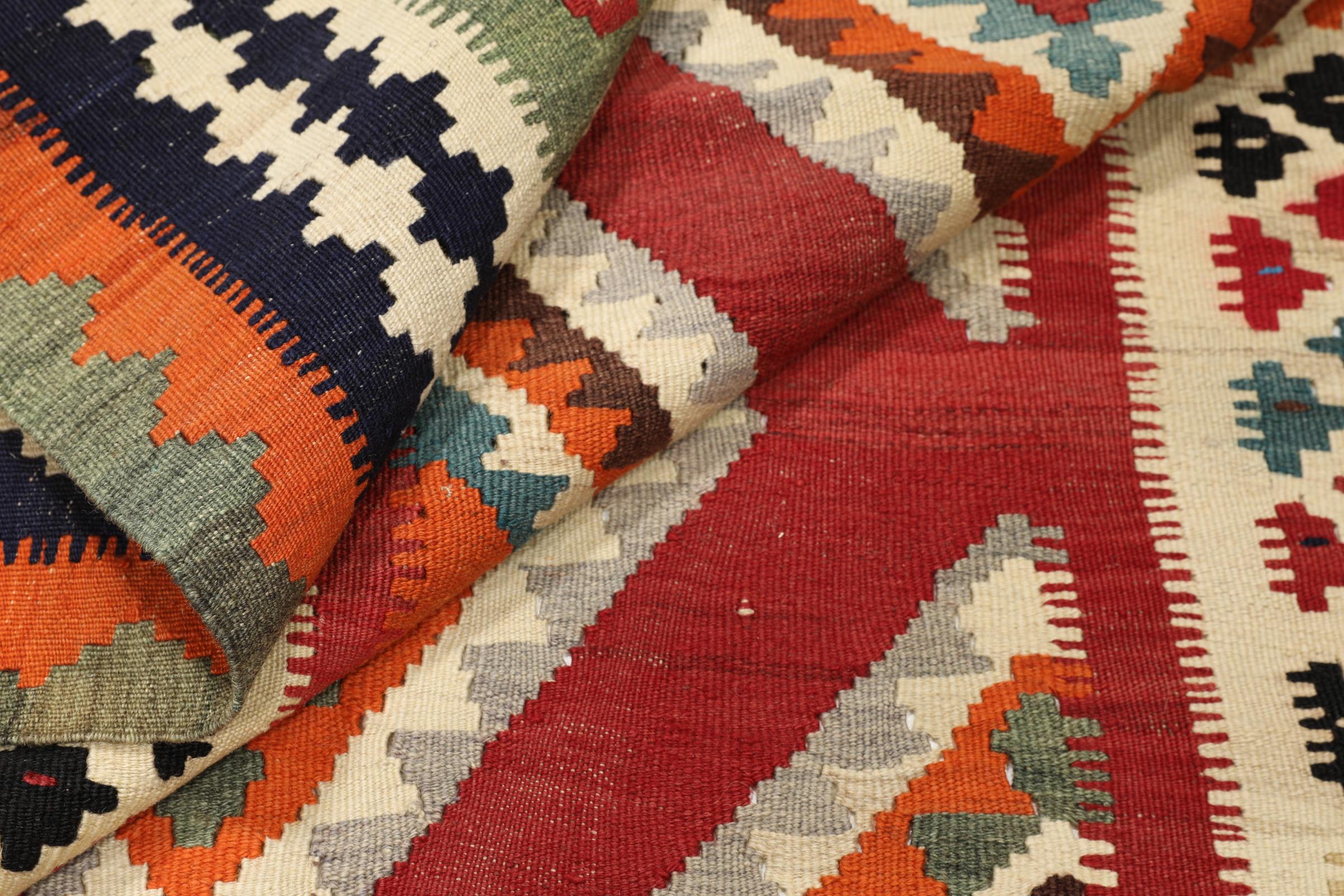
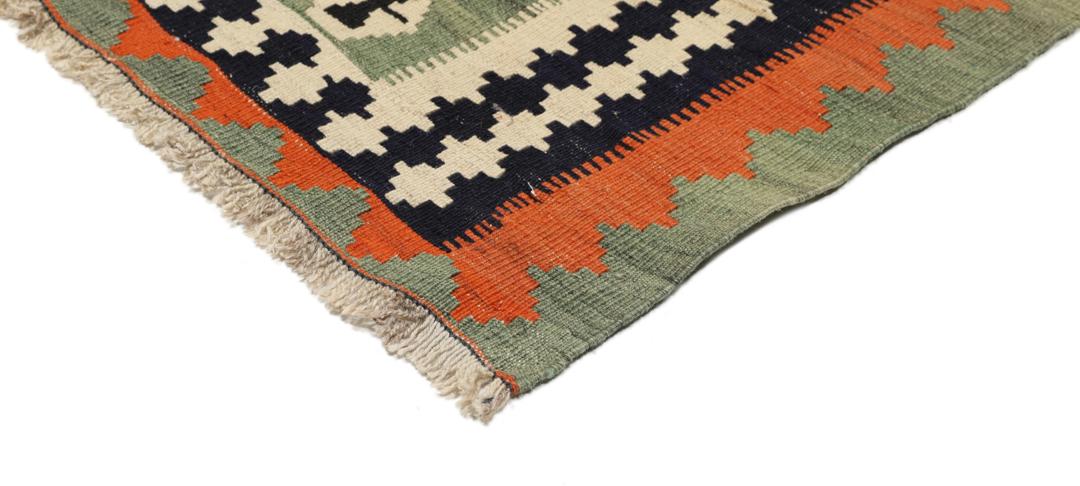
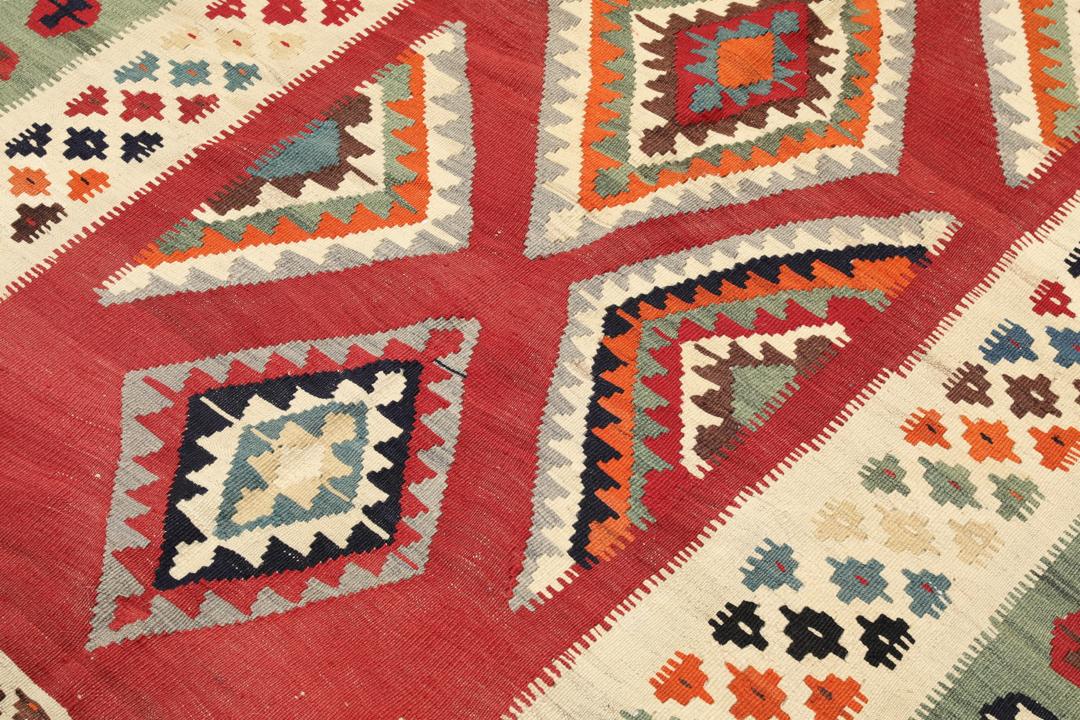
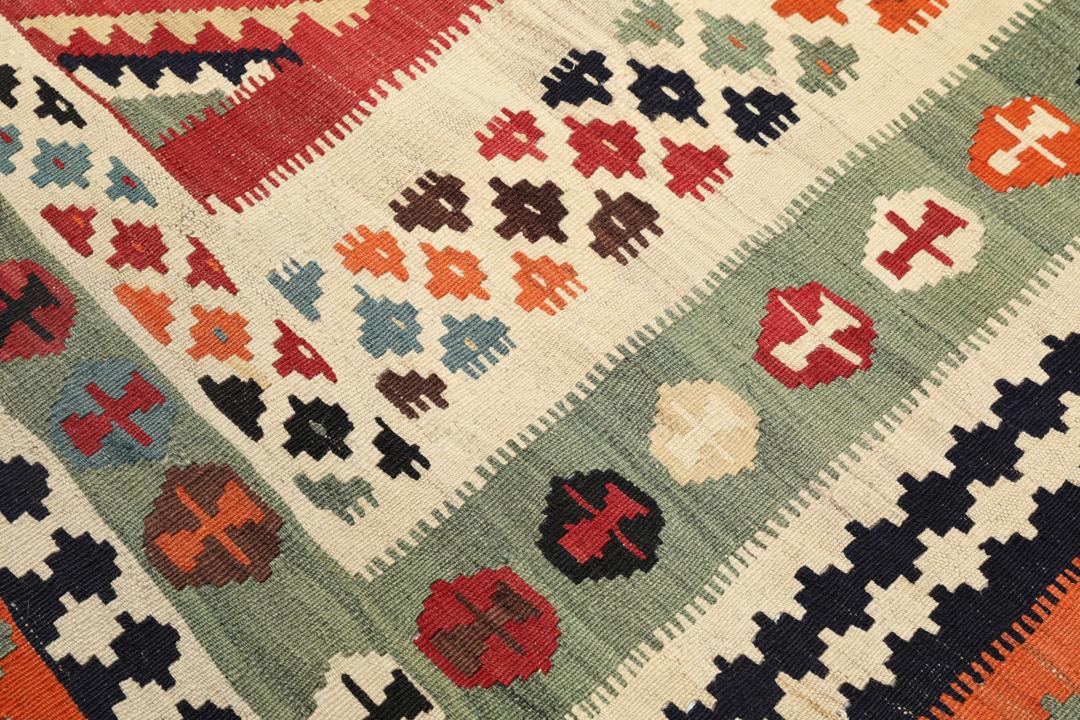
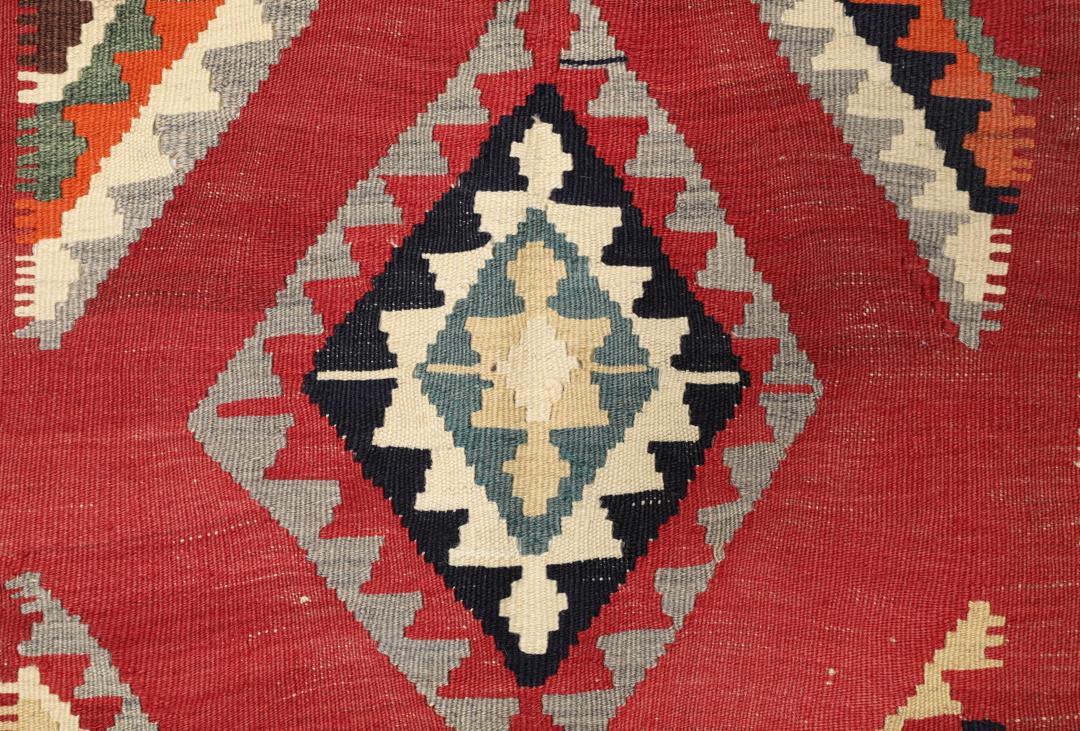
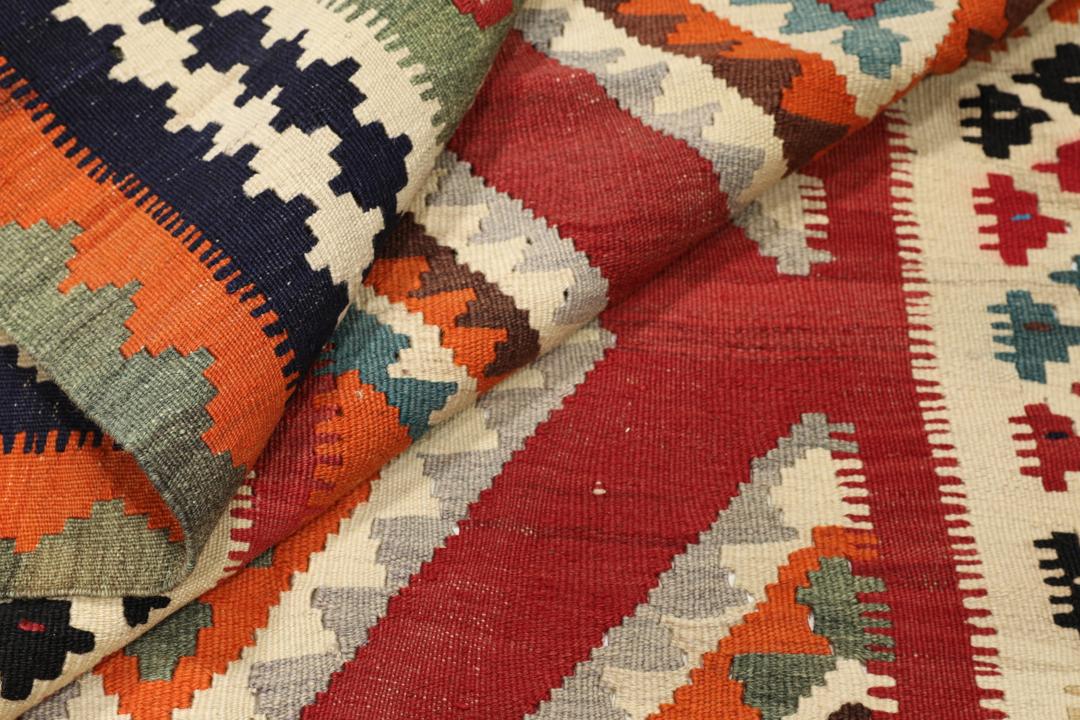
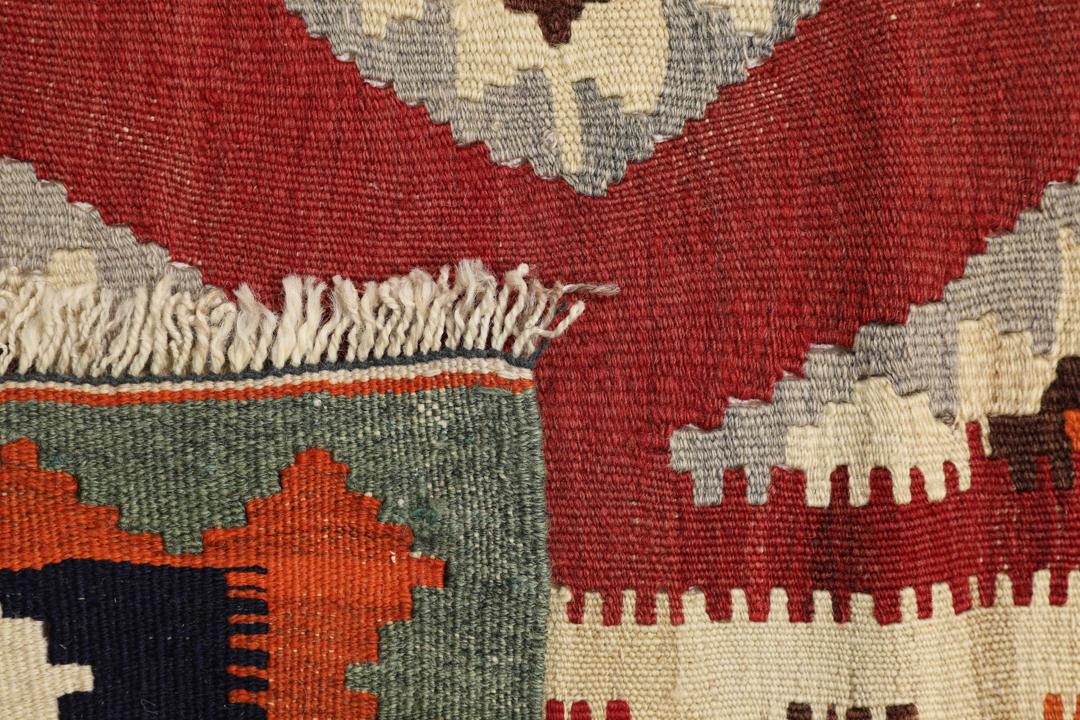
A Kilim is defined by its flat-weave construction, which distinguishes it from pile rugs. This technique involves wrapping the coloured Wool weft strands around the warp threads, a method that allows for the creation of crisp, sharp-edged geometric designs. This construction is highly valued for its versatility and portability, as the lack of pile makes the rug thinner and lighter, yet remarkably strong and resistant to wear.
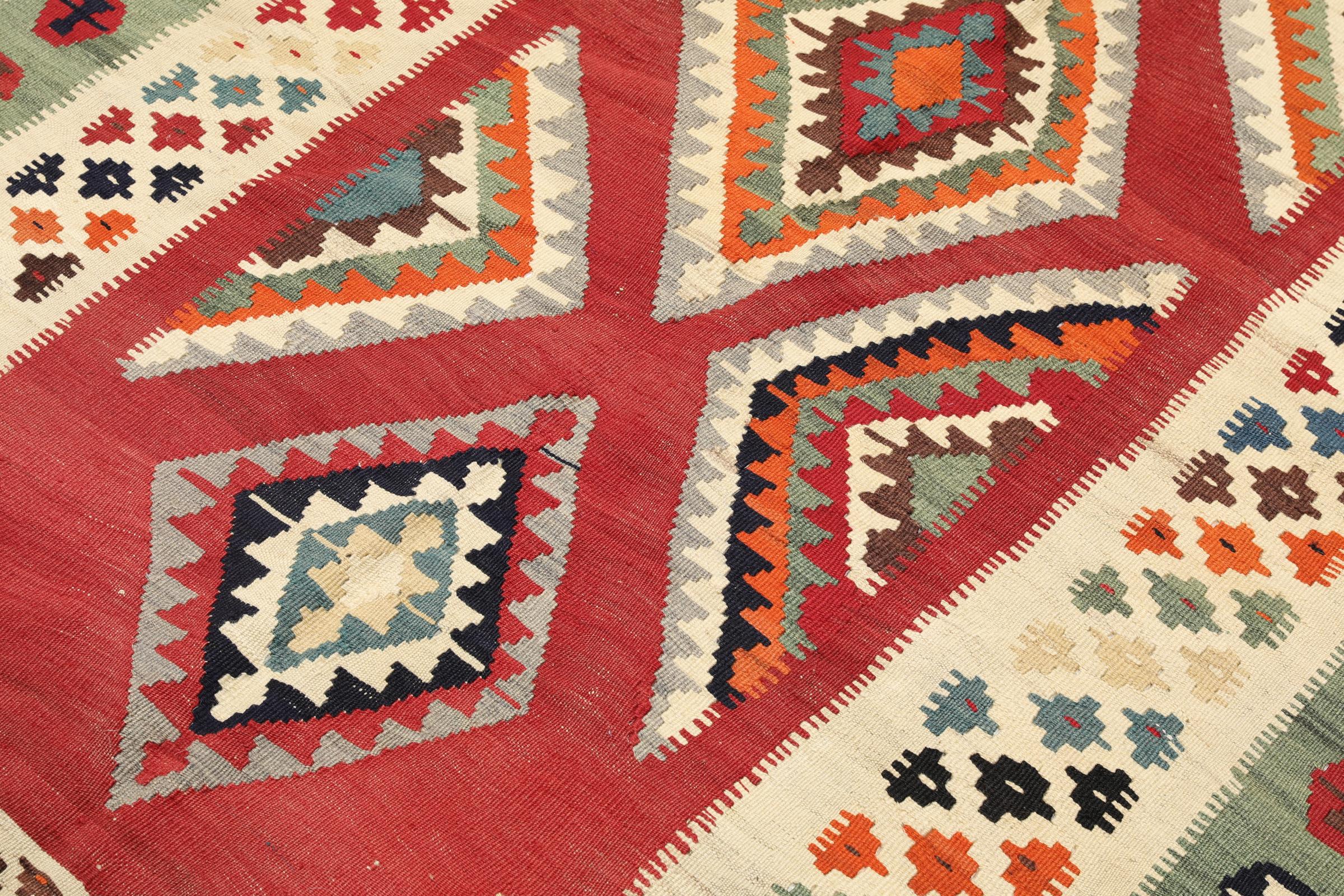
The signature design language of this Kilim centres on bold, repeating geometric motifs that often hold symbolic meaning, such as protection or fertility, within the weaver's culture. The use of vibrant, natural dyes and complex diamond or medallion patterns is a hallmark of this tradition. The specific arrangement of these motifs creates a sense of balance and rhythm that is both visually captivating and deeply respectful of the historical patterns that define the region's artistic heritage.
Collecting vintage Kilim rugs is a way to preserve the skill and artistry of a disappearing way of life. Each piece is a historical record of the weaver's individual expression, making them highly sought after by those who appreciate the cultural weight of hand-made textiles. Owning a vintage Kilim is more than just a decor choice, it is an act of stewardship for a craft that represents the enduring human spirit and the shared history of Middle Eastern craftsmanship.