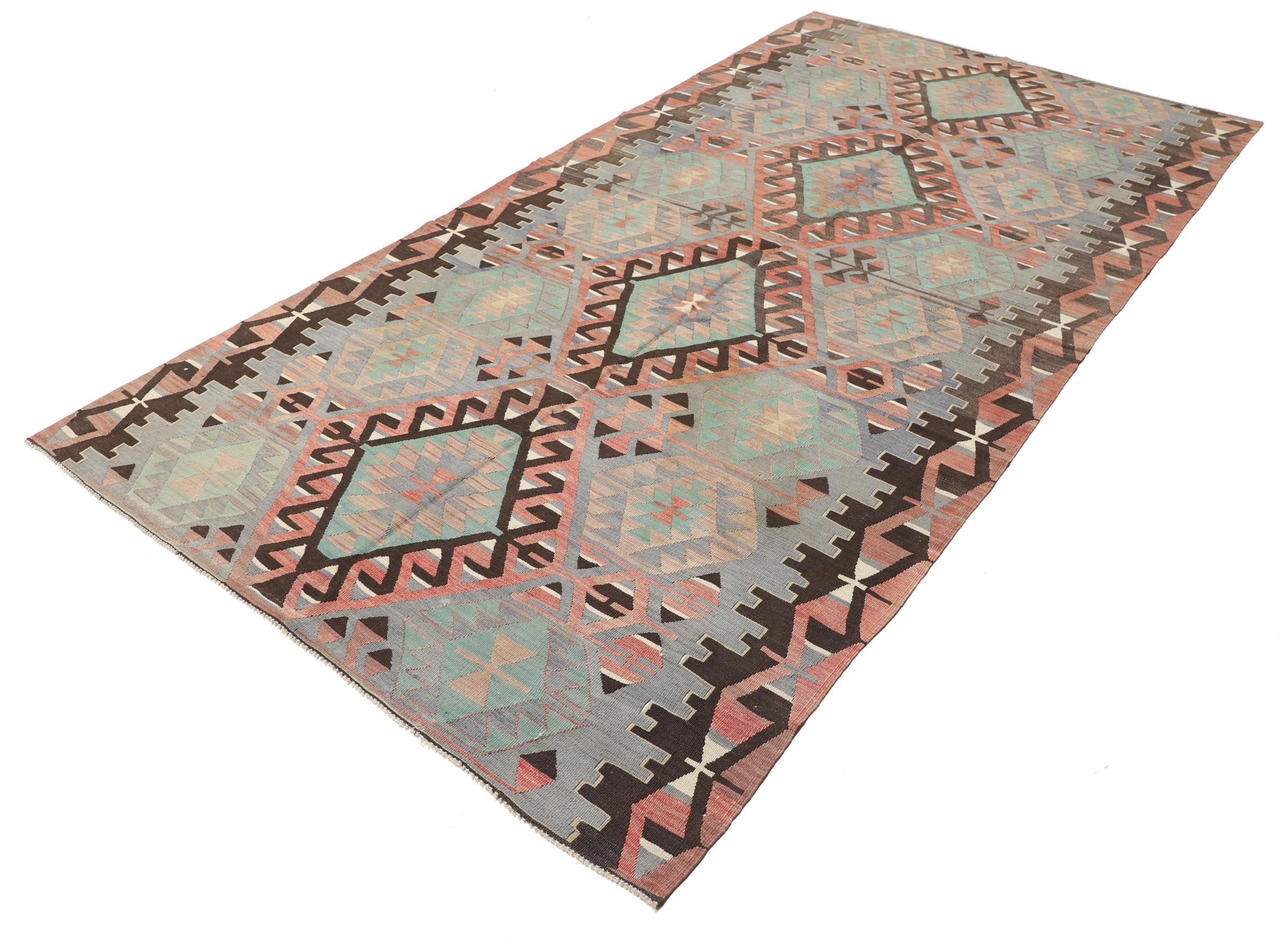
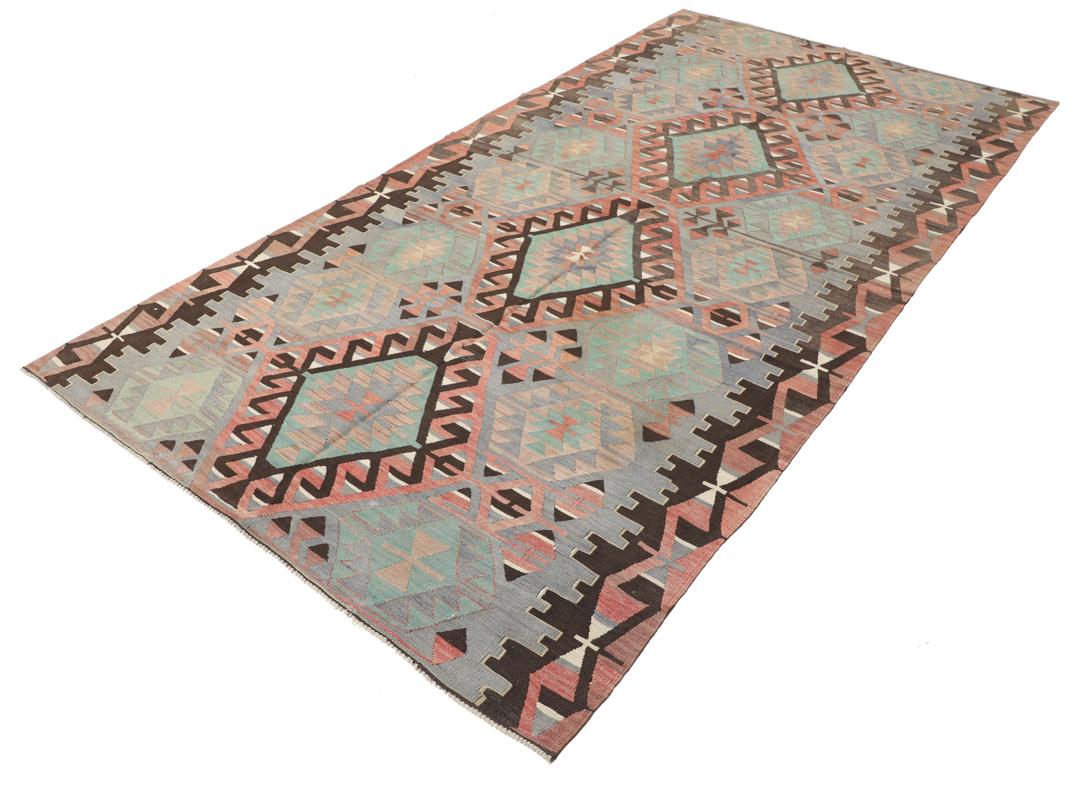
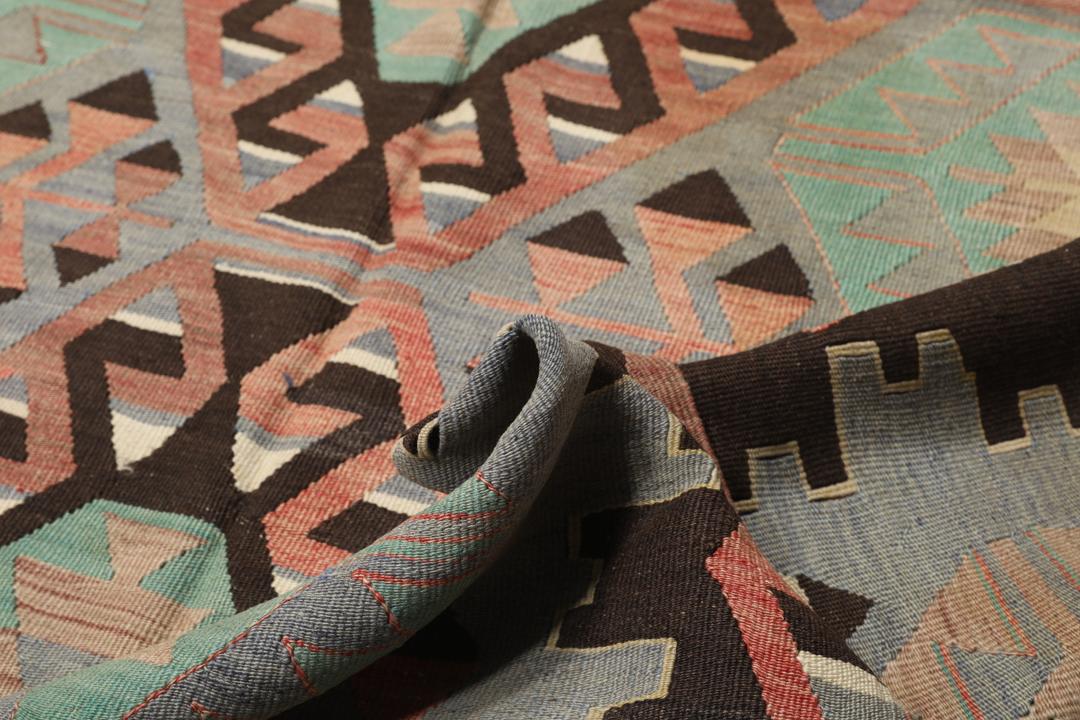
Kilim rugs originate from the nomadic and semi-nomadic traditions of the Middle East, particularly Turkey. These flat-woven textiles have been essential to domestic life for centuries, serving as floor coverings, wall hangings, and protective storage bags for travelling families. The tradition is deeply rooted in the cultural identity of the weavers, with each region developing its own distinct vocabulary of symbols and motifs.
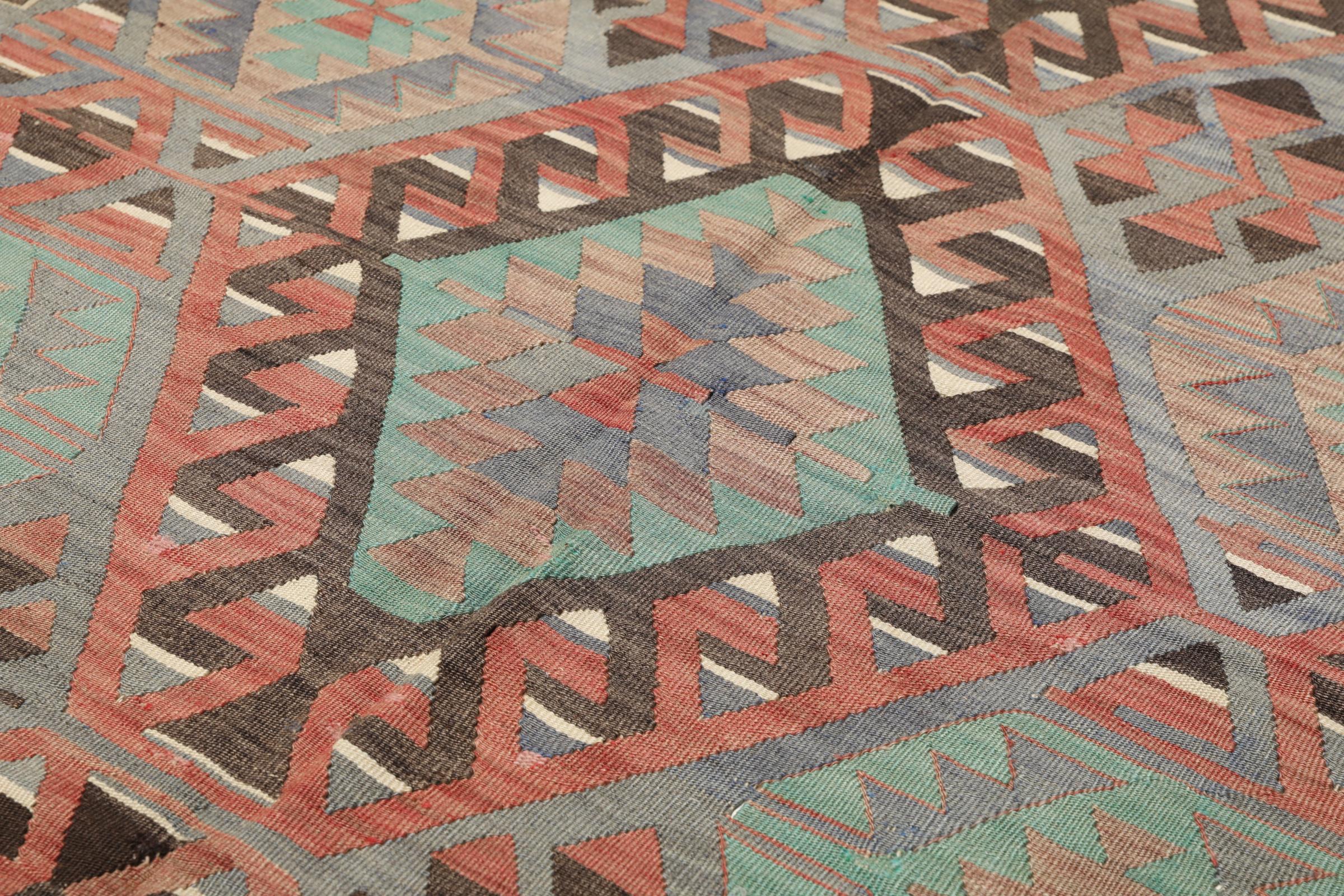
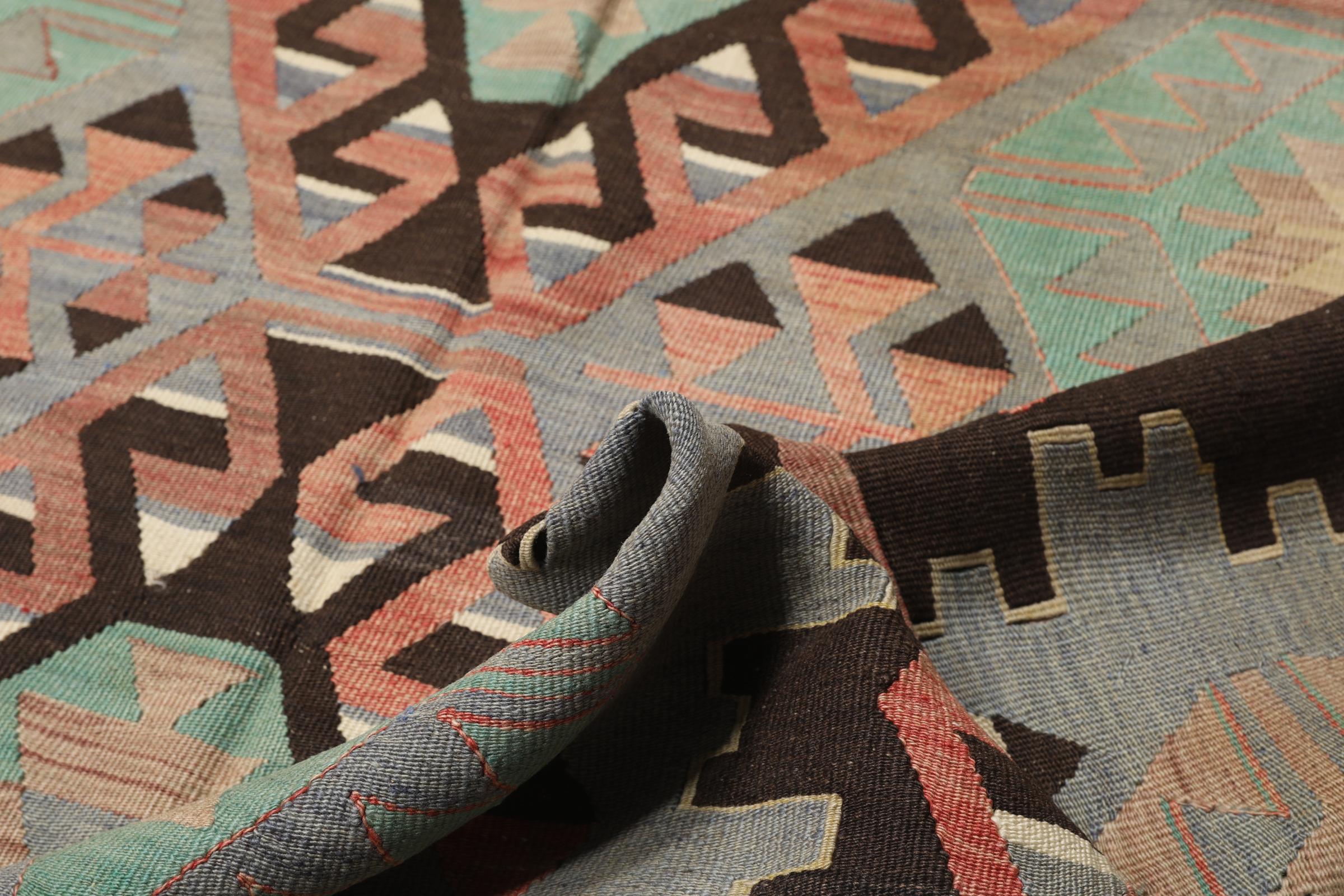
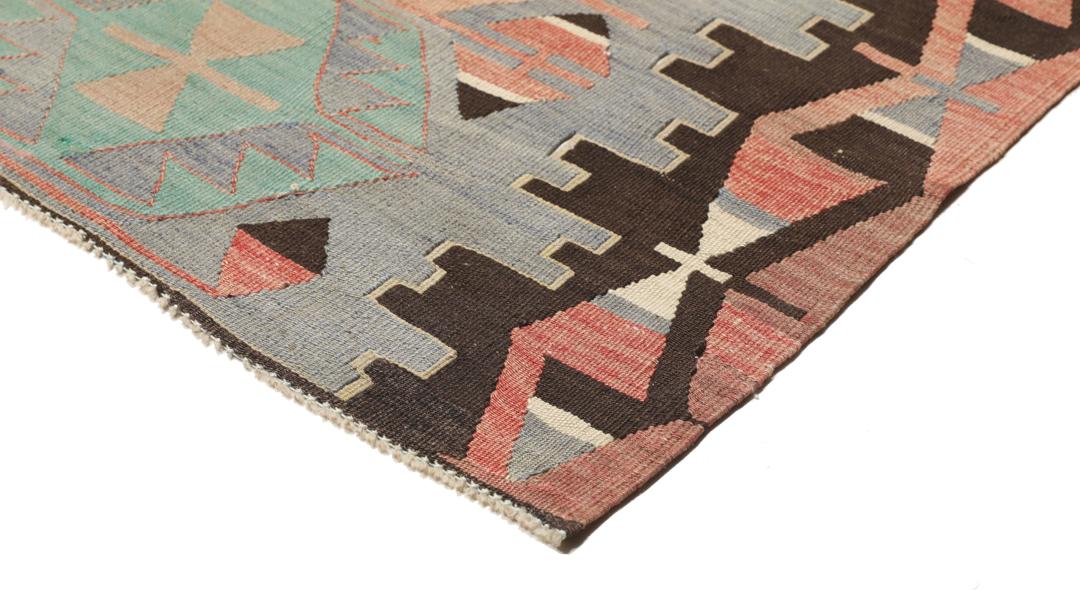
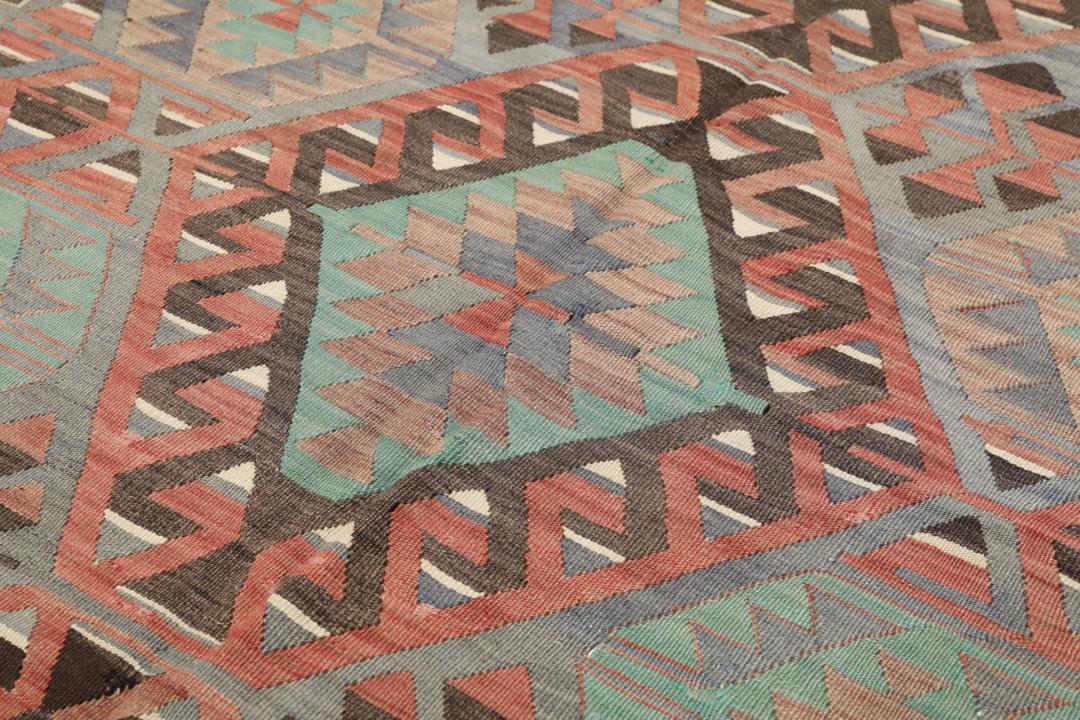
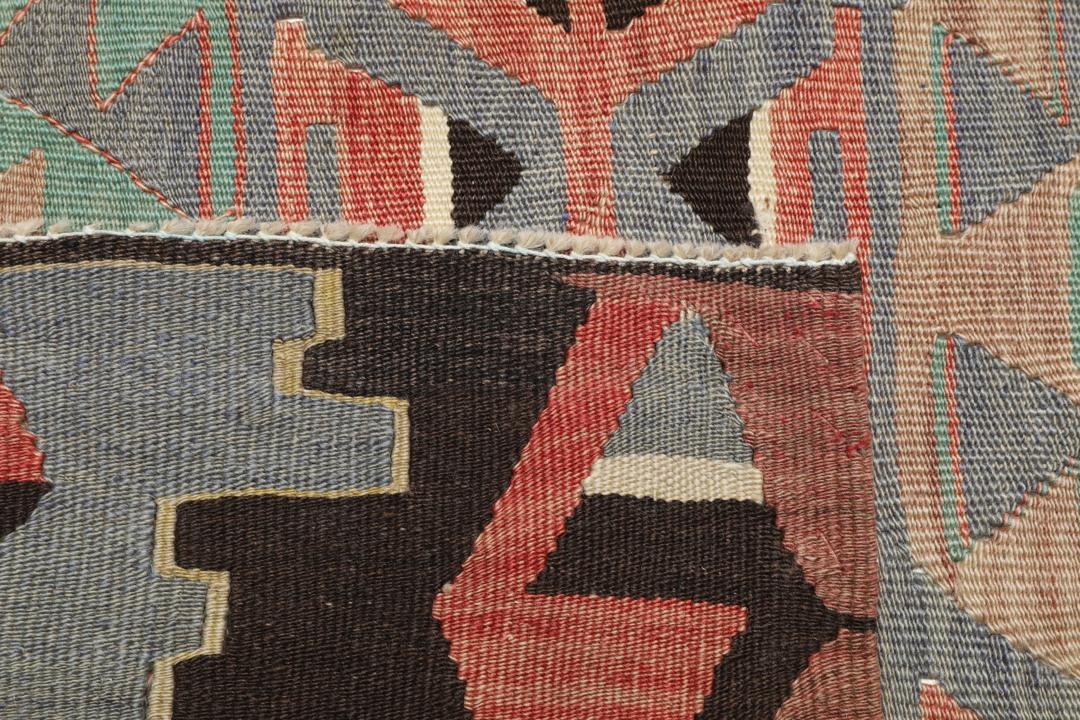
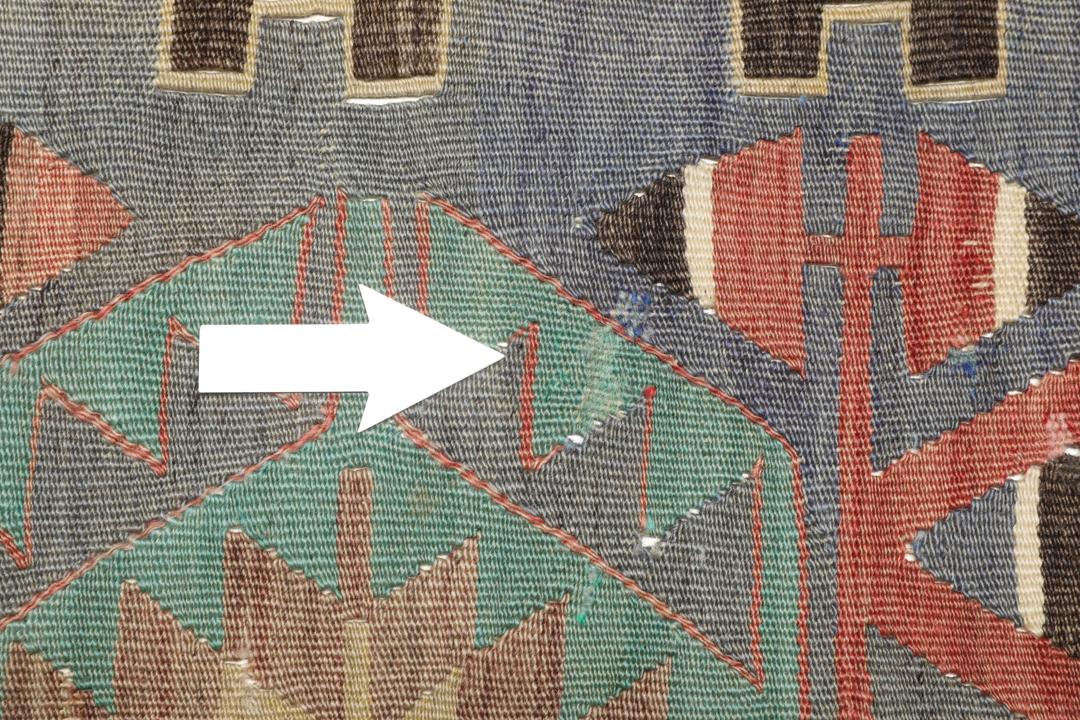
The term 'Kilim' refers specifically to the slit-weave technique, where the weft threads are woven tightly back and forth to create the pattern. This method results in a thin, reversible fabric that is prized for its strength and portability. The quality of a Kilim is determined by the tightness of this weave, which allows for sharp, precise geometric designs that remain clear even after years of use.
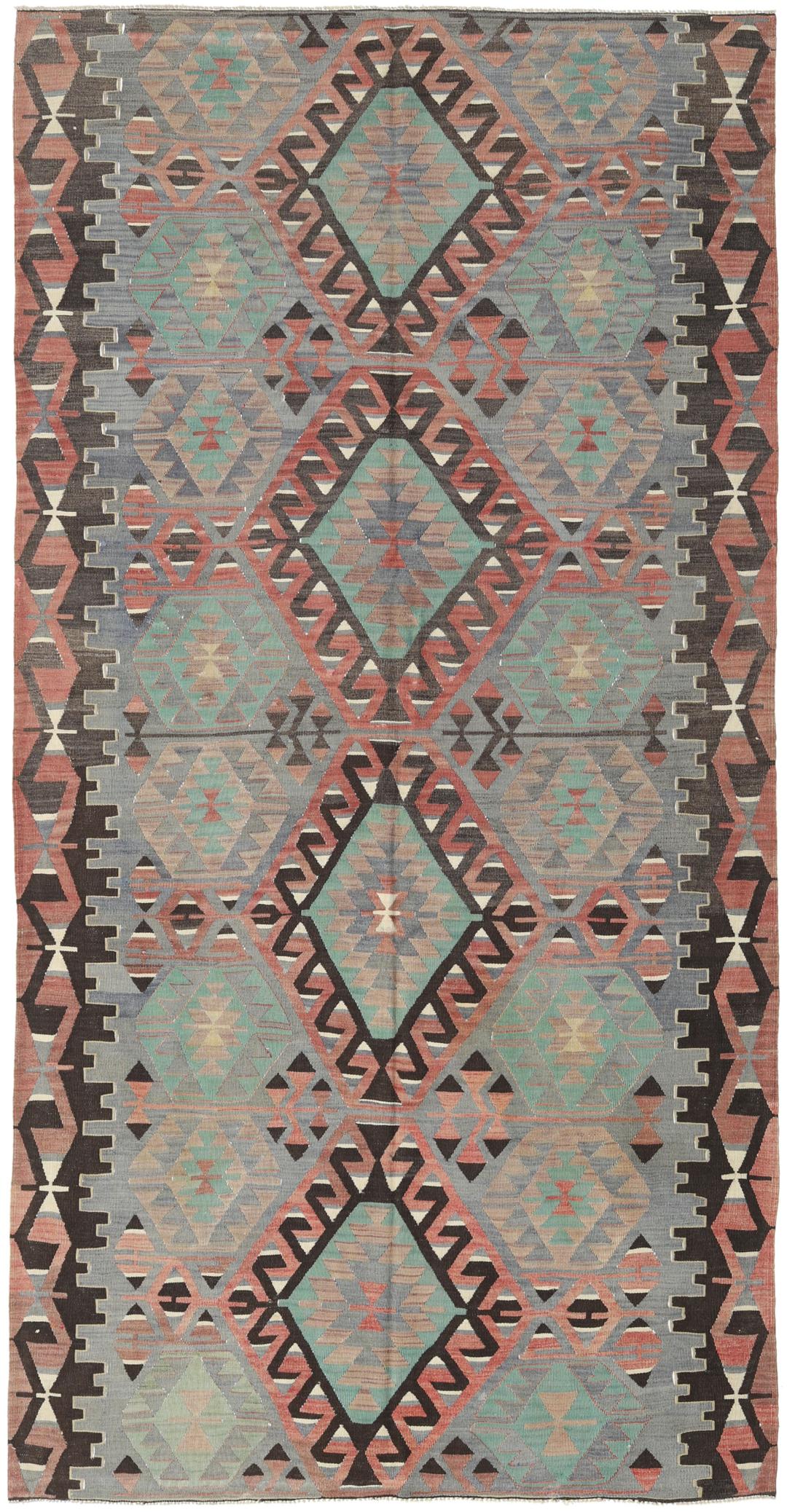
Signature design elements of Turkish Kilims often include large, bold diamonds and stylised medallions, frequently bordered by intricate, repeat patterns. These motifs are not merely decorative but often hold symbolic meaning related to protection, fertility, or the weaver's own life experiences. The use of vibrant, natural dyes has historically defined the look of these pieces, resulting in colours that mellow beautifully as they age.
Today, vintage Kilims are highly sought after by collectors and interior enthusiasts alike. Owning a piece like this is a way to preserve a fading art form and connect with the history of nomadic craftsmanship. These rugs are valued not just for their aesthetic appeal, but for the tangible evidence they provide of a life lived in rhythm with ancient traditions and enduring skill.