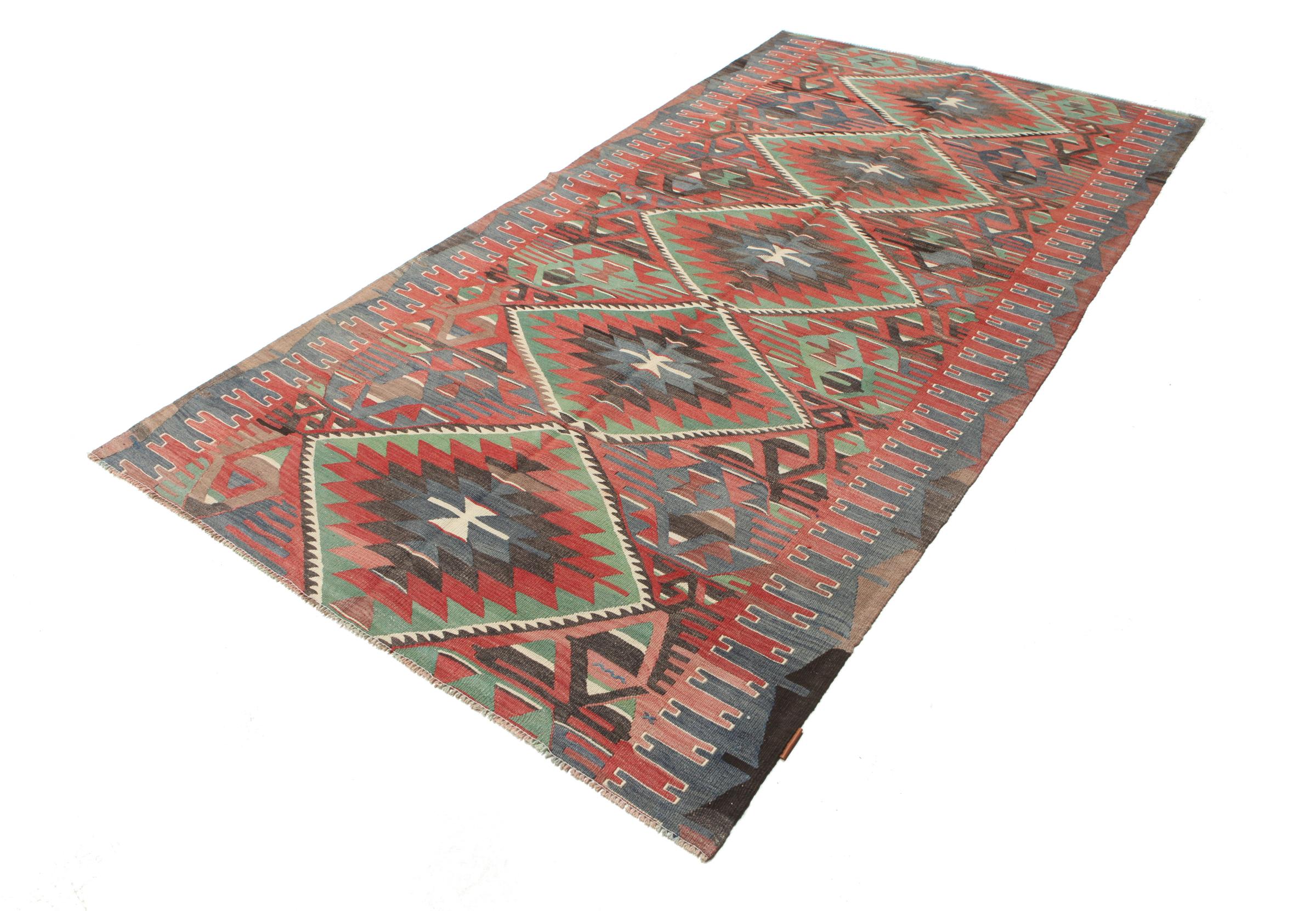
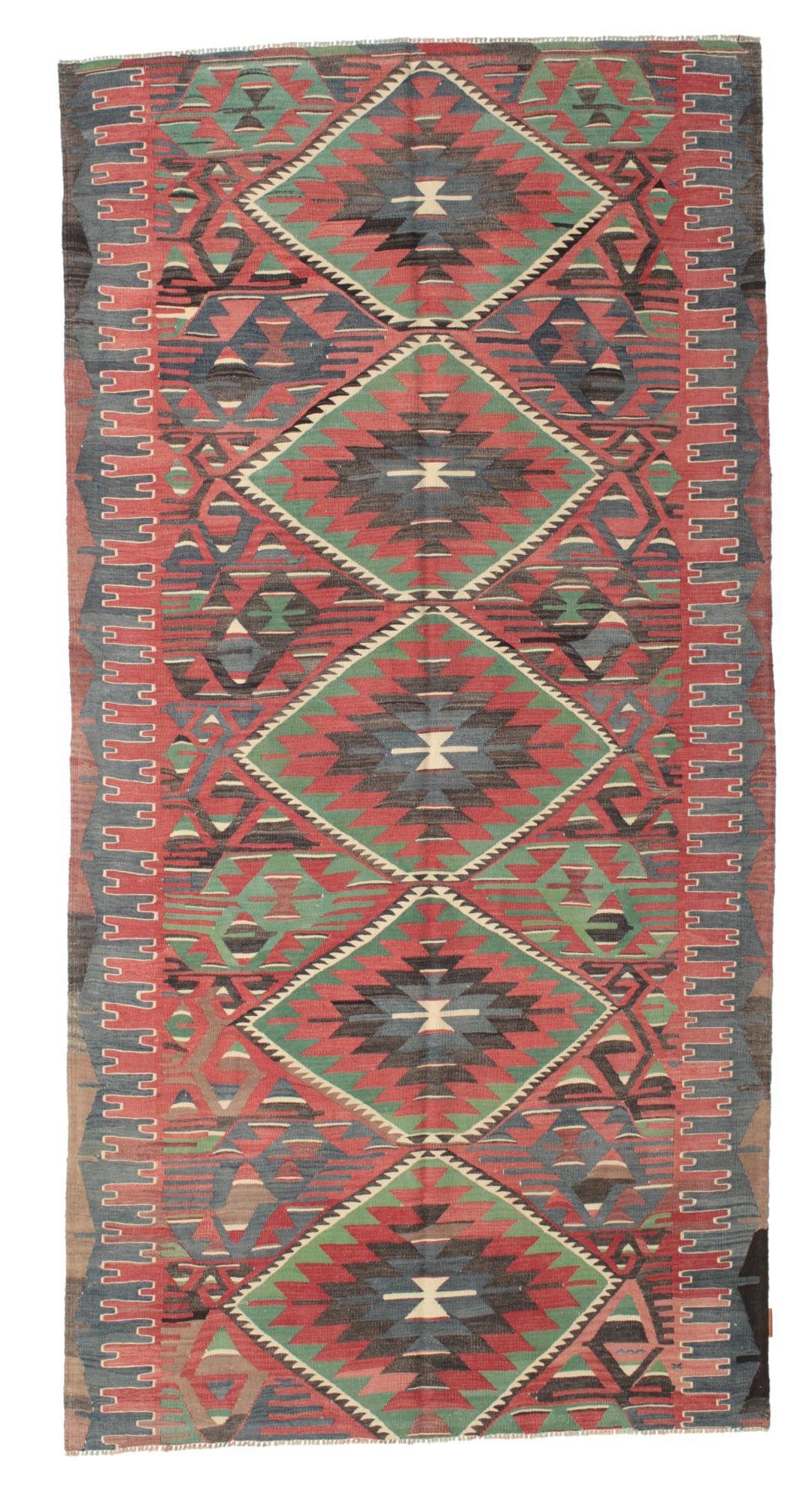
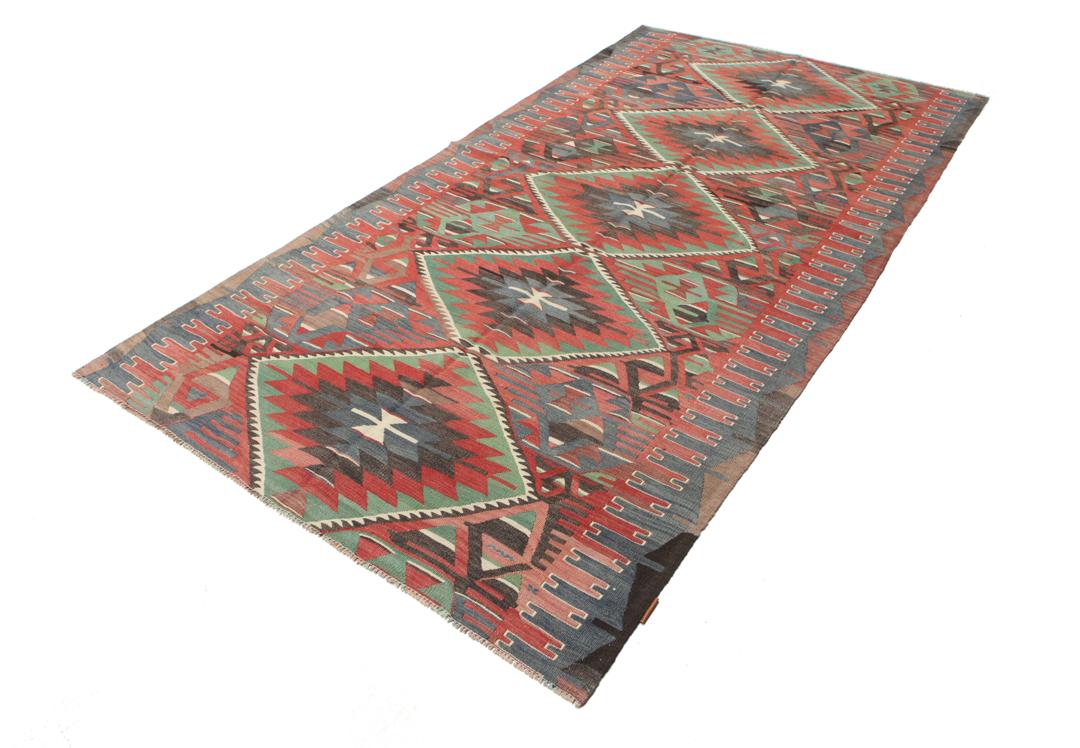
Kilim rugs are a cornerstone of Middle Eastern textile history, with their roots deeply embedded in the nomadic cultures of Turkey and the surrounding regions. Traditionally, these flat-woven pieces were crafted by tribal weavers not just as decorative items, but as essential tools for survival, used as floor coverings, tent partitions, and storage sacks to protect families from the harsh elements.
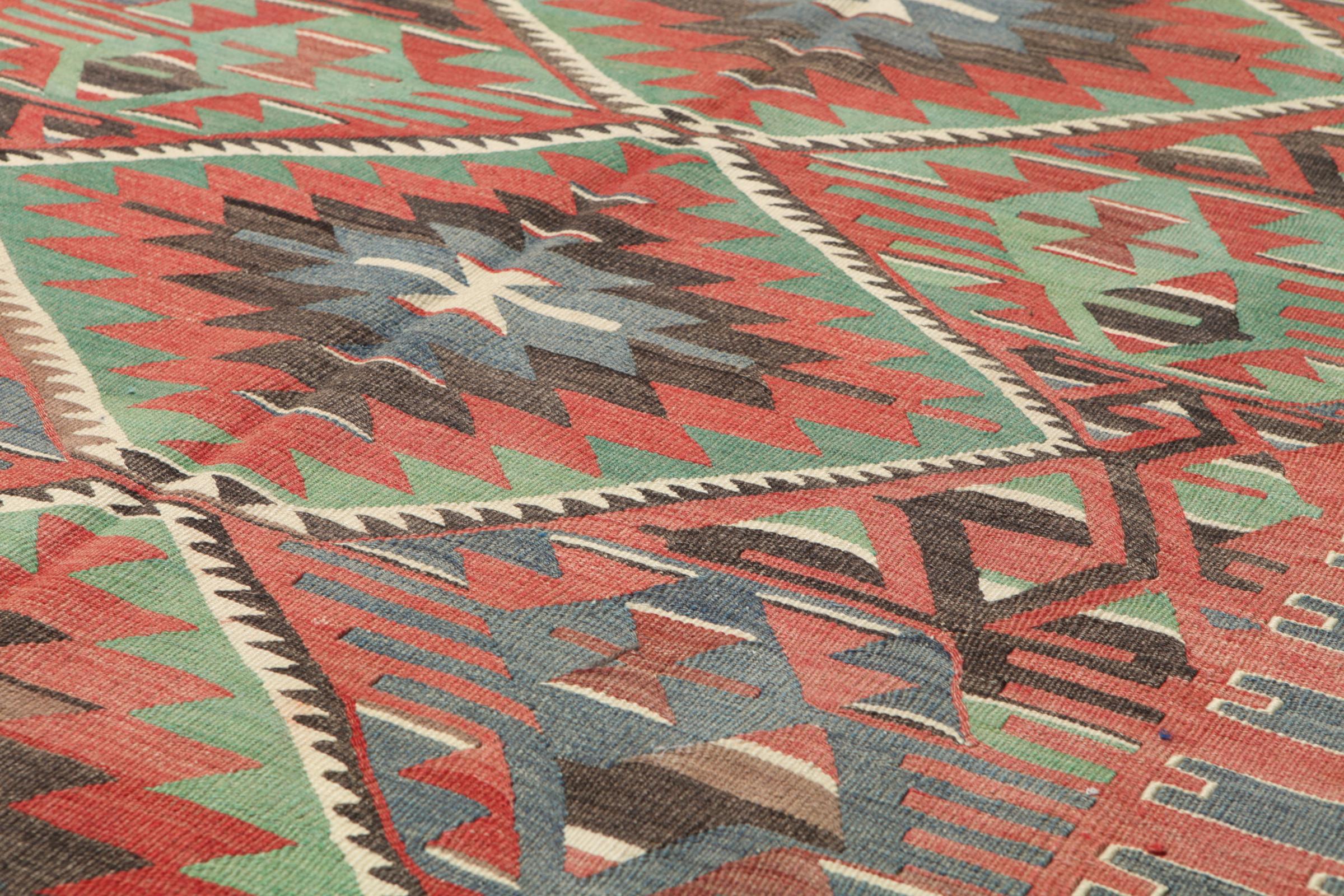
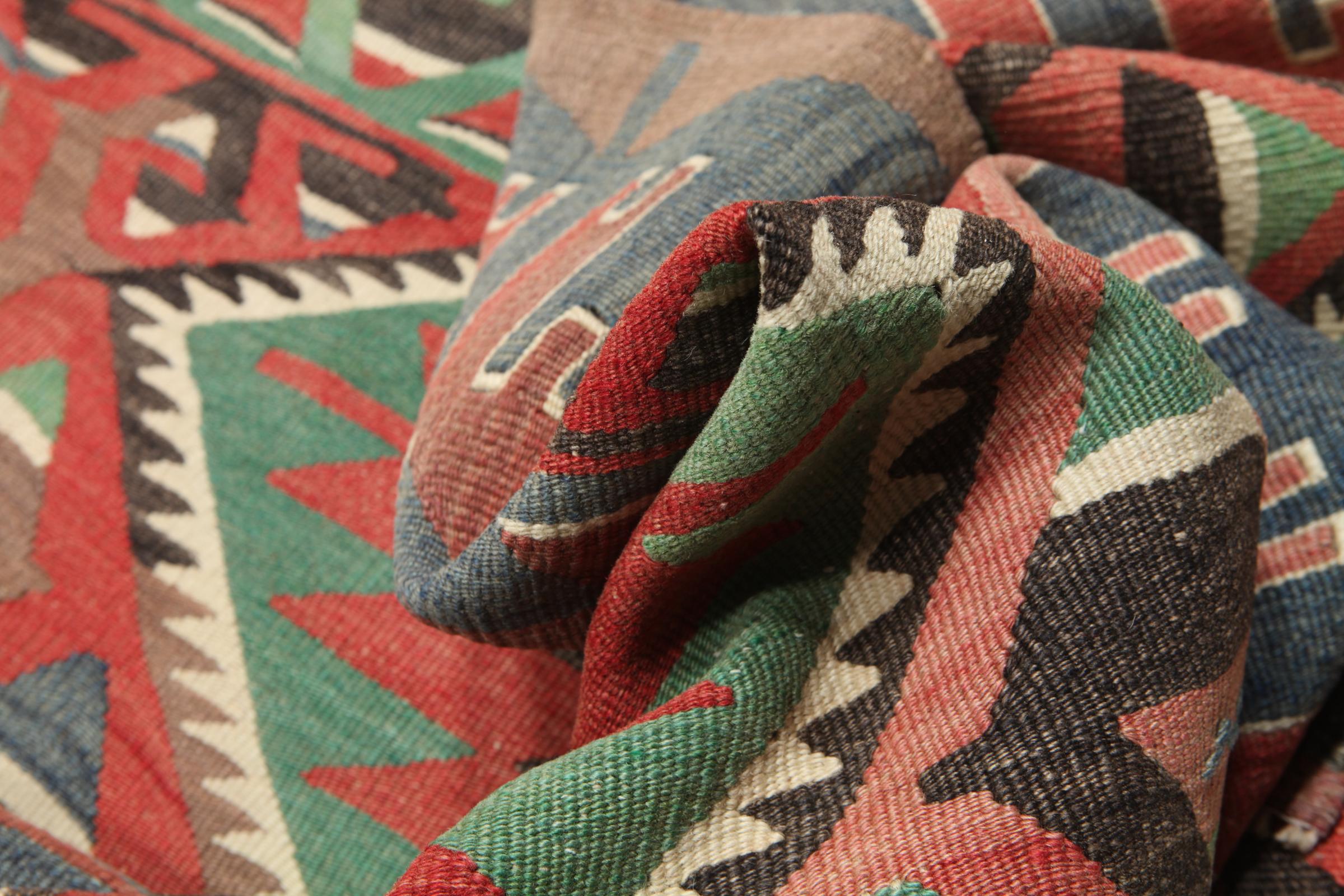
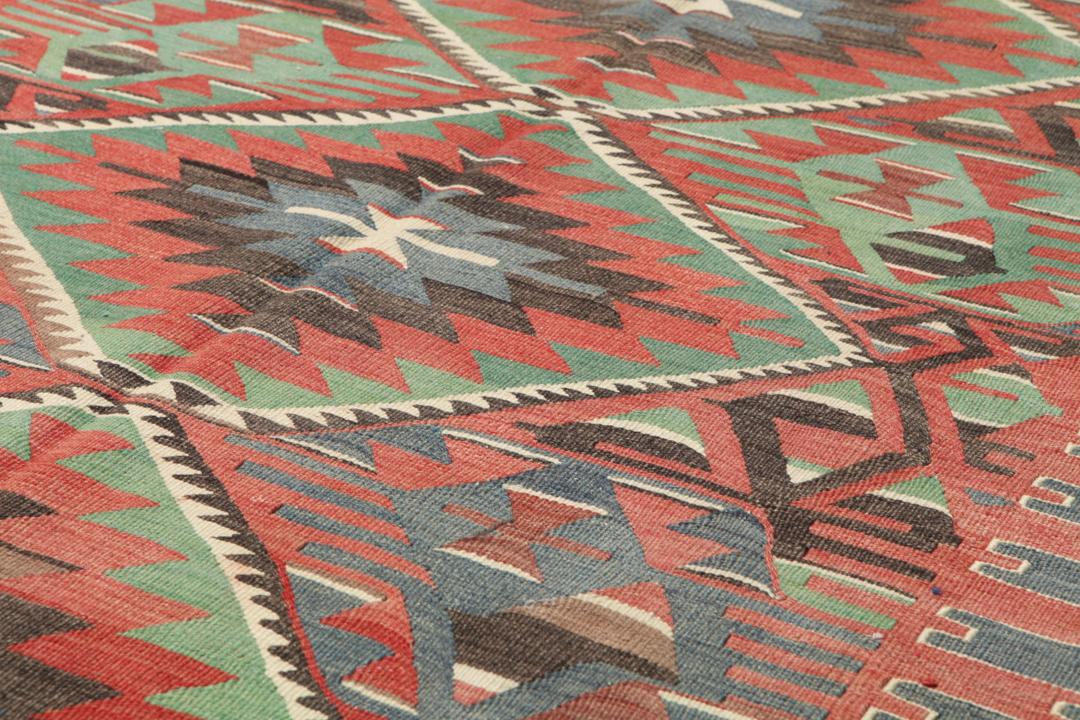
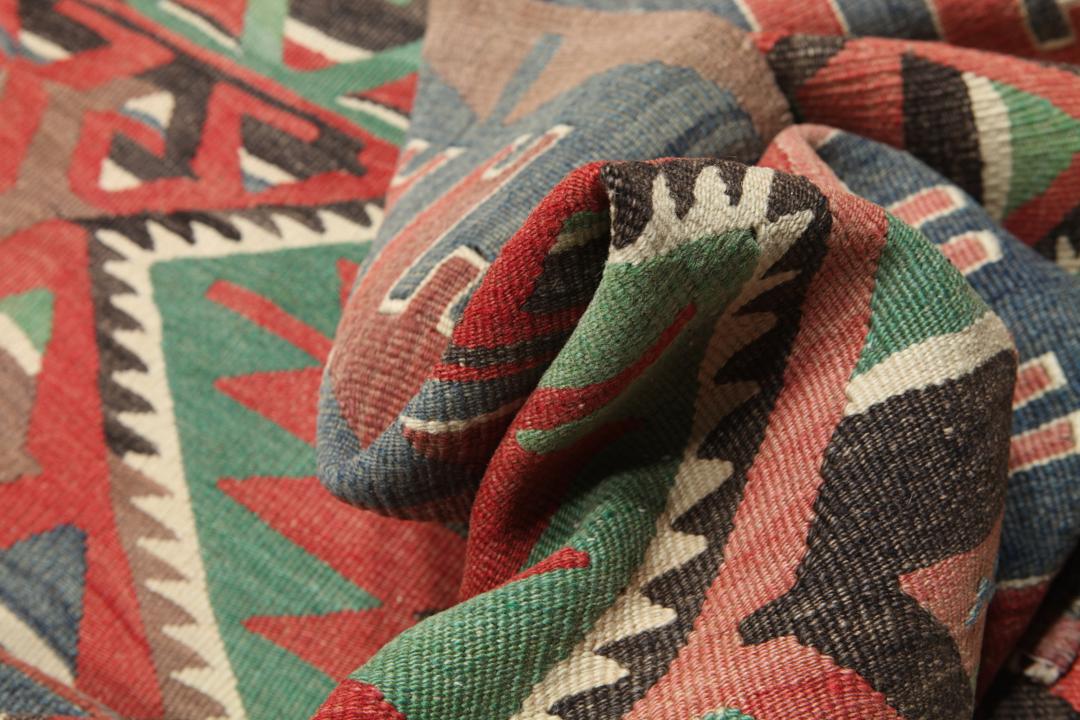
The term kilim refers specifically to the flat-weaving technique where the warp and weft are interlaced to create a smooth, pileless surface. This method is distinct from knotted rugs, as the design is created by the interweaving of different coloured wefts. This technical approach results in a thin, versatile fabric that is exceptionally durable and light, qualities that made them perfect for the migratory lifestyle of their creators.
Signature design elements in Turkish kilims often revolve around geometric motifs, with diamonds, triangles, and stylized floral shapes appearing frequently. These patterns are not merely aesthetic; they often carry symbolic meanings related to protection, fertility, or family history. The bold, vibrant colours are traditionally derived from natural dyes, which mellow beautifully over time, giving vintage pieces like this one their unique, storied appearance.
Today, these rugs are highly valued by collectors and interior enthusiasts alike for their cultural significance and the raw skill they represent. Owning a vintage kilim is an opportunity to connect with a centuries-old tradition of storytelling through textiles. Each rug is a physical record of the weaver's environment and creative expression, offering a sense of heritage and authentic craft that adds genuine soul to a modern home.