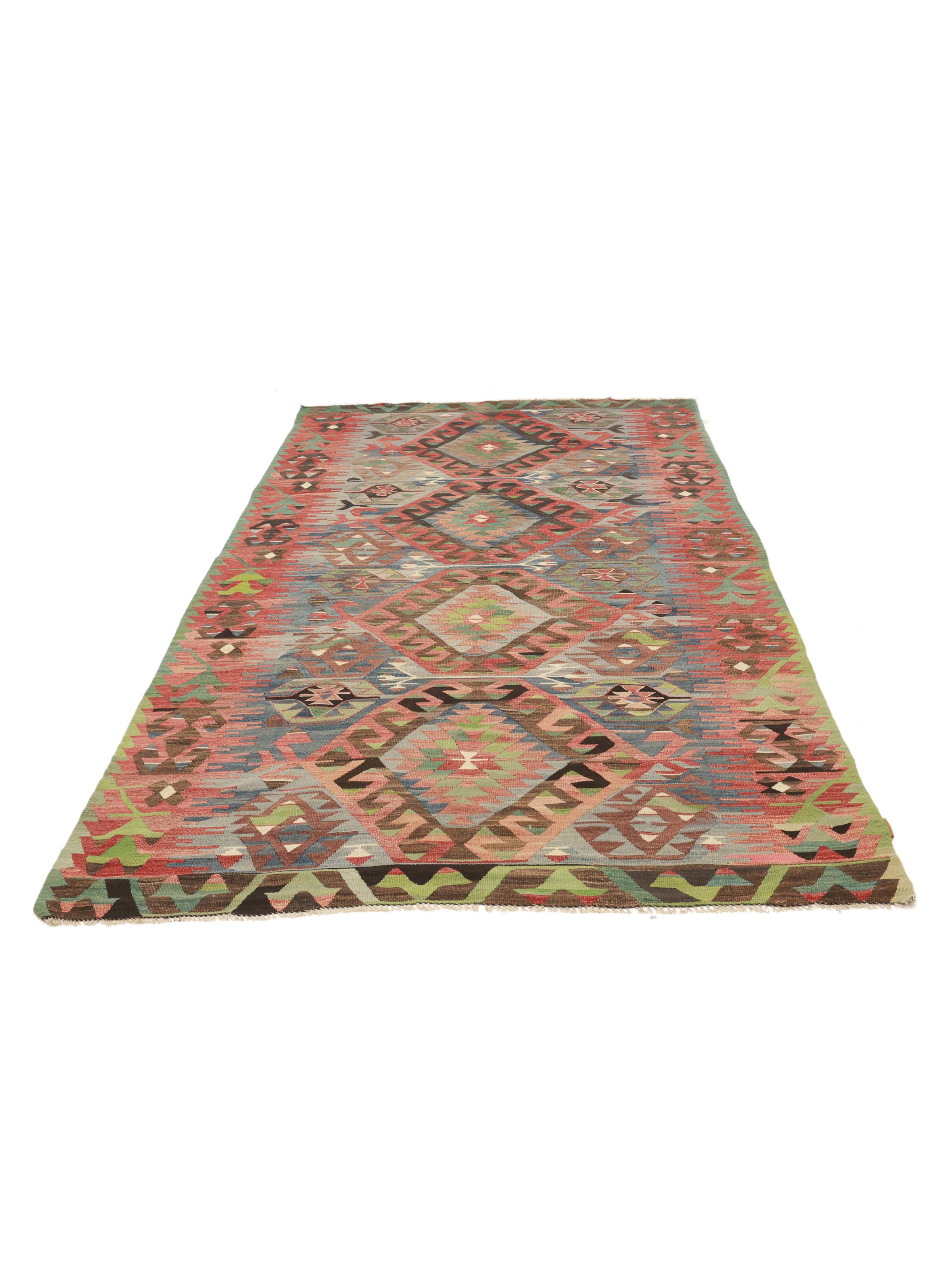
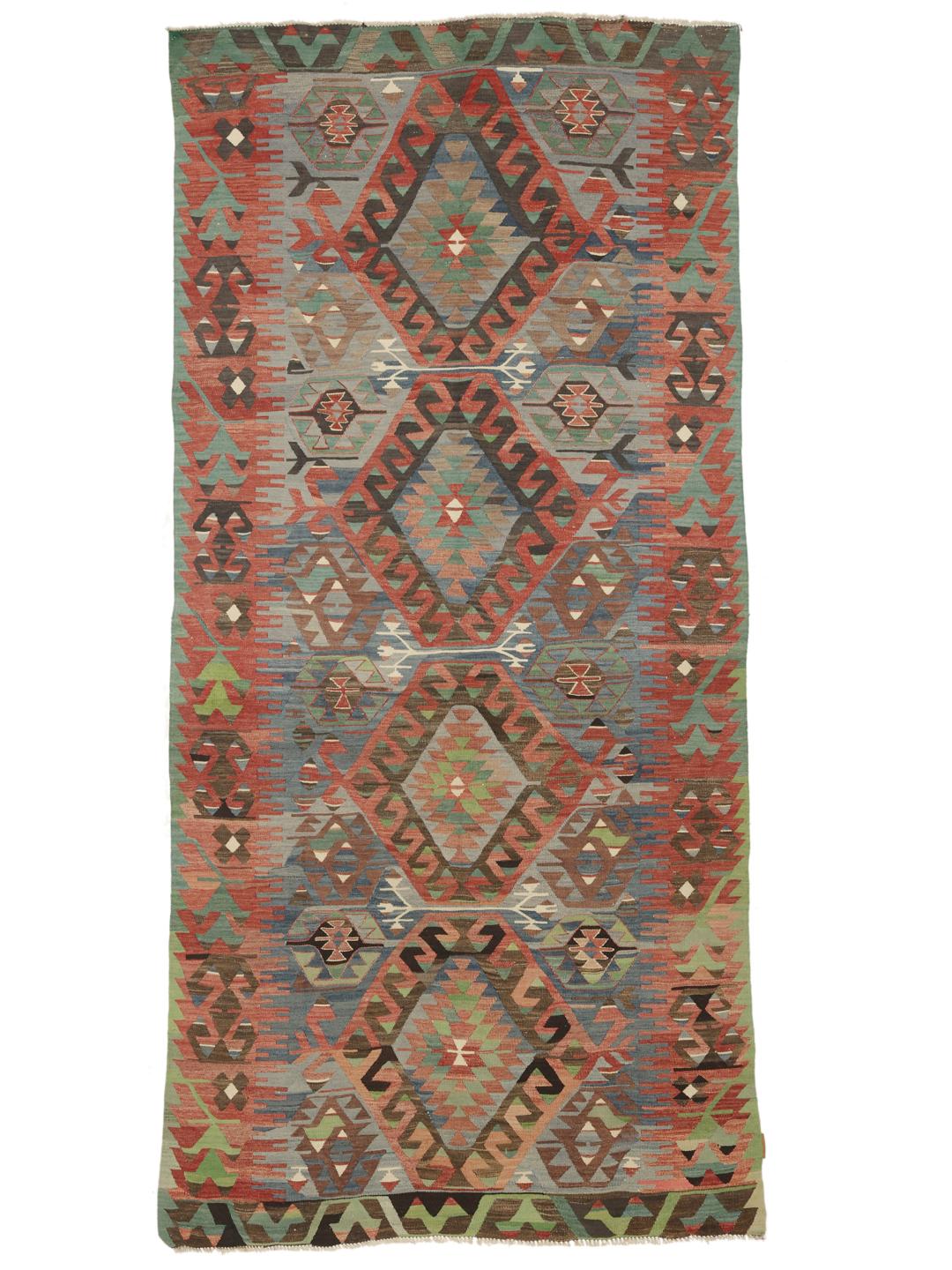
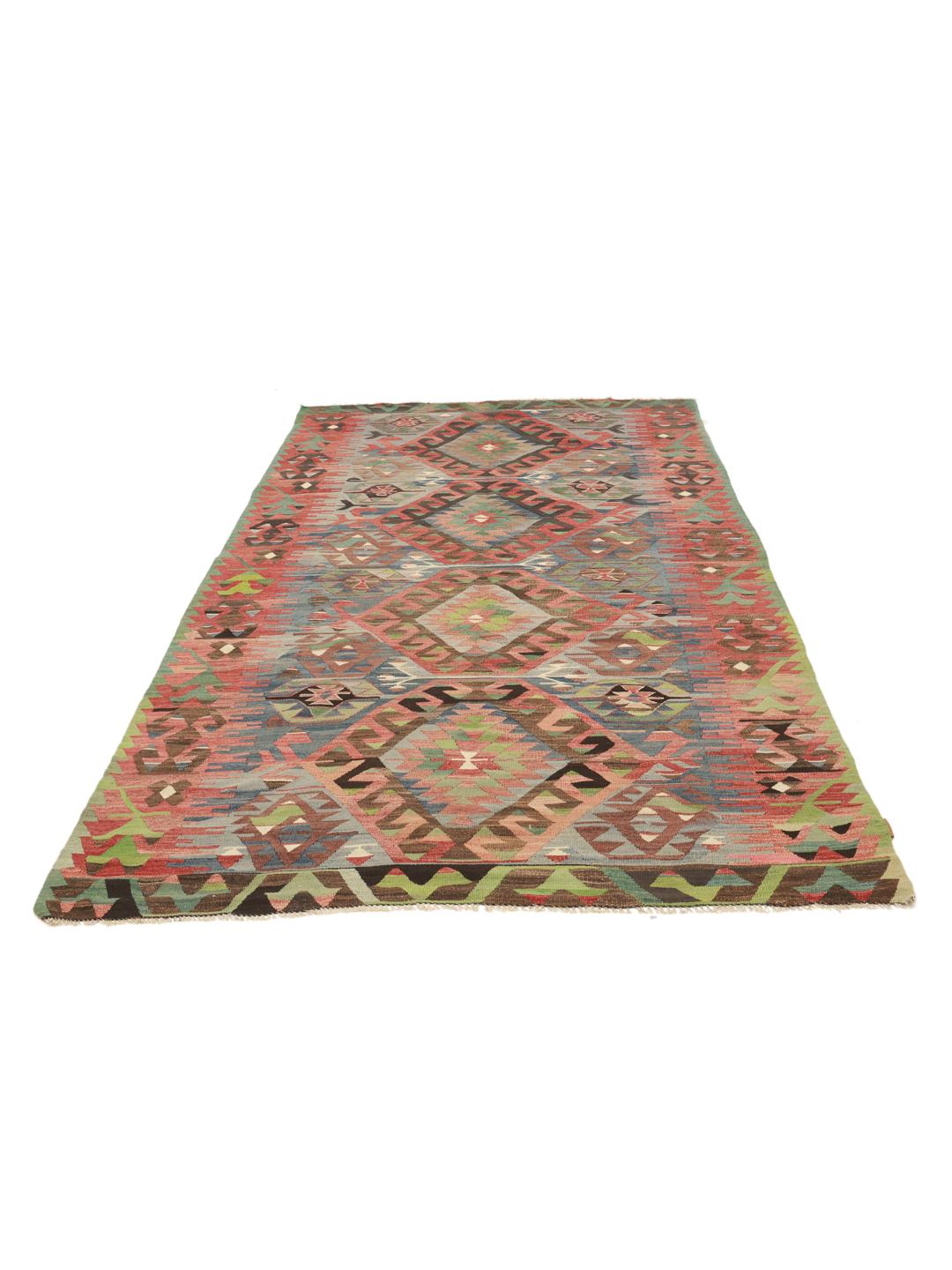
Kilim rugs are deeply rooted in the nomadic traditions of the Middle East and Central Asia, with Turkey serving as one of the most significant centres for this art form. For centuries, these rugs were woven by tribal communities as functional items—blankets, floor coverings, and storage sacks—that were essential to daily life while travelling across the landscape.
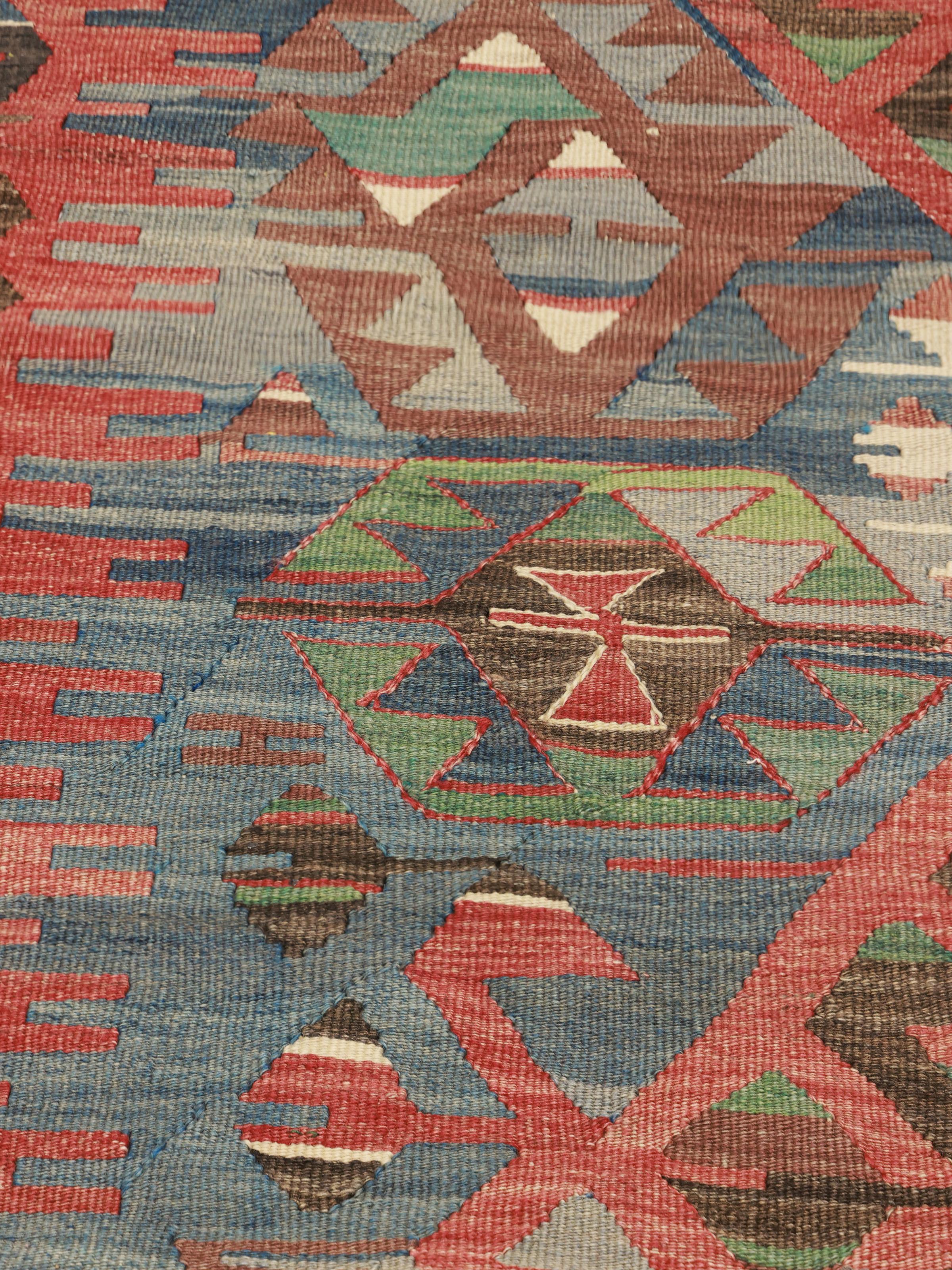
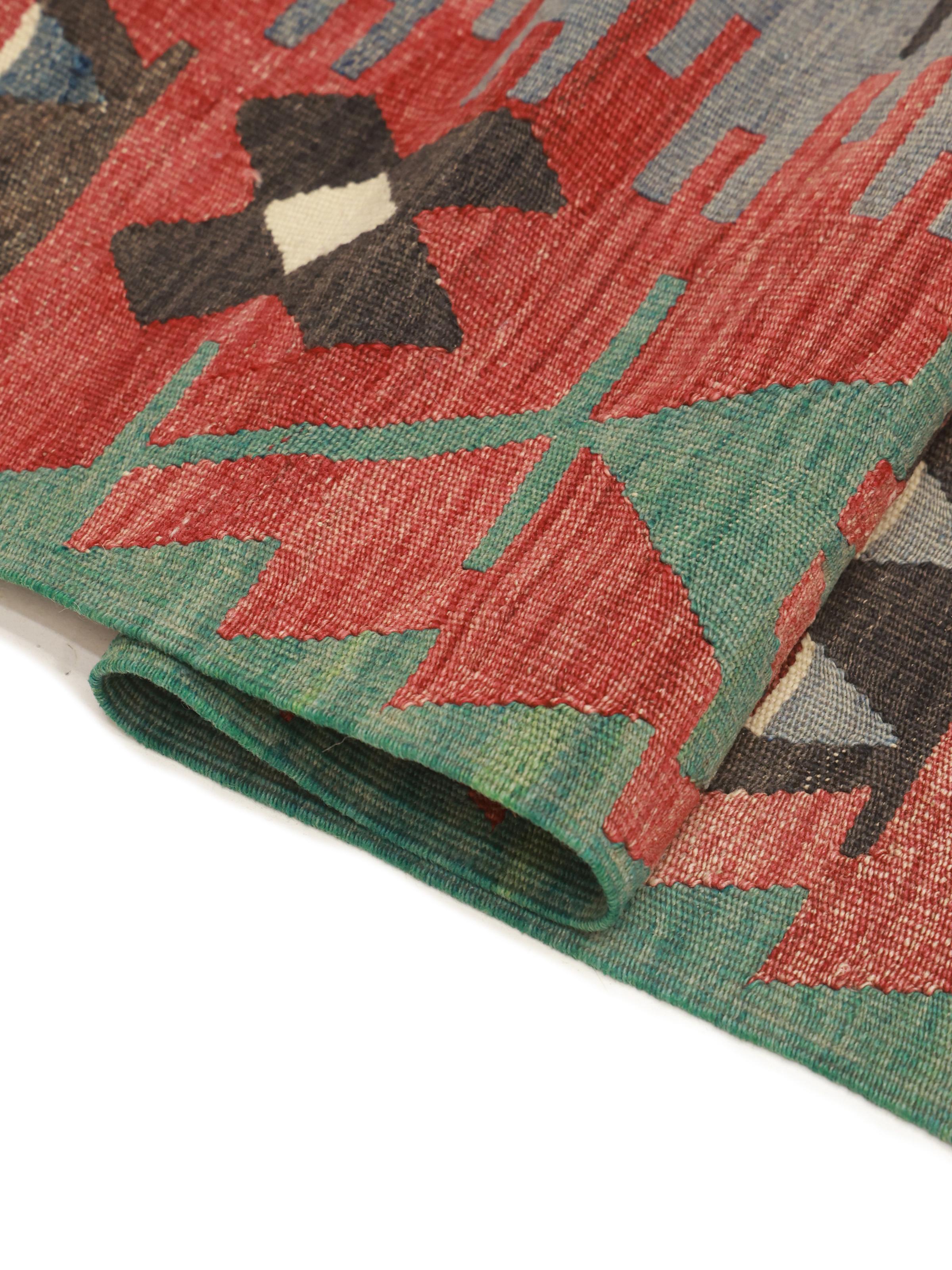
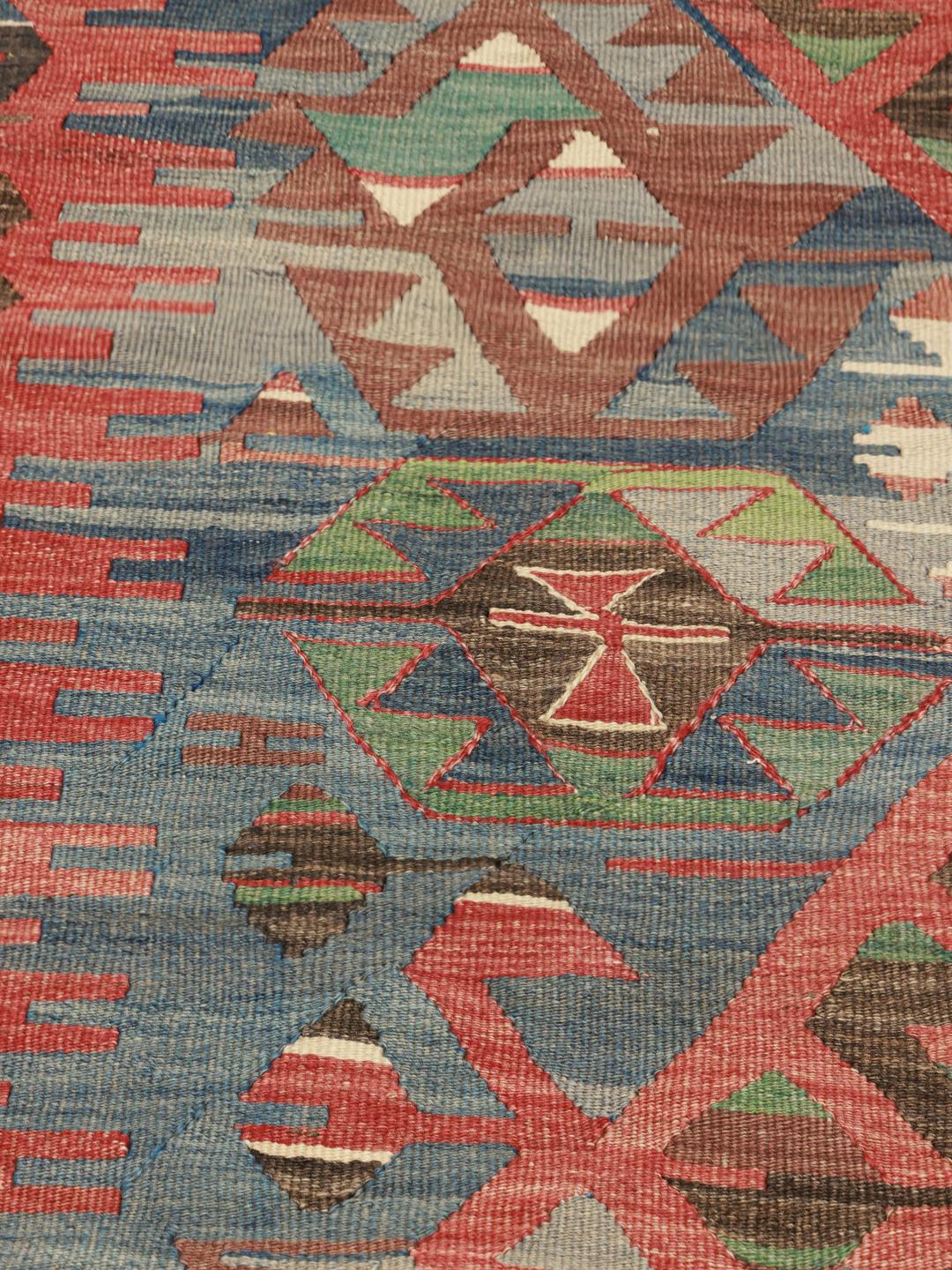
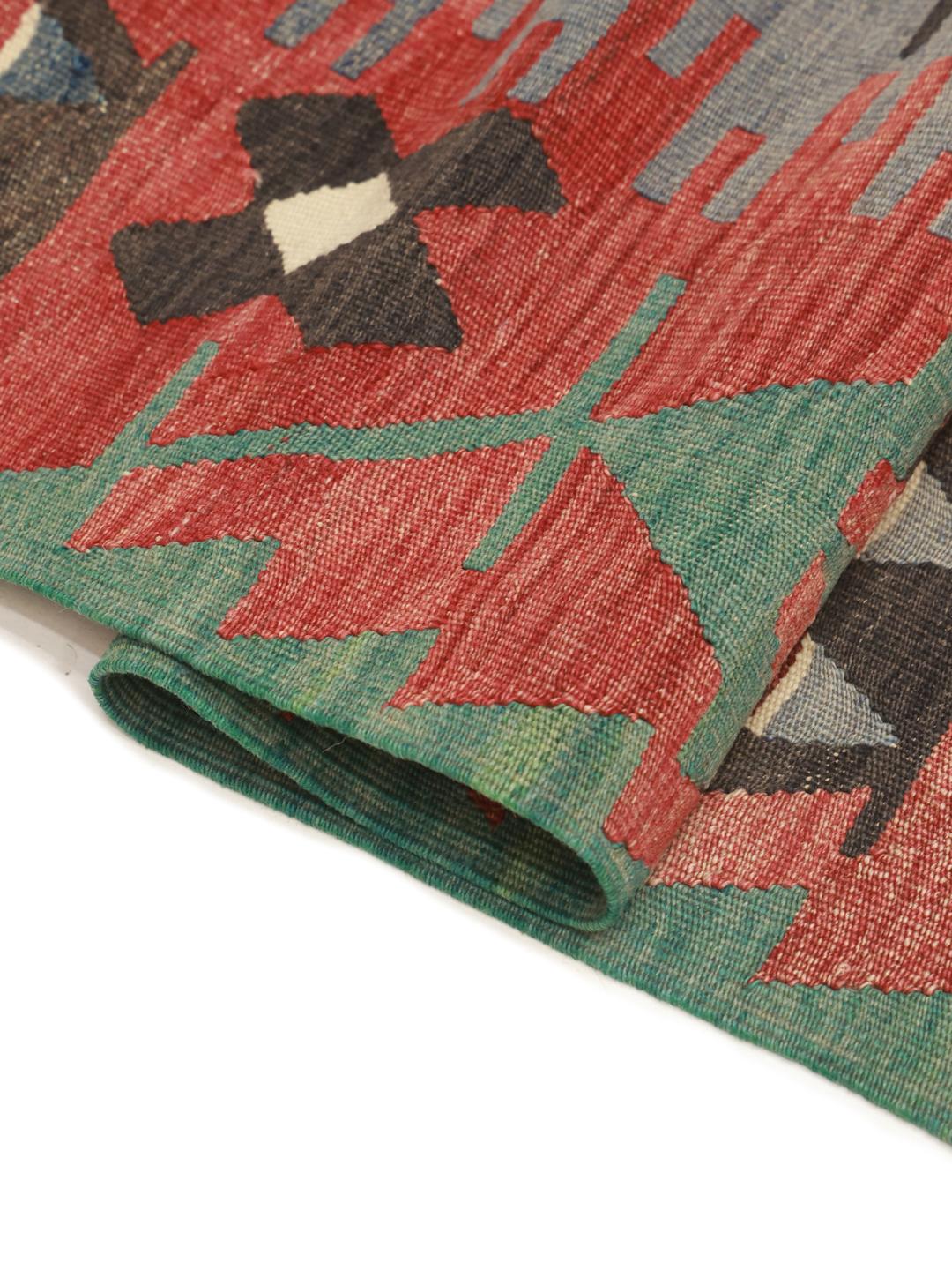
The term 'Kilim' refers specifically to the flat-weaving technique where the weft threads are pulled tightly over the warp threads to hide them completely, creating a smooth, durable surface. This method does not involve knots; instead, the pattern is formed by the colour changes in the weft, which requires the weaver to have an impeccable grasp of geometric symmetry and tension to ensure the final piece is both flat and strong.
The visual language of Turkish Kilims is defined by bold geometric motifs and symbolic shapes. You will often see medallions and stylized tribal patterns that serve as a visual shorthand for the weaver’s environment and beliefs, often representing protection, fertility, or family history. The use of natural dyes historically meant that each rug possessed a unique vibrancy that evolved and mellowed as the rug aged, giving it the characteristic look that collectors prize today.
Collecting a vintage Kilim is more than just purchasing a floor covering; it is an act of preserving a cultural narrative. These rugs are valued for their authenticity and the human skill embedded in every thread. By bringing this piece into your home, you are continuing a legacy of craftsmanship that has survived for generations, bridging the gap between historical nomadic utility and contemporary interior design.