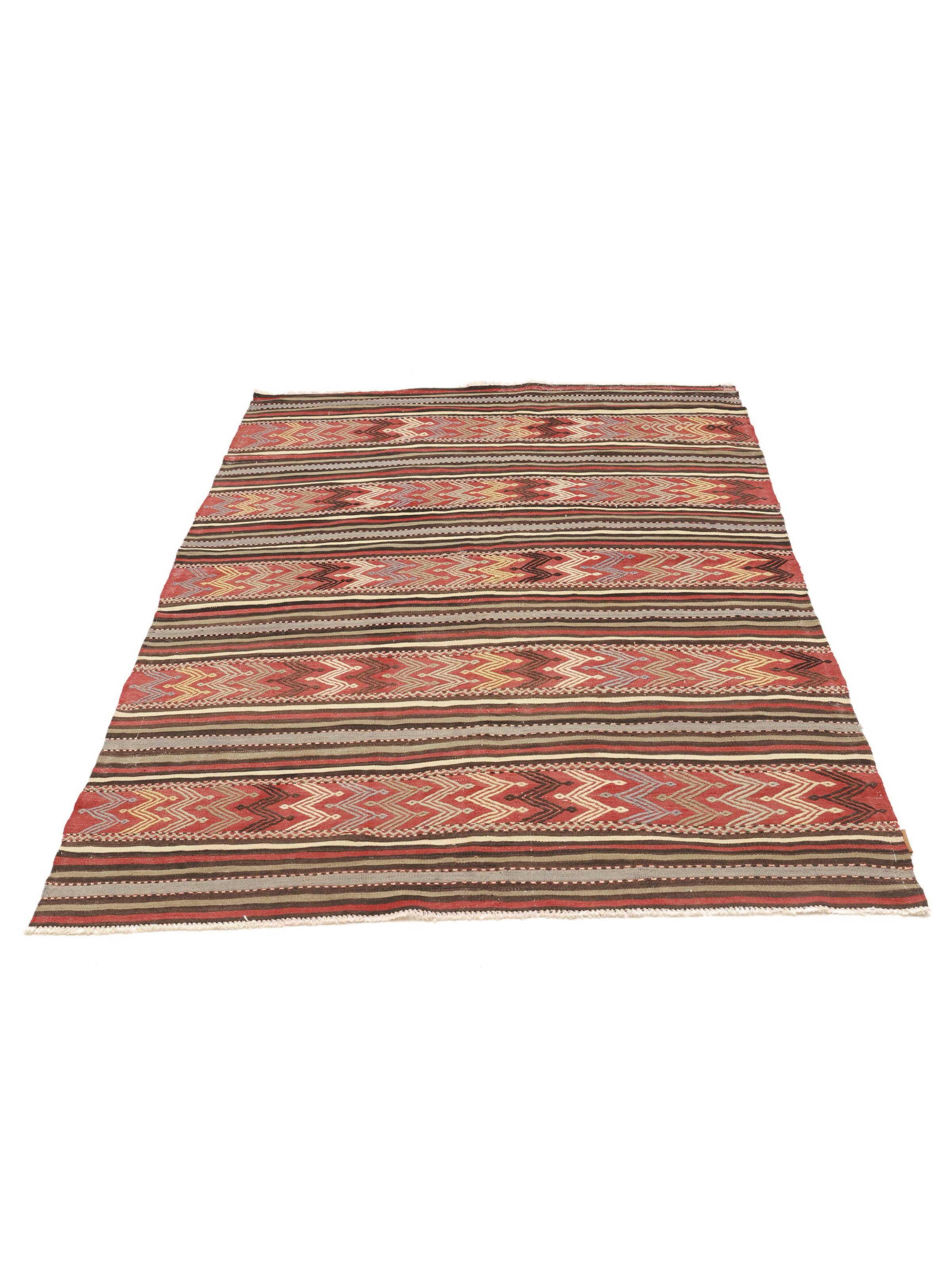
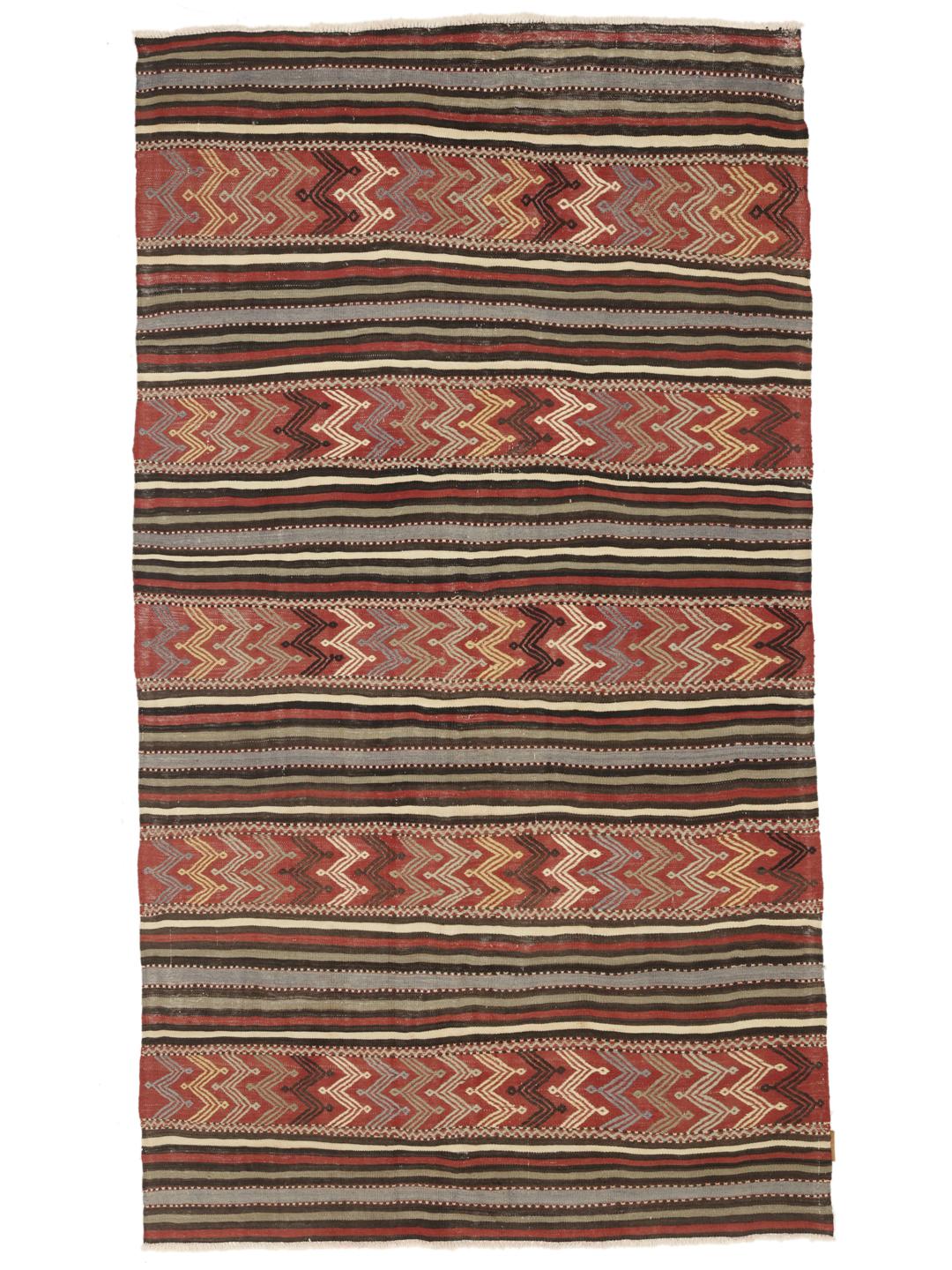
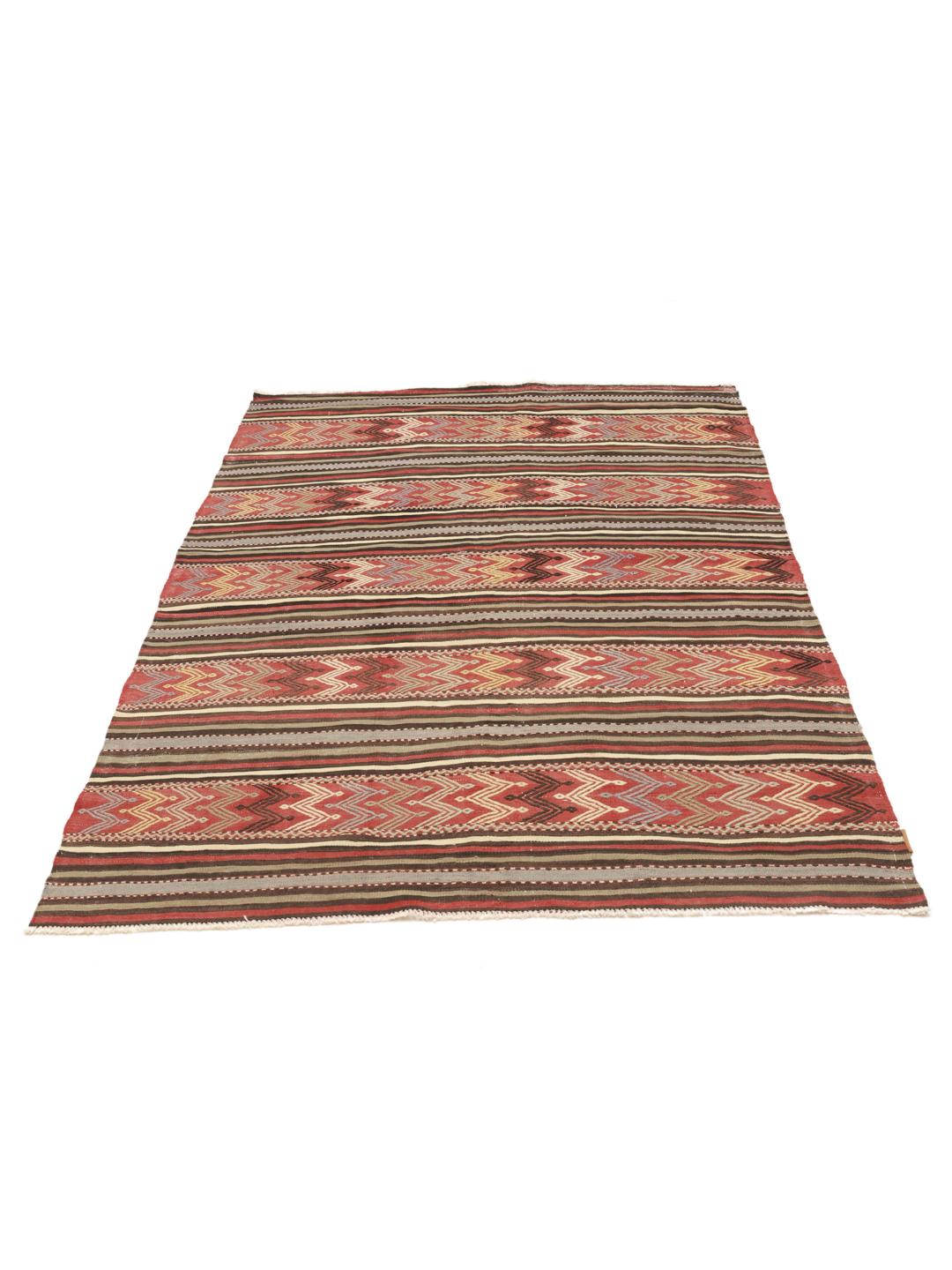
Kilims are a cornerstone of Turkish textile culture, with a history that stretches back millennia. These flat-woven rugs were traditionally crafted by nomadic and semi-nomadic tribes to serve as functional items for their homes, often acting as floor coverings, blankets, or even storage sacks. The techniques used to create them have been preserved through generations, with each region of Turkey developing its own distinct vocabulary of colours and motifs.
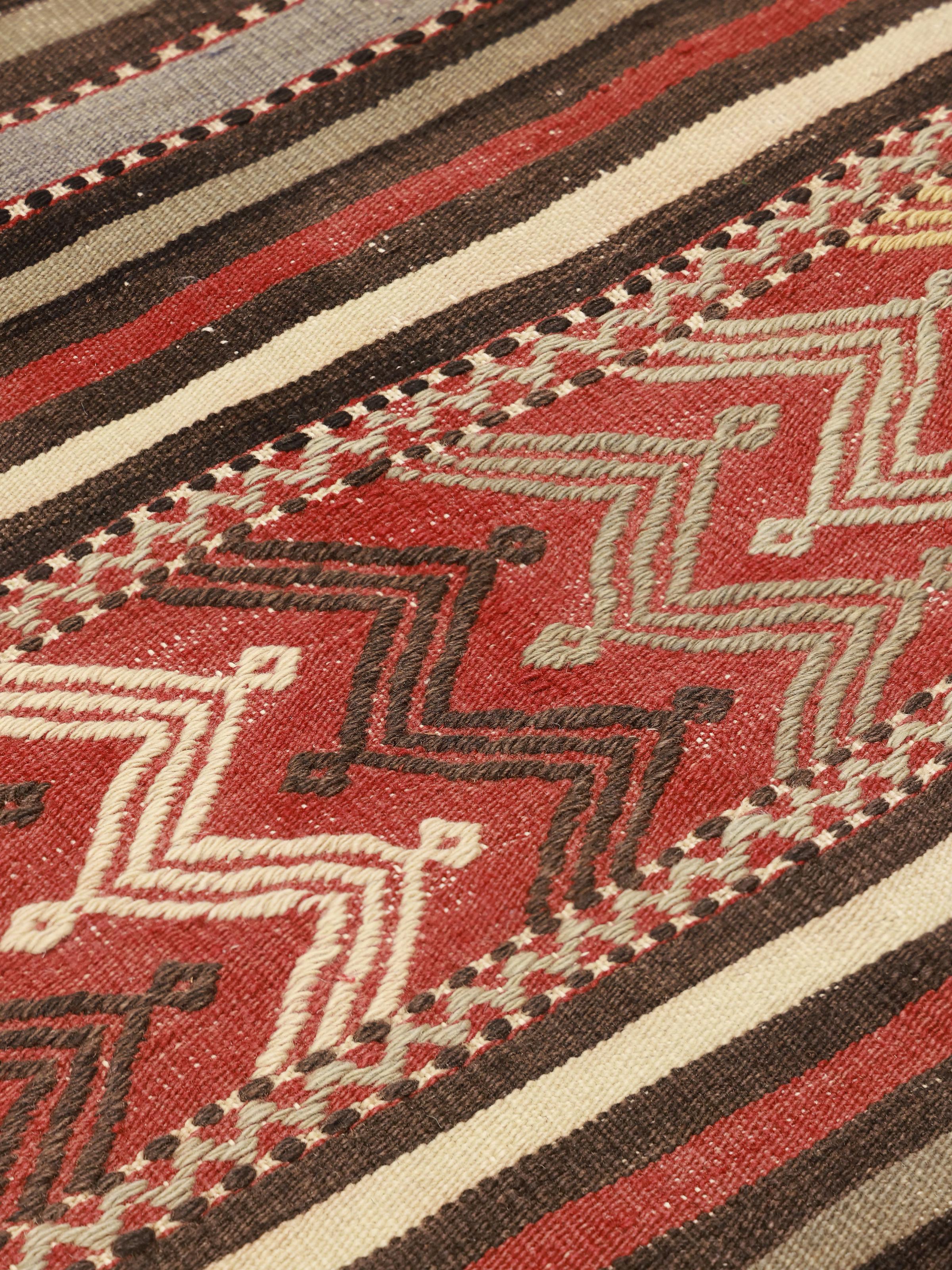
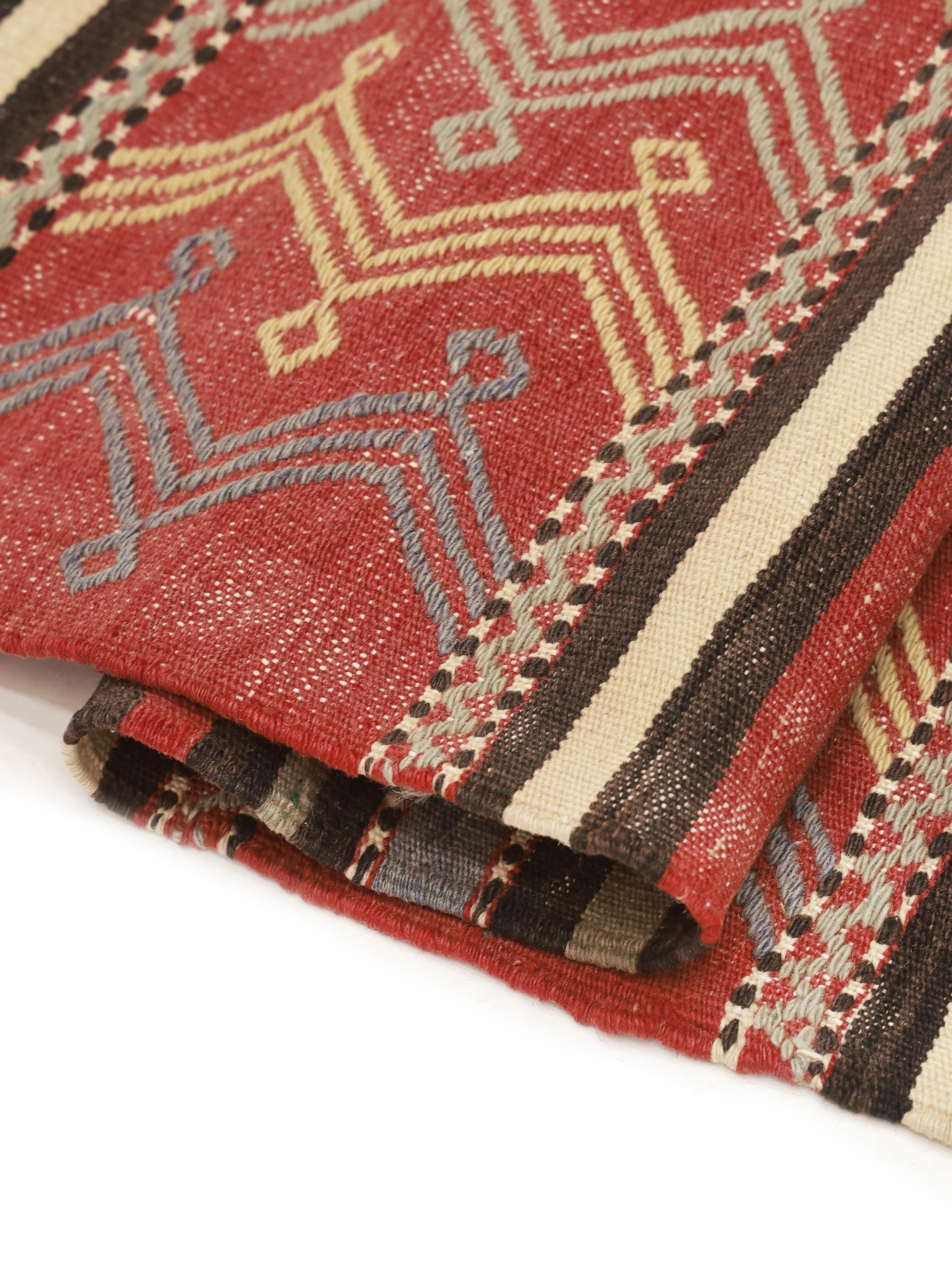
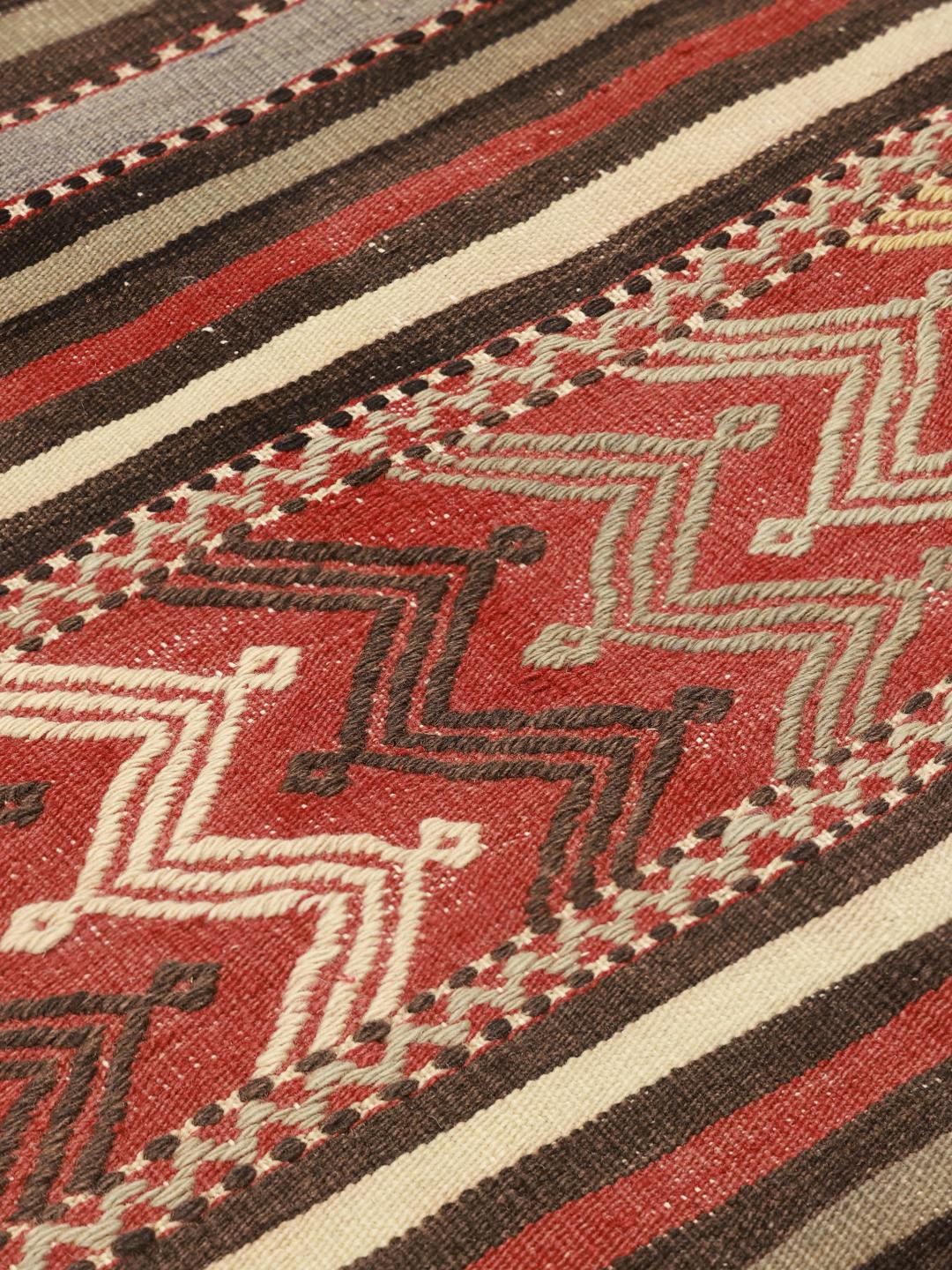
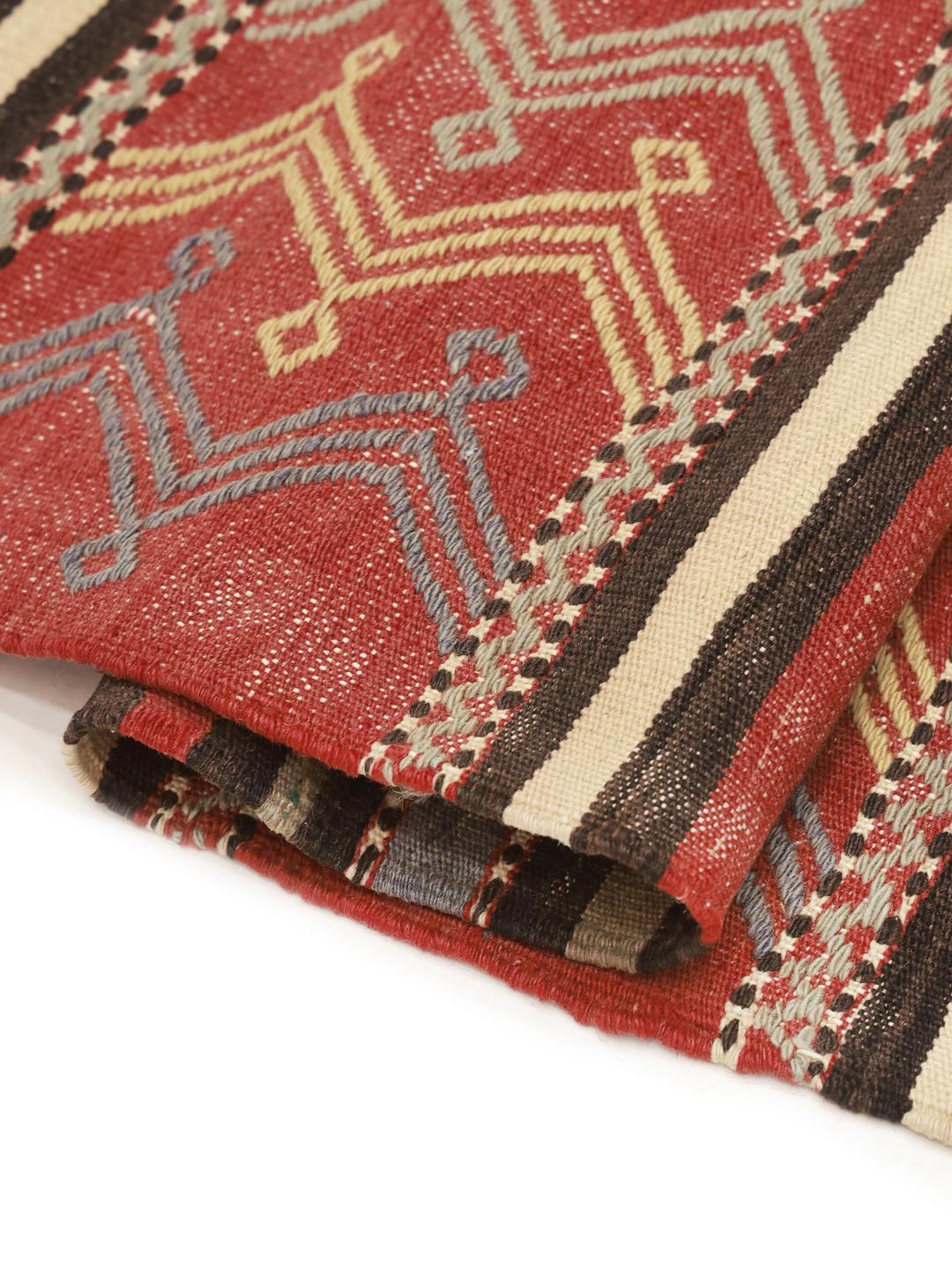
The term 'kilim' specifically refers to the slit-weave technique, where the weaver creates a small gap or 'slit' in the fabric when changing colours. This technique allows for the creation of sharp, geometric designs that define the look of these textiles. Because there is no pile to hide the structure, the quality of the weave is immediately apparent, making the skill of the weaver the most critical factor in the rug's durability and aesthetic appeal.
The visual language of this kilim is rooted in traditional motifs, which often serve as symbols of protection, fertility, or family identity. The repeating patterns and borders are not merely decorative; they are a form of storytelling. The use of natural dyes and traditional geometric shapes creates a sense of harmony that has made these rugs highly sought after by collectors and interior designers alike.
Valuing a vintage kilim means appreciating the passage of time. As these pieces age, the wool fibres settle and the colours mellow, giving the rug a depth and character that modern recreations simply cannot match. Owning such a rug is an investment in cultural heritage, representing a connection to the artisans of the past and a commitment to preserving the art of traditional hand-weaving.