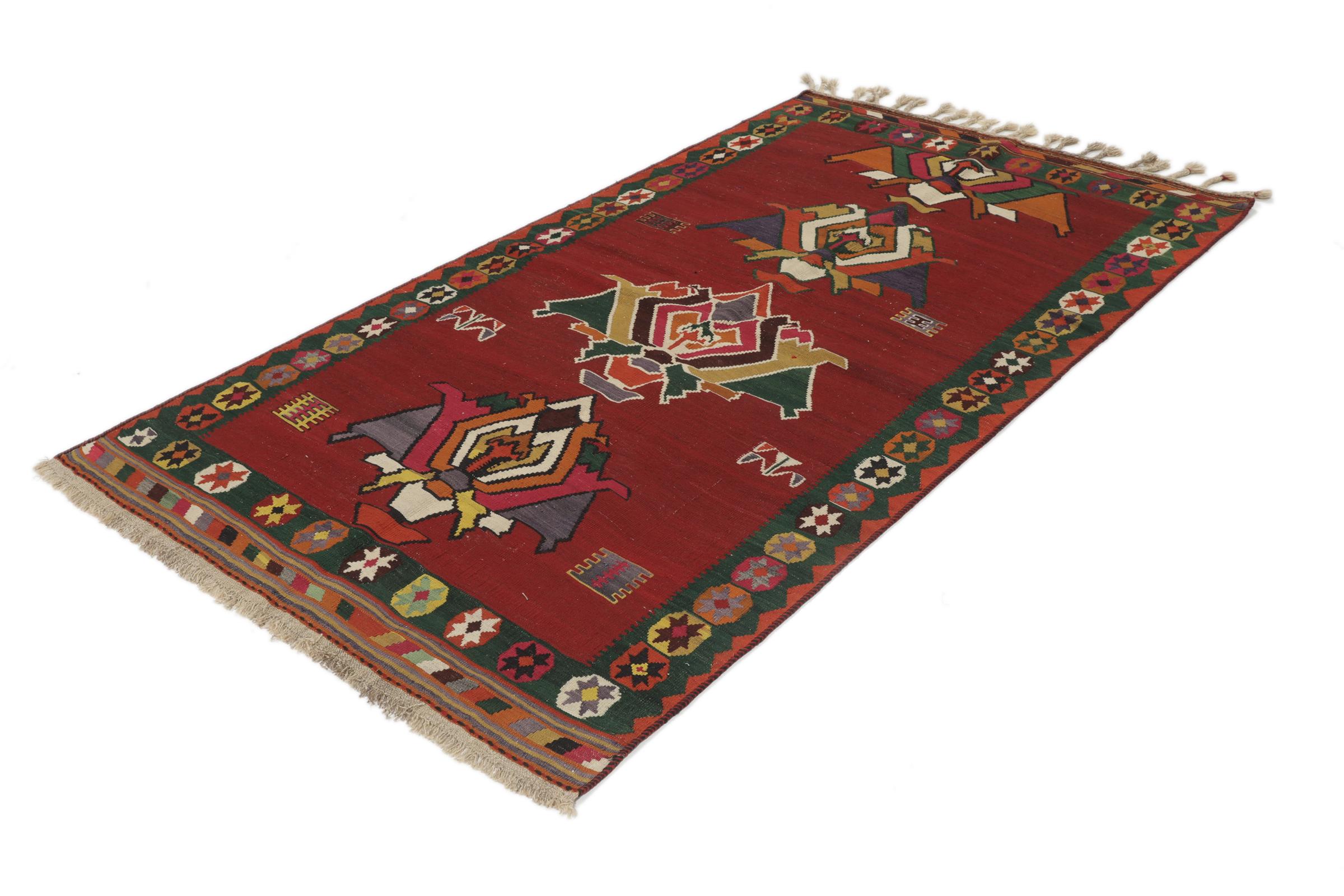
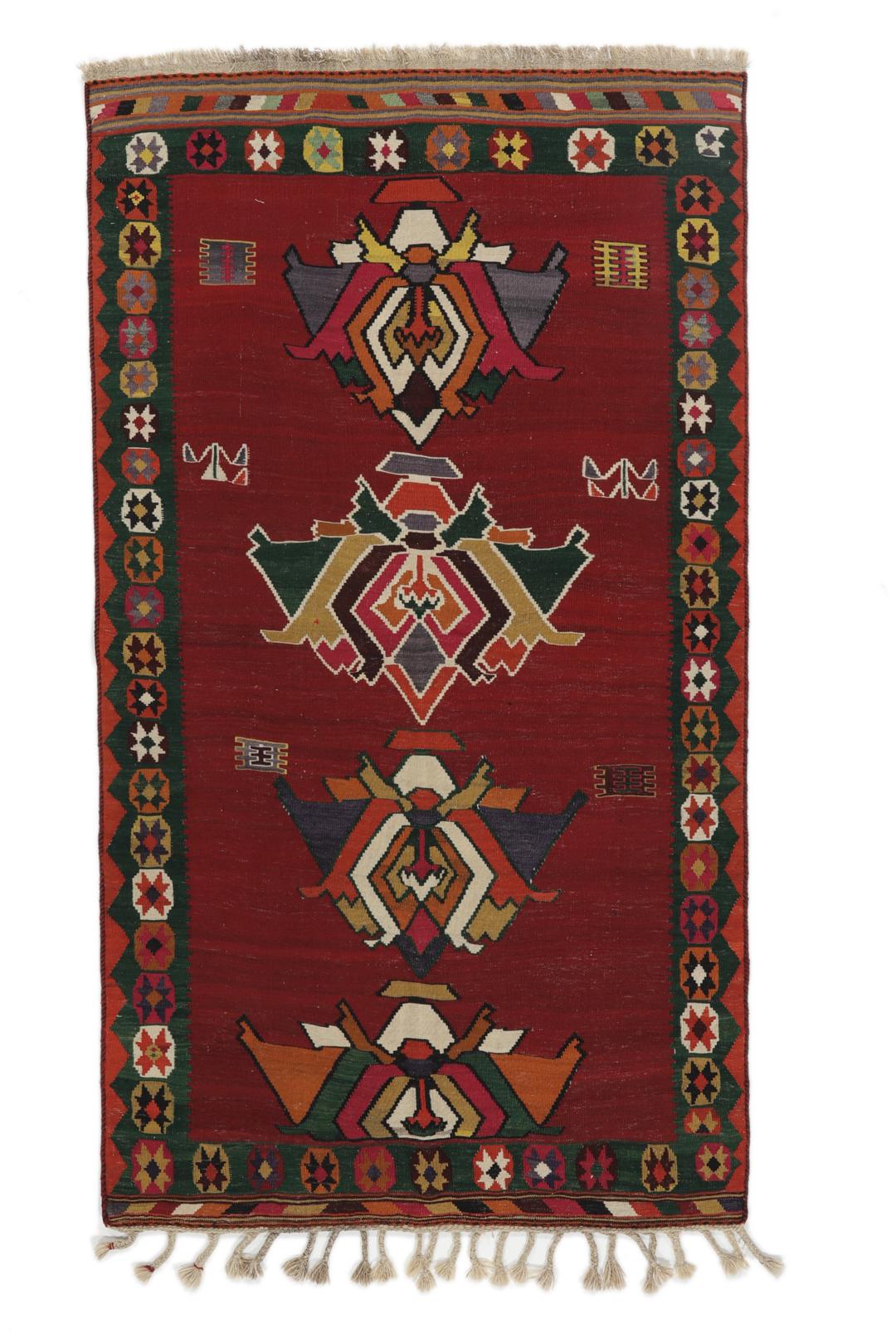
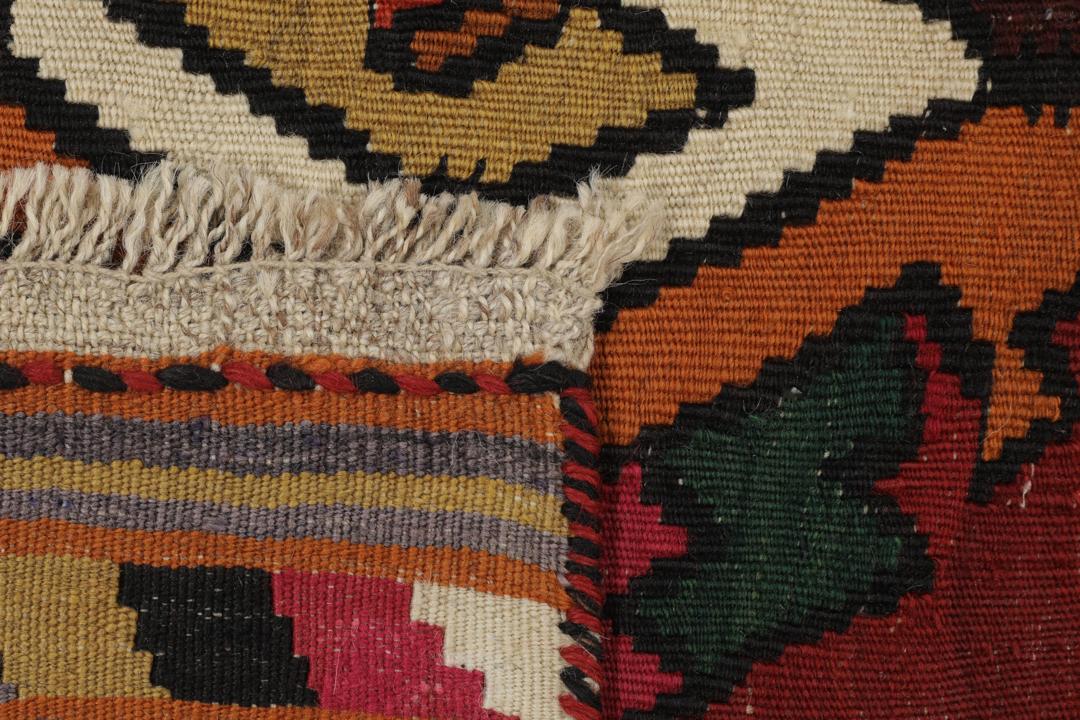
Kilim rugs are deeply rooted in the nomadic and village traditions of the Middle East. Historically, these flat-woven textiles were essential to daily life, serving as floor coverings, blankets, and storage bags for travelling communities. The tradition of kilim weaving has been passed down through generations, with each region developing its own distinct visual language and techniques that reflect the local landscape and cultural identity.
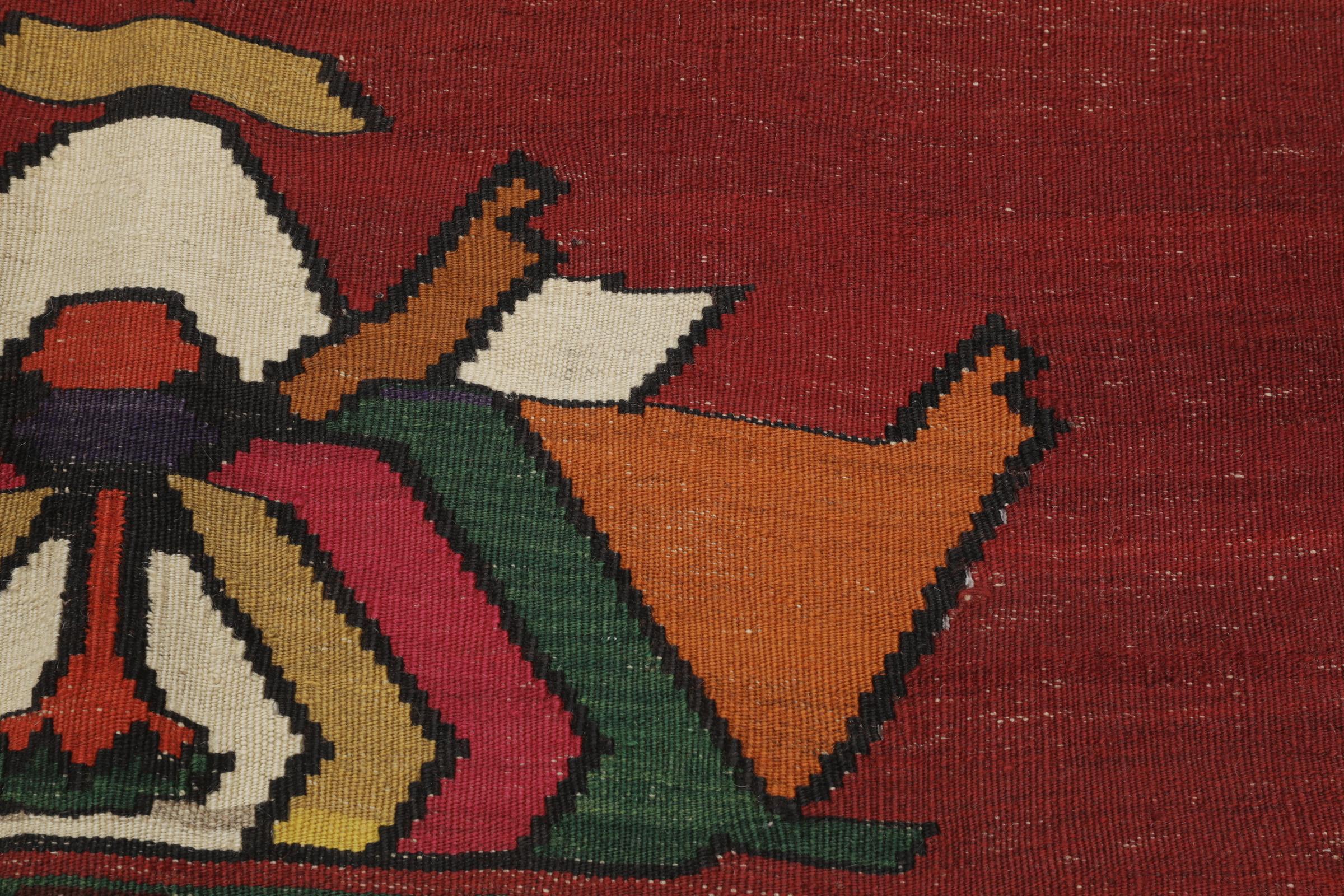
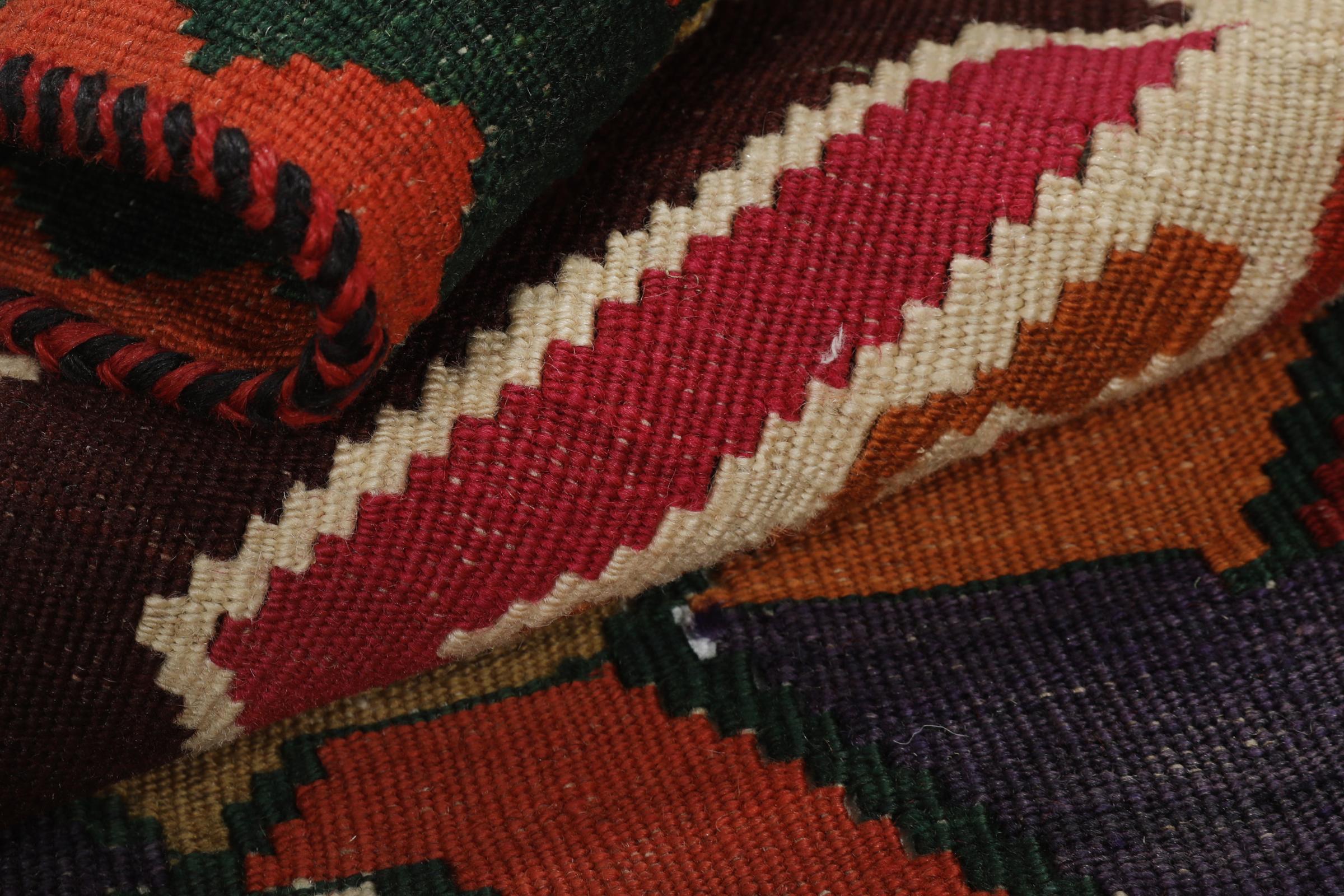
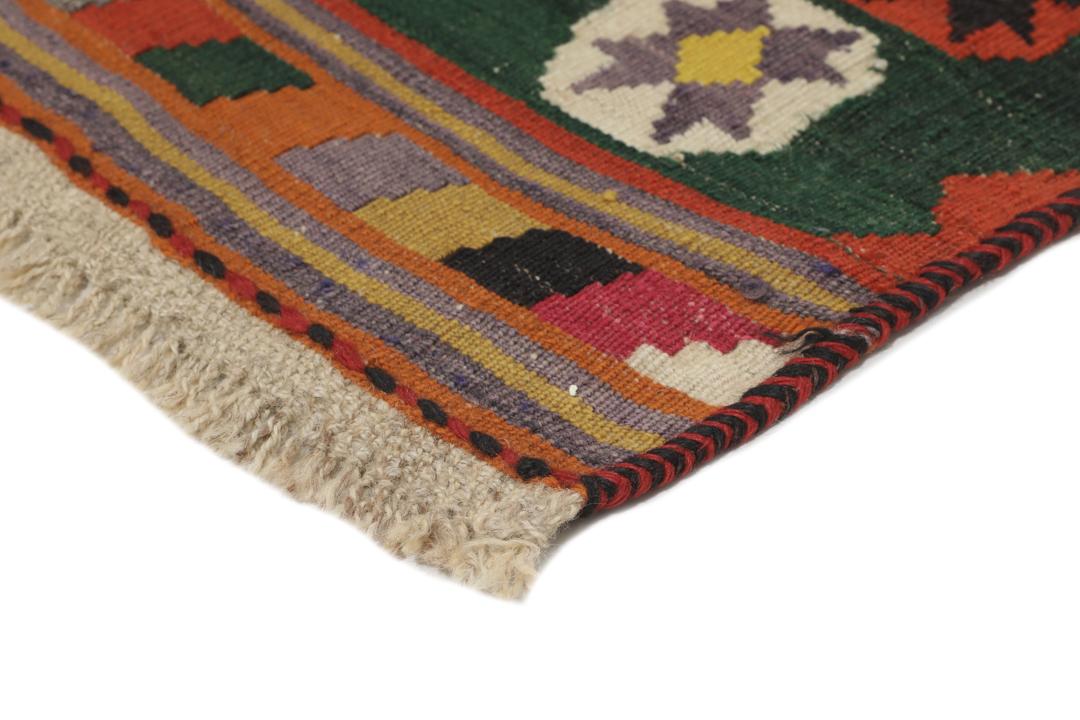
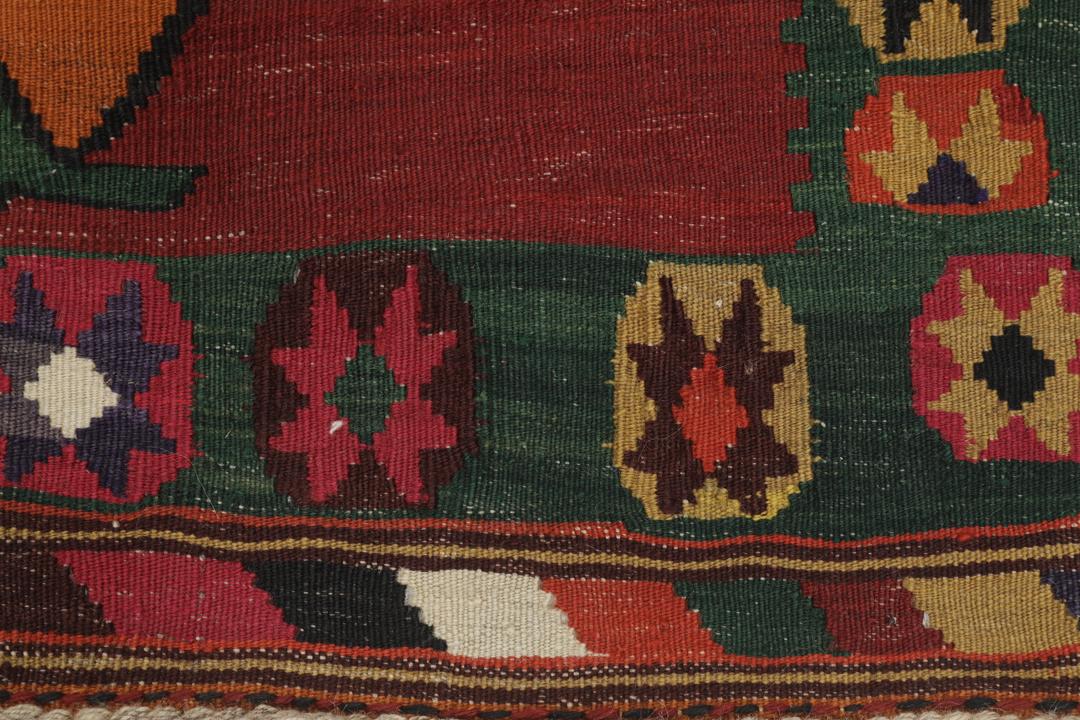
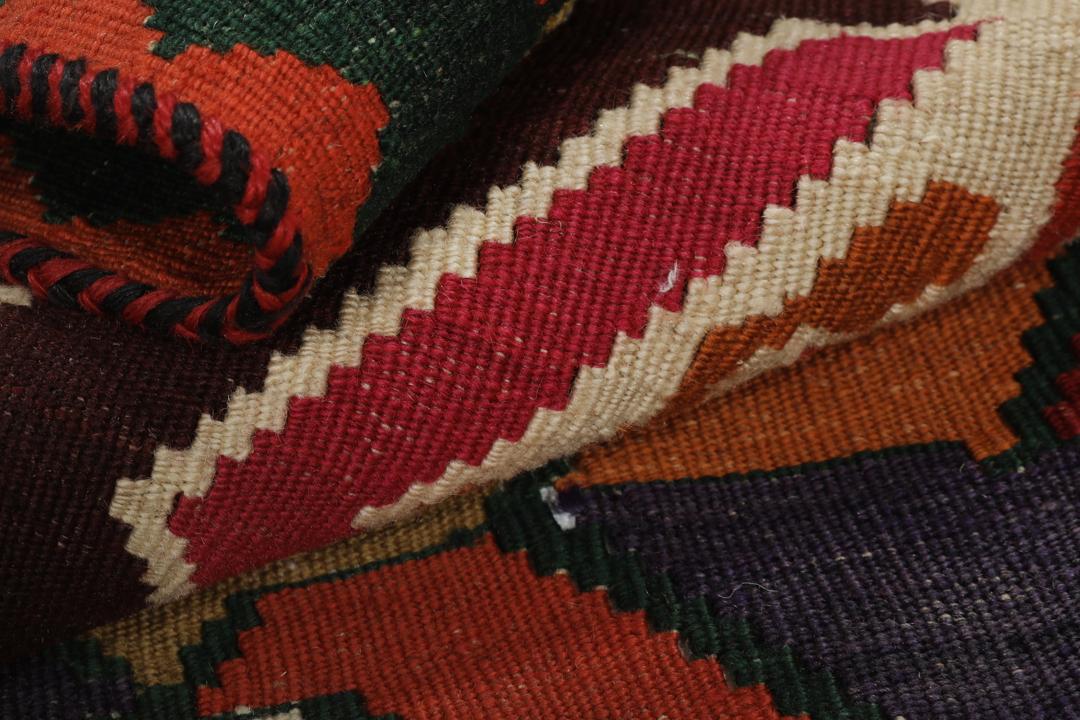
The term 'kilim' specifically refers to the tapestry-weave technique, where the pattern is created by the weft threads, leaving no pile. This method results in a durable and versatile textile. By using hand-spun Wool, weavers ensure that the rug maintains a natural texture and holds dye beautifully over the decades, which is why vintage pieces remain so sought after for their depth of character and enduring structural quality.
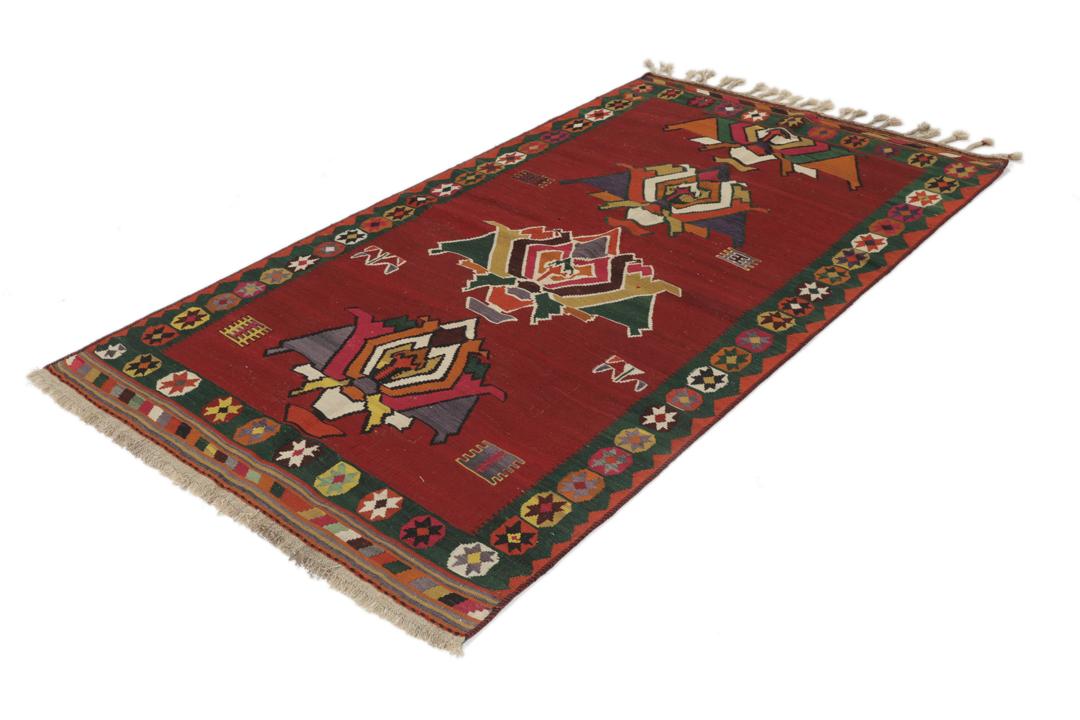
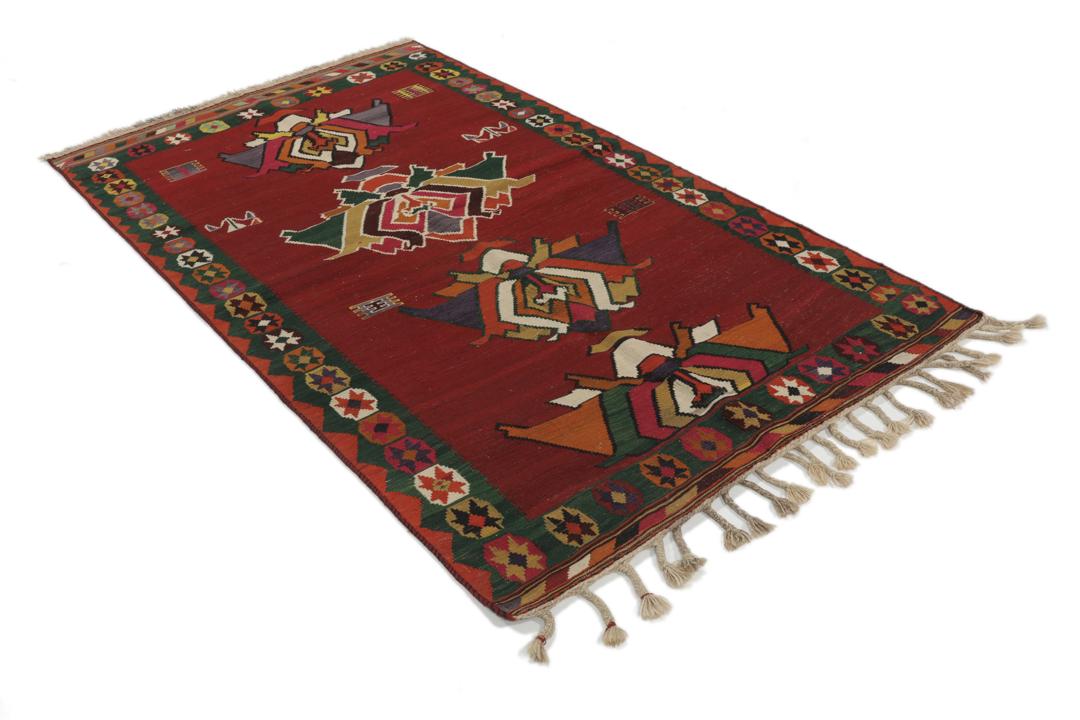
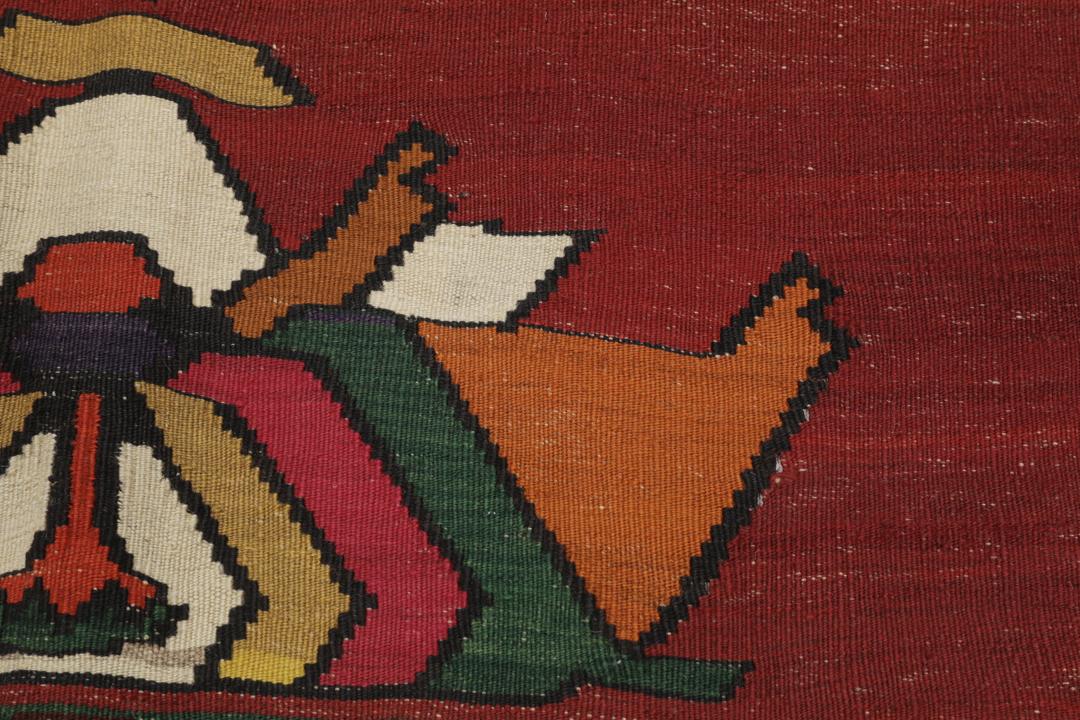
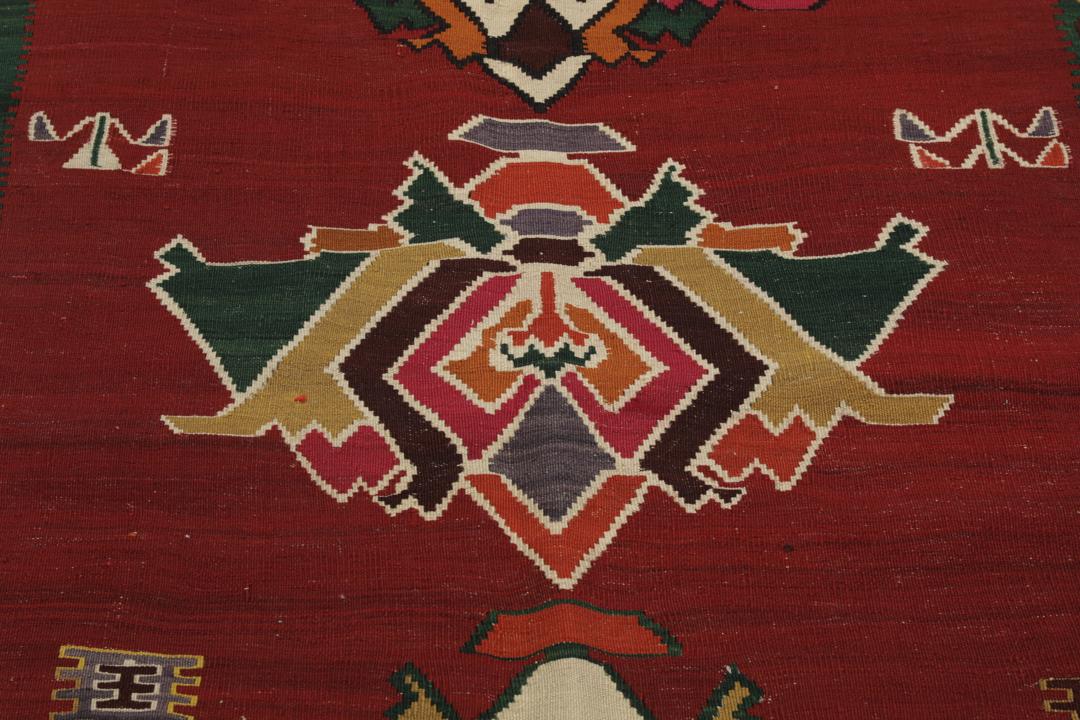
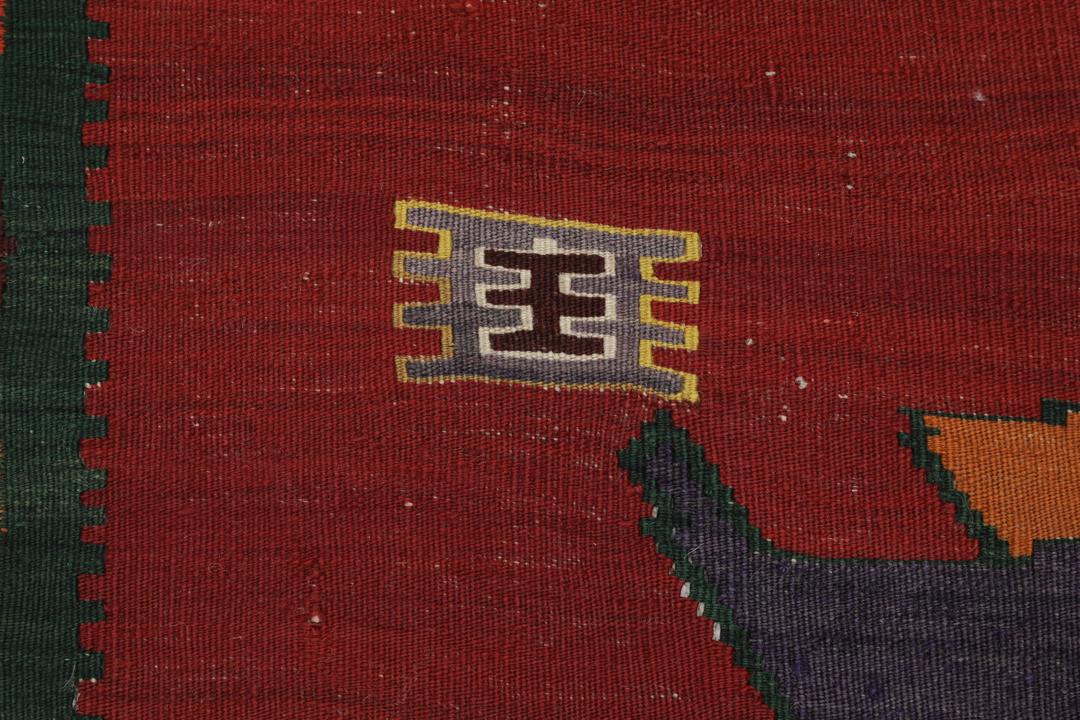
Signature design elements in these rugs often include stylized geometric medallions, tribal motifs, and symbolic representations of nature or protection. The patterns are usually arranged in rhythmic, balanced compositions that reflect the weaver's personal expression within the boundaries of their cultural heritage. The use of bold, earthy colours is a hallmark of the tradition, with natural dyes often providing the deep, saturated tones seen in this piece.
Collectors value kilims for their raw authenticity and the human story woven into every thread. Each rug serves as a historical document, capturing the aesthetic preferences and technical expertise of a specific time and place. By acquiring a vintage kilim, you are preserving a piece of cultural history and bringing a sense of warmth and genuine craft into your home that mass-manufactured items simply cannot replicate.