Kilim rugs are a cornerstone of Middle Eastern weaving traditions, with roots that stretch back centuries across the Anatolian plateau. Historically, these flat-woven textiles were crafted by nomadic and village communities as essential household items, serving as floor coverings, wall hangings, and storage bags. Their development reflects a deep connection to the land and the seasonal rhythms of the people who made them.
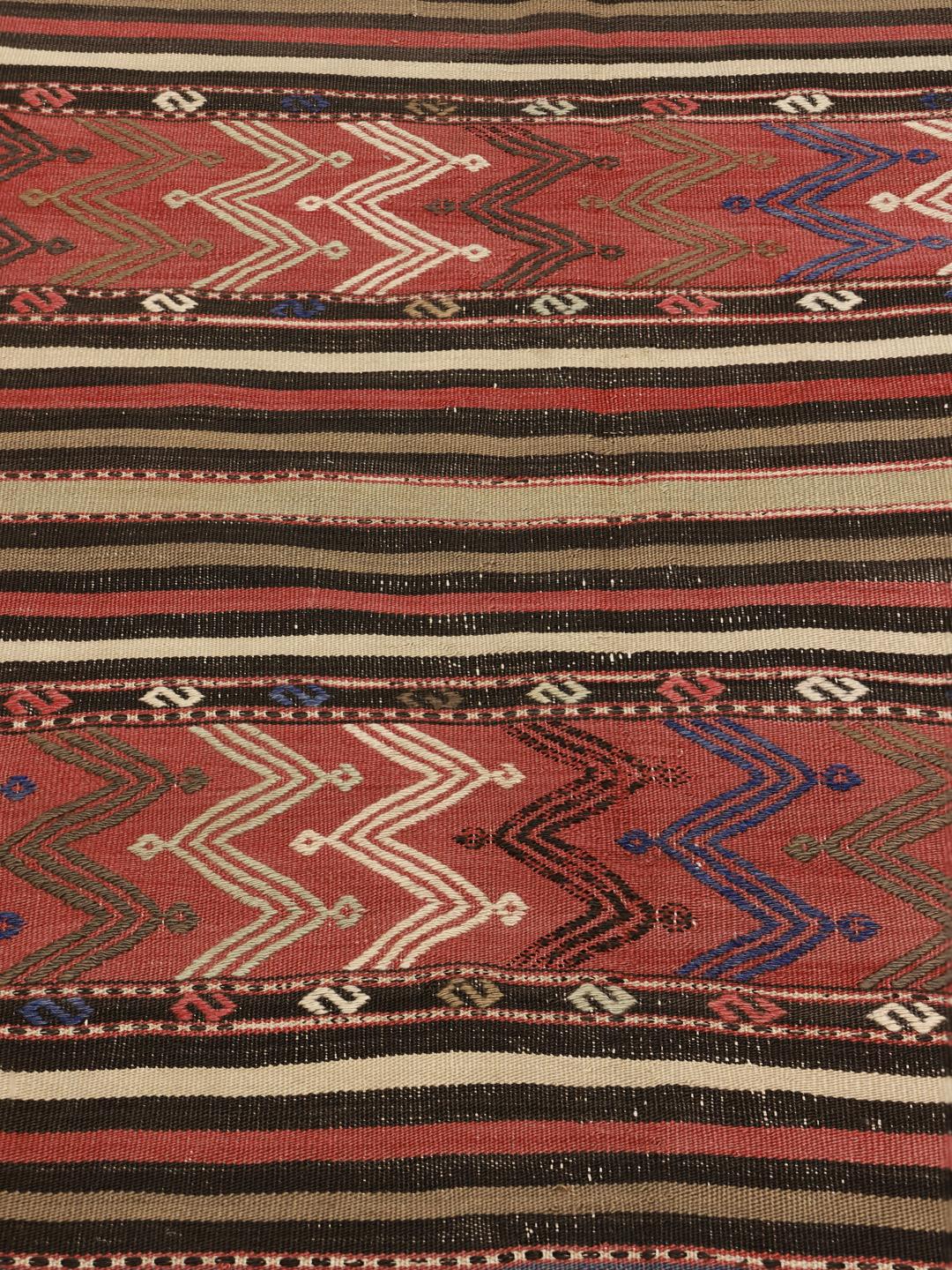
The term 'kilim' refers to the specific technique of slit-weave construction, where the weft threads are passed back and forth through the warp to create distinct geometric shapes. This method creates a thin, reversible rug without a raised pile, which is highly prized for its clarity of pattern and its lightweight, portable nature. The lack of pile allows the weaver to create sharp, angular designs that remain crisp over decades of use.
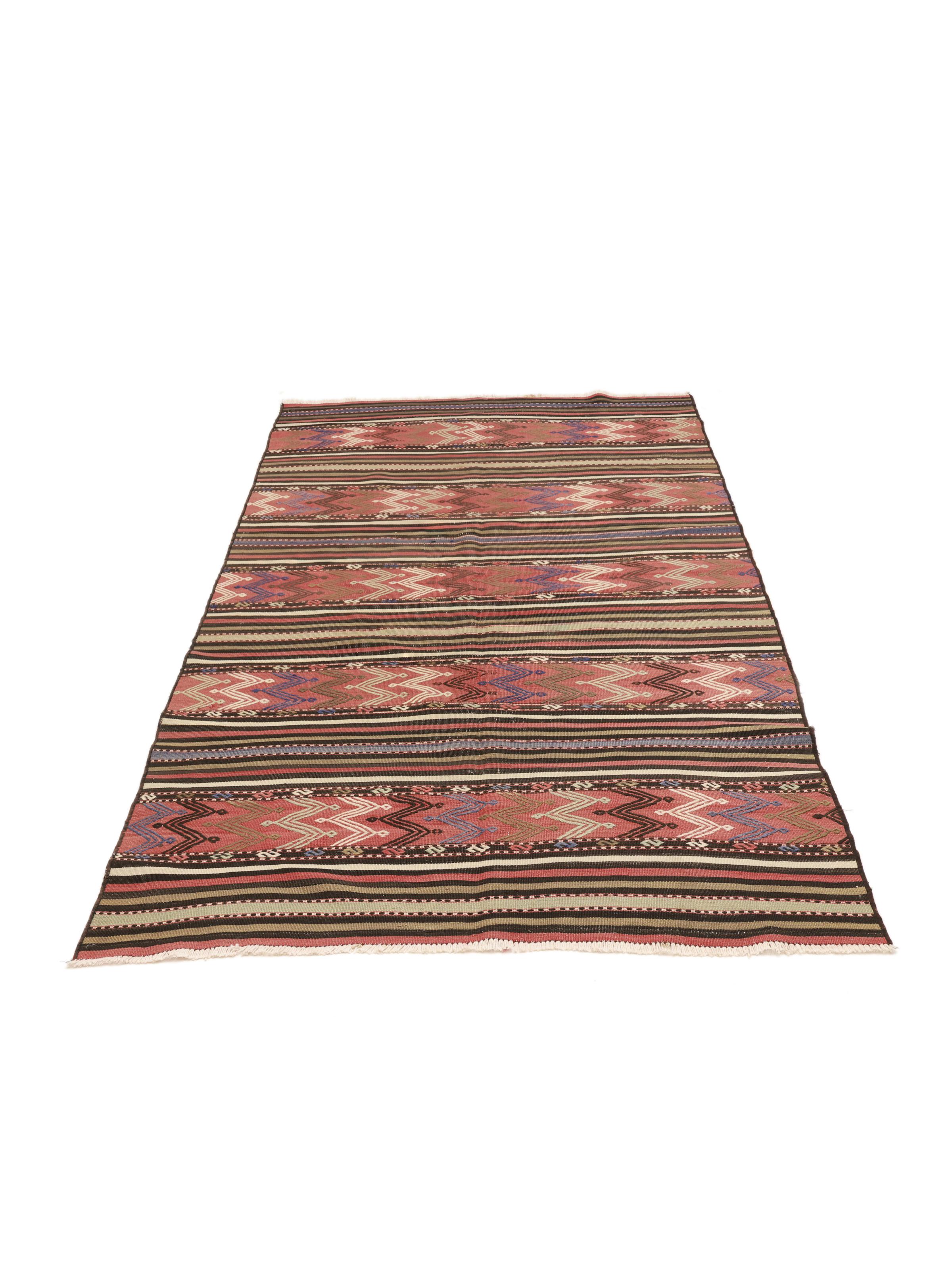
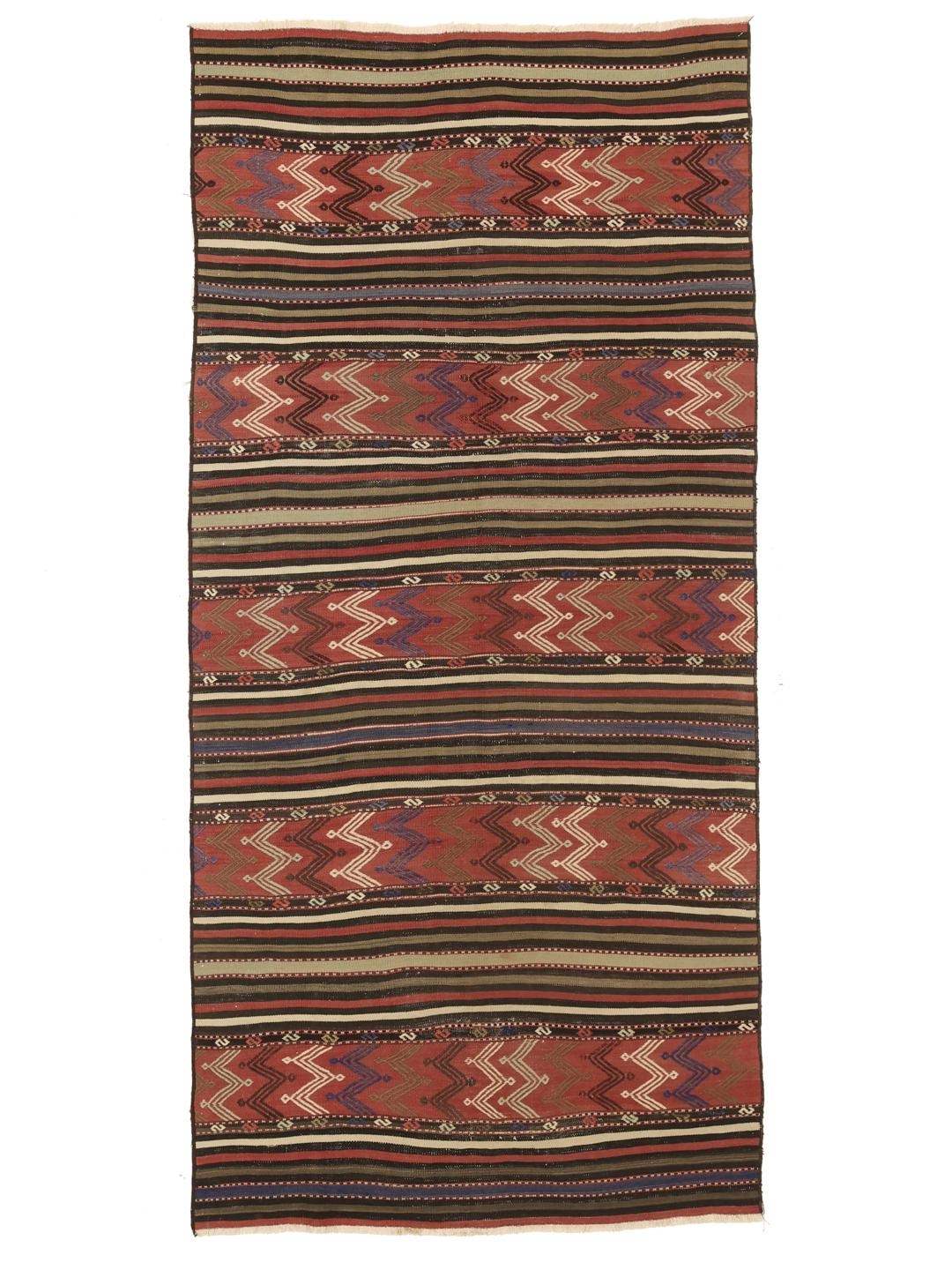
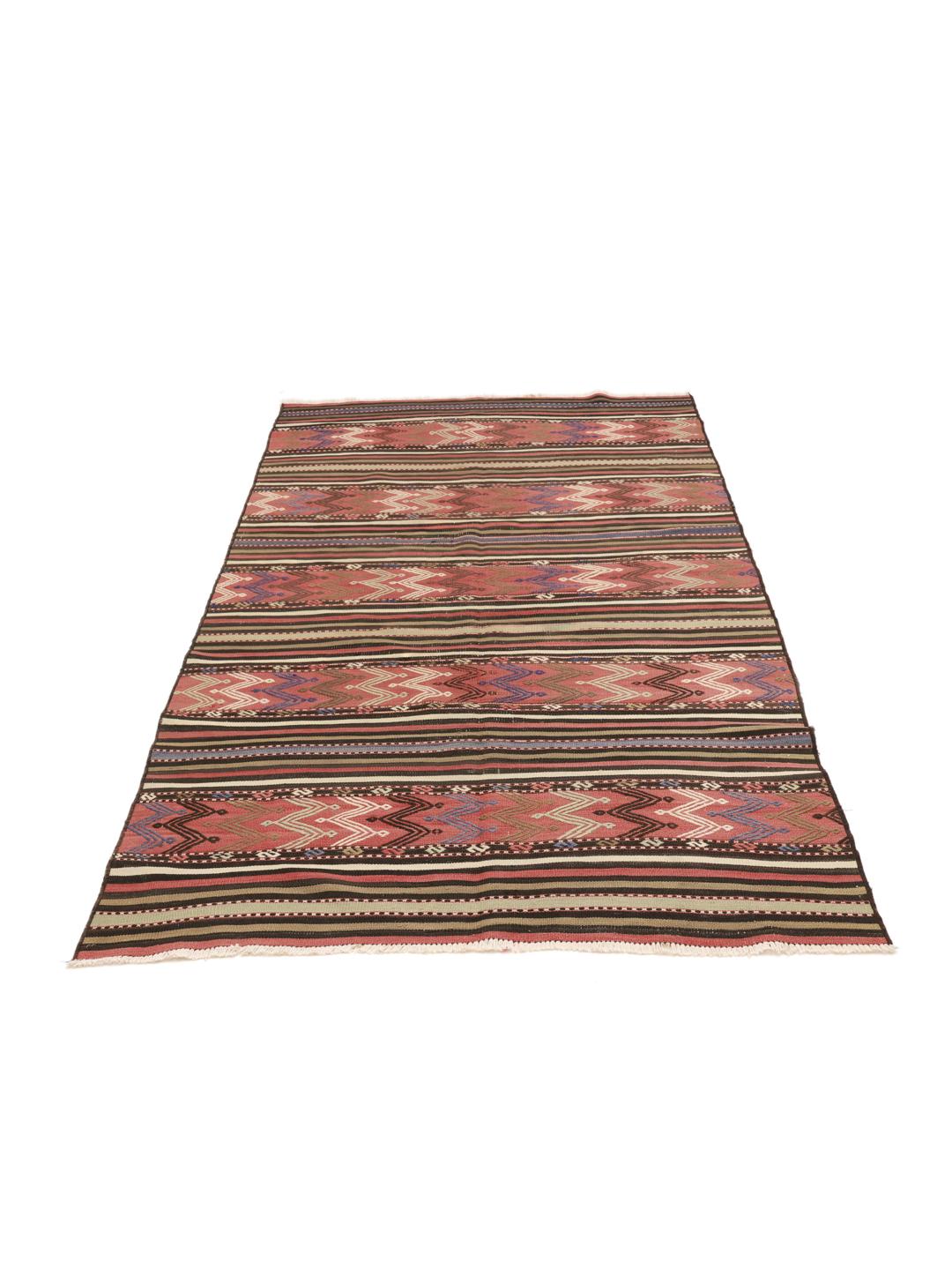
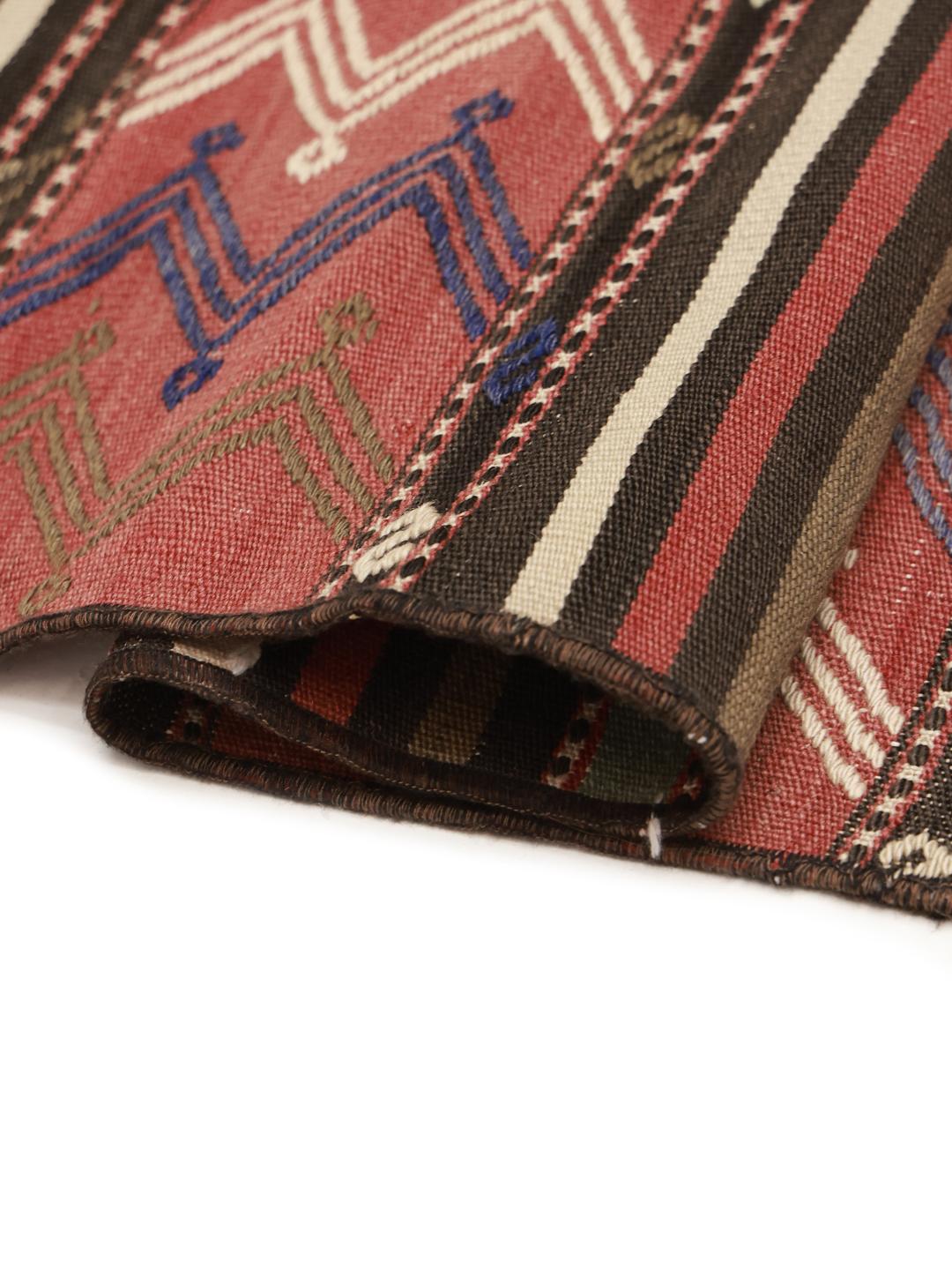
Visually, this rug features the bold, geometric motifs that are hallmark signatures of Turkish weaving. These patterns often carry symbolic meanings, ranging from protection against the evil eye to hopes for fertility and prosperity. The inclusion of vibrant reds and earthy tones is typical of the regional palette, showcasing the use of natural dyes that have softened beautifully over time to create a rich, lived-in aesthetic.
Owning a vintage kilim is an investment in a storied craft tradition. These rugs are collected not only for their visual impact but for the skill and cultural heritage they represent. By choosing this piece, you are preserving a legacy of craftsmanship that has been passed down through generations, ensuring that these ancient techniques continue to be celebrated in modern homes.