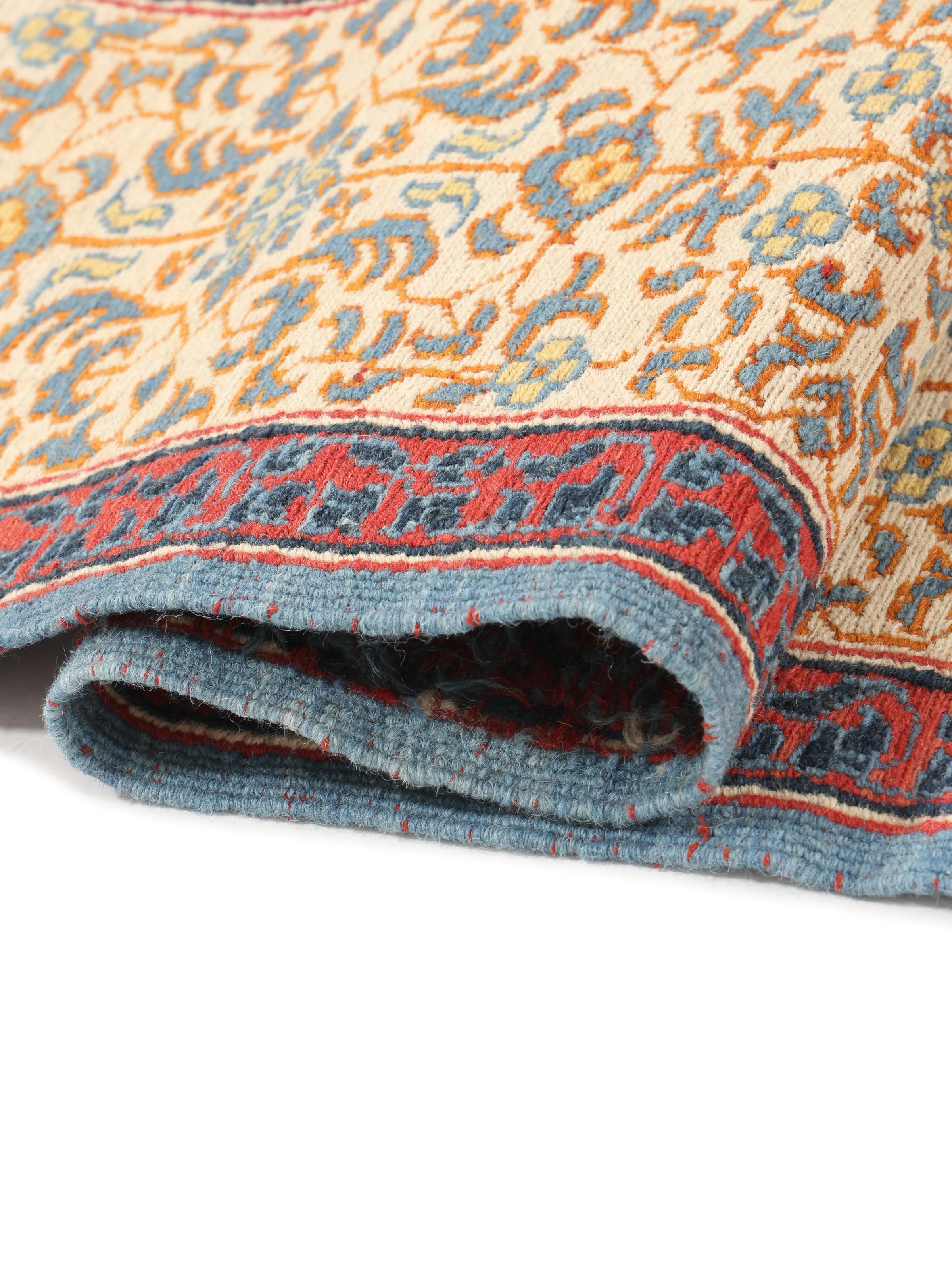
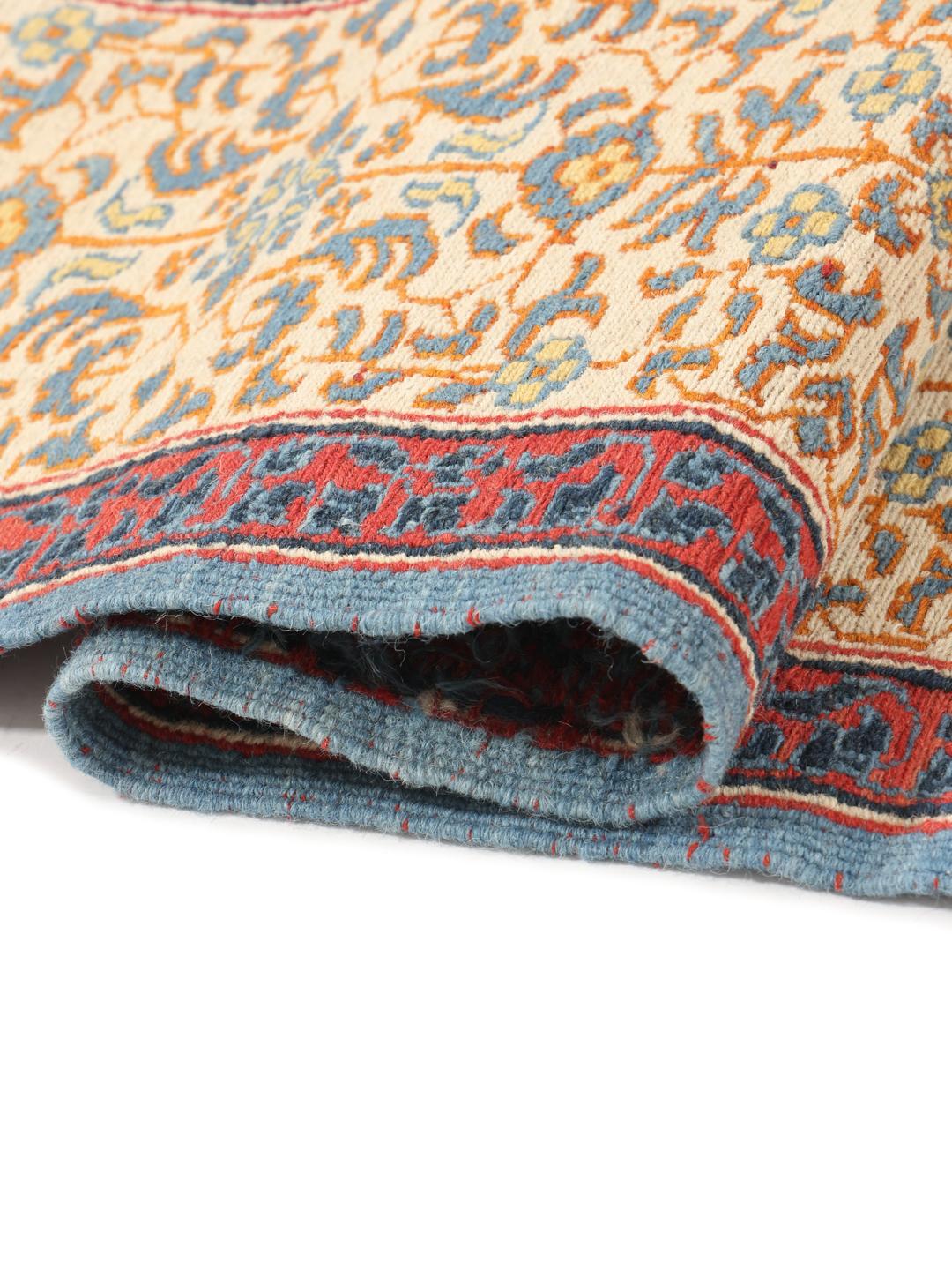
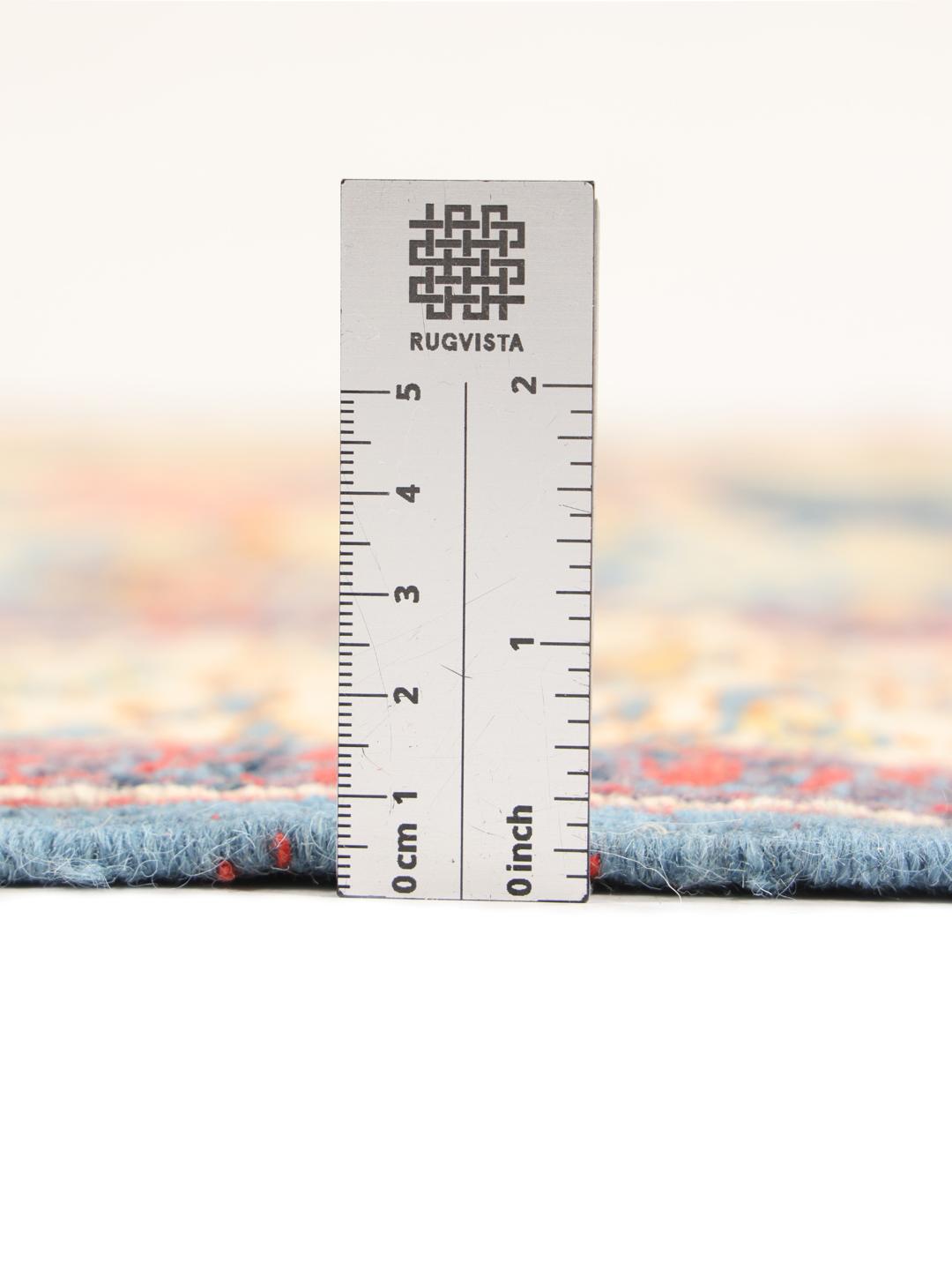
The Kelim tradition is one of the oldest and most respected forms of textile weaving in the Middle East and Central Asia. Historically, these flat-woven rugs were essential to the nomadic lifestyle, serving as versatile floor coverings, wall hangings, and storage bags. Today, the craft has evolved into a celebrated art form, with Afghan weavers continuing to refine the techniques passed down through generations.
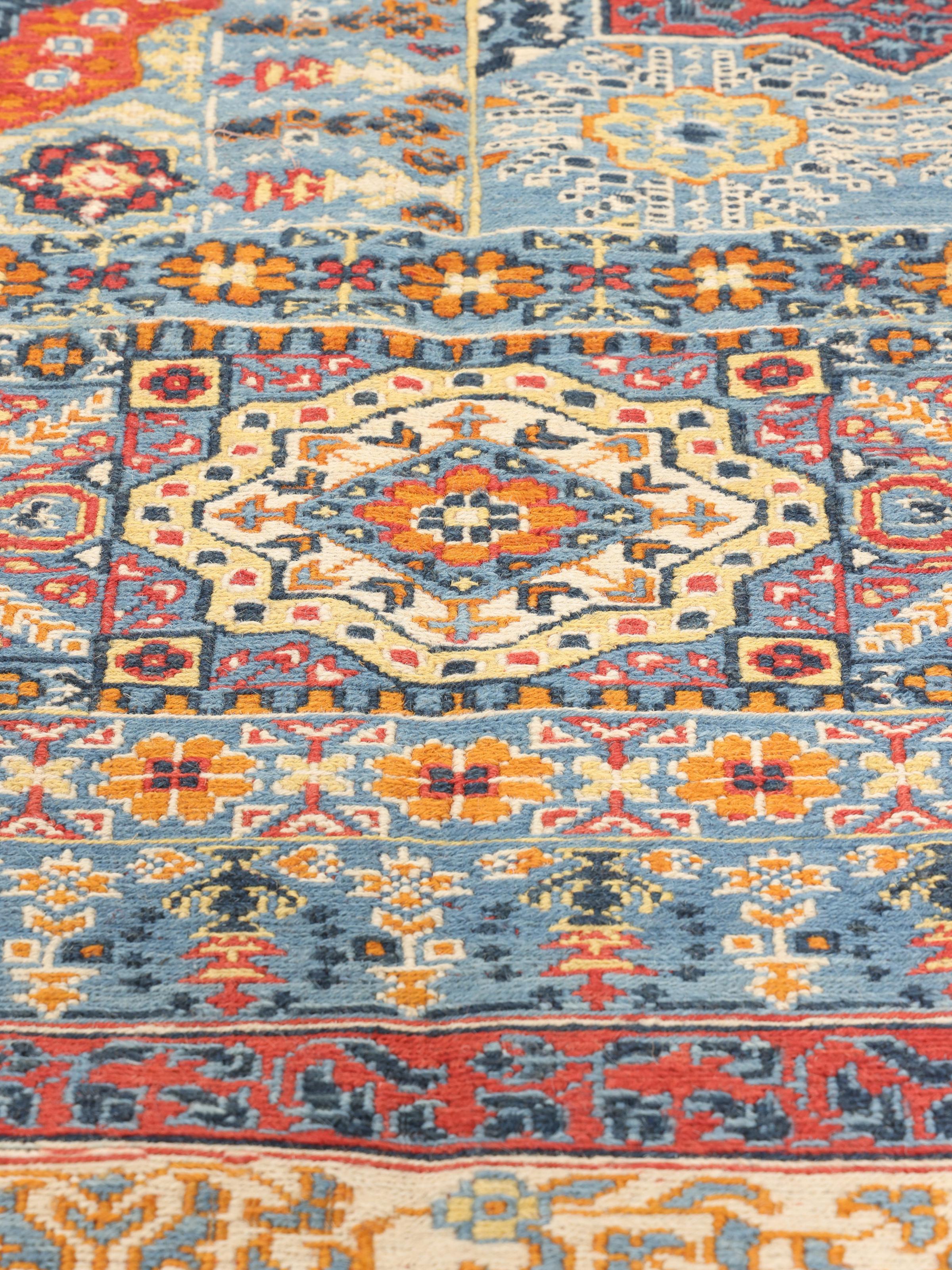
The term 'Suzani' refers to a style of needlework that has historically influenced the patterns seen in these woven rugs. While a traditional Kelim is defined by its flat-weave structure without a pile, the incorporation of Suzani-inspired motifs brings a sophisticated, floral, and medallion-based aesthetic to the rug. This marriage of robust weaving and delicate, symbolic design results in a textile that is both durable and visually evocative.
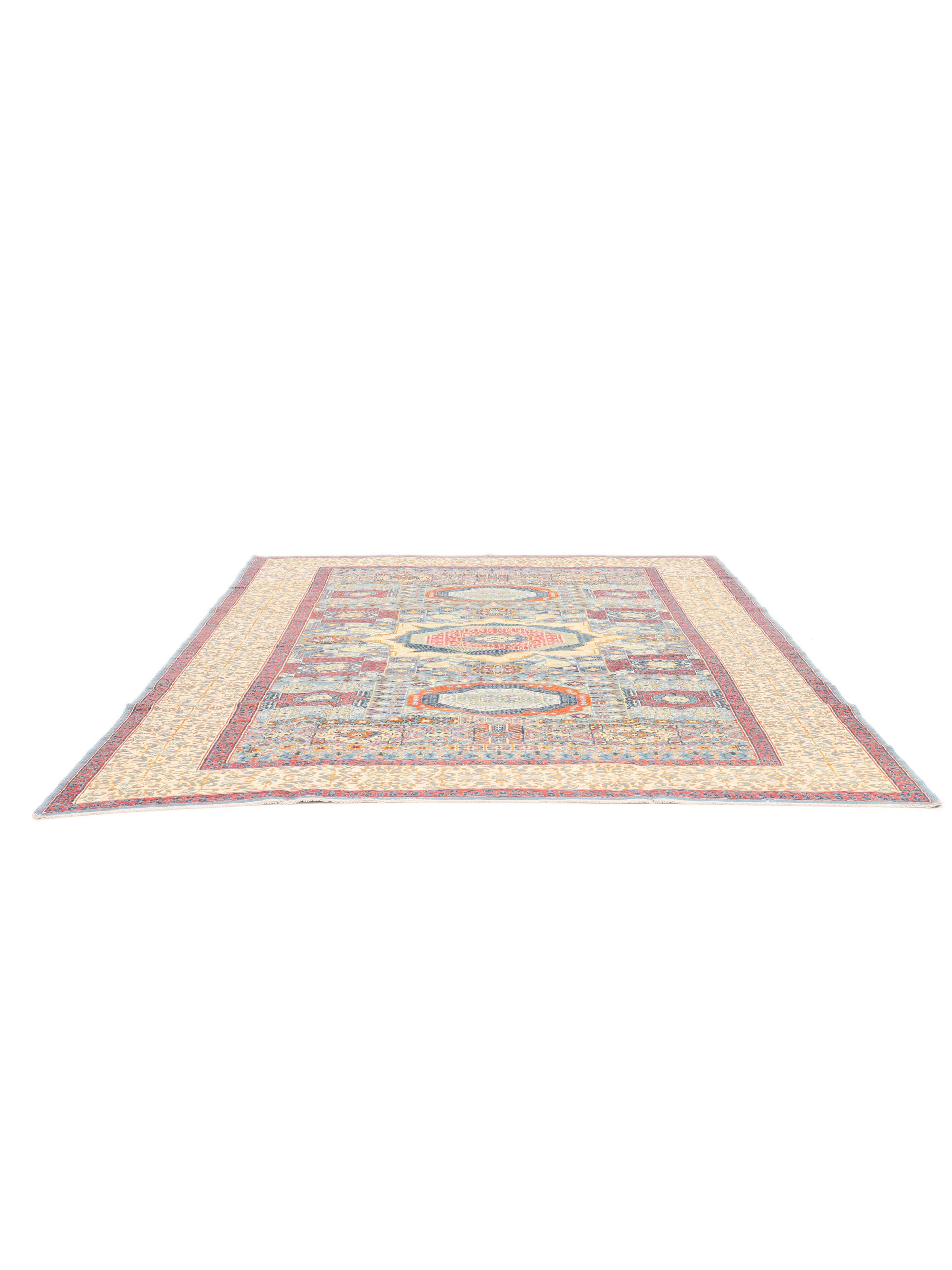
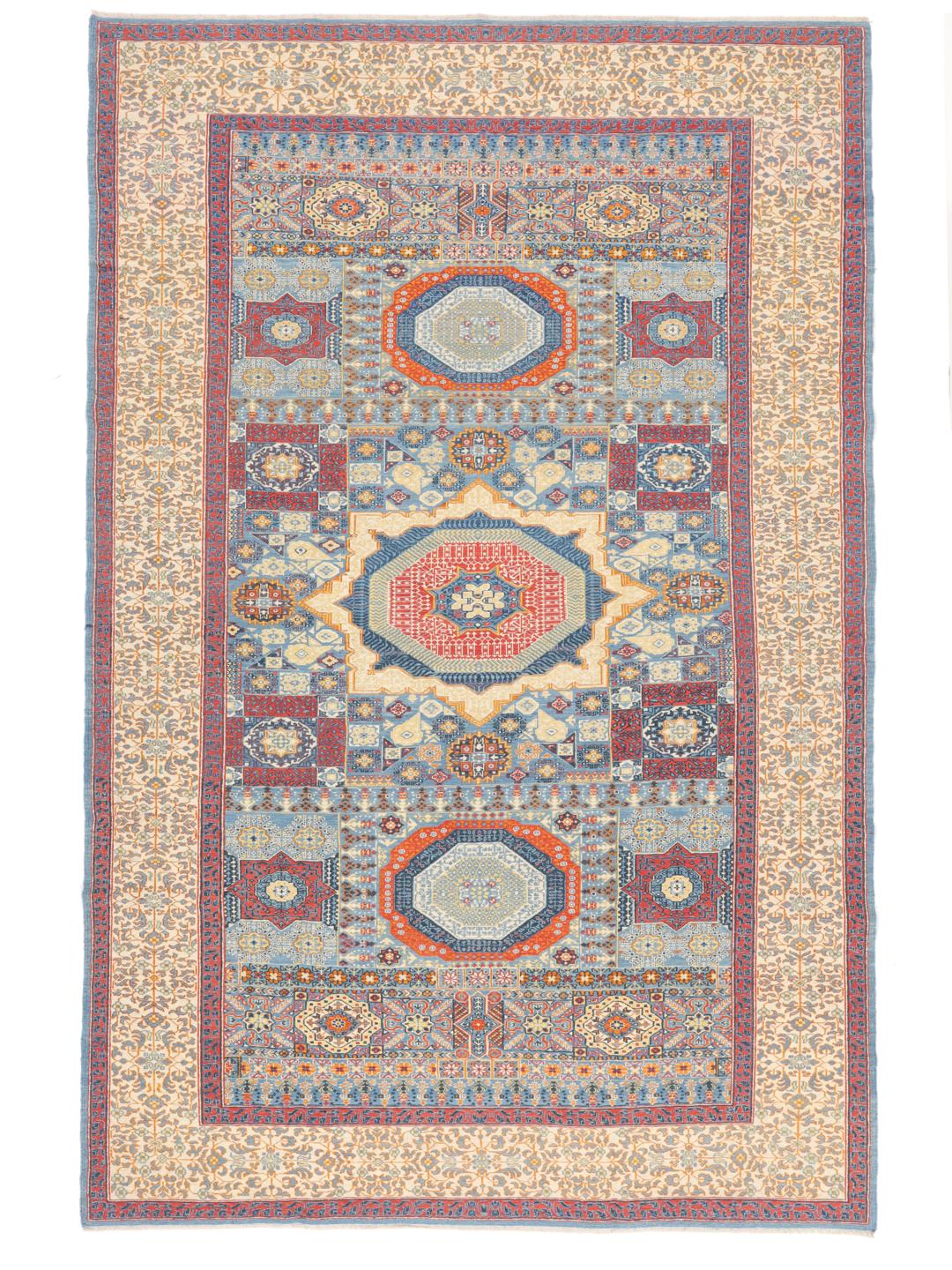
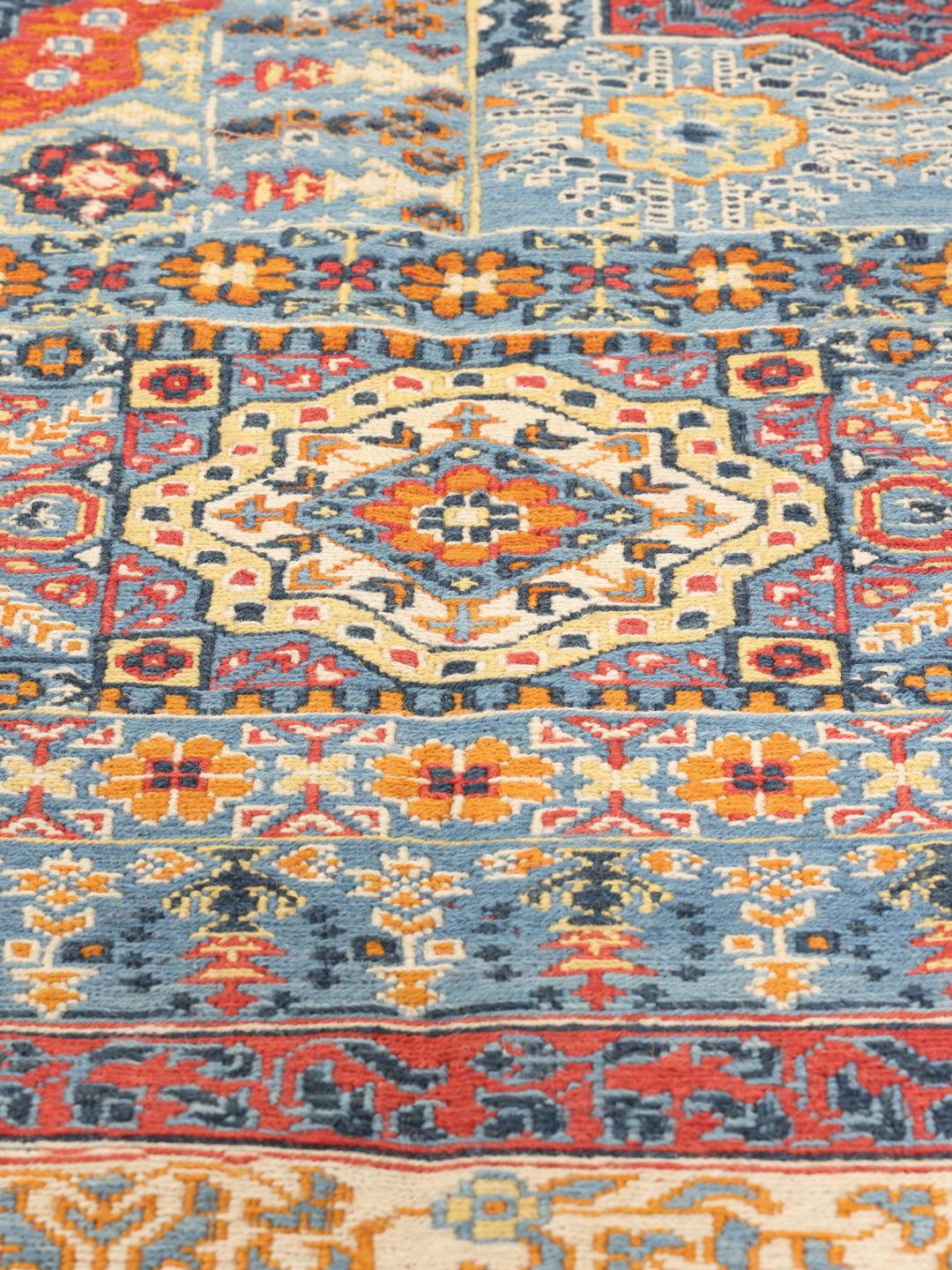
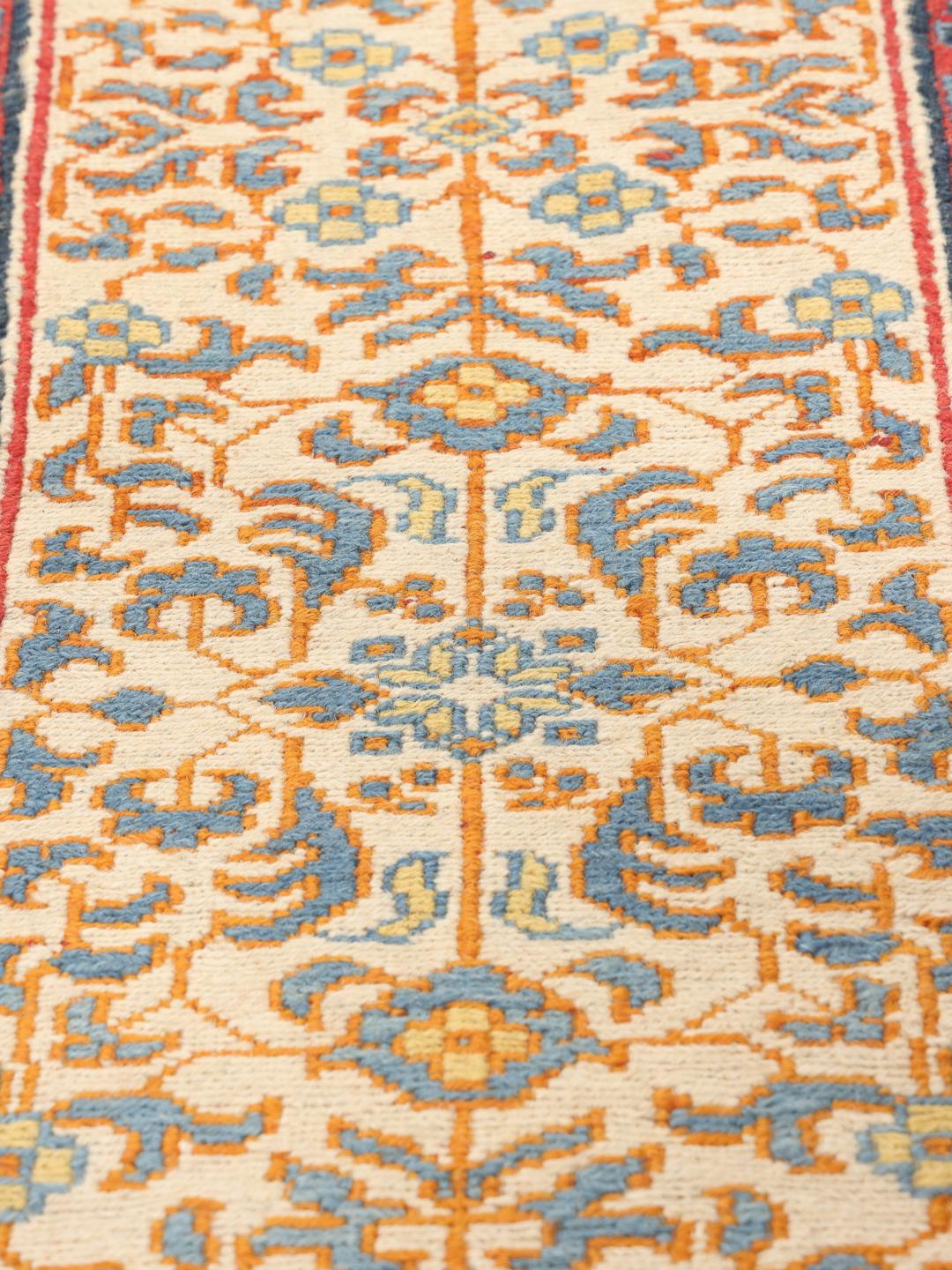
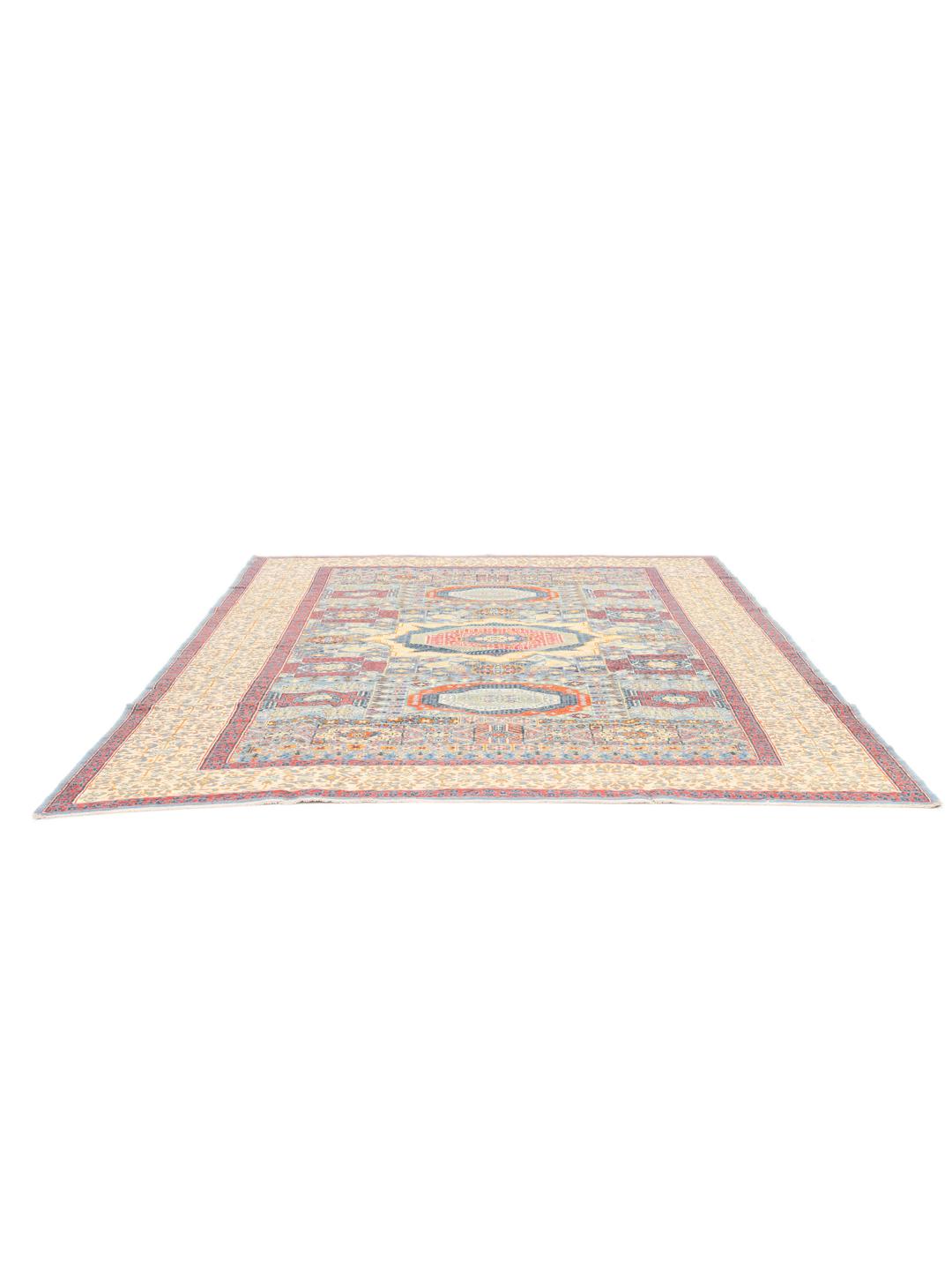
The design of this rug features repeating medallions and decorative borders, which are hallmark elements of the regional weaving style. These motifs often carry cultural significance, representing protection, fertility, or the natural world. The use of blue and red as dominant tones is a classic choice, reflecting the traditional natural dyes once used in these regions, which continue to influence modern colour palettes.
Collectors value these rugs not only for their beauty but for the historical continuity they represent. Owning a piece like this is a commitment to preserving a craft that prioritises human skill over industrial speed. It is a tangible link to a rich cultural heritage, providing a sense of depth and authenticity that brings a unique narrative to any modern interior.