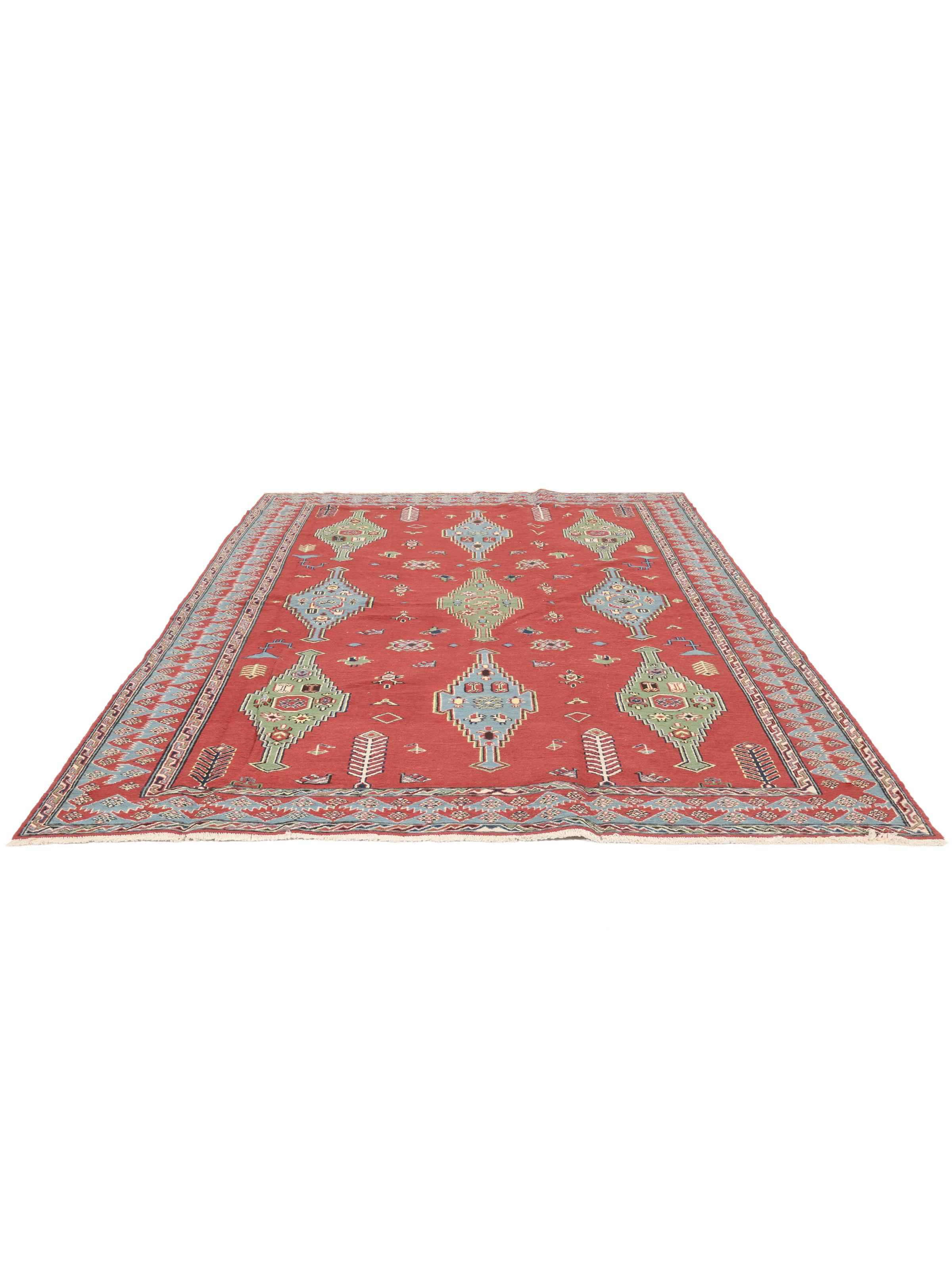
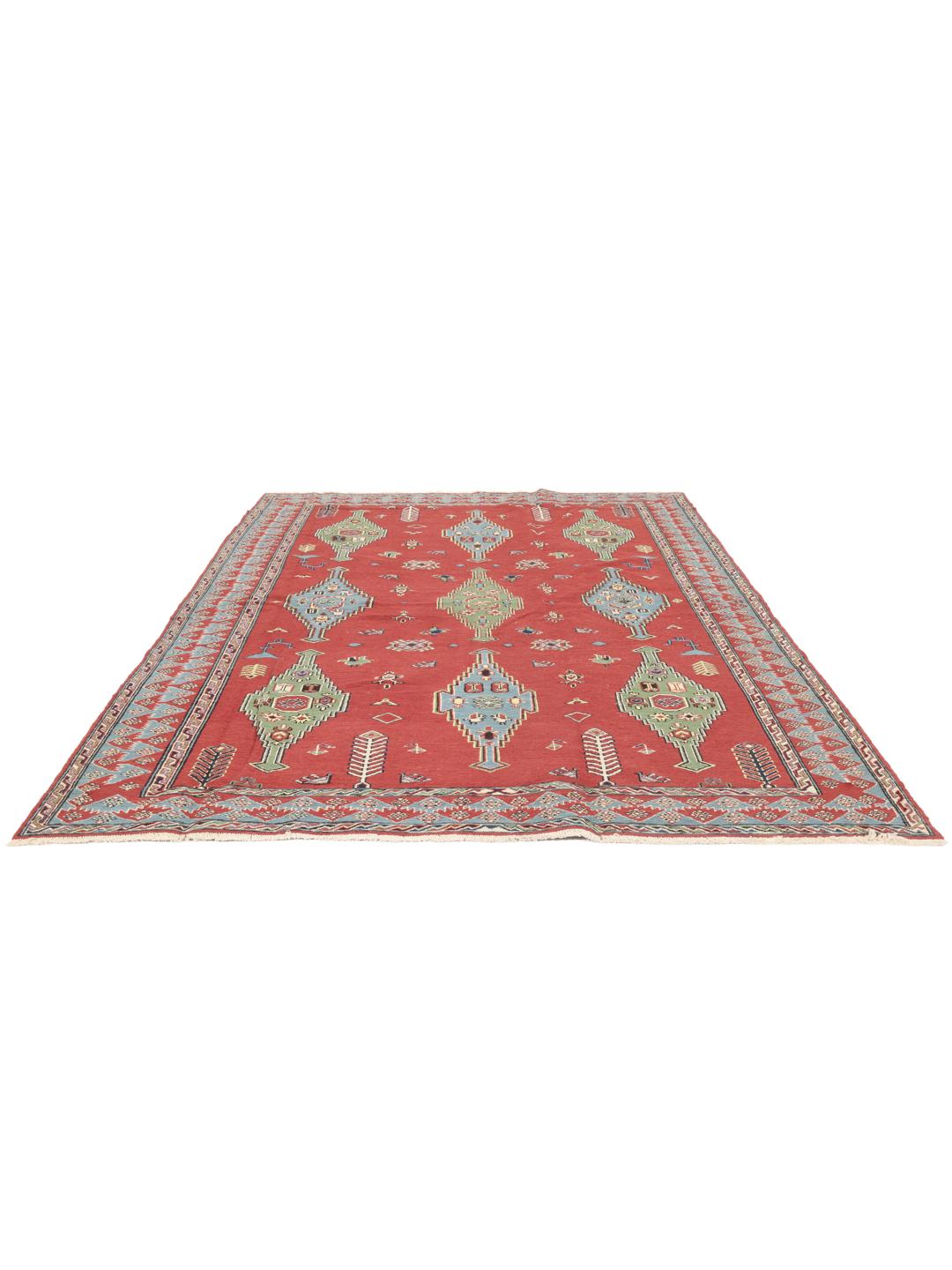
The Kelim tradition is deeply rooted in the history of the Middle East and Central Asia, where these flat-woven textiles have served as essential household items for centuries. Originally created by nomadic tribes and village communities, these rugs were designed for versatility, often used as floor coverings, wall hangings, or saddlebags, reflecting a lifestyle that valued both beauty and utility.
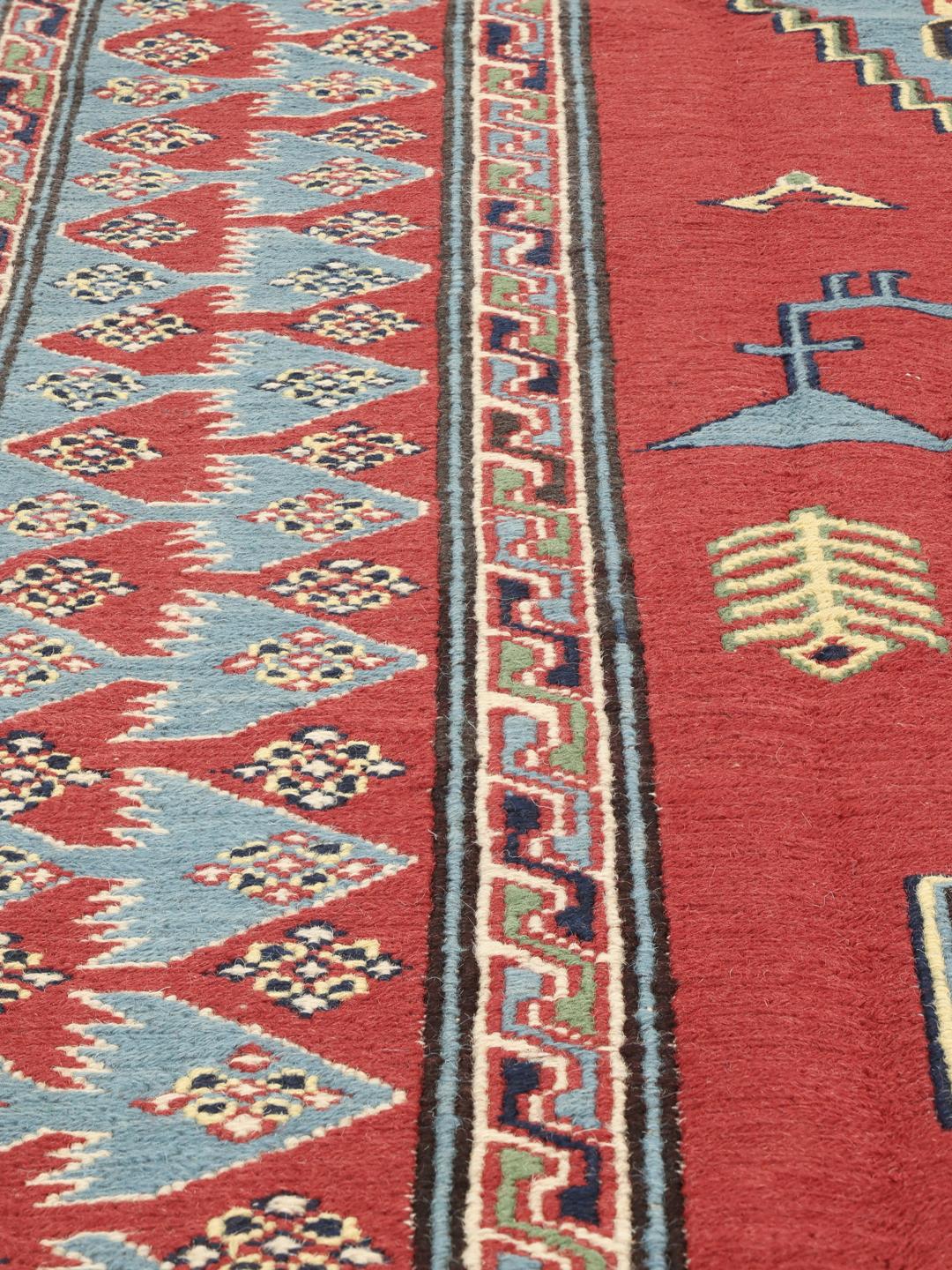
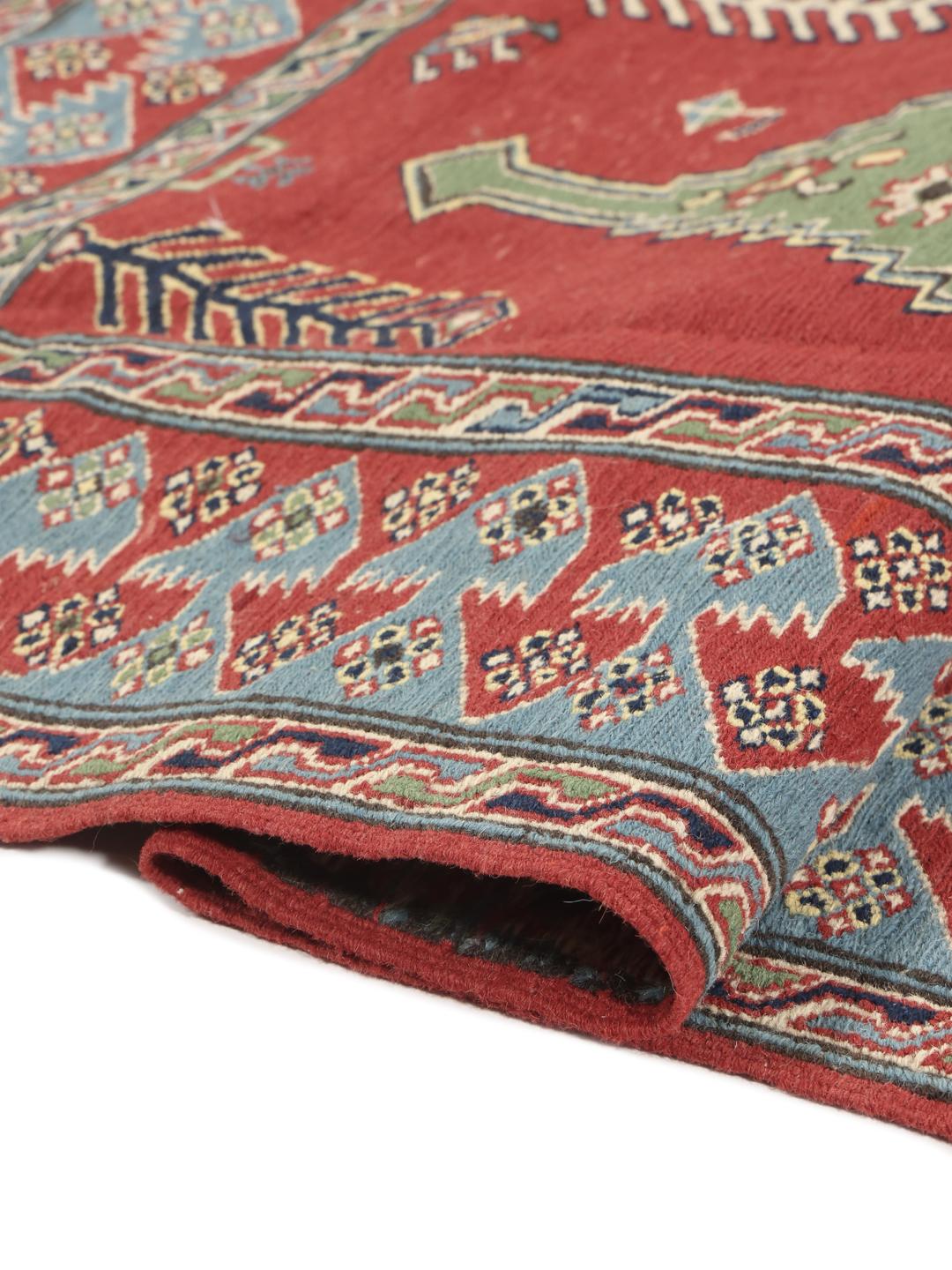
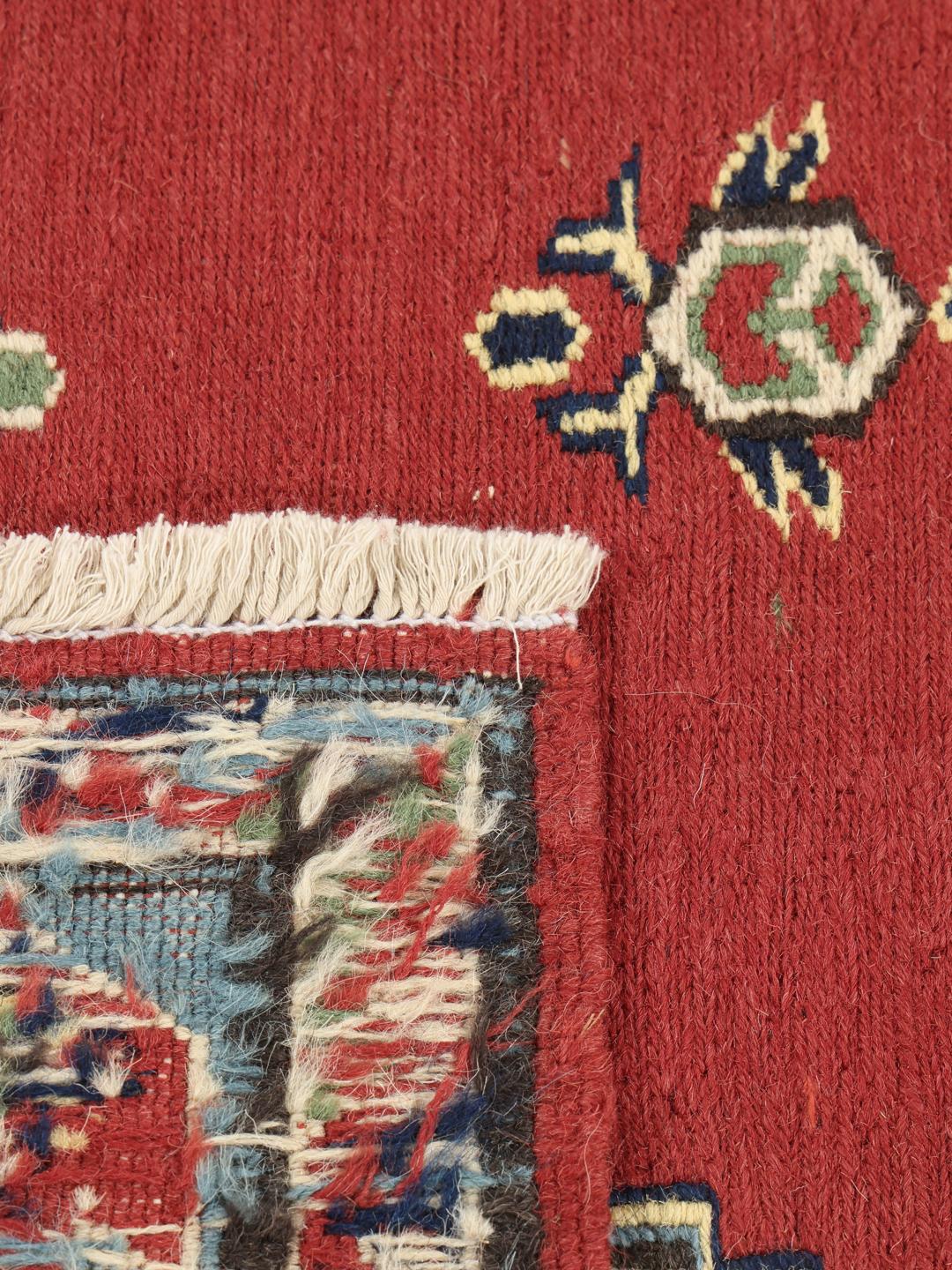
The term 'Kelim' refers to the specific technique of slit-weave tapestry, where the weft threads are woven back and forth to create the design. Because there is no pile to hide the structure, the quality of the Wool and the tension of the weave are paramount. This method produces a light, reversible, and highly durable textile that remains a hallmark of regional craft excellence.
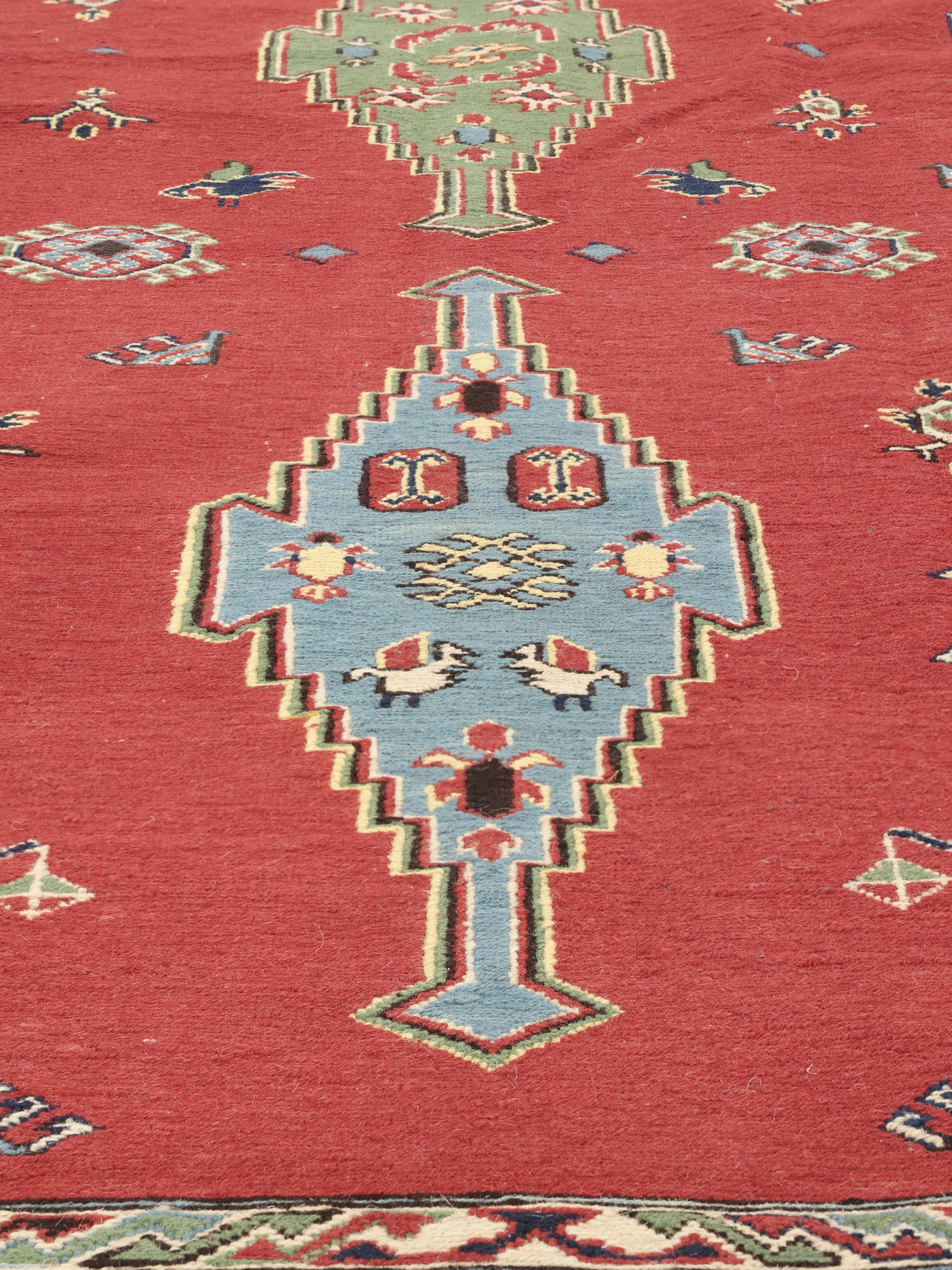
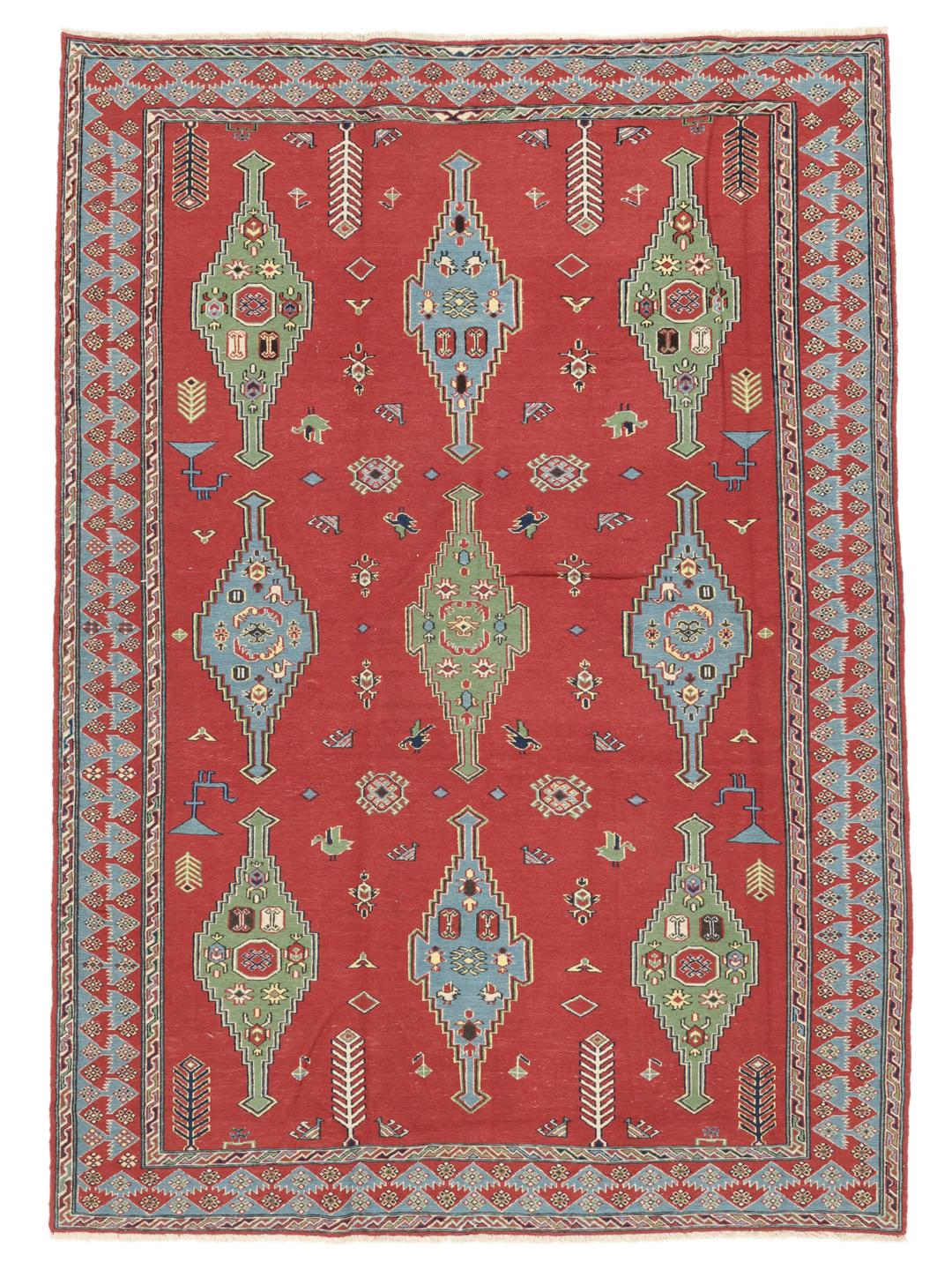
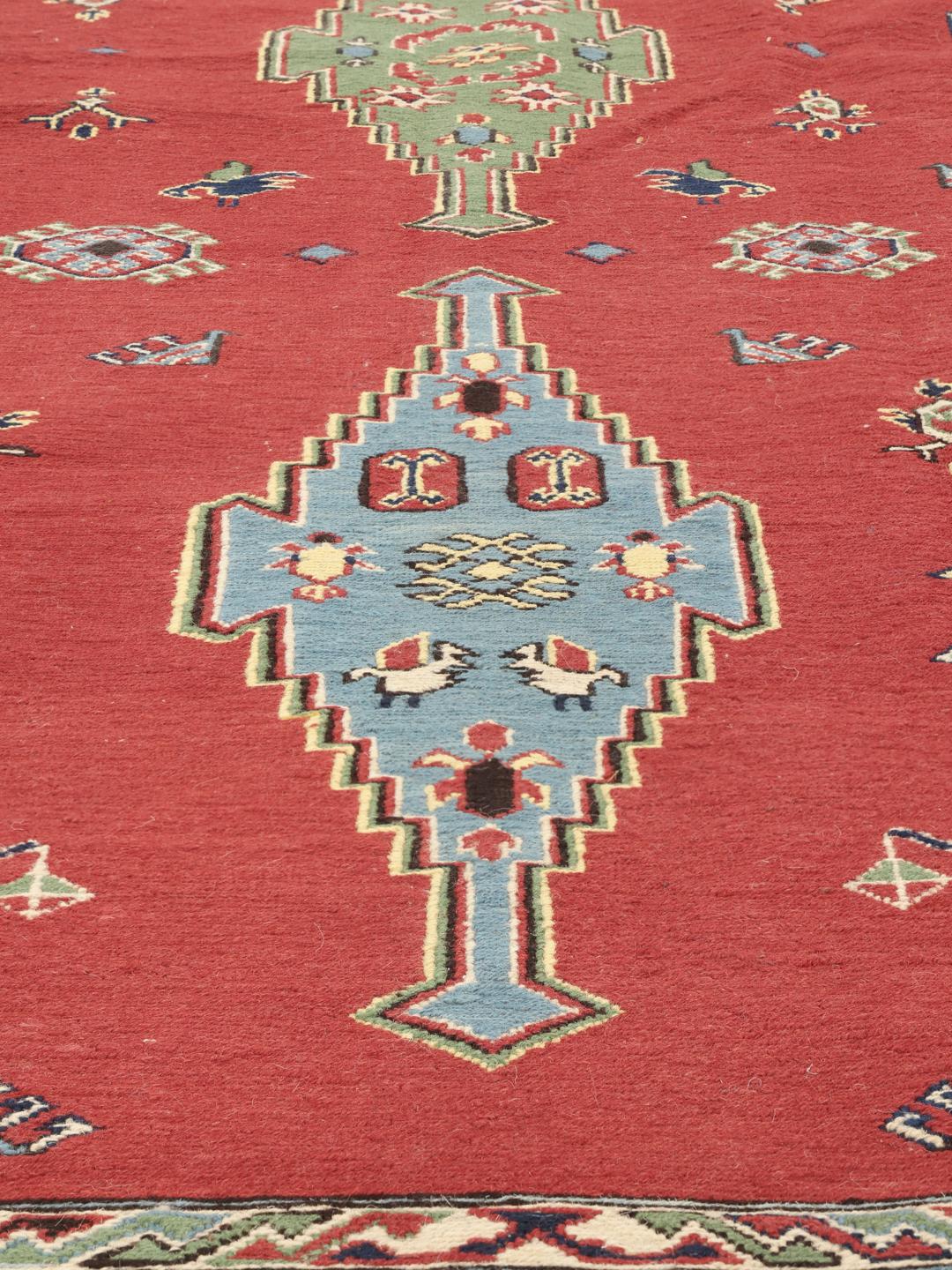
This particular piece incorporates Suzani-inspired influences, which are traditionally intricate embroidery designs from the region. The field is populated with repeating diamond-shaped medallions and symbolic motifs that often represent protection, fertility, or the natural world. The use of a bold red field contrasted with blue and green accents is a classic choice that highlights the vibrant natural dyes historically used in these communities.
Collecting a Kelim is an investment in cultural heritage. Each rug tells a story of the specific region and the individual weaver's creative expression. By choosing this piece, you are supporting a legacy of craftsmanship that has survived for generations, bringing a sense of history and human connection into your contemporary home.