The kilim tradition is one of the most enduring and storied forms of textile art in the Middle East. These rugs are historically rooted in the nomadic cultures of the region, where they were created as functional, portable items for life on the move. Over centuries, these weaving techniques have been refined, passing down from generation to generation and evolving into the sophisticated, decorative pieces we see today.
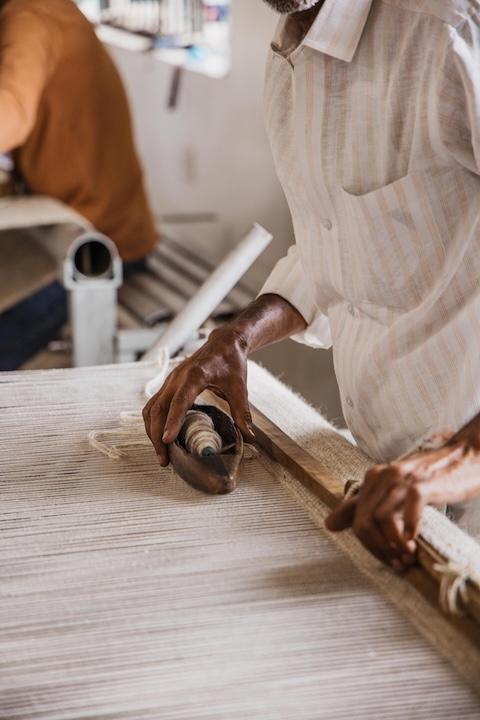
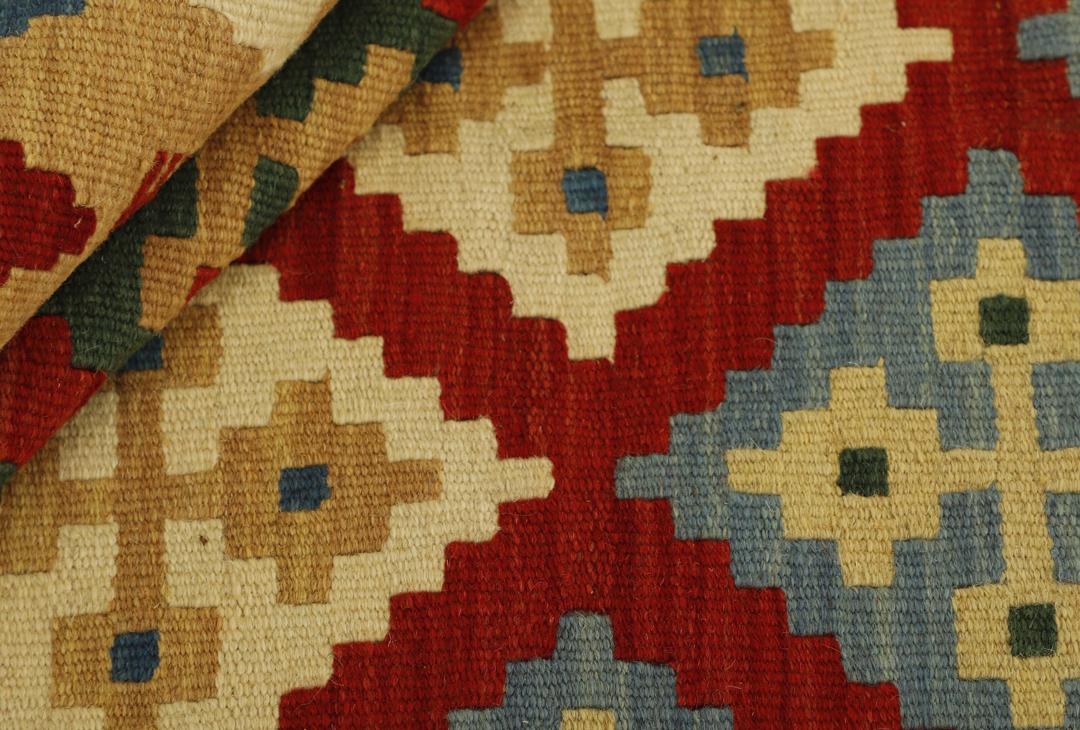
Technically, a kilim is defined by its flat-weave construction, which distinguishes it from pile rugs. Instead of knotting individual strands of wool onto a foundation, the weaver interweaves the coloured weft threads directly into the warp. This technique results in a reversible, durable fabric that is prized for its clean, graphic lines and ability to showcase complex, detailed motifs without the added bulk of a pile.
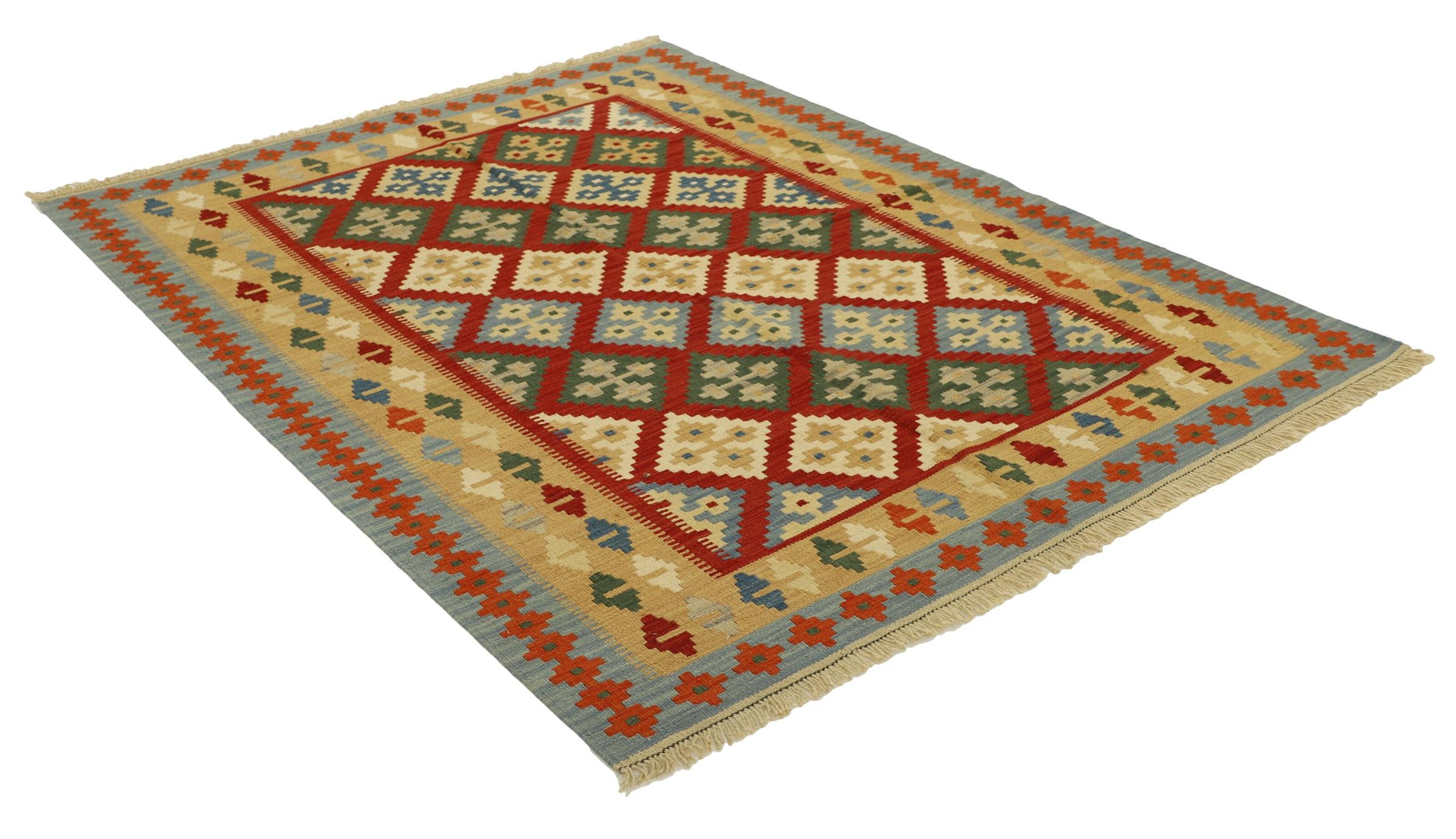
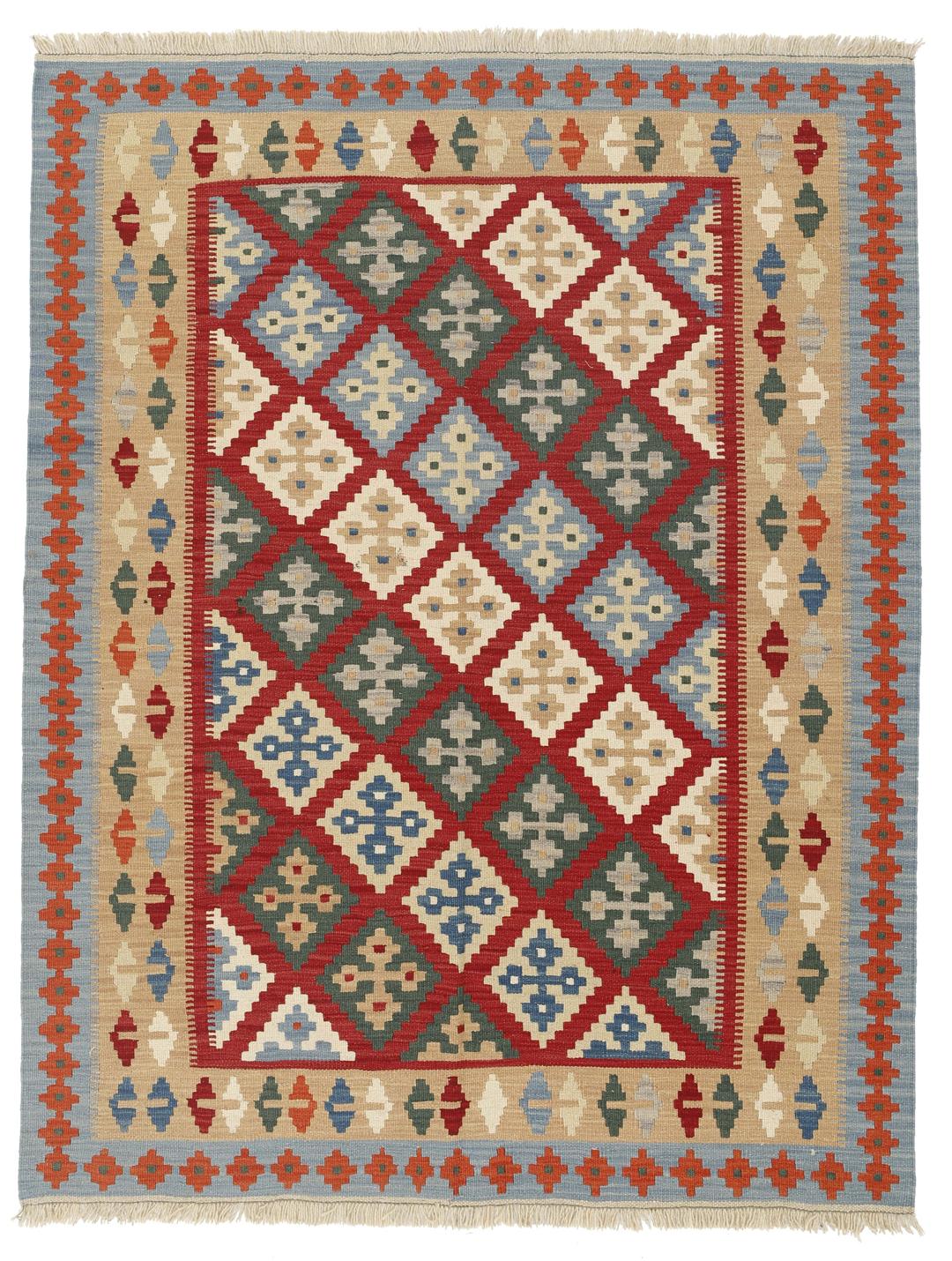
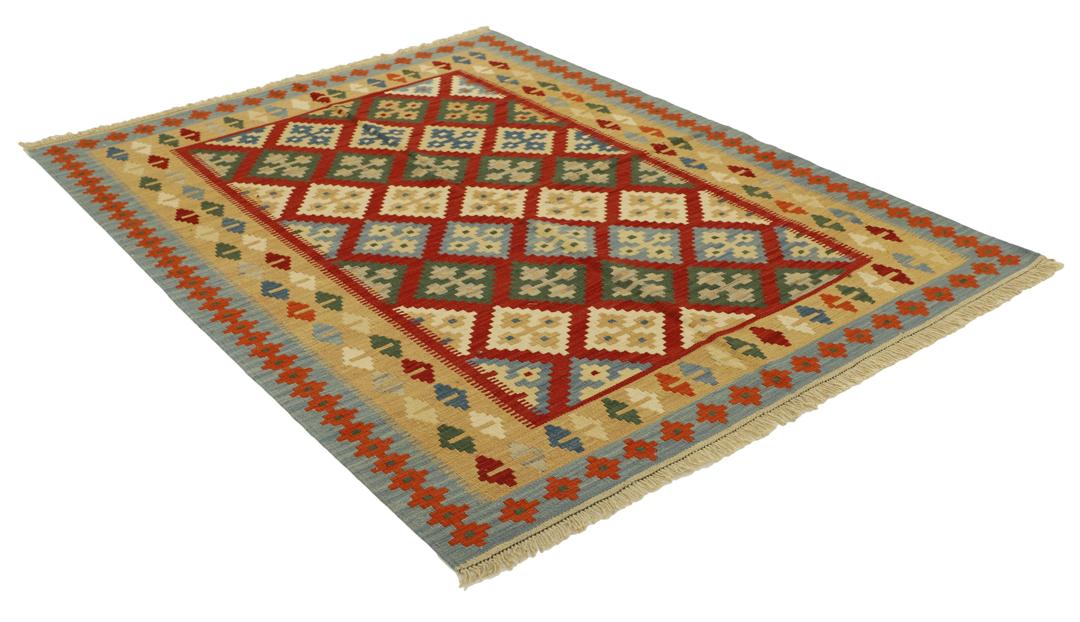
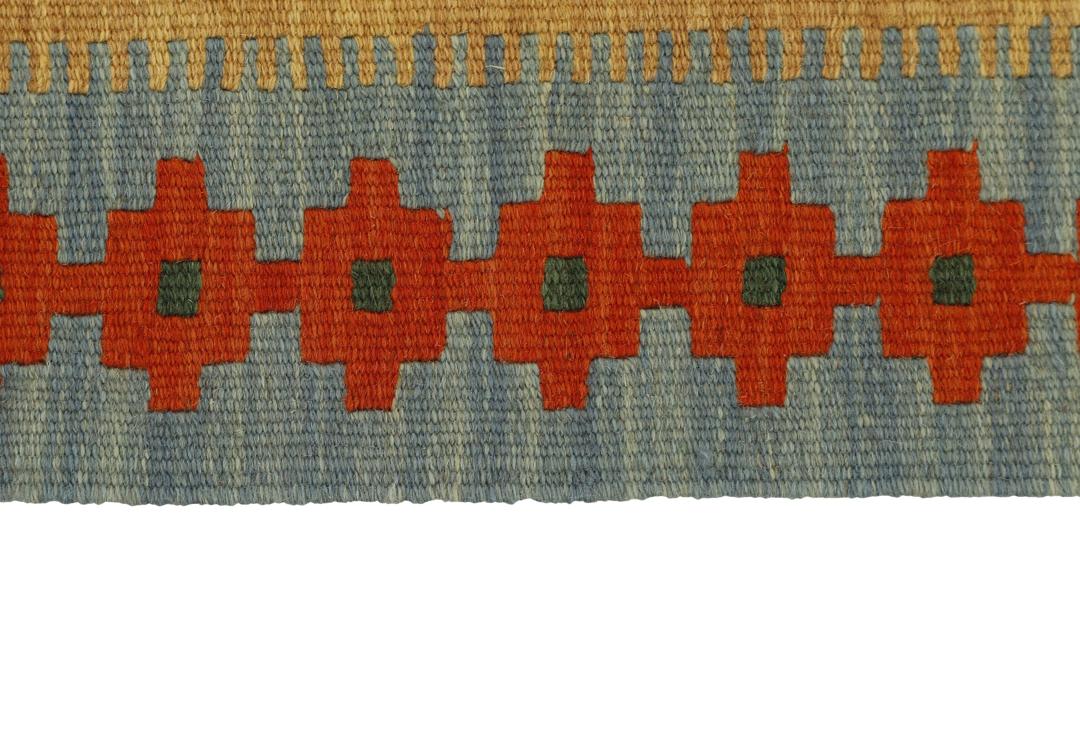
The visual language of this rug is deeply symbolic, often utilising geometric motifs that have been used for centuries to represent protection, fertility, and the natural world. The repeating diamond and border patterns found here are hallmarks of the tradition, demonstrating a balanced composition that reflects the orderly, rhythmic nature of the landscape from which these designs emerged.
Today, kilims are highly sought after by collectors for their cultural weight and authentic craftsmanship. Owning a piece like this is more than just selecting a floor covering; it is an investment in a living tradition. These rugs carry the narrative of their creators and the history of their region, offering a lasting connection to a craft that values slow, deliberate work over mass production.