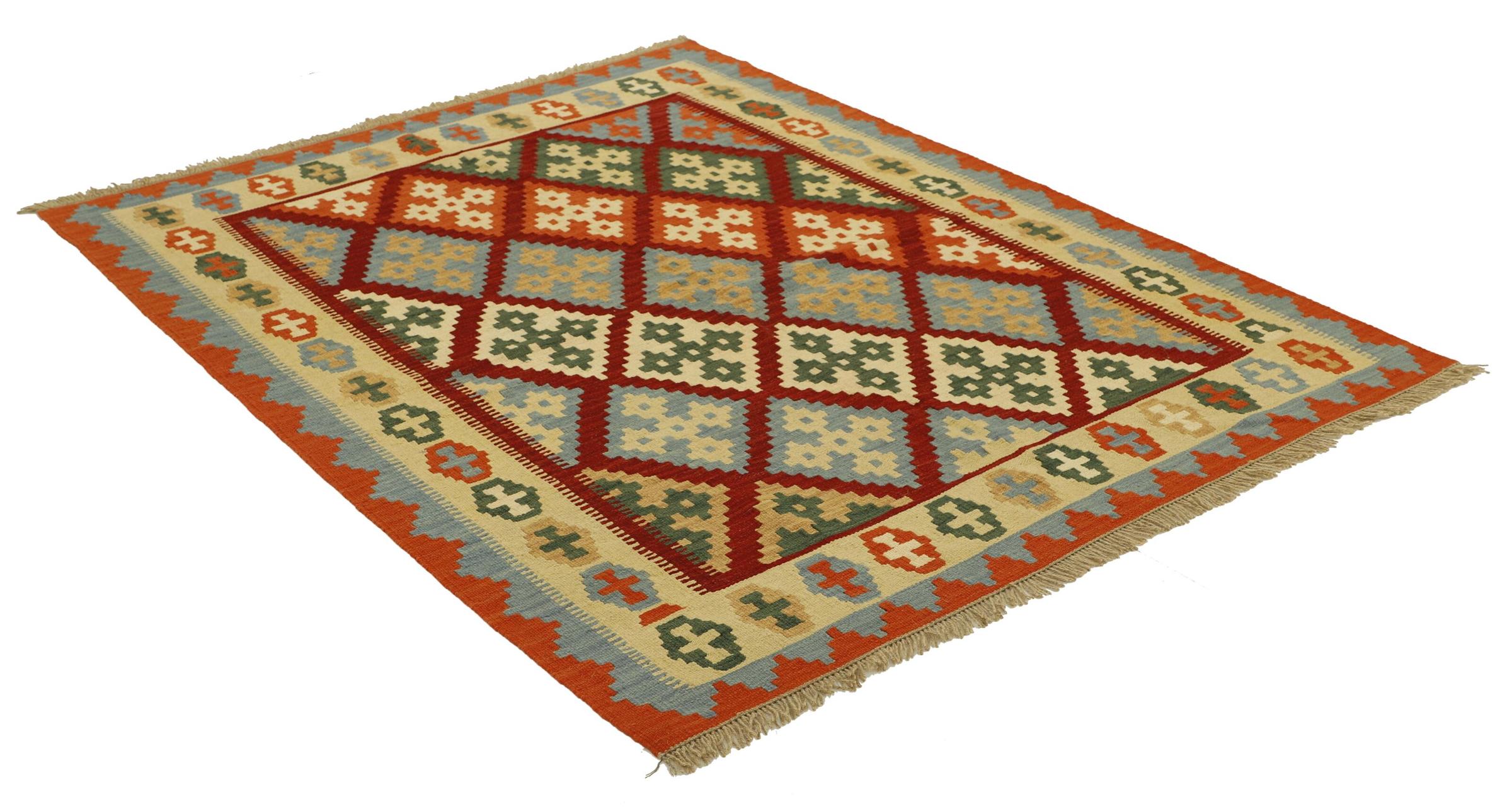
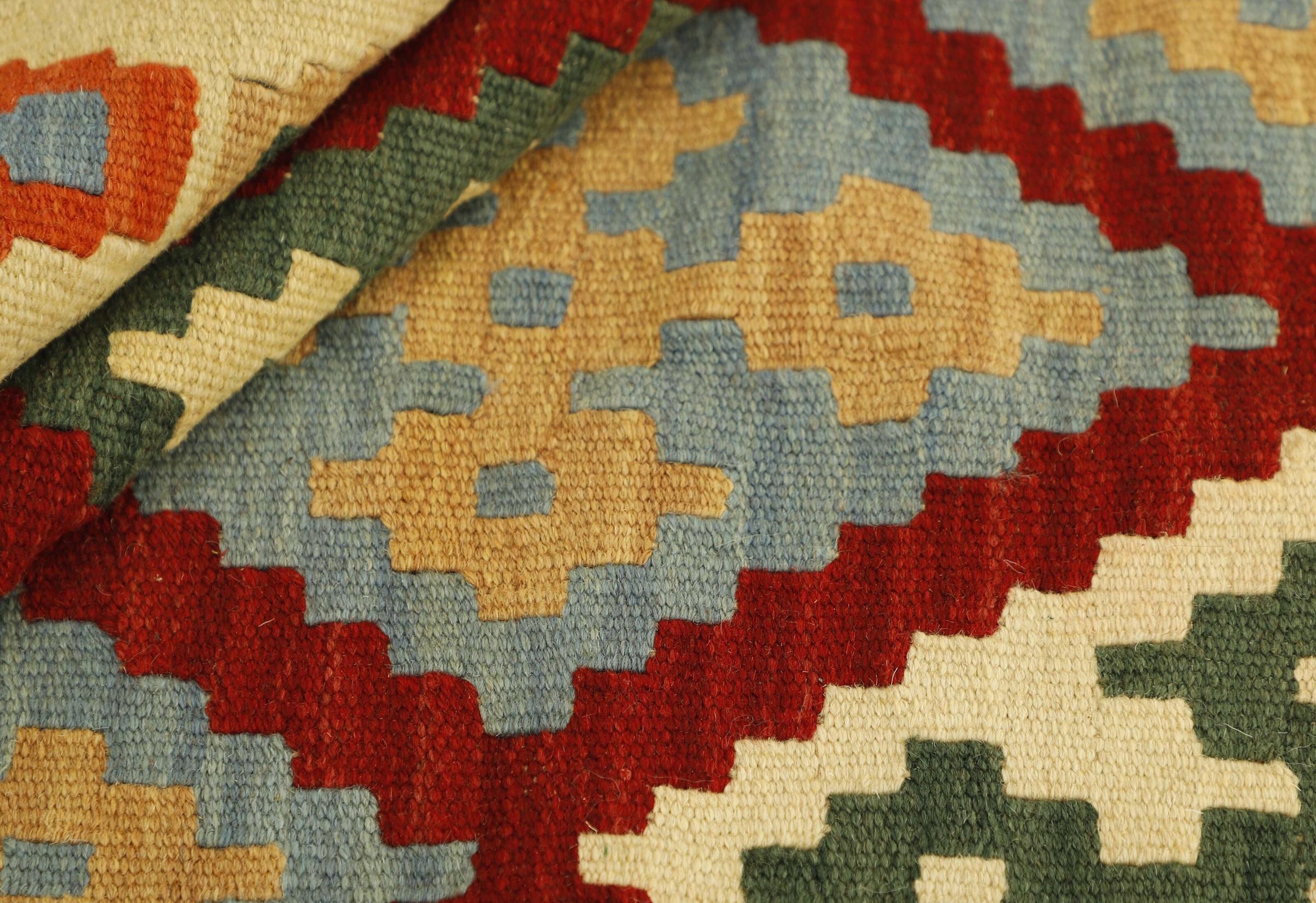
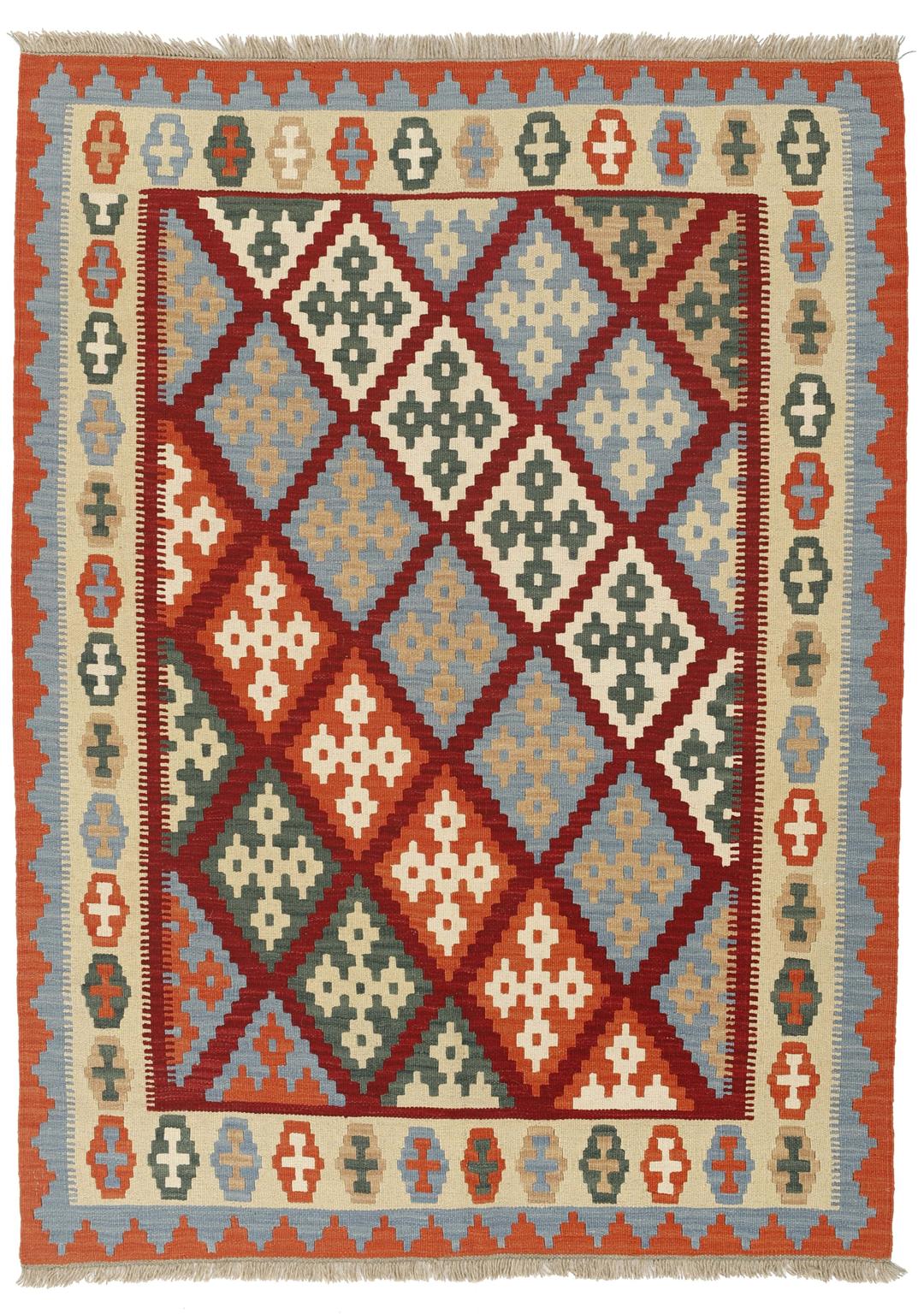
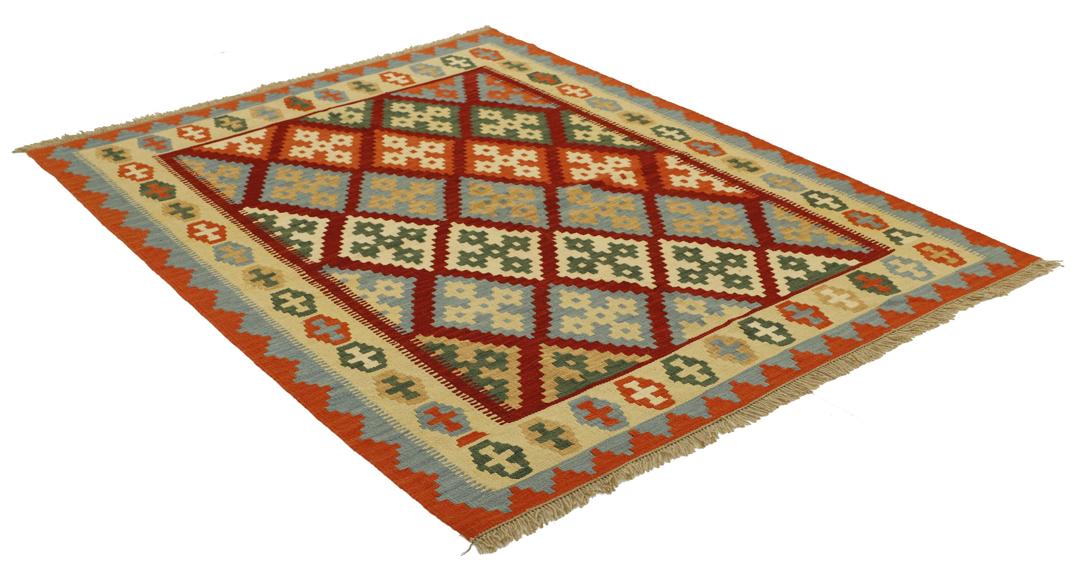
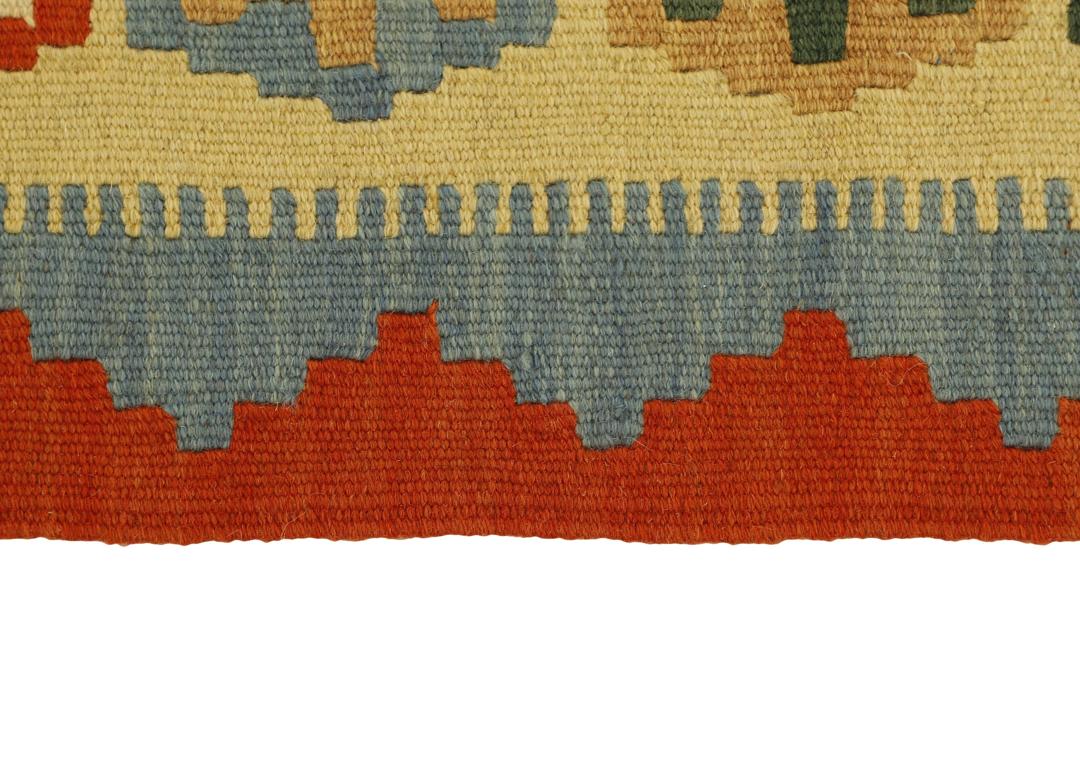
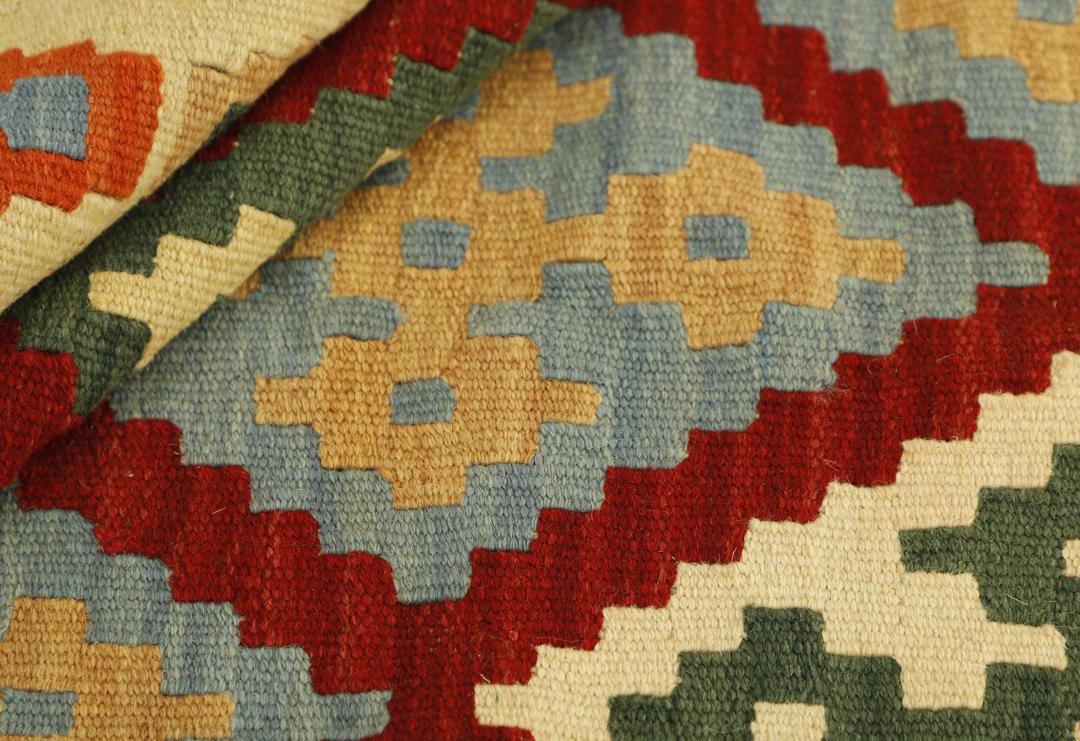
Kilim rugs are a foundational element of Middle Eastern textile history, emerging from a tradition where nomadic and village weavers created flat-woven carpets to serve both decorative and functional purposes. Unlike pile rugs, these are created by interlocking the weft and warp threads, a technique that has been perfected over centuries to produce lightweight yet incredibly durable floor coverings.
The term Kilim itself refers to this specific flat-weaving technique, which is distinct from the knotted-pile methods used in other regional rug traditions. By omitting the knotted pile, the weaver achieves a unique, slim texture that highlights the clarity of the pattern. This technical choice is essential for the sharp, angular motifs that define the aesthetic, as it allows for precise colour transitions that knotted rugs cannot replicate with the same graphic intensity.
The geometric diamond patterns seen here are traditional motifs that often carry symbolic meaning, representing protection, fertility, or tribal identity. The use of bold, contrasting colours is a hallmark of this tradition, where weavers draw inspiration from the natural landscape and local dyes. Each rug is a visual narrative, with borders and central fields that reflect the specific cultural vocabulary of the region where it was crafted.
Collecting these rugs is an investment in human skill and cultural heritage. Because they are crafted without modern mechanical assistance, each rug serves as a document of the weaver's personal vision and technical mastery. Owning a piece like this connects your home to an ancient lineage of craft, offering a sense of depth and authenticity that mass-produced items simply cannot match.