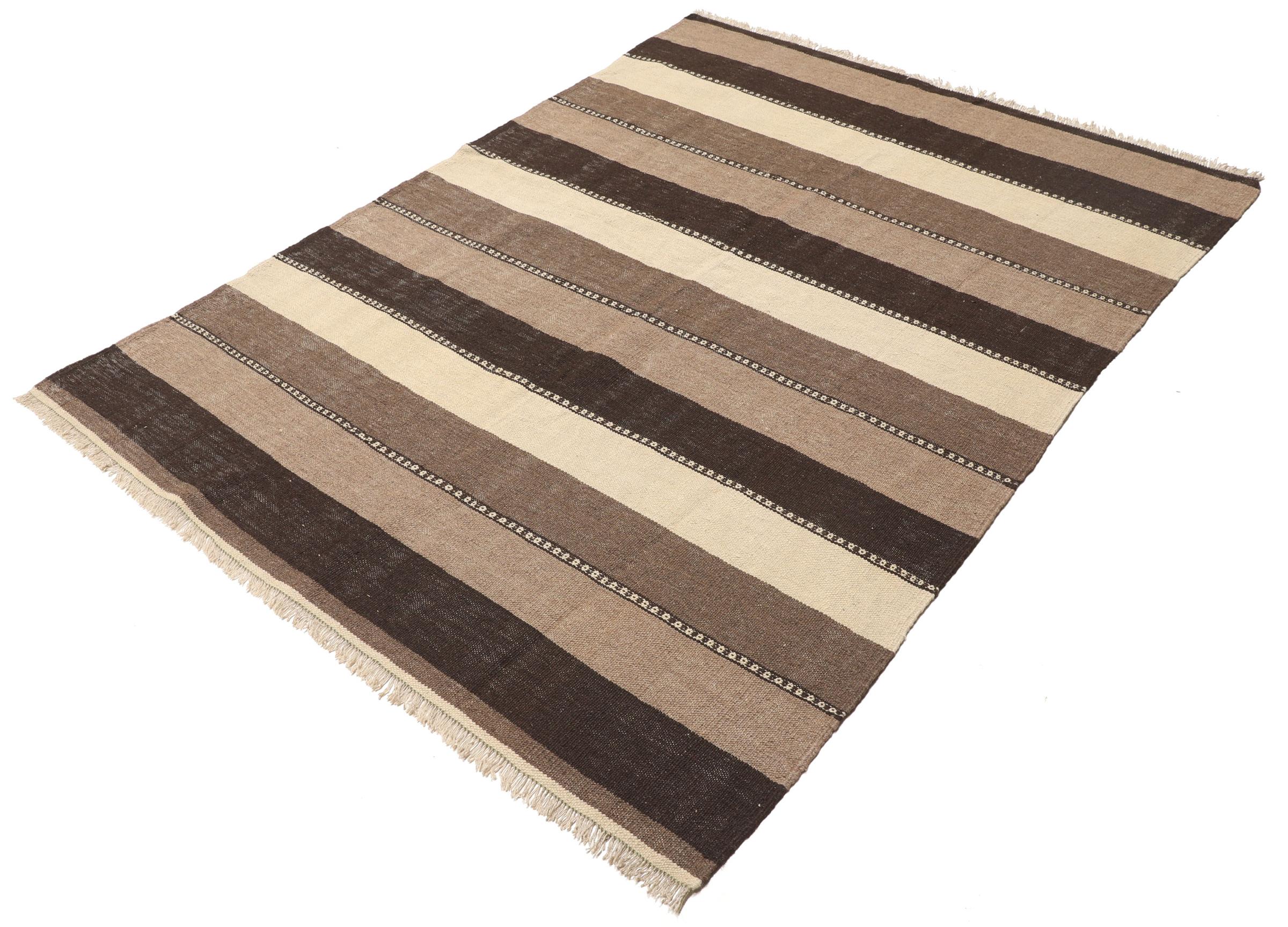
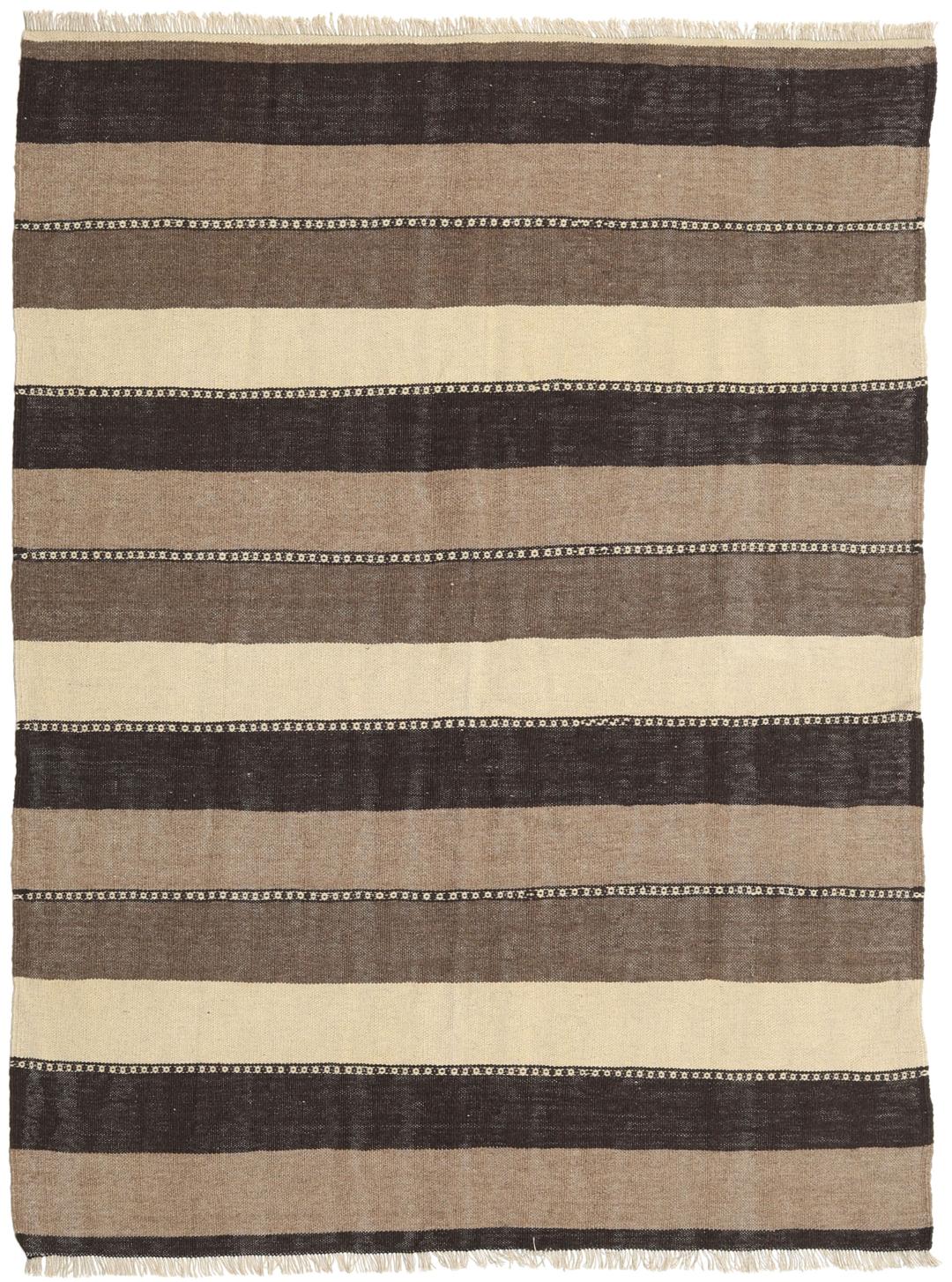
Kilim rugs represent one of the most enduring weaving traditions from the Middle East. These flat-woven textiles have been used for centuries, not just as floor coverings, but as essential functional items in nomadic and village life. The word Kilim itself refers to the specific technique of weaving where no pile is created, resulting in a thin, versatile fabric that could easily be folded, transported, or used as a wall hanging or floor mat.
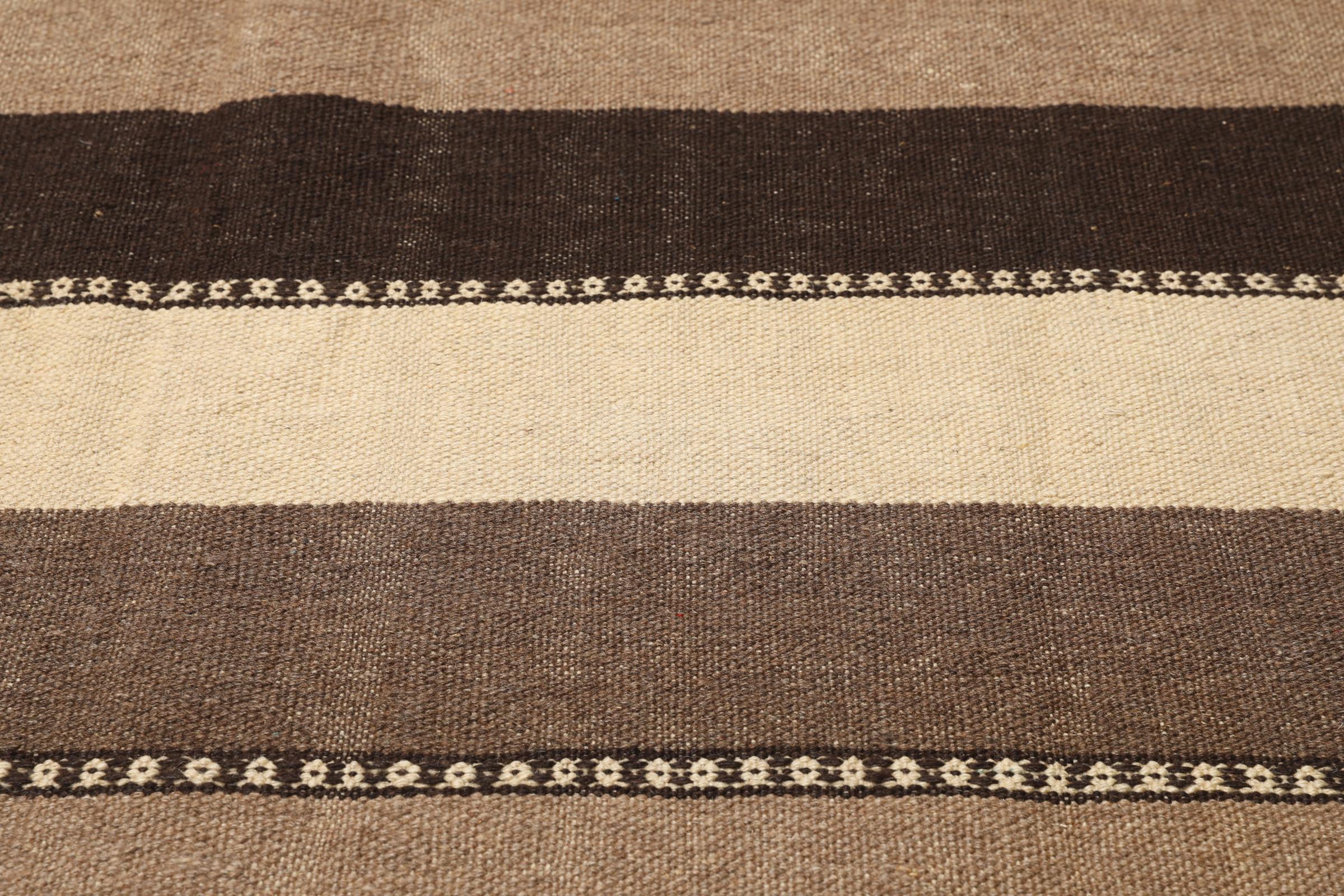
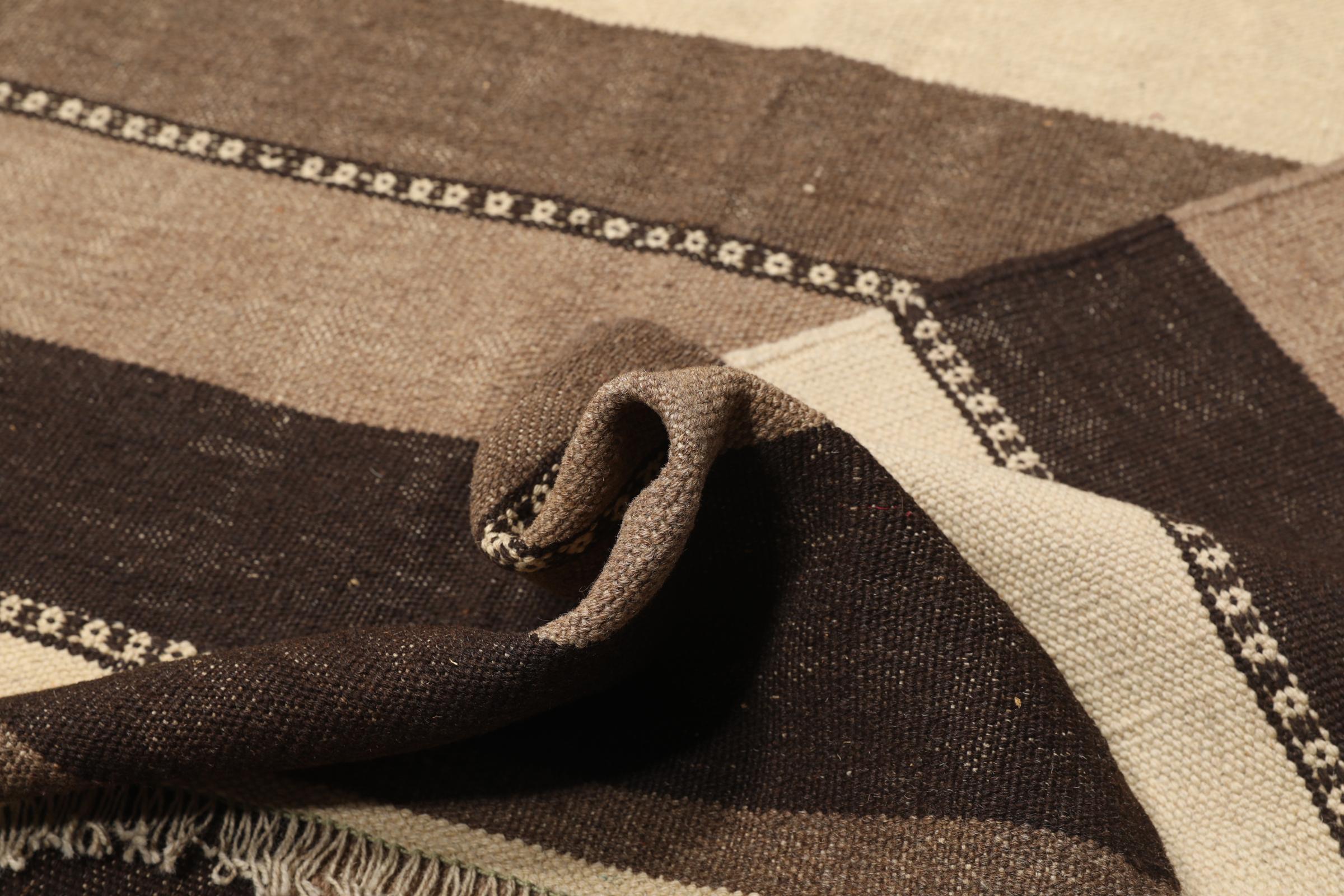
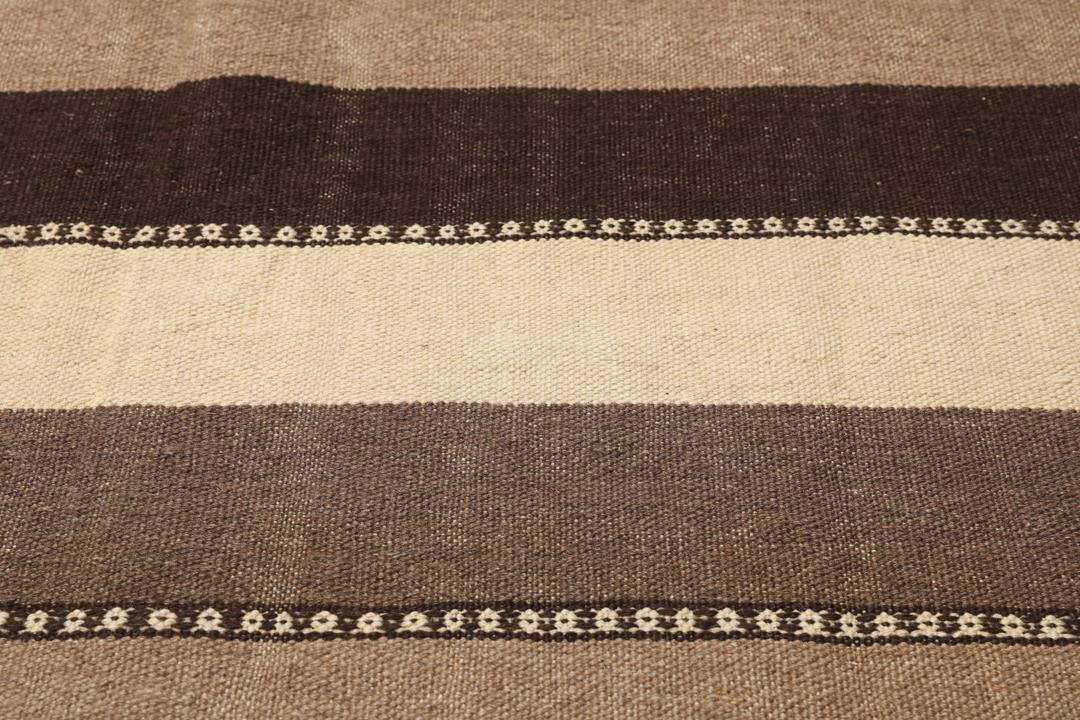
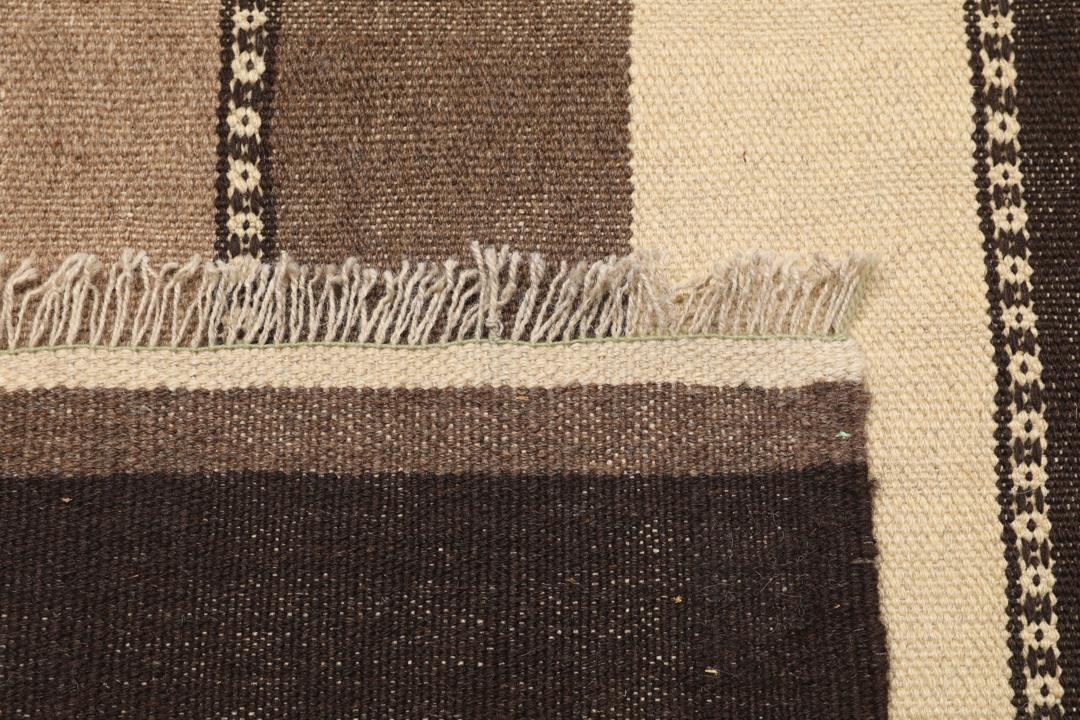
The technical brilliance of a Kilim lies in its slit-weave construction. By changing the colours of the weft threads, the weaver creates crisp, geometric transitions without the need for complex knotting techniques. This method requires an intimate knowledge of tension and pattern, as the weaver must maintain perfect alignment to ensure the stripes and motifs remain sharp and straight throughout the entire length of the rug.
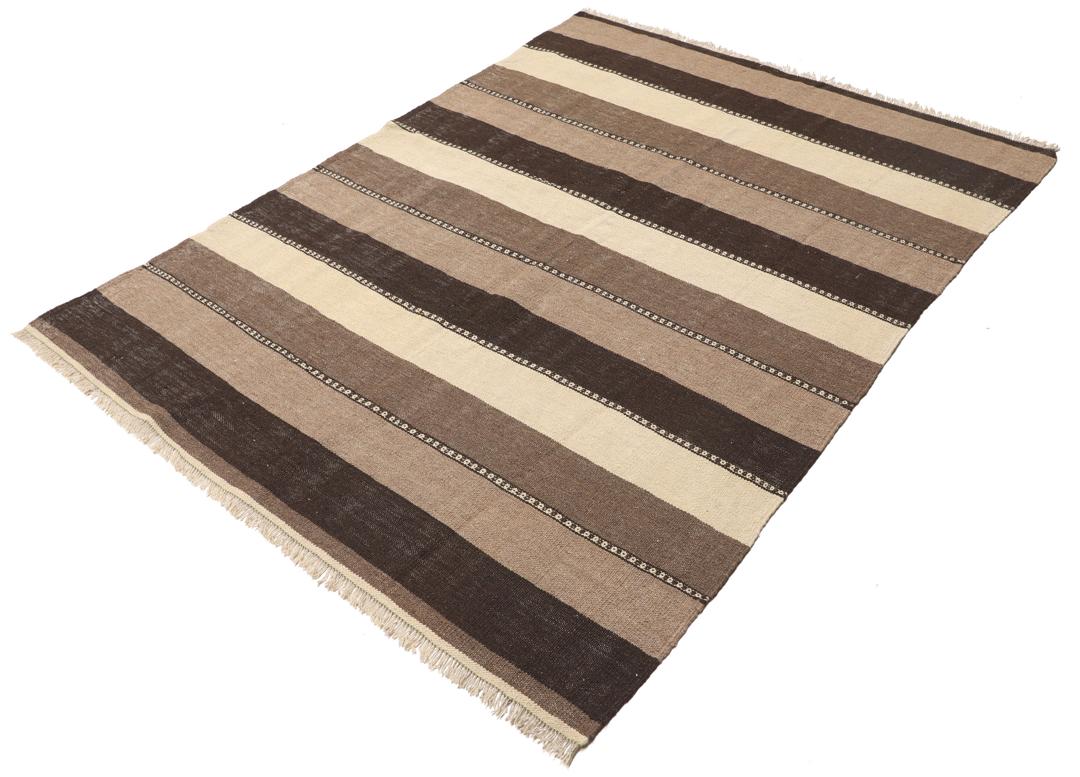
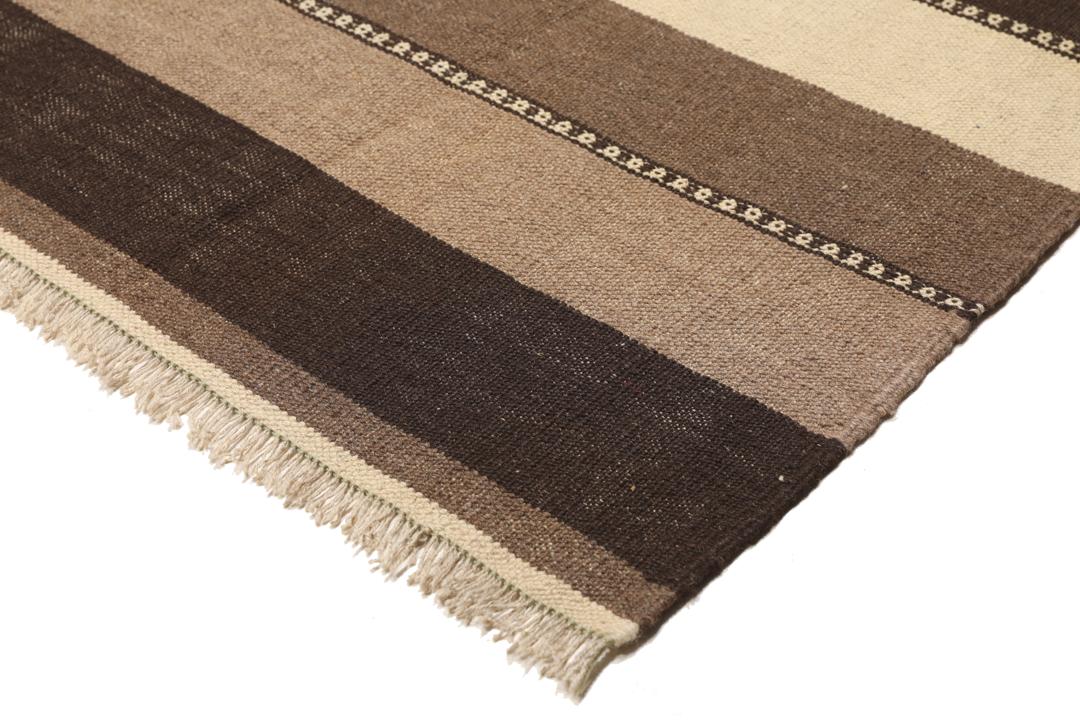
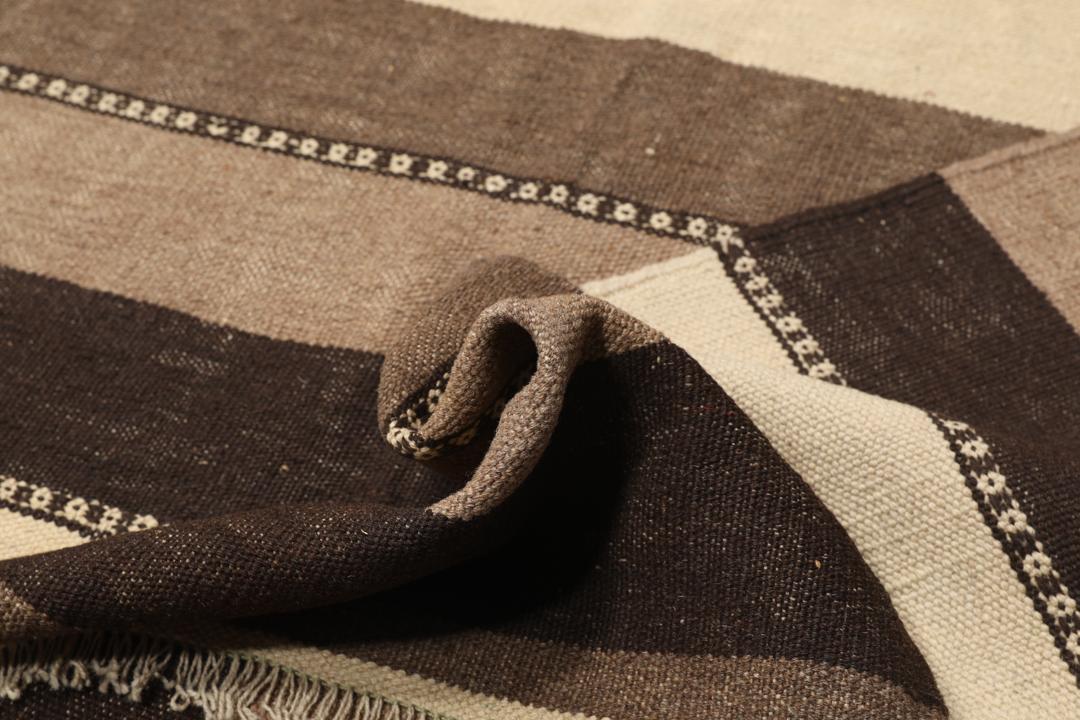
Design-wise, these rugs are often defined by their geometric clarity. Striped patterns, such as the one seen here, are a classic expression of this tradition, emphasising the raw beauty of the natural wool colours. The use of undyed or naturally dyed wool in these earthy tones is a hallmark of the region, reflecting a deep connection to the local landscape and the sustainable practices that have defined these communities for generations.
Collecting a Kilim is an act of preserving a piece of cultural heritage. Because they are hand-woven without the aid of modern machinery, each rug reflects the specific environment and artistic intent of the person who created it. Owning one is a way to bridge the gap between ancient traditions and the contemporary home, bringing a sense of history and human connection into your living space that a factory-made rug simply cannot replicate.