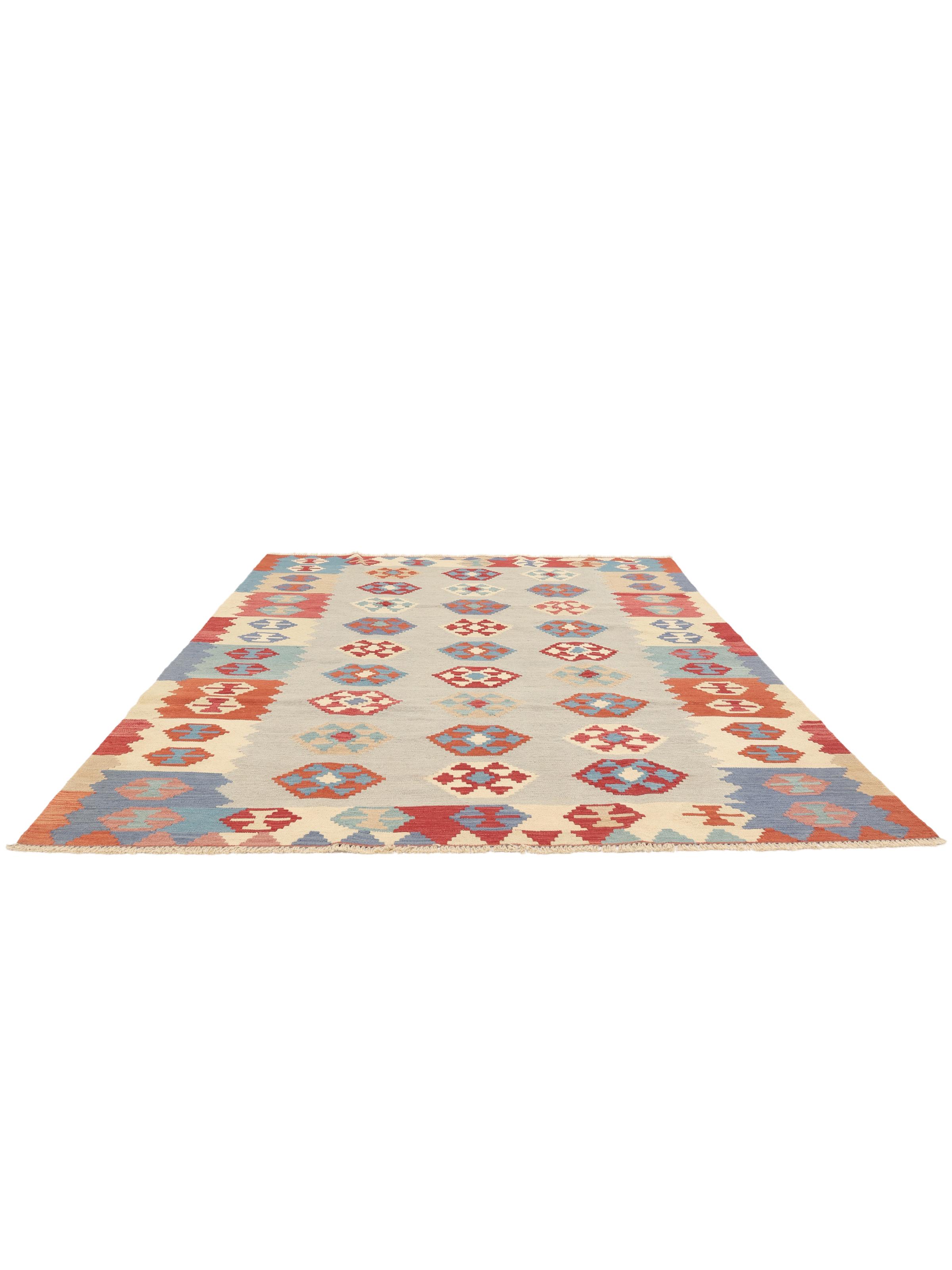
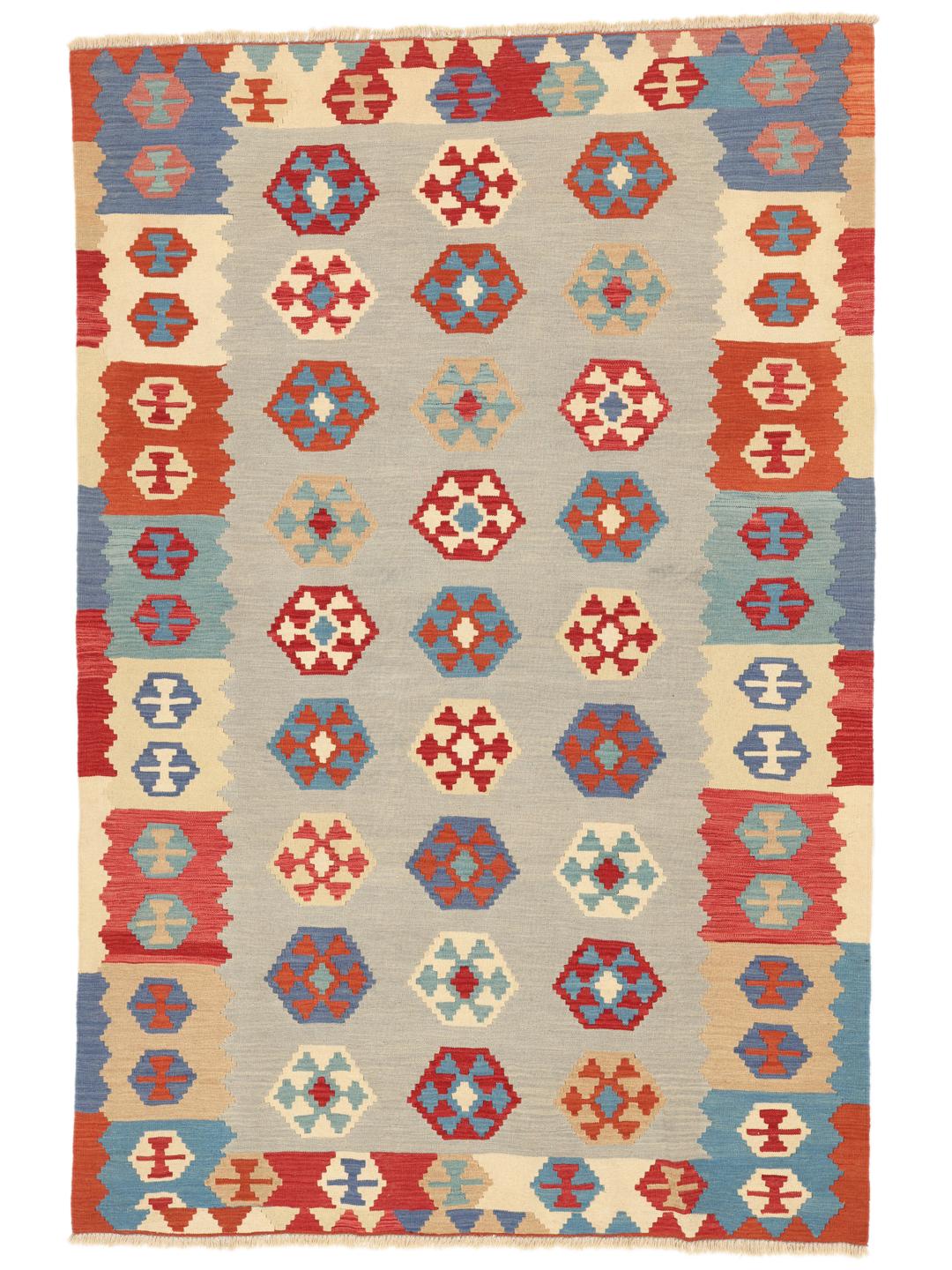
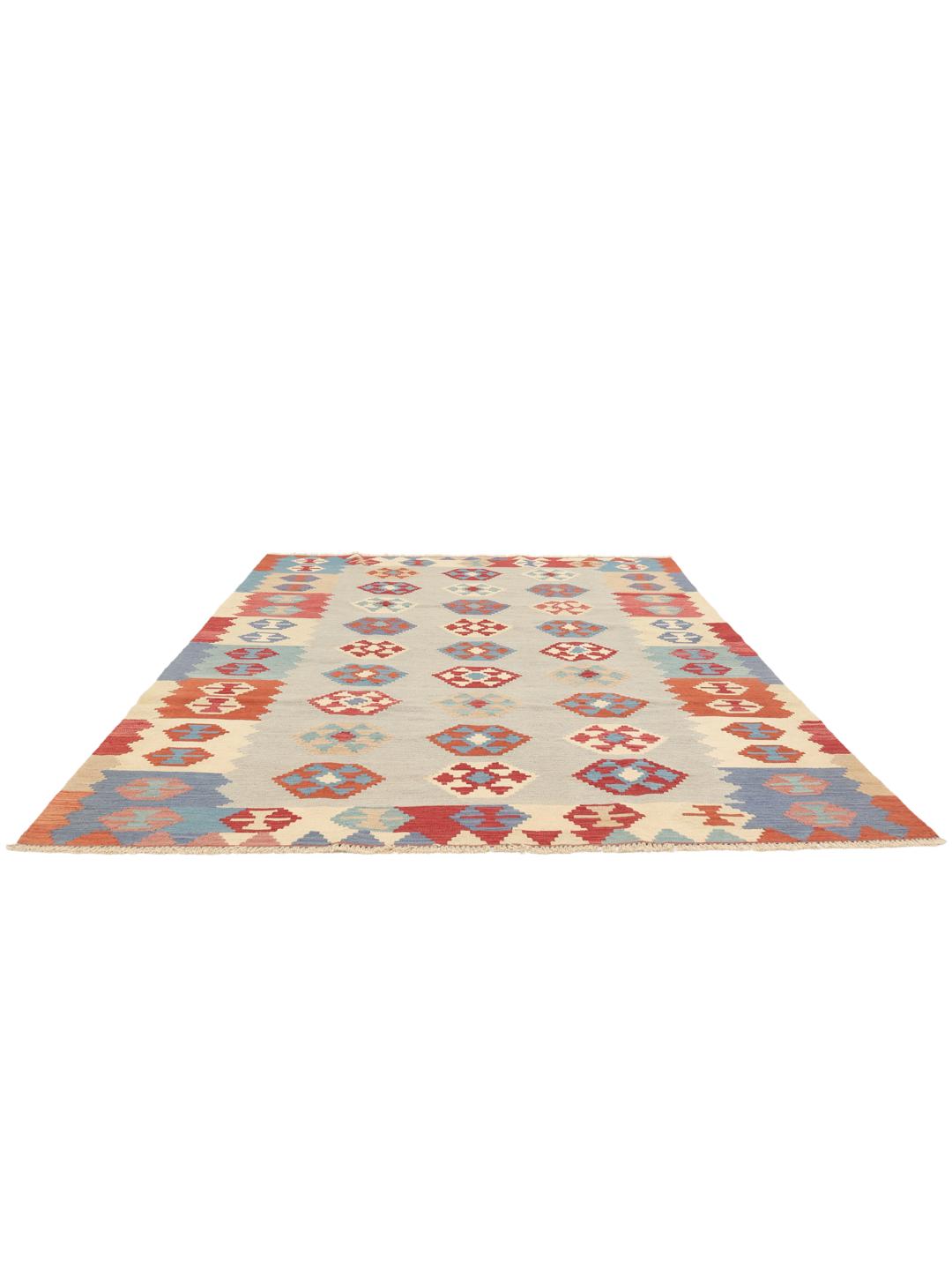
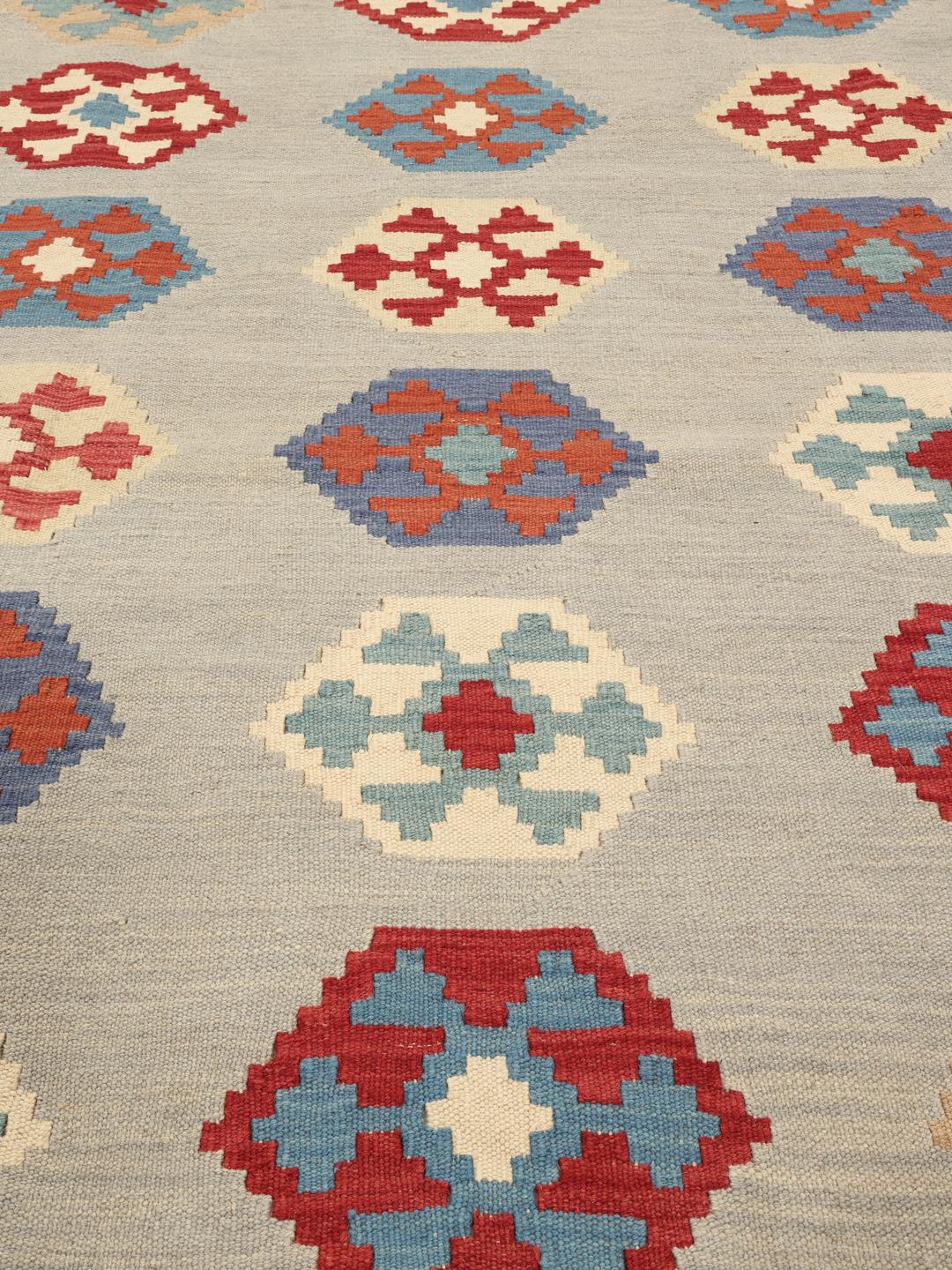
The Kilim Ghashghai originates from the nomadic tribes of the Middle East, a region with a storied history of textile production that dates back centuries. These rugs were traditionally created by tribal weavers to meet the functional needs of a migratory lifestyle, serving as floor coverings, tent partitions, and storage bags. The transition from these utilitarian roots to decorative art has preserved the authenticity of the craft while allowing it to adapt to modern home environments.
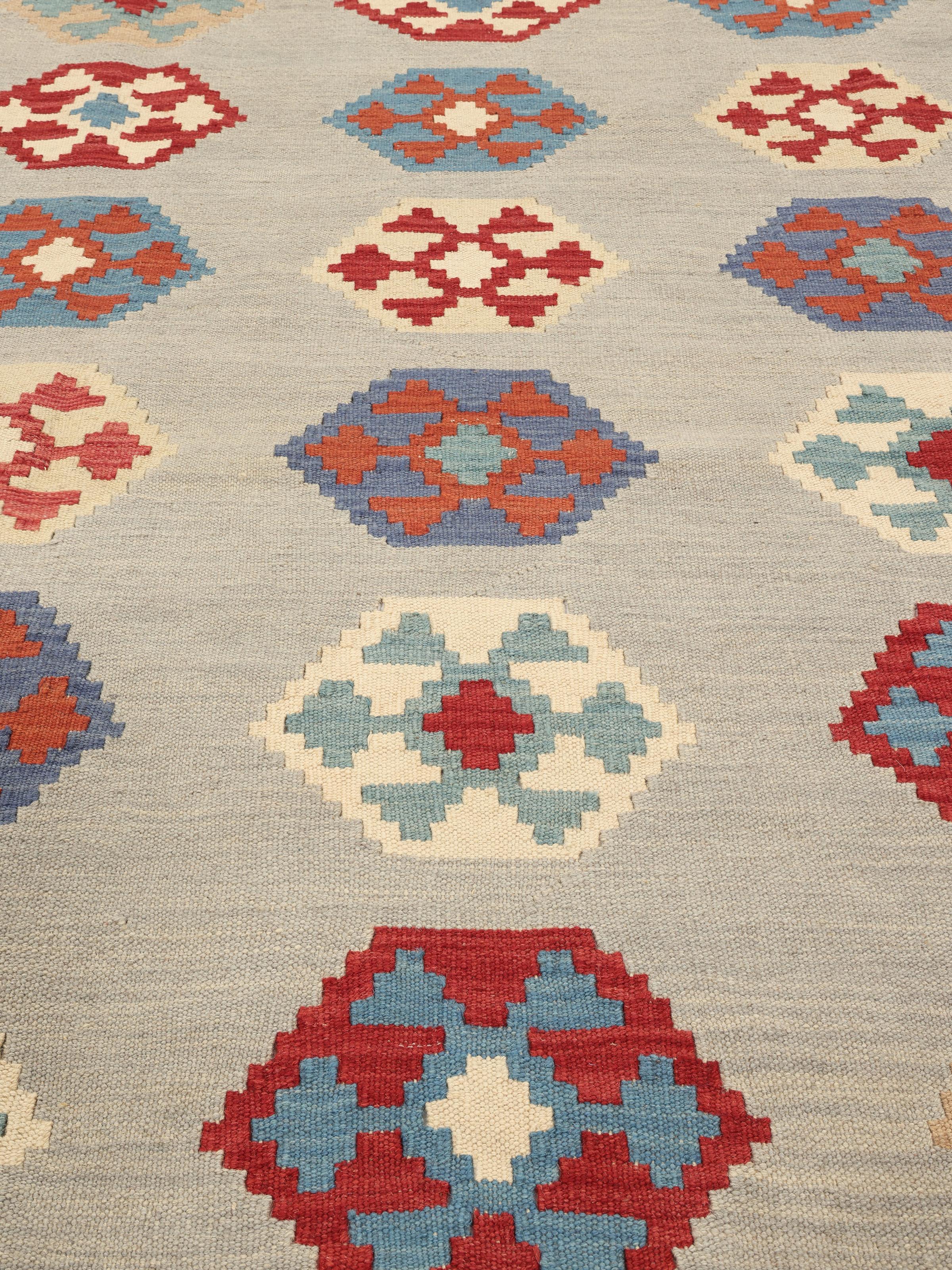
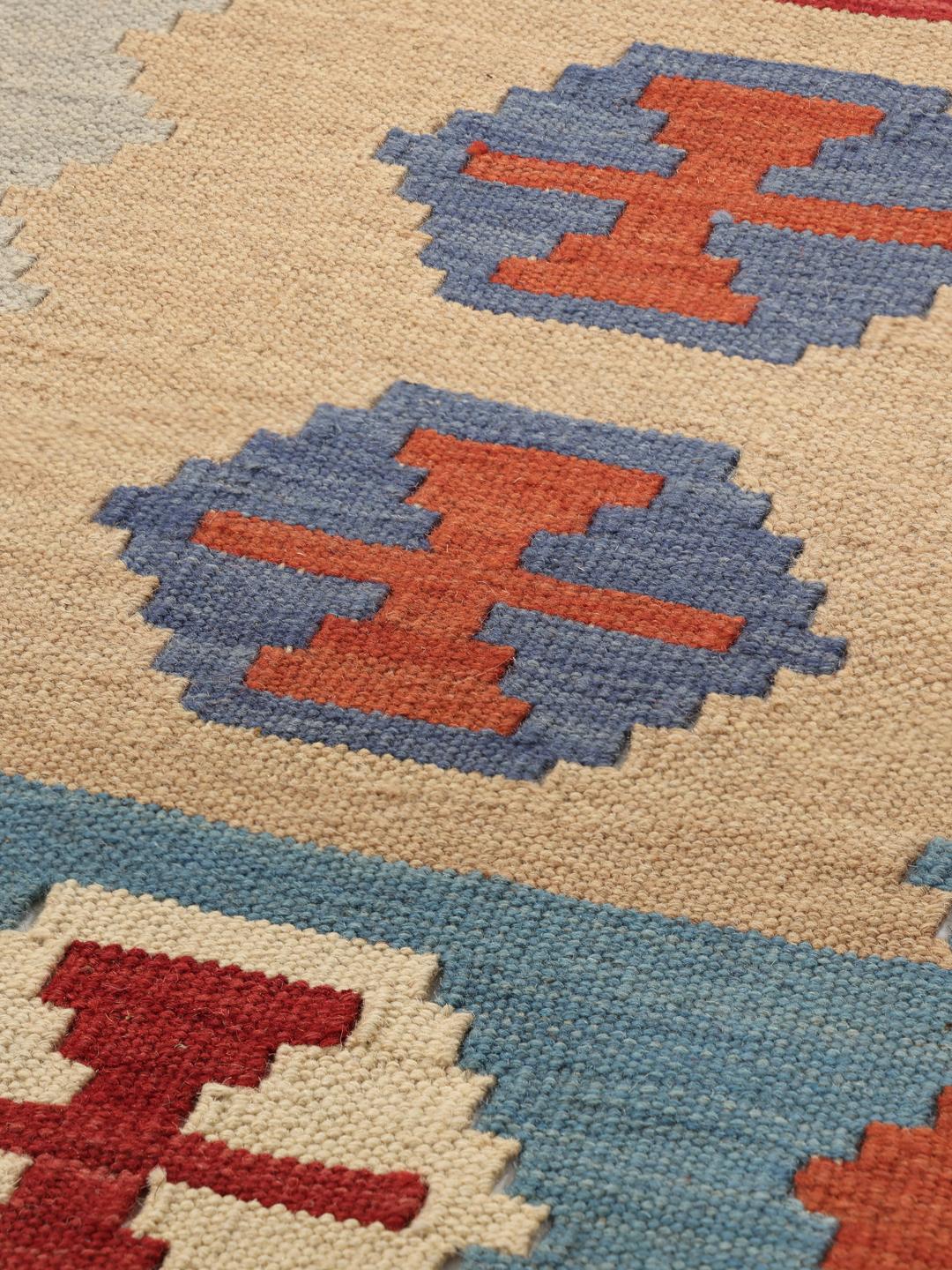
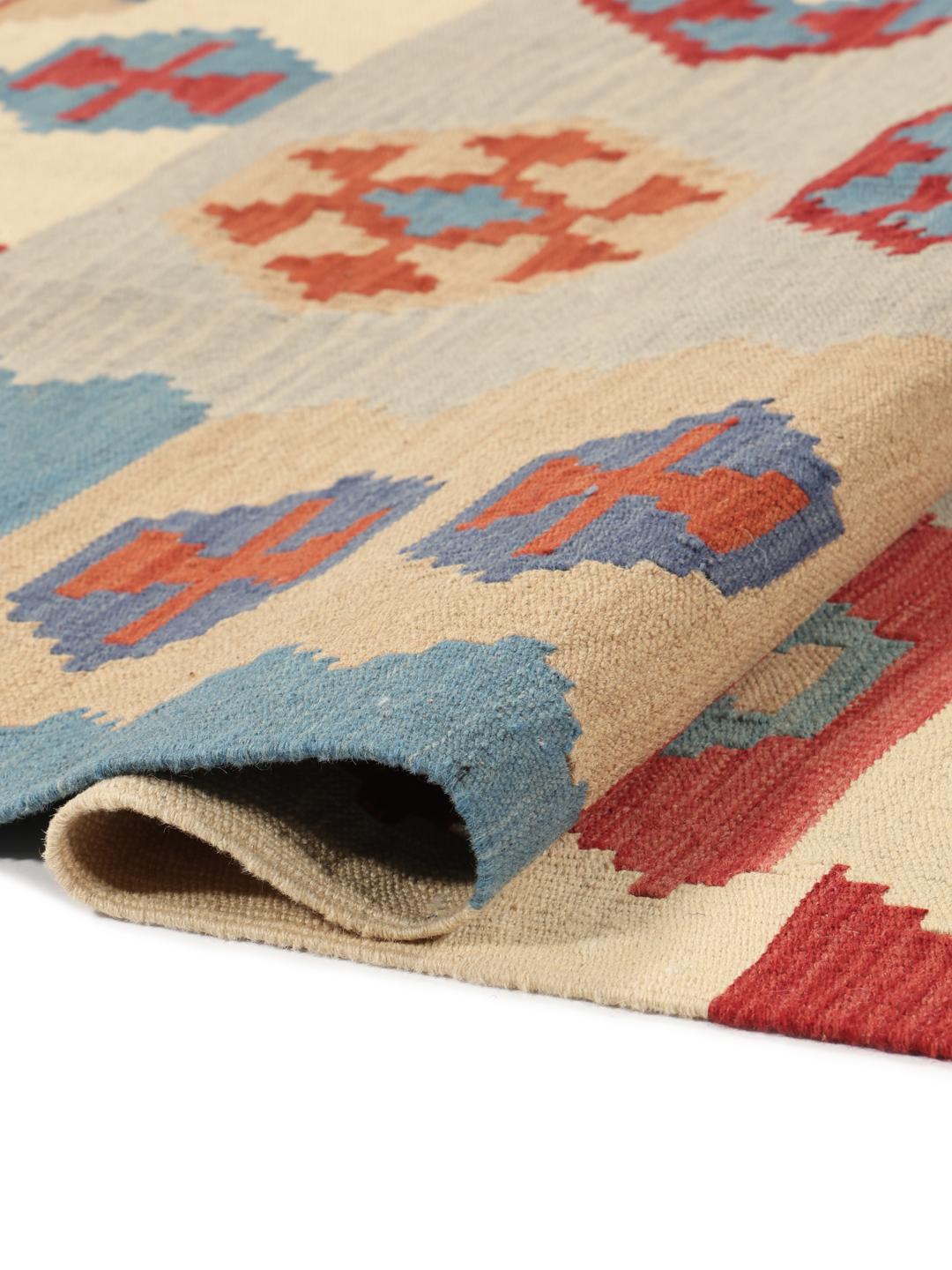
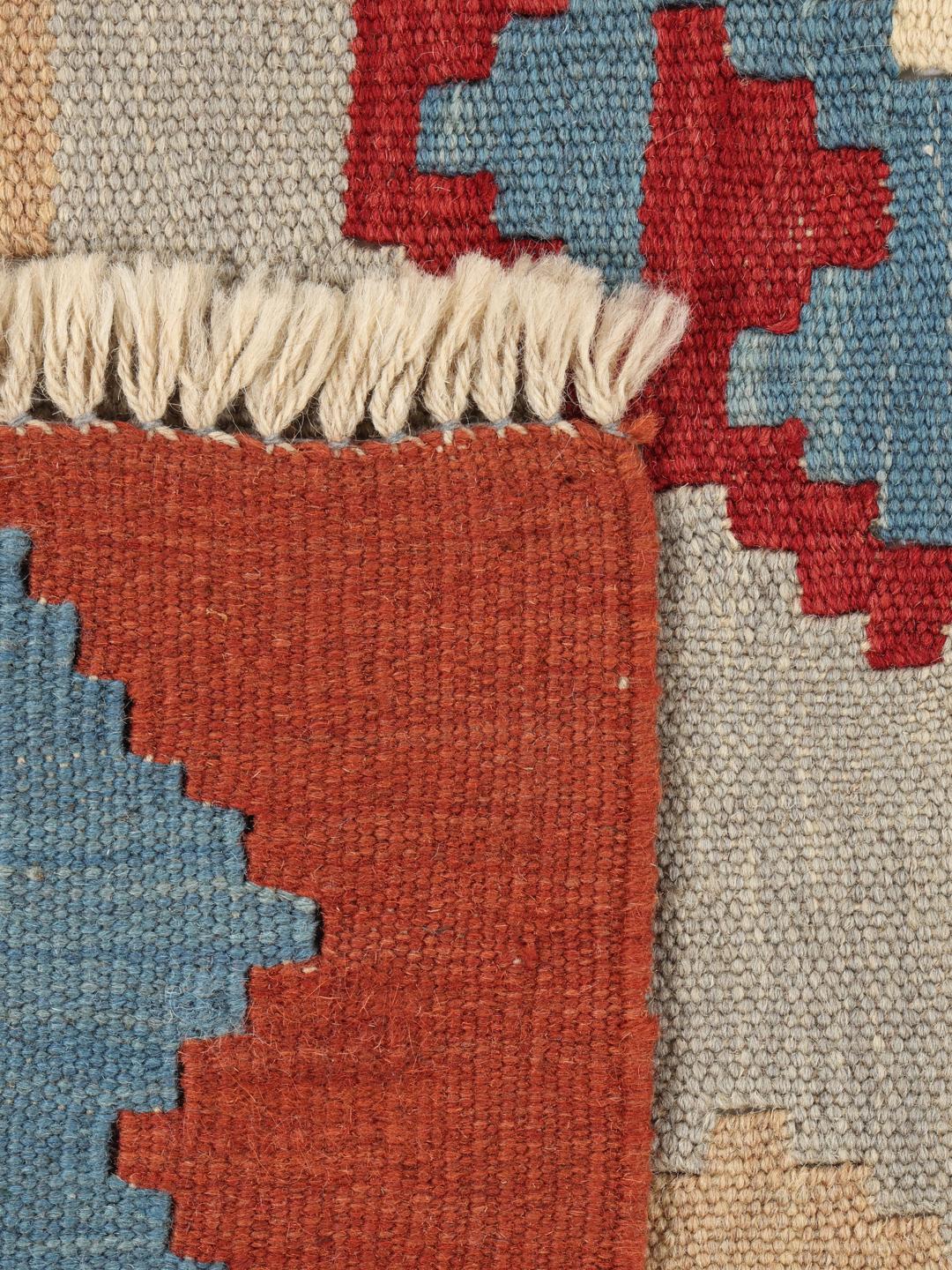
The term 'kilim' specifically refers to the flat-weaving technique where the weft threads are passed through the warp to create the design. Because there is no pile, the resulting rug is reversible, lightweight, and exceptionally durable. This technique requires a high degree of precision, as the weaver must manage multiple colour changes throughout the process to maintain the crisp edges of the geometric patterns.
Visually, these rugs are defined by their bold use of colour and repetitive, geometric motifs. You will often find stylised animal figures, latch-hook medallions, and complex borders that reflect the weaver's environment and cultural identity. The colours are traditionally sourced from natural dyes, contributing to the vibrant, earthy palette that makes these pieces so recognisable and sought after by collectors worldwide.
Collecting a Kilim Ghashghai is an investment in cultural heritage. Each rug tells a story of the people who made it, capturing a moment in time through its patterns and colour choices. By choosing such a piece, you are supporting the continuation of an ancient tradition and bringing a tactile, authentic element into your home that cannot be replicated by modern industrial manufacturing.