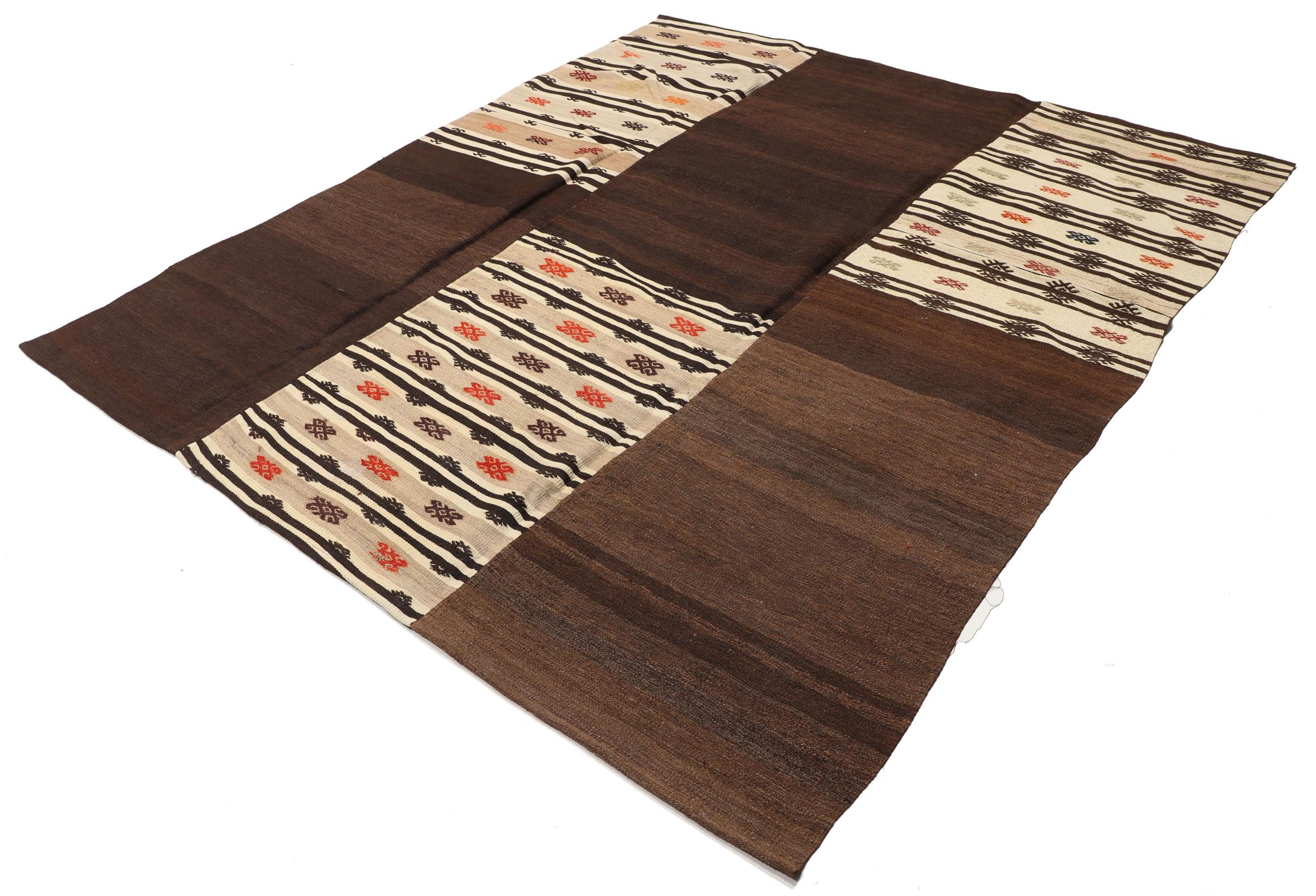
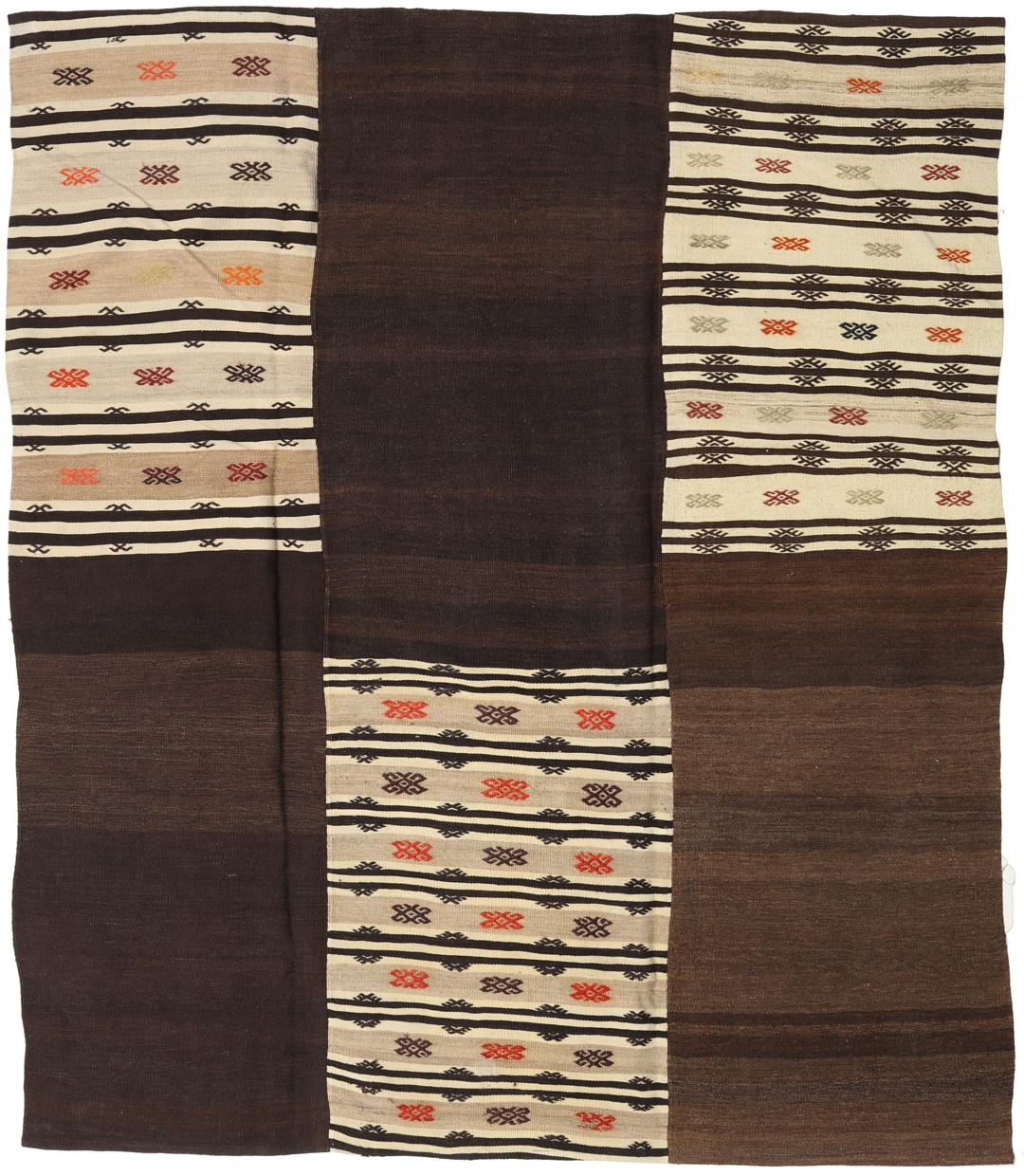
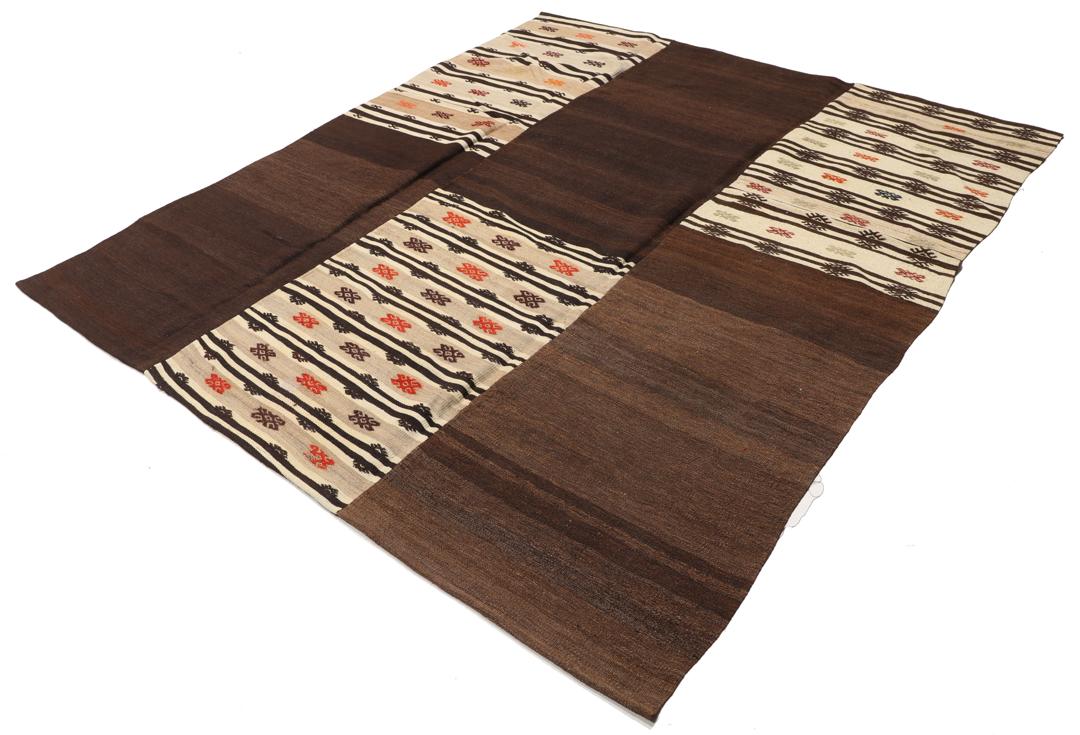
The tradition of the Kelim, or flat-woven rug, is deeply rooted in the history of the Middle East, particularly within the nomadic and village cultures of Turkey. Historically, these rugs were woven on portable looms by women who used them for everything from floor coverings to saddlebags and wall hangings. The practice of creating patchwork rugs is a modern evolution of this heritage, allowing older or partial textiles to be repurposed into new, functional designs that celebrate the history of the original weave.
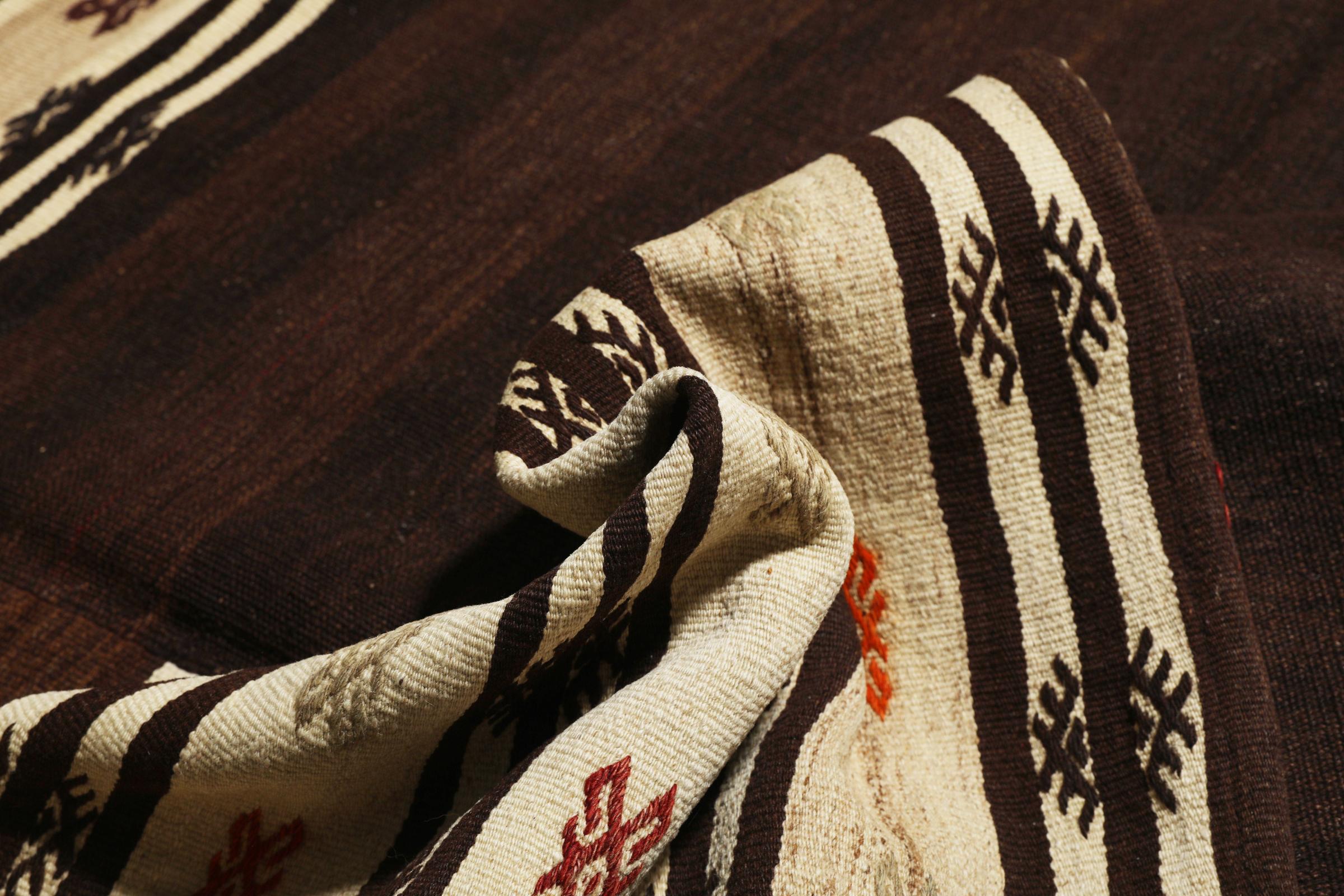
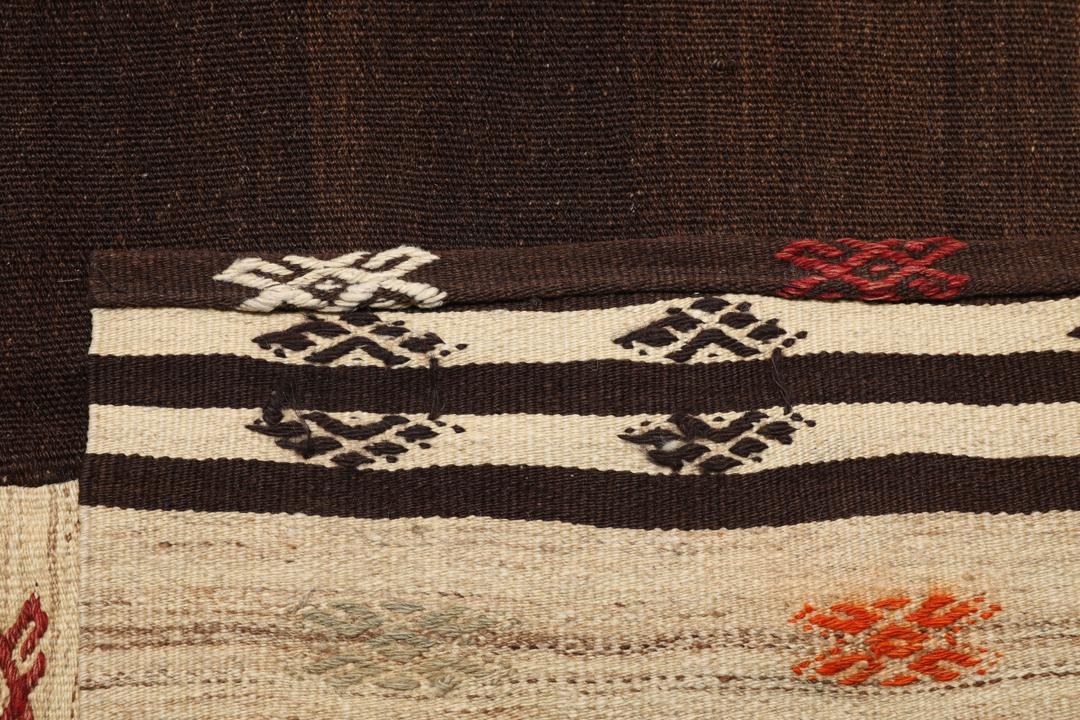
Flat-woven construction means that the rug is made by interlacing warp and weft threads without the use of knots. This technique results in a thinner, lighter, and reversible textile that is incredibly strong despite its profile. For the customer, this means a rug that is easy to maintain and move, offering a sleek look that fits perfectly under furniture while providing a durable layer of protection for your floors.
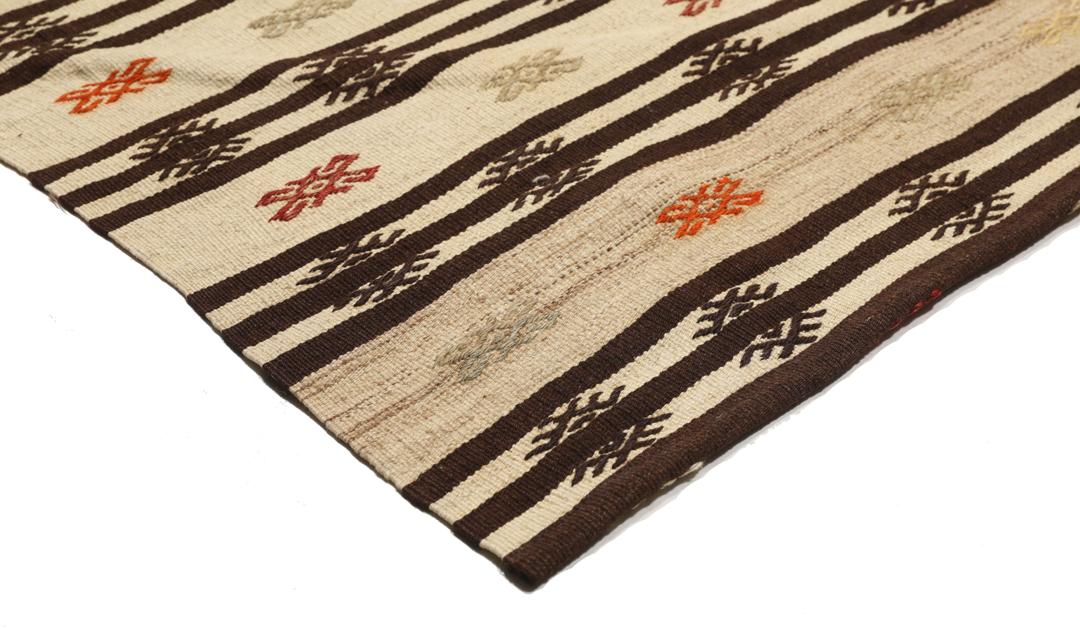
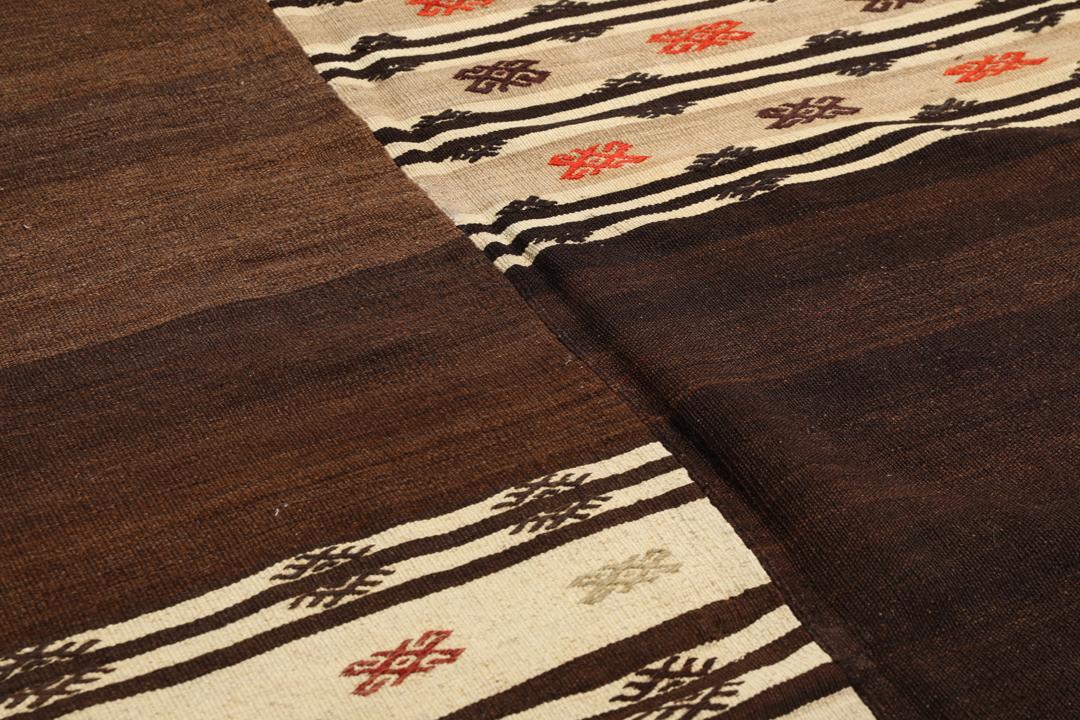
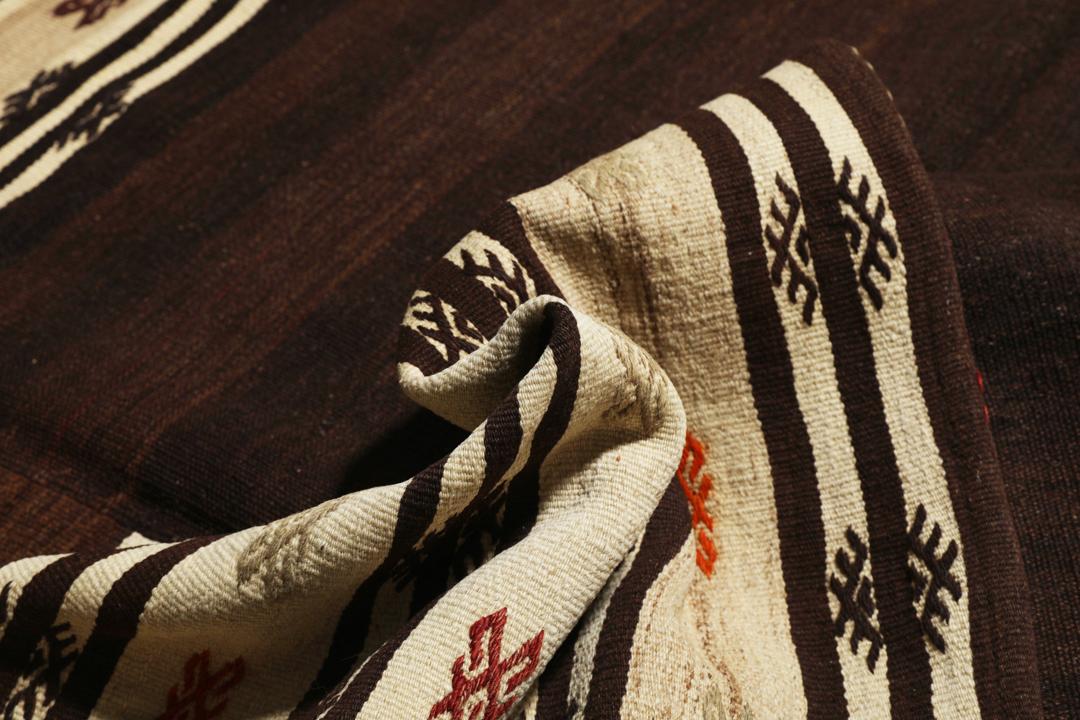
The visual language of these rugs often features geometric motifs and striped arrangements, which are characteristic of traditional Anatolian designs. The inclusion of small, stylized symbols within the stripes often reflects the weaver’s environment or tribal heritage, acting as a form of visual storytelling. In this piece, the combination of dark, solid brown sections with patterned panels creates a sophisticated contrast that highlights the versatility of Turkish textile motifs.
Owning a piece like this connects you to a long lineage of artisans who have perfected the art of weaving for centuries. These rugs are highly valued for their ability to bring a sense of history and cultural depth into a modern home. By collecting a patchwork piece, you are not just purchasing a floor covering, but preserving a craft tradition that values sustainability, skill, and the beauty of human-made objects.