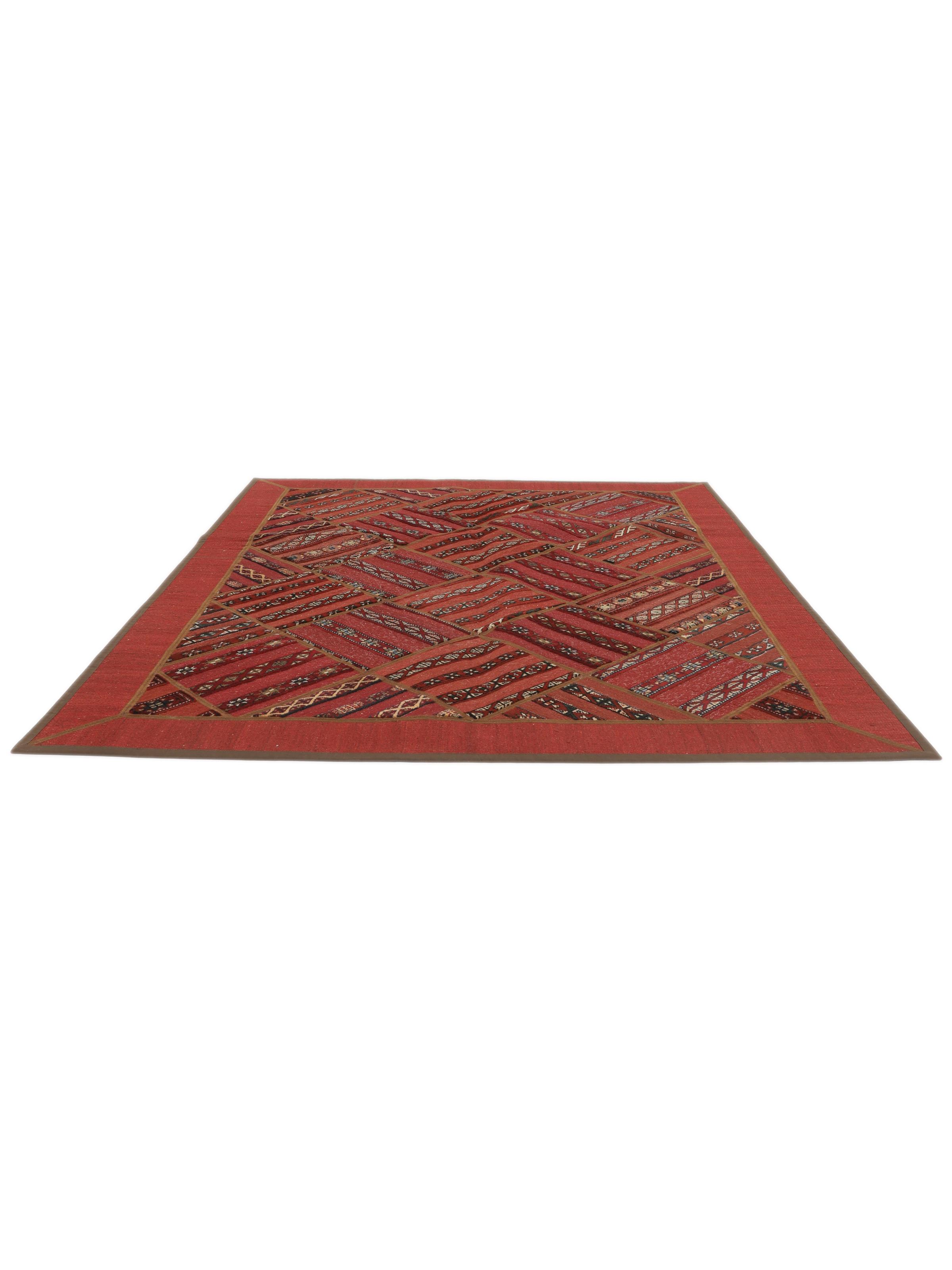
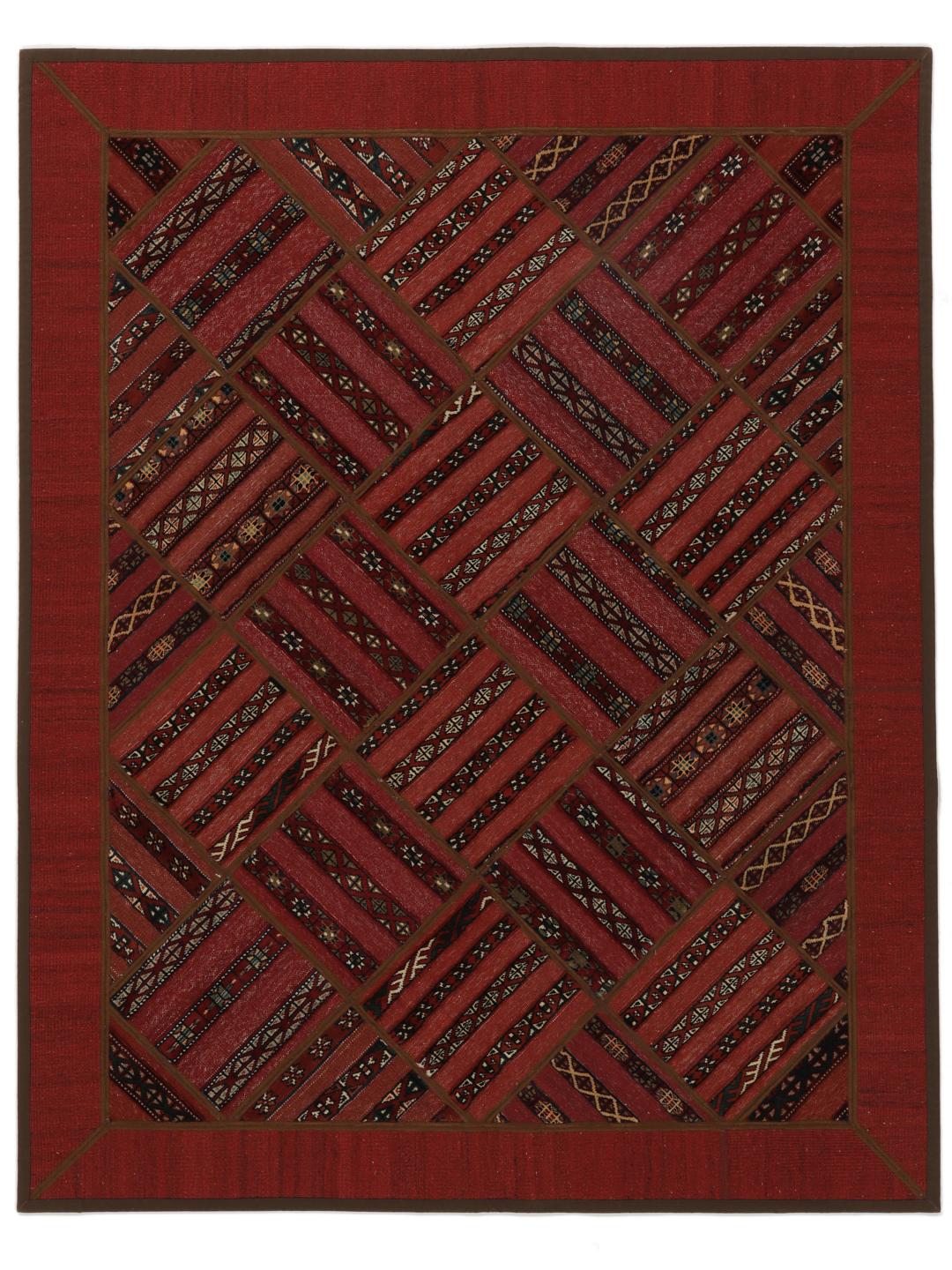
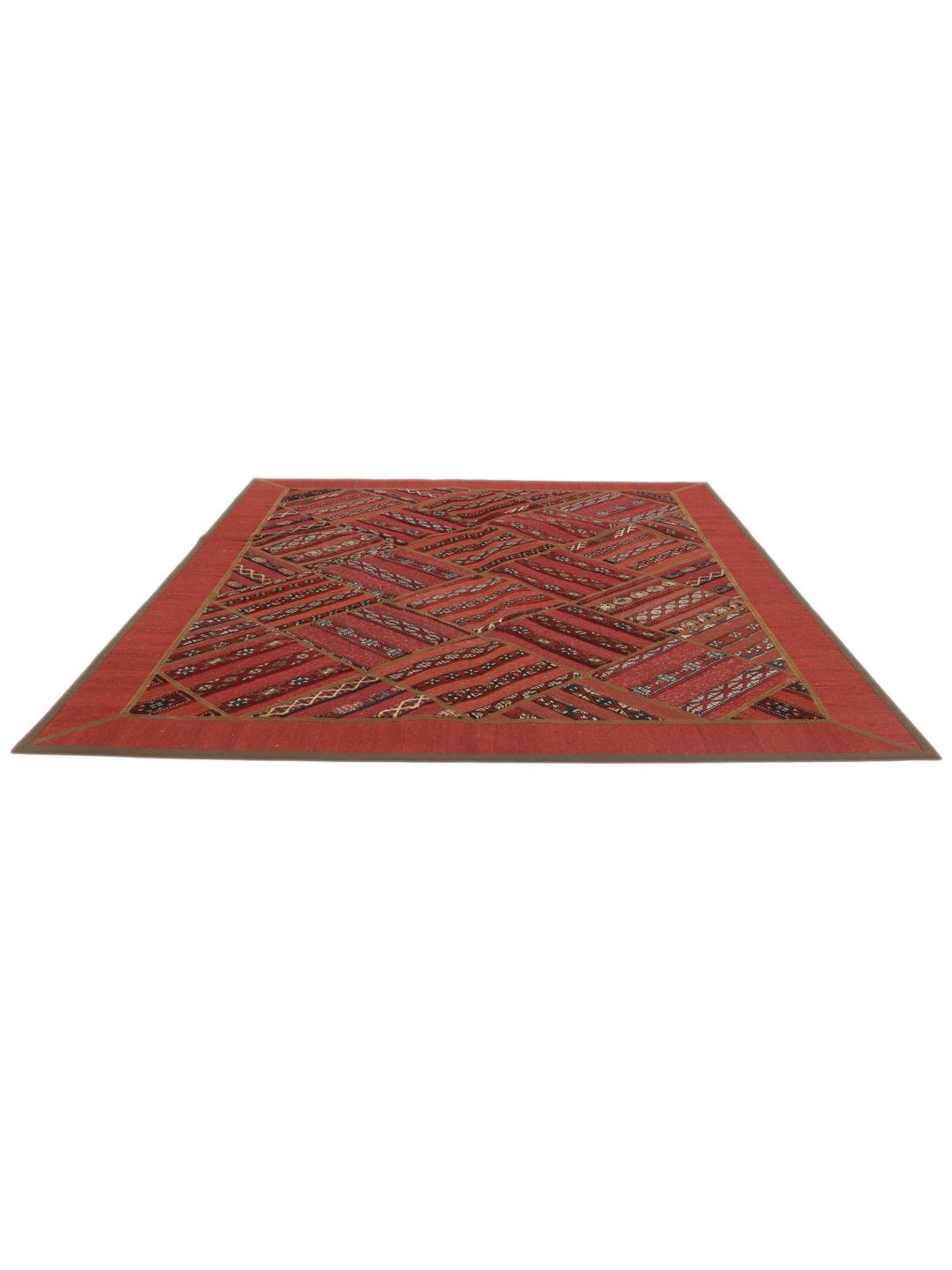
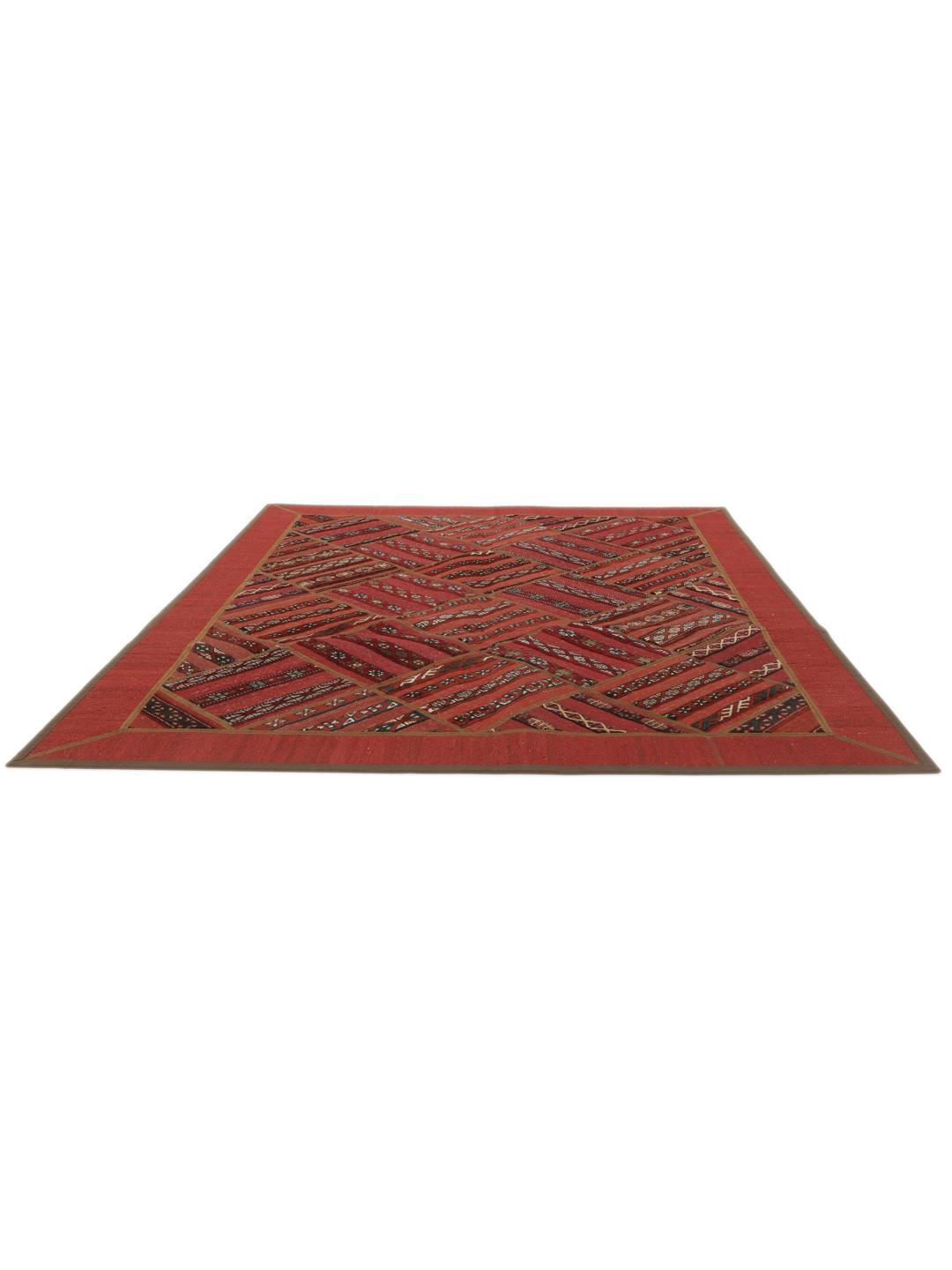
The tradition of patchwork in the Middle East has deep roots, evolving from the necessity of preserving and honouring hand-woven textiles. Artisans and families would carefully save remnants of older, well-loved rugs and kilims, eventually stitching them together to create new, functional floor coverings. This practice transformed remnants into heirlooms, ensuring that the labour and artistry of the original weavers were never lost.
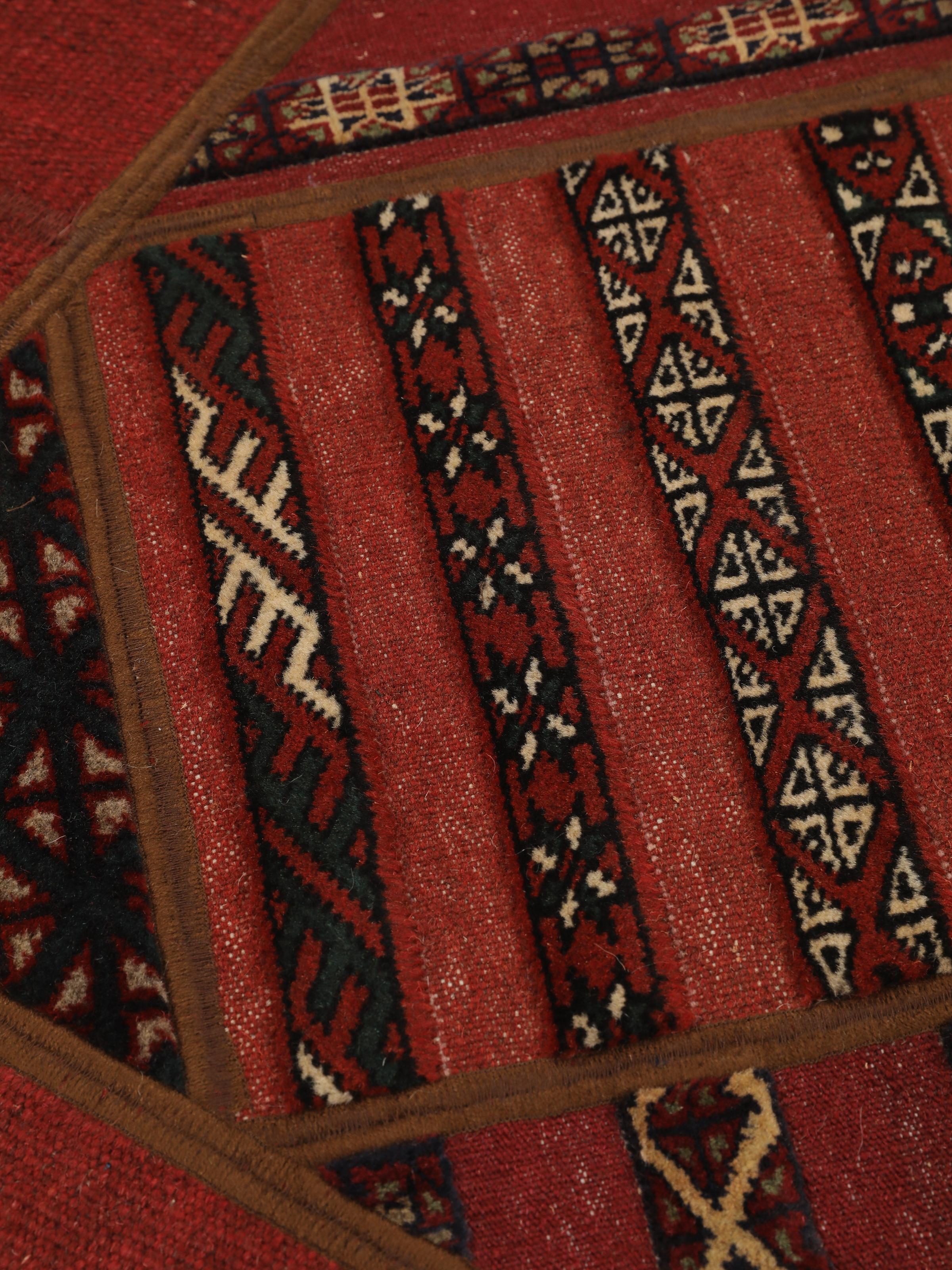
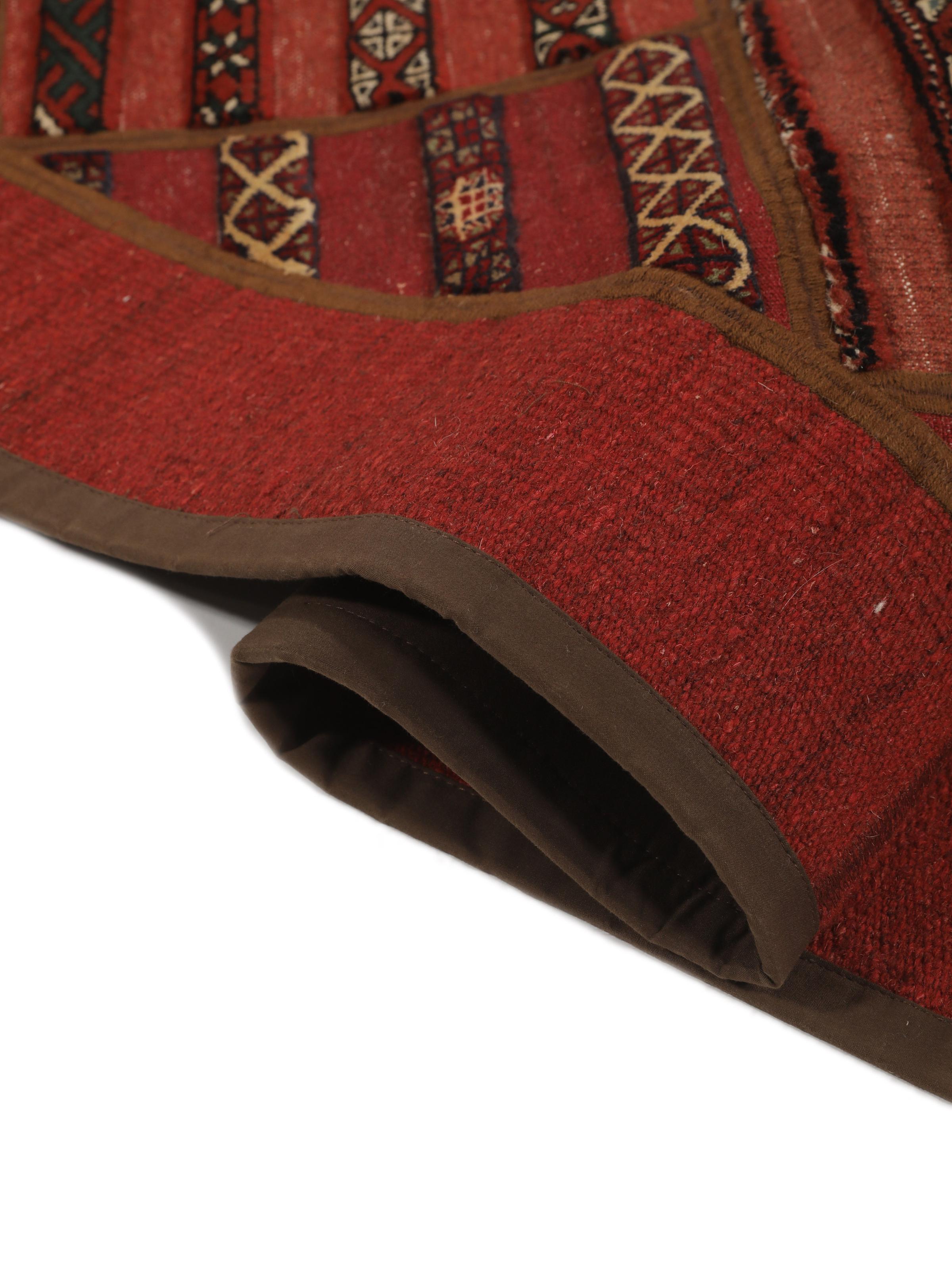
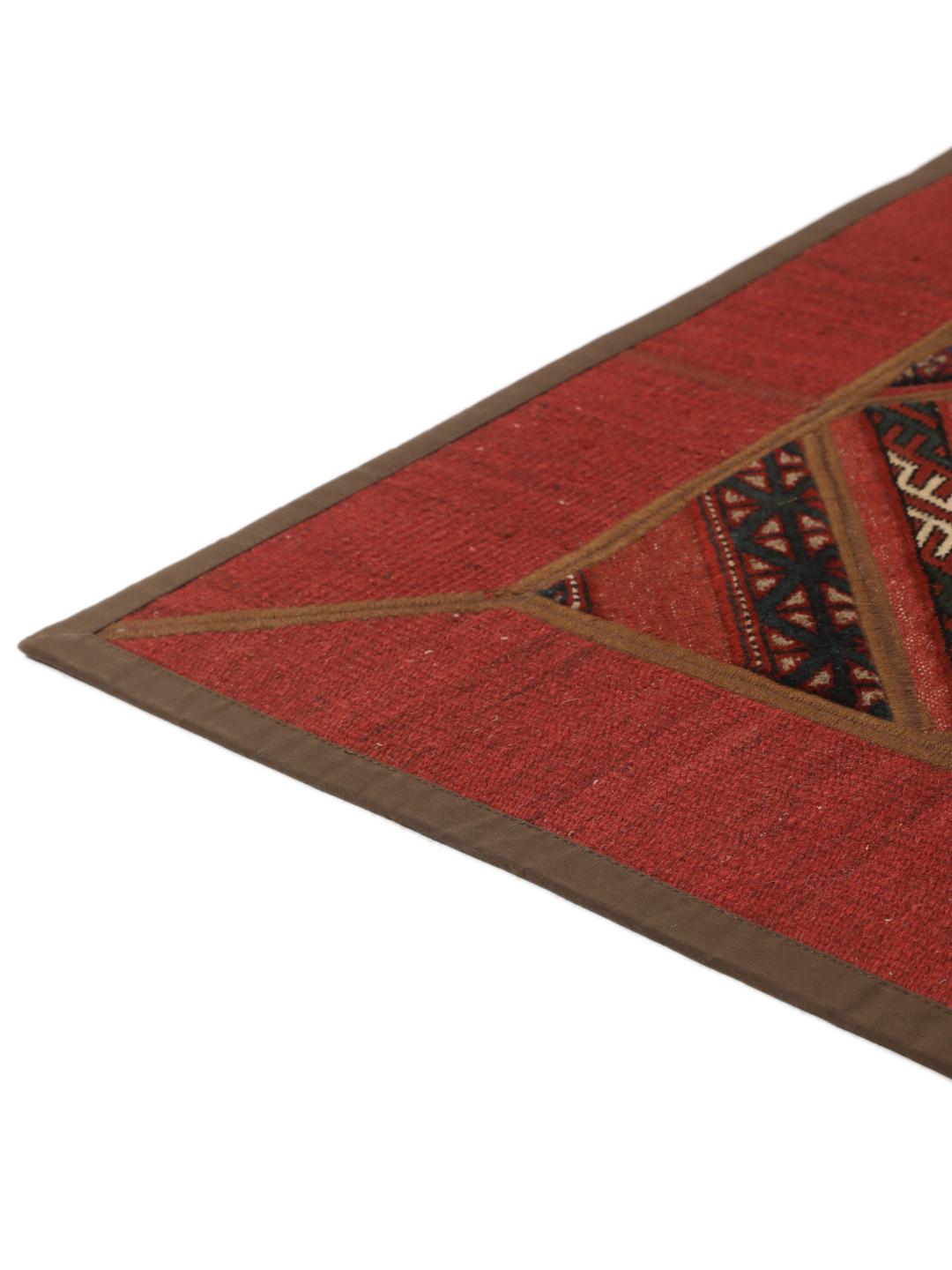
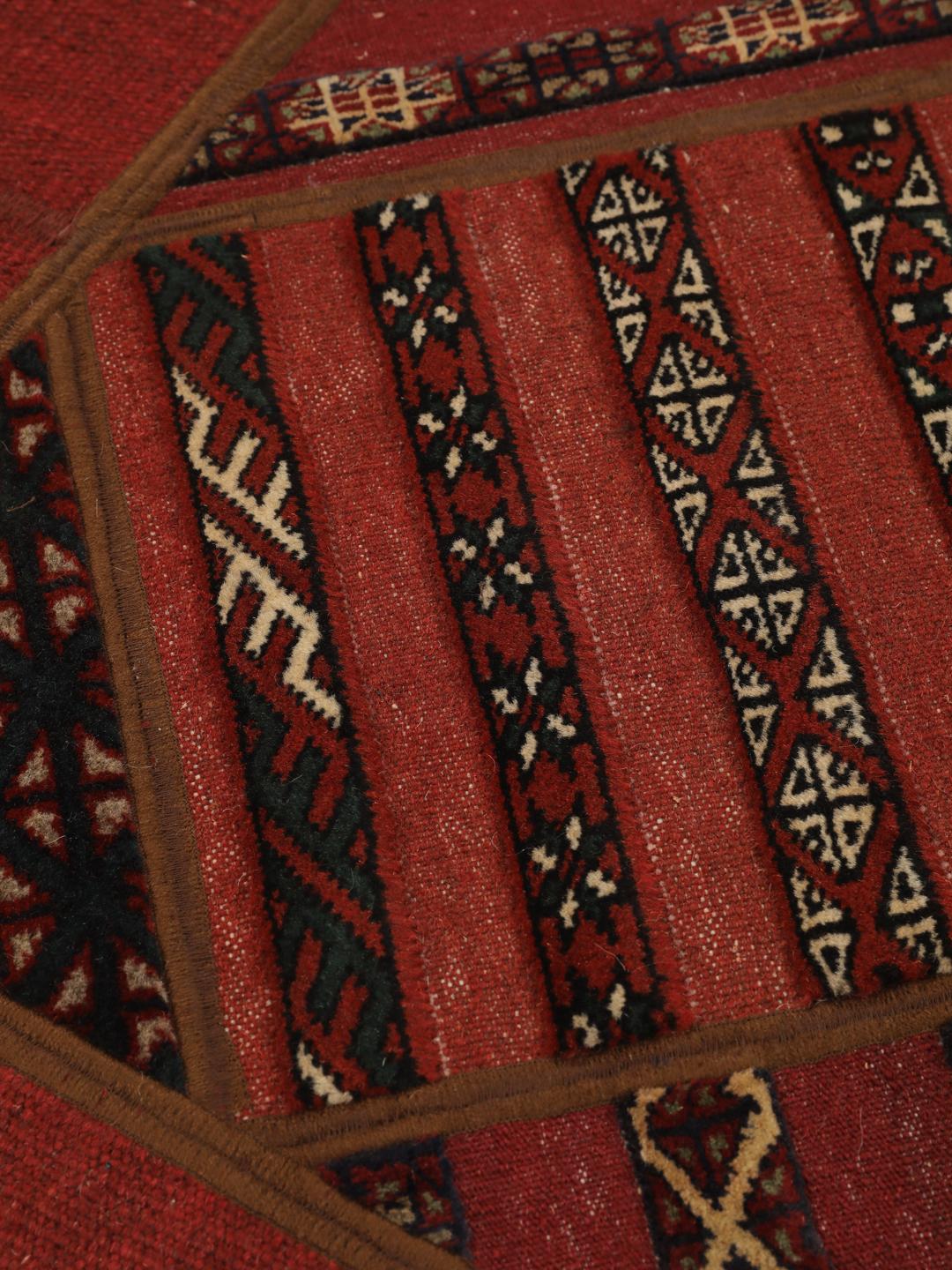
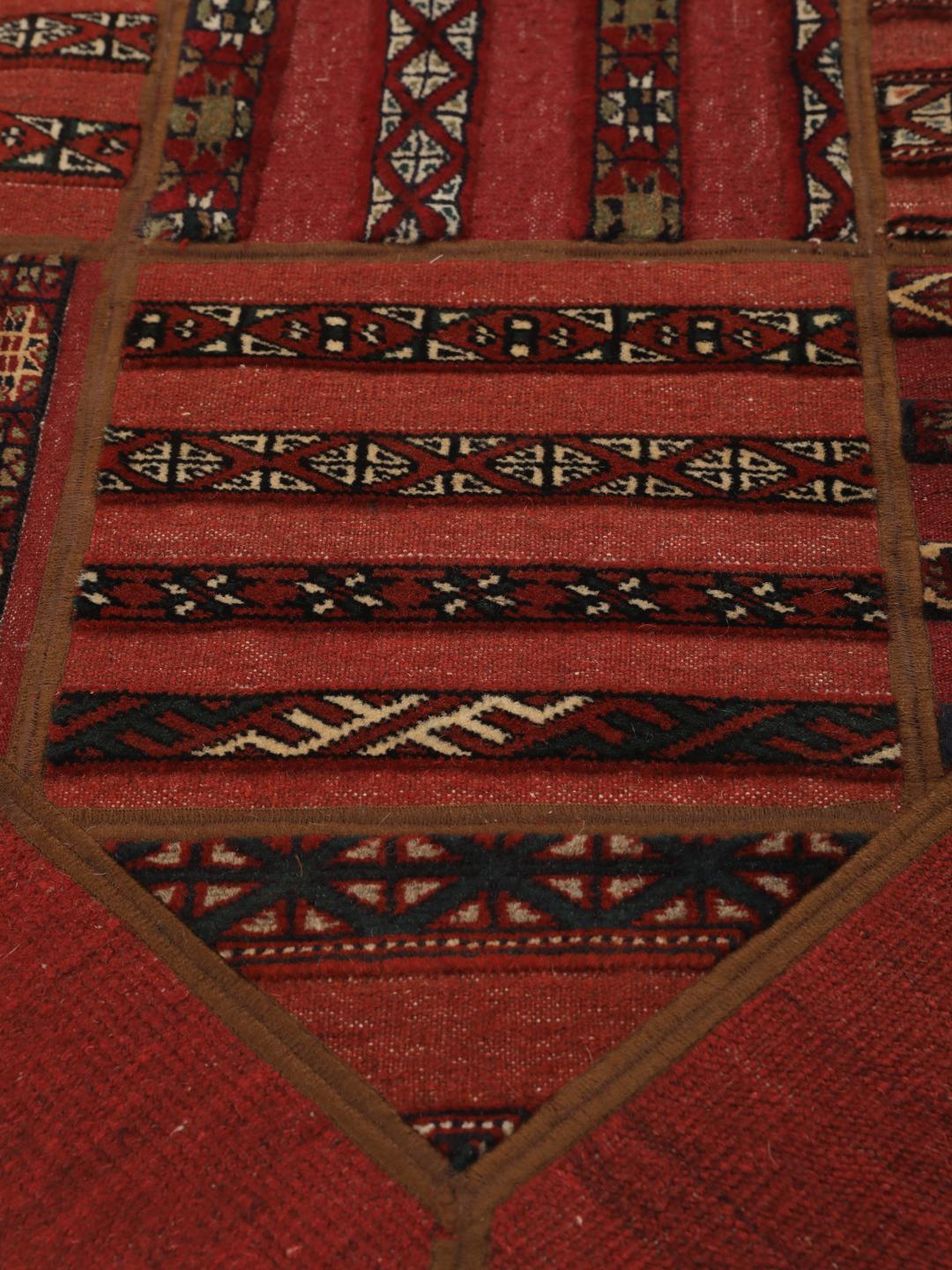
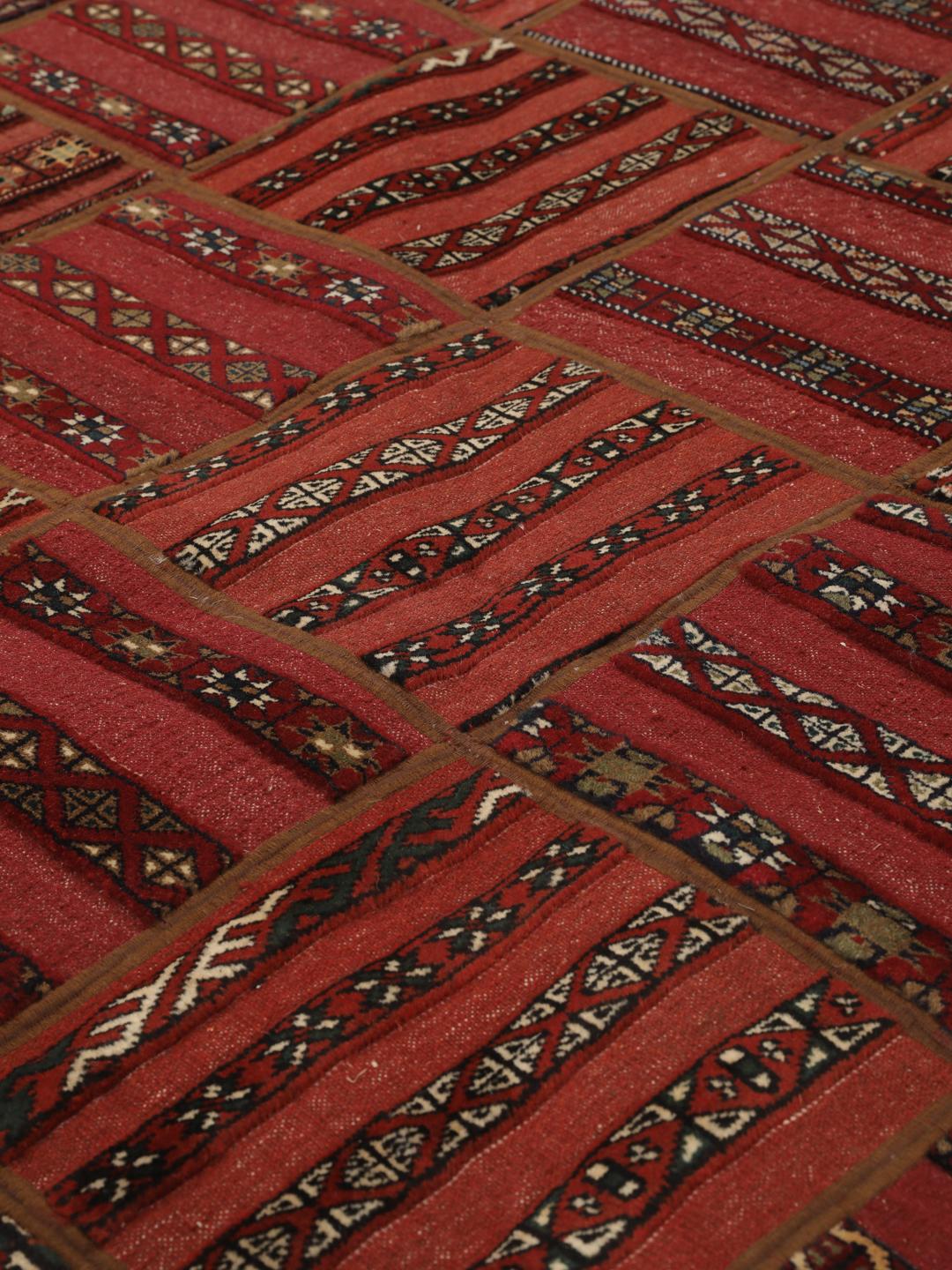
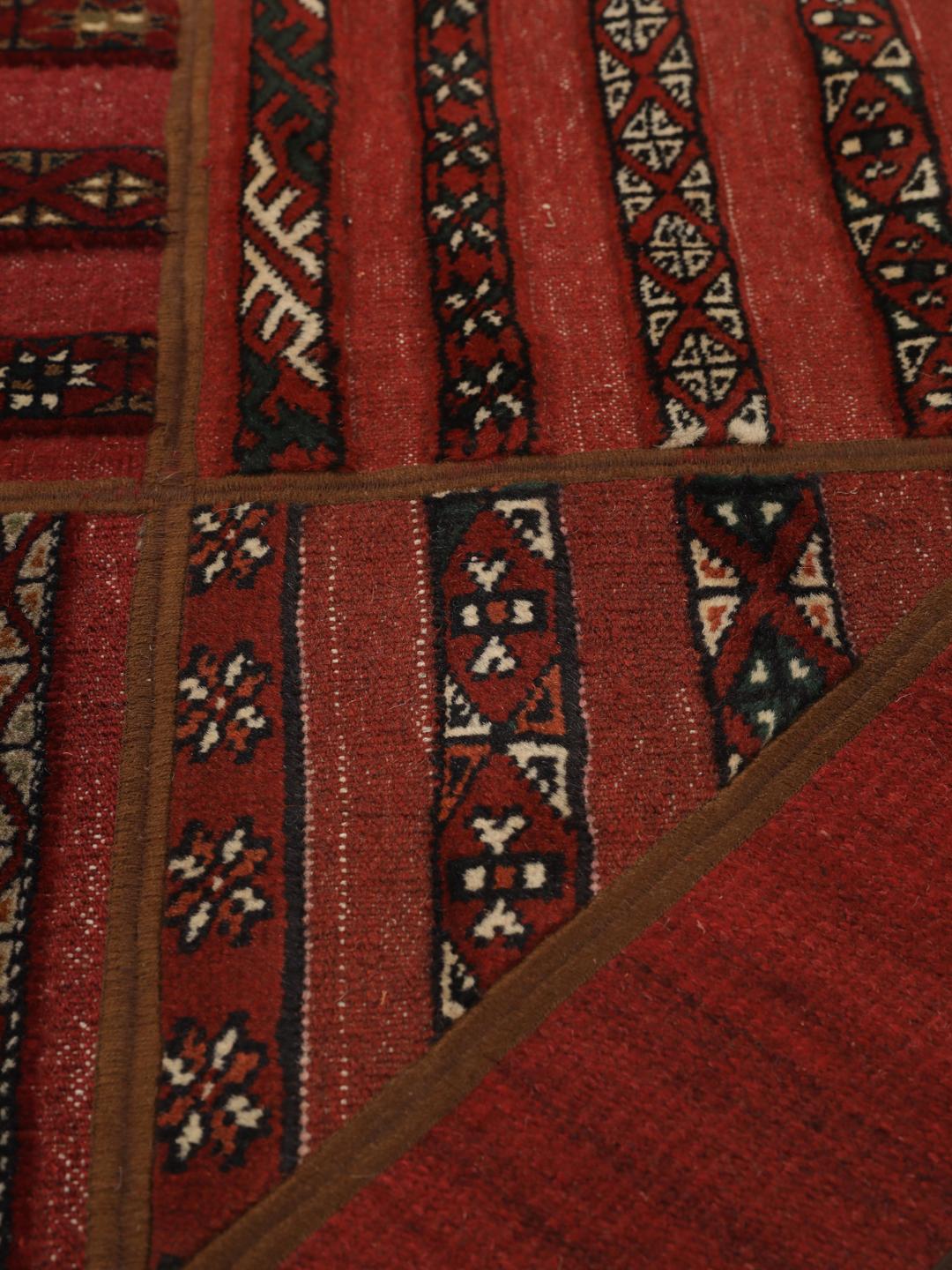
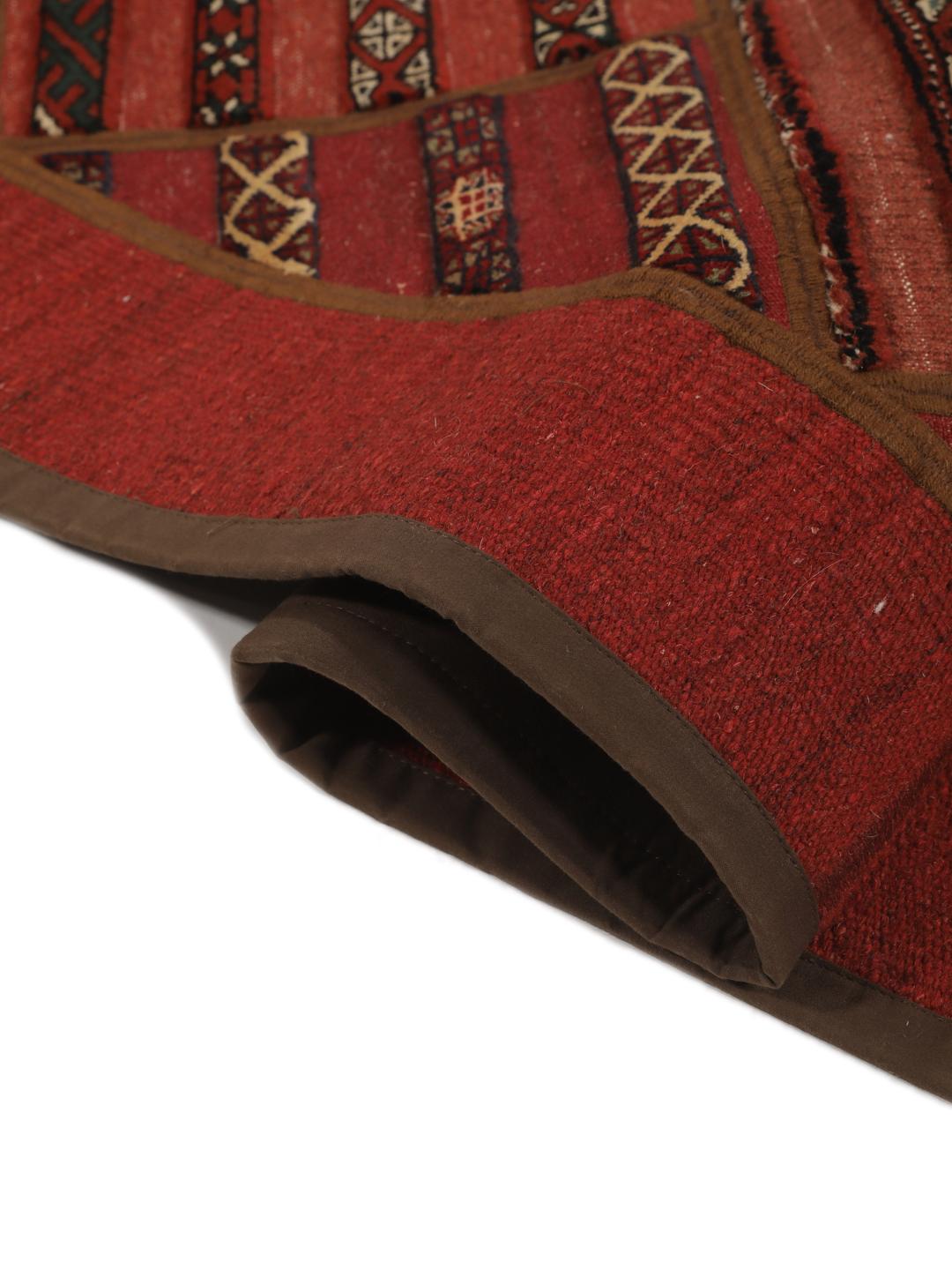
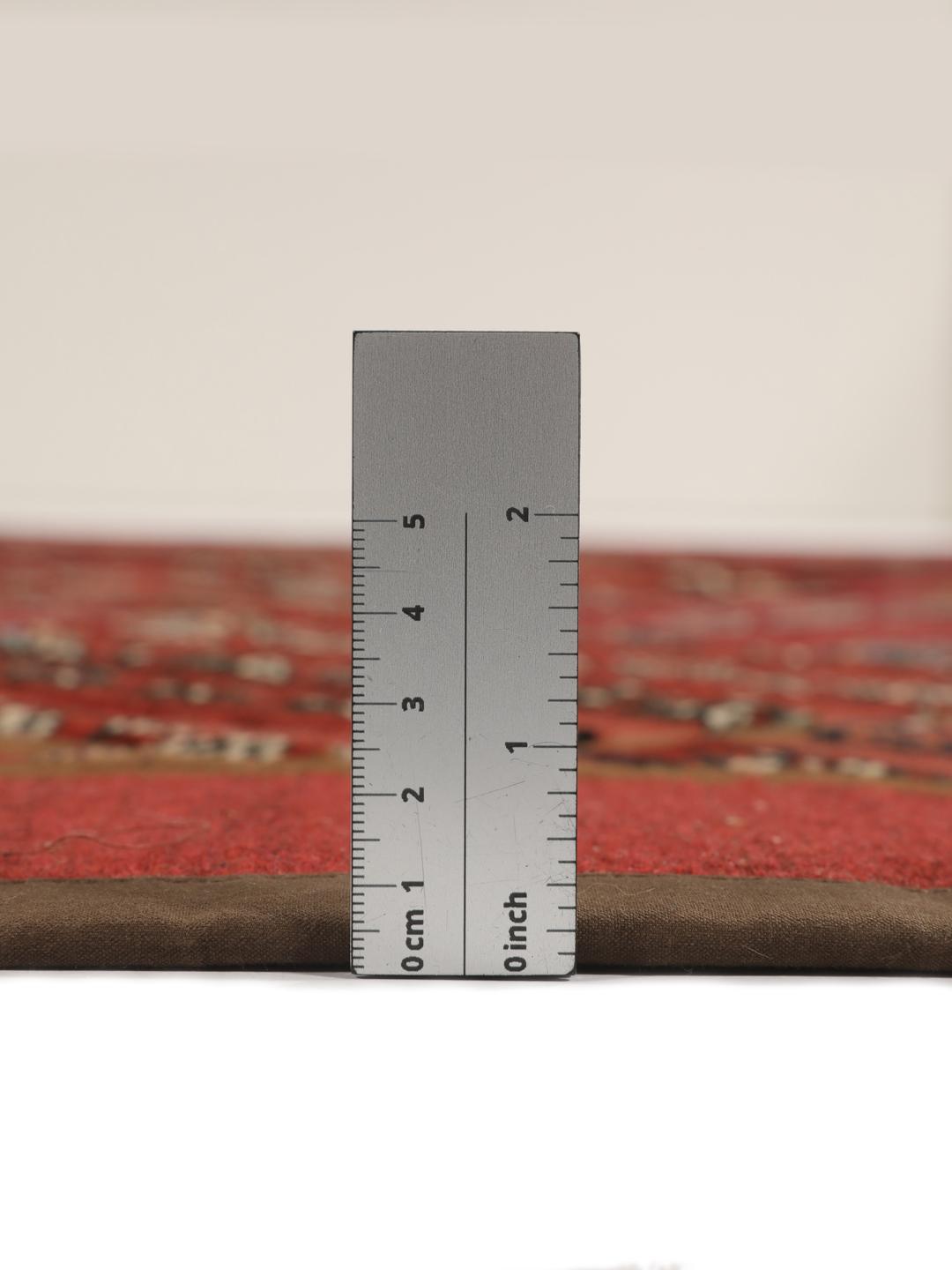
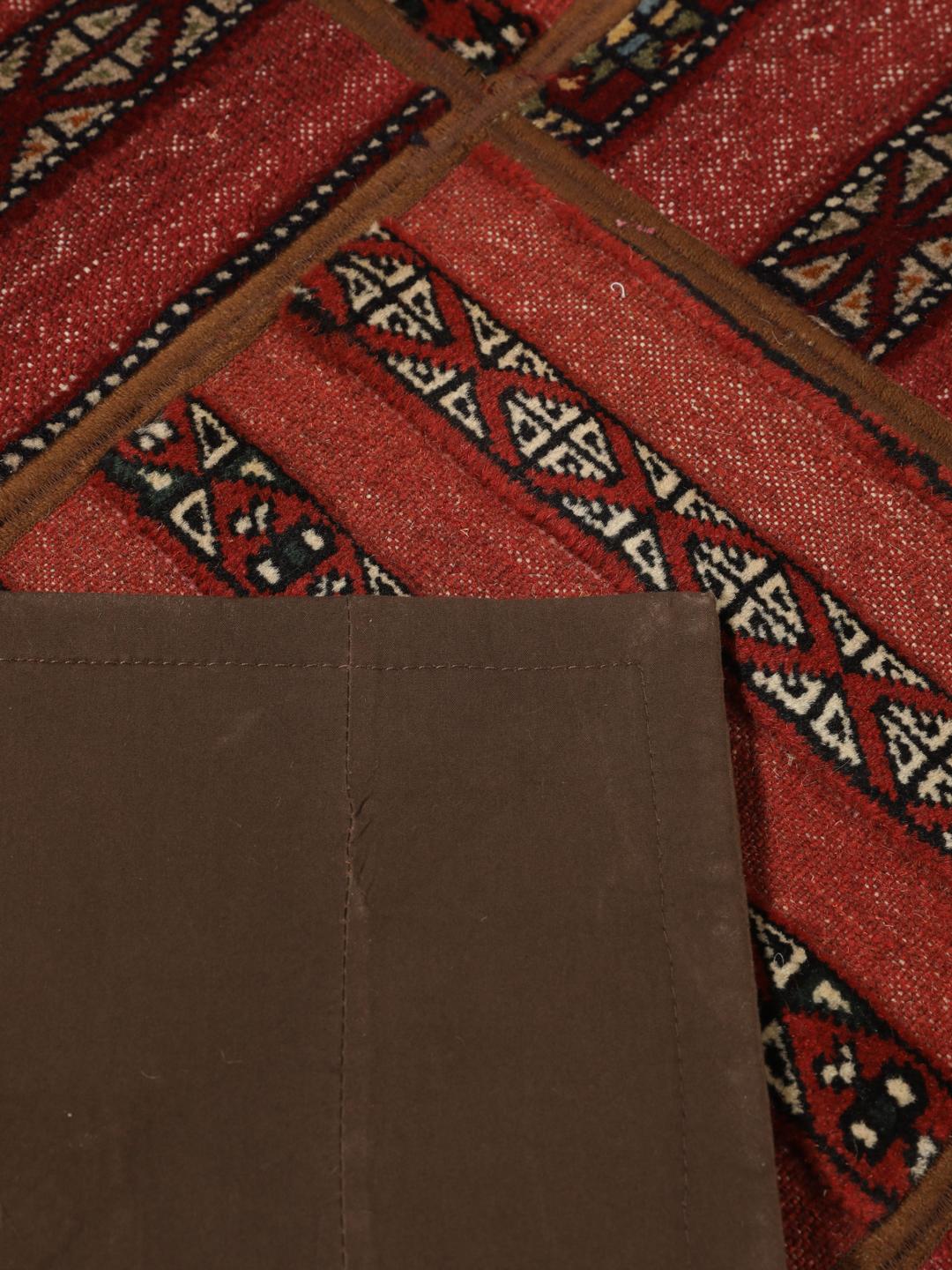
Technical excellence in these pieces is defined by the quality of the original weave and the strength of the assembly. A kilim is a flat-woven textile, meaning it lacks a pile, which results in a distinct, durable structure. By utilising these flat-woven sections, the resulting patchwork maintains a slim profile while offering a sophisticated, layered aesthetic that showcases various weaving techniques within a single piece.
Visually, these rugs are defined by their geometric complexity and the interplay of varied motifs. Traditional patterns often include tribal symbols, serrated diamonds, and intricate borders, which, when combined in a patchwork format, create a dynamic visual rhythm. The red-dominant palette seen here is a classic choice, reflecting the use of natural dyes that have been central to the region's textile identity for centuries.
Owning a piece like this is an act of preserving cultural heritage. It represents a bridge between the historical significance of Middle Eastern weaving and modern home design. Collectors value these rugs not only for their aesthetic beauty but for the narrative they carry—a story of sustainable craft, regional identity, and the timeless appeal of handmade textiles.