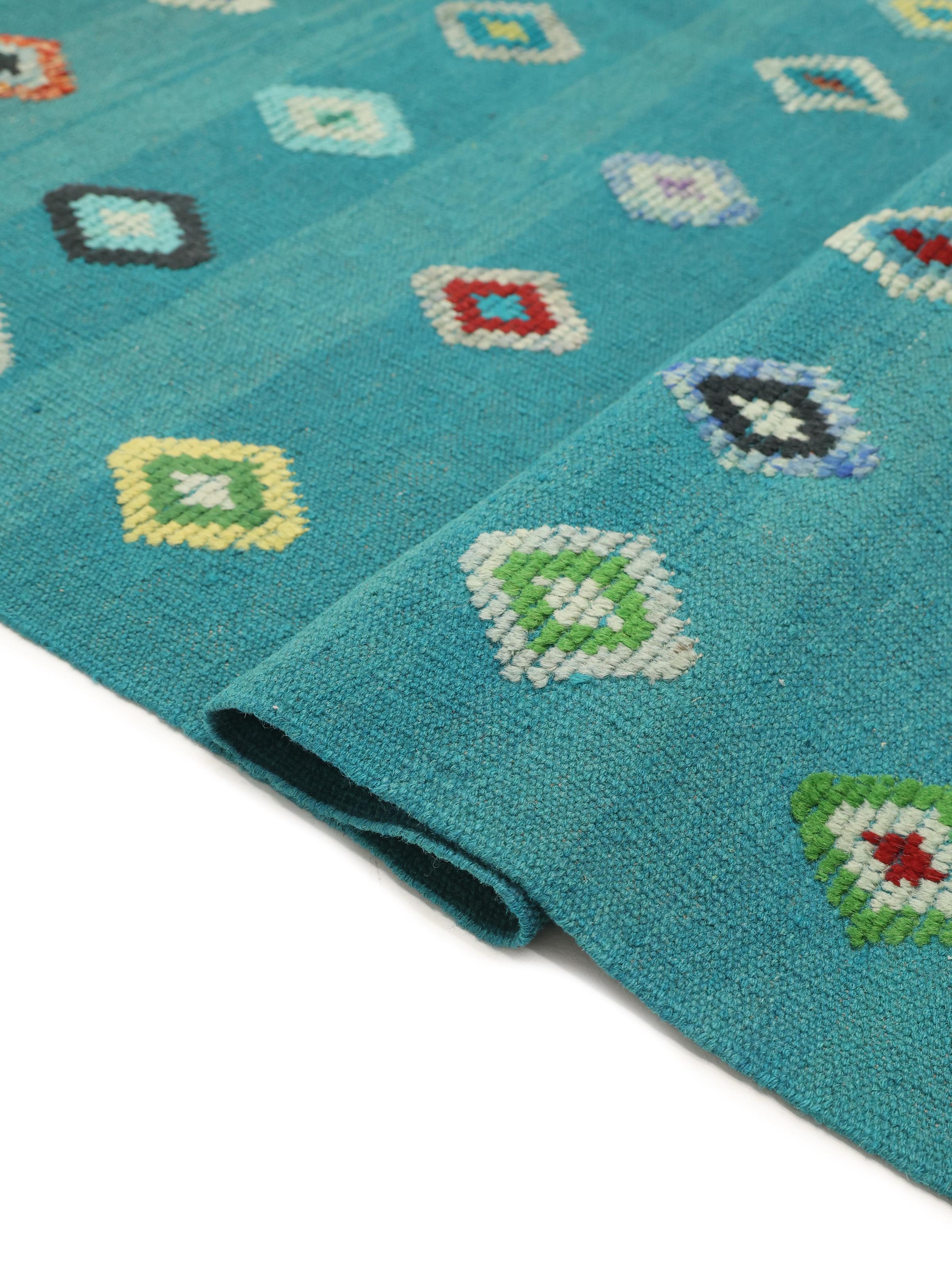
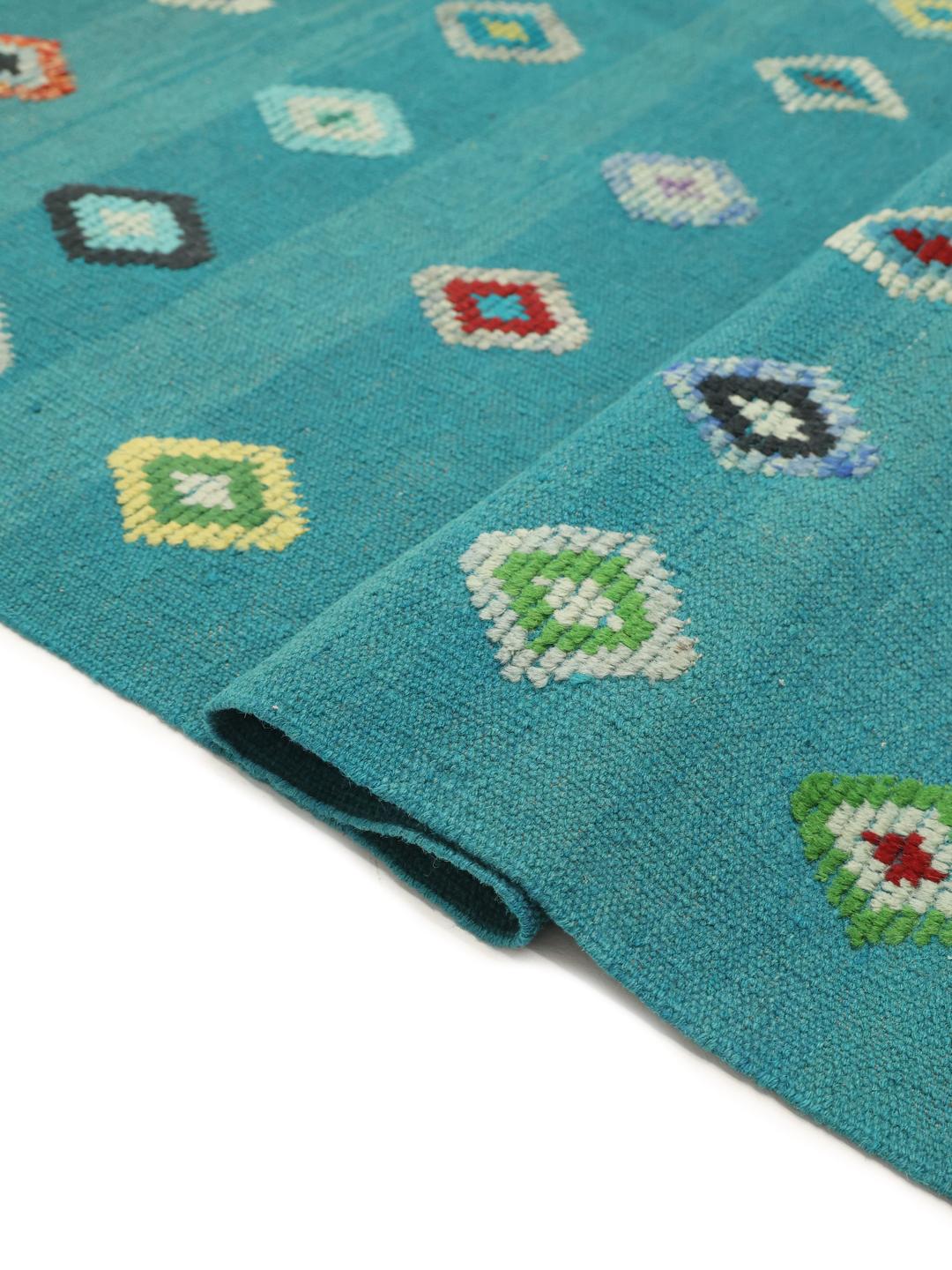
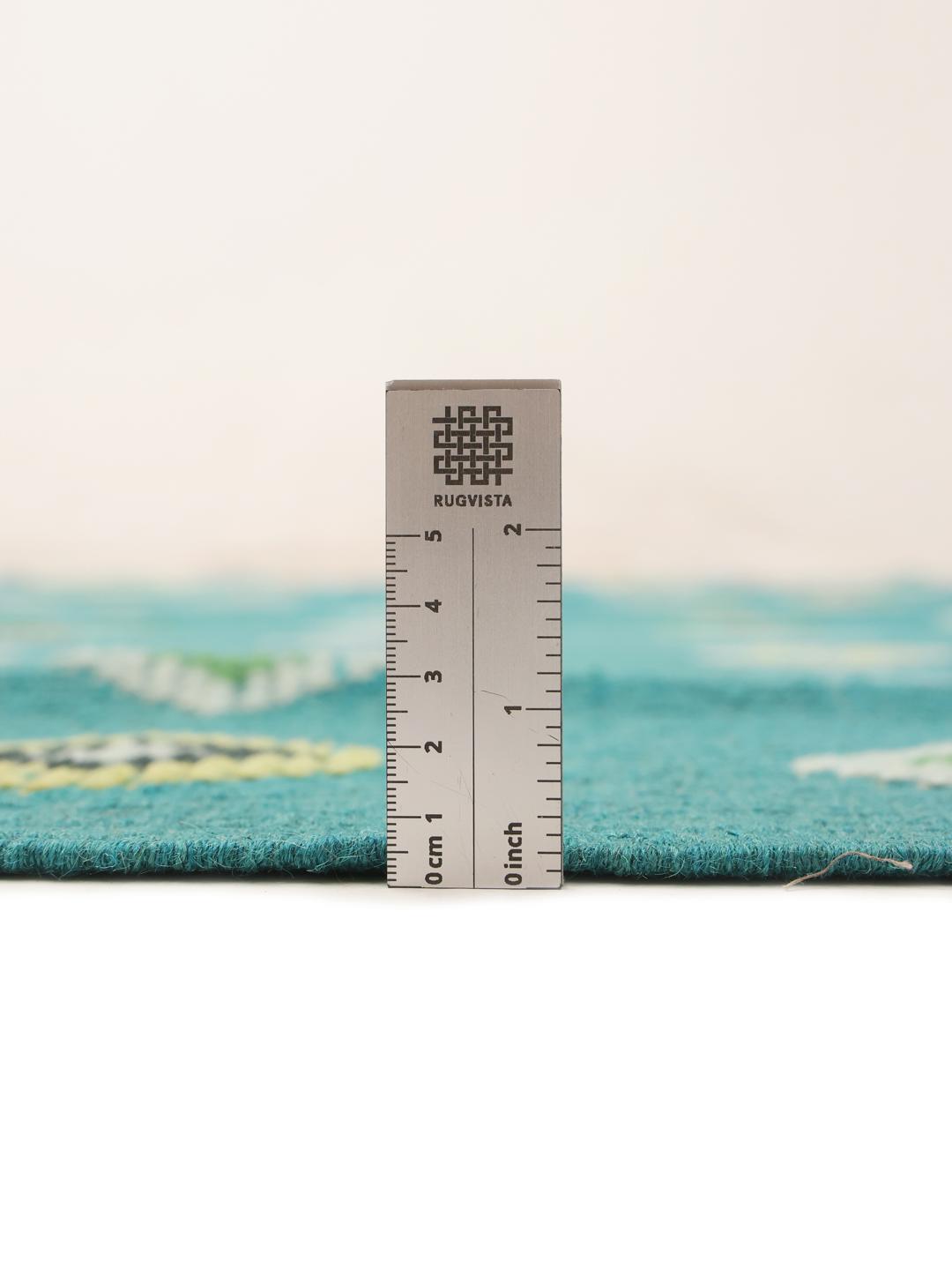
The tradition of Kelim weaving is deeply embedded in the history of the Middle East and Central Asia. These flat-woven rugs have been produced for centuries by nomadic and semi-nomadic tribes, serving a multitude of purposes from floor coverings and wall hangings to saddlebags and storage sacks. The term Kelim itself refers to the specific technique where the weft threads are woven tightly over the warp to create a smooth, pileless surface that is both lightweight and incredibly durable.
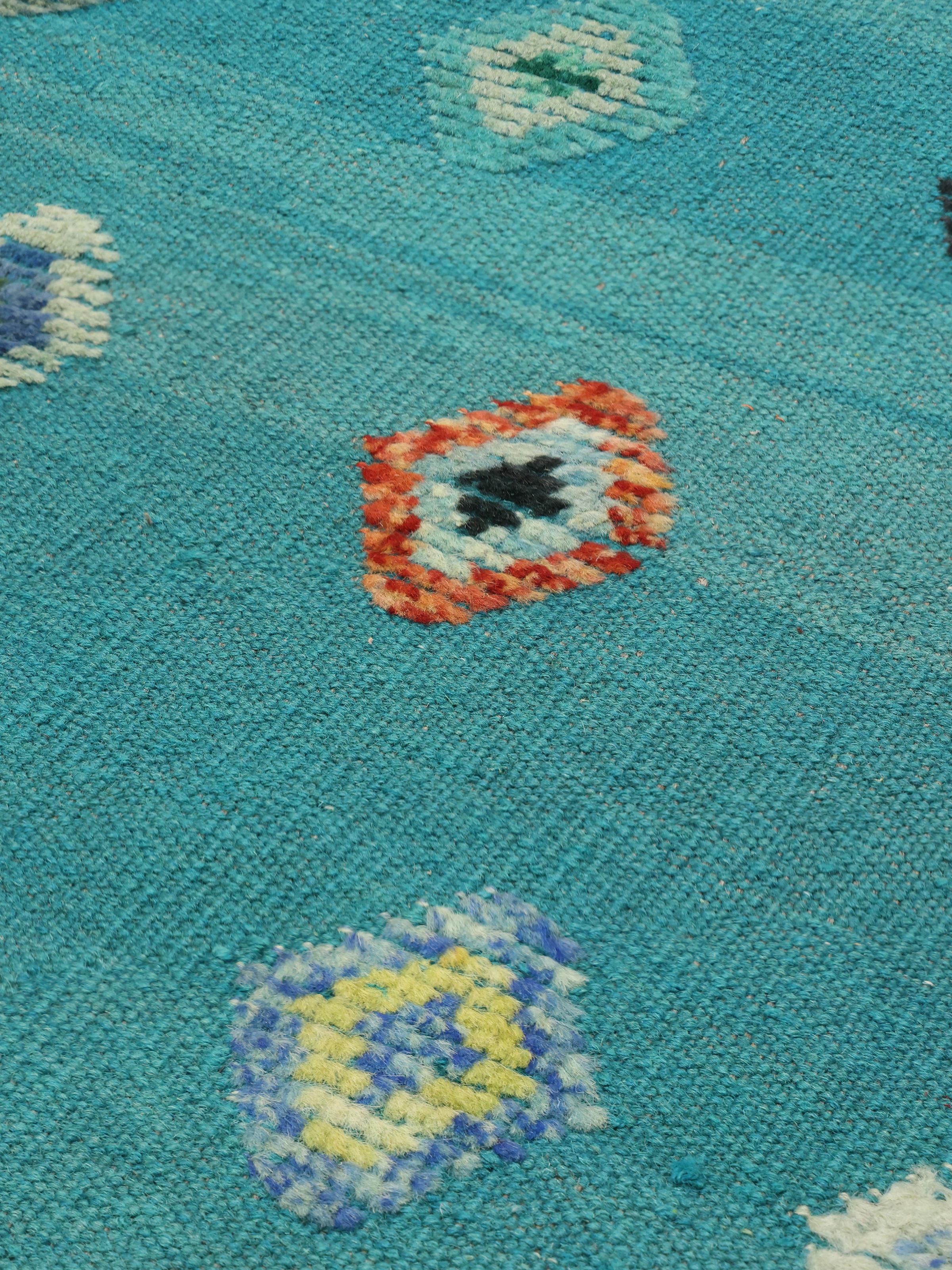
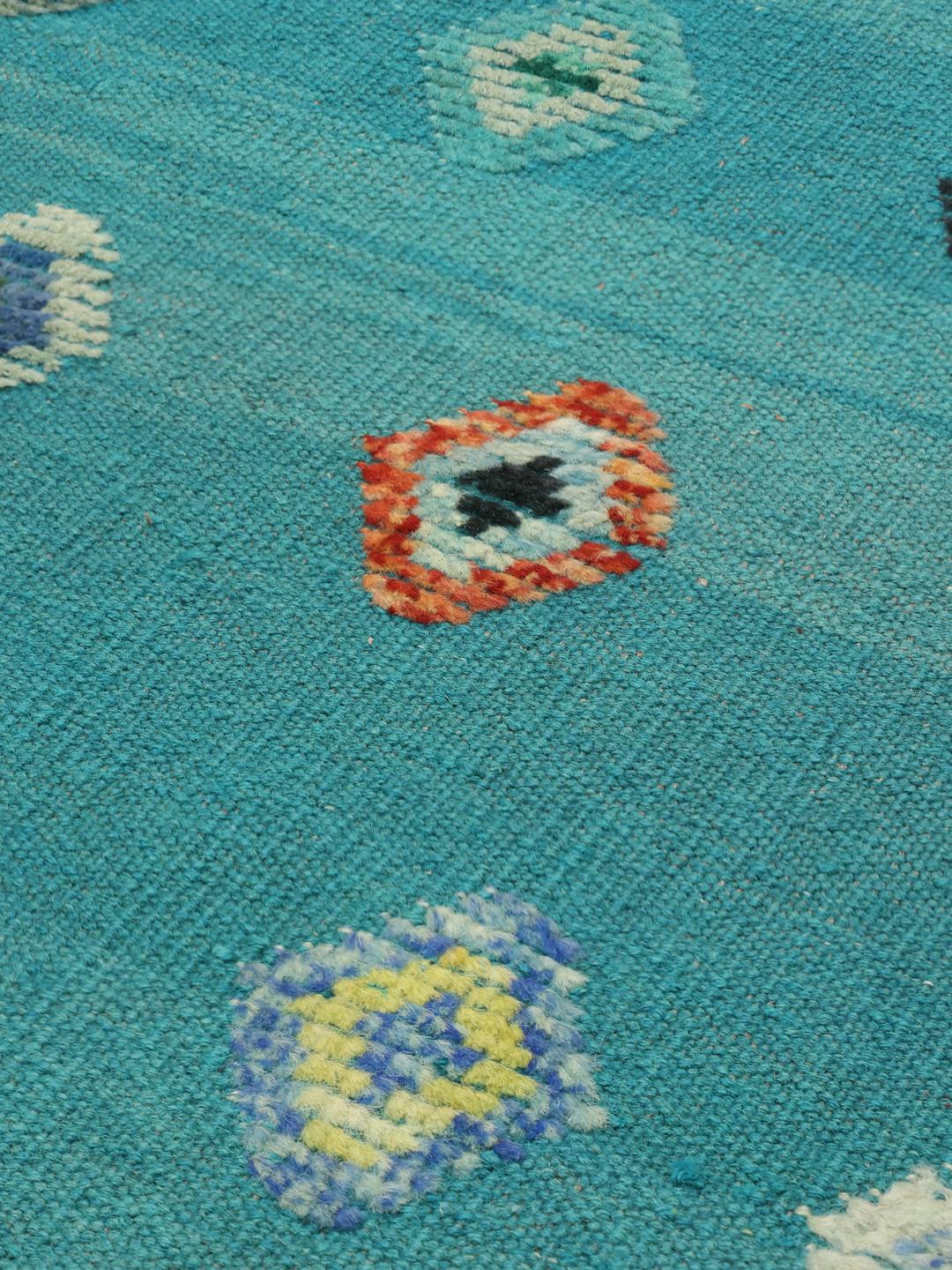
Nimbaft, a specific sub-category within this tradition, is recognised for its refined and precise weaving. This style often highlights the expertise of the artisan, as the lack of a pile means there is nowhere to hide imperfections. The clarity of the pattern is a direct result of the weaver's ability to maintain even tension throughout the entire process, which is why Nimbaft pieces are so highly regarded for their clean, sharp aesthetic.
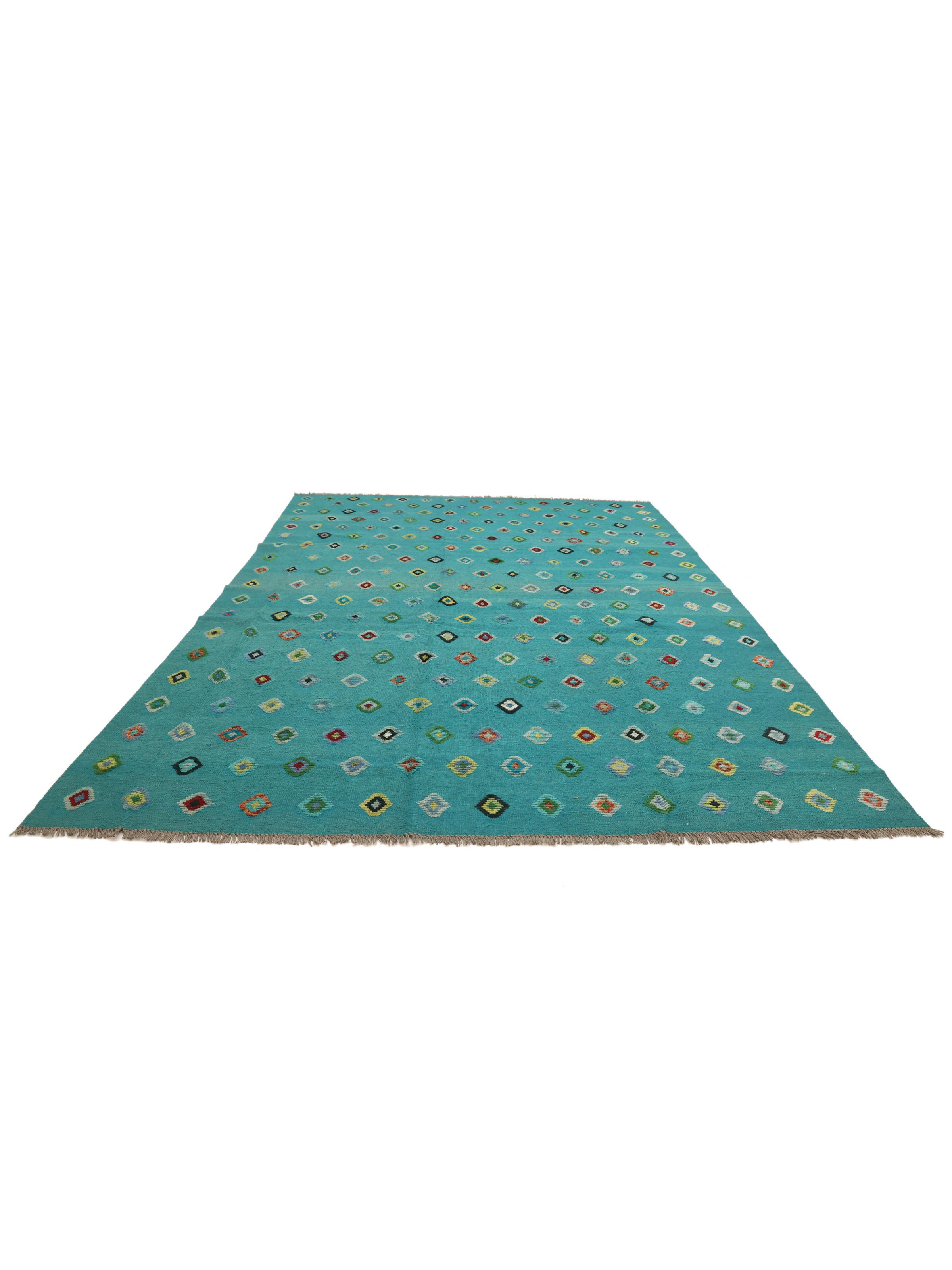
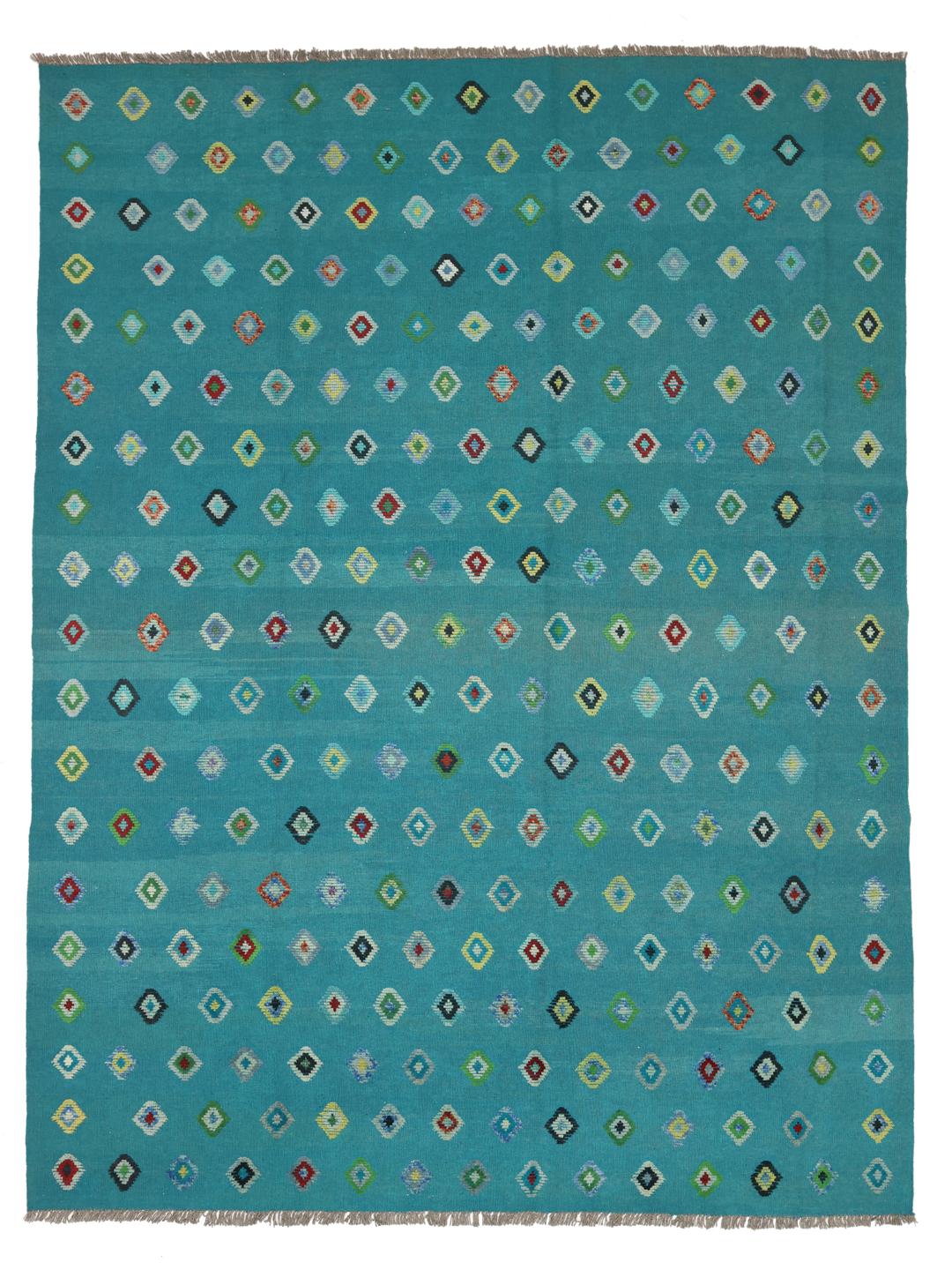
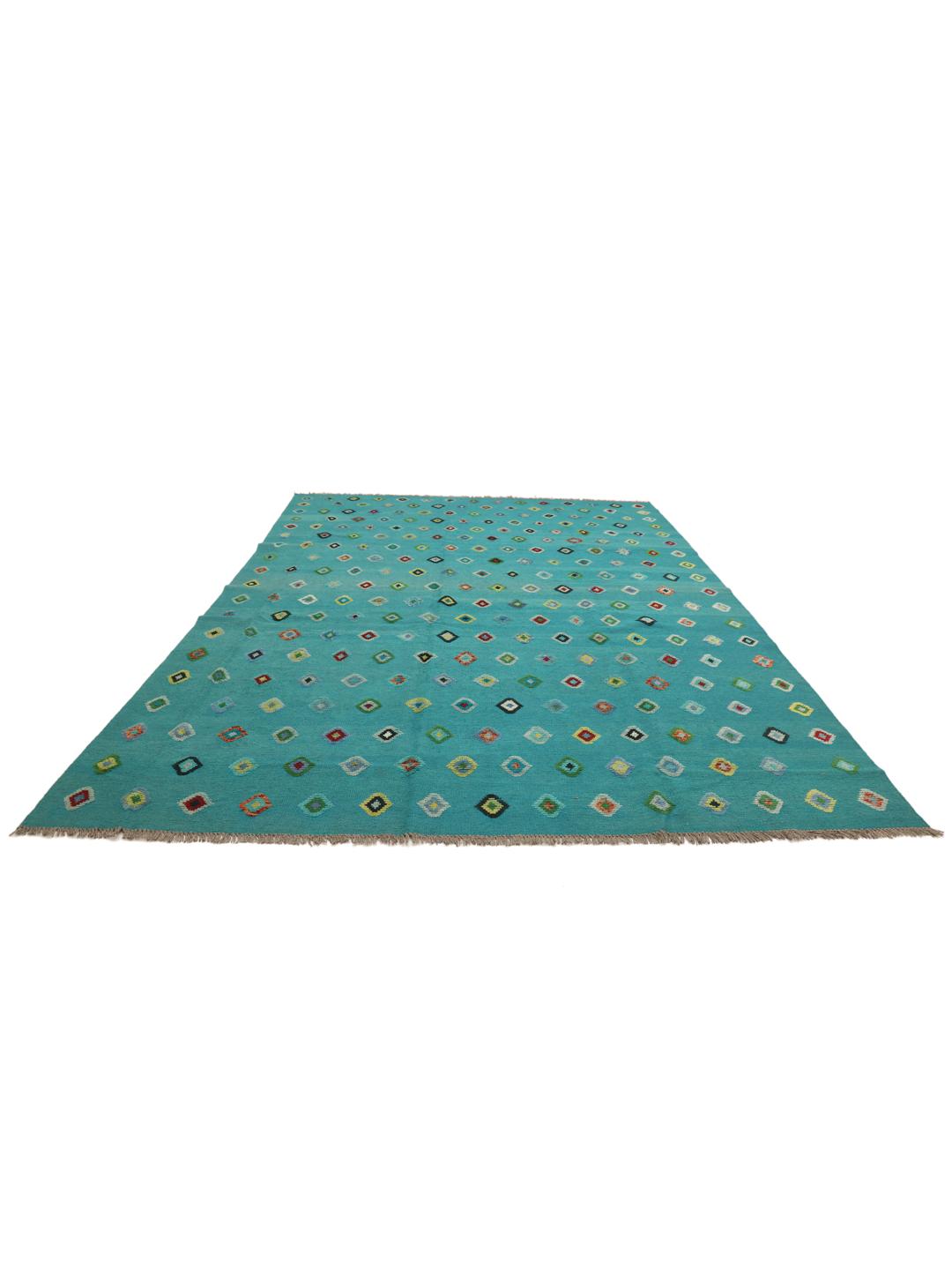
The visual language of this rug is characterised by its geometric diamond motifs, a common feature in Afghan tribal design. These patterns are not merely decorative but often carry symbolic meaning, representing elements of nature, protection, or tribal identity. The use of a vibrant teal field is a bold departure from traditional earth tones, showcasing a modern evolution in the craft that respects historical techniques while embracing contemporary colour palettes.
Collectors value these rugs for their authenticity and the human story woven into every thread. By choosing a Kelim Nimbaft, you are not just purchasing a rug; you are acquiring a piece of cultural heritage that represents a bridge between ancient nomadic traditions and modern interior design. The skill required to produce such a piece is becoming increasingly rare, making every genuine example a significant addition to any collection.