Kelim rugs are among the most storied traditions in the Middle East, originating from a long history of nomadic and village cultures. These flat-weave textiles were historically created for practical use, serving as floor coverings, wall hangings, and storage bags for families on the move. The Nimbaft style, specifically from Afghanistan, represents a refined evolution of this tradition, blending ancestral techniques with contemporary sensibilities.
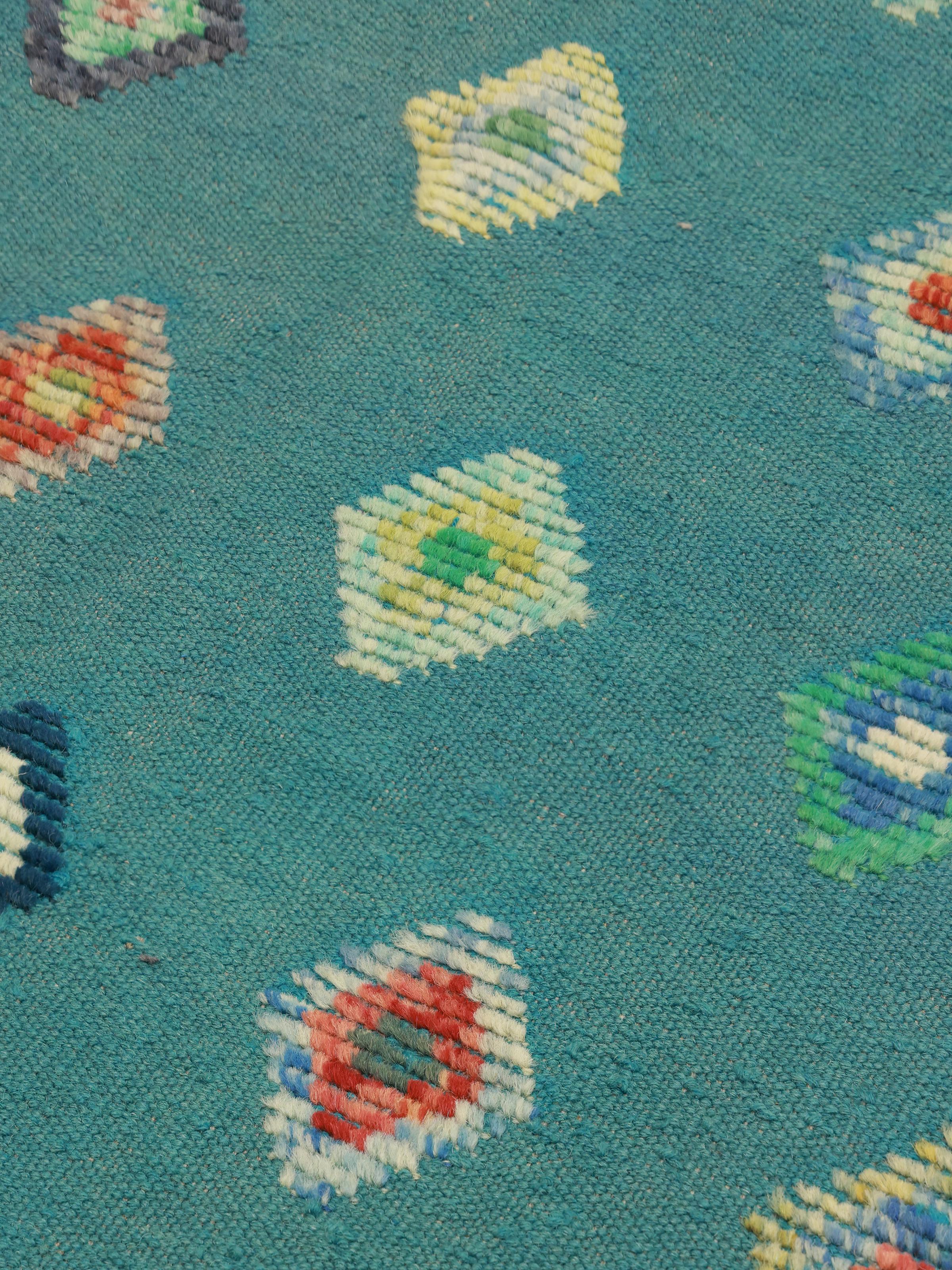
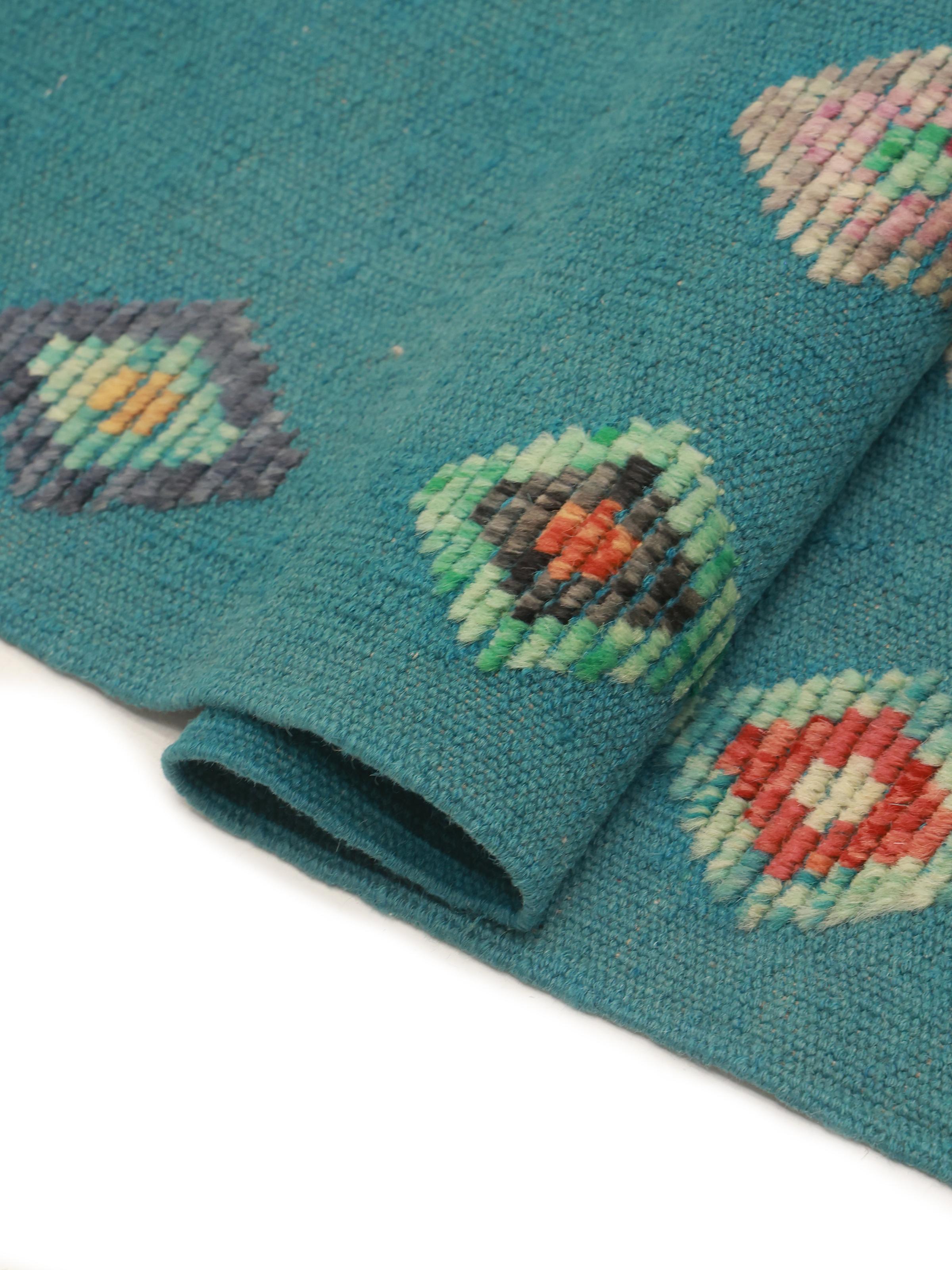
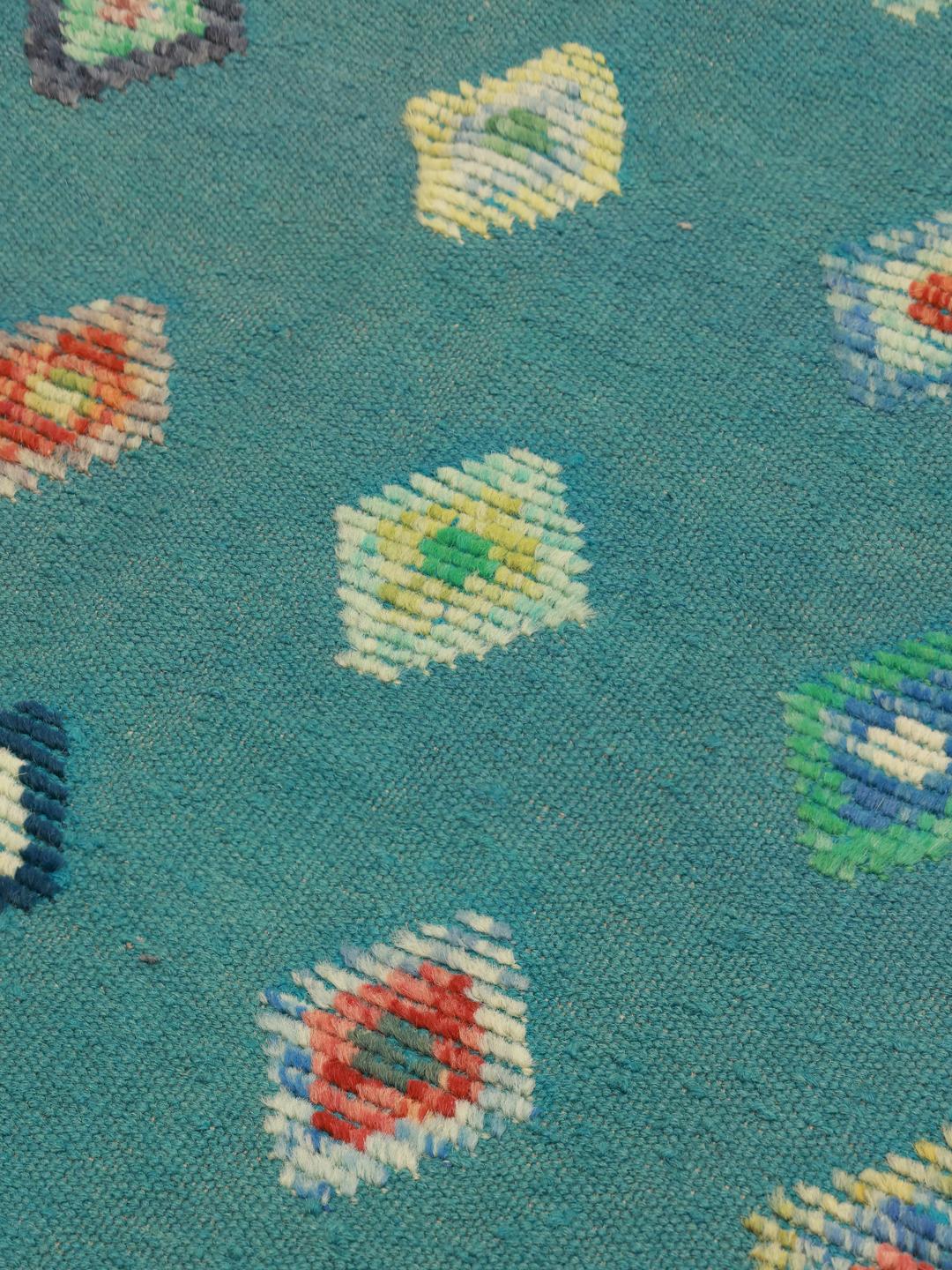
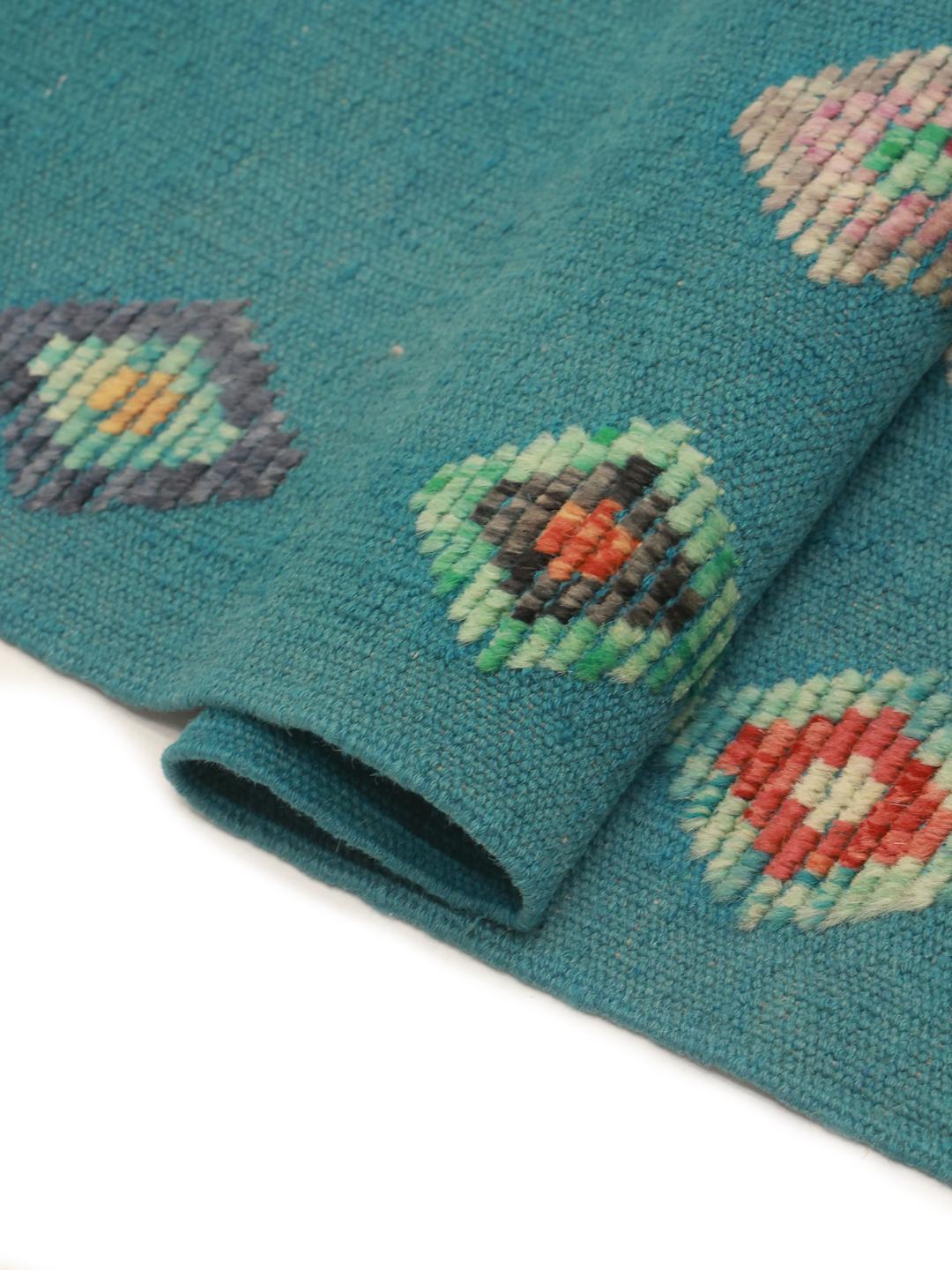
The term Kelim refers to the specific flat-weave technique where the weft and warp threads are interwoven to create the pattern, resulting in a rug without a pile. This construction is highly valued for its durability and its ability to be used on both sides. In the context of Nimbaft rugs, this technique allows for crisp, geometric designs that remain clear and vivid, showcasing the skill of the weaver in every colour transition.
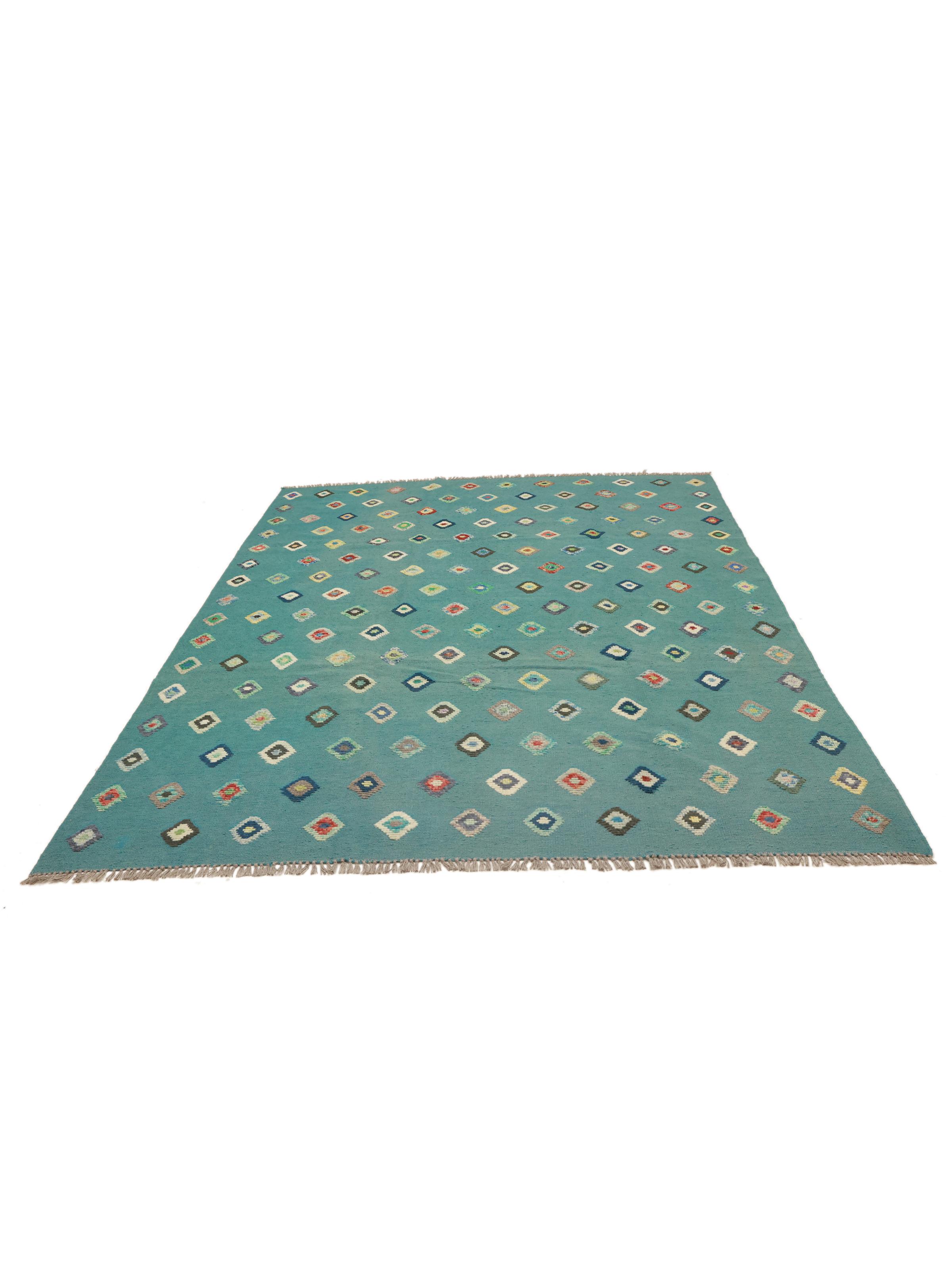
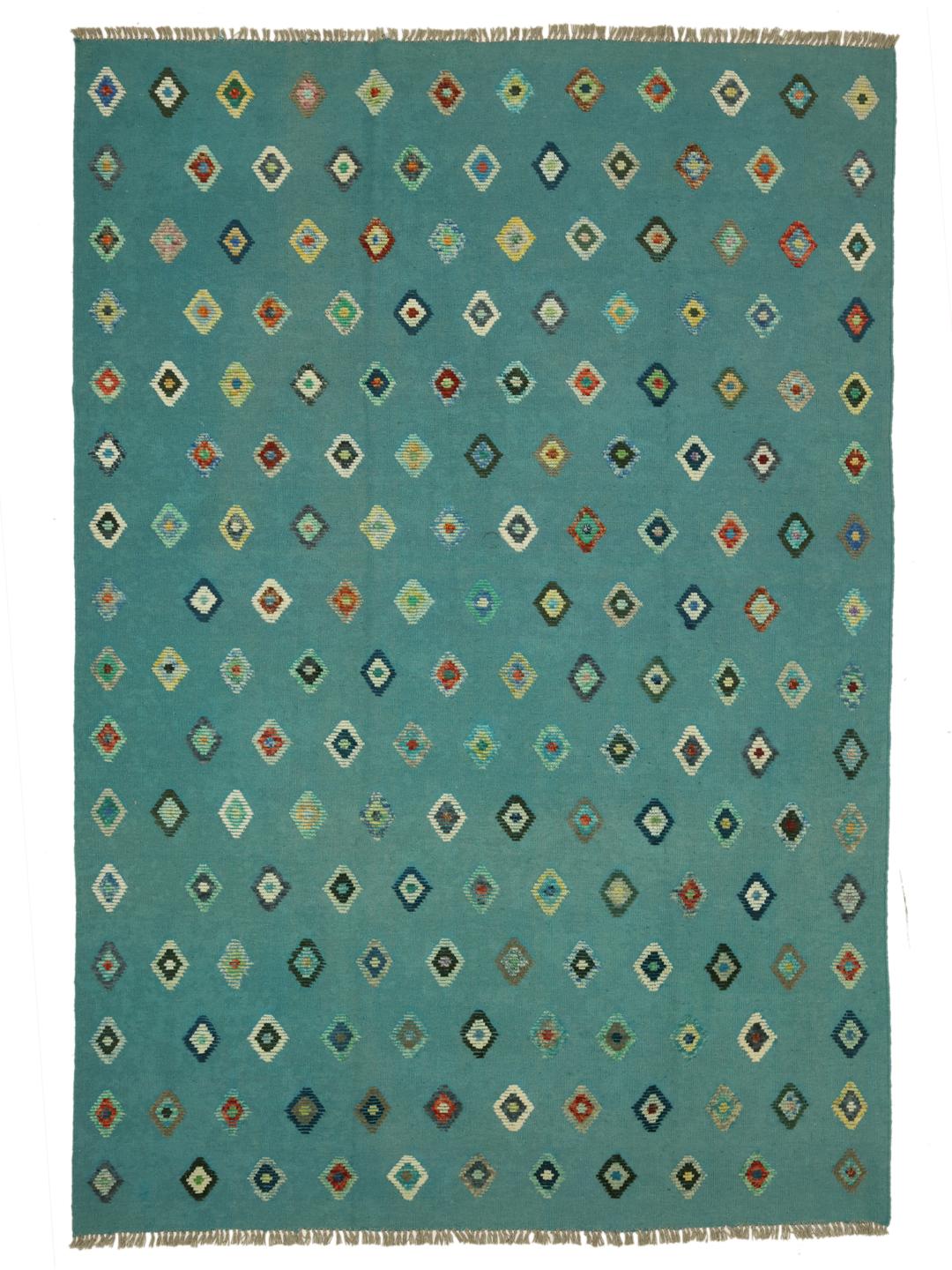
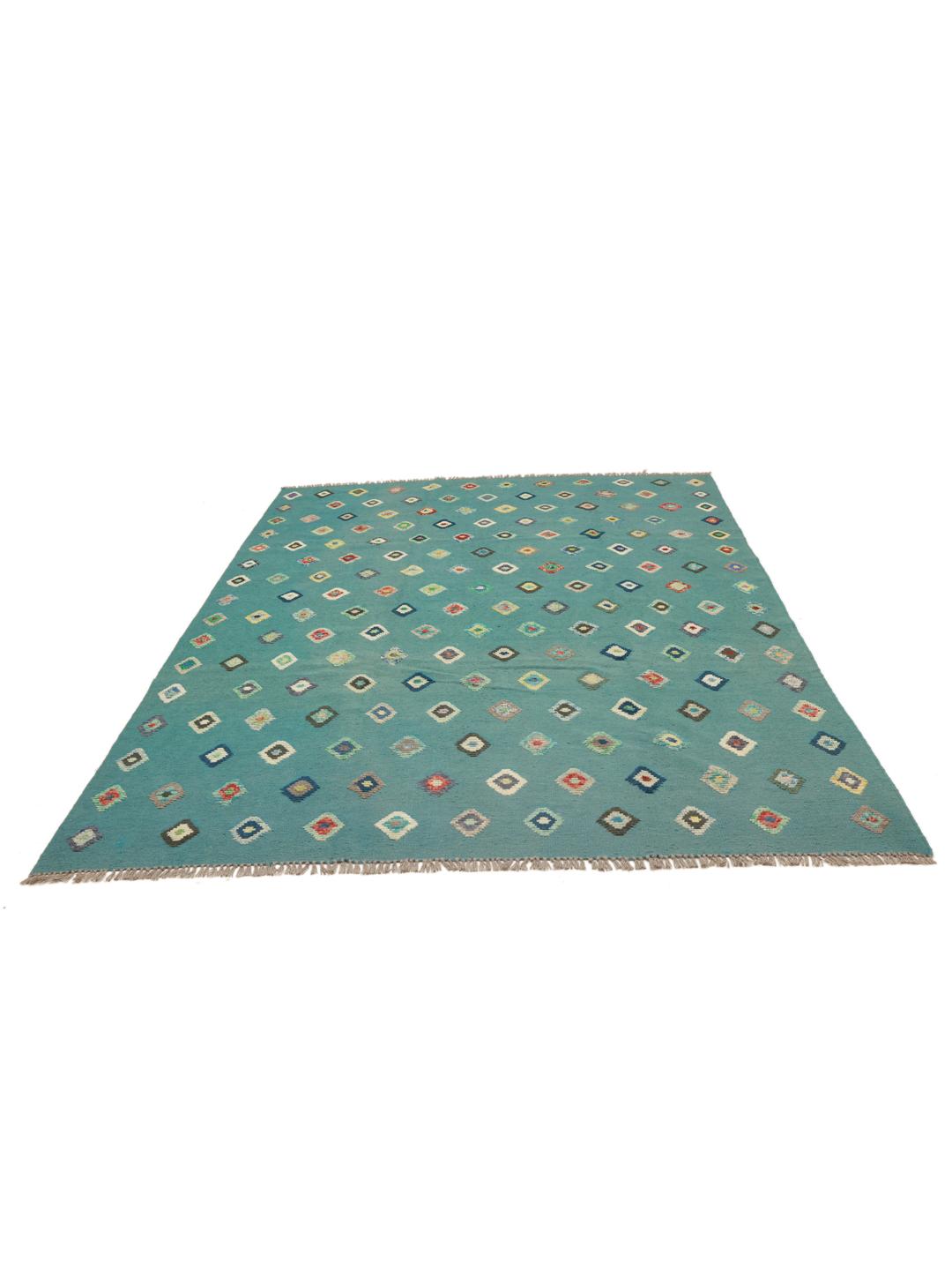
Visually, these rugs are defined by their geometric language. Diamonds, triangles, and stylized floral motifs are common, often arranged in repeating patterns that create a sense of harmony. The use of vibrant, often natural dyes has long been a signature of the region, and this rug continues that tradition by pairing a bold teal background with intricate, multi-coloured diamonds that draw the eye.
Owning a Kelim Nimbaft is an investment in a living heritage. These rugs are collected not only for their aesthetic beauty but for the connection they provide to the history of the Middle East. By choosing a hand-woven piece, you are supporting a tradition that values patience, skill, and the preservation of craft, ensuring that these cultural techniques continue to thrive in modern homes.