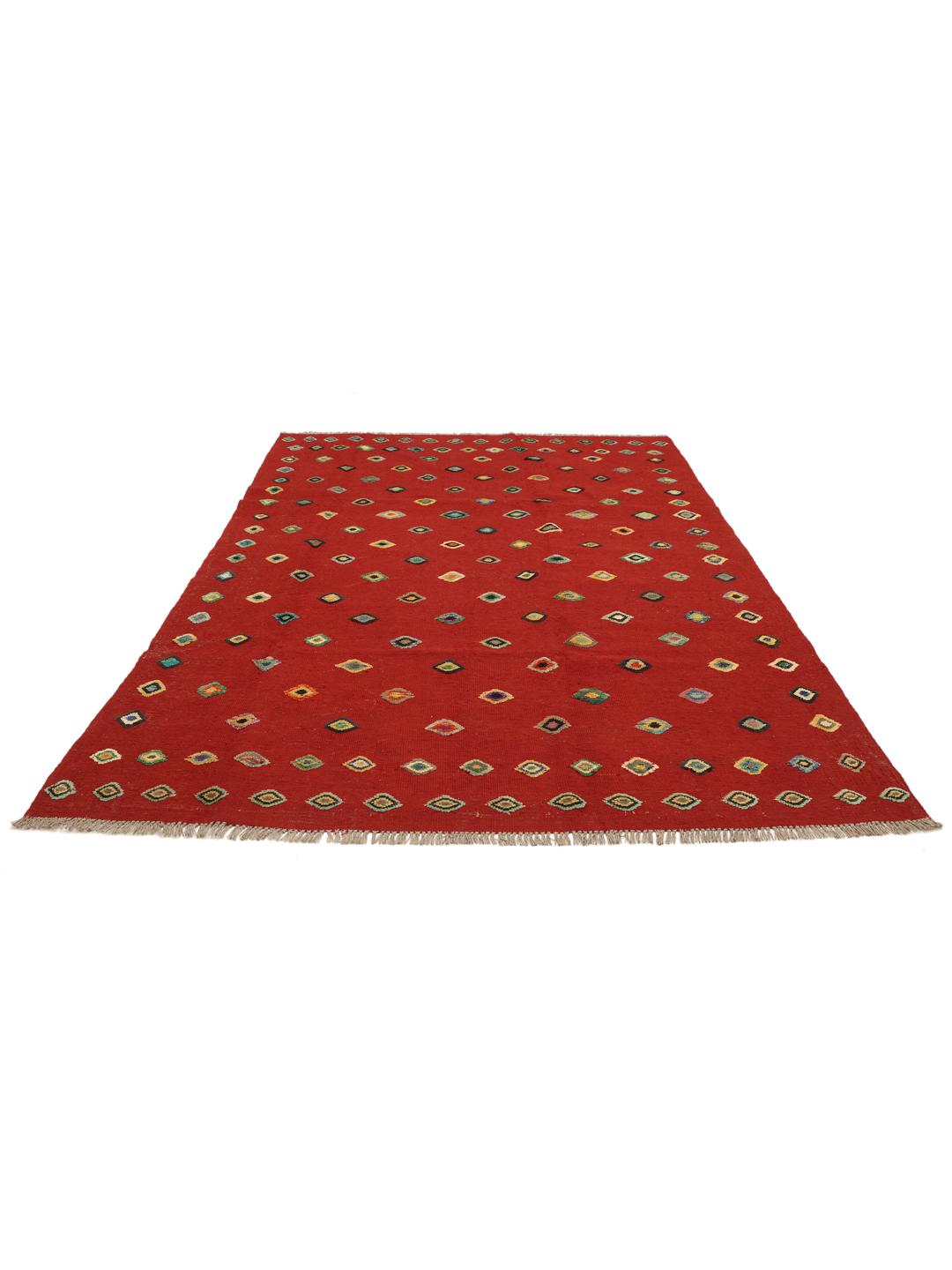
Kelim rugs have a rich history rooted in the nomadic and village traditions of the Middle East and Central Asia. Originally created as versatile, practical coverings for tents and homes, these flatwoven textiles served as bedding, storage bags, and durable floor coverings that could easily be packed and moved during seasonal migrations. Over centuries, these functional textiles evolved into celebrated works of folk art, each region developing its own distinct vocabulary of symbols and colour combinations.
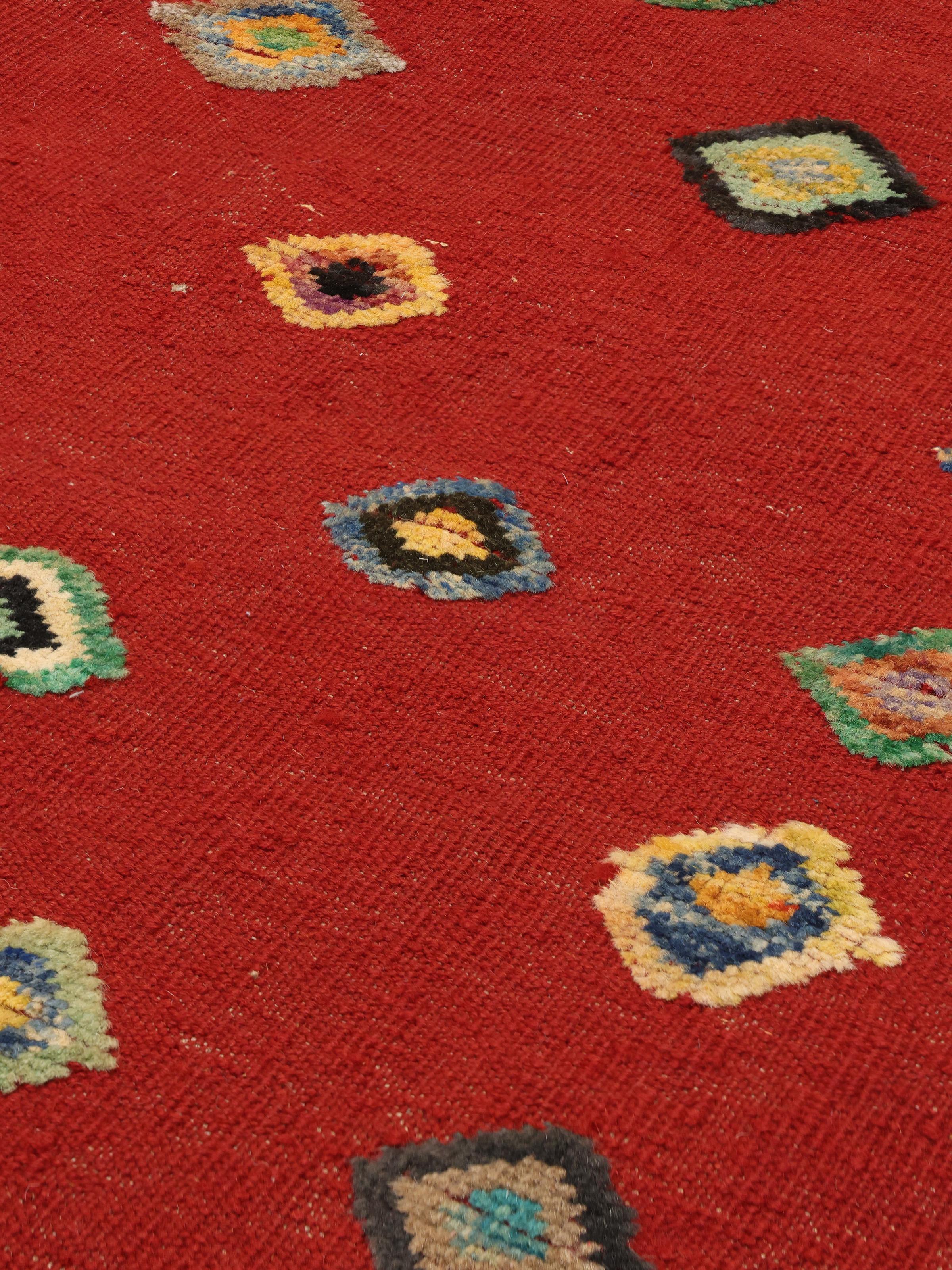
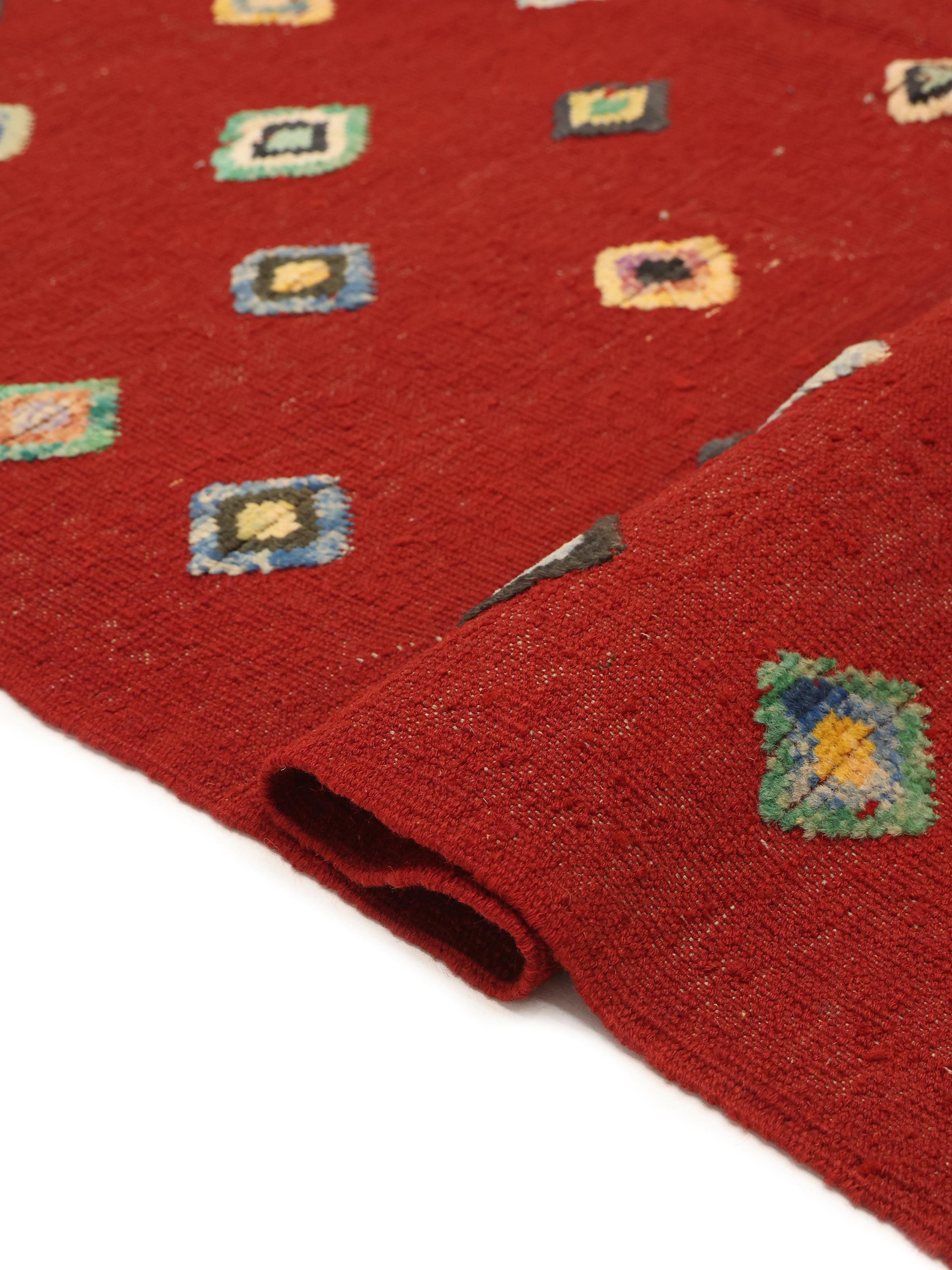
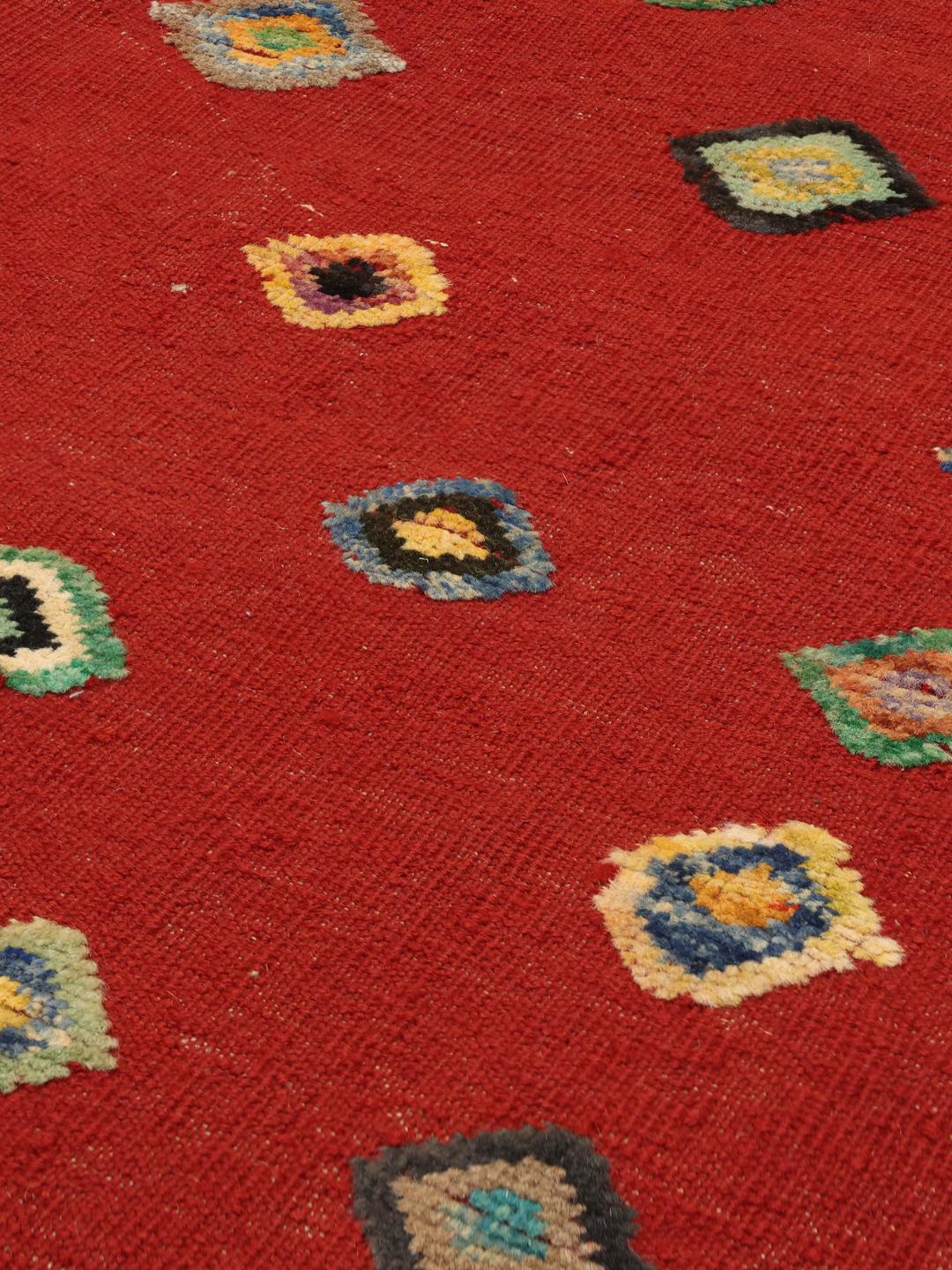
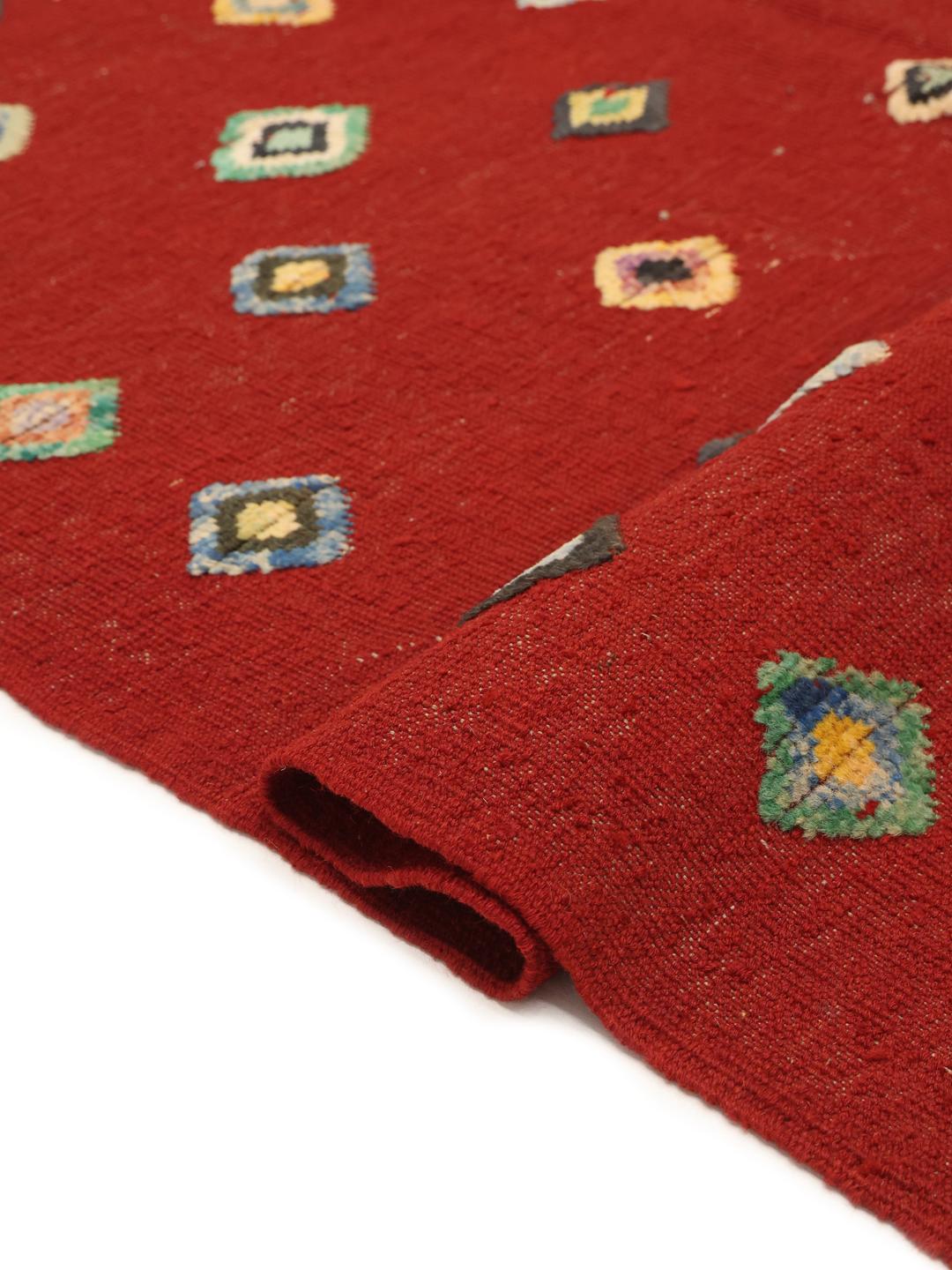
The Nimbaft tradition represents a specific branch of this weaving heritage, characterised by flatwoven structures that prioritise durability and graphic clarity. Unlike knotted pile carpets, Kelims are created by interweaving warp and weft threads tightly together, a technique that produces a flat, smooth surface where the pattern is visible on both sides of the fabric. This method requires expert tension control to ensure the geometric motifs remain sharp and symmetrical.
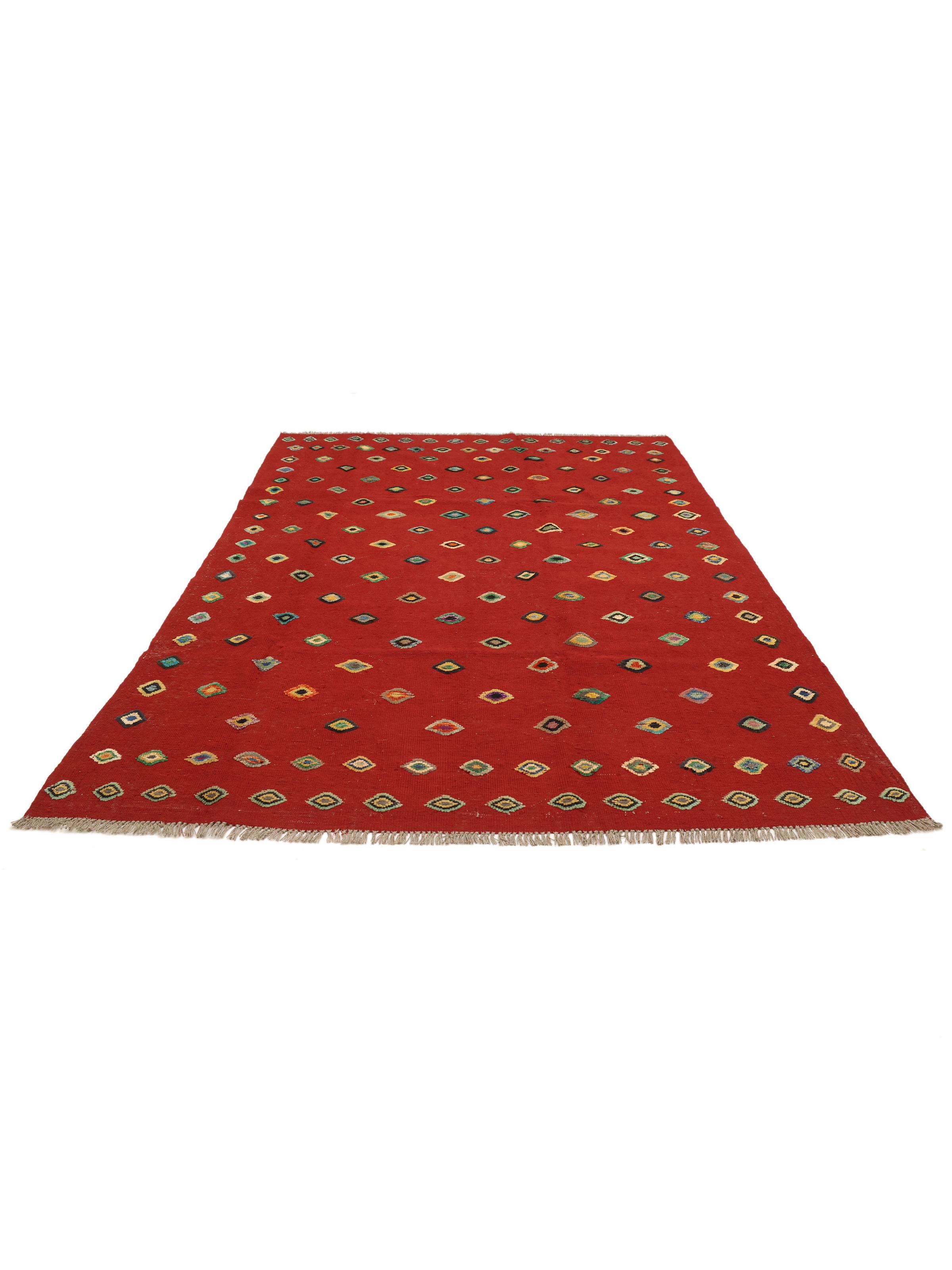
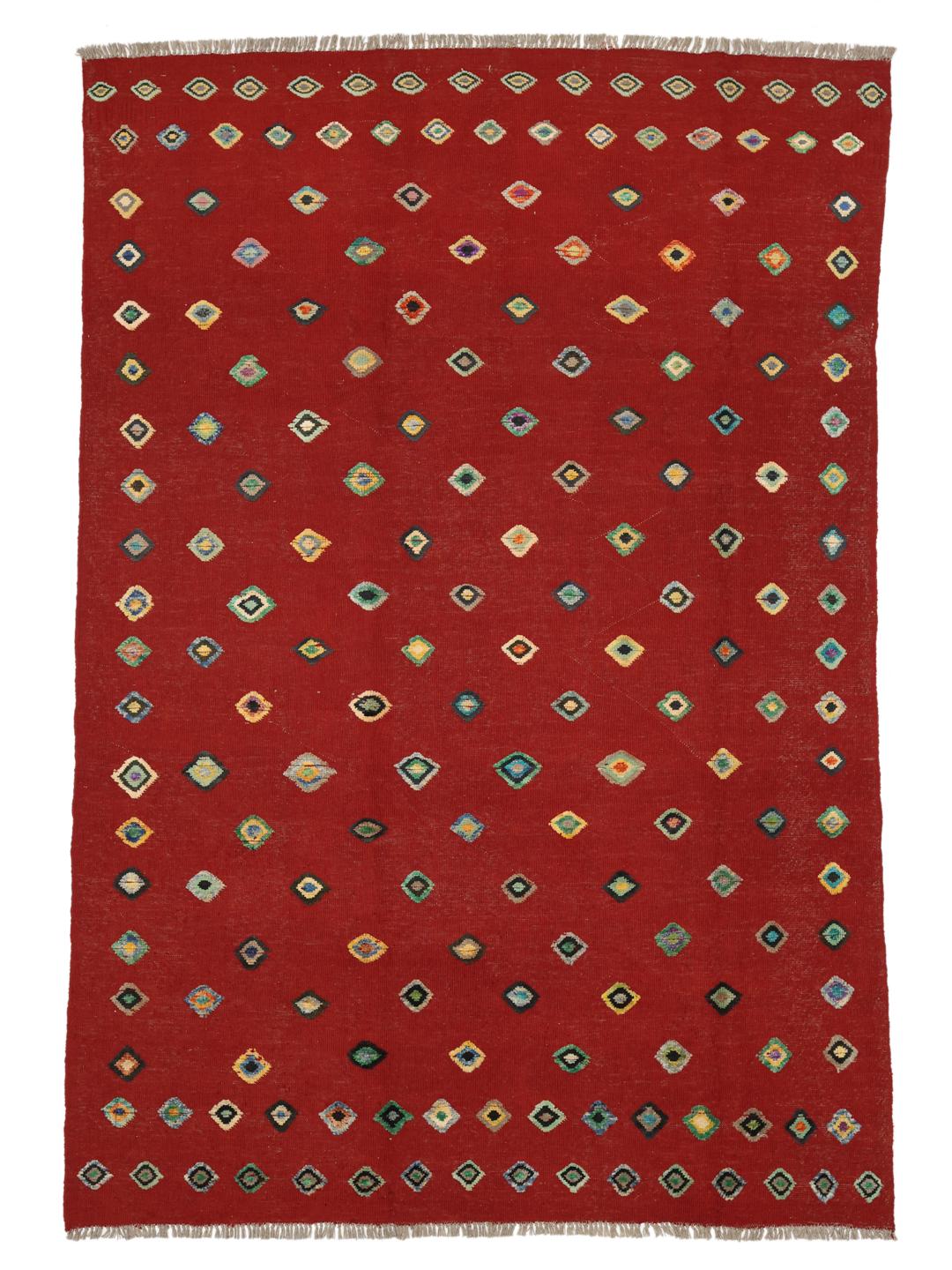
Design traditions in Afghan Kelims often feature repeating geometric elements, with diamonds and tribal motifs playing a central role. These symbols frequently drew inspiration from nature, tribal identity, and protective symbolism, passed down orally from mother to daughter across generations. The deep red background seen in this piece is a classic hallmark of the region, historically achieved using rich natural dyes that gained depth and patina over time.
Collecting vintage and contemporary Kelims has become a way to preserve a deeply human craft that modern industrial methods cannot replicate. Owning a piece like this connects your modern interior to a long lineage of textile makers whose artistry turned simple wool threads into enduring cultural artefacts. It brings a sense of authentic history and grounded storytelling to any room it inhabits.