Kelim rugs have long been a cornerstone of nomadic and village life across the Middle East and Central Asia. These flat-woven textiles were traditionally created as functional items, serving as floor coverings, tent dividers, or storage bags for travelling tribes. Their portability and durability made them essential, while the designs often served as a visual language to represent the weaver's tribe, family history, or local environment.
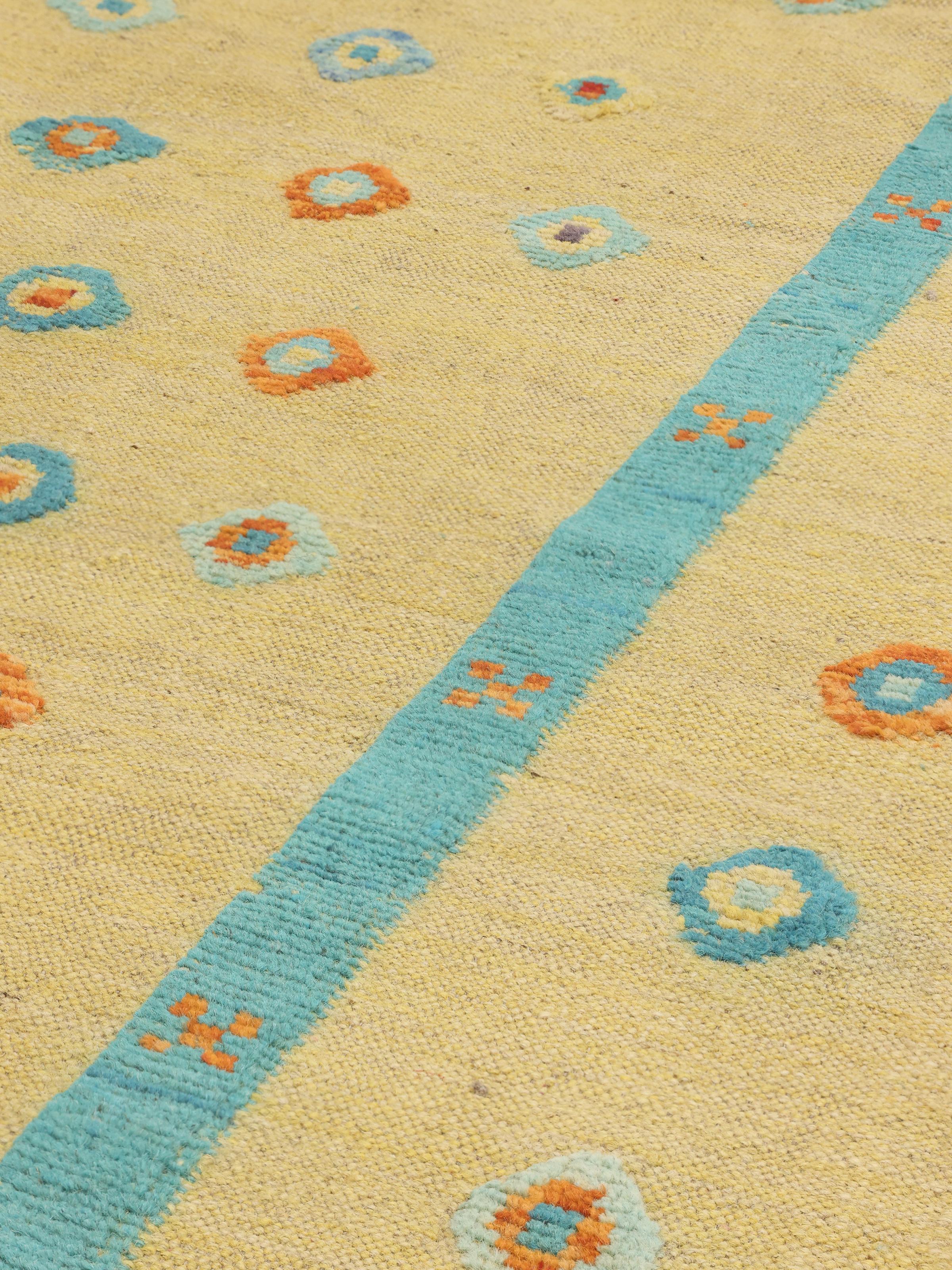
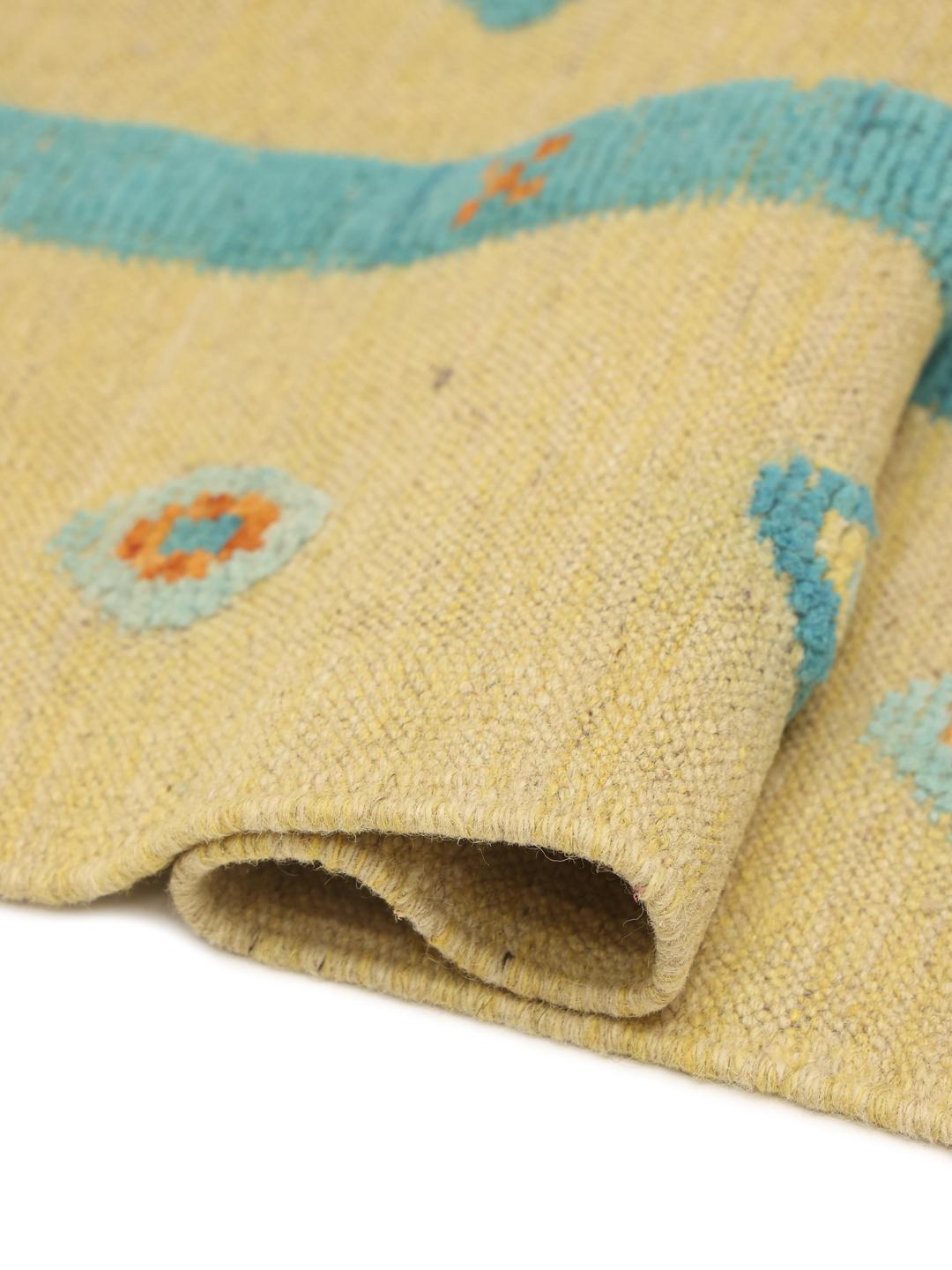
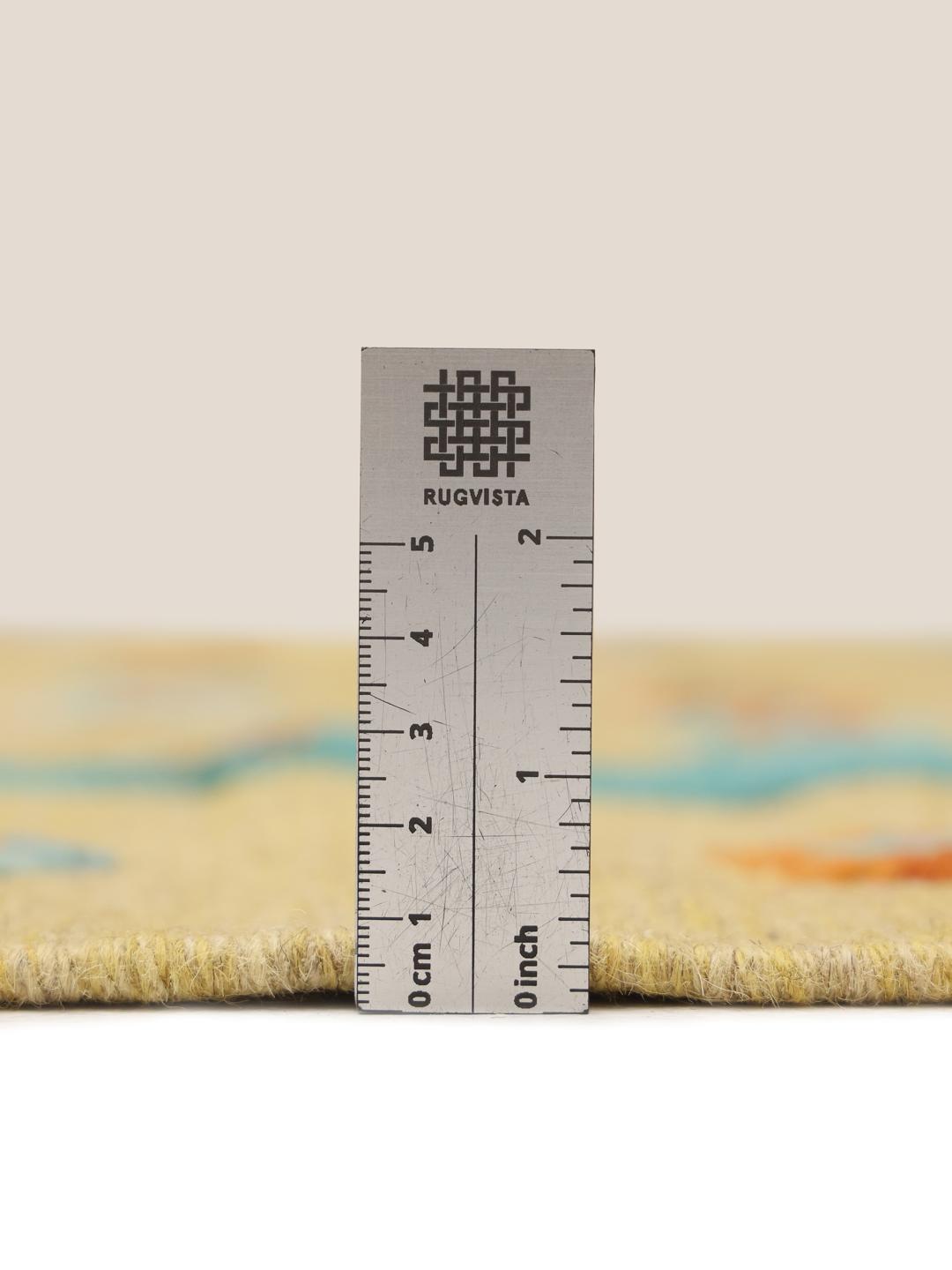
The term Nimbaft refers to a specific approach to the weave, resulting in a tight, flat texture that is both durable and thin. This construction is highly valued because it creates a smooth surface that does not trap dust, making it a practical choice for both modern and traditional homes. The quality of a flat-woven rug is determined by the tension of the weave and the consistency of the wool, which ensures the piece lies perfectly flat and retains its shape over decades of use.
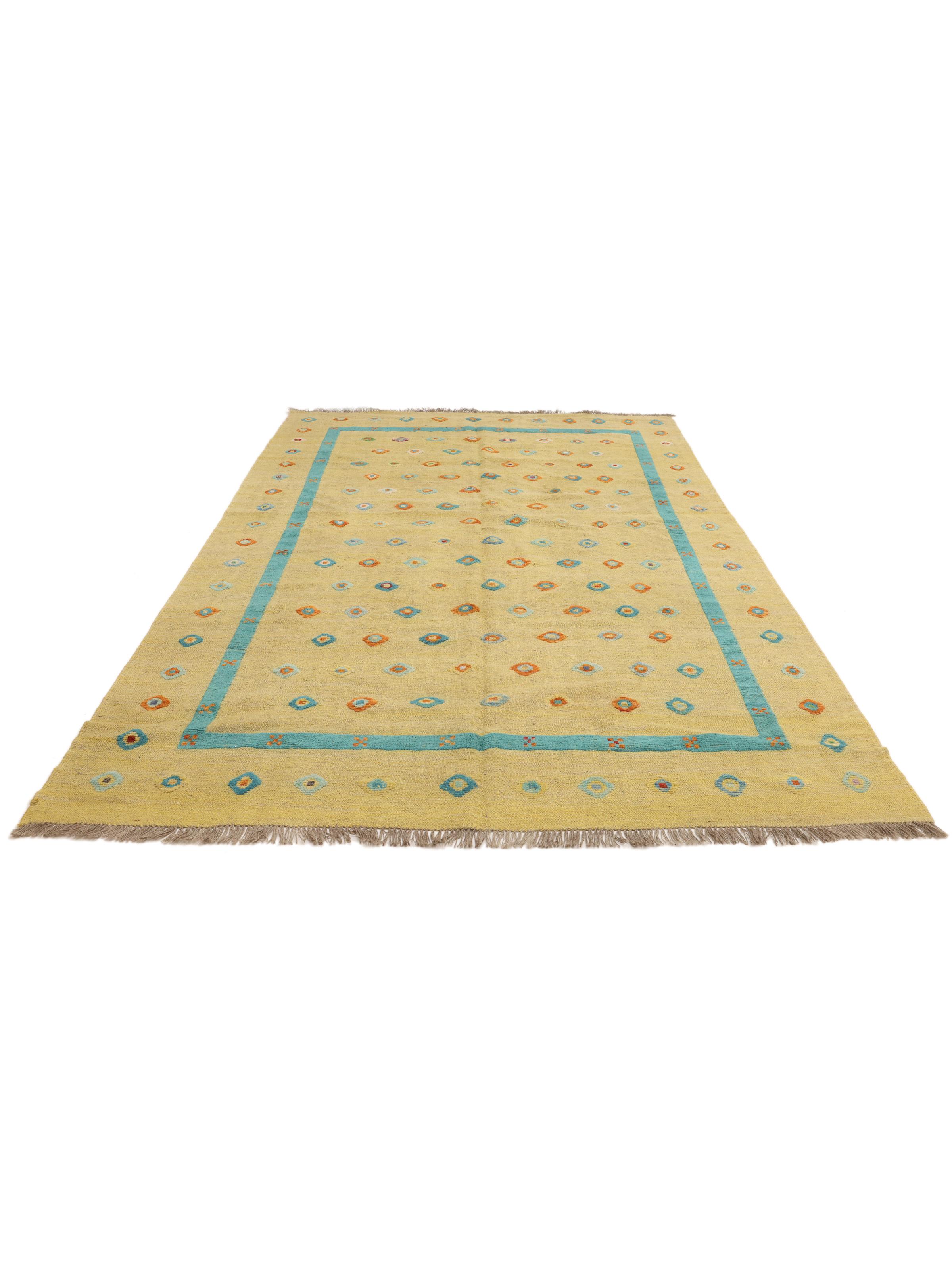
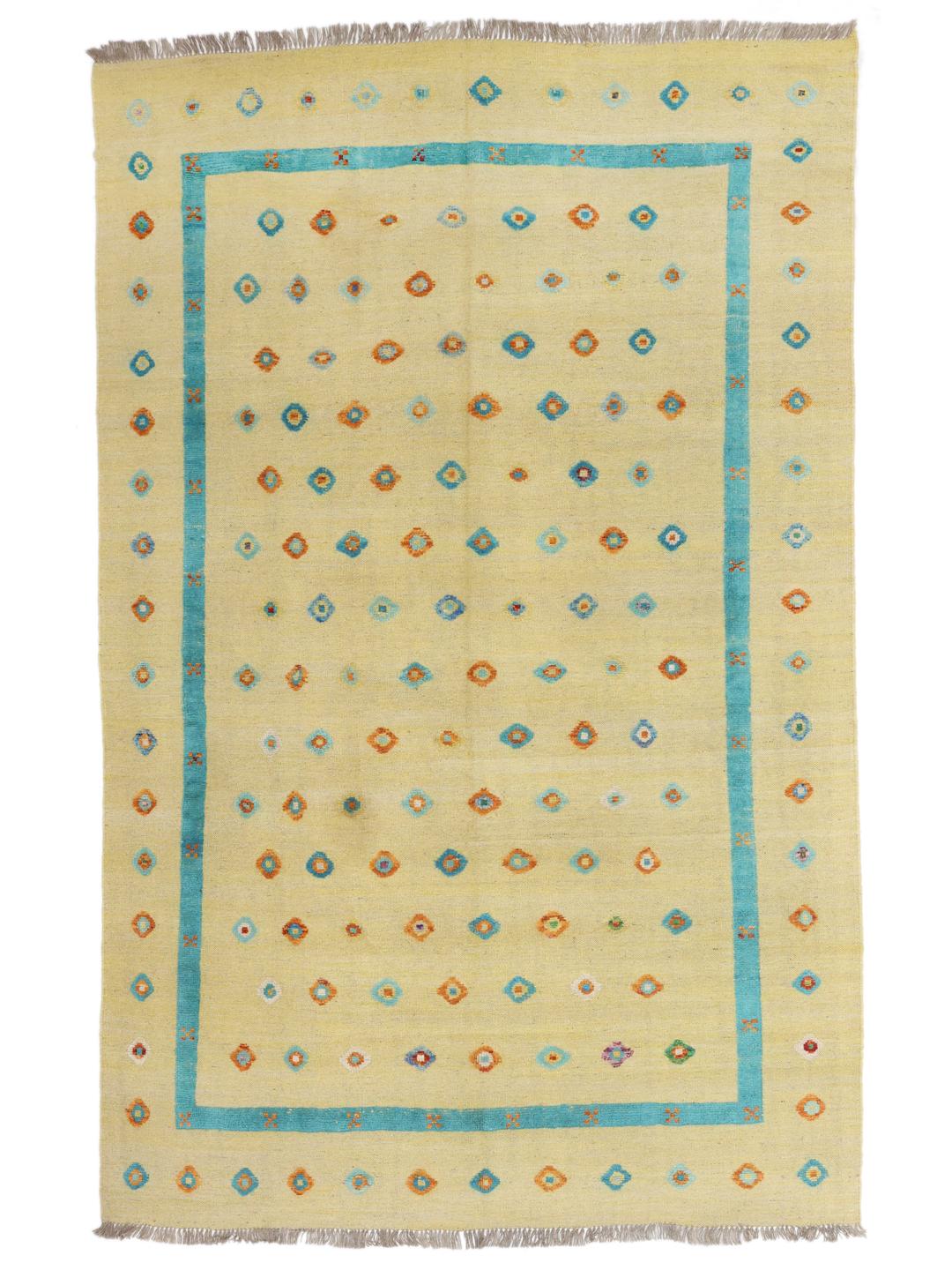
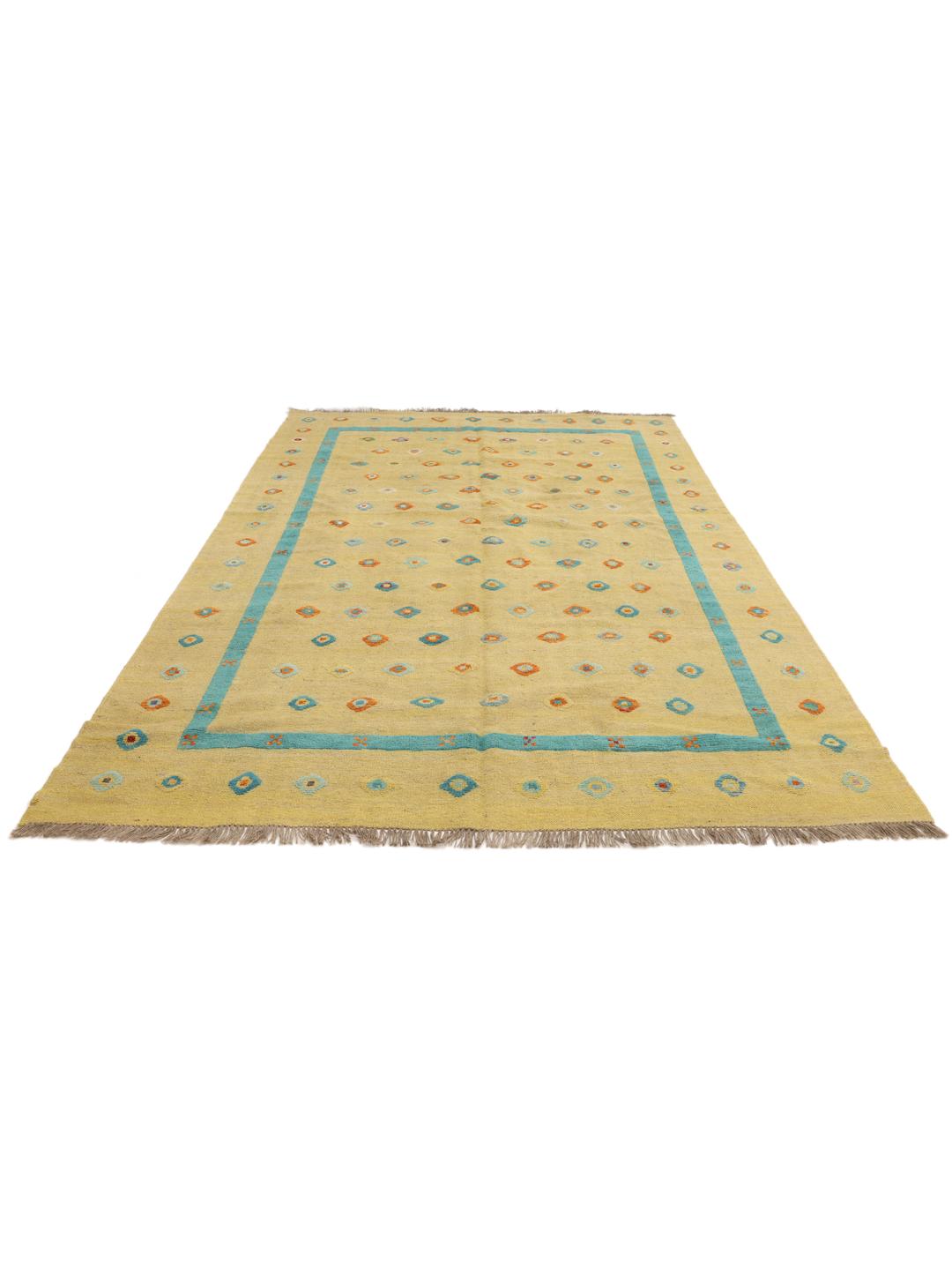
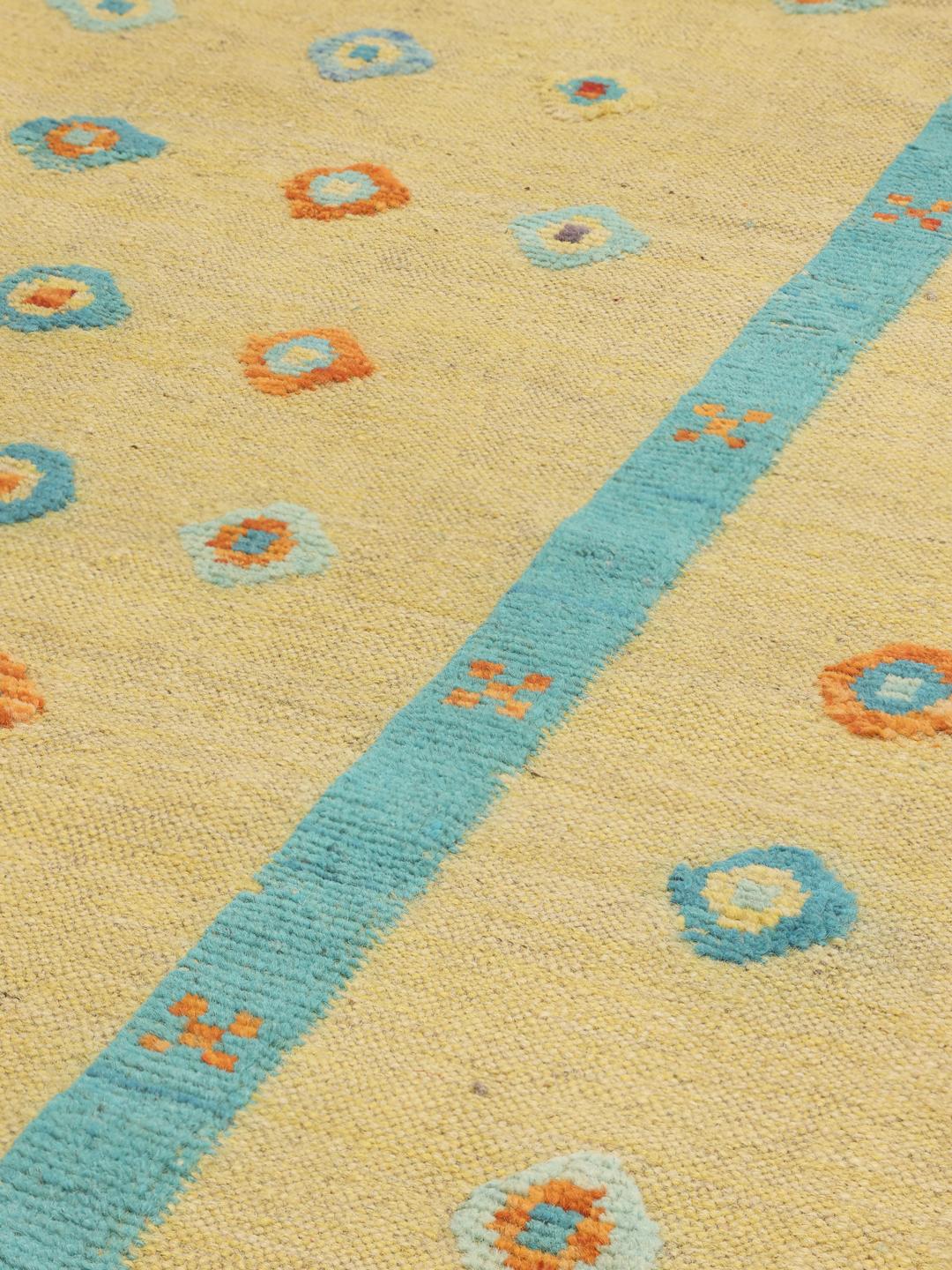
Visually, these rugs are defined by their geometric vocabulary. Motifs such as the diamonds and small geometric shapes seen here are classic elements, often interpreted as protective symbols or stylized representations of nature. The use of a vibrant yellow field is a bold departure from more muted, earth-toned traditions, showcasing the creative evolution of Afghan weavers who blend historic techniques with modern colour palettes to create striking, contemporary pieces.
Owning a Kelim Nimbaft is more than just a decorative choice, it is a connection to a long-standing heritage of craft. These rugs are highly sought after by collectors who appreciate the human element in every thread. By preserving these traditional weaving methods, collectors help ensure that the skill and cultural narrative of these regions continue to thrive, making every rug a meaningful piece of history for your home.