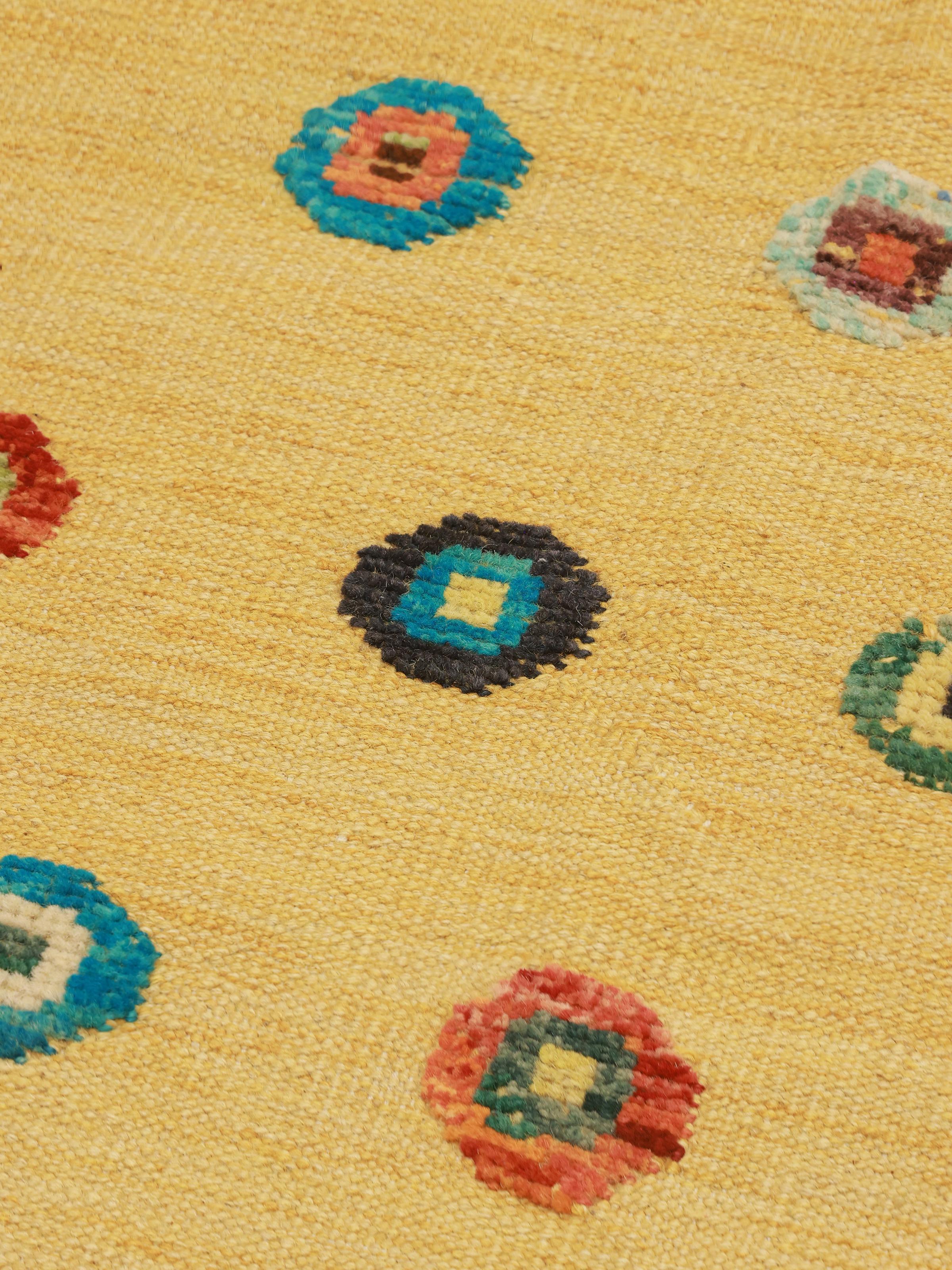
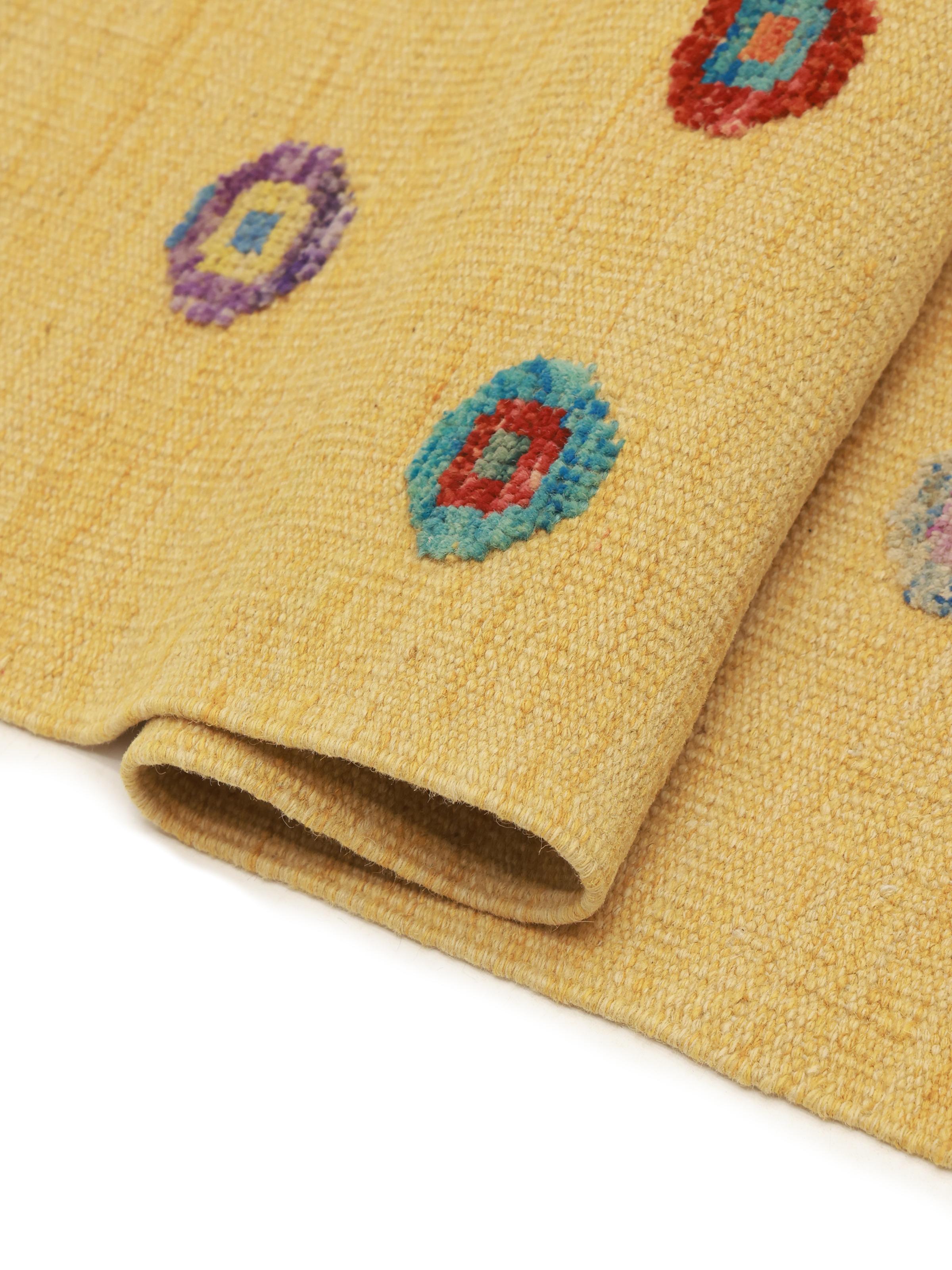
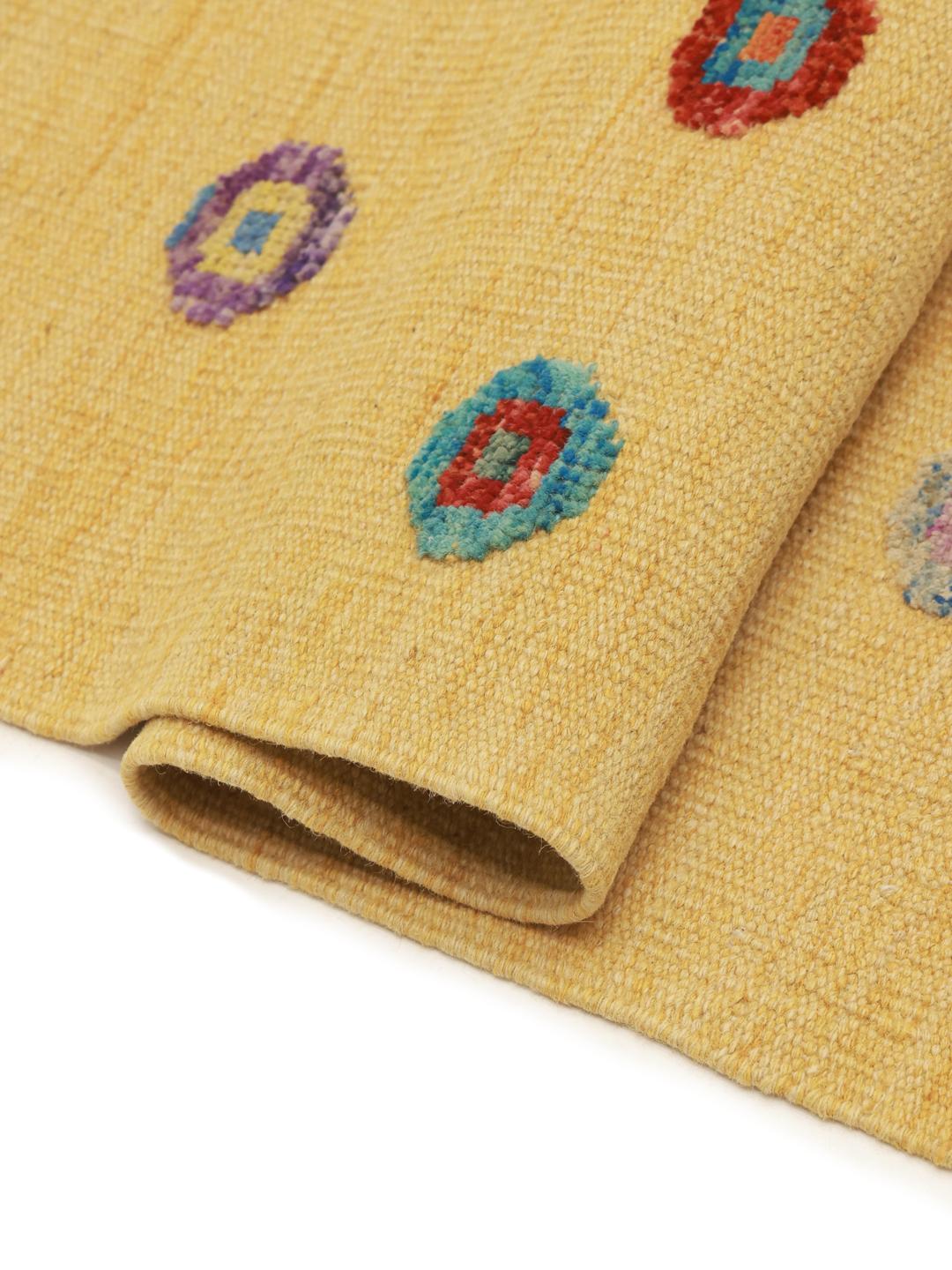
Kilim rugs are a foundational element of nomadic and village life across the Middle East and Central Asia. Historically, these rugs were created as utilitarian items, serving as floor coverings, tent dividers, and storage sacks for travelling tribes. The term 'Kelim' refers to the specific flat-weaving technique where the warp and weft threads are interlaced to create a smooth surface without a pile, a method that allows for bold, graphic designs.
The Nimbaft tradition specifically highlights the skill of the weaver in creating intricate, small-scale motifs within a larger field. Unlike larger, more complex medallion patterns, this style focuses on the repetition and variation of smaller shapes, which requires immense concentration to maintain consistency across the entire rug. This technique is a testament to the weaver's ability to balance visual rhythm with technical accuracy.
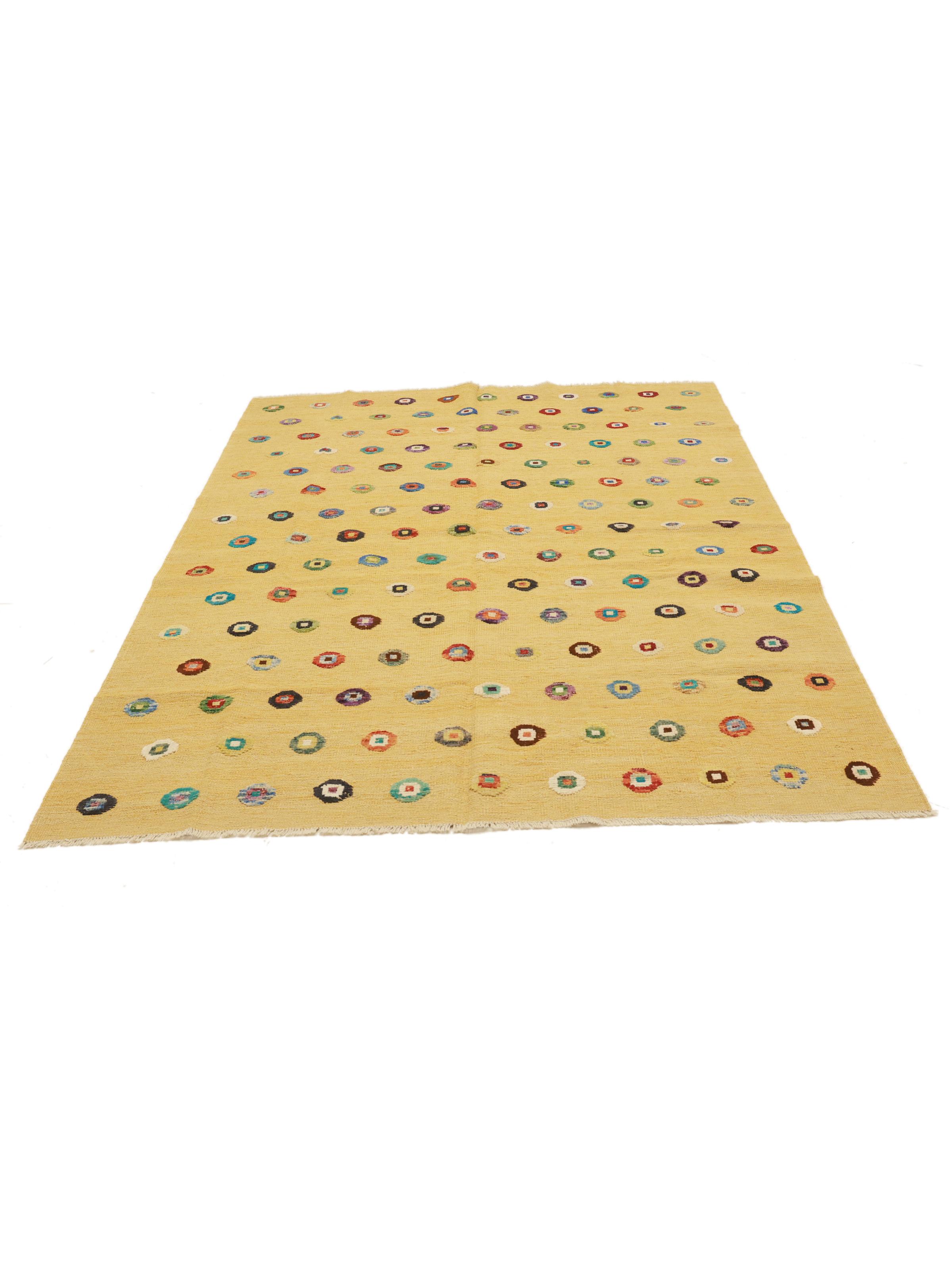
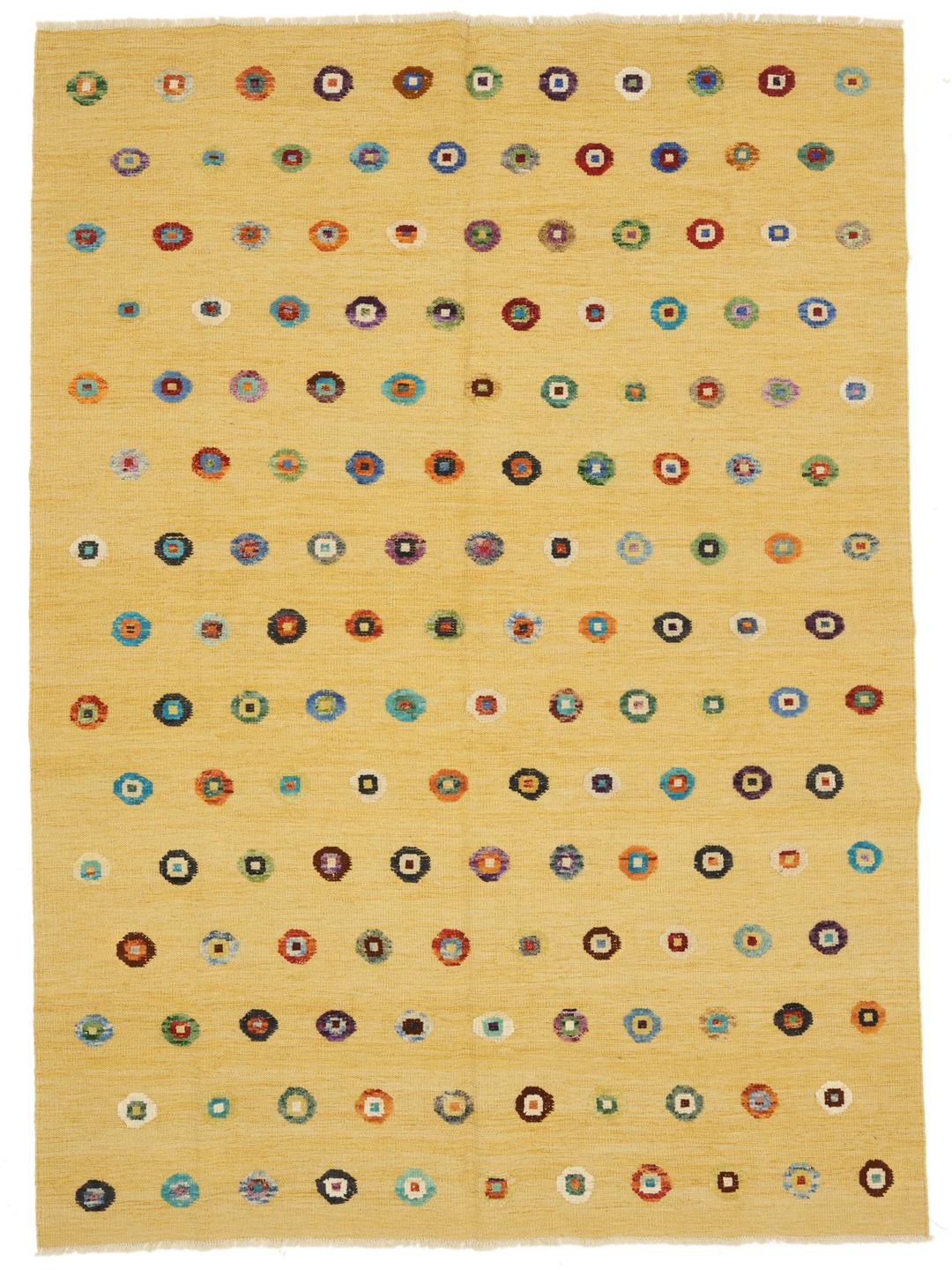
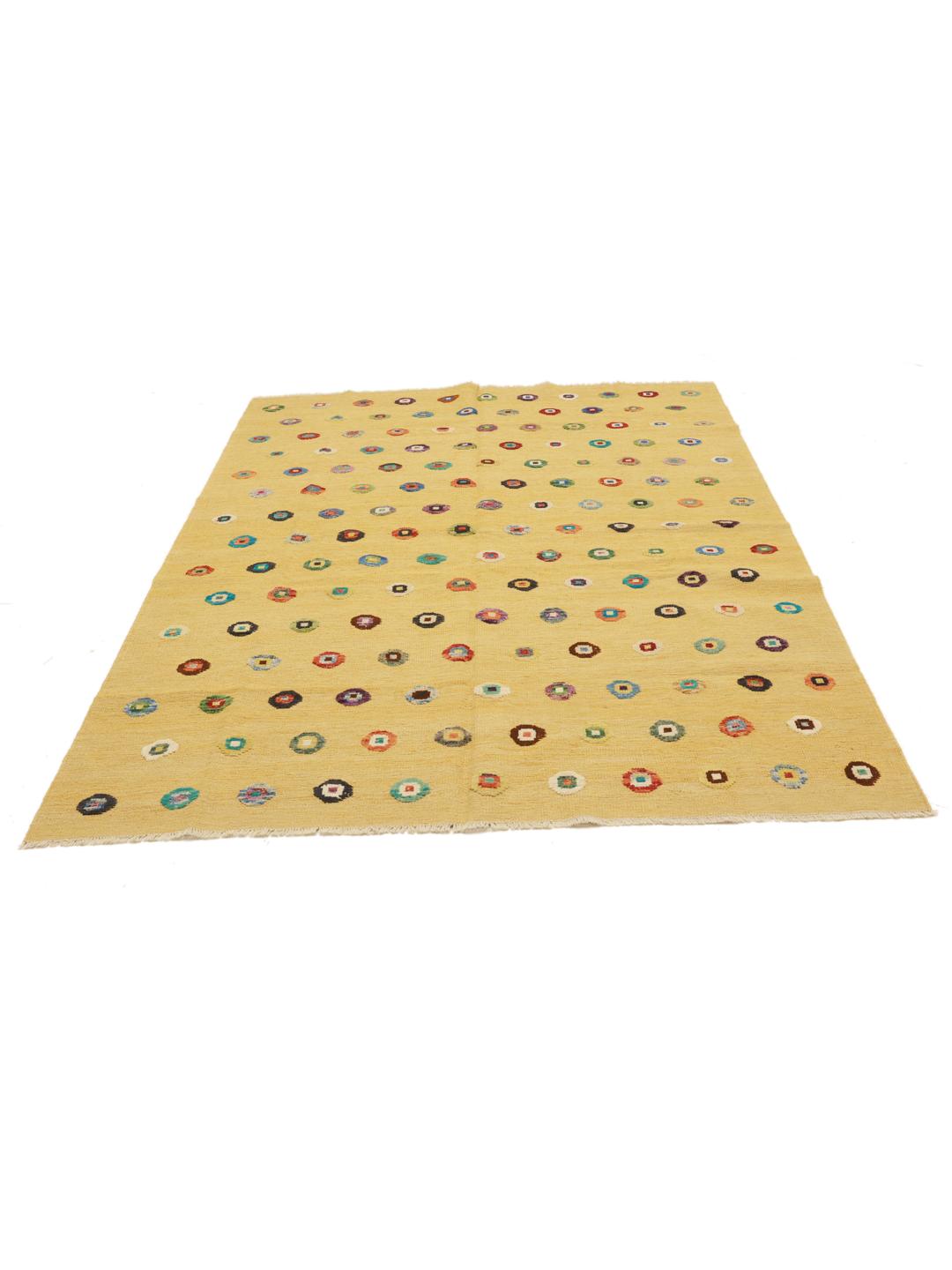
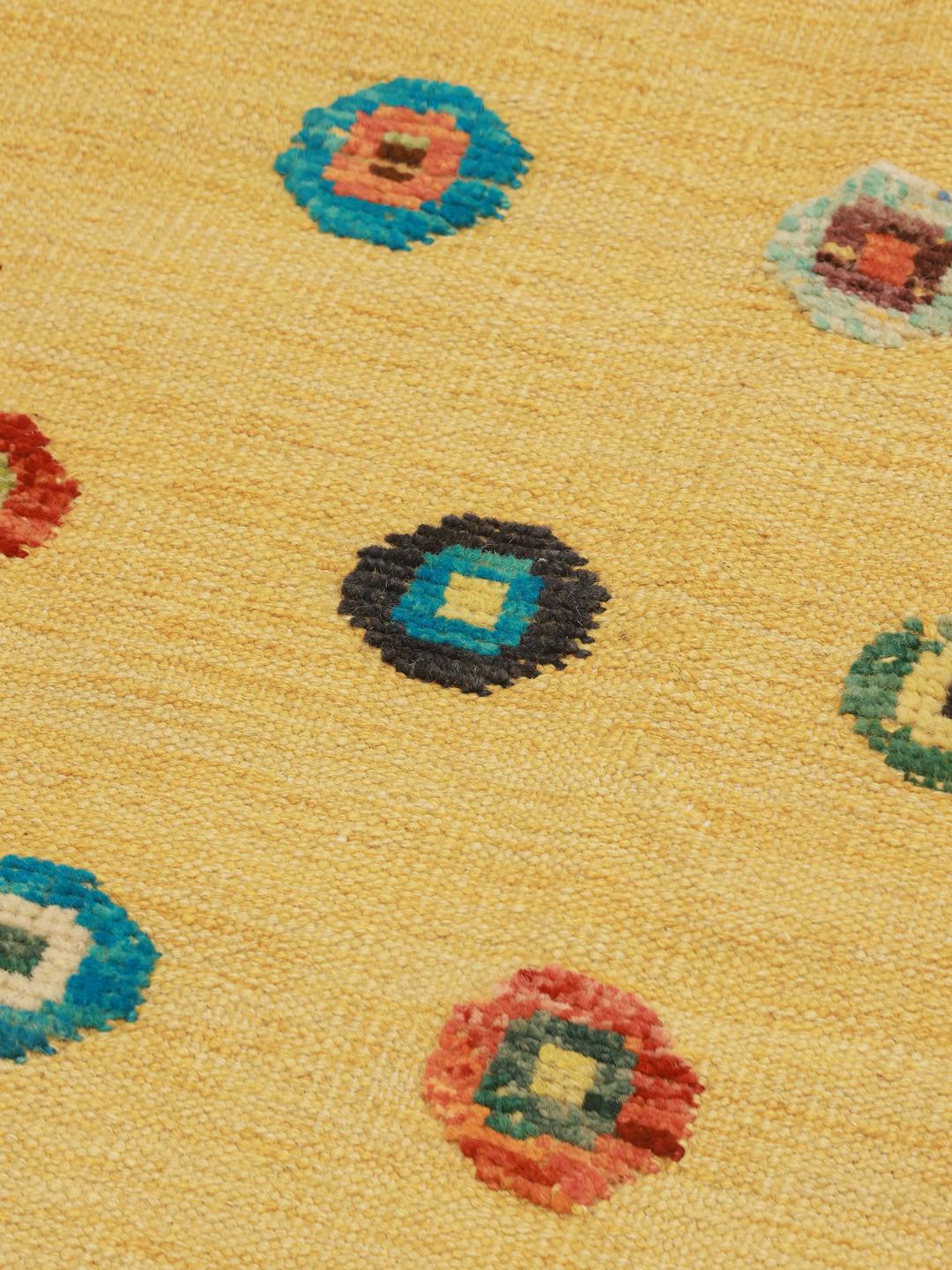
Visually, this rug is defined by its scattered, colourful motifs, which contrast beautifully against the warm yellow field. In many traditional Afghan designs, these small shapes are inspired by the surrounding landscape or tribal symbolism, acting as a visual language that carries meaning beyond mere decoration. The use of such varied colours within a single rug is a hallmark of the creativity found in these workshops, where weavers often use leftover yarn from other projects to create these lively, spontaneous patterns.
Owning a hand-woven Afghan Kilim is an invitation to connect with a long-standing tradition of craft that values both form and function. These rugs are highly prized by collectors not only for their beauty but for the story behind their creation. They offer a tangible sense of history and human connection, making them a meaningful addition to any home that values authentic, enduring design.