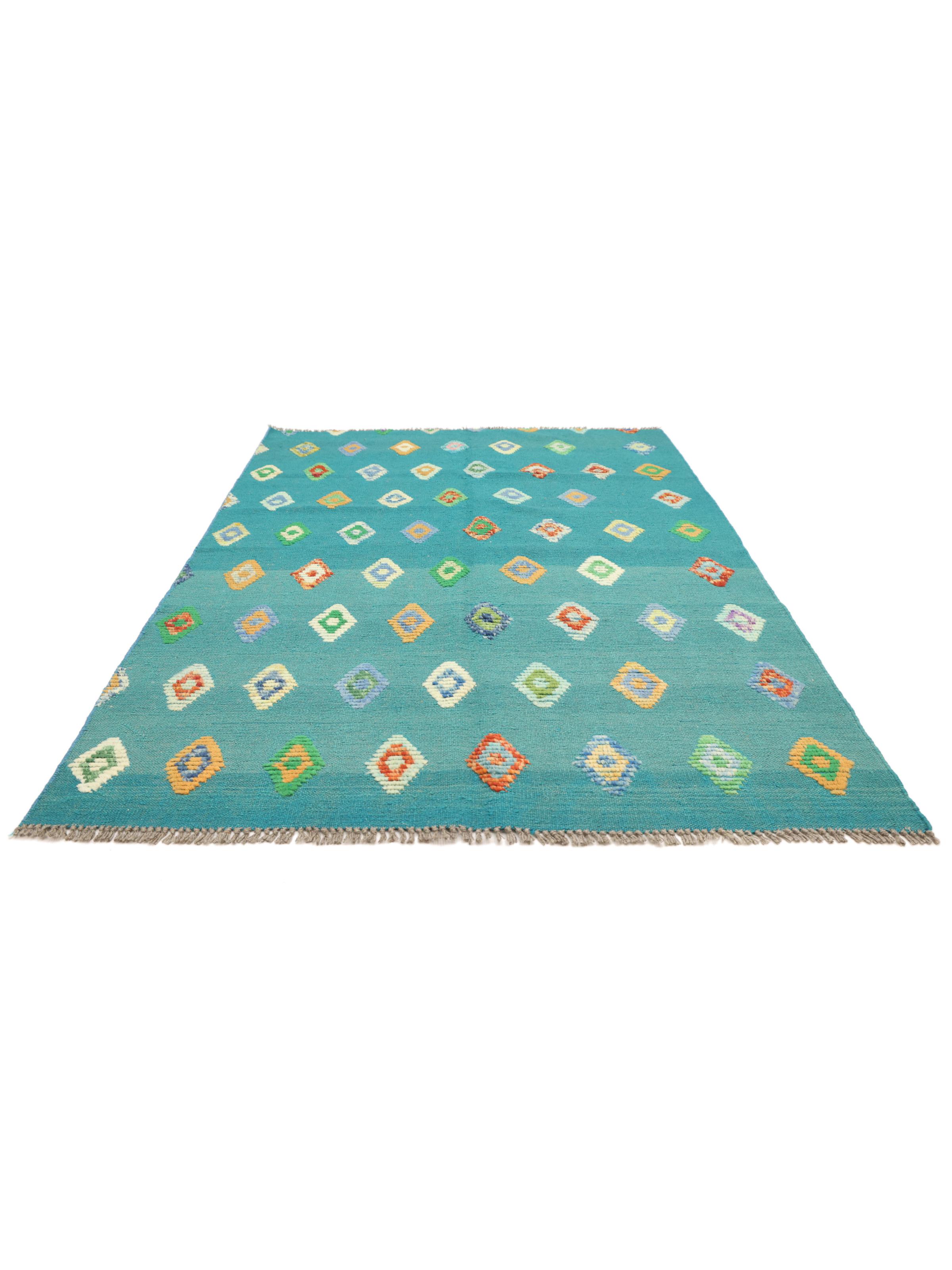
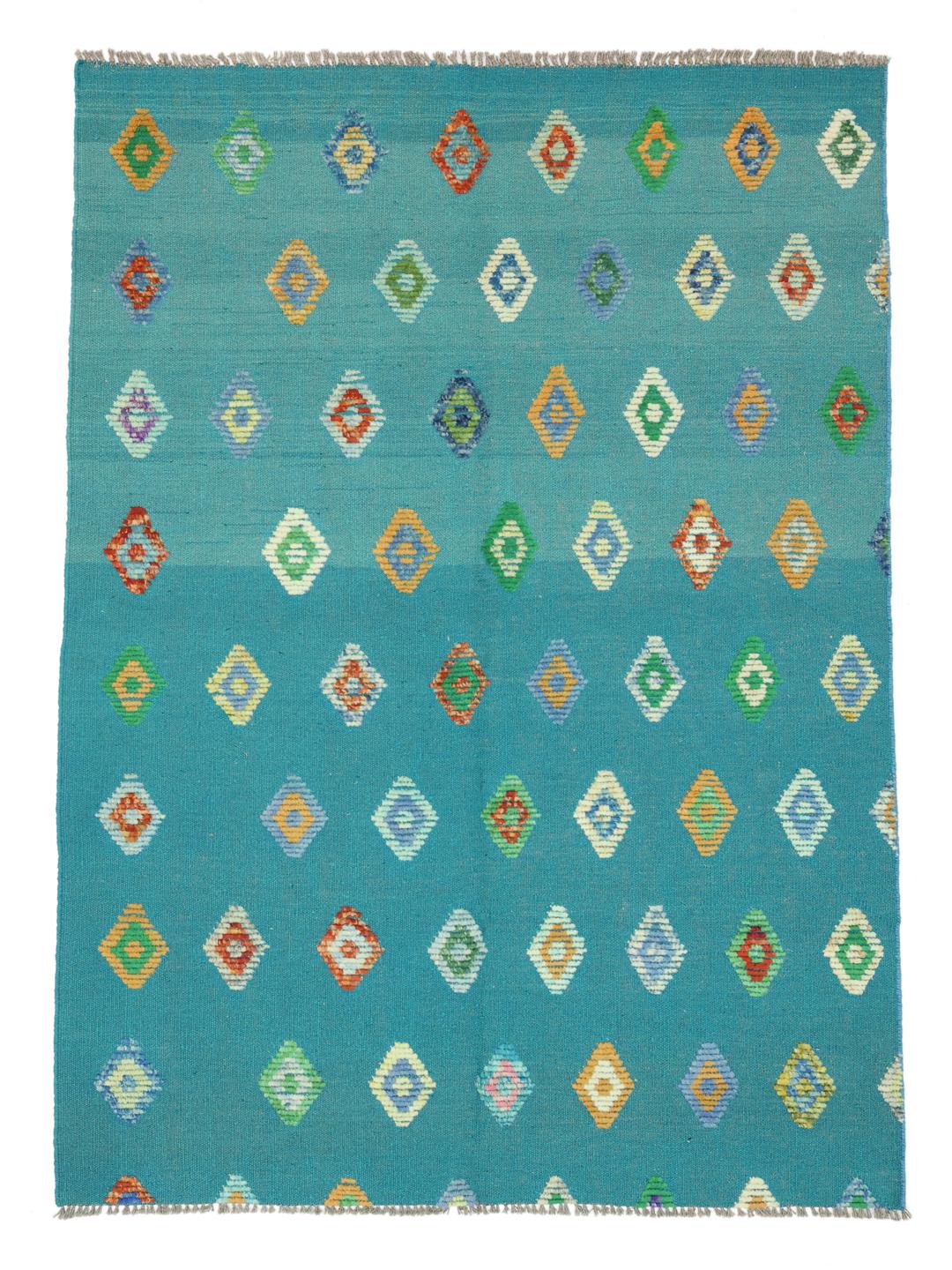
The Kelim Nimbaft tradition has deep roots in the nomadic and village cultures of Afghanistan, where flat-woven textiles were crafted for their versatility and portability. These rugs are historically significant, serving as essential components of daily life, used as floor coverings, blankets, and wall hangings by families who traversed the rugged landscapes of Central Asia.
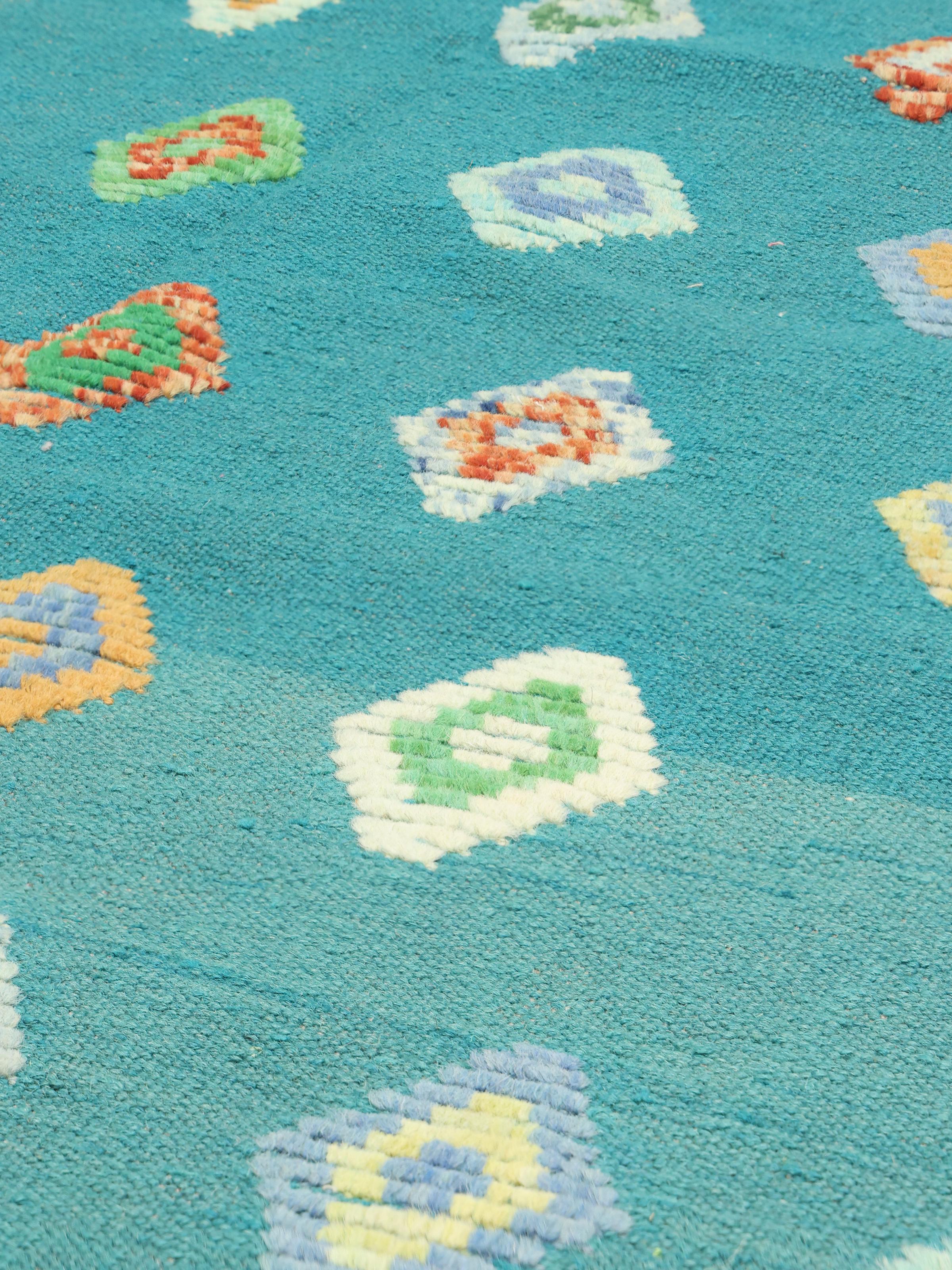
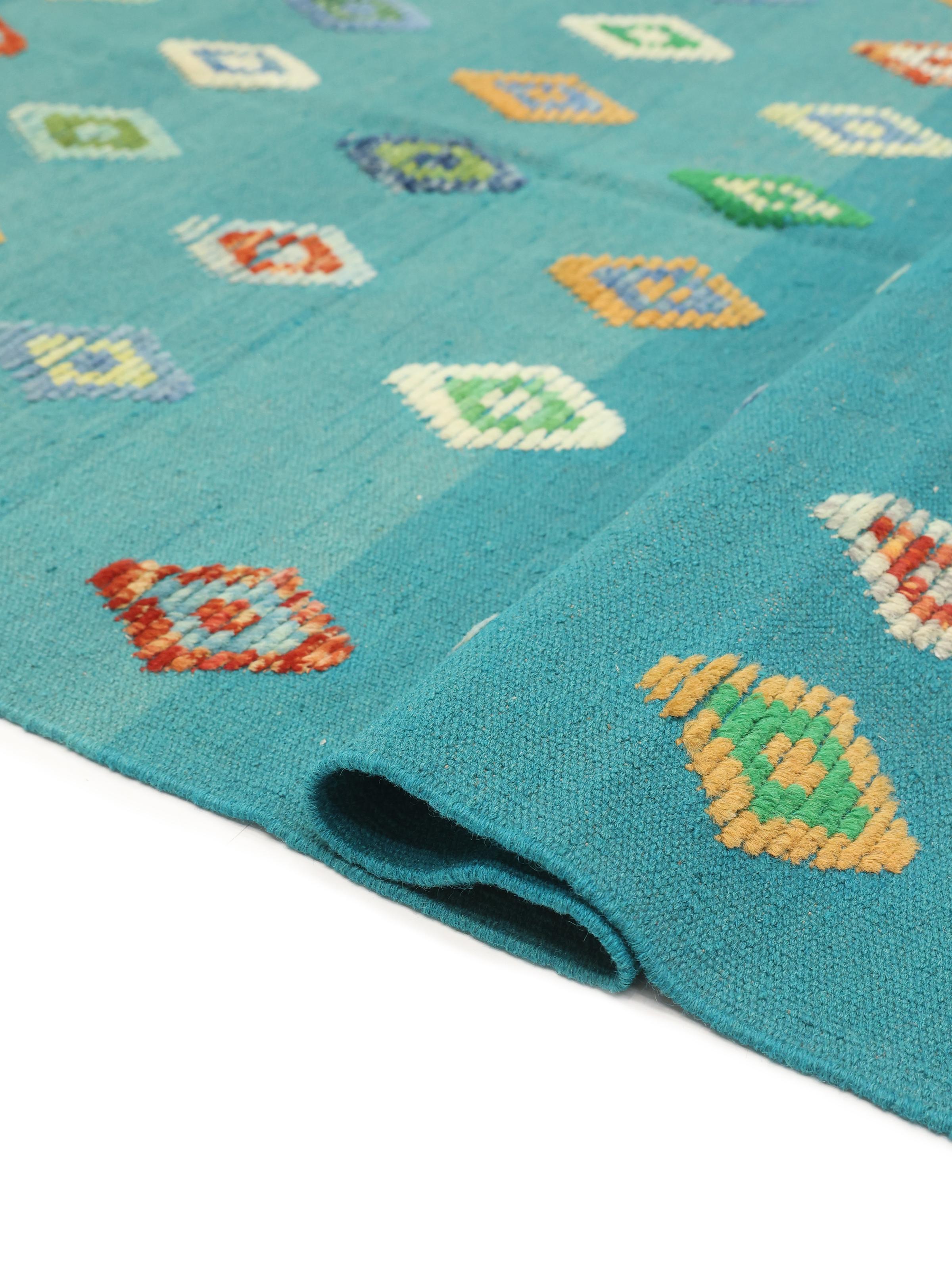
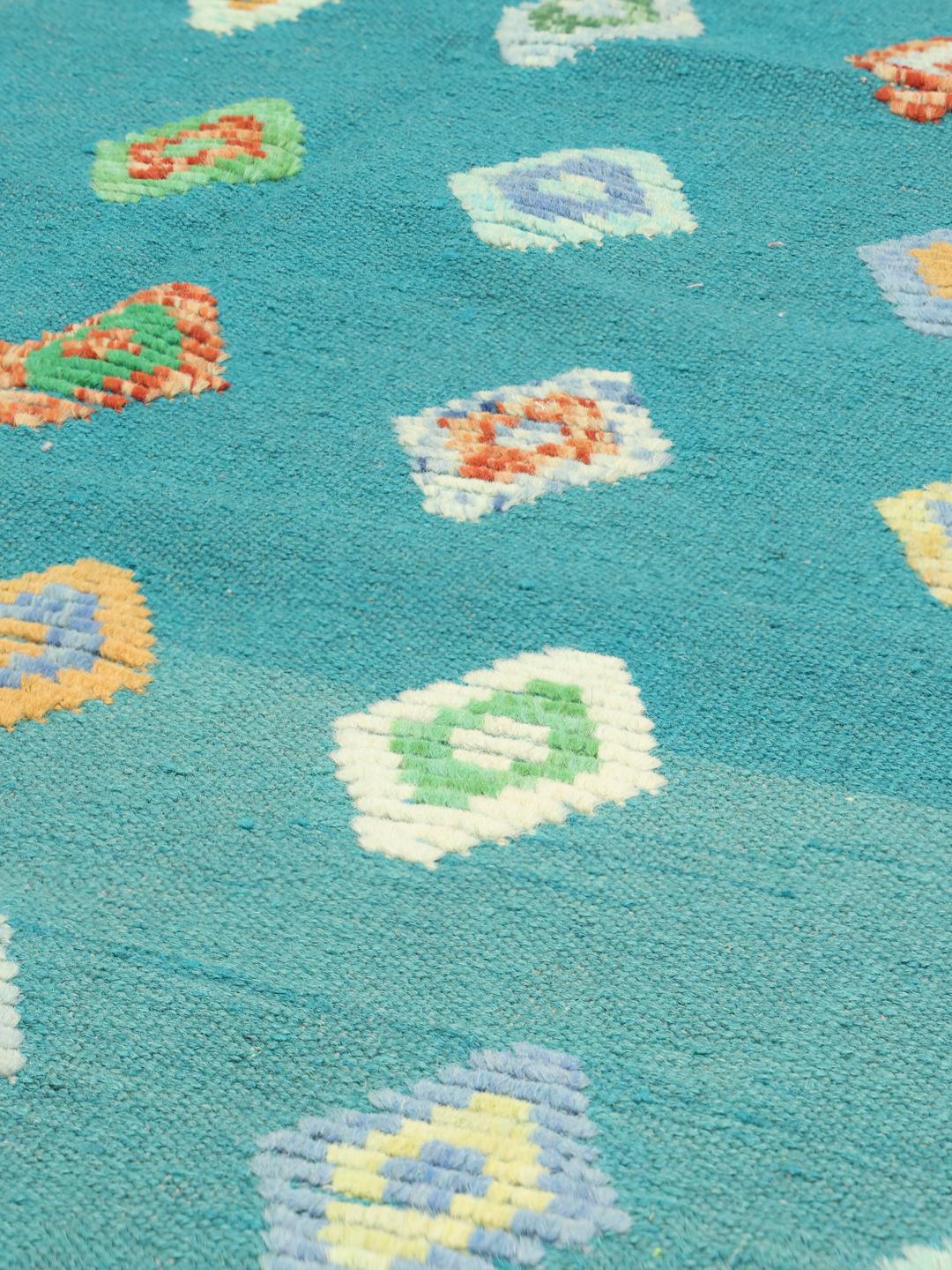
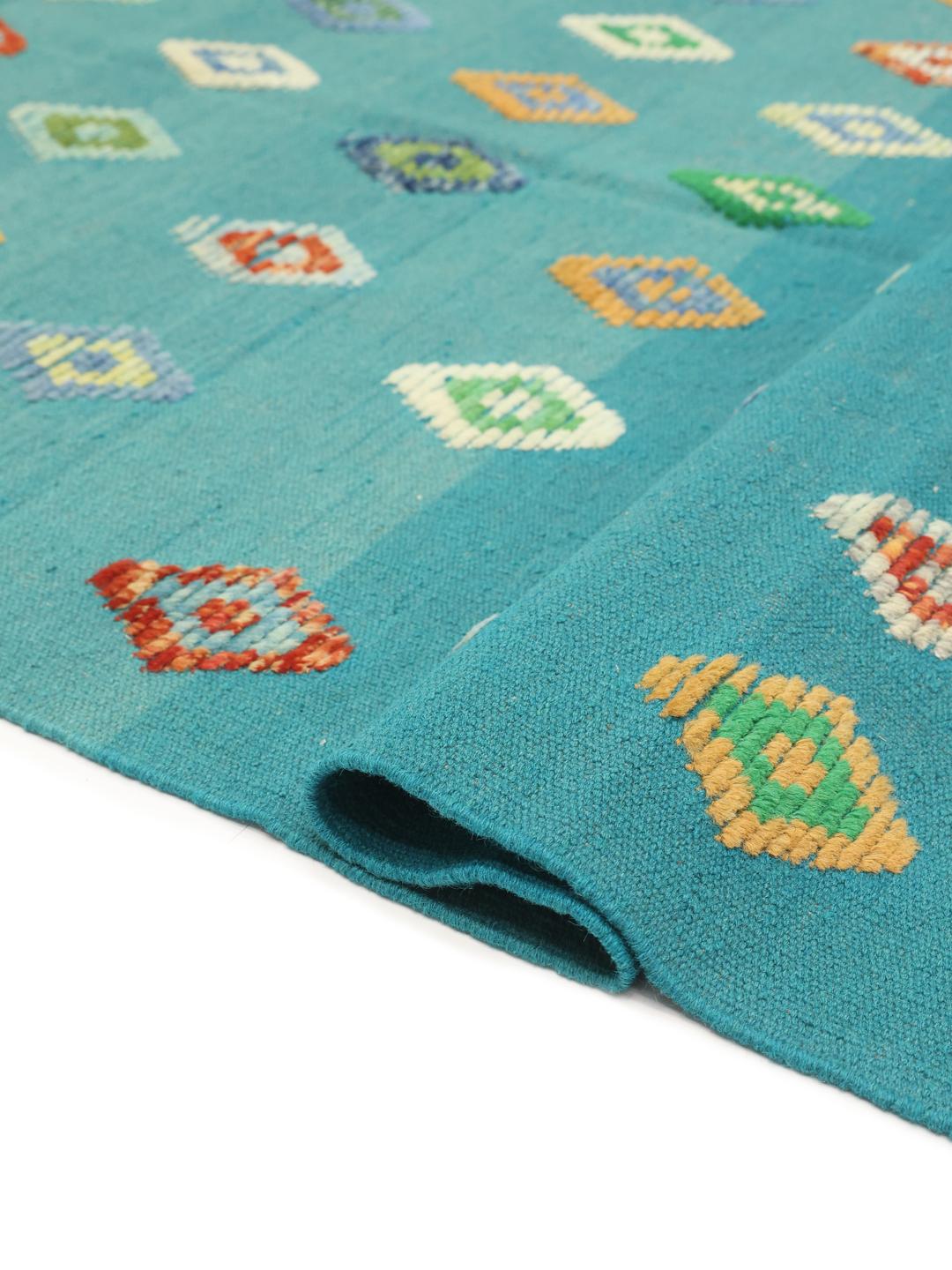
The term 'Kelim' refers to the specific flat-weaving technique where the weft threads are woven tightly over the warp to create a smooth, pileless surface. This method is highly prized for its durability and the clarity it brings to geometric designs. The 'Nimbaft' style often features a refined approach to these traditional weaves, resulting in a more polished aesthetic while maintaining the raw, authentic spirit of its origin.
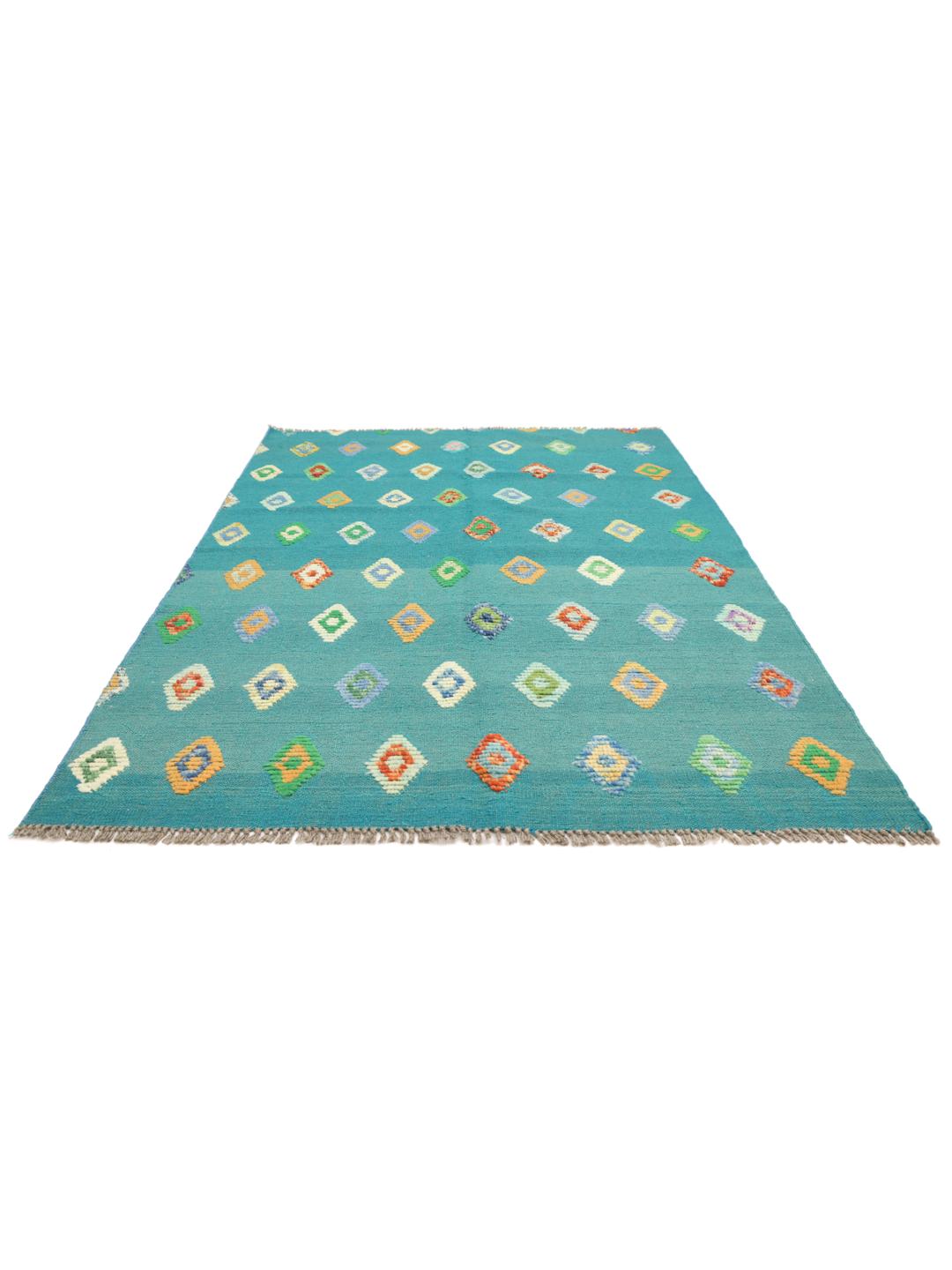
Visually, these rugs are defined by their symbolic geometric language. The diamond motifs seen here are common in the region, often representing protection or prosperity. The vibrant colour palette, set against a bold teal background, is a hallmark of the Nimbaft tradition, showcasing a fearless use of colour that contrasts beautifully with the earthy tones often found in other regional styles.
Today, these rugs are collected by those who value the intersection of ancient skill and cultural history. Owning a piece from this tradition is an investment in human artistry, preserving the legacy of the weavers whose techniques have been passed down through centuries. It is not merely a floor covering, but a testament to the resilience and creative spirit of Afghan artisans.