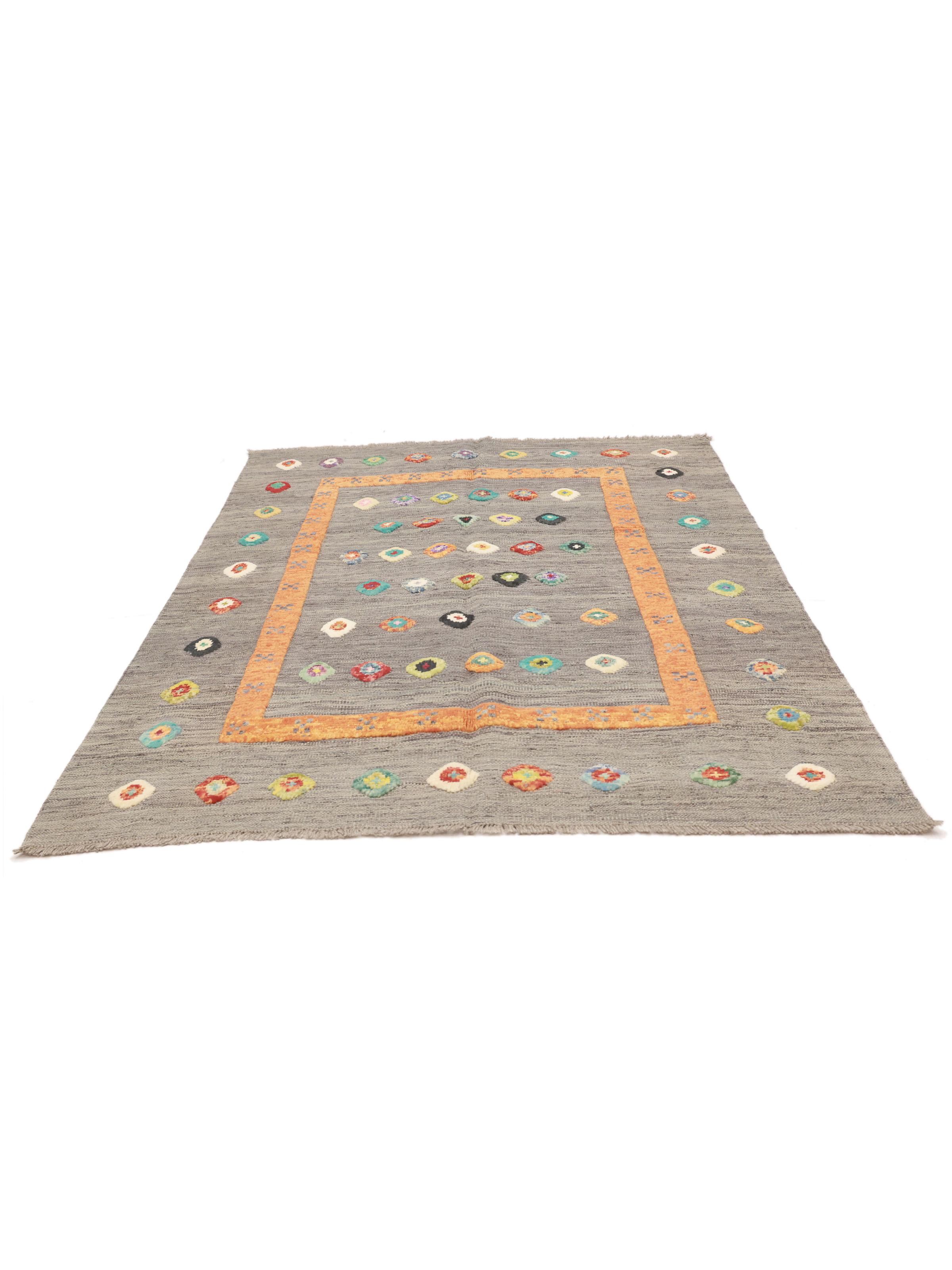
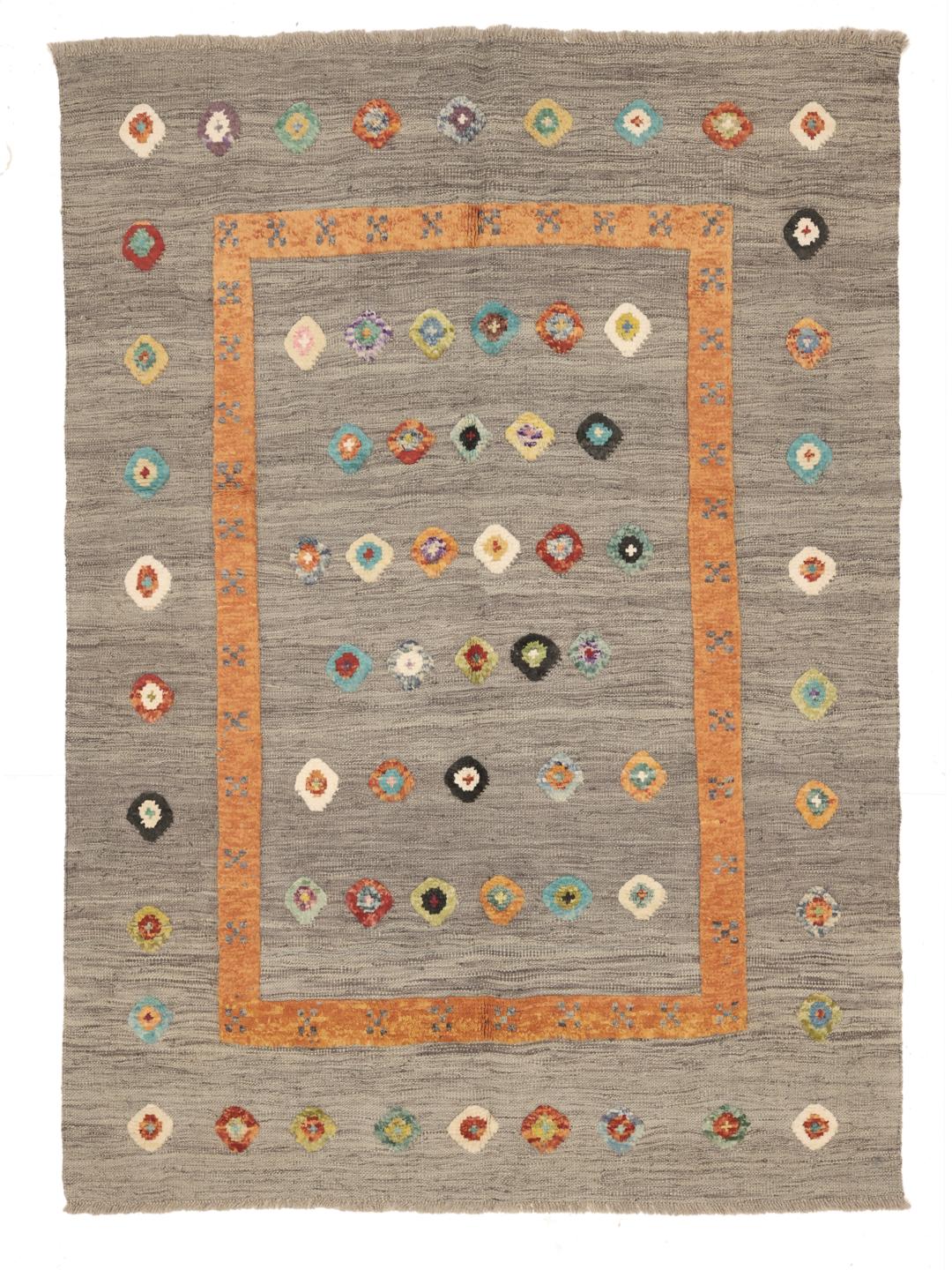
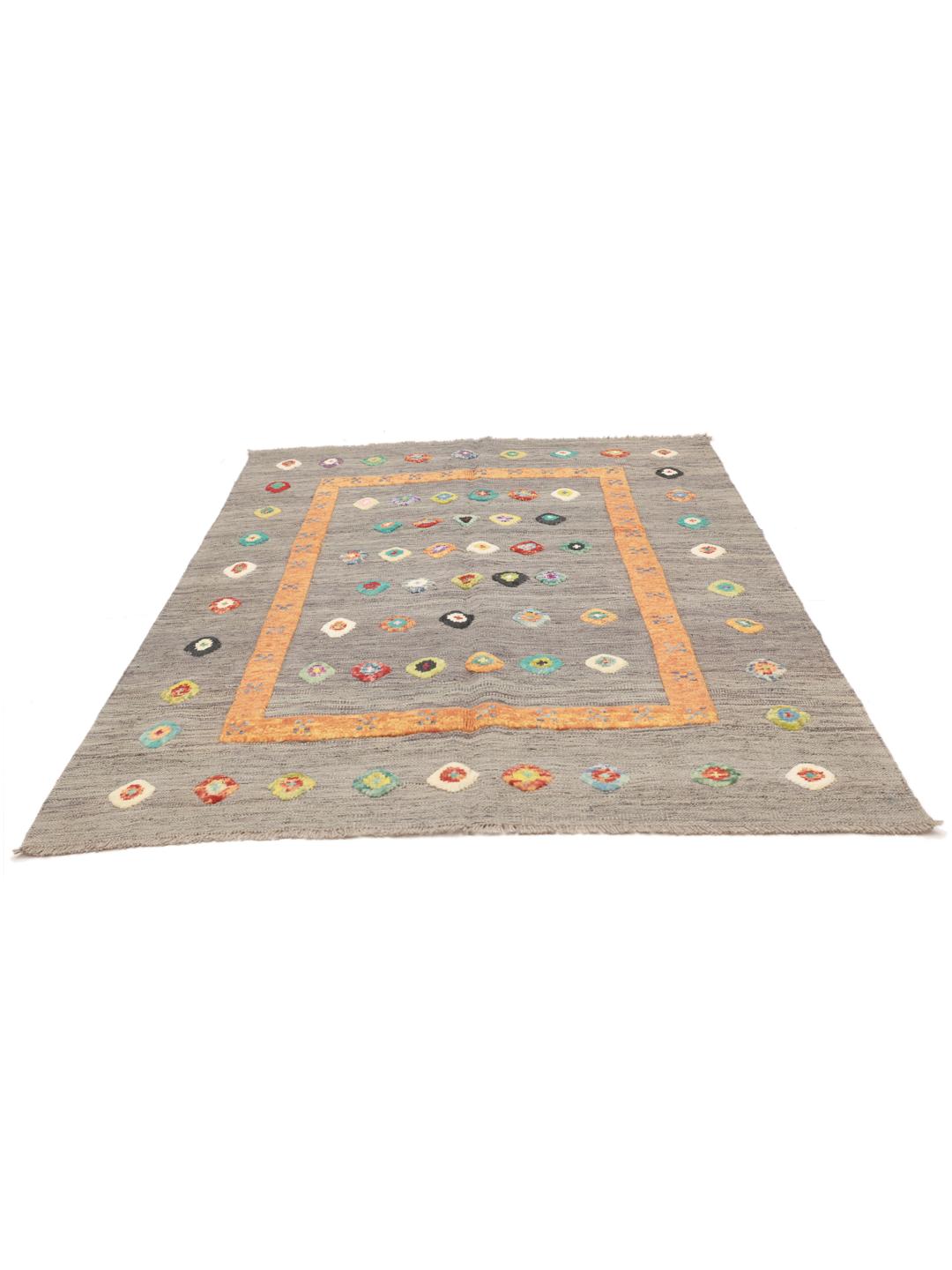
The tradition of weaving kilims is deeply rooted in the nomadic history of the Middle East and Central Asia. These rugs were originally created by tribal communities not only as decorative floor coverings but as functional, portable items that could serve as blankets, bags, or wall hangings. Over centuries, the craft evolved into the sophisticated artistic tradition we see today, with Afghanistan remaining a vital centre for the production of authentic, hand-woven kilims that reflect regional aesthetics and ancestral techniques.
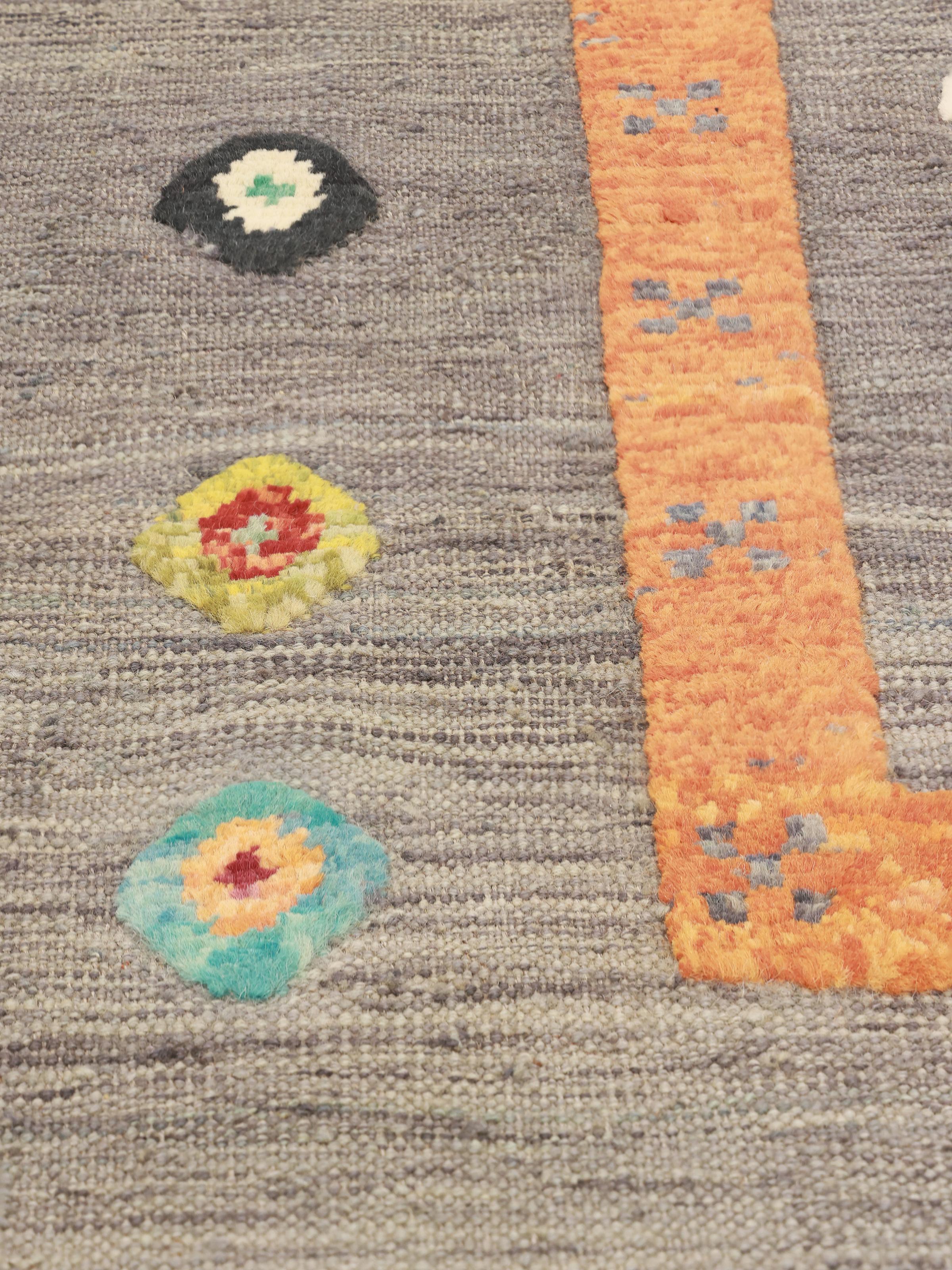
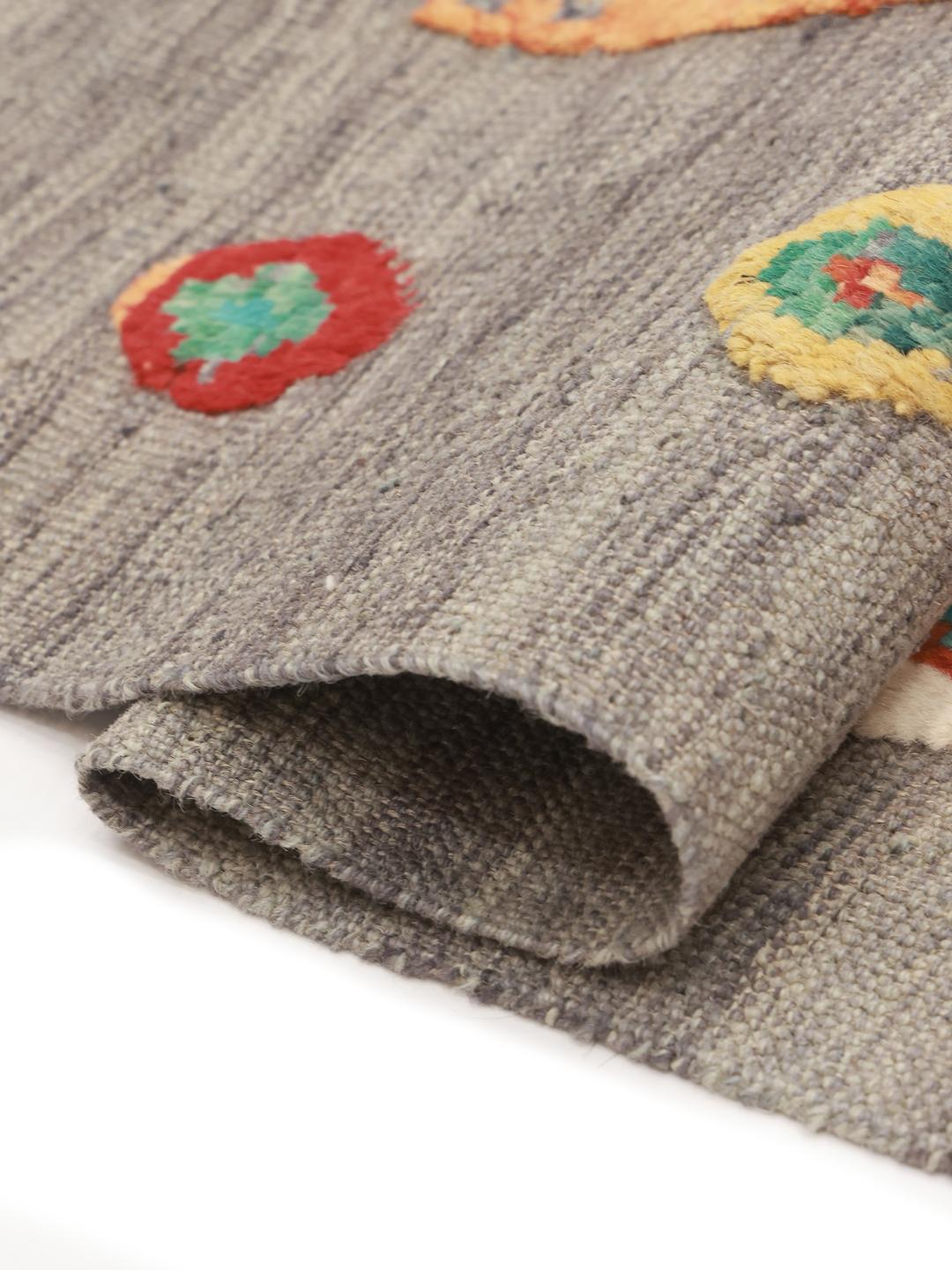
The term 'kilim' refers specifically to the tapestry-weave construction, where the weft threads are passed over and under the warp threads to create a flat, durable surface. Unlike knotted rugs, kilims do not have a pile, which gives them their characteristic sleekness and versatility. This construction method allows for bold, geometric designs, as the weaver builds the pattern directly into the structure of the rug, creating a seamless and often reversible finished piece.
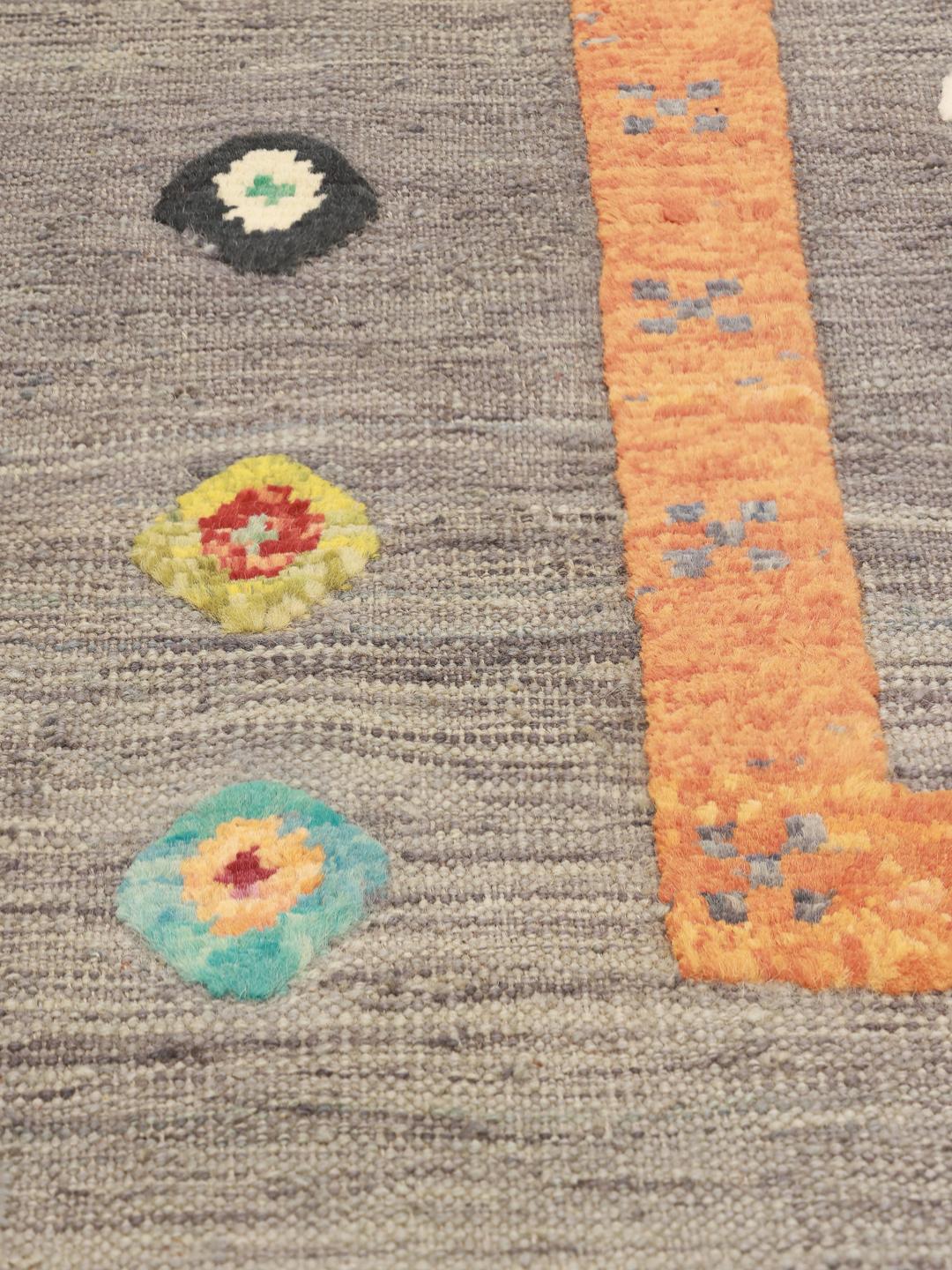
Signature design elements of the Nimbaft style often include a blend of traditional tribal motifs, such as the scattered geometric shapes seen here, framed by distinct, often contrasting borders. The use of vibrant, contrasting colours against a muted, natural-toned field is a hallmark of this tradition, designed to bring a sense of life and energy into a tent or a modern home alike. Each motif often carries symbolic meaning, though in contemporary weaving, they serve primarily as a beautiful expression of the weaver's creativity.
Today, these rugs are highly valued by collectors and homeowners alike for their authentic, non-industrial quality. Owning a piece of this tradition is a way to connect with a history of nomadic art and skilled manual labour. These rugs are not just objects; they are expressions of a cultural heritage that prizes both utility and beauty, ensuring that each piece remains a cherished and lasting element of any collection.