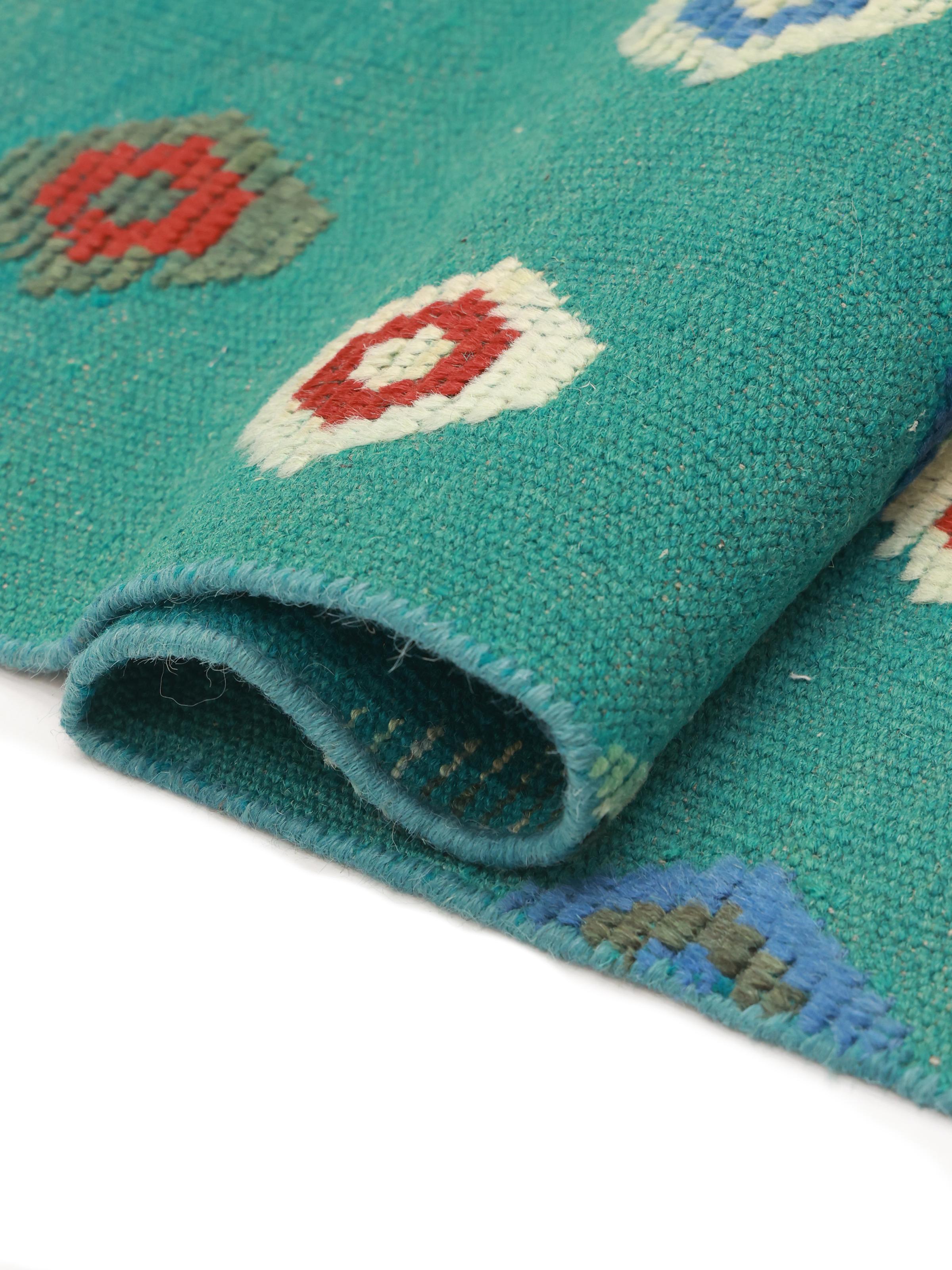
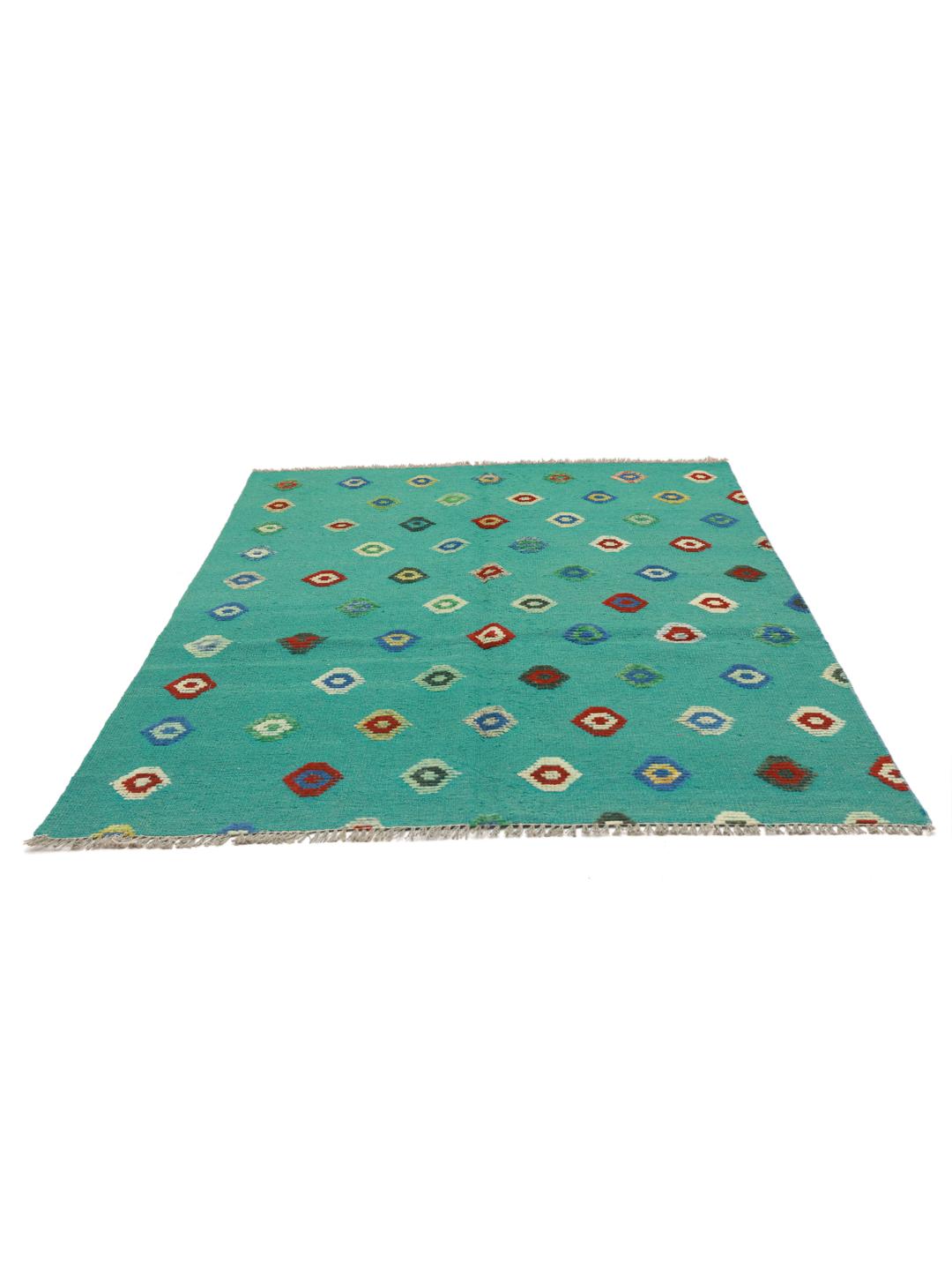
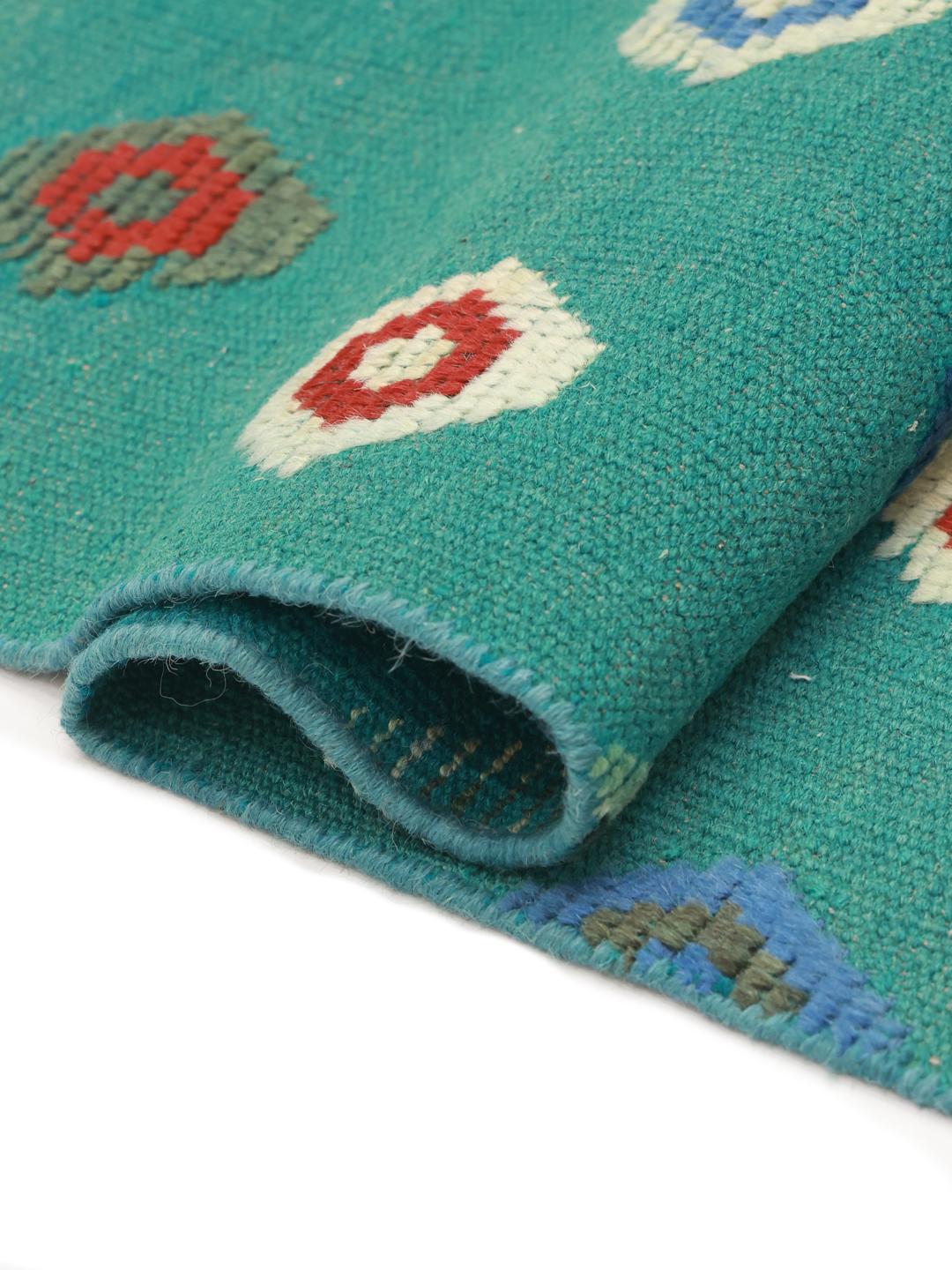
Kelim rugs have a history that stretches back centuries across the Middle East and Central Asia, serving as both functional floor coverings and essential nomadic textiles. The term 'Kelim' refers to the flat-weaving technique that distinguishes these rugs from their pile-knotted counterparts, often resulting in reversible and highly durable pieces that were traditionally used as saddlebags, floor mats, or wall hangings.
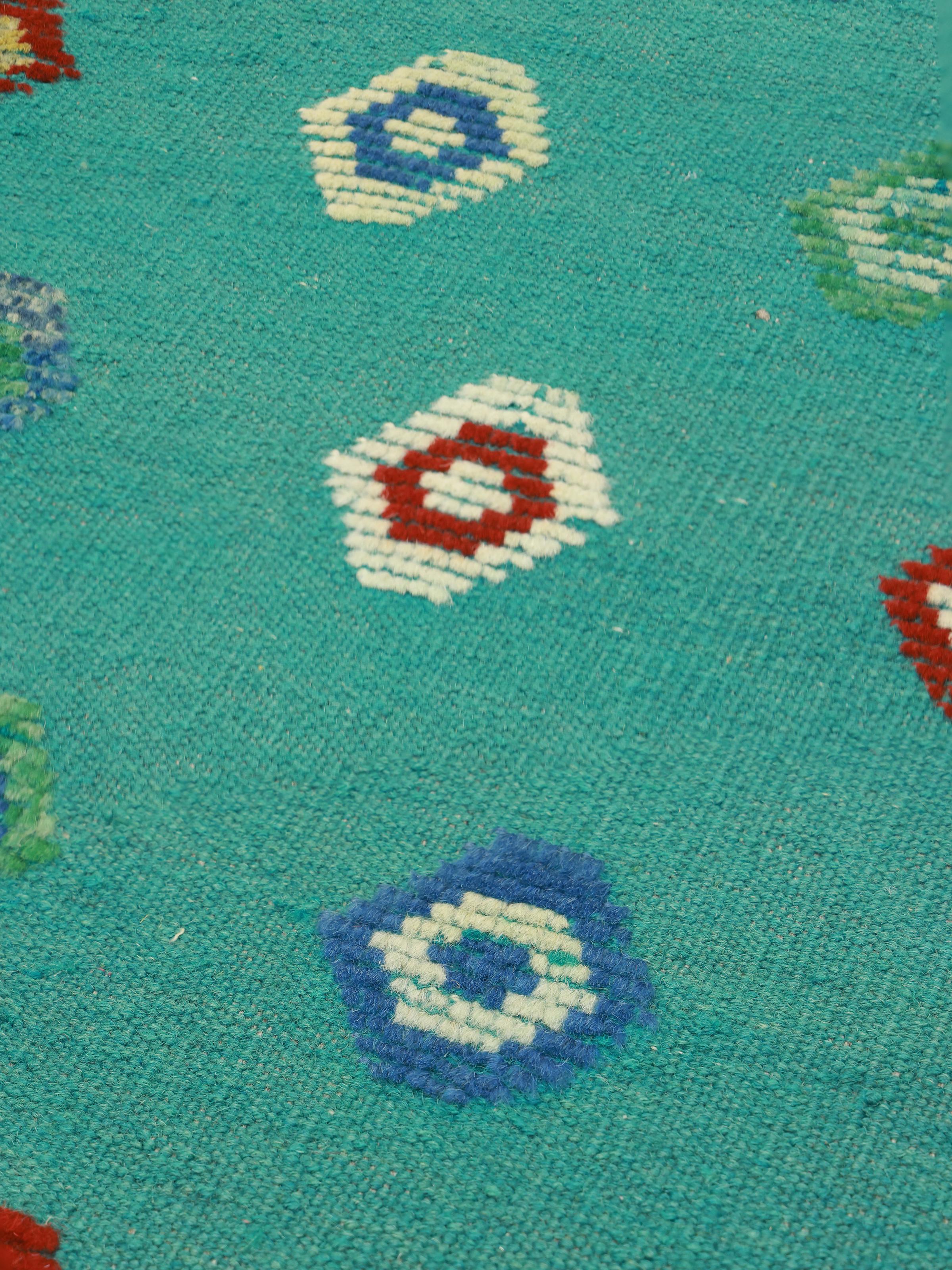
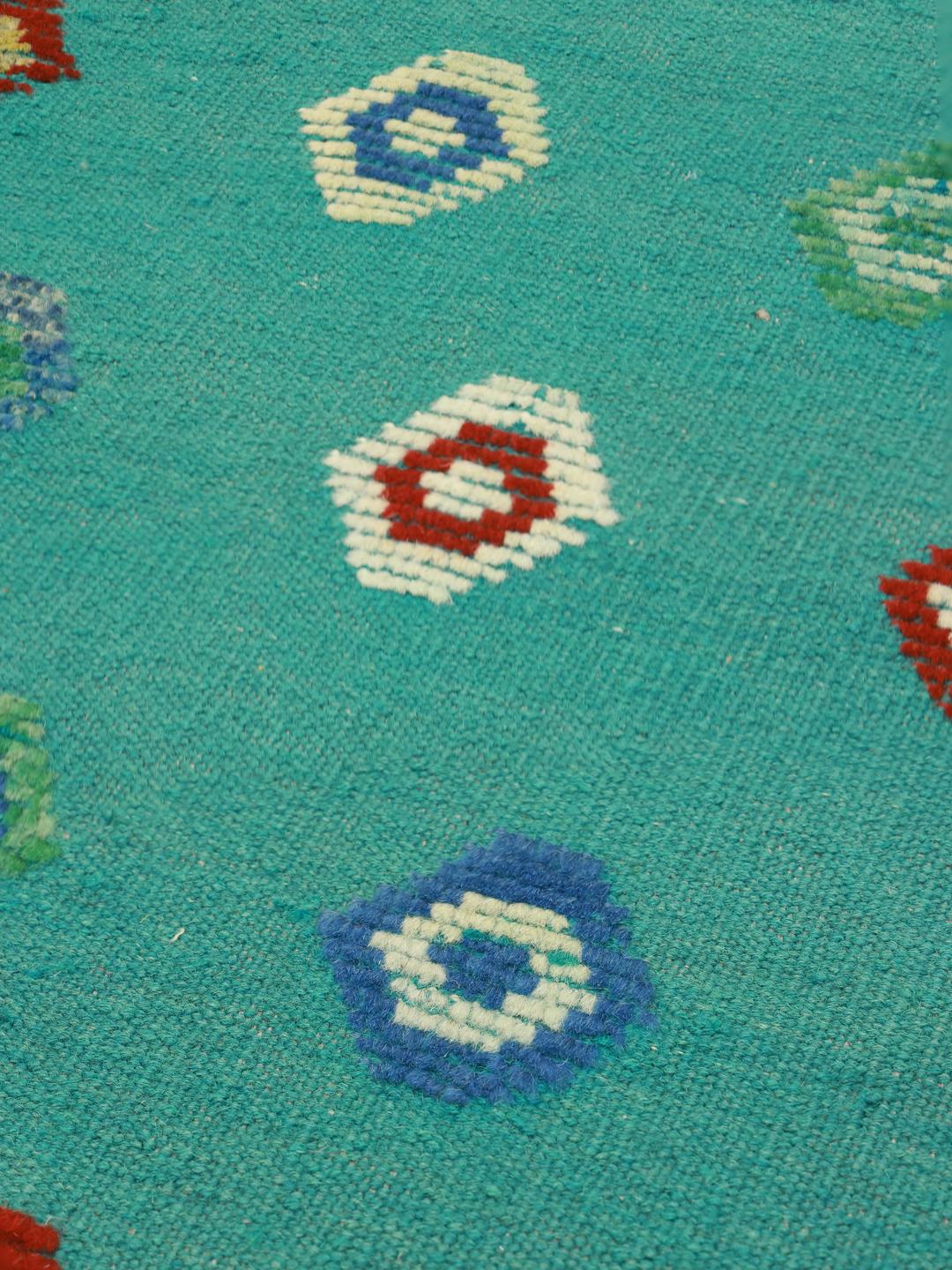
The 'Nimbaft' tradition within this category highlights the specific skill of the weaver in maintaining consistent tension and pattern alignment without the support of a pile. This technical precision is vital, as any irregularity in the weave would be immediately visible. By mastering this craft, weavers are able to create intricate designs that are sharp, defined, and remarkably resilient, showcasing a level of expertise passed down through generations.
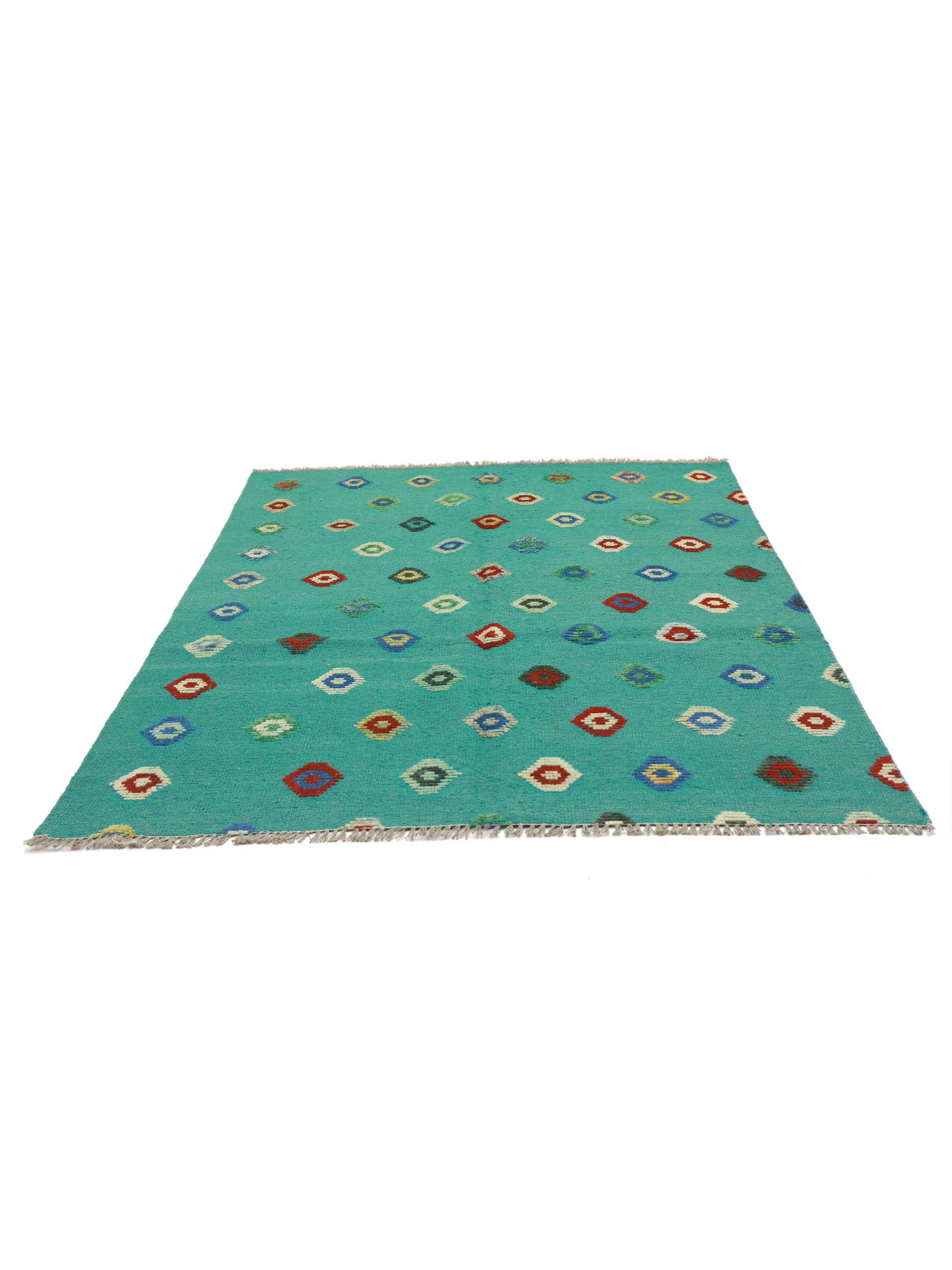
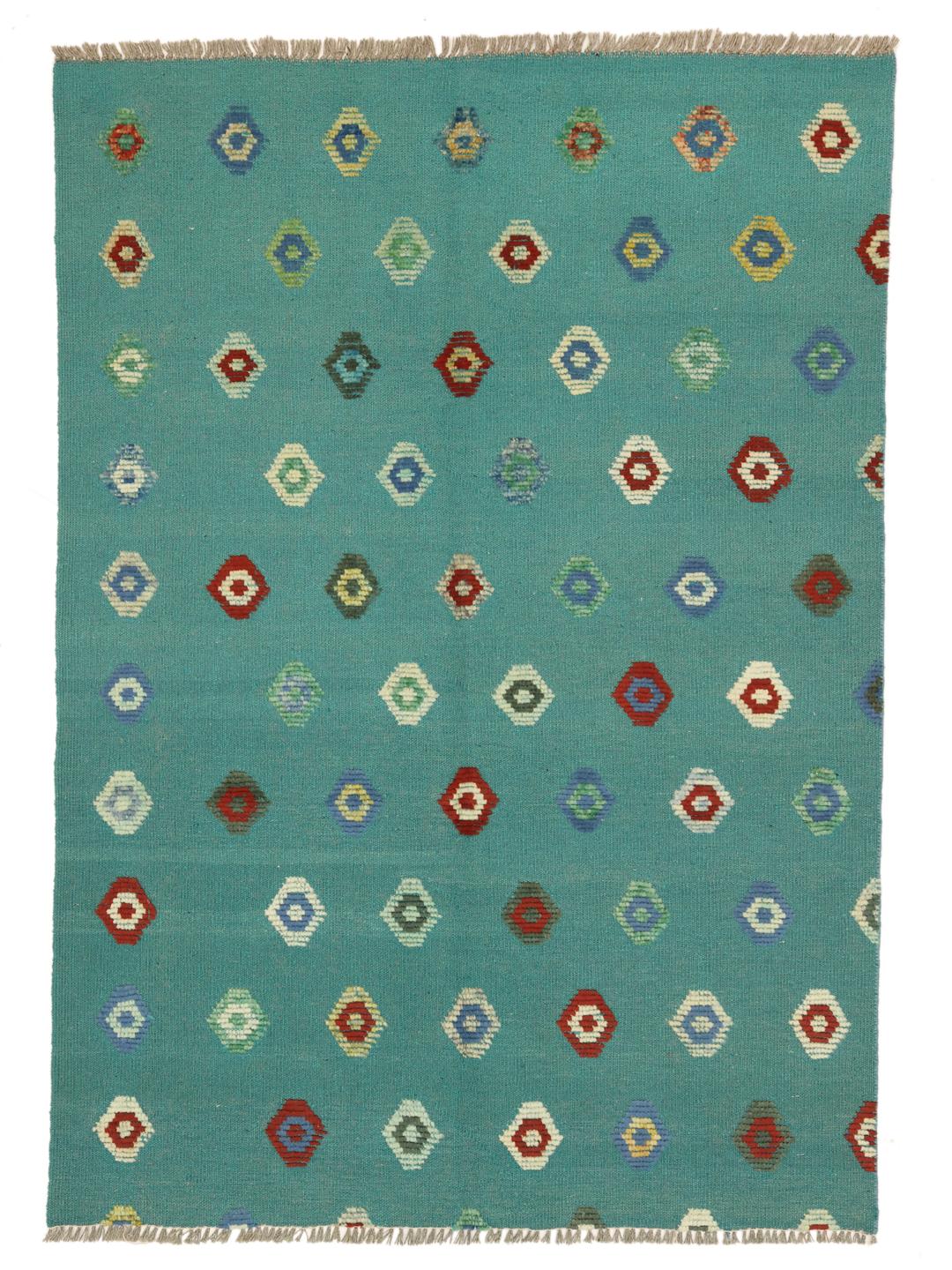
Visually, these rugs are defined by their geometric language. While the field might feature repeating motifs, each one is often imbued with symbolic meaning related to protection, fertility, or the natural landscape of the region. The use of vibrant colours, such as this piece's striking teal, demonstrates a move toward more expressive, decorative styles that bridge the gap between traditional tribal art and contemporary interior aesthetics.
Owning a hand-woven Kelim is an invitation to appreciate the cultural heritage of Afghanistan. These rugs are highly valued by collectors and design enthusiasts alike, not just for their beauty, but for the human effort and historical continuity they represent. Every rug of this type is a unique artifact, capturing the spirit of the maker and the timeless traditions of the region in a format that feels perfectly at home in a modern living space.