Kilim rugs represent one of the most enduring weaving traditions in the Middle East, with a heritage that stretches back thousands of years. These flat-woven textiles were historically created by nomadic tribes as versatile and portable floor coverings, bags, and blankets. Today, the tradition continues in regions like Afghanistan, where weavers adapt ancient techniques to create contemporary designs that resonate with modern sensibilities.
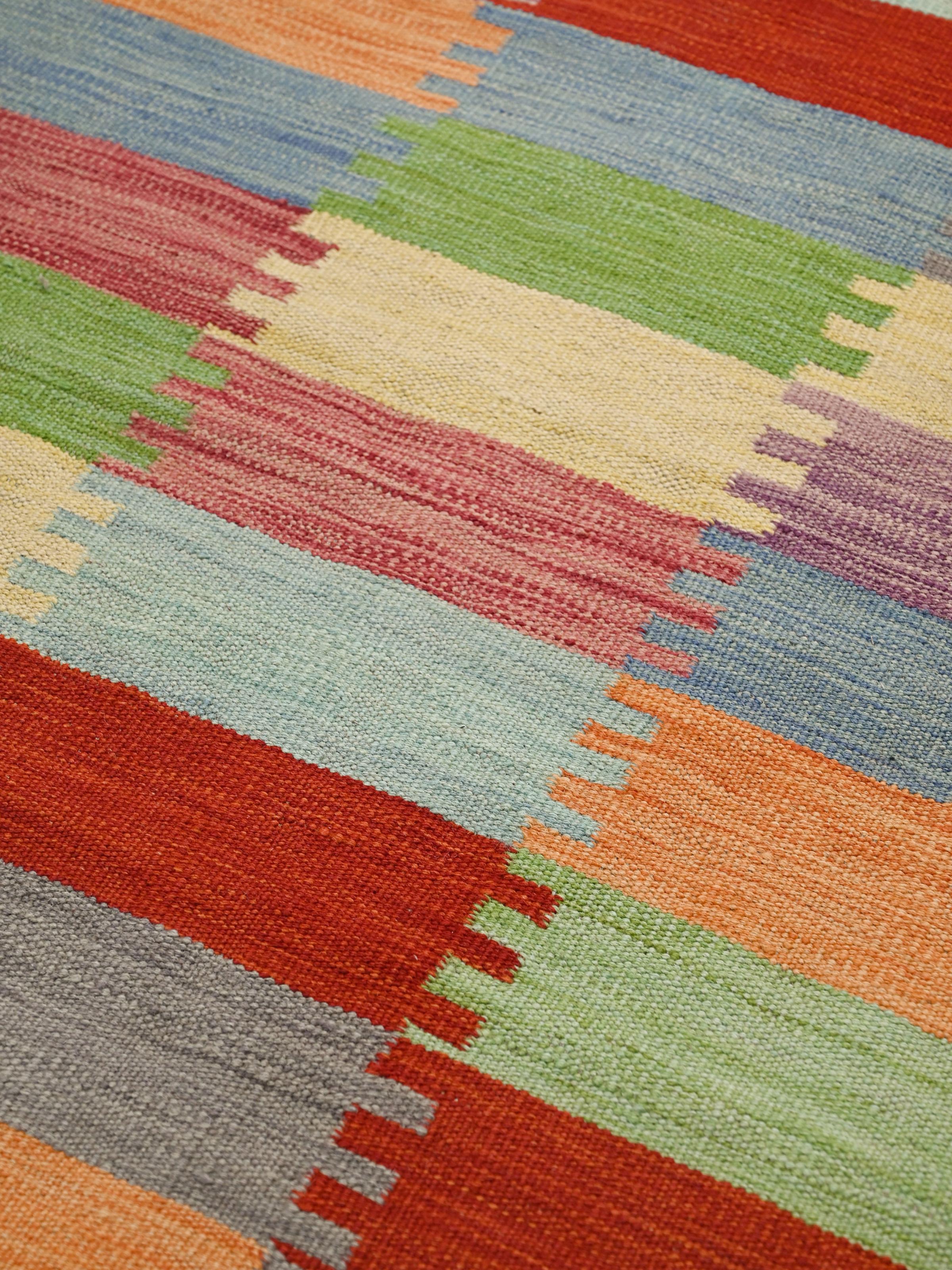
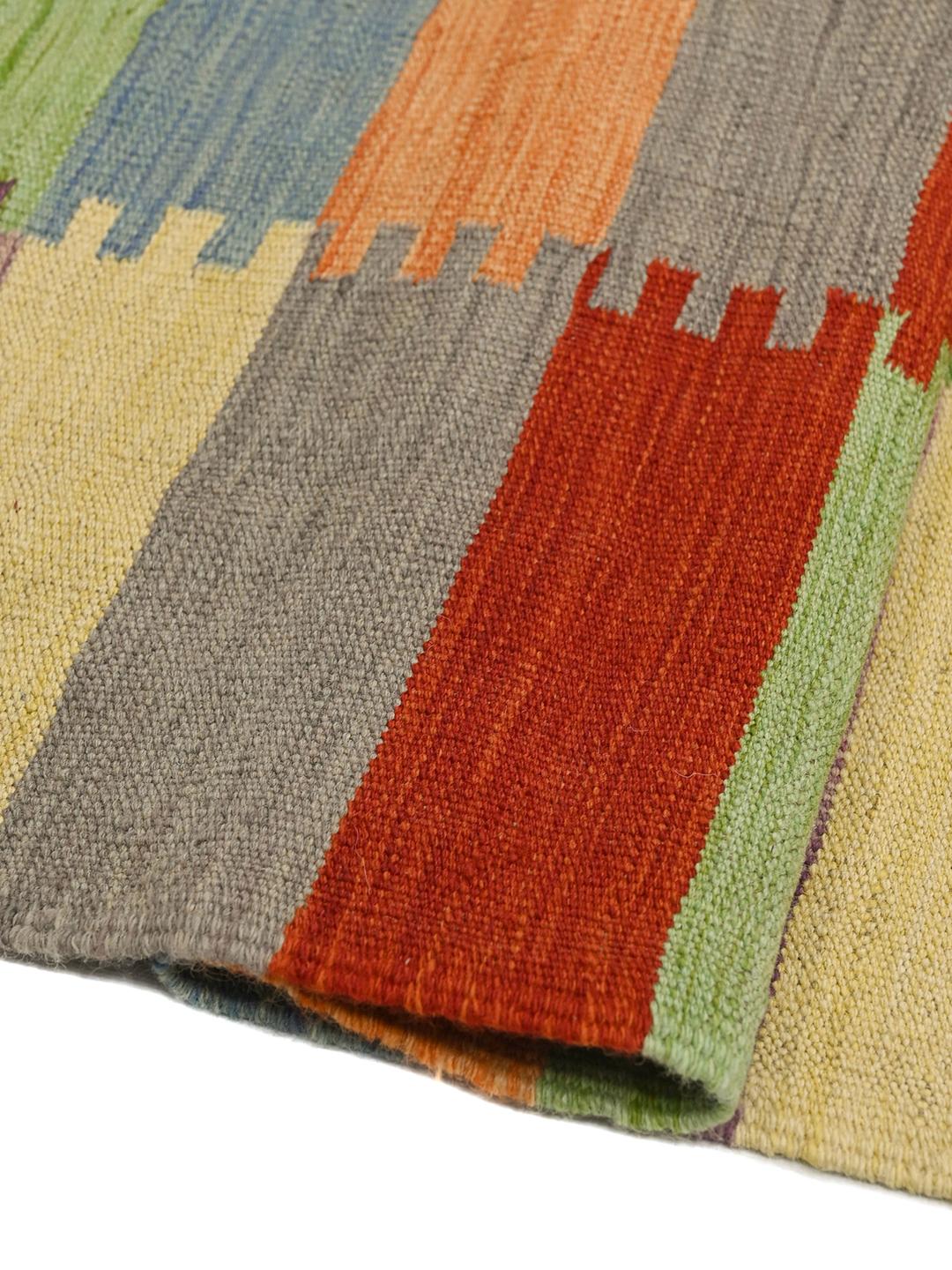
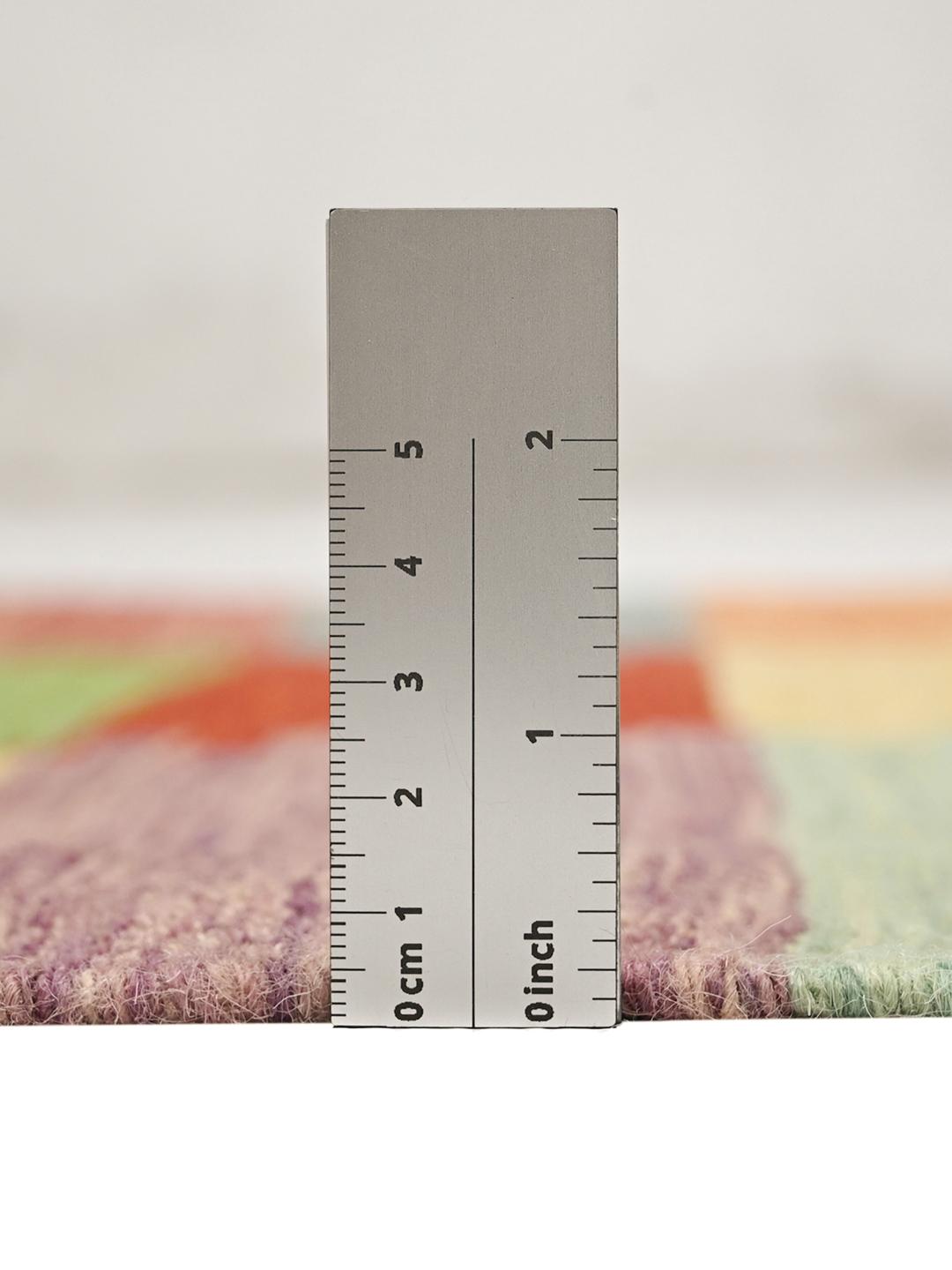
The term 'kilim' refers specifically to the slit-weave technique, where the weft threads are passed back and forth through the warp to create the pattern. This method eliminates the need for a pile, resulting in a lightweight yet incredibly strong fabric. In modern production, this technique allows for sharp, clean-edged geometric motifs that are difficult to achieve in knotted rugs, making it a preferred choice for those who value precise, bold design.
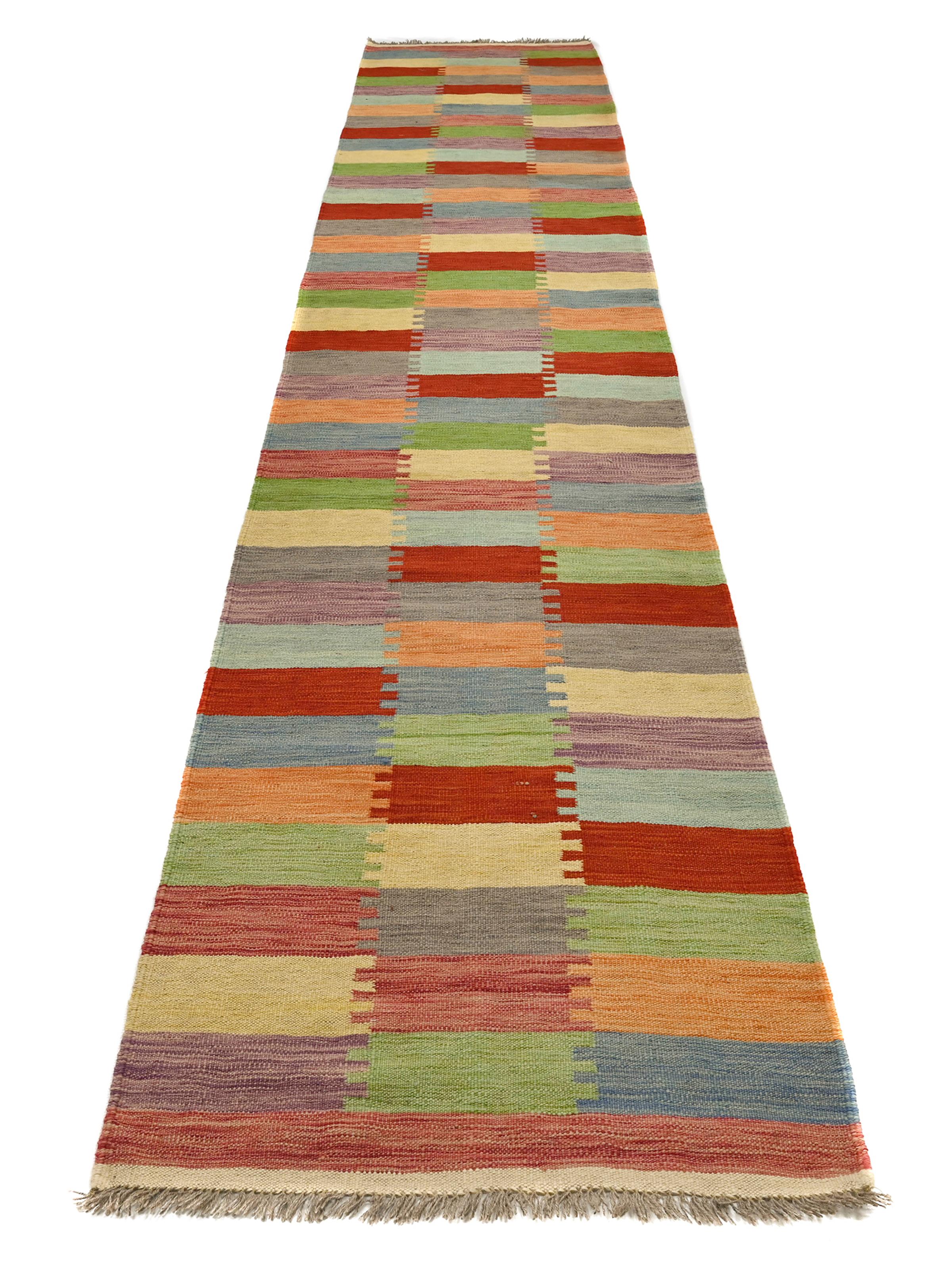
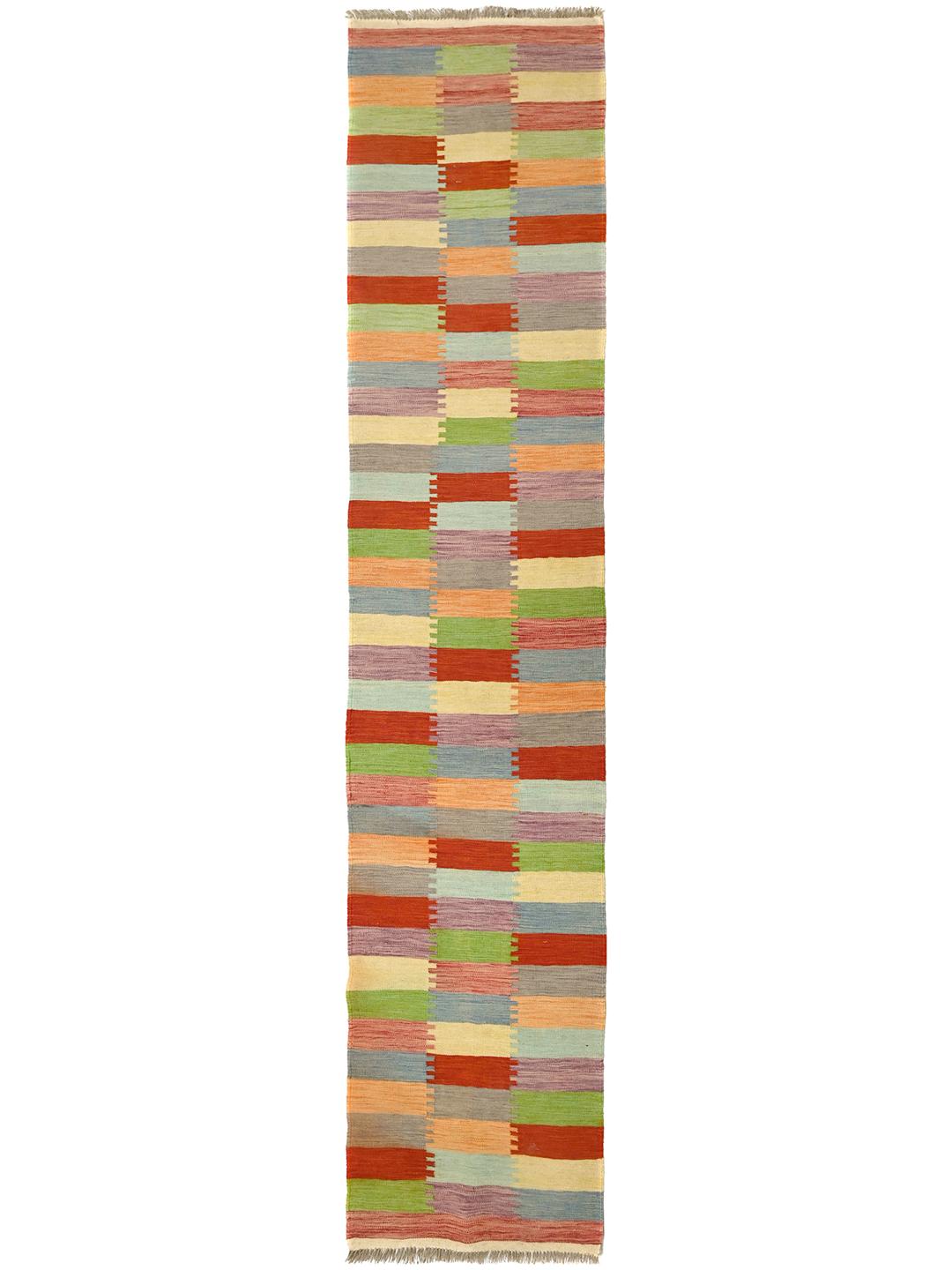
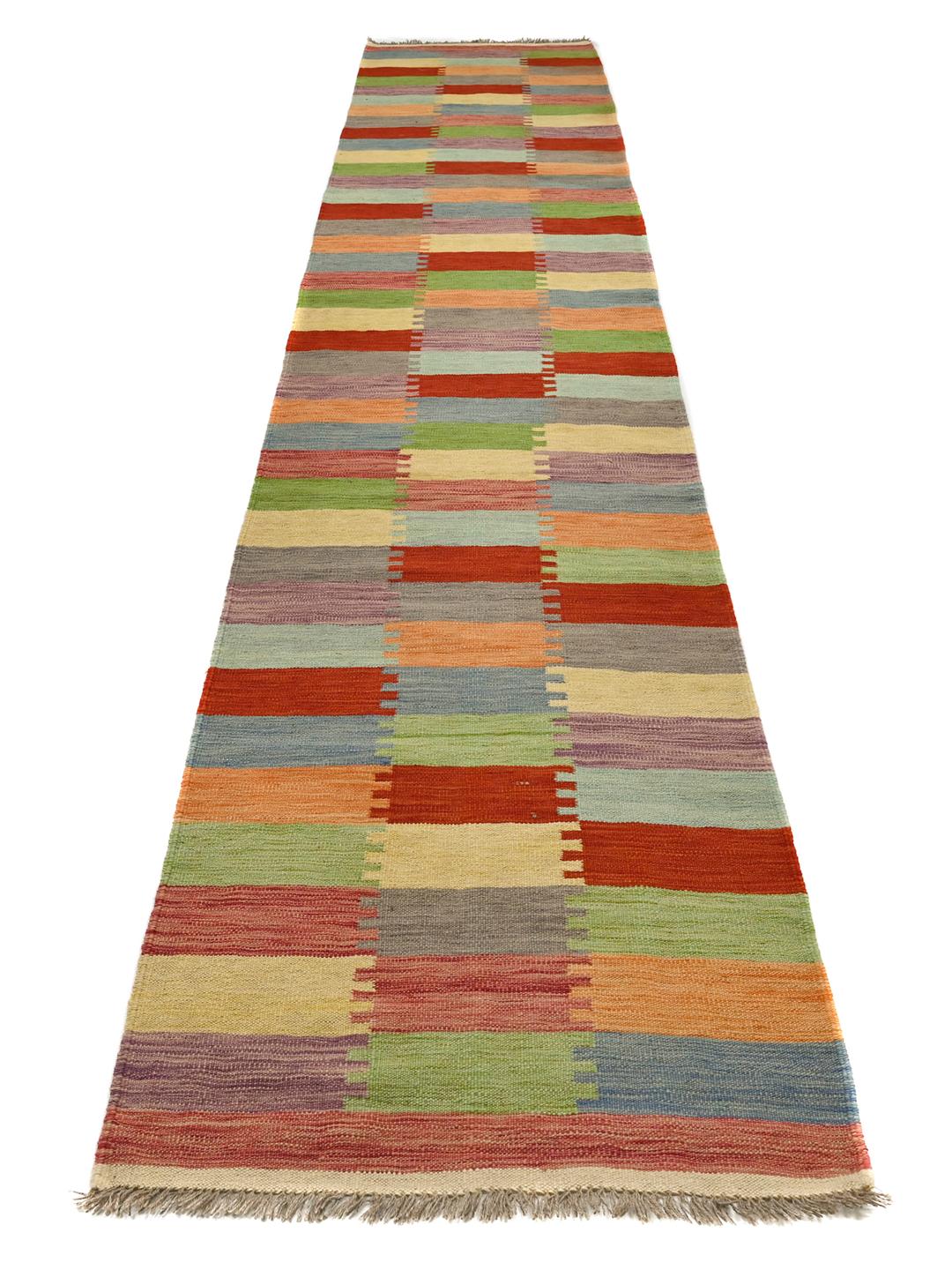
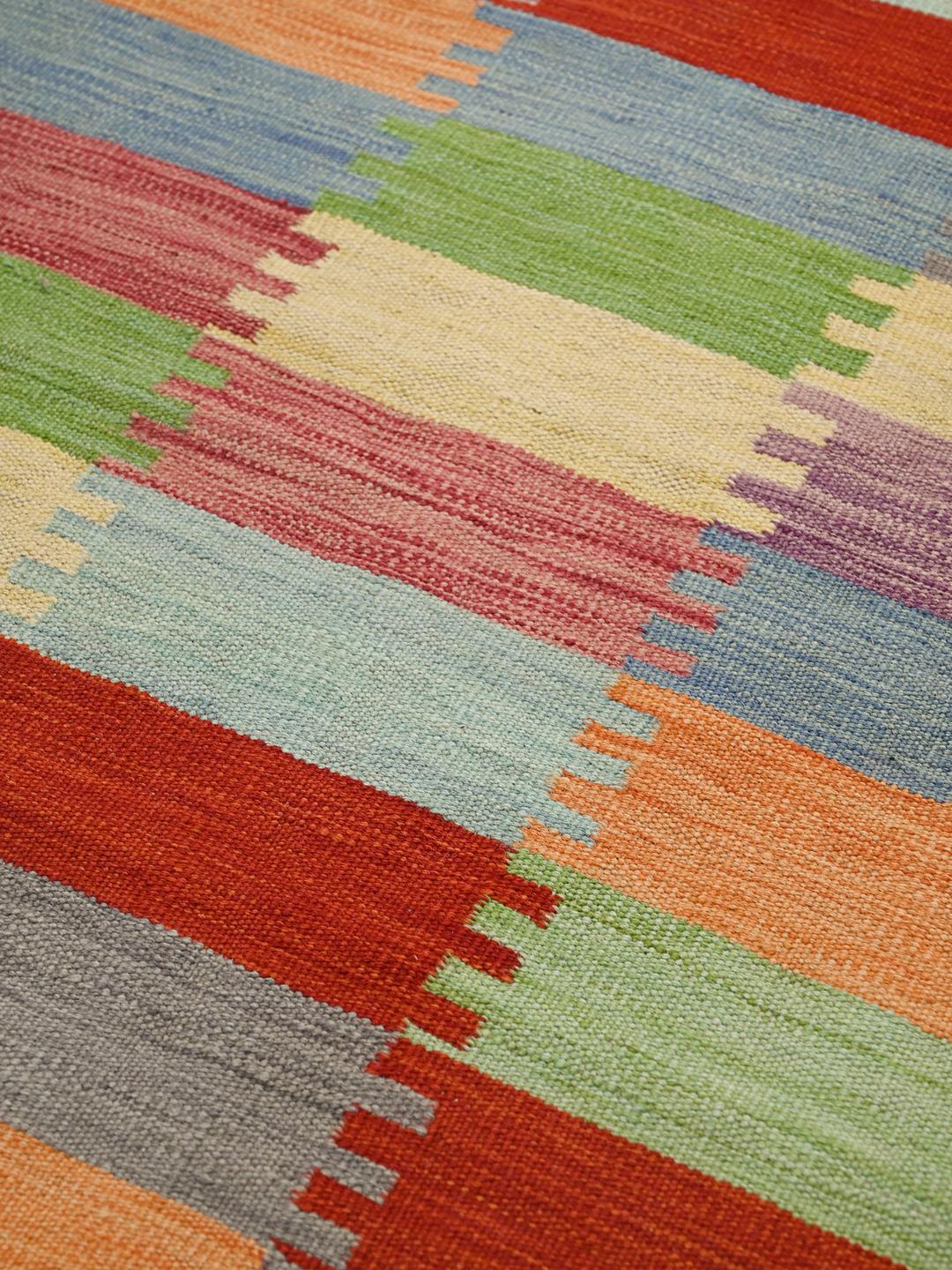
Visual language in Afghan kilims often centres on geometric abstraction, with repeating shapes and contrasting colours playing a central role. This specific runner utilises a recurring block pattern, a motif that has evolved from older tribal designs into a more simplified, graphic aesthetic. The use of varied colours highlights the natural beauty of the wool, which absorbs dyes with a unique depth and richness that synthetic fibres cannot match.
Owning a hand-woven kilim is an investment in cultural heritage and human skill. These pieces are highly valued by collectors and homeowners alike for their authenticity and the story behind every thread. By choosing a piece from this tradition, you are supporting a craft that has survived for generations, bringing an authentic and grounded sense of history into your modern home.