Kilim rugs are a cornerstone of the textile heritage across the Middle East and Central Asia. They represent a tradition of flat-weaving that dates back centuries, where the focus is on the interplay of colour and geometry rather than a raised pile. This specific style has evolved from ancient nomadic practices into a sophisticated modern art form, particularly within the artisanal hubs of Afghanistan.
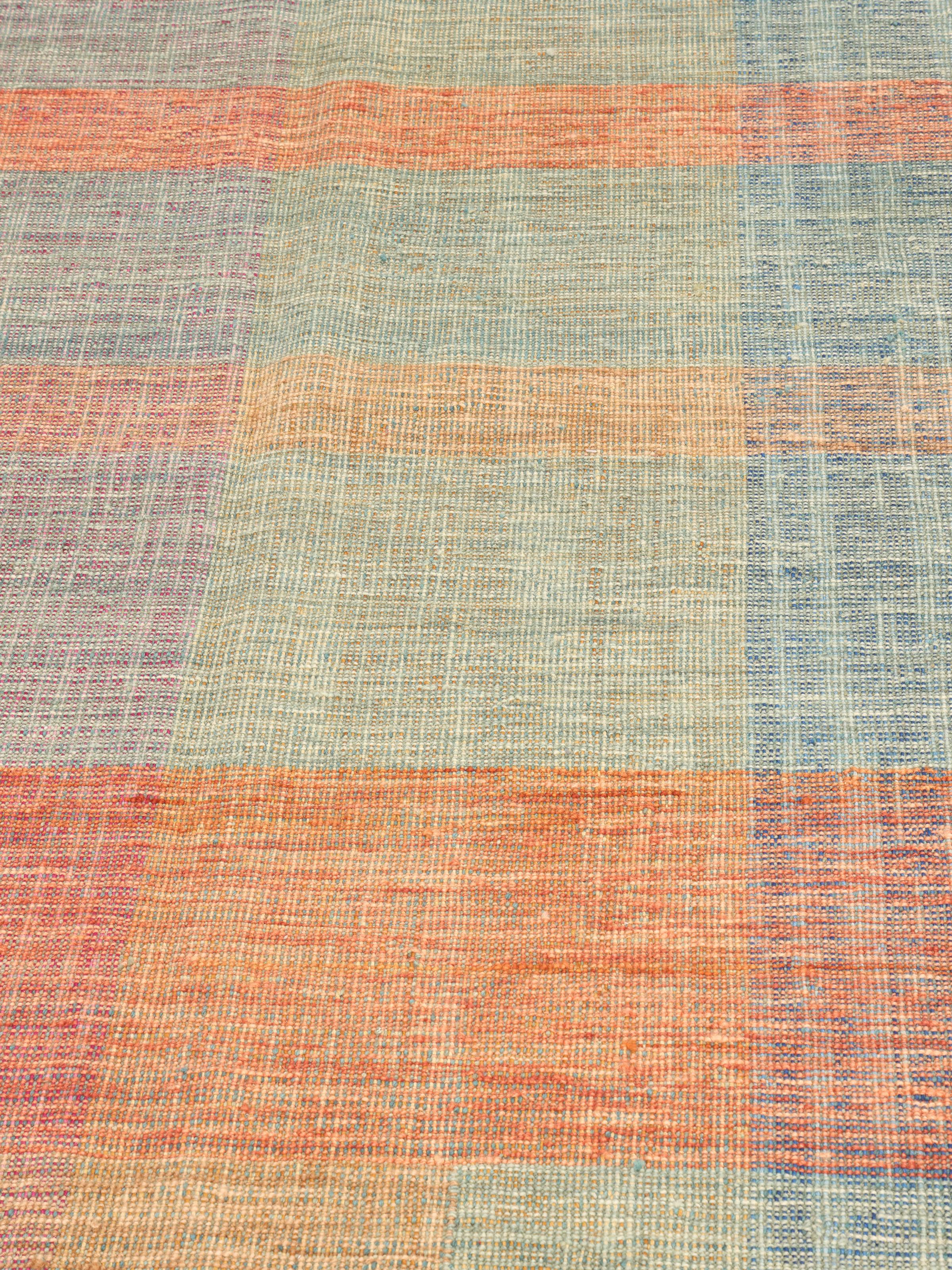
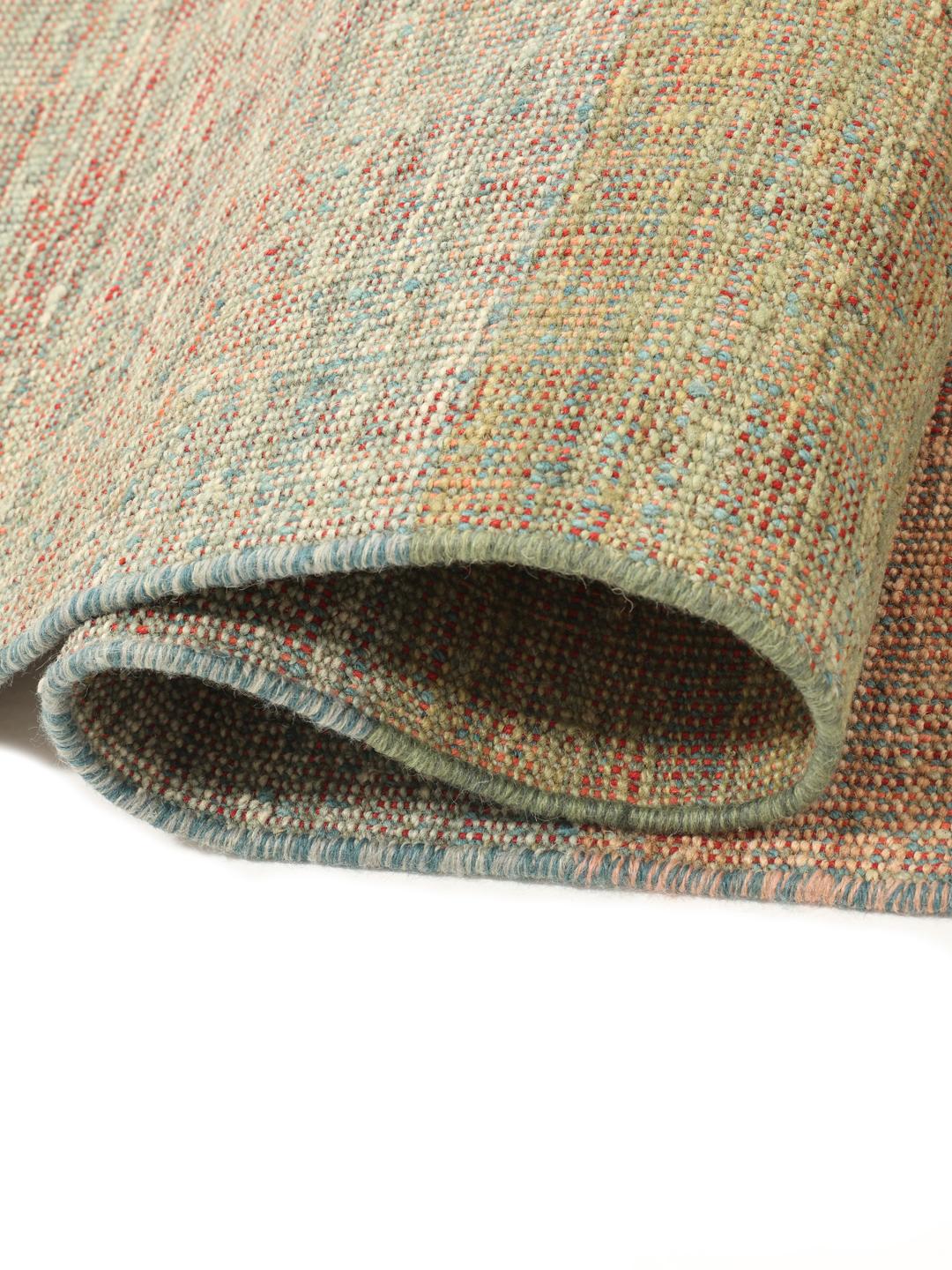
The term 'Kilim' refers to the specific technique of interlocking the weft threads with the warp to create a flat, durable surface. This method is incredibly demanding, as the weaver must maintain constant tension to ensure the pattern remains sharp and the edges stay straight. It is a testament to the weaver's expertise that such complex, large-scale geometric patterns can be achieved with such precision.
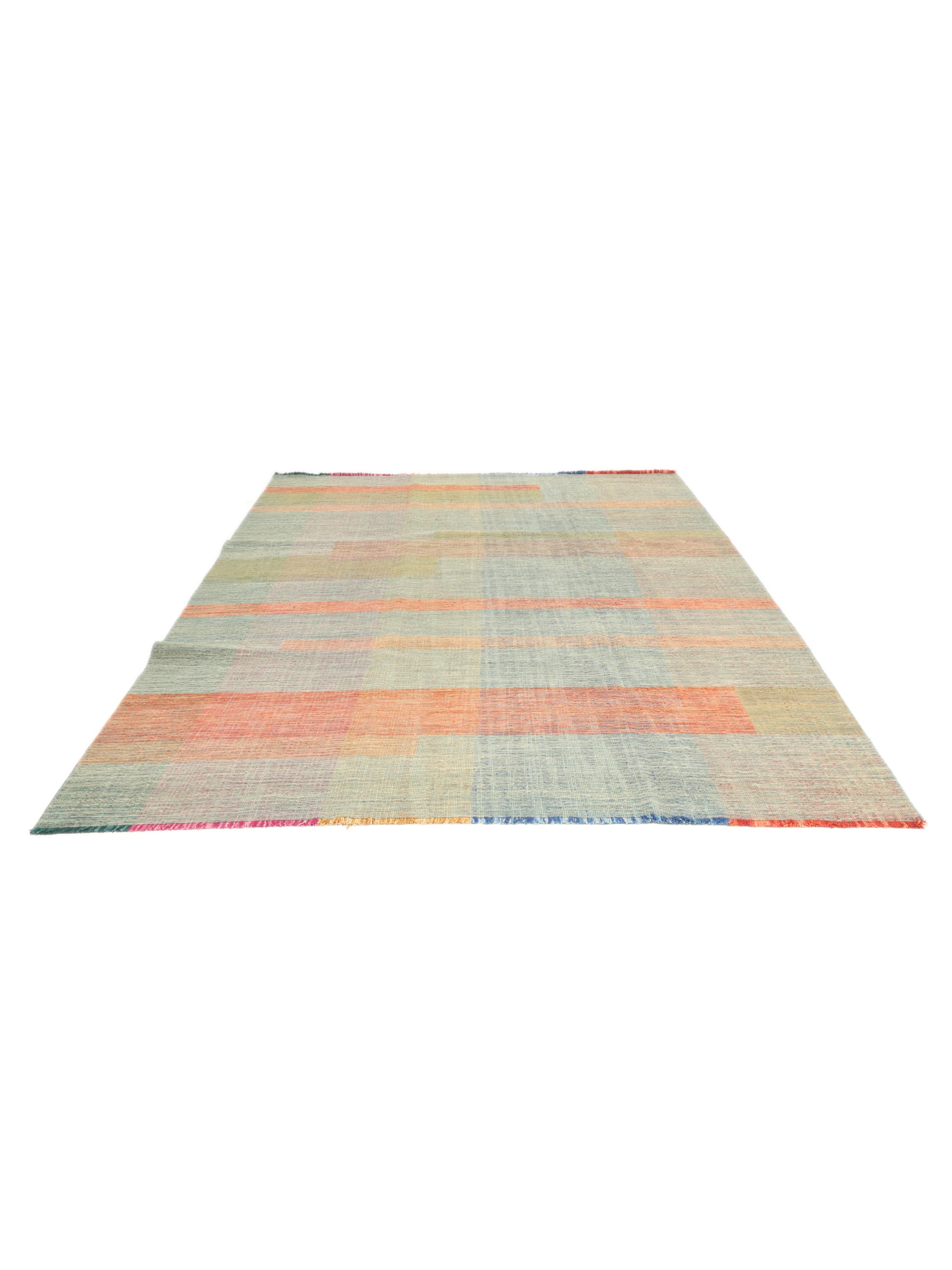
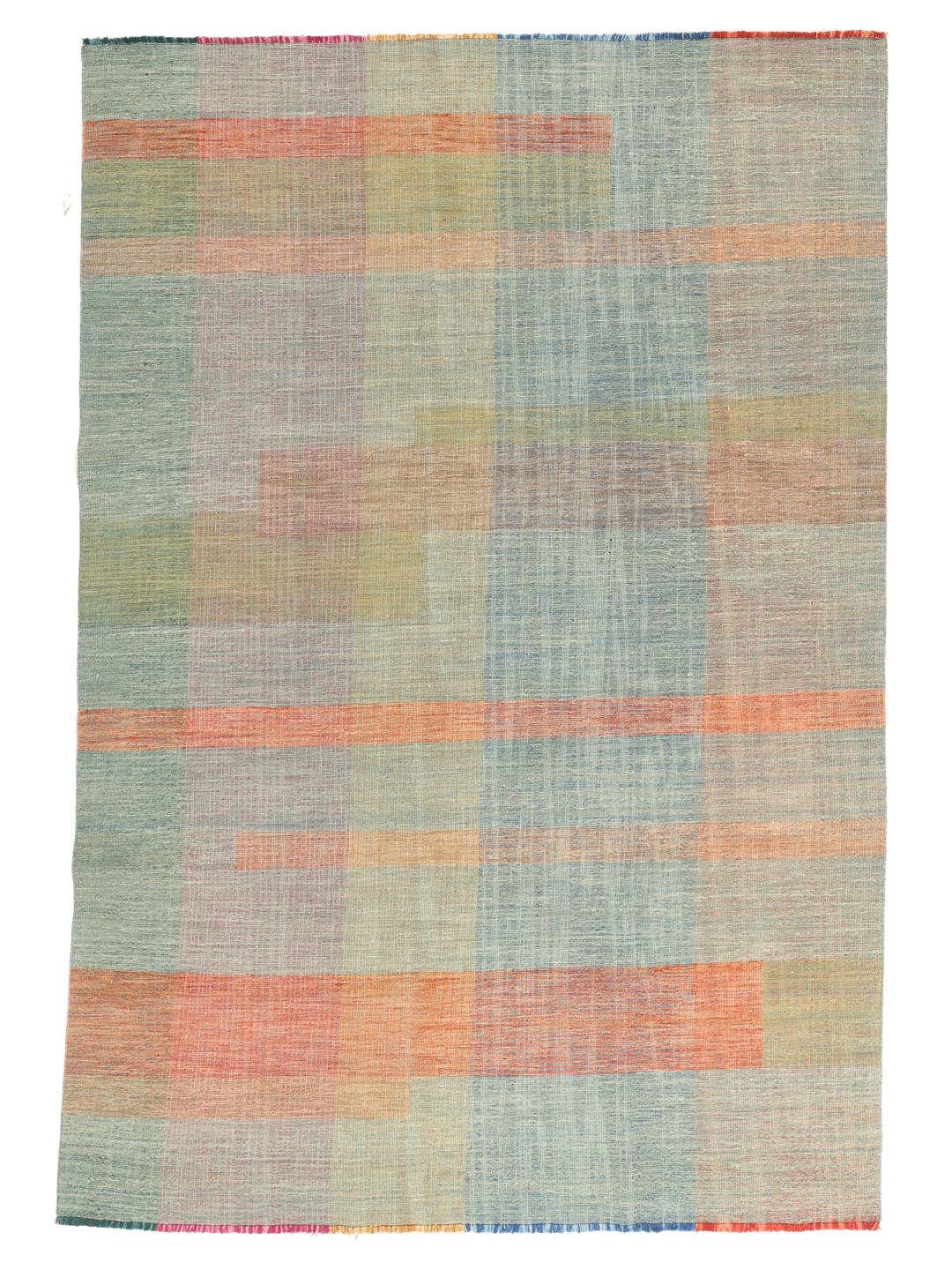
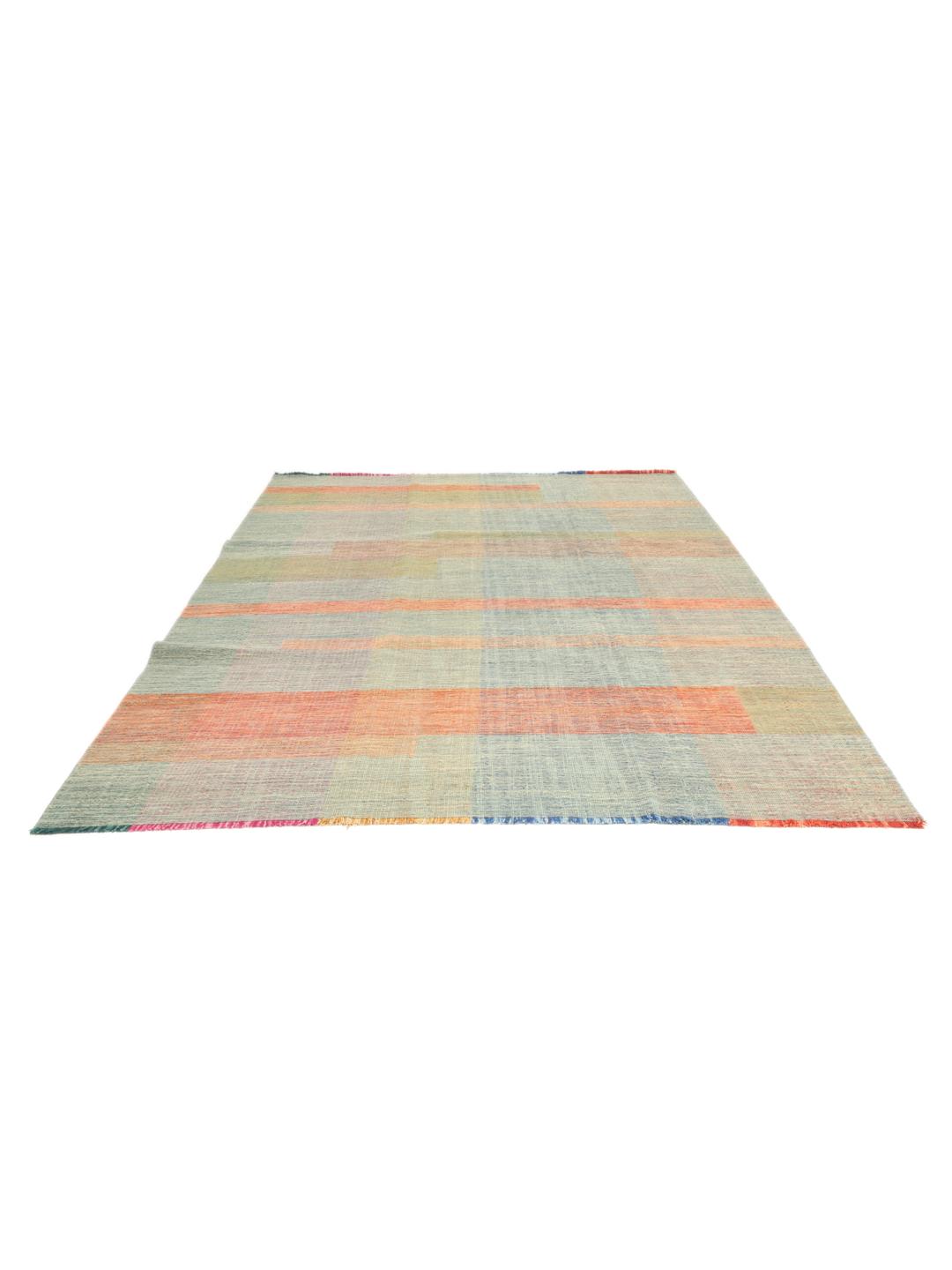
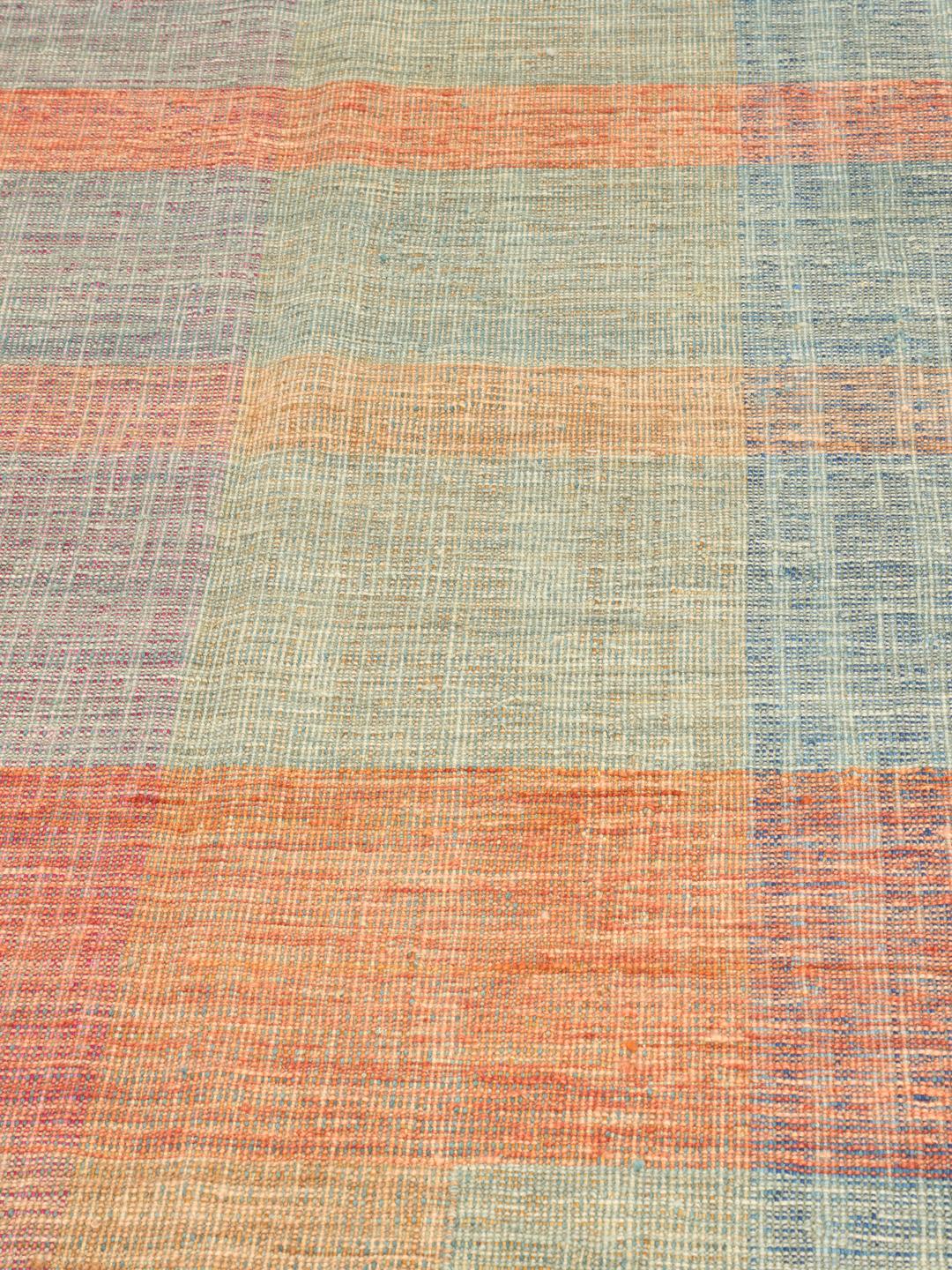
Visually, these rugs are defined by their clean lines and vibrant, often contrasting, colour palettes. While traditional kilims often feature tribal symbols and intricate borders, this modern interpretation leans into abstract, layered blocks of colour. The result is a piece that feels both rooted in history and perfectly suited for the contemporary home, offering a sophisticated take on a classic craft.
Collecting a hand-woven kilim is an investment in cultural tradition and human skill. These rugs are highly valued for their portability, durability, and the sheer amount of time required to produce them. By choosing a piece from this tradition, you are supporting a legacy of craftsmanship that has survived for generations, ensuring that these beautiful, practical works of art continue to be produced and appreciated.