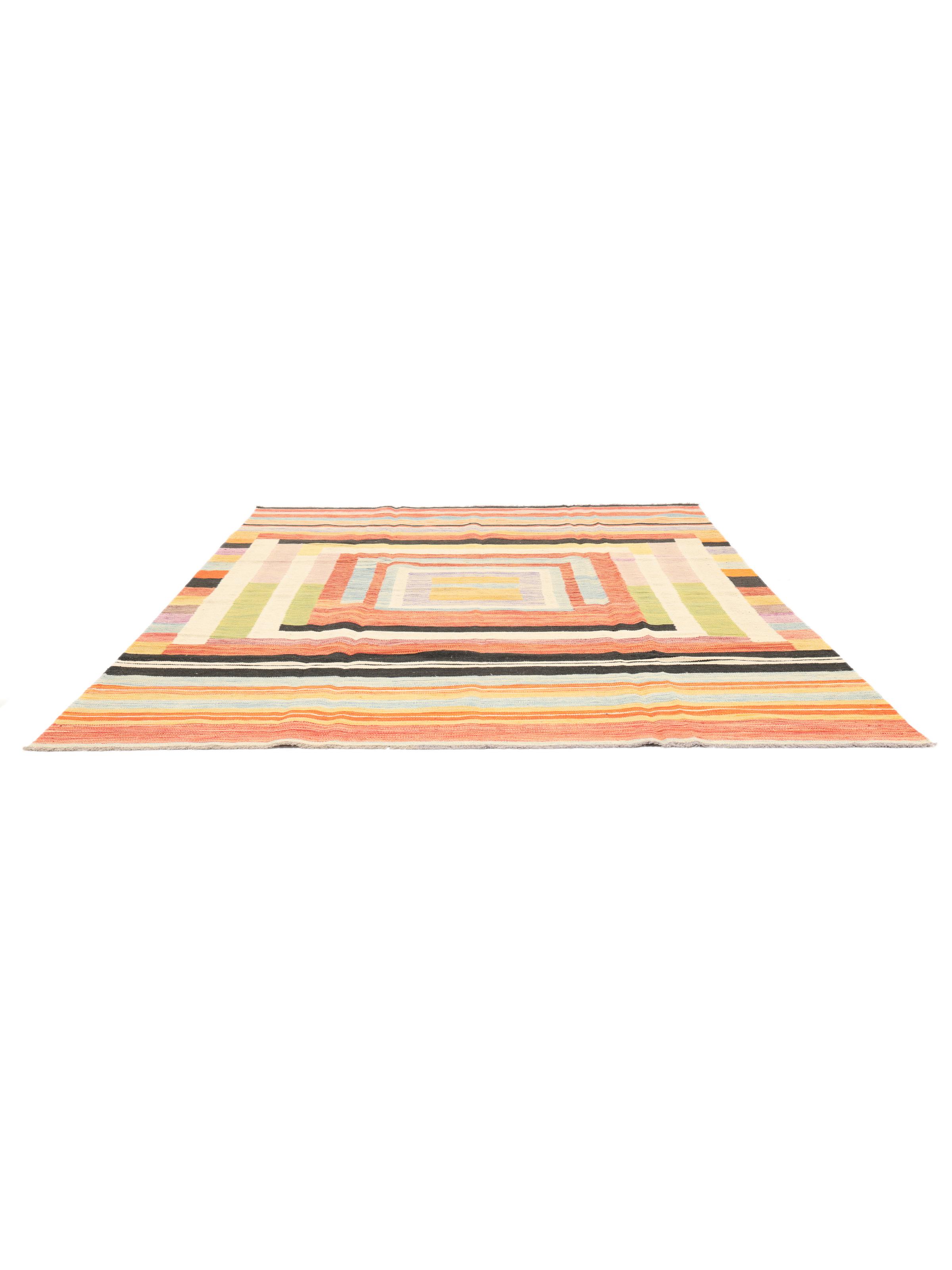
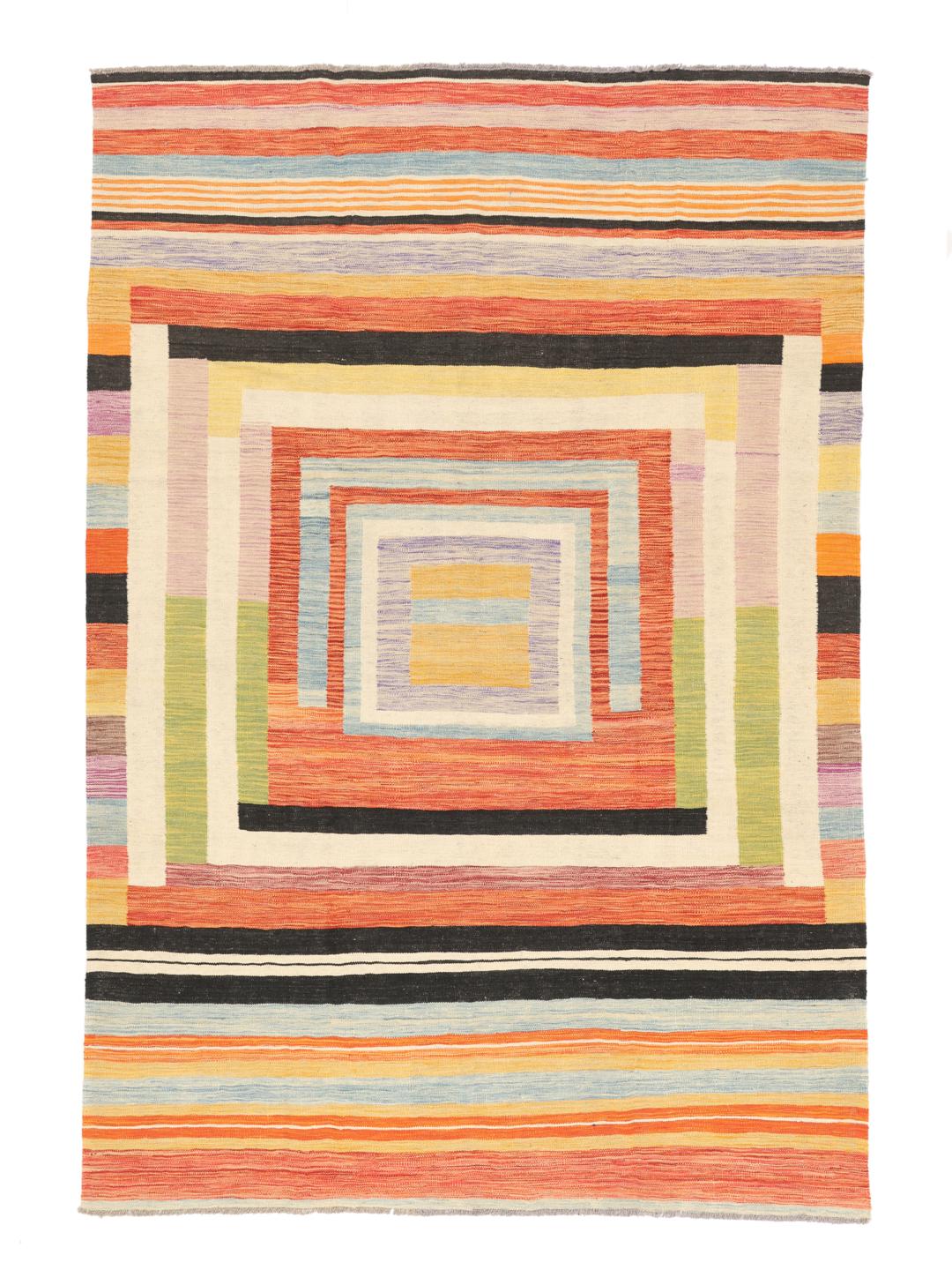
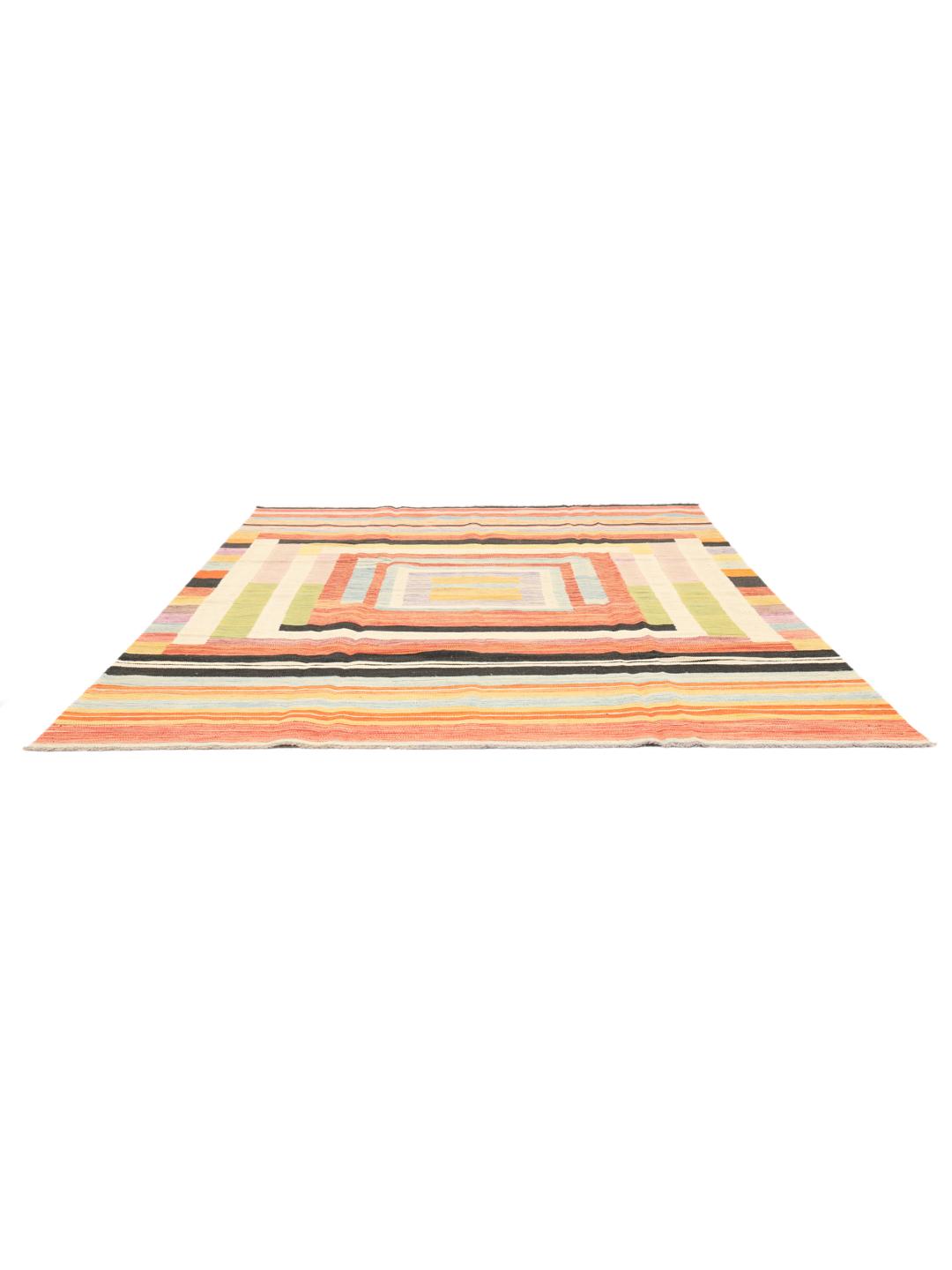
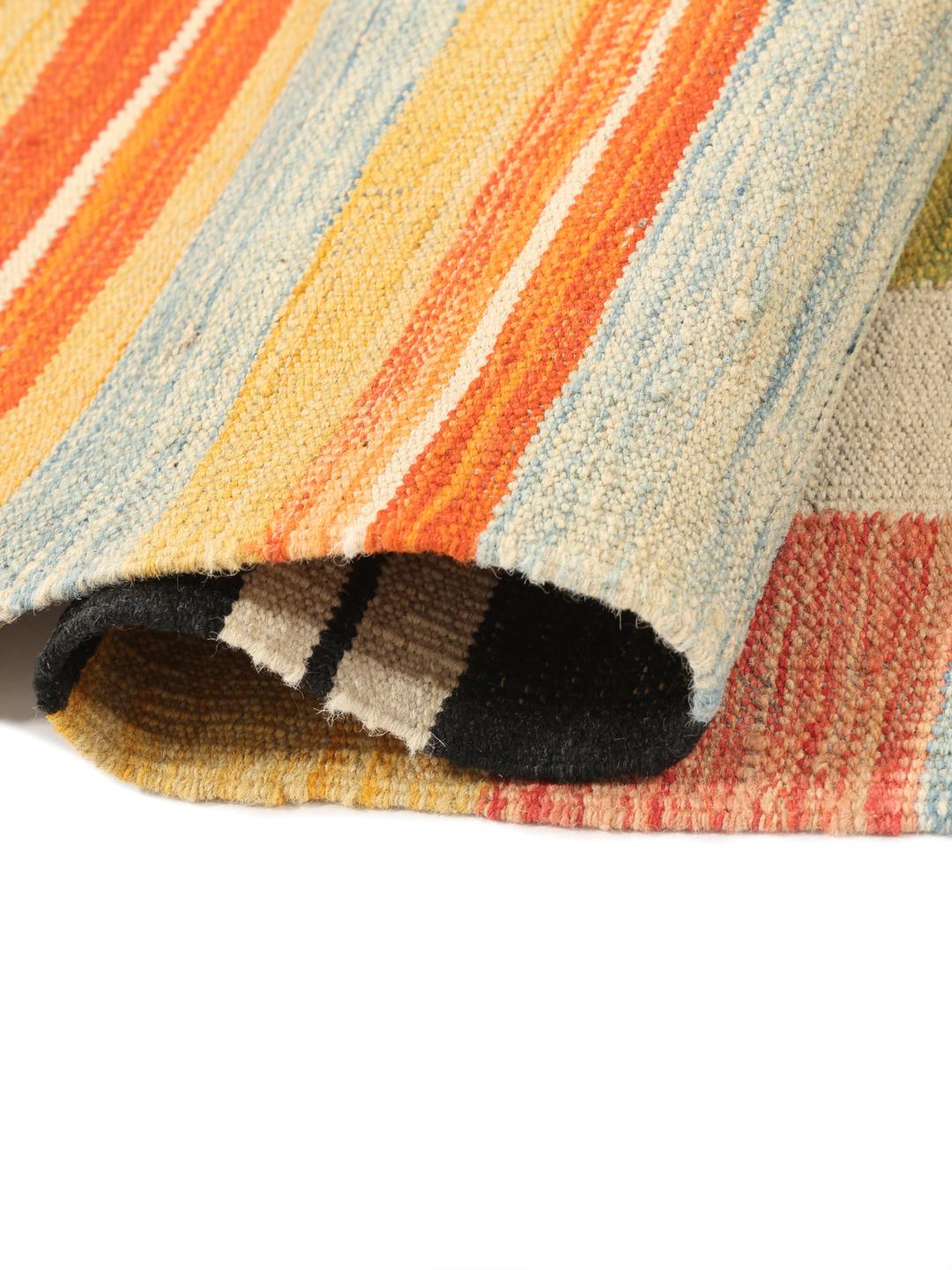
Kilim rugs are a foundational element of the textile heritage of Afghanistan and the wider Middle Eastern region. Historically, these flat-woven pieces were essential to nomadic life, prized for their portability, durability, and versatility. Unlike pile rugs, they lack a knotted surface, which allowed them to be used as floor coverings, wall hangings, or even bags for transporting goods across the rugged mountain terrain.
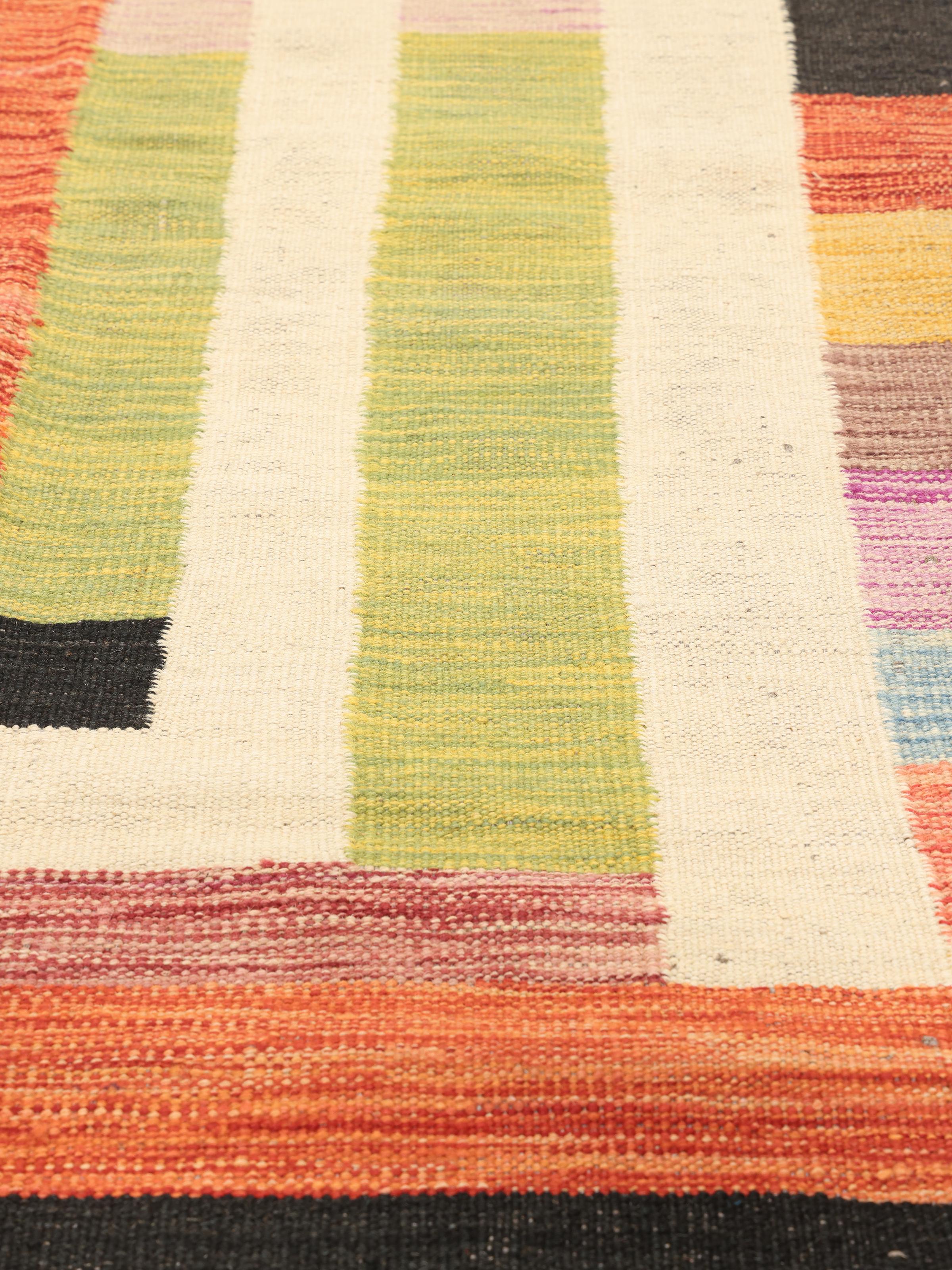
The term 'Kilim' refers specifically to the slit-weave technique used to create the pattern. In this method, the weft threads of different colours are woven back and forth around the warp, creating small vertical slits where colours meet. This technical approach is what gives these rugs their signature crisp, geometric look. Mastering this craft requires significant skill to ensure that the tension remains consistent, preventing the rug from puckering or warping.
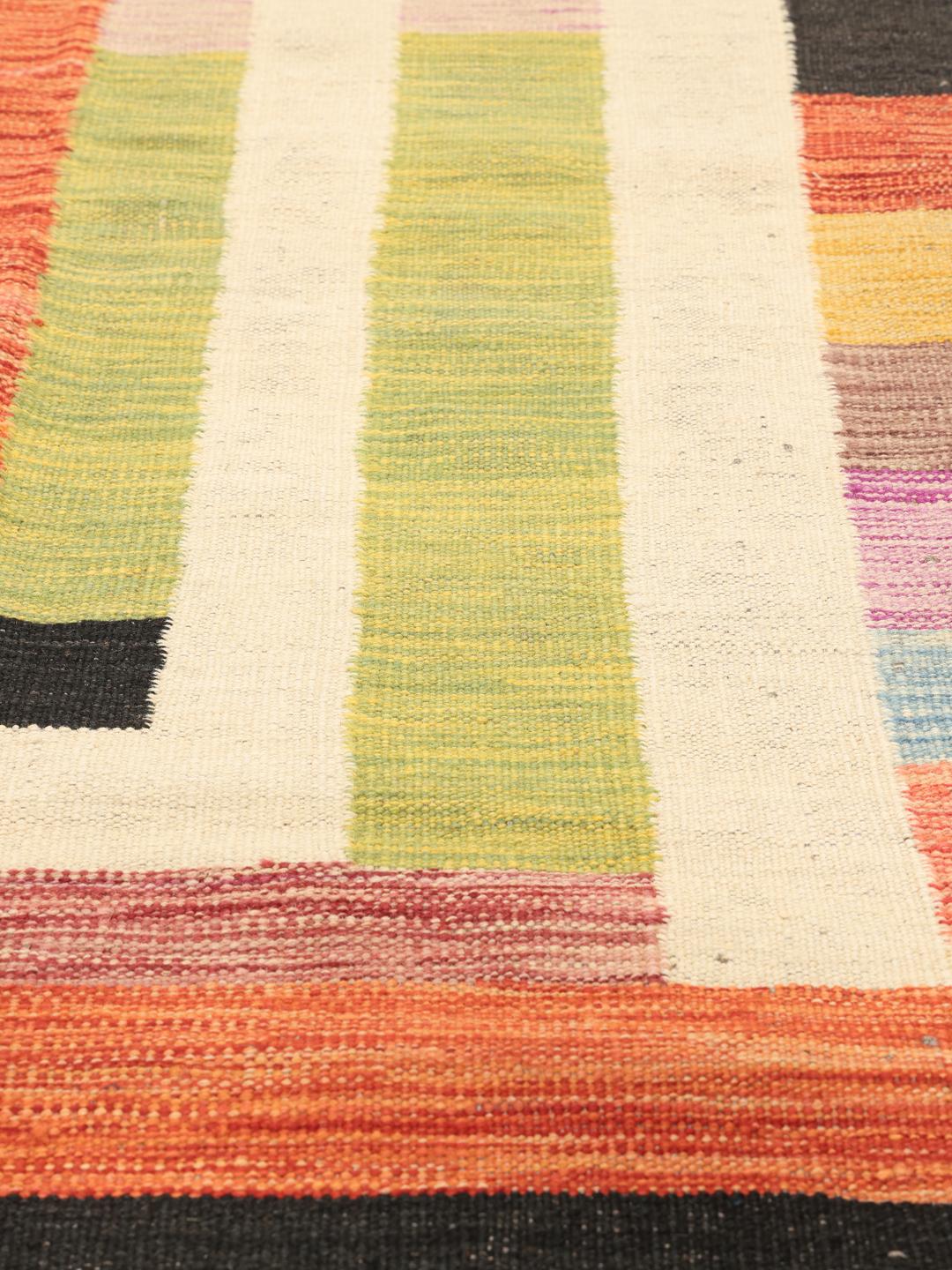
The visual language of modern Kilims from Afghanistan often reinterprets ancient tribal motifs through a contemporary lens. While traditional pieces might focus on highly specific, repetitive geometric symbols representing protection or fertility, this modern interpretation leans into bold, expansive shapes and a wide colour spectrum. The use of vibrant, contrasting hues is a hallmark of this tradition, reflecting the rich mineral and vegetable dyes once common to the region.
Today, these rugs are highly valued by collectors and design enthusiasts alike for their ability to bridge the gap between historical craft and modern interiors. Owning a piece like this is a commitment to preserving a living tradition. It represents a level of human skill and cultural continuity that transforms a simple floor covering into a meaningful artifact of heritage and artistic expression.