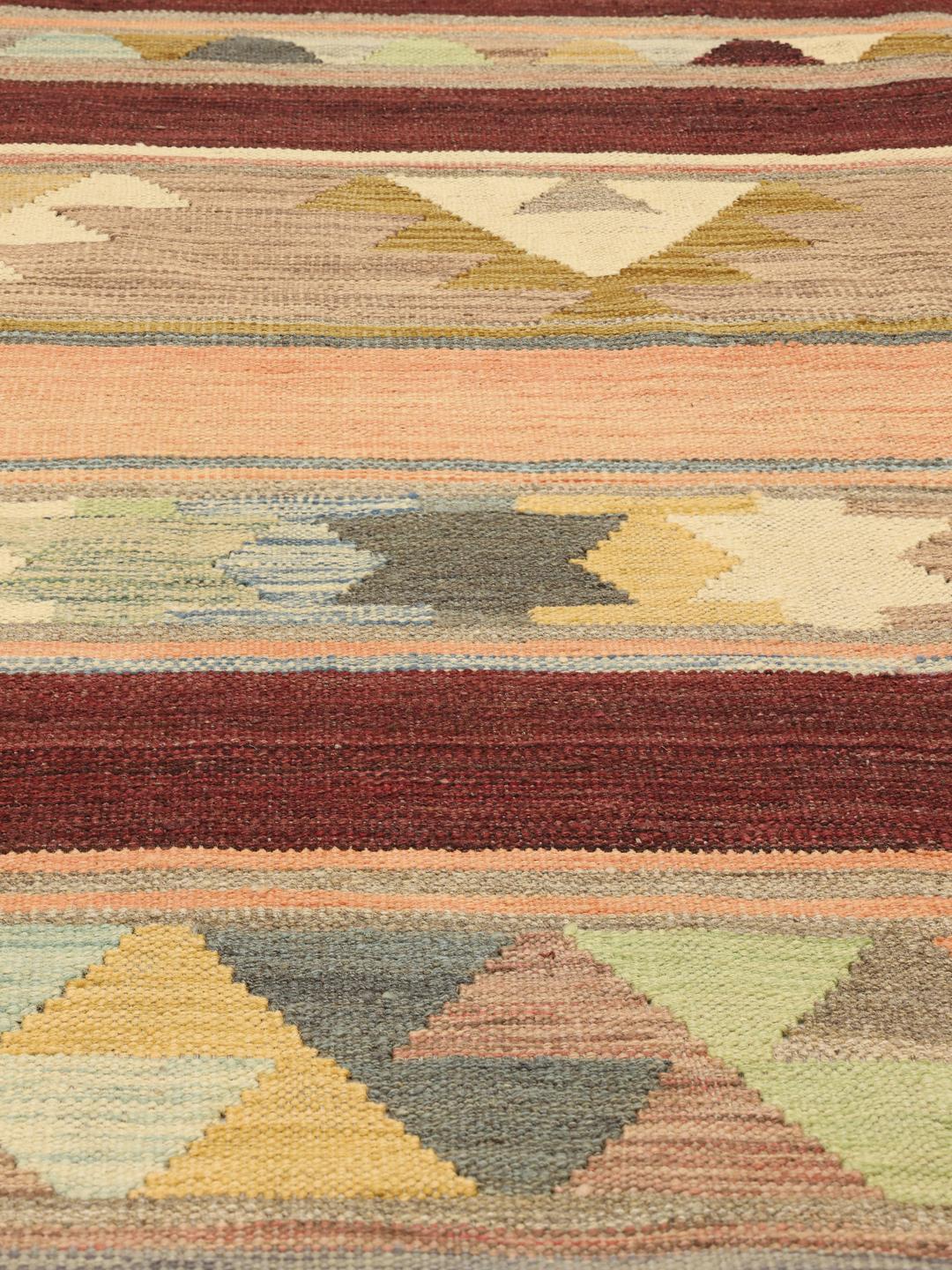
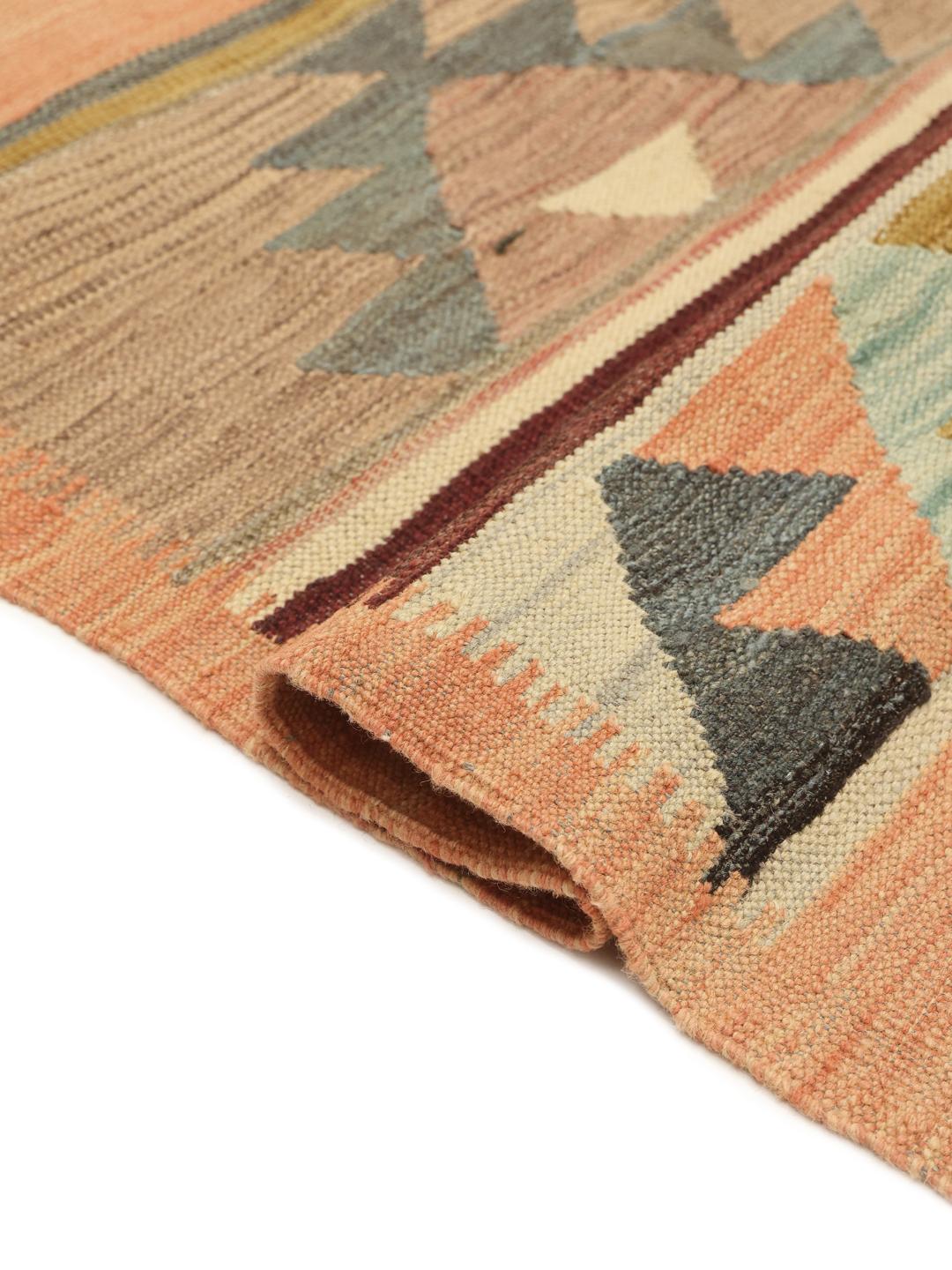
Flatweave rugs, traditionally known as kilims, hold a rich history rooted in the nomadic and village traditions of Central Asia and the Middle East. For generations, skilled weavers across Afghanistan have passed down the knowledge of creating these flat textiles without a traditional pile. Originally crafted for practical household use such as floor coverings, blankets, and storage sacks, these pieces have evolved into celebrated works of textile art valued for their graphic simplicity and authentic cultural heritage.
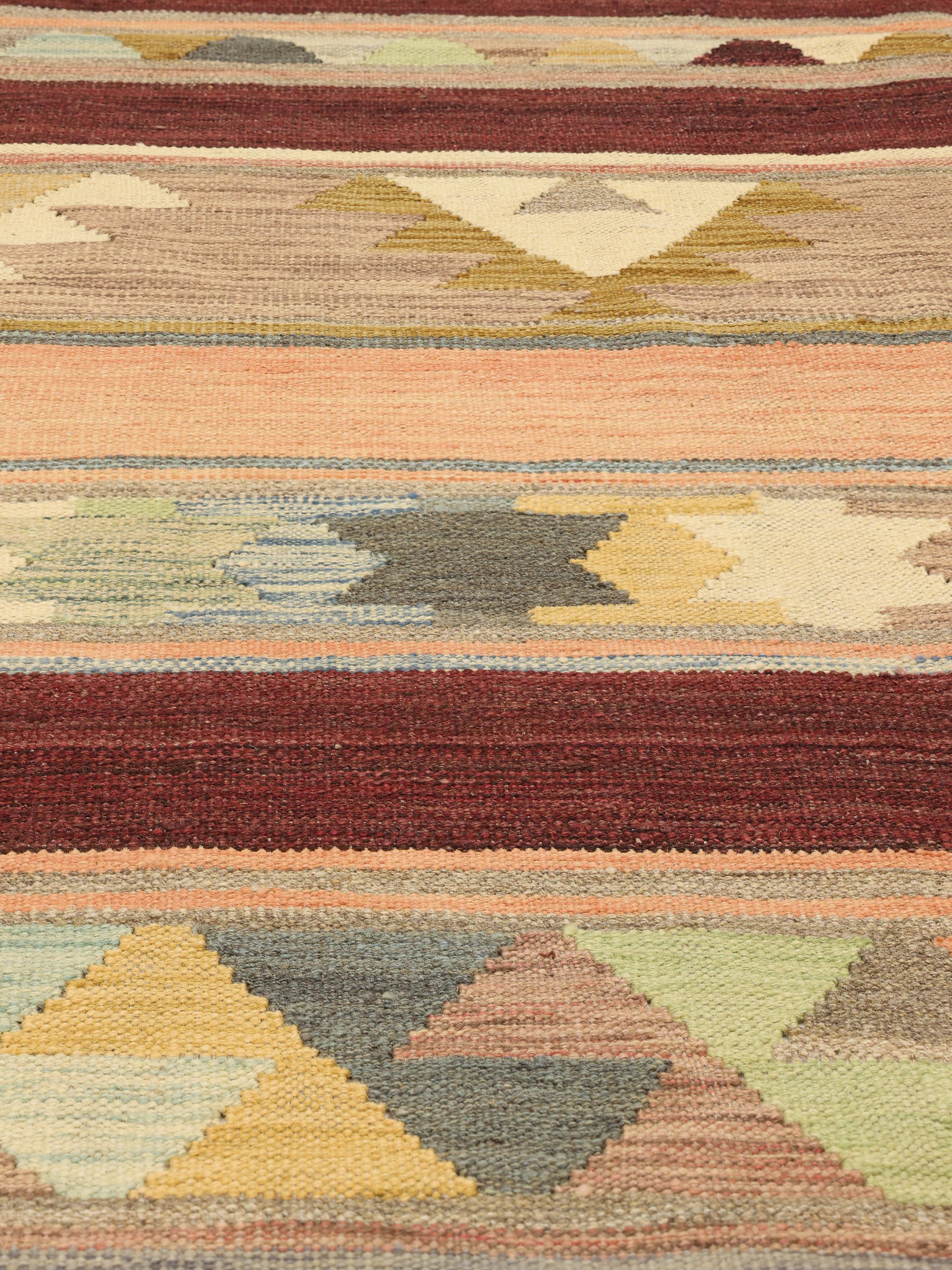
The term kilim refers specifically to the flat-woven technique where the pattern is created by tightly packing the coloured weft threads back and forth over the warp threads. This technique produces a lightweight yet remarkably sturdy fabric with no backing, meaning the design appears identically on both sides of the textile. Without a pile to obscure the details, the weaver must plan every colour transition with absolute precision during the weaving process.
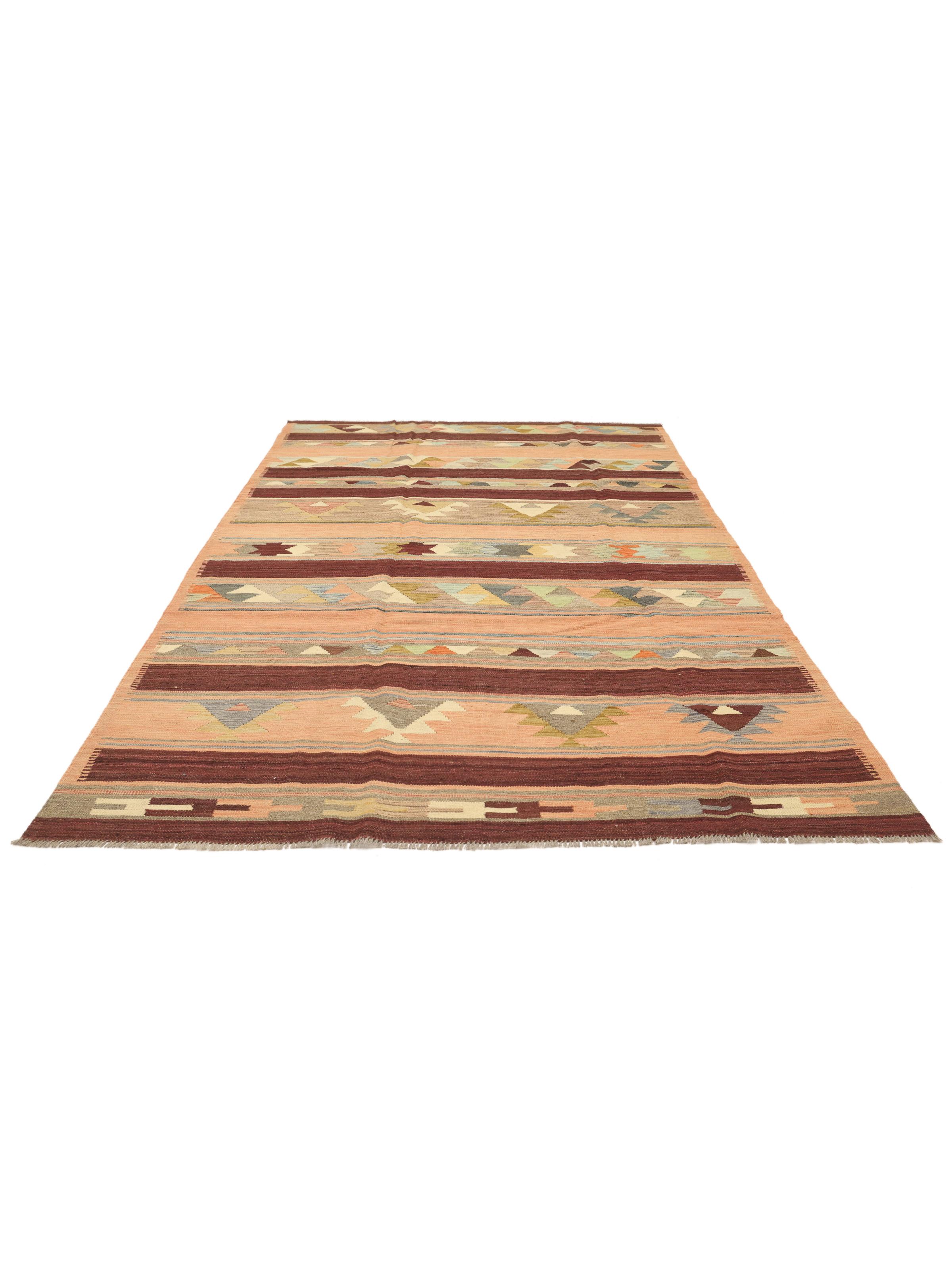
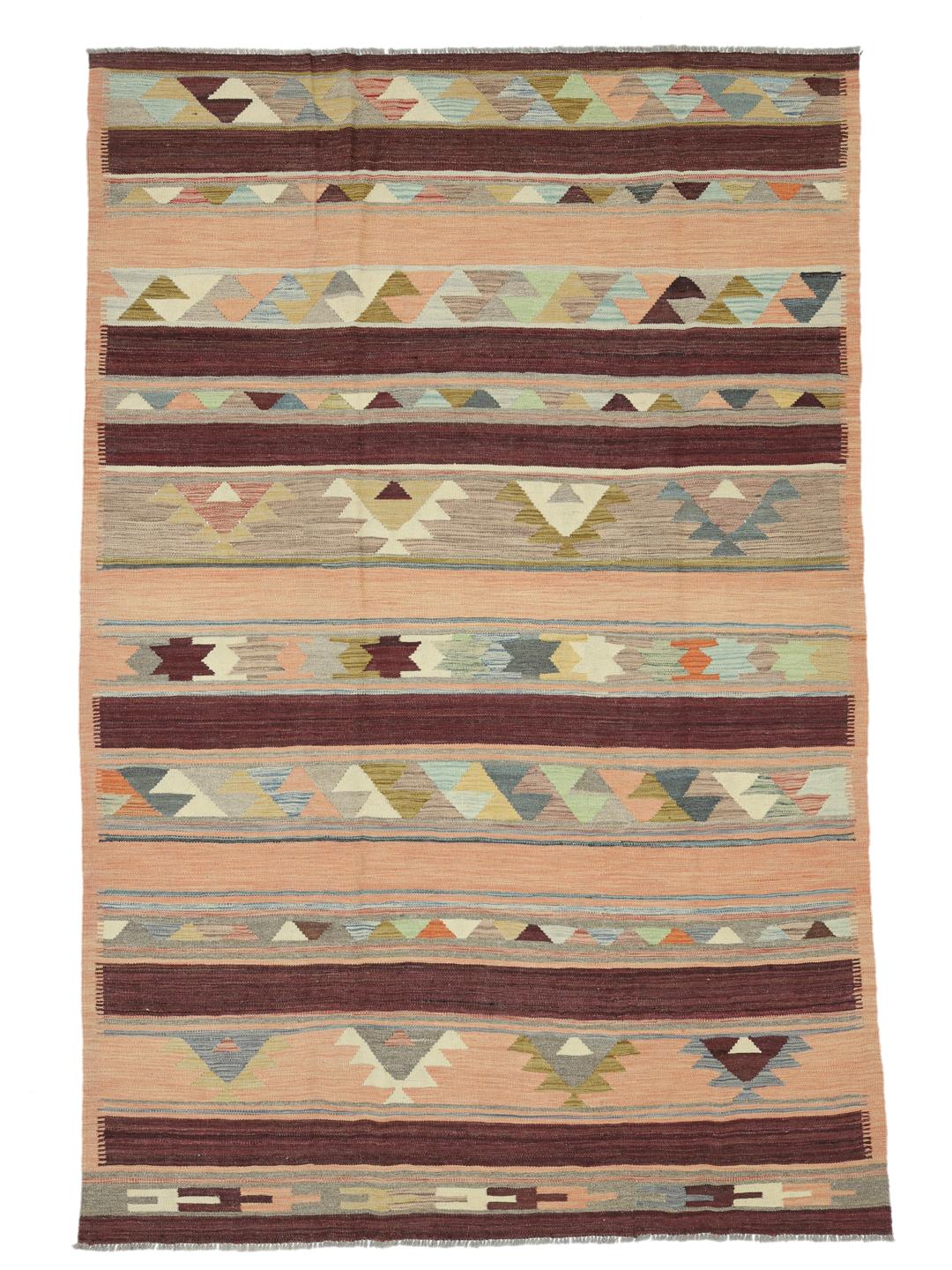
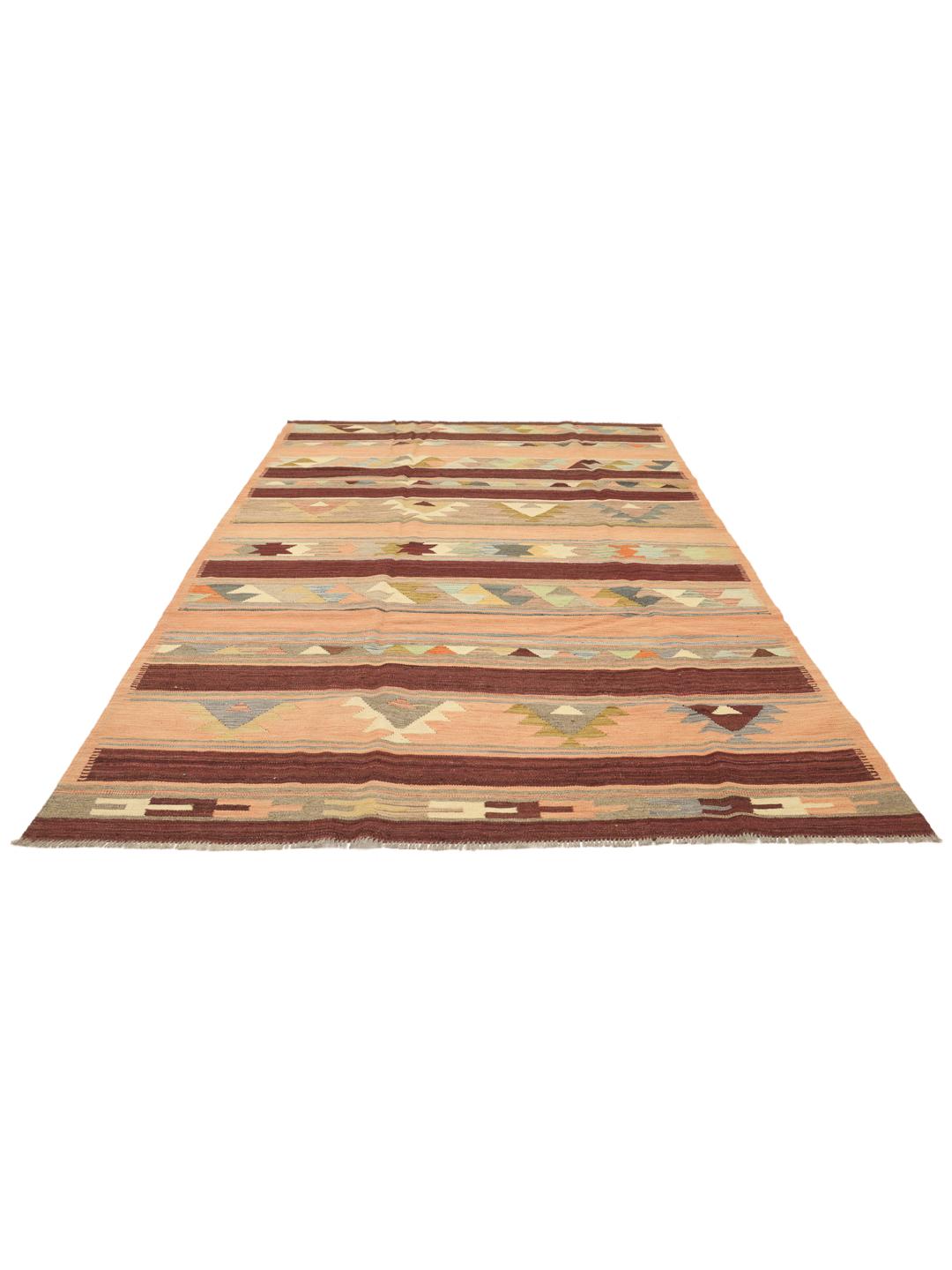
Design traditions in Afghan flatweaves often feature geometric motifs, bold stripes, and symbolic shapes passed down through families and local communities. Triangles, diamonds, and stylised animal motifs frequently appear as visual representations of protection, prosperity, and daily life in the region. The harmonious blend of earthy pink and dark-red tones in this particular piece showcases a modern interpretation of these classic design vocabularies.
Today, collecting handmade kilims is a way to preserve ancient craft traditions while bringing a piece of living history into contemporary interior spaces. Each rug tells the story of the hands that shaped it, offering collectors and design lovers alike a unique connection to the rich artisanal heritage of Afghanistan.