The art of the kilim is deeply rooted in the history of the Middle East and Central Asia, where these flat-woven textiles have served as essential elements of domestic life for centuries. Unlike pile rugs, kilims are created by interlocking the weft and warp threads, a technique that produces a lightweight yet exceptionally robust fabric. Afghanistan remains one of the most significant regions for this craft, where weaving traditions are passed down through generations, maintaining a connection to ancestral design languages.
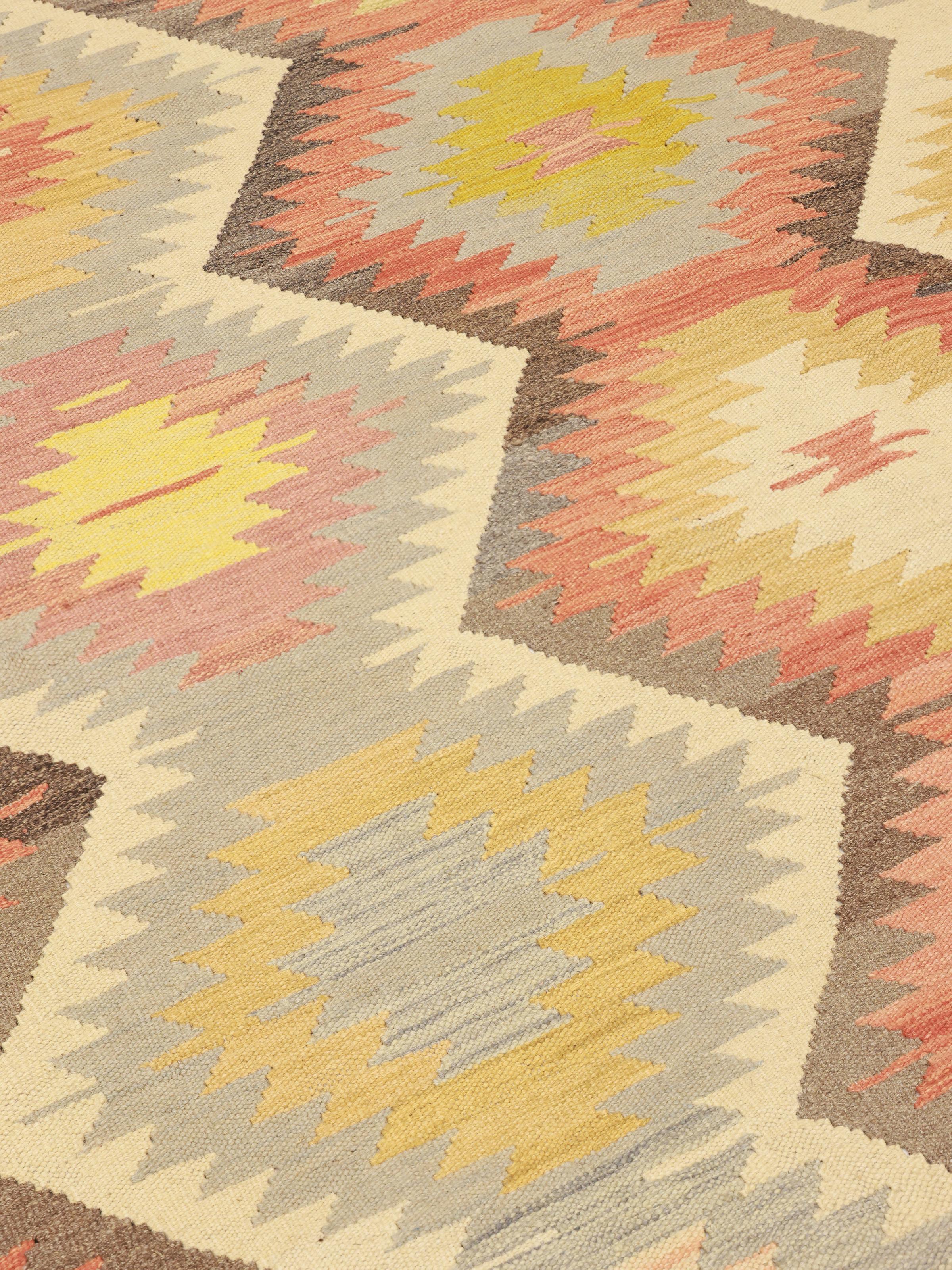
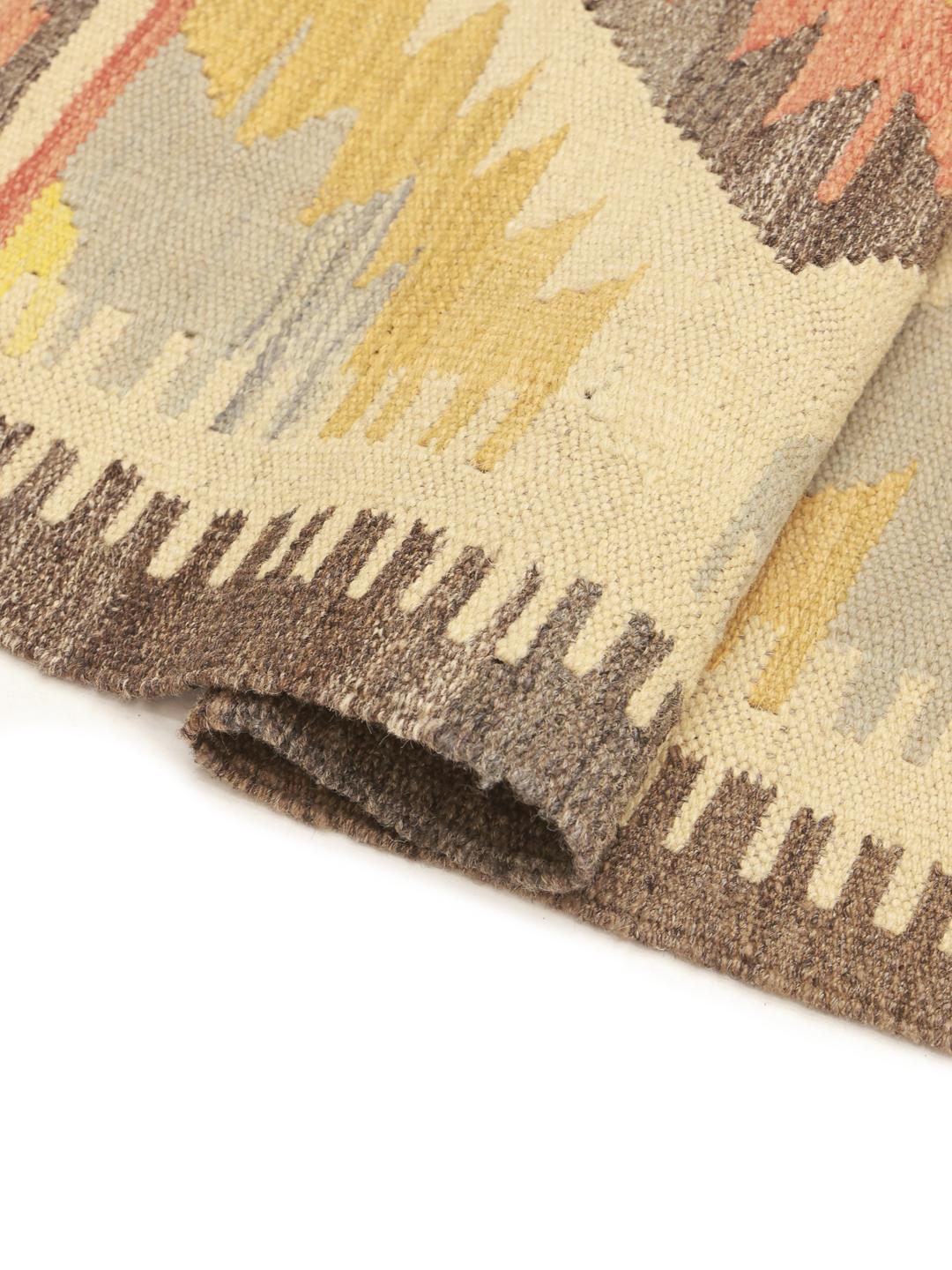
The term 'kilim' refers to this specific tapestry-weave technique, which is prized for its versatility and durability. Because there is no pile to wear down, these rugs are famously long-lasting and easy to maintain. The construction process requires a master weaver to have a profound understanding of tension and colour placement, as the pattern is built directly into the fabric's structure during the weaving process itself.
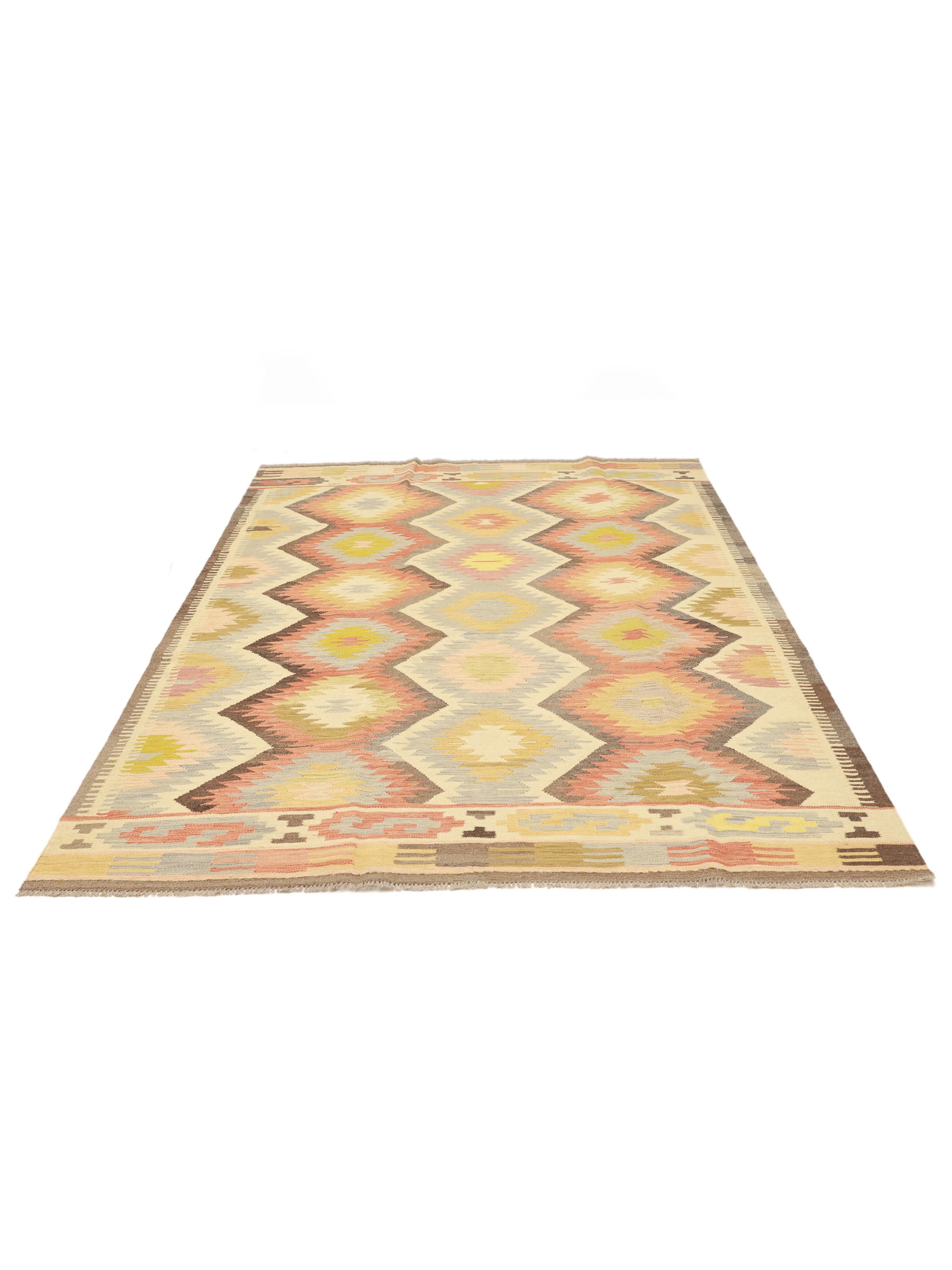
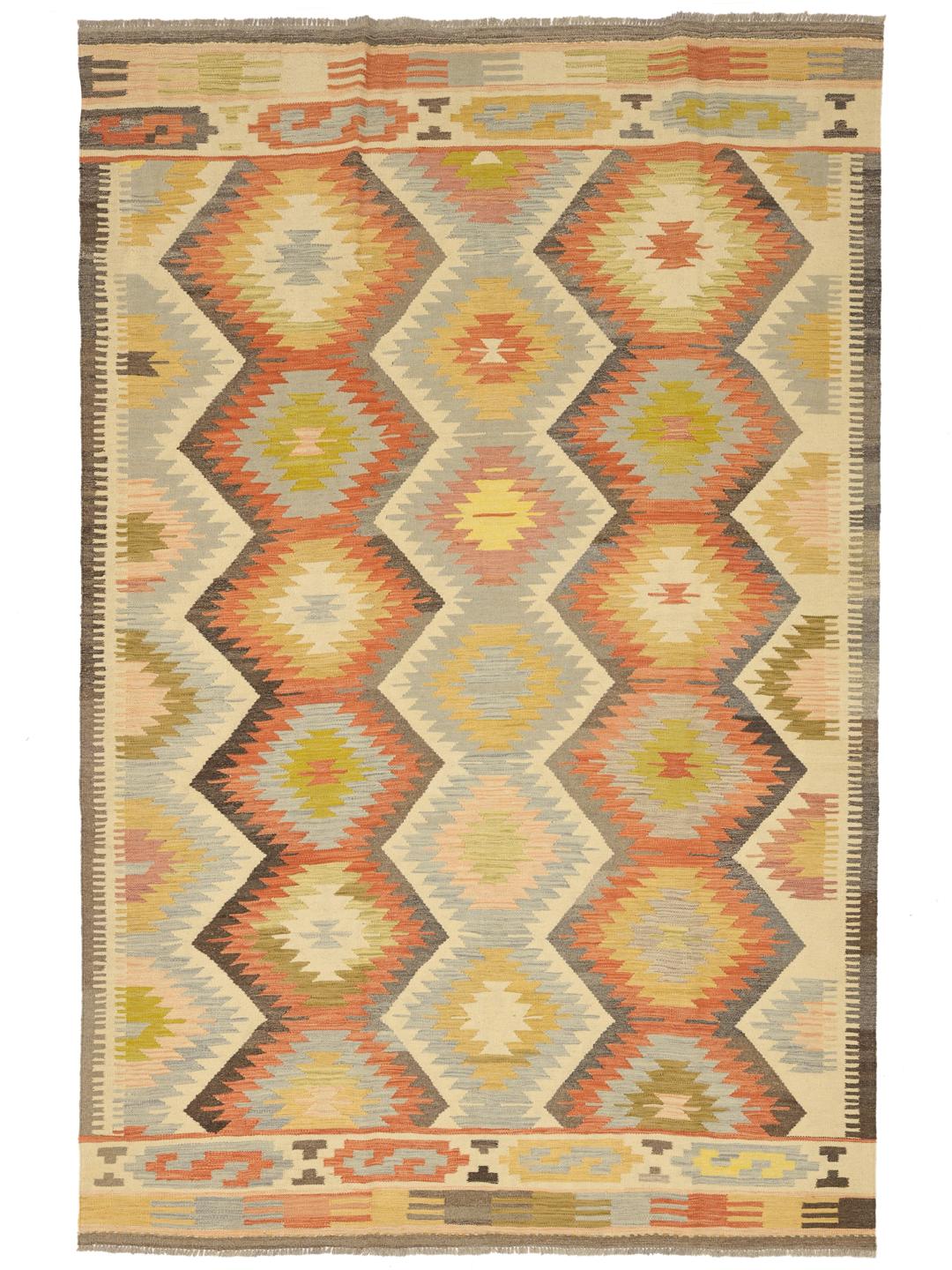
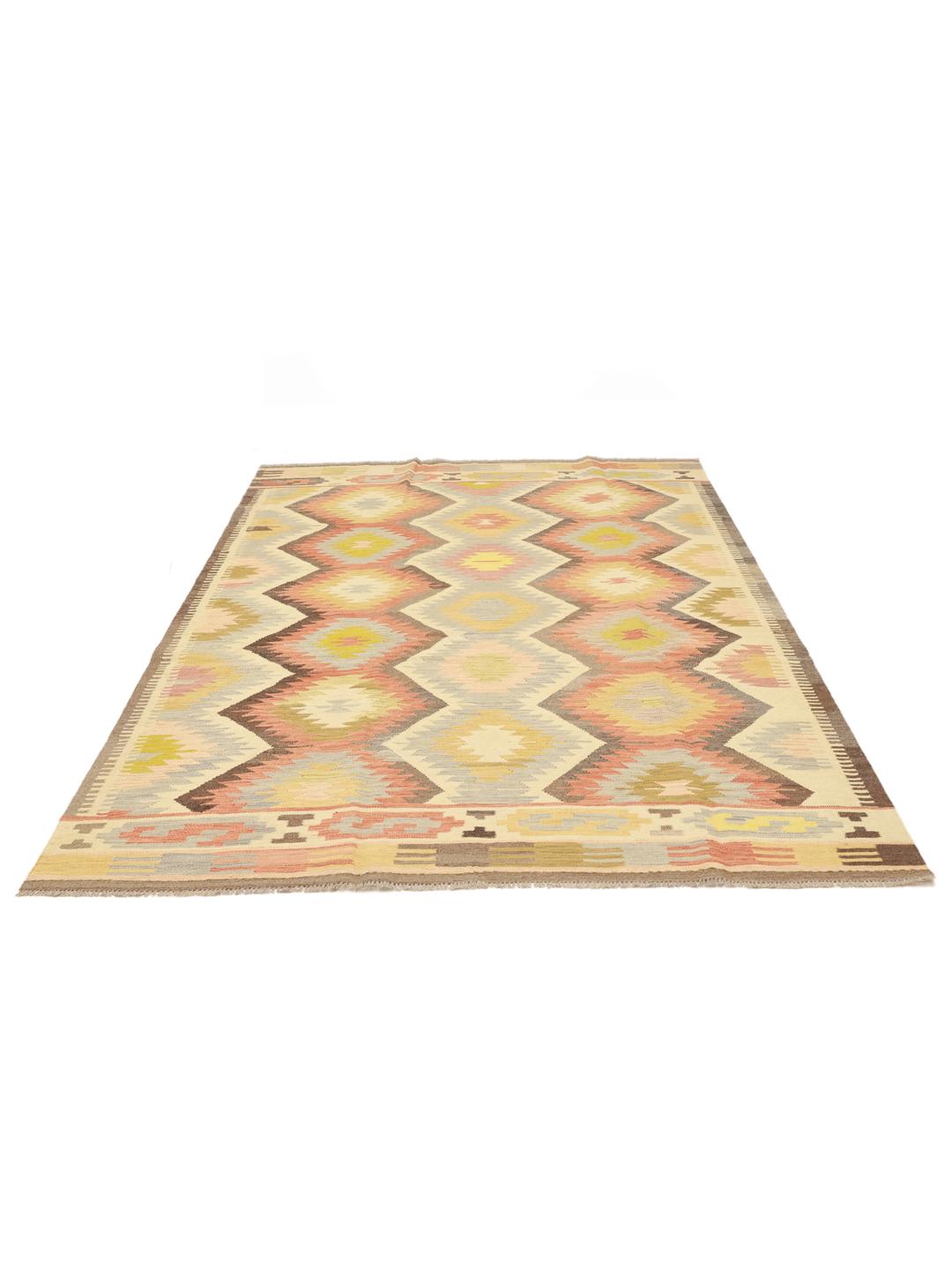
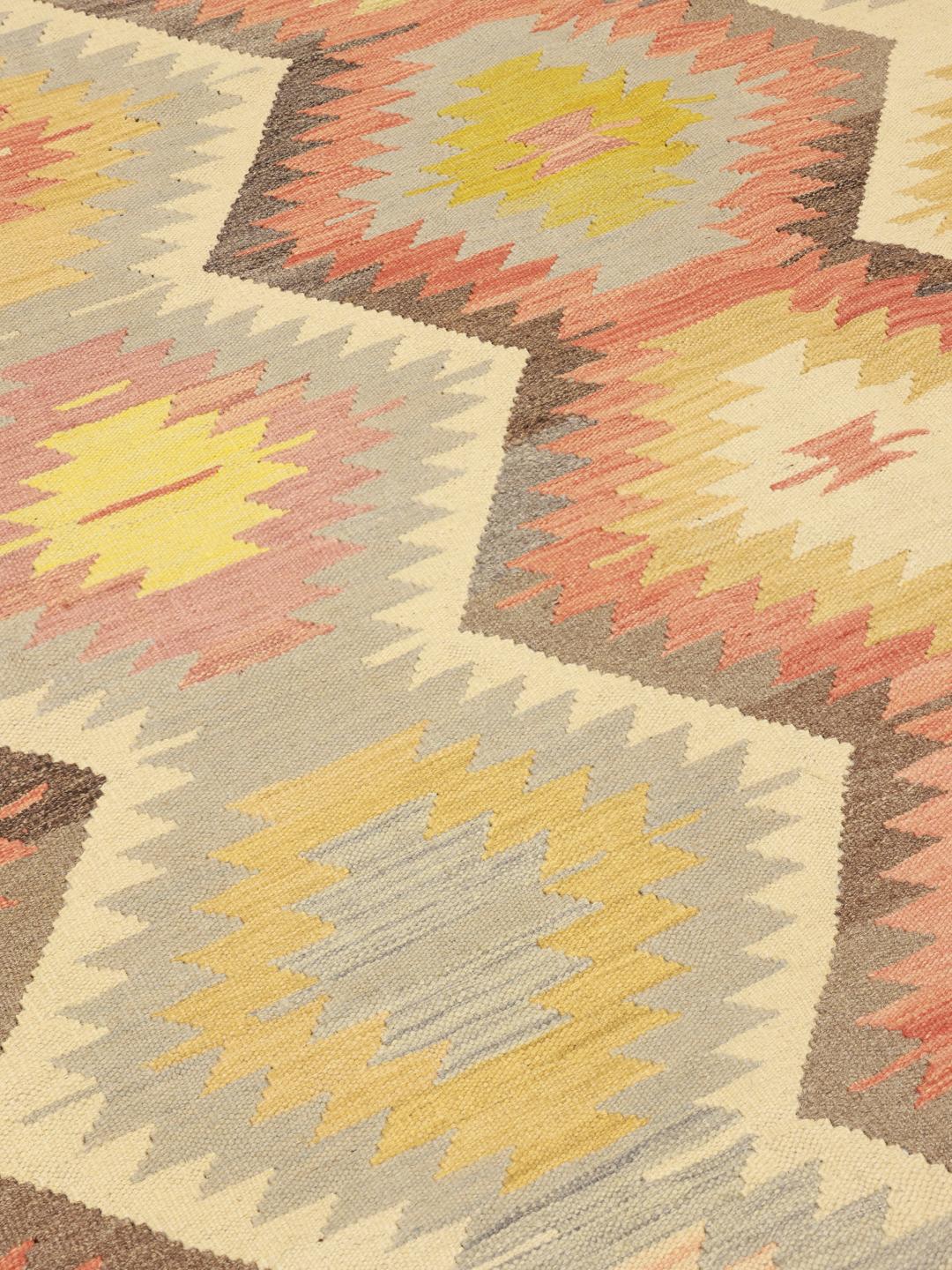
Visually, this rug features an array of geometric diamonds and symbolic motifs that are characteristic of Afghan kilim design. These shapes are not merely decorative but are often derived from ancient tribal visual vocabularies, representing protection, fertility, or the natural landscape. The use of vibrant, contrasting colours within these shapes creates a dynamic rhythm that draws the eye and anchors the room in a sense of cultural heritage.
Collecting a hand-woven kilim is an investment in a living tradition. Each rug tells the story of the weaver and the region, capturing a moment in time through its unique colour choices and pattern iterations. Owning such a piece is an opportunity to connect with a storied craft, bringing an authentic and grounded aesthetic to your home that honours the skill and history of the people who created it.