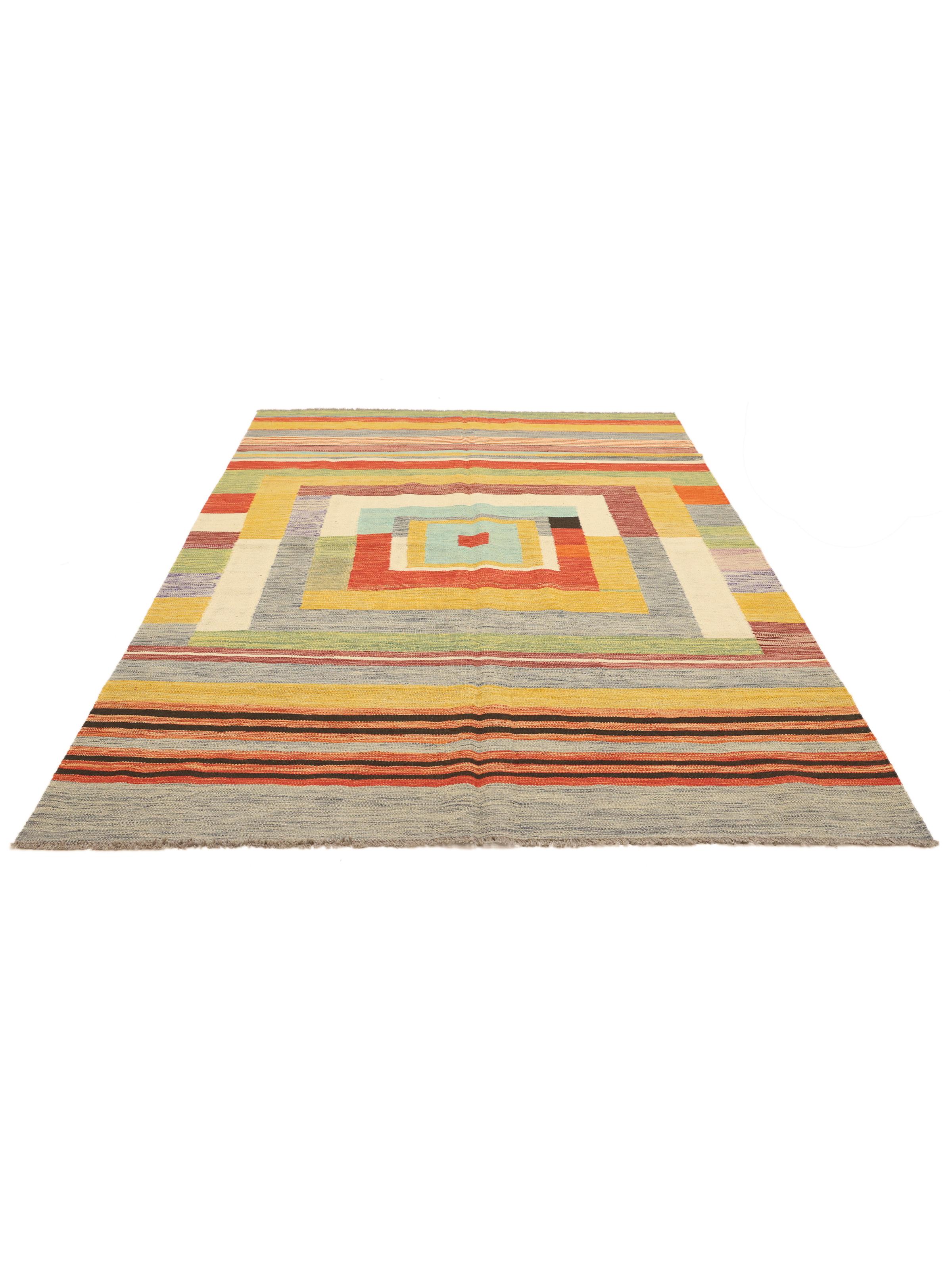
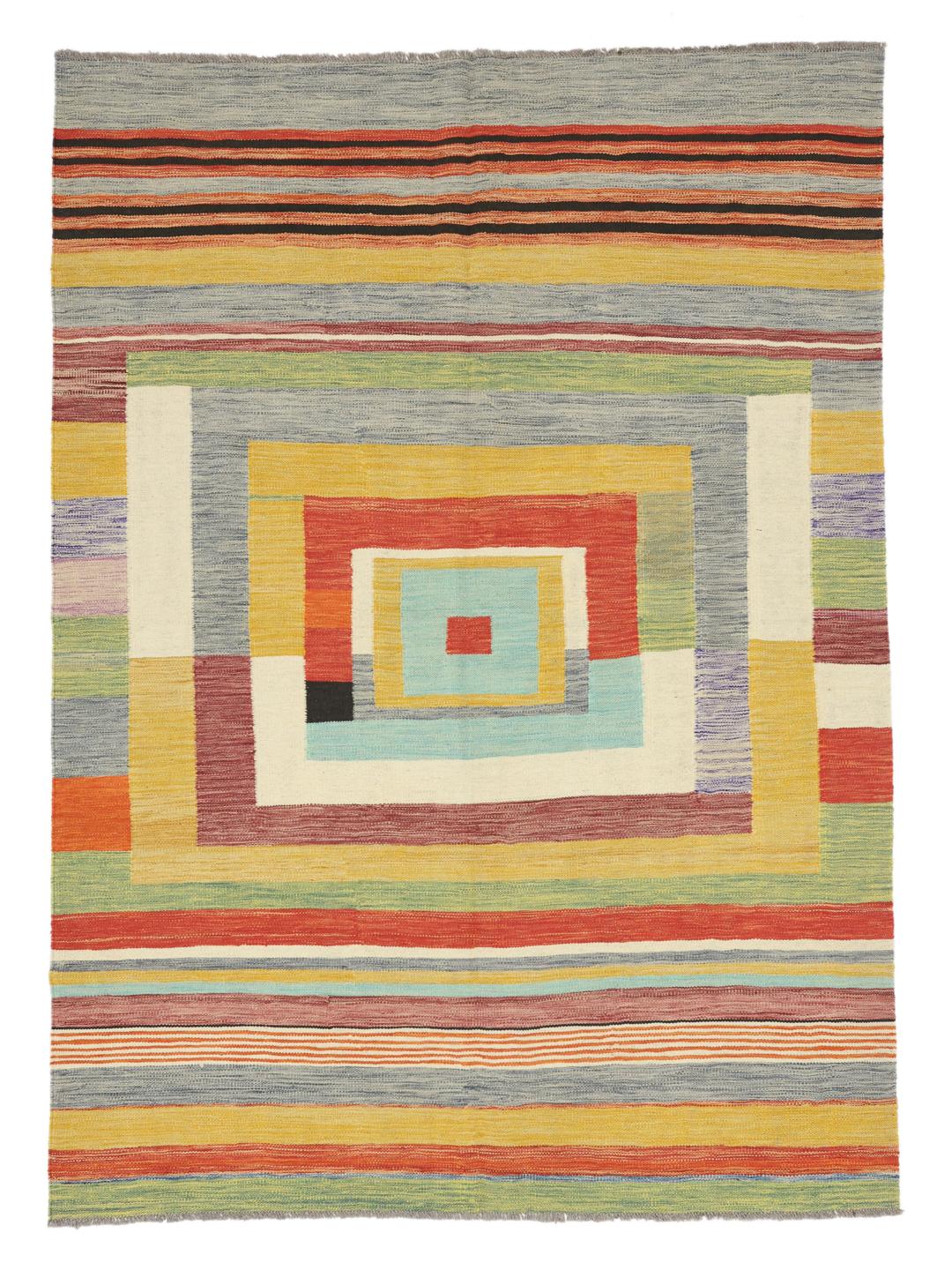
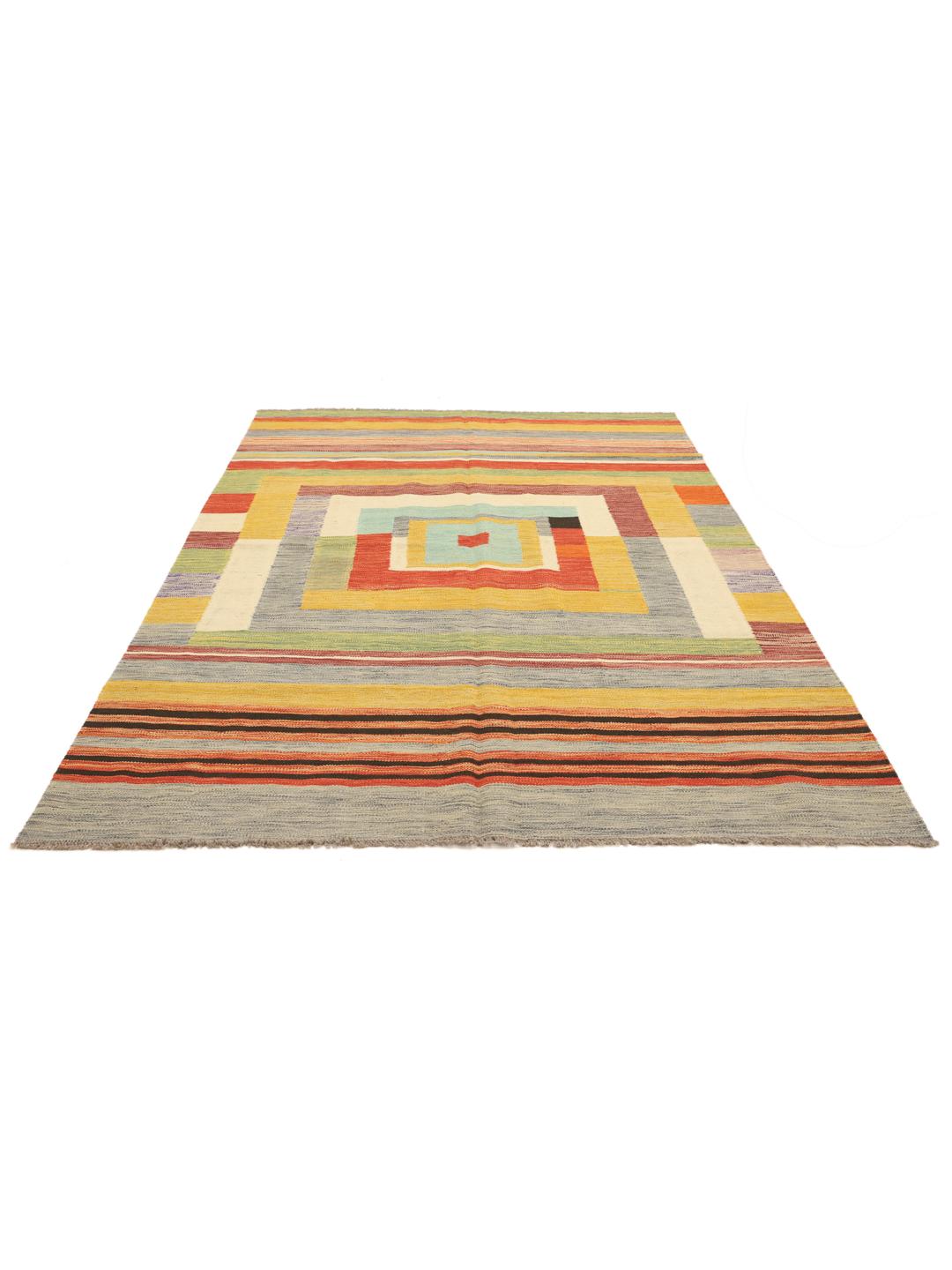
Kelim rugs have a long history rooted in the nomadic and village traditions of the Middle East and Central Asia. Originally created by tribal weavers for practical household use as floor coverings, blankets, and storage sacks, these flatwoven textiles relied entirely on the materials at hand and the weaver's personal artistic vision. Over generations, the tradition evolved into a celebrated art form, with weaving communities in Afghanistan preserving these ancient flatweaving techniques while adapting designs for contemporary interiors.
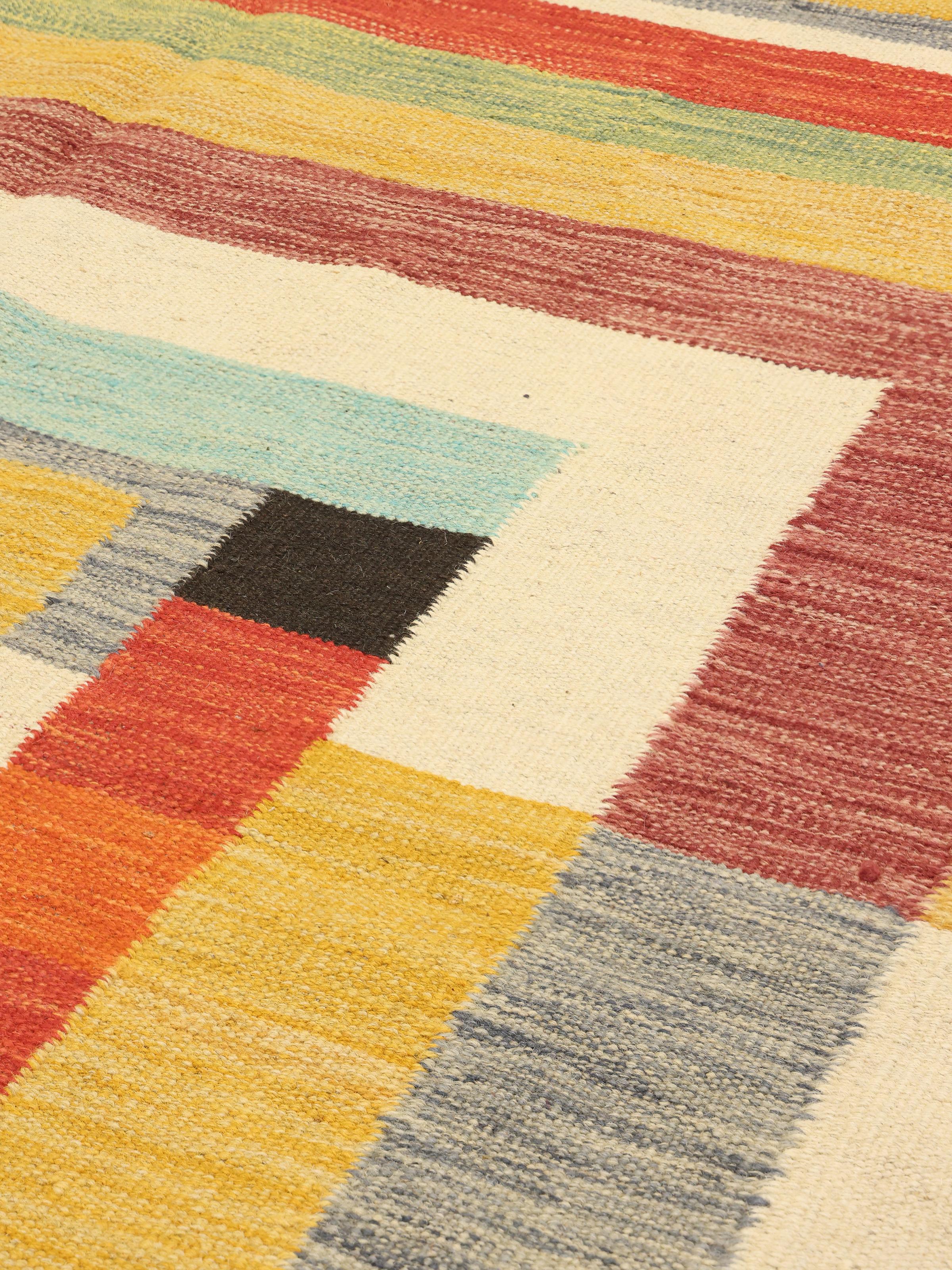
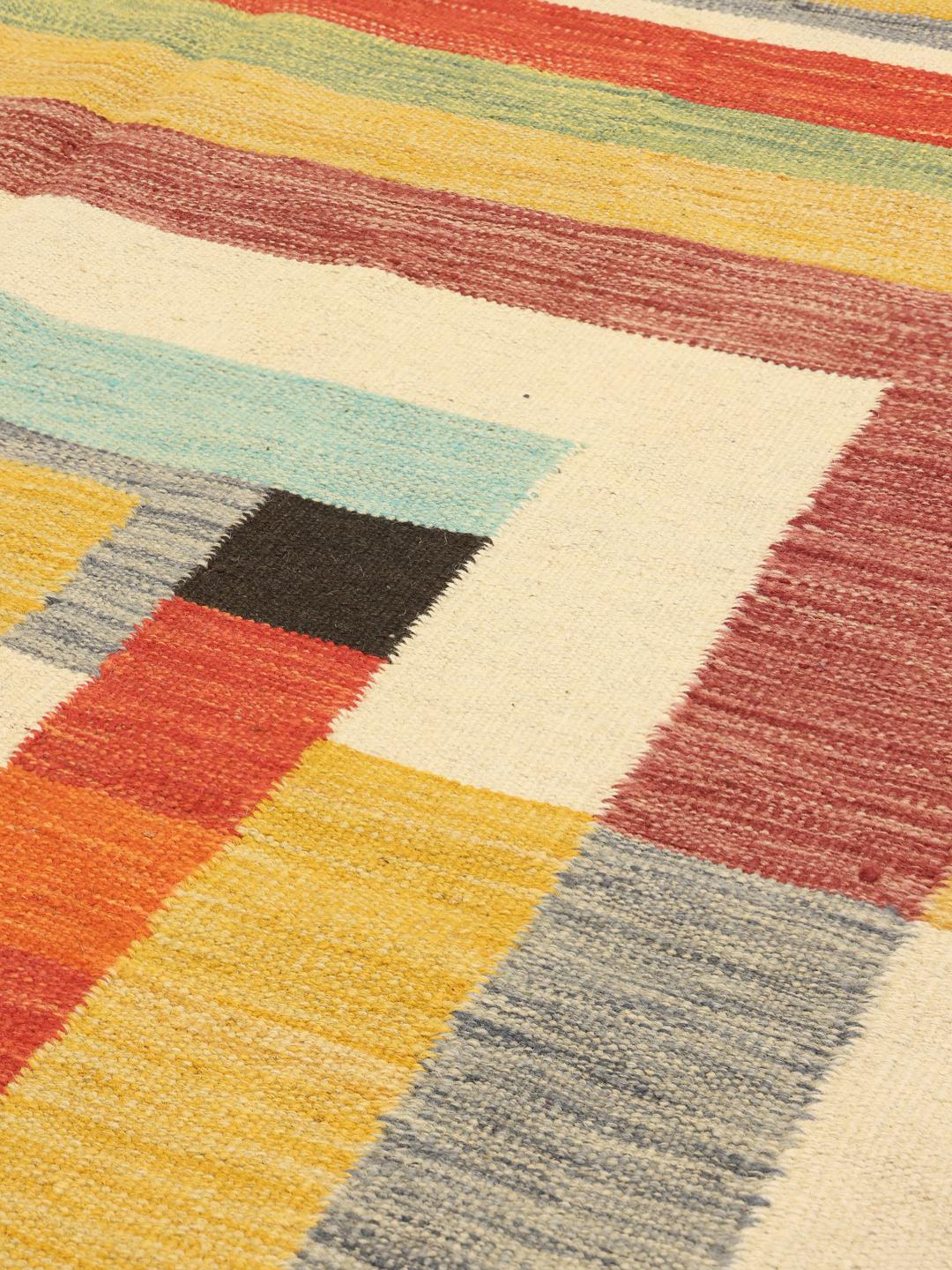
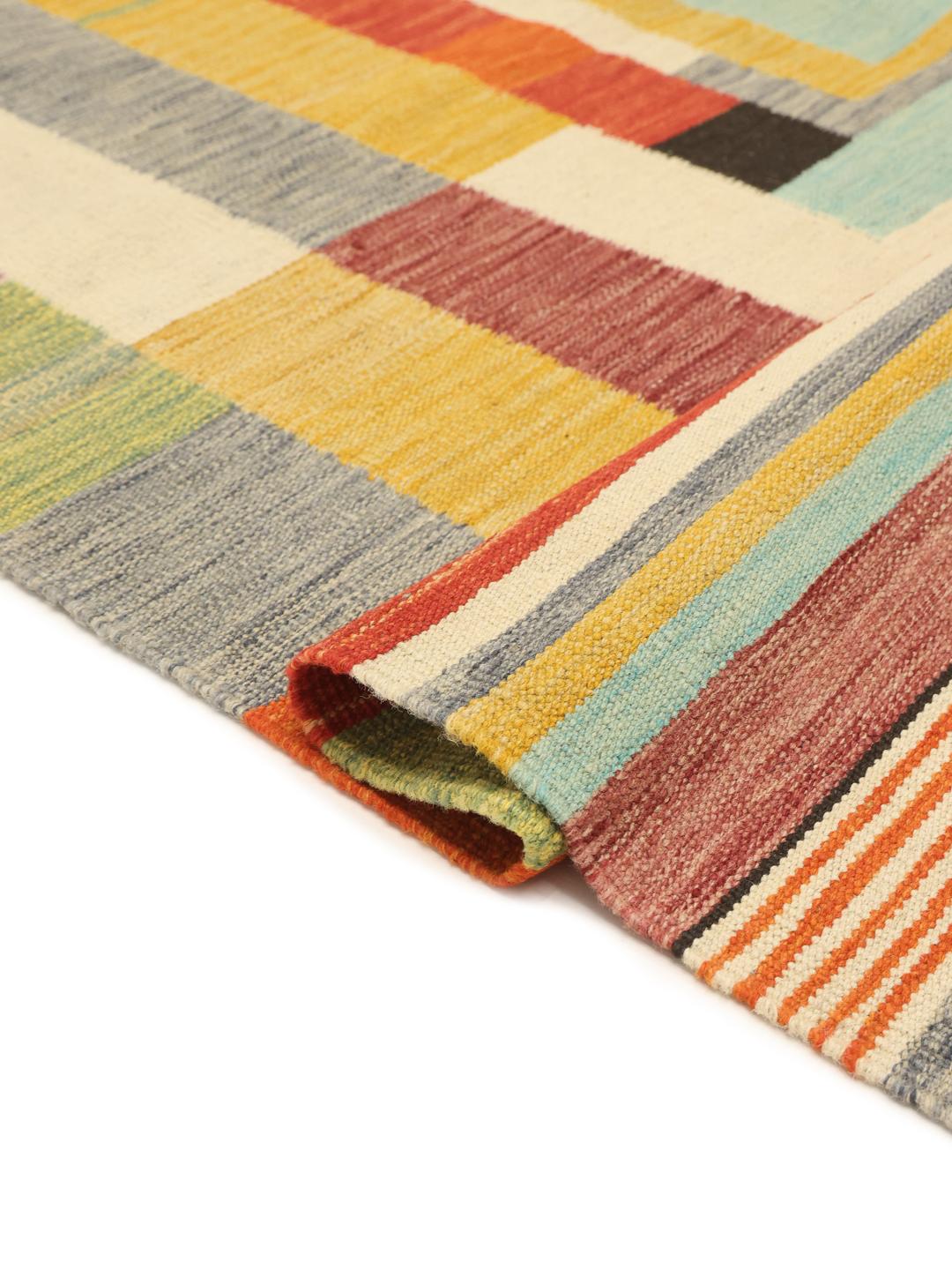
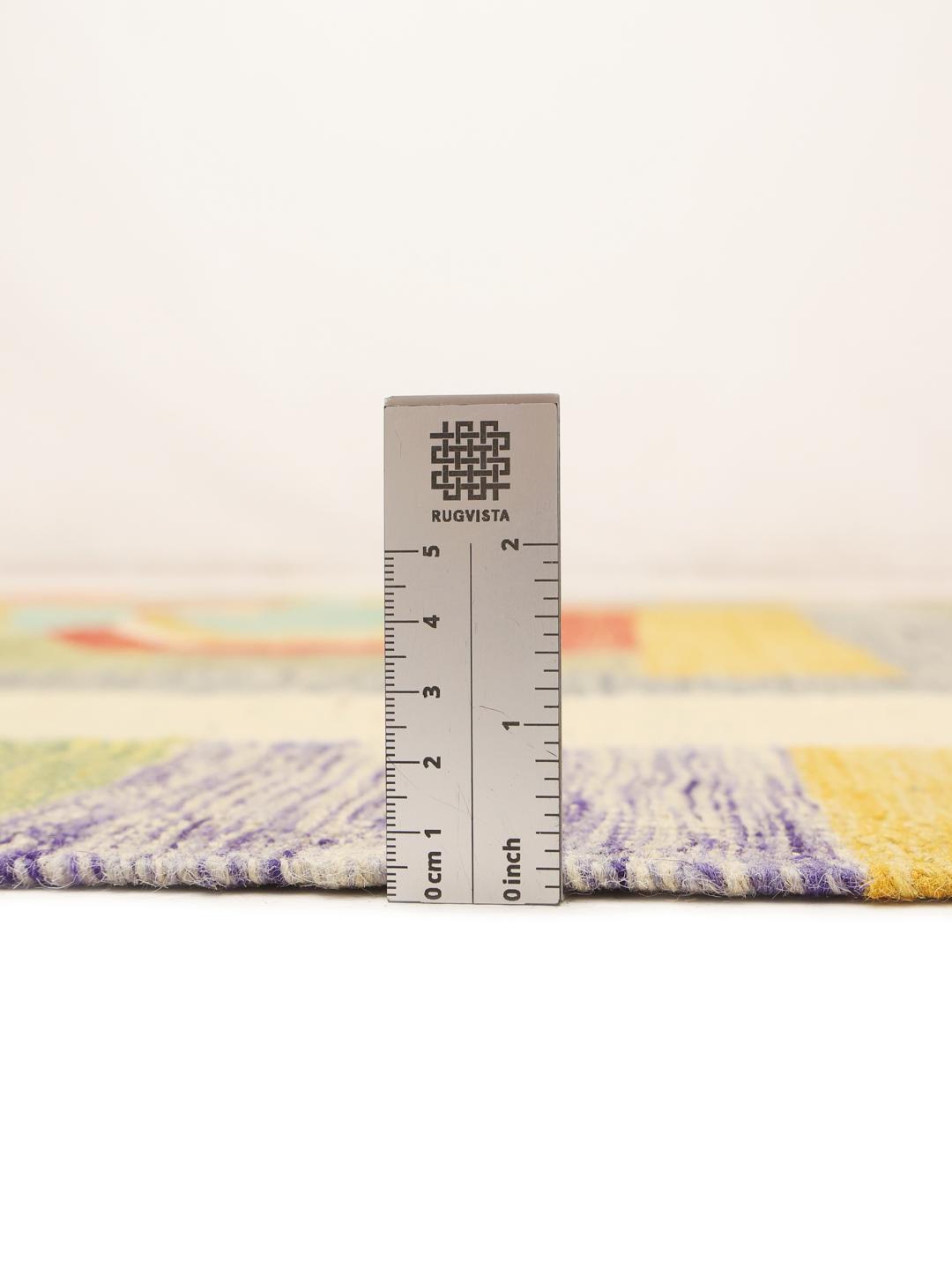
Unlike pile rugs, traditional Kelims are woven without knots. The artisan creates the pattern by tightly interweaving the coloured weft threads through the warp foundation, a technique known as slit-weave flatweaving. This method produces a lightweight, reversible textile with a smooth surface where colours meet sharply at the vertical slits, creating clean geometric alignments that define the characteristic look of a Kelim.
The visual language of this Kelim Modern tradition draws heavily on geometric abstraction, featuring repeating bands, stepped boxes, and rectilinear arrangements. While traditional palettes often leaned on earthy reds and deep indigos, modern Afghan Kelims frequently incorporate a broader spectrum of natural dyes, balancing heritage motifs with fresh, contemporary colour combinations that adapt effortlessly to modern homes.
Collecting a Kelim means connecting with a living craft tradition that values resourcefulness, patience, and visual storytelling. Each piece reflects the environment and cultural memory of the region where it was made, offering today's homes a durable and culturally rich textile that carries the quiet dedication of its maker.