Kilim rugs represent one of the most storied traditions in textile art, originating from the nomadic tribes and settled villages across the Middle East and Central Asia. Historically, these flat-woven pieces were essential tools for daily life, serving as floor coverings, wall hangings, and protective storage bags for travelling families. The evolution of the kilim from a functional tribal necessity to a celebrated design object mirrors the shifting cultural landscapes of these regions.
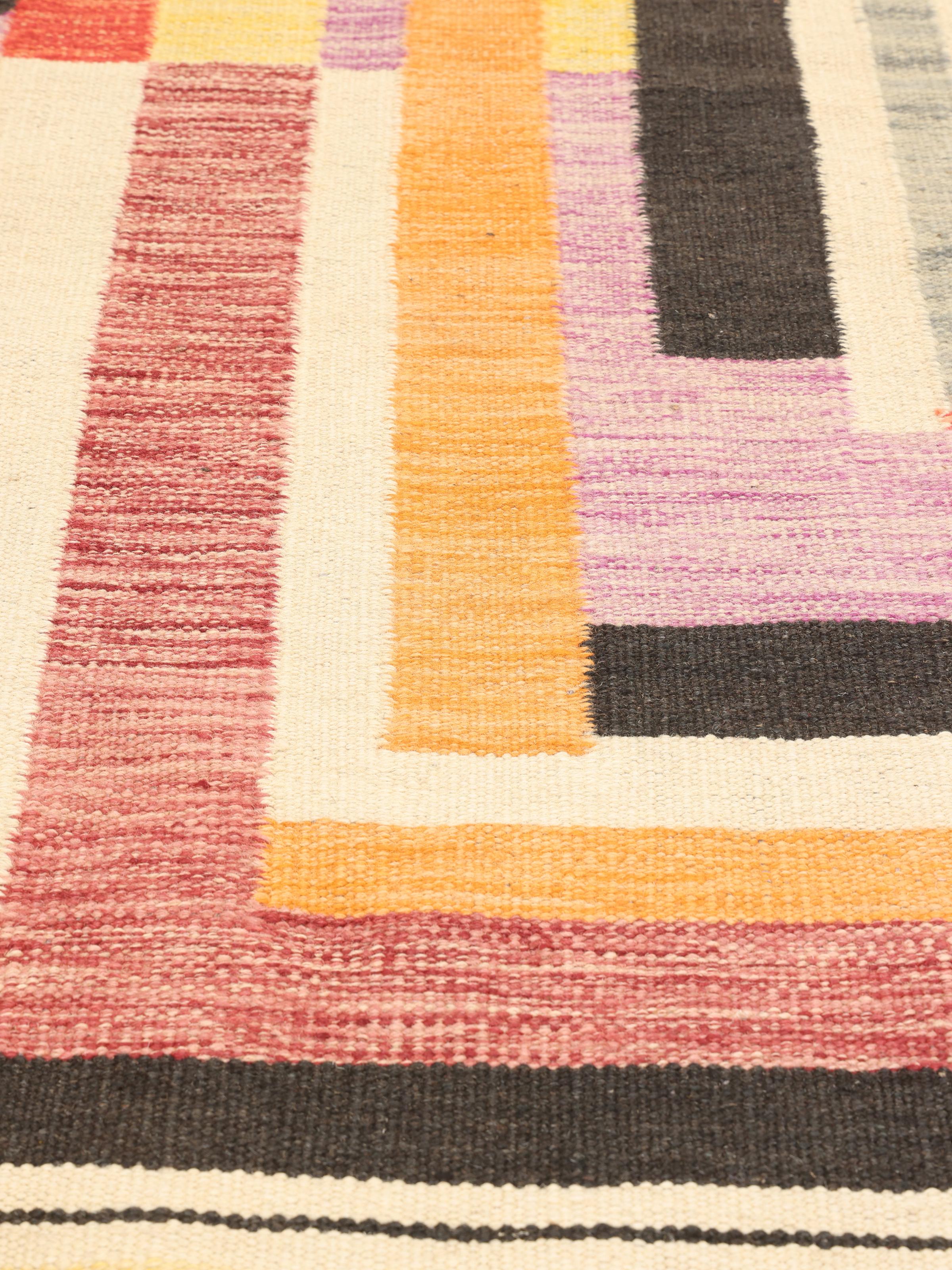
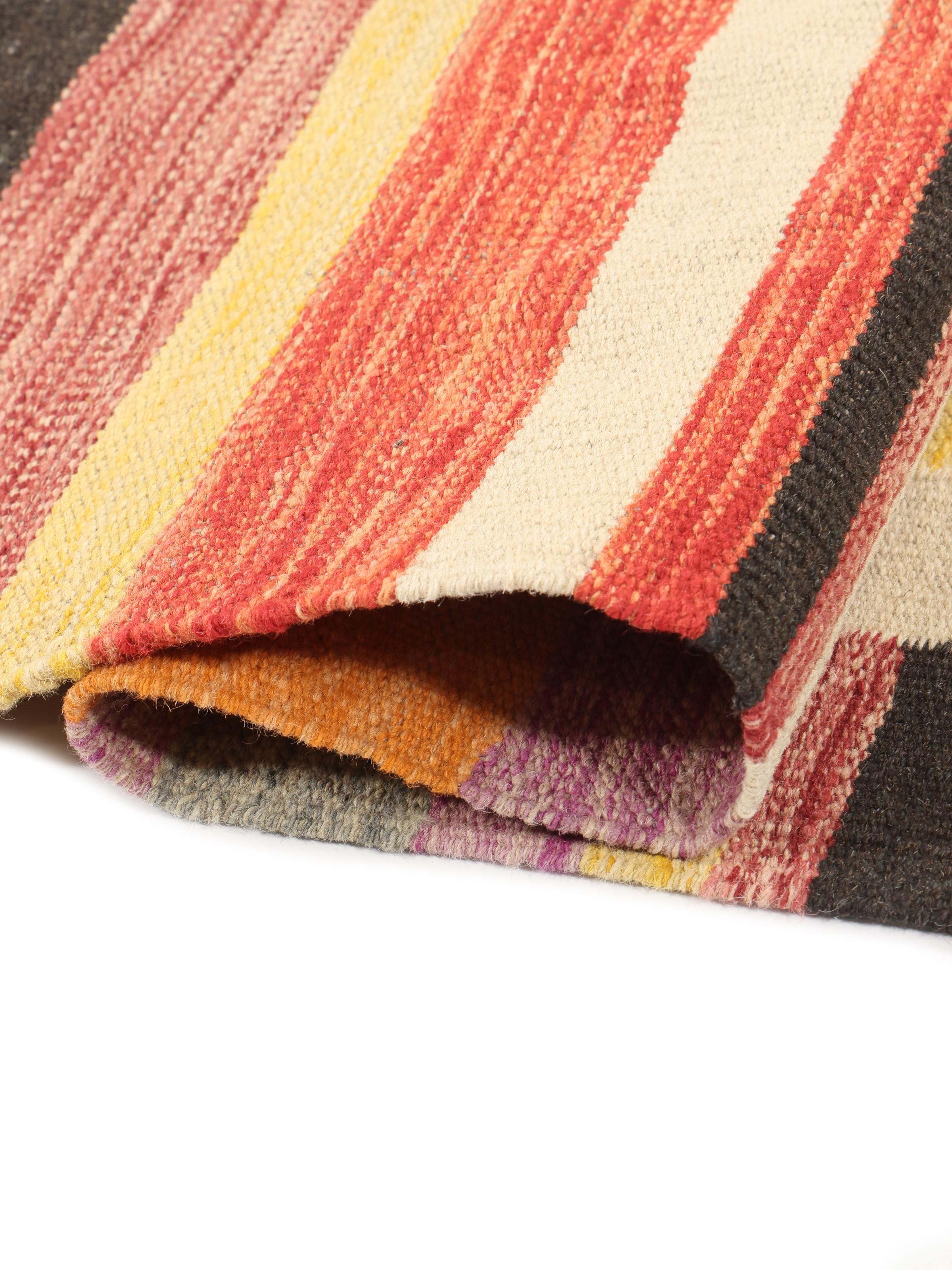
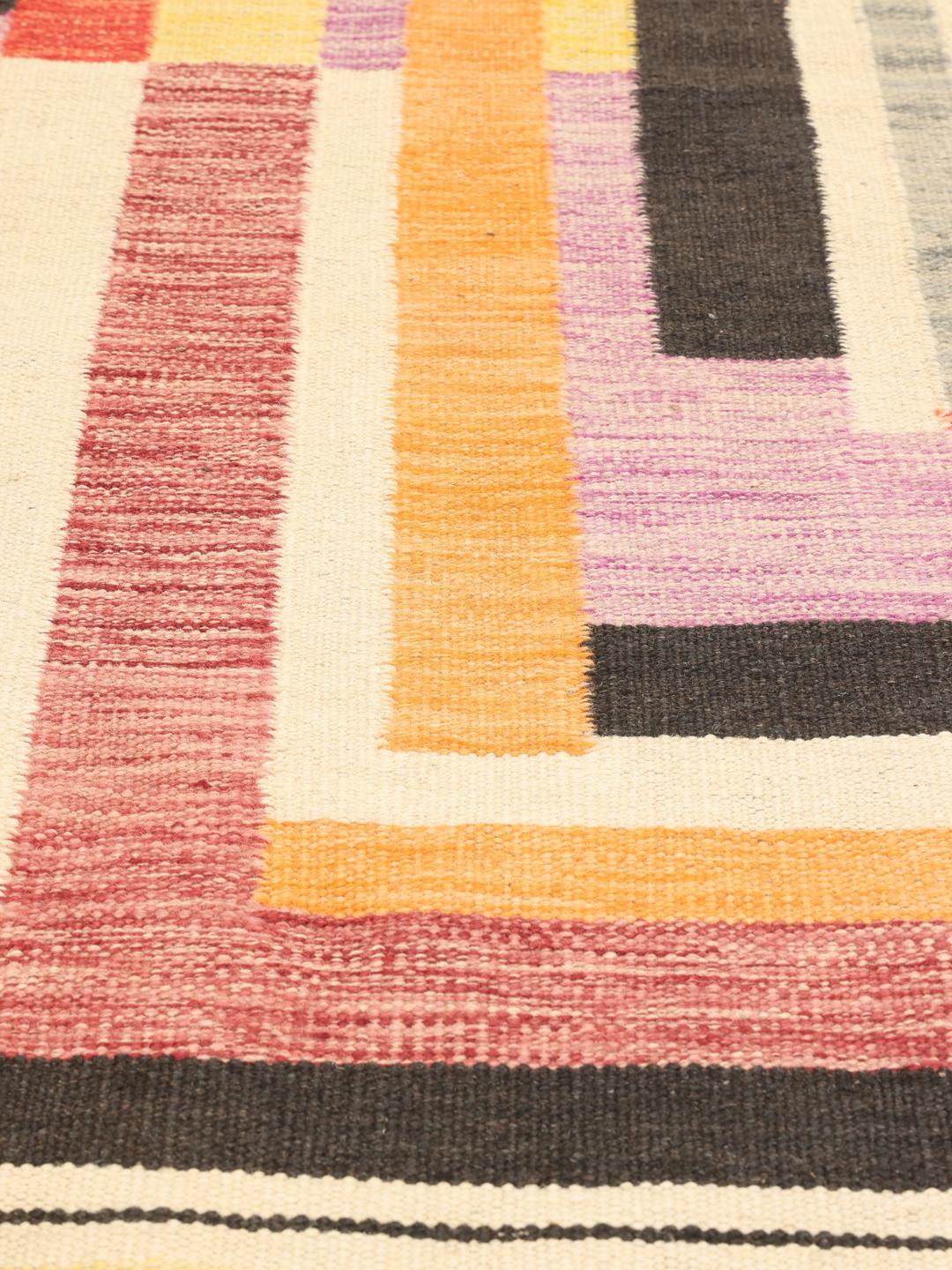
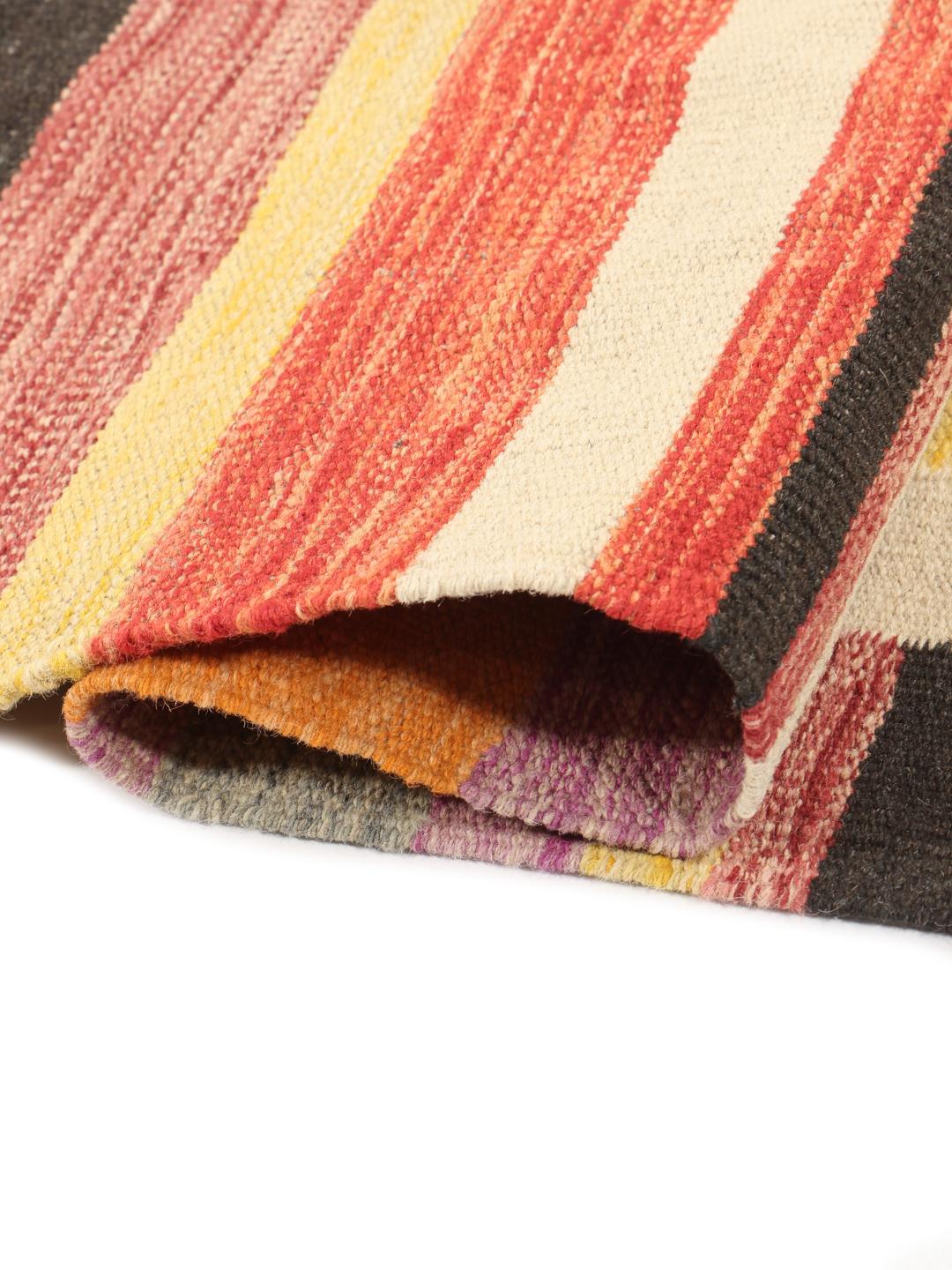
The term 'kilim' specifically refers to the technique of tapestry weaving, where the weft threads are passed over and under the warp threads to create a flat, pileless surface. This method allows for the creation of sharp, crisp geometric patterns, as the design is essentially built into the structure of the fabric itself. Because there is no pile to obscure the design, the clarity of the motifs depends entirely on the precision of the weaver's tension and the quality of the Wool used.
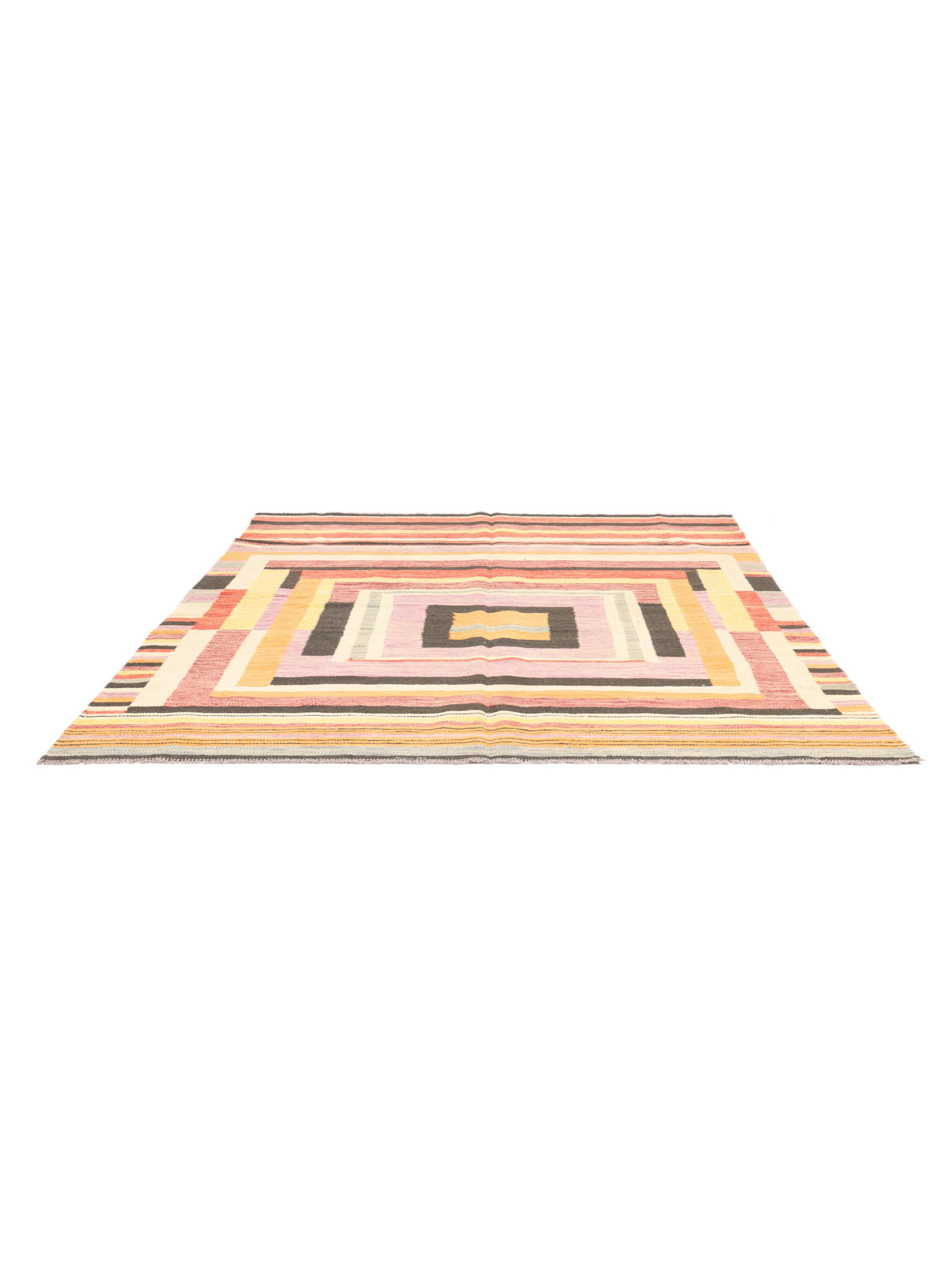
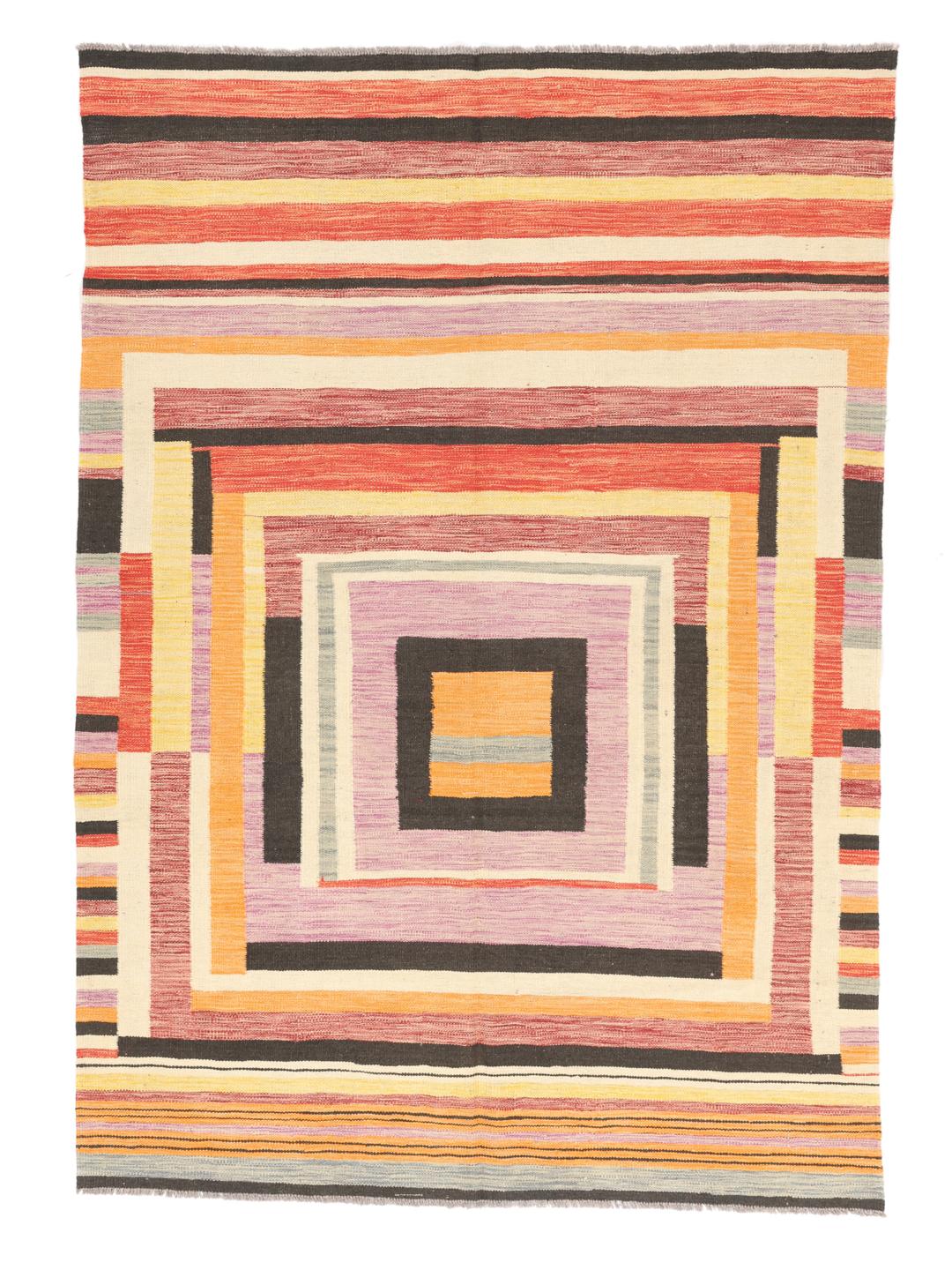
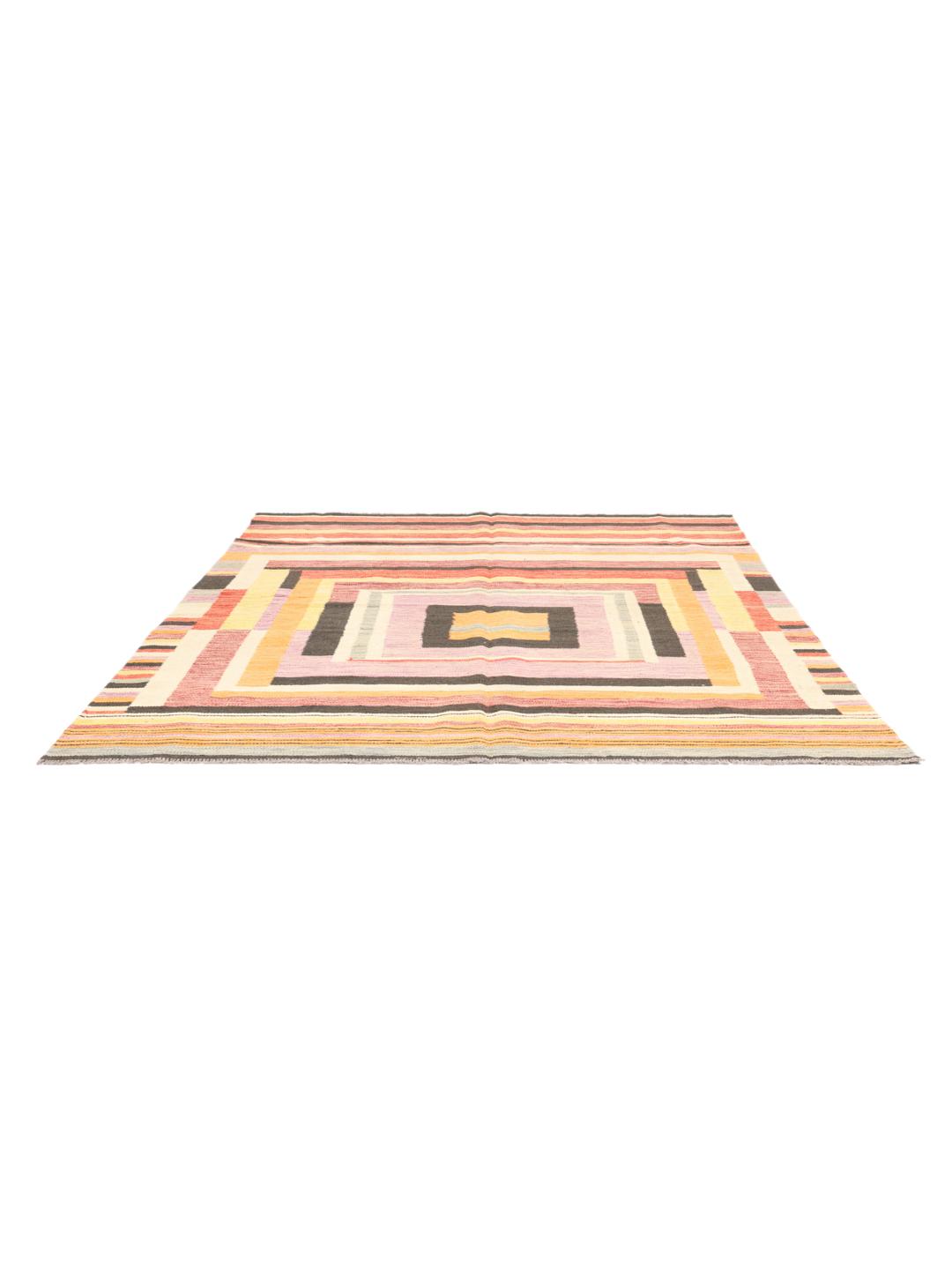
Visually, these rugs are defined by their geometric language, which often includes diamonds, triangles, and stripes. These shapes are not merely decorative but are deeply rooted in the cultural symbolism of the weaving communities, often representing protection, family, and the natural world. This particular rug utilises a vibrant, modern colour palette, which is a contemporary adaptation of the traditional earthy tones found in older, more rural examples.
Collecting kilim rugs is an act of preserving a heritage of skill and human connection. Each piece serves as a physical record of the weaver's choices, reflecting both the constraints of their environment and their creative vision. When you acquire a rug from this tradition, you are bringing home a piece of history that values authentic materials and the time-intensive beauty of manual labour over the speed of modern manufacturing.