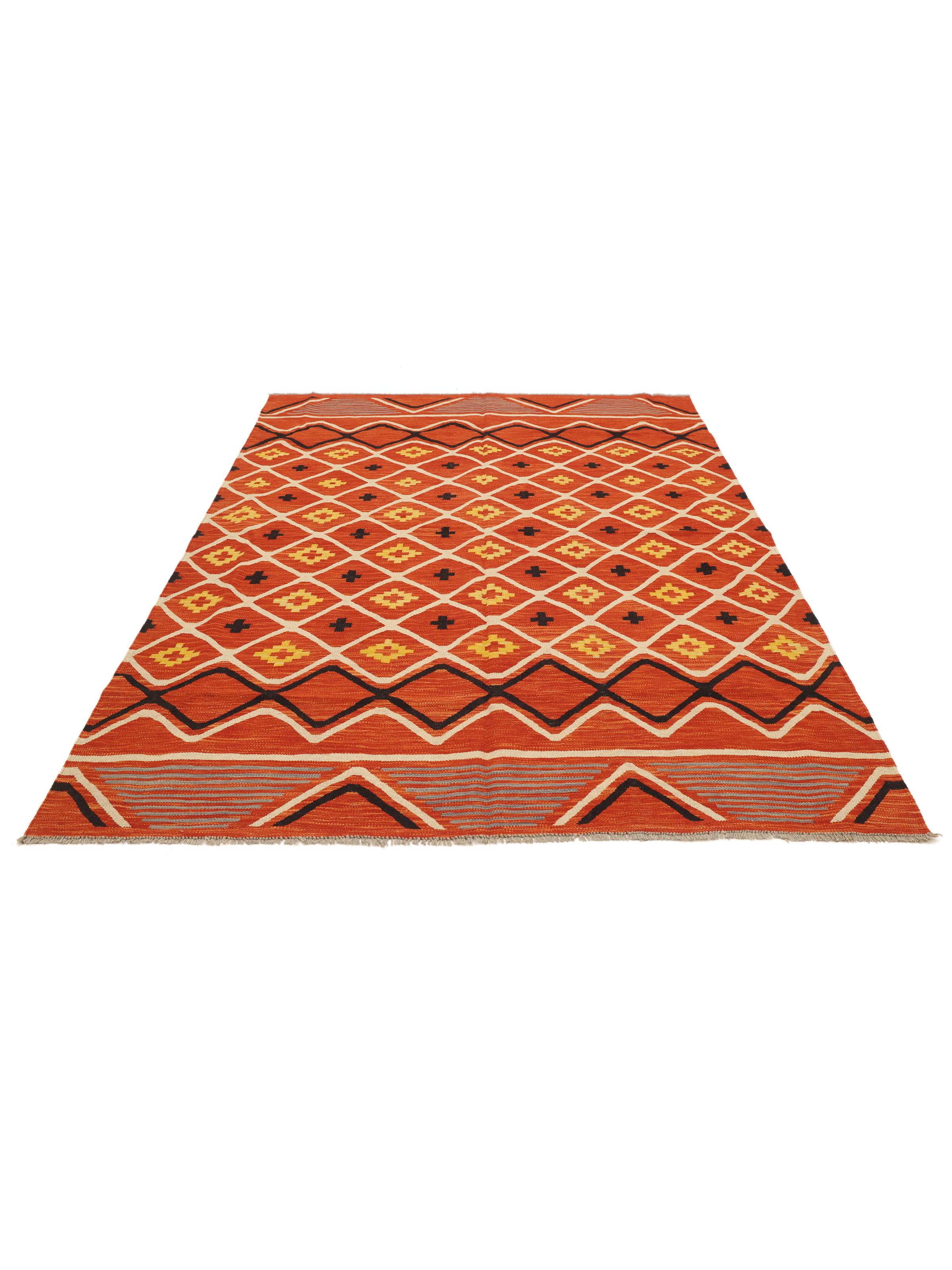
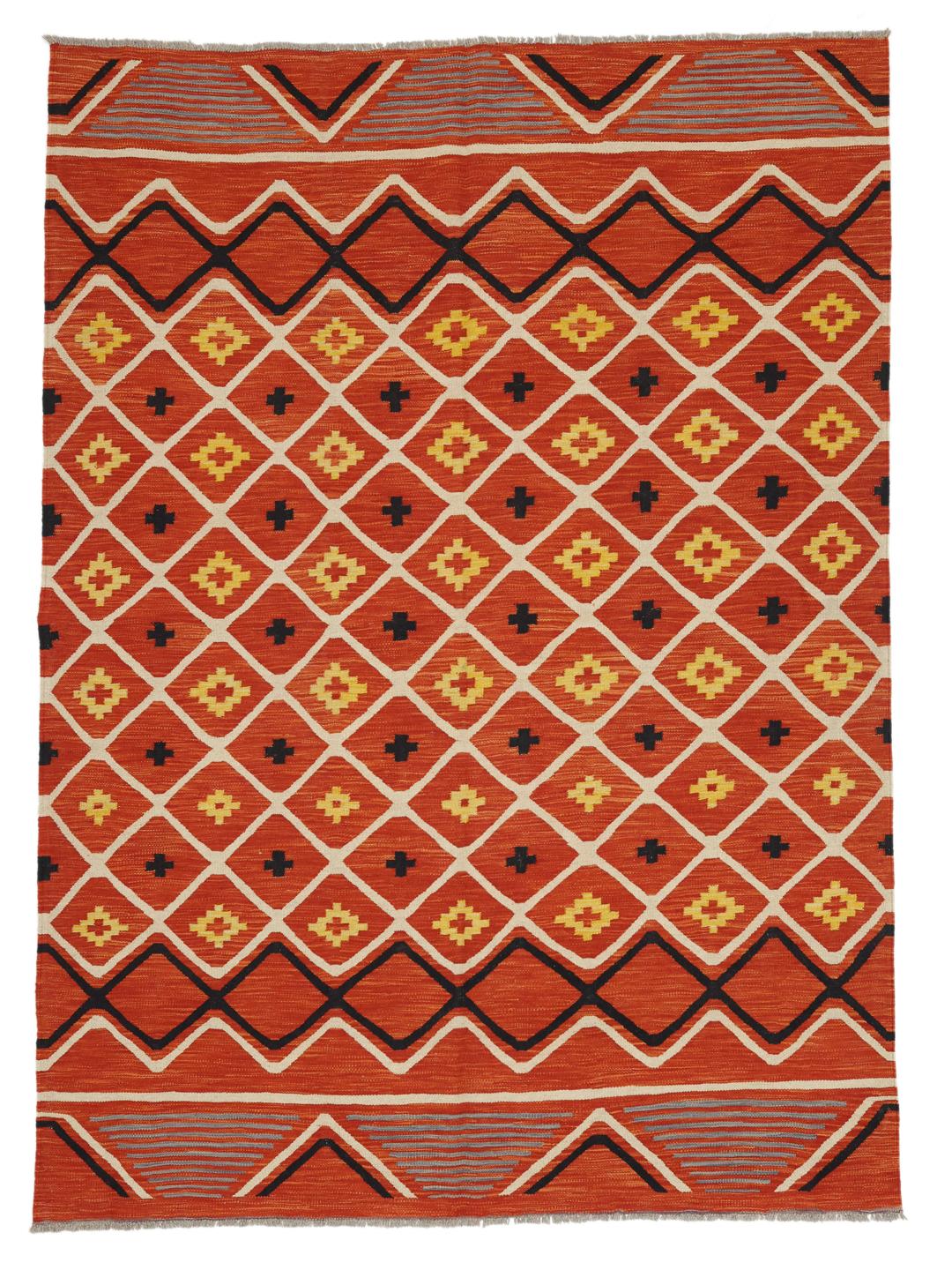
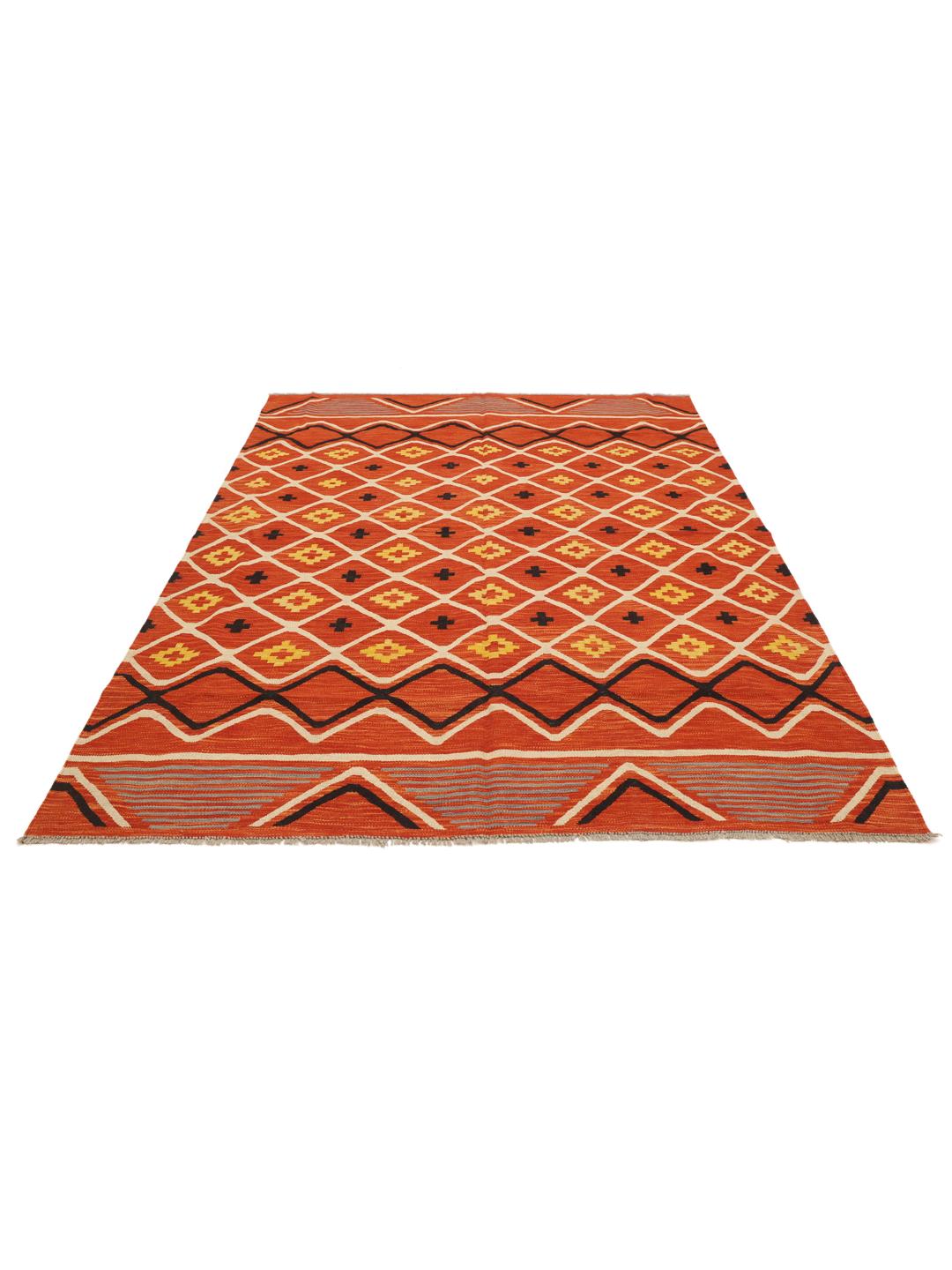
Flatweave rugs from Afghanistan have a rich history rooted in the nomadic and village traditions of Central Asia. Traditionally created by tribal weavers for practical household use, these textiles served as durable floor coverings, blankets, and storage bags. Over generations, the craft evolved as weavers adapted regional patterns to suit changing tastes, eventually giving rise to the modern kelim style that blends traditional weaving methods with contemporary design sensibilities.
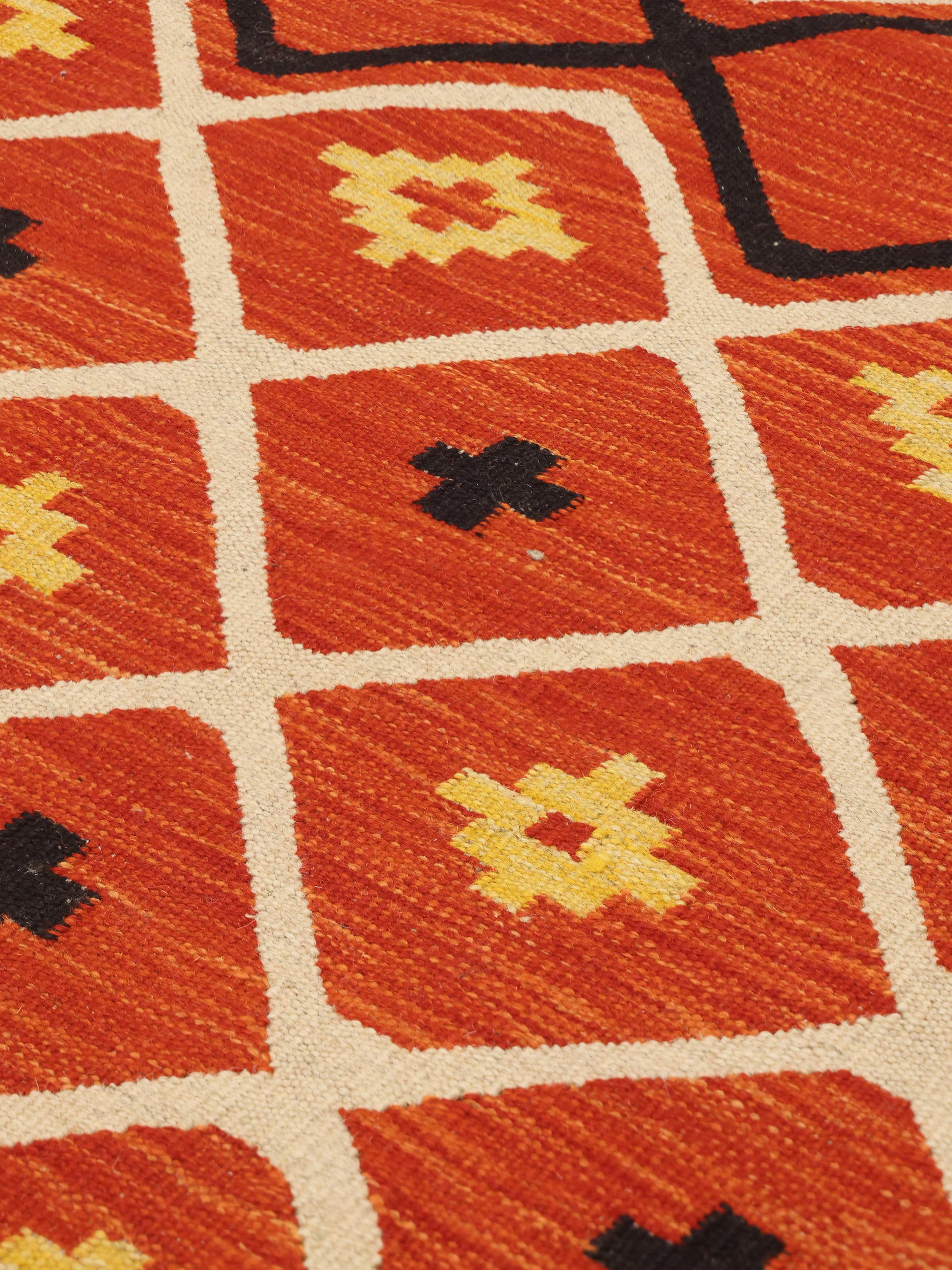
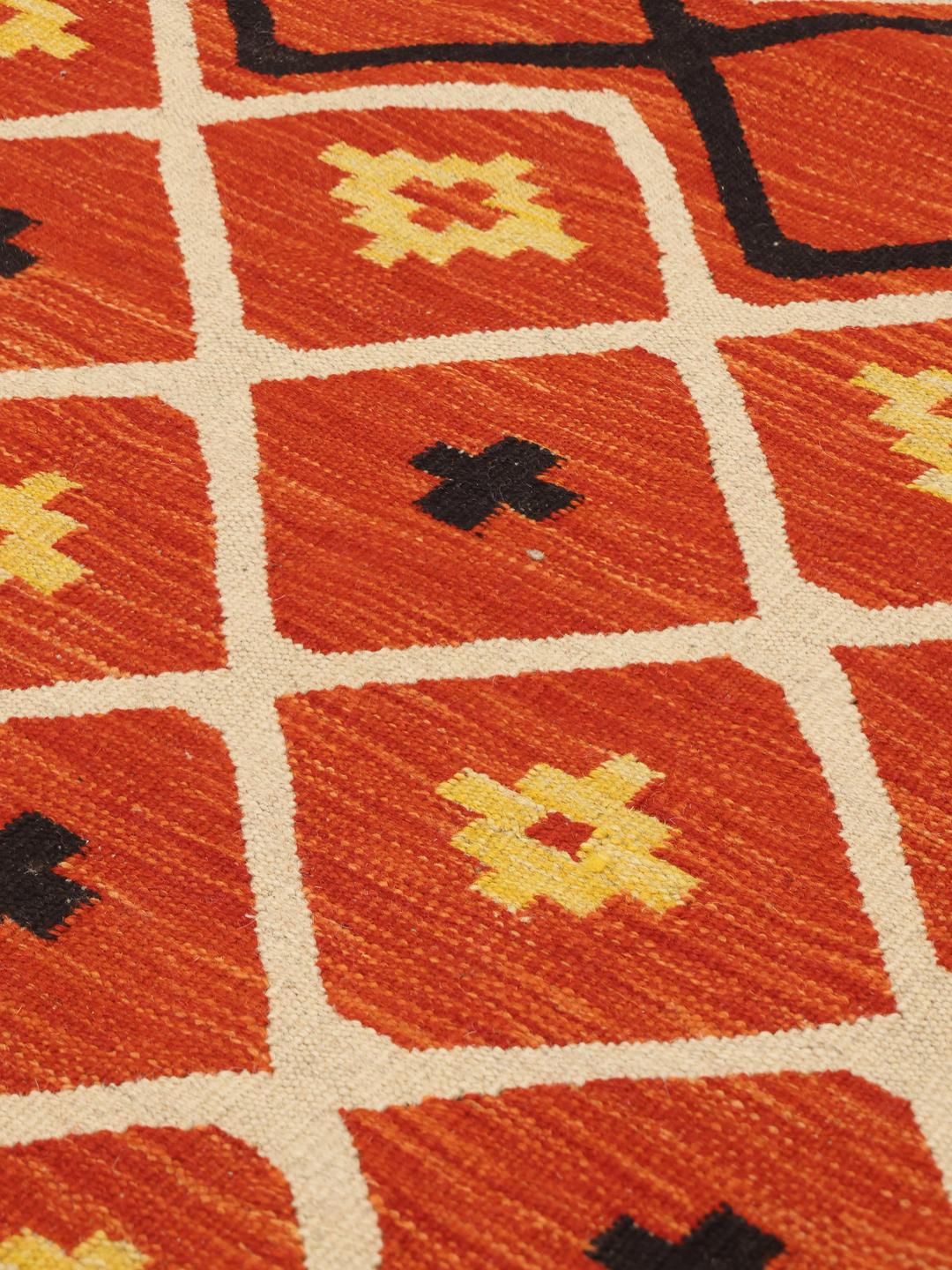
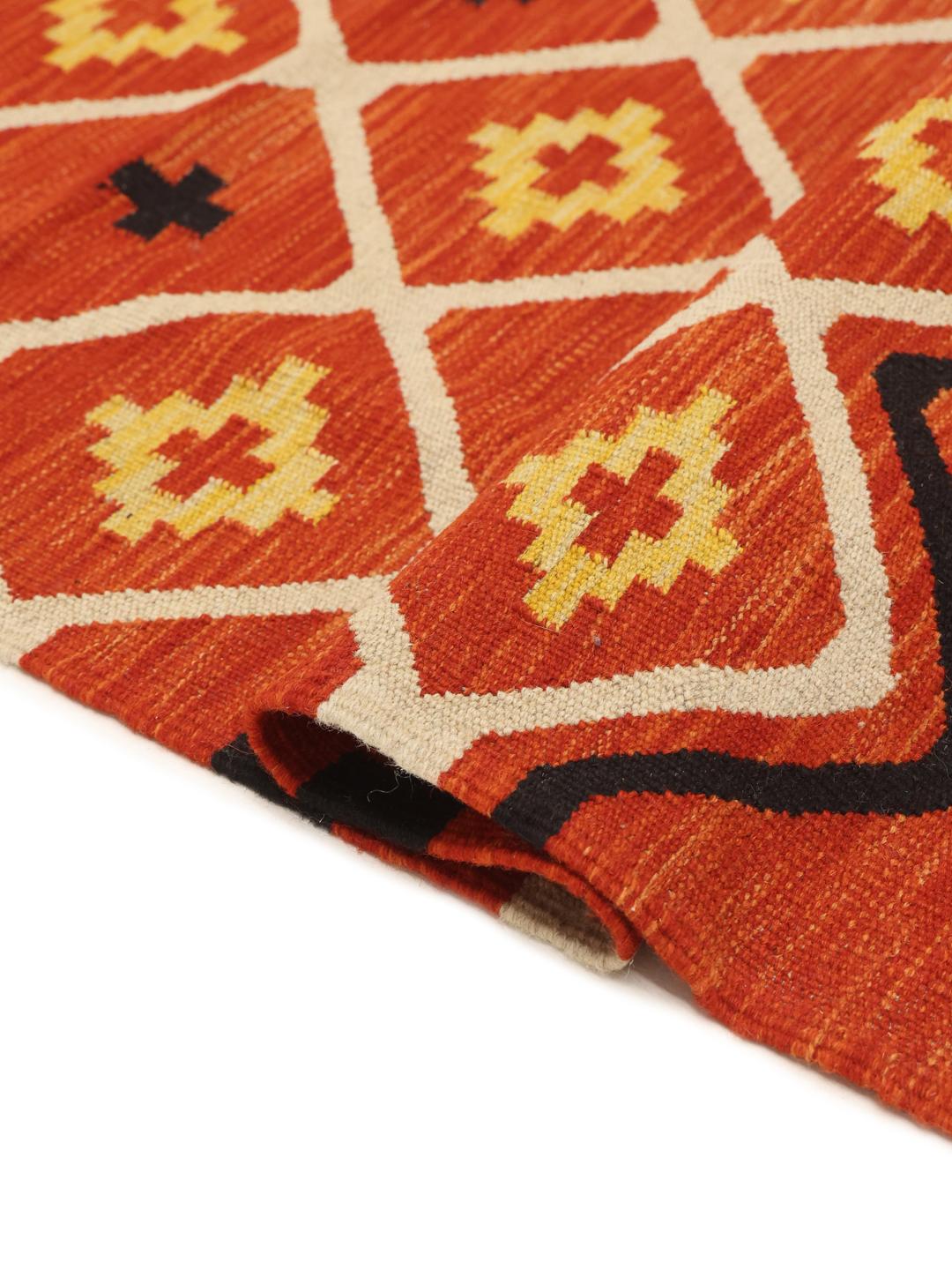
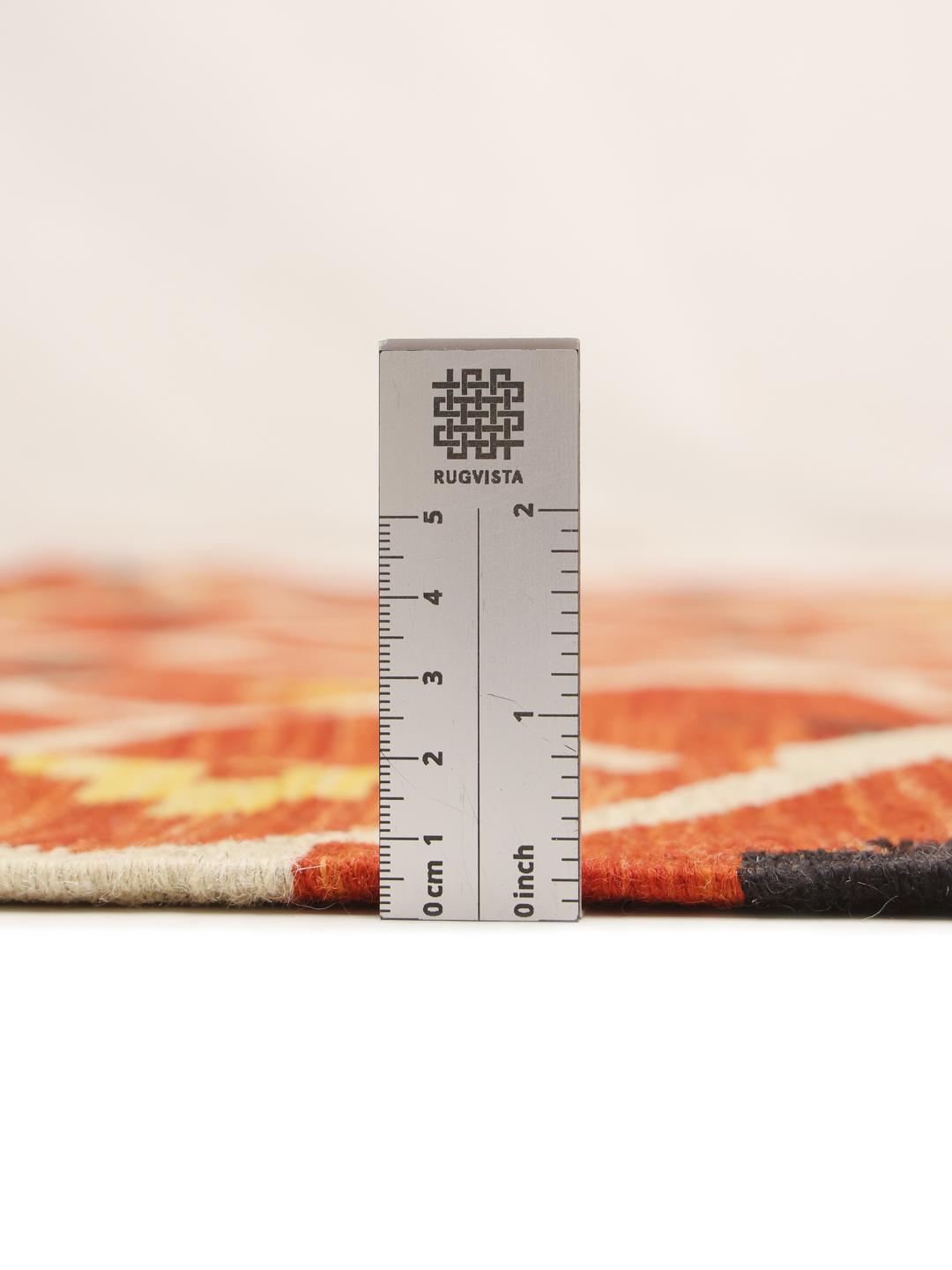
The term kelim refers to a flat-woven textile produced by tightly interweaving warp and weft strands without creating a pile. This technique produces a lightweight yet remarkably sturdy rug with no pile height. The absence of pile means the pattern is visible on both sides, allowing the rug to be flipped for even wear over time. This clever construction method requires immense precision, as every colour change must be neatly locked into the underlying foundation.
The visual language of this tradition is defined by striking geometric patterns, sharp diagonals, and symbolic motifs. In this particular piece, bold diamond shapes and intricate border elements draw from ancient tribal iconography, reinterpreted in a clean and balanced layout. The dominant red background field creates a warm backdrop for the contrasting motifs, resulting in a visual rhythm that feels both timeless and entirely relevant to contemporary interiors.
Collecting Afghan kelims is a way to preserve and honour living craft traditions that rely entirely on human skill rather than industrial production. Owning a piece like this connects your home to the hands and heritage of the artisans who made it. It represents a commitment to sustainable, authentic craftsmanship that stands apart from mass-market alternatives.