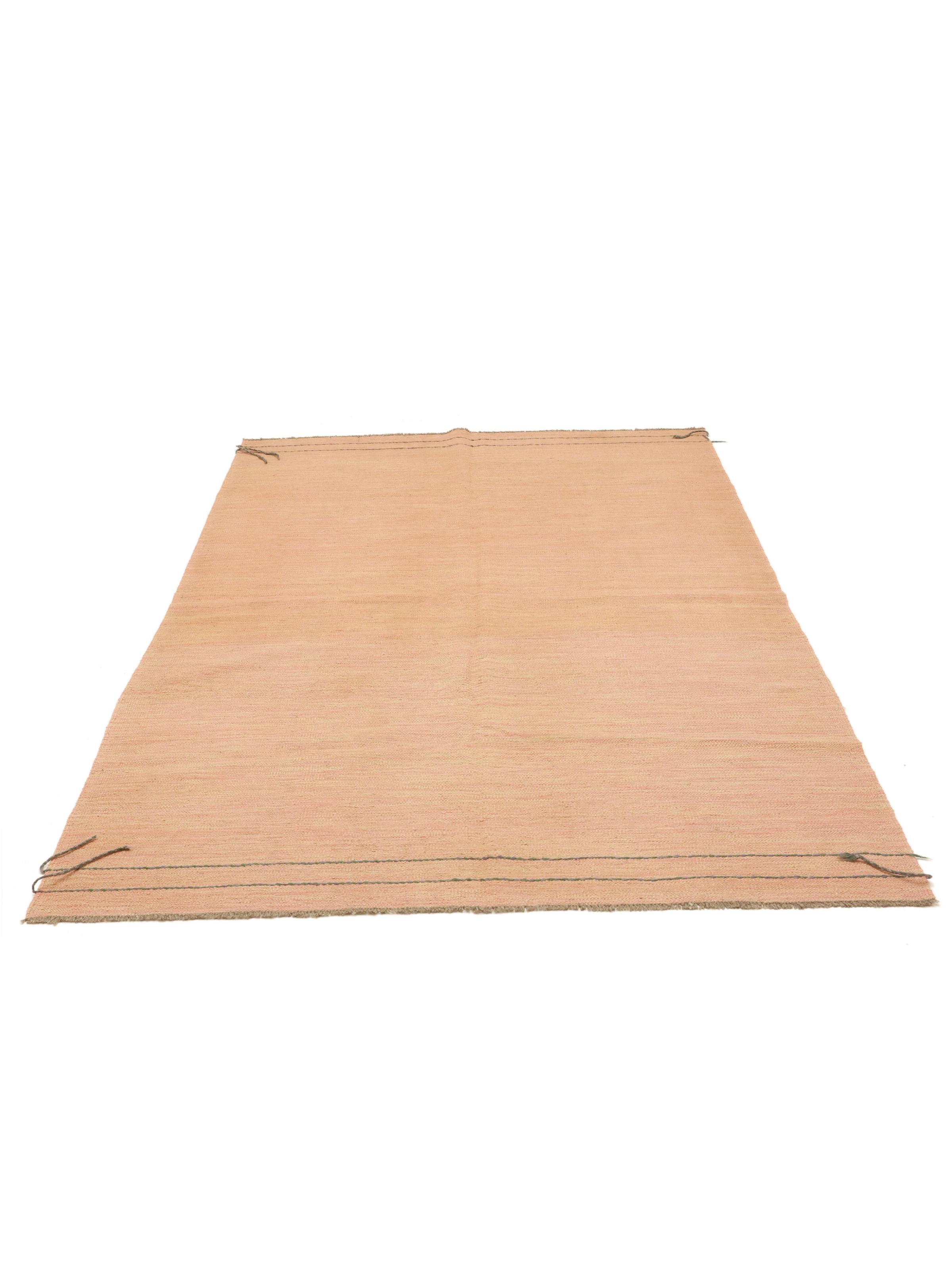
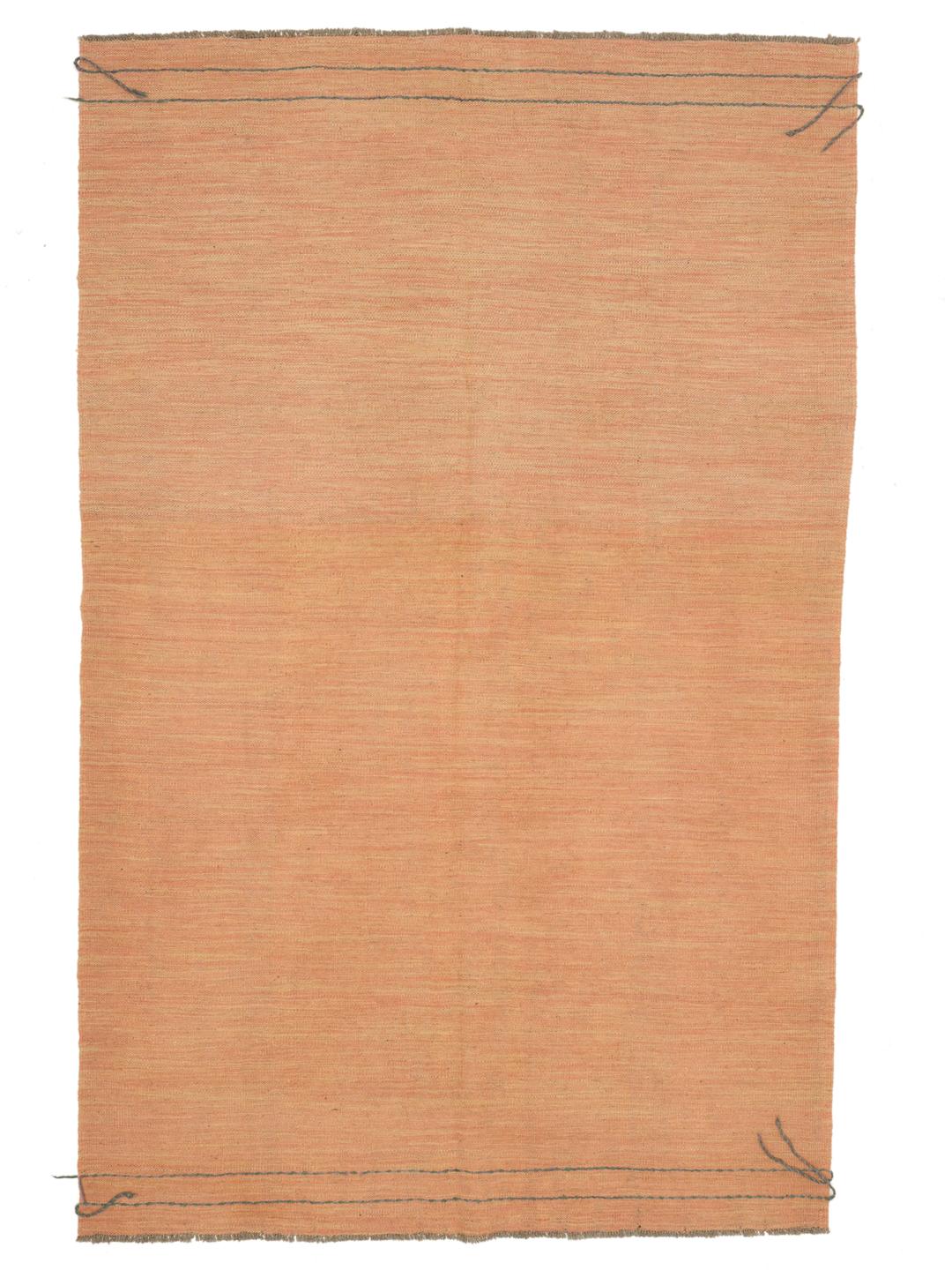
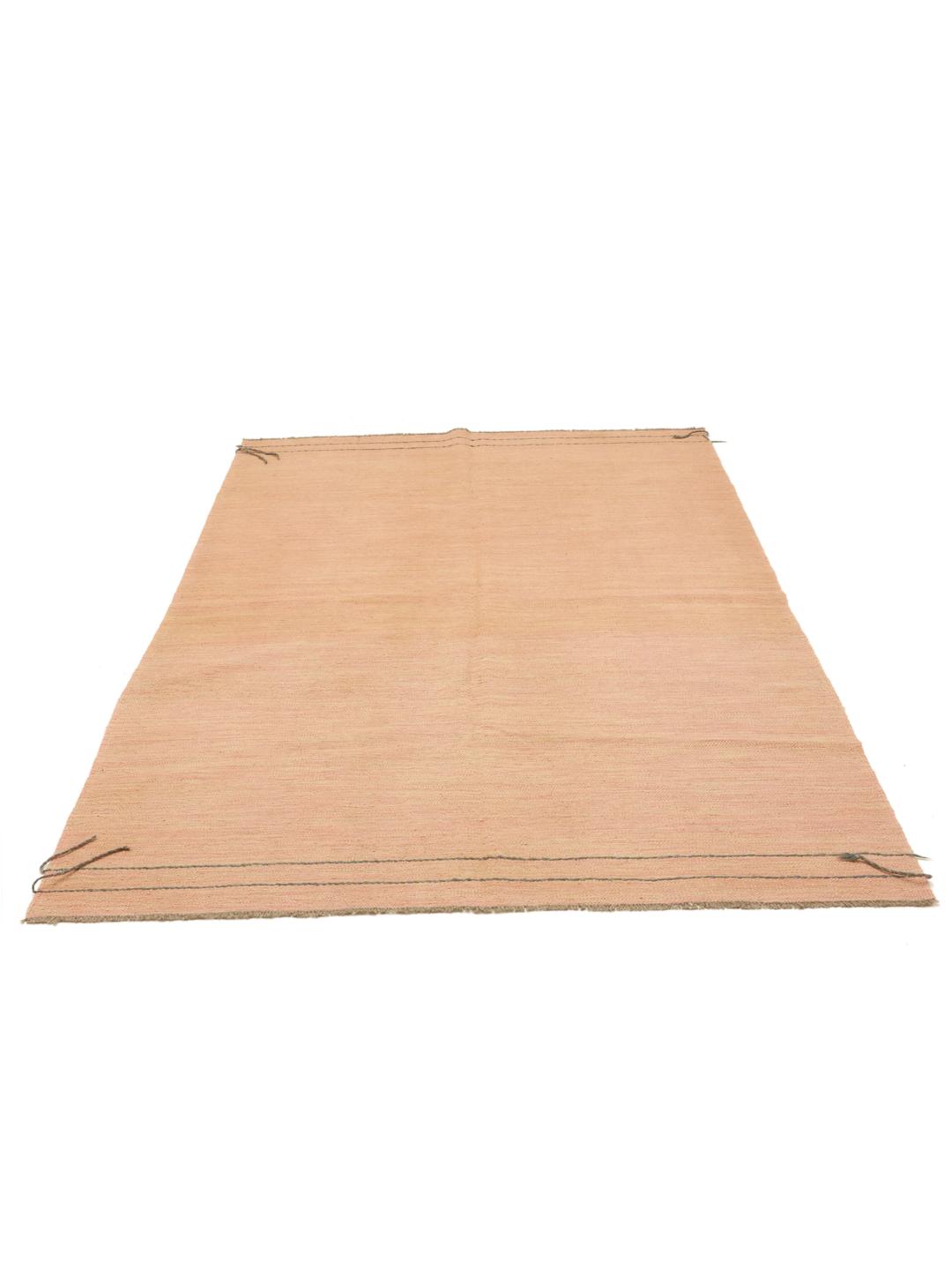
Kelim rugs have a long and storied history rooted in the nomadic traditions of the Middle East and Central Asia. Originally created by tribal weavers as functional items for daily life, such as tents, storage bags, and floor coverings, these flatwoven textiles were designed to be both practical and expressive. Over generations, the craft travelled along ancient trade routes, with modern weaving centres evolving in countries like Afghanistan to keep these time-honoured techniques alive.
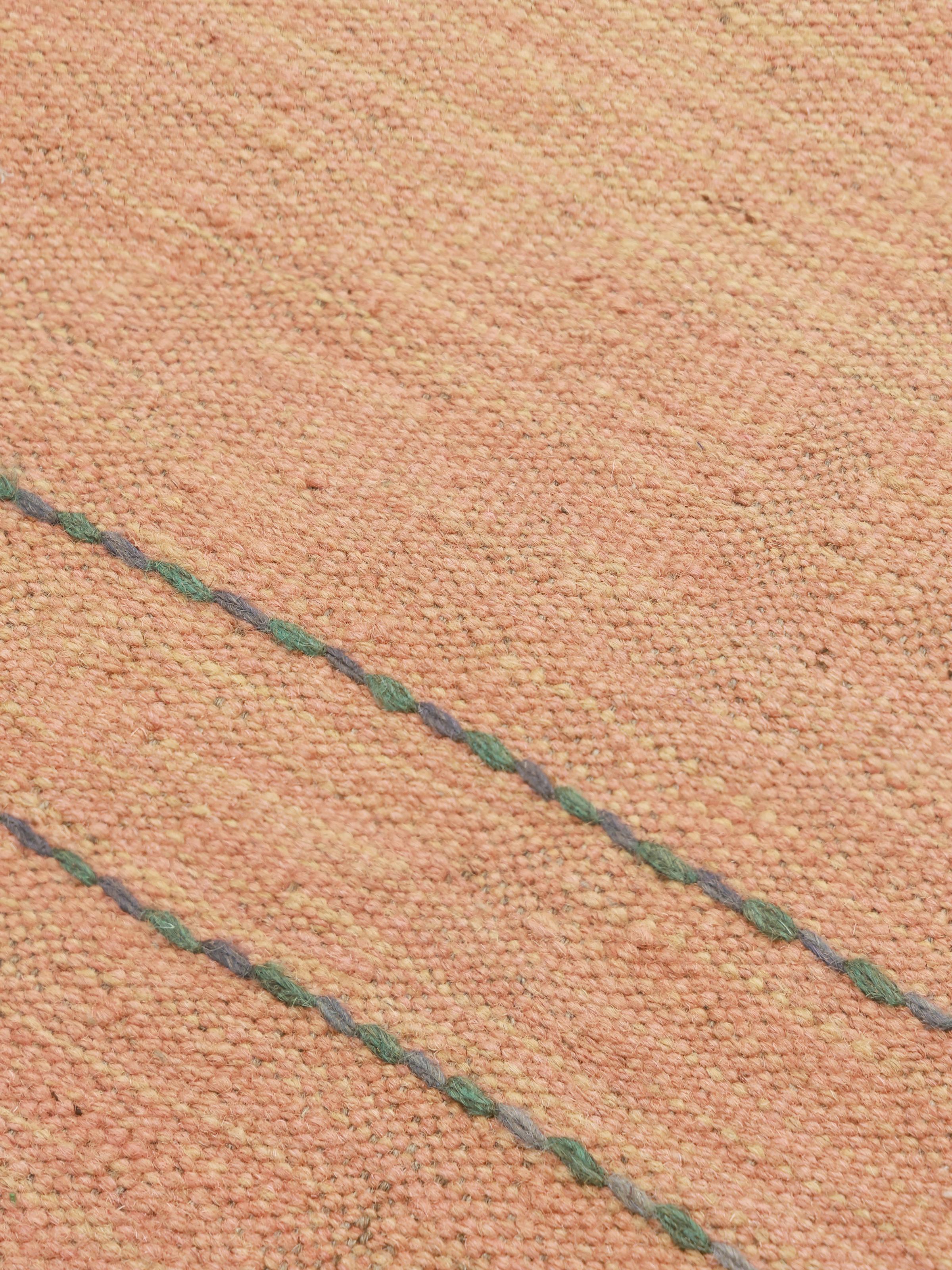
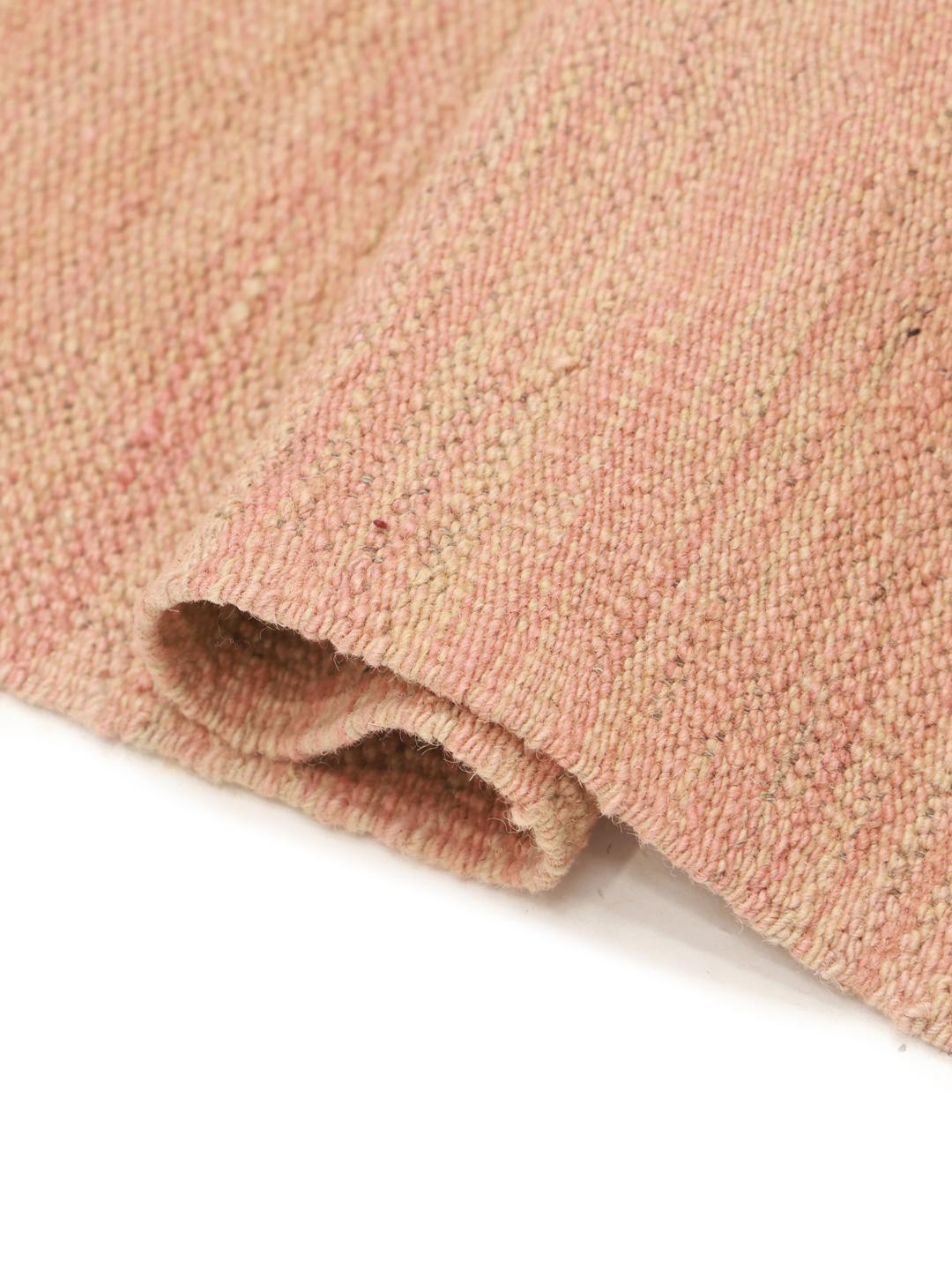
The flatwoven construction of a kelim means it is crafted without a traditional raised pile. Instead, the coloured weft threads are tightly interwoven through the warp foundation to create a flat, reversible fabric. This technique requires exceptional control and spatial awareness from the weaver, as the pattern must be formed directly through the placement of the coloured yarns during the weaving process itself.
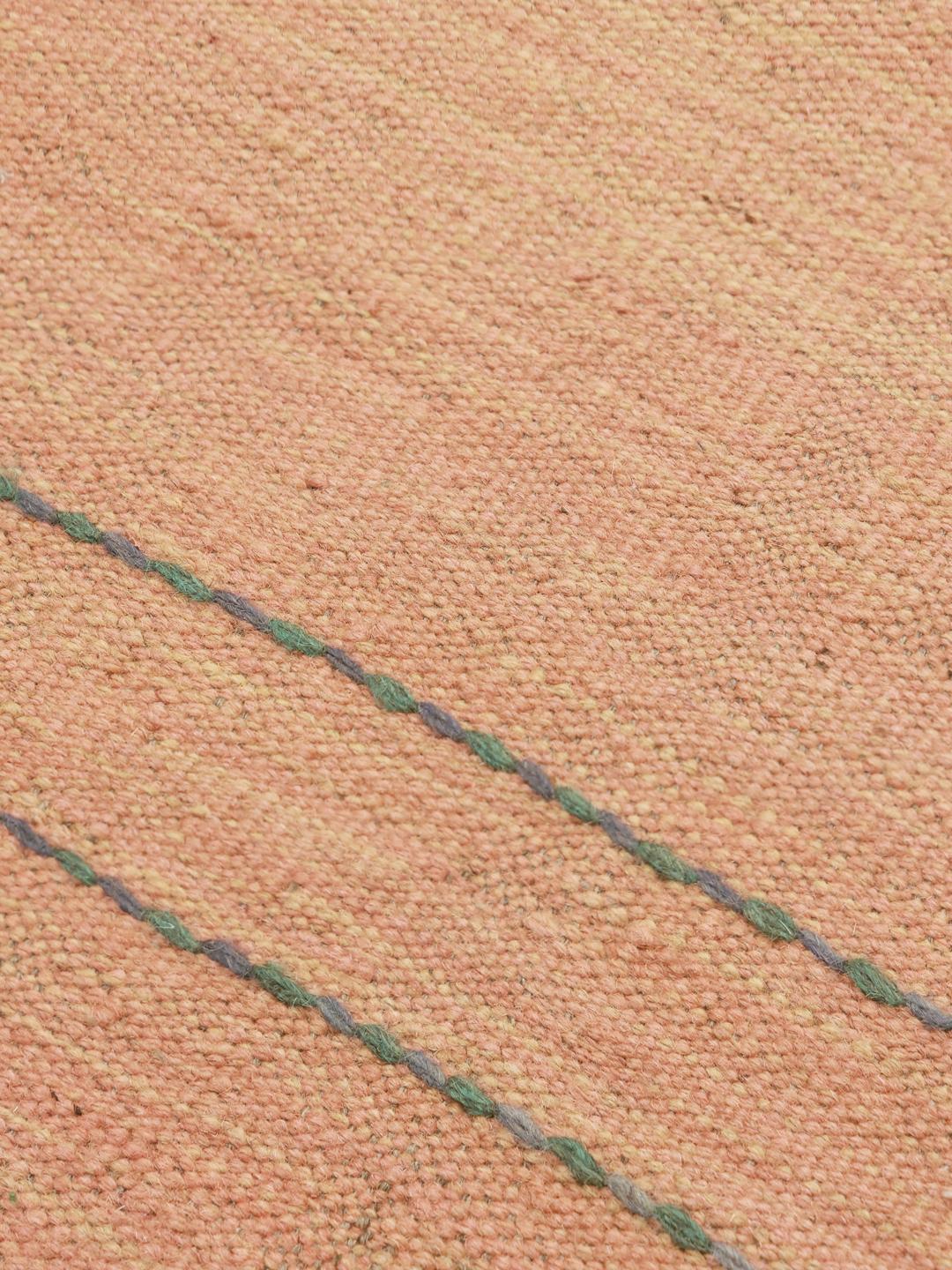
Kelim design traditions are known for their geometric clarity and reliance on symbols drawn from daily nomadic life, such as stylized stars, diamonds, and tribal motifs. In this modern interpretation, the focus shifts towards subtle tonal expressions and minimalist aesthetics, allowing the natural warmth of the orange hue to take centre stage while still honouring the geometric simplicity of classic flatweaves.
Collecting a kelim means owning a piece of living cultural heritage. The skill required to produce such a uniform flatweave by hand speaks to a tradition passed down through families and artisan communities. Bringing a piece like this into your home connects your living space to centuries of textile craftsmanship and human artistry.