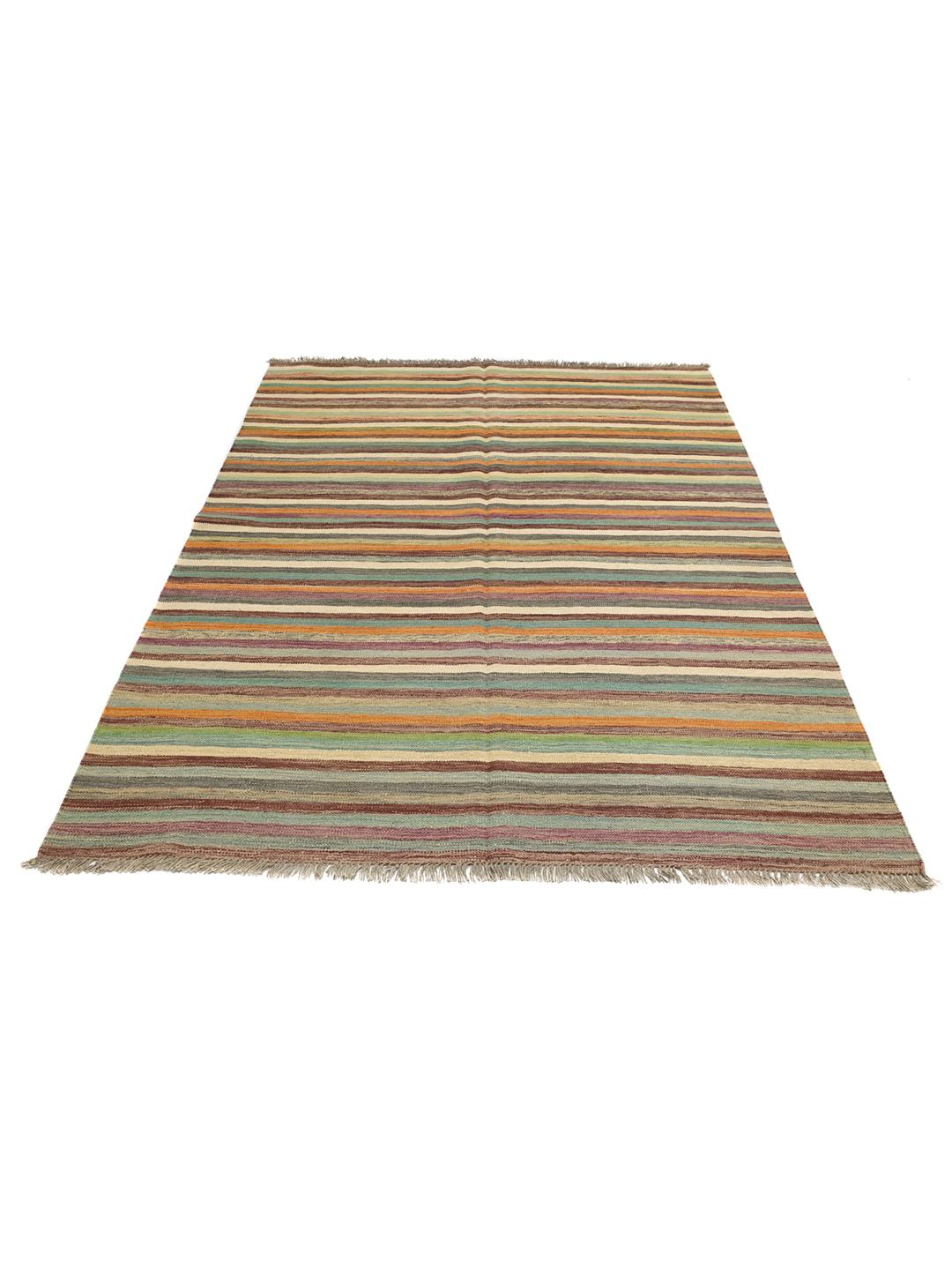
Kilim rugs are a foundational element of Middle Eastern textile history, emerging from nomadic traditions where portability, durability, and utility were paramount. These flat-woven textiles were originally created by tribal communities to serve as floor coverings, tent dividers, and storage bags, reflecting a nomadic lifestyle that required items to be both lightweight and exceptionally hard-wearing.
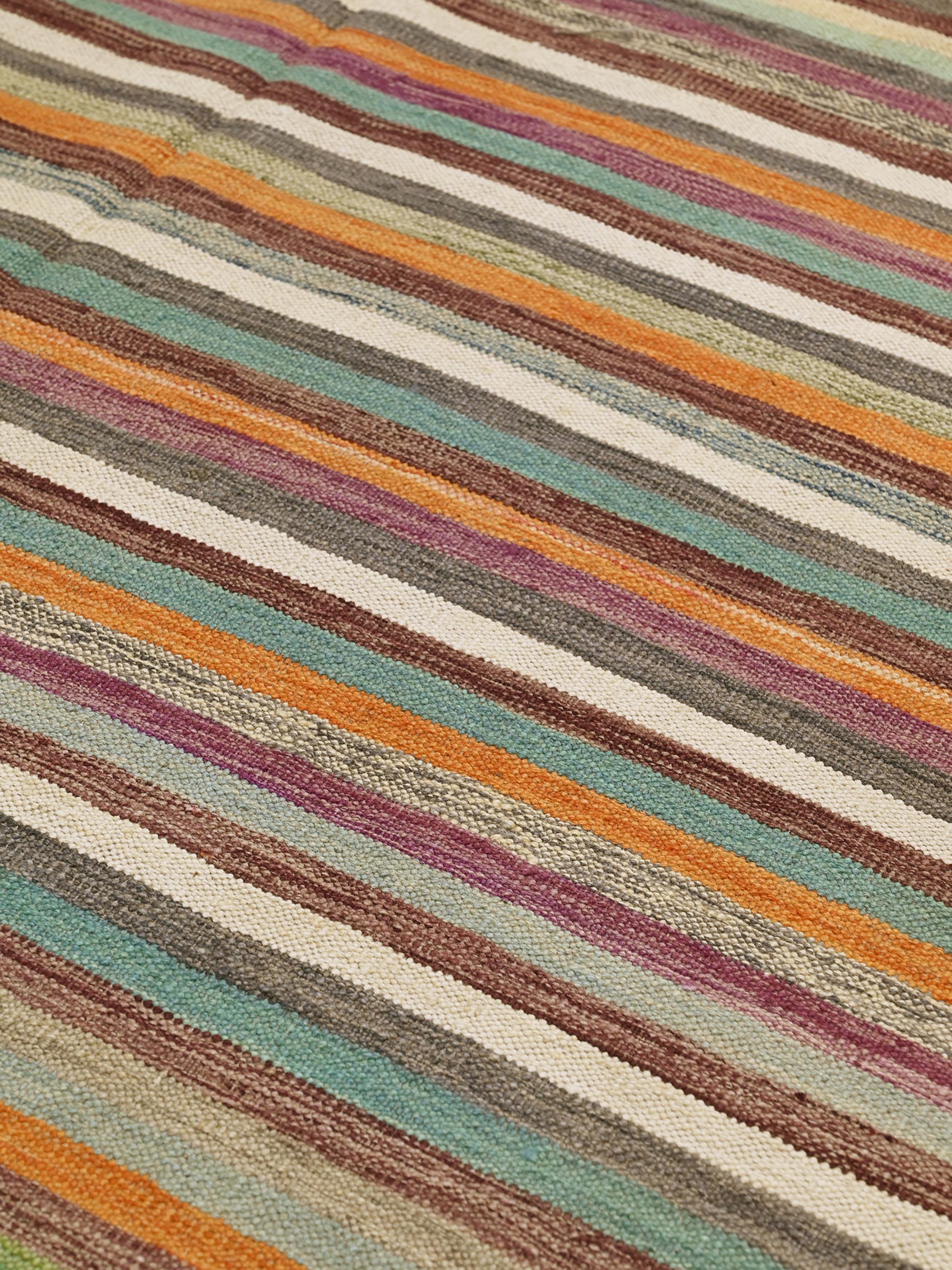
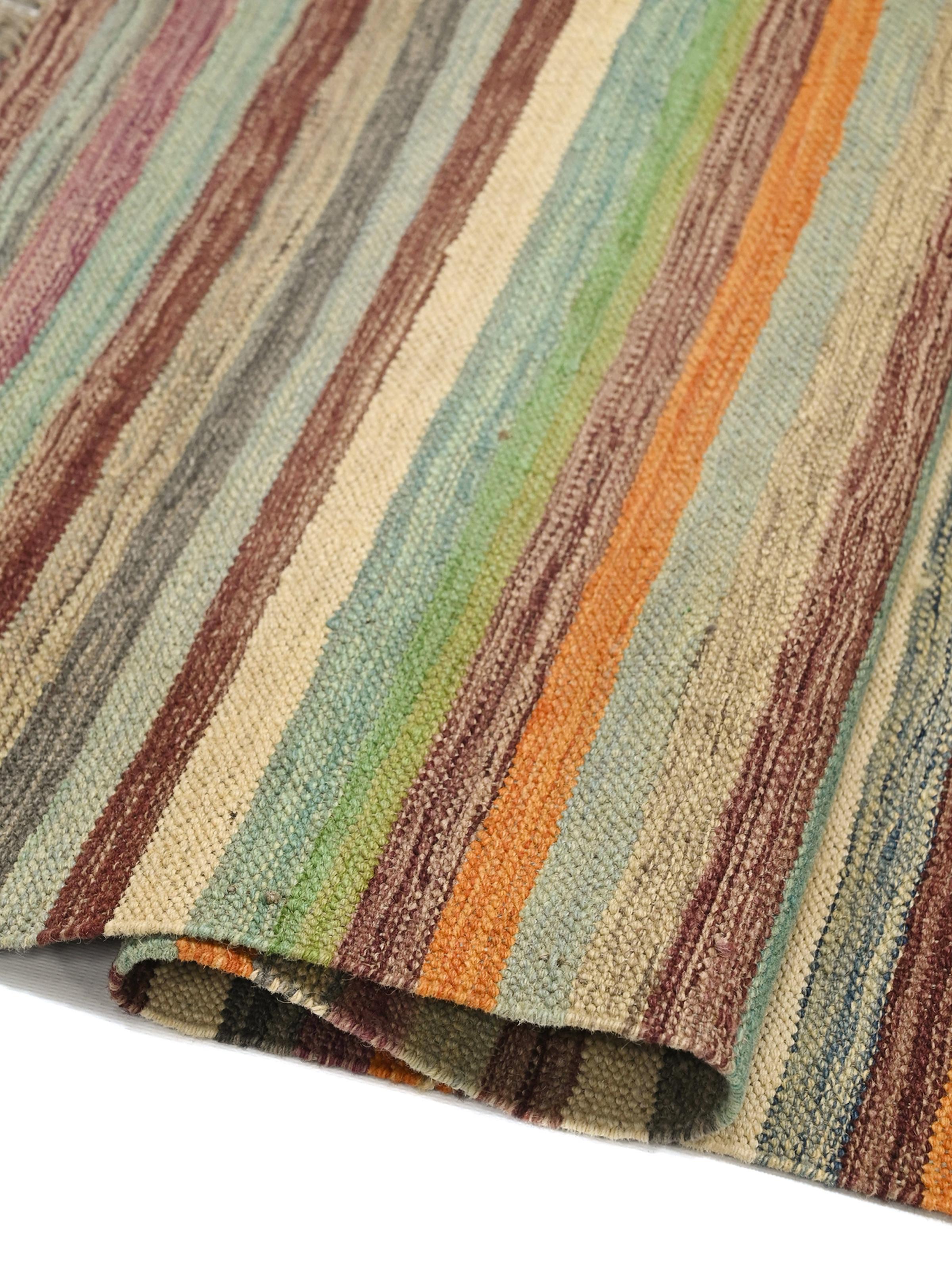
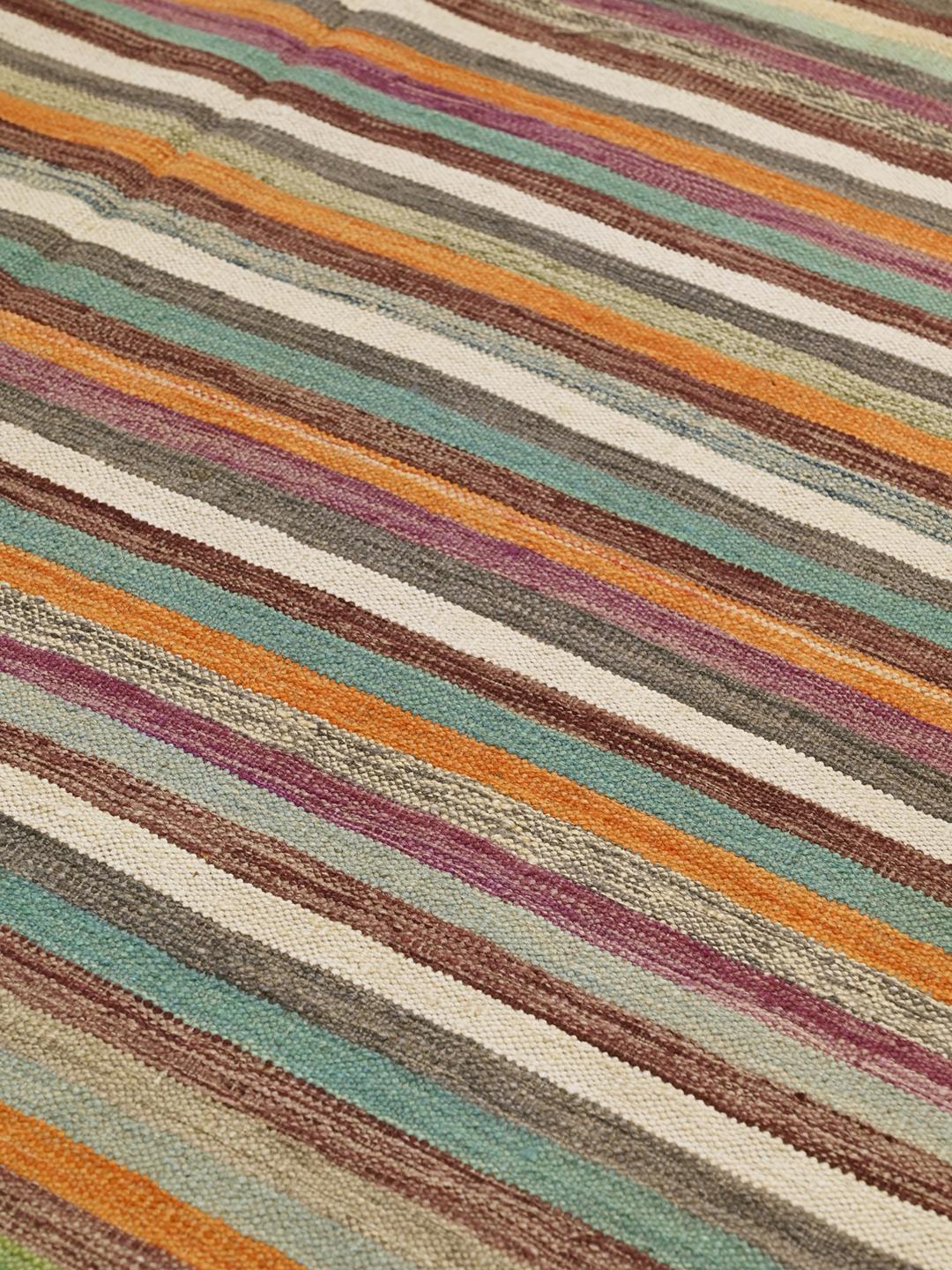
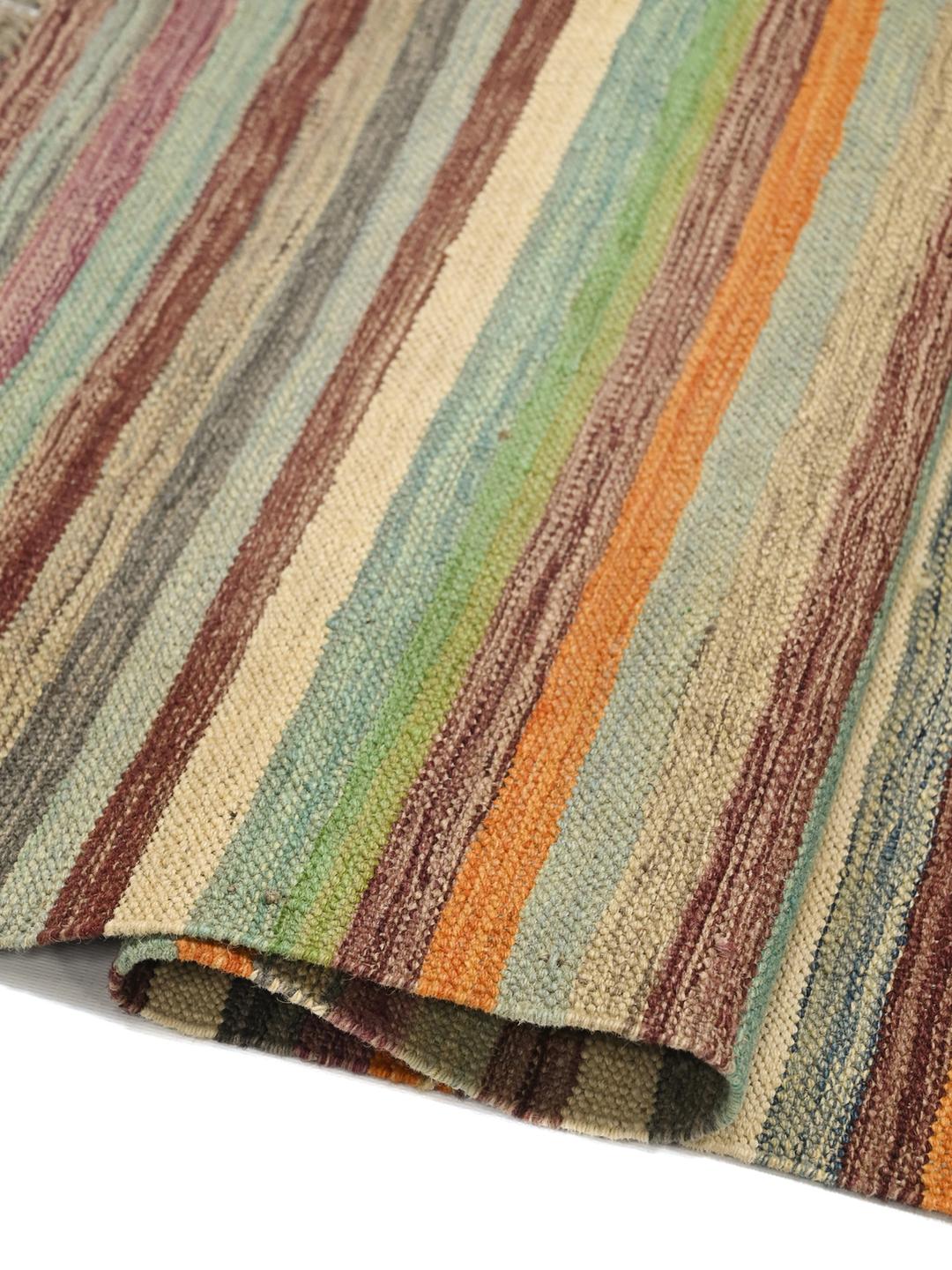
The term 'Kilim' refers specifically to the technique of tapestry weaving, where the weft threads are pulled tightly over the warp to create a smooth, pattern-free surface on both sides. This method is distinct because it does not use a knotted pile, resulting in a thinner, more flexible rug that can be easily folded or rolled. This technical simplicity belies the complexity of the design, which is created entirely through the careful manipulation of the weave.
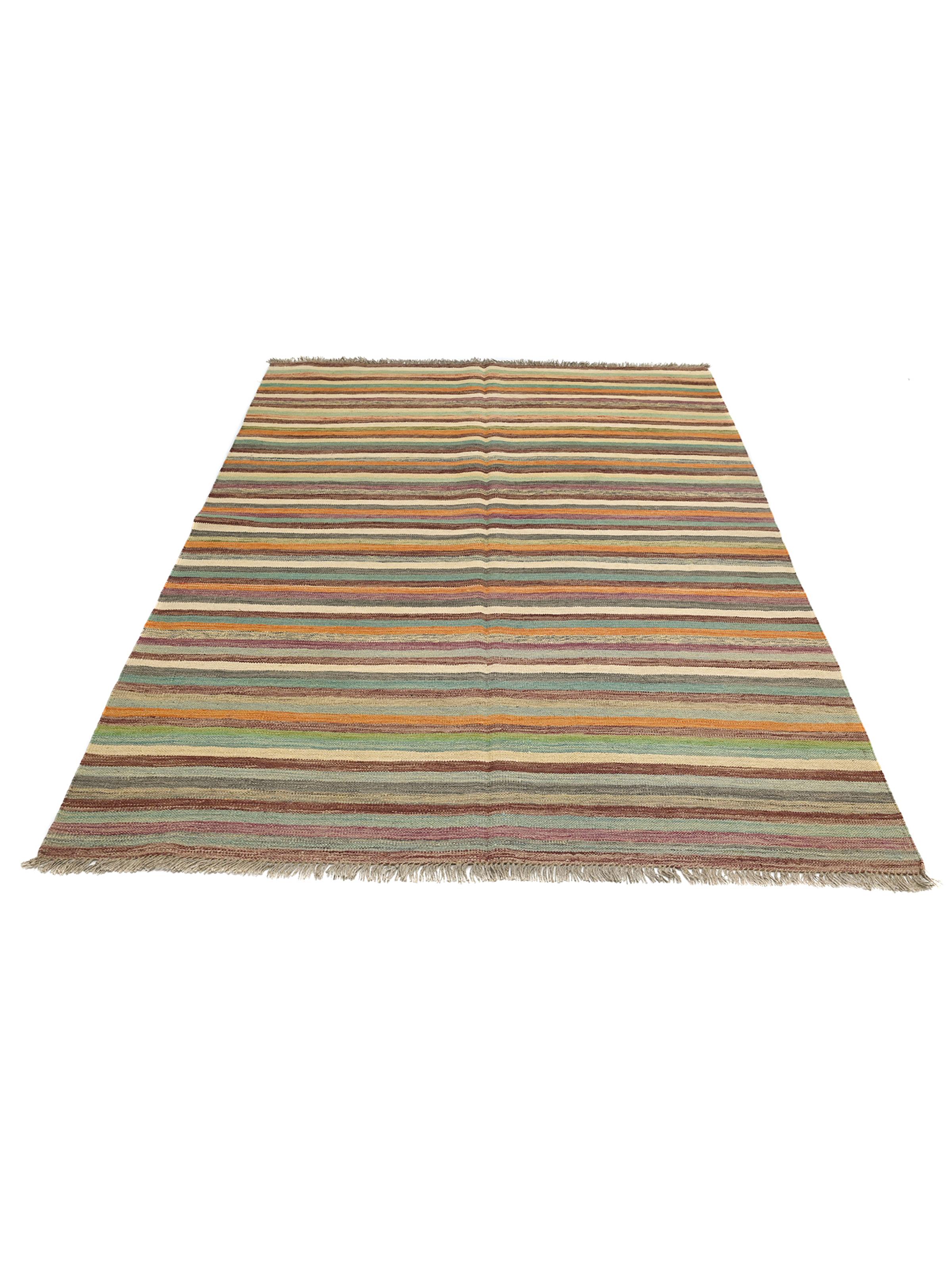
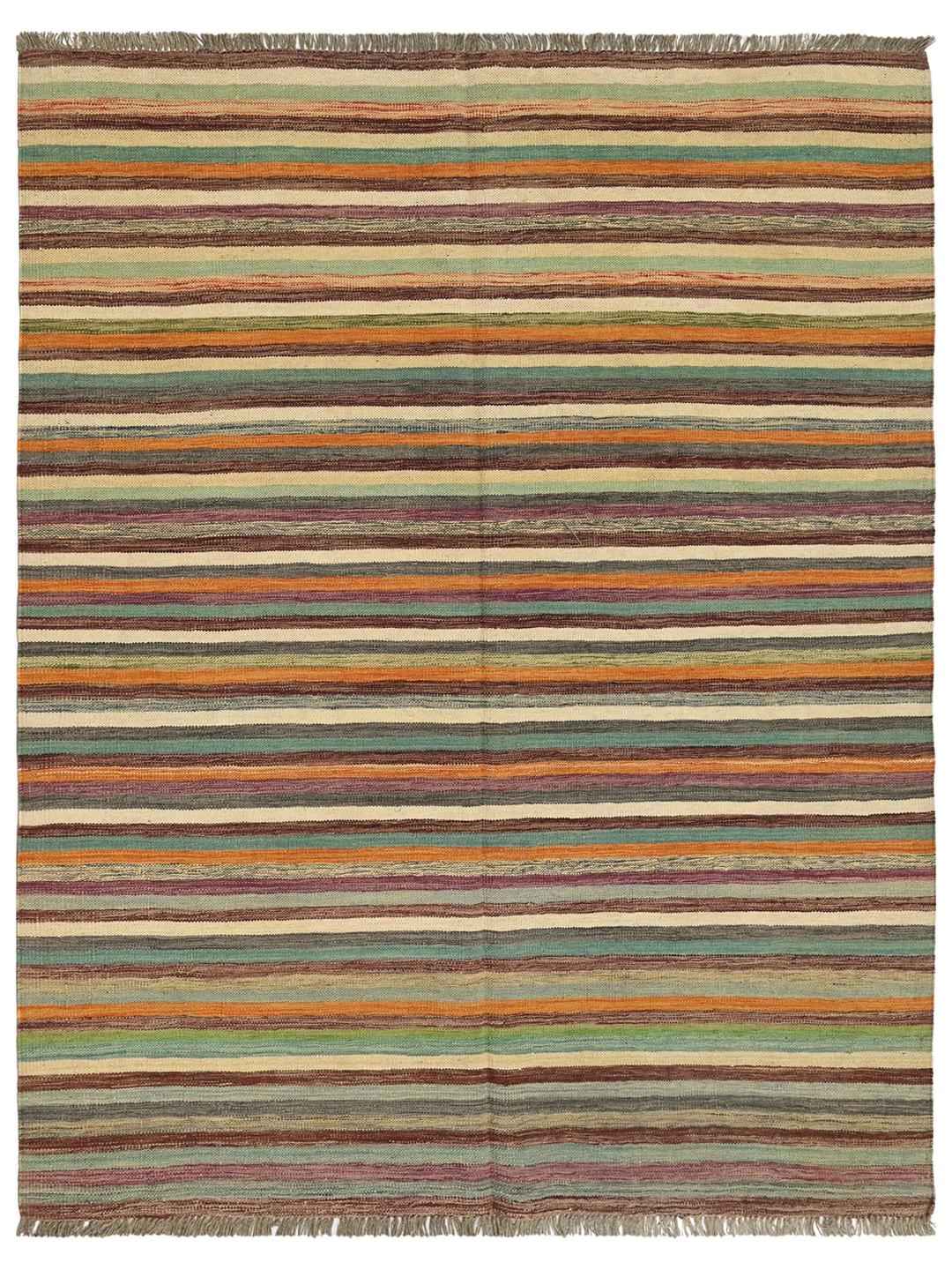
Visually, Kilims are known for their geometric language, often utilising stripes, diamonds, or chevrons to create bold, rhythmic compositions. While traditional patterns often hold symbolic meaning linked to tribal identity and protection, modern expressions like this piece embrace a more contemporary aesthetic. The use of varied, vibrant bands of colour creates a sense of harmony and balance, turning a functional object into a striking visual statement.
Collecting a Kilim is an act of preserving a rich cultural legacy. These rugs are highly valued for their authenticity and the sheer skill required to weave them without the guidance of a pre-set pile. Owning such a piece connects your modern home to an ancient lineage of artisans, offering a sense of heritage and enduring quality that is increasingly rare in today's world.