Kilim rugs represent one of the most enduring weaving traditions originating from the Middle East and Central Asia. Historically, these flat-woven textiles were crafted by nomadic and village populations as versatile, functional items such as floor coverings, tent hangings, and storage bags. The migration of these techniques across the Silk Road has allowed the Kilim to evolve from a purely utilitarian object into a celebrated form of artistic expression.
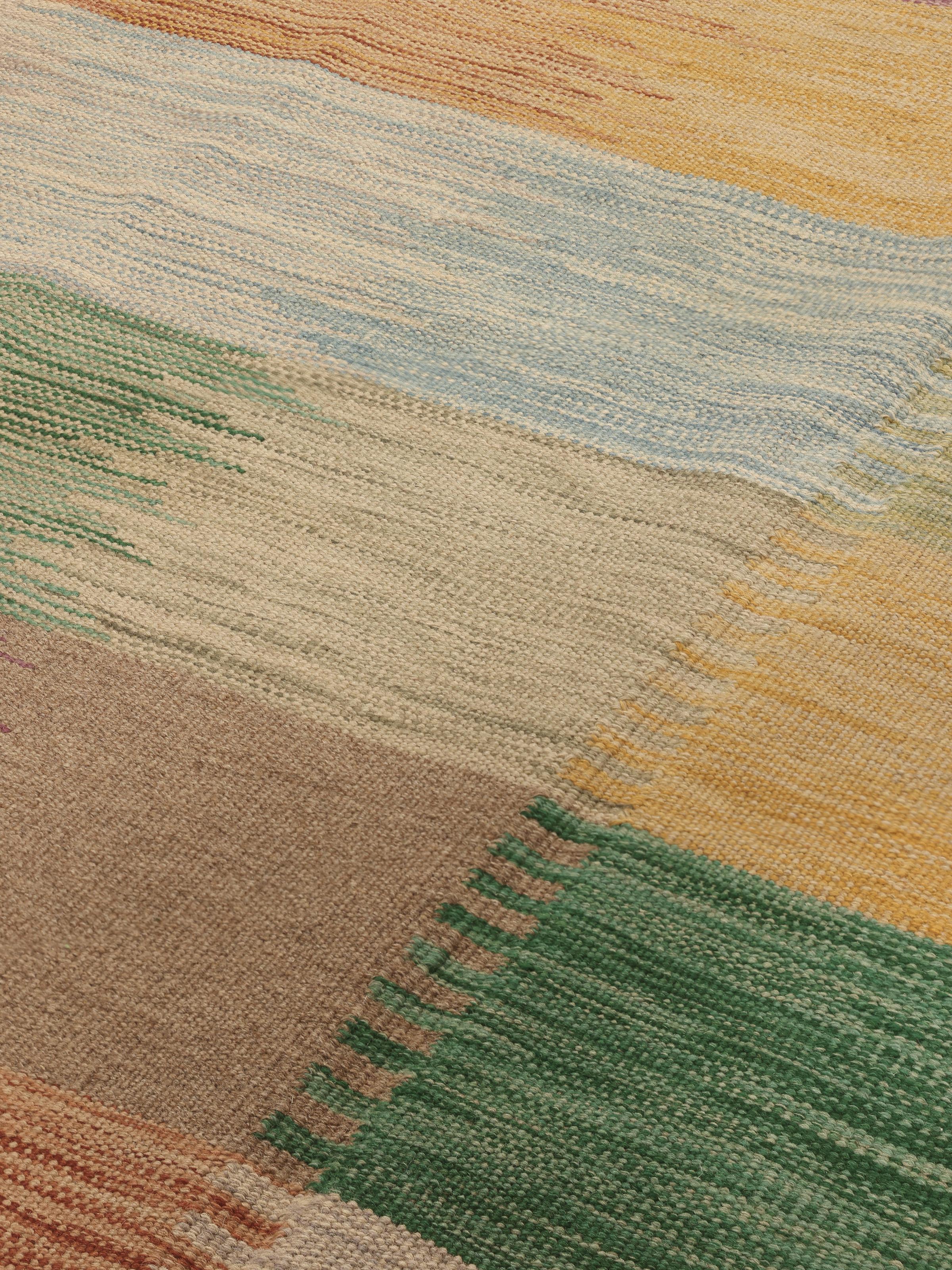
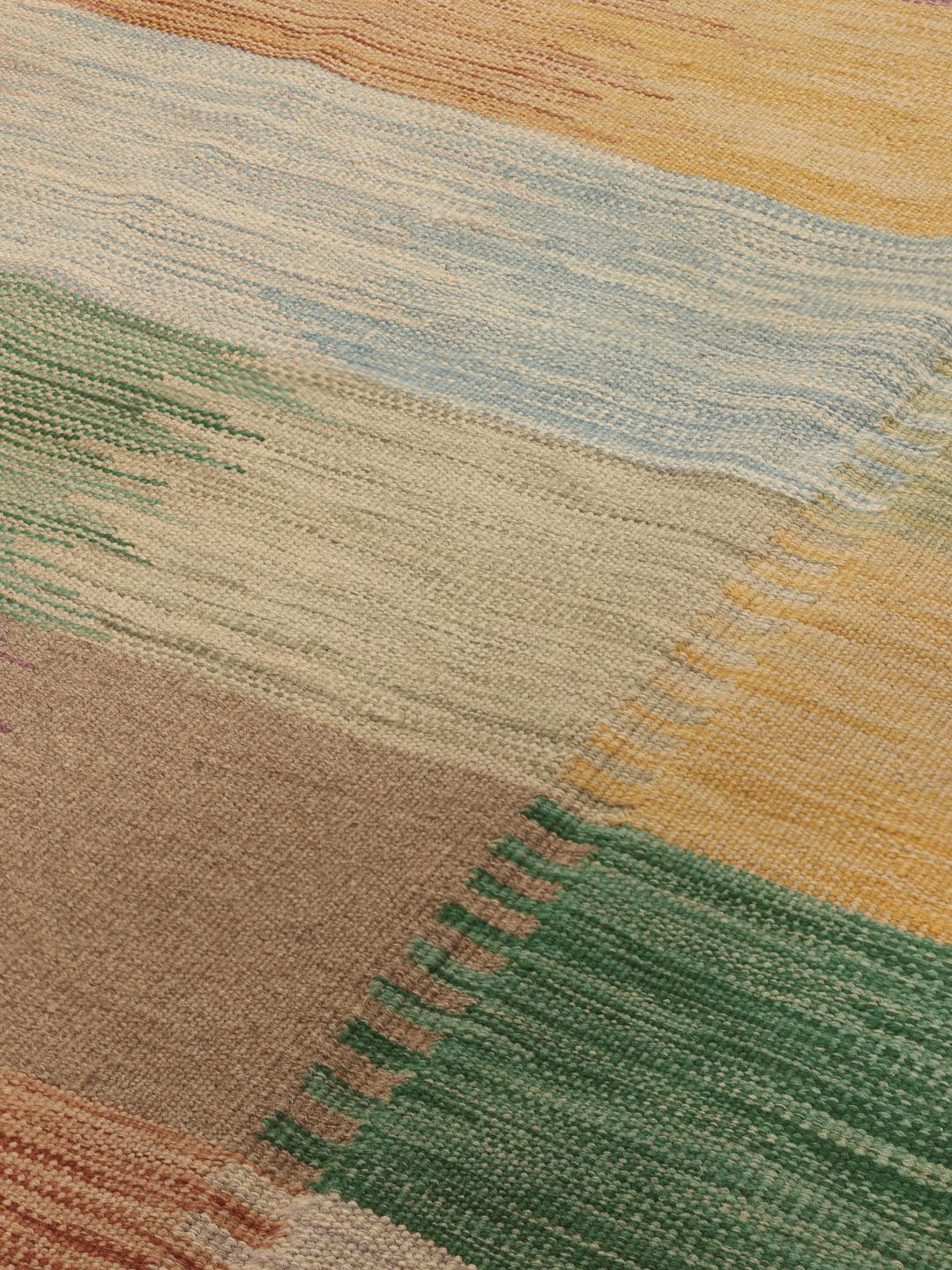
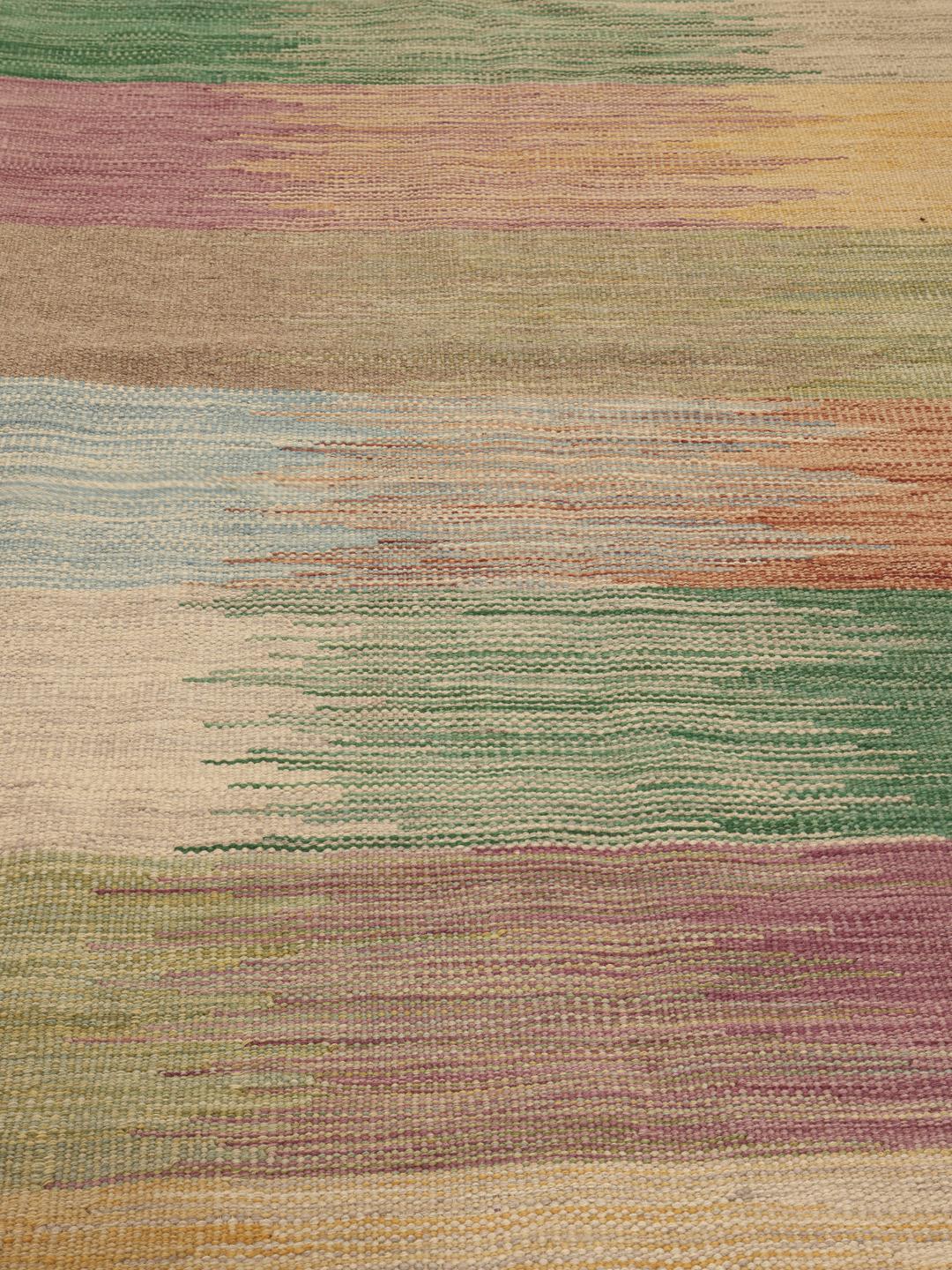
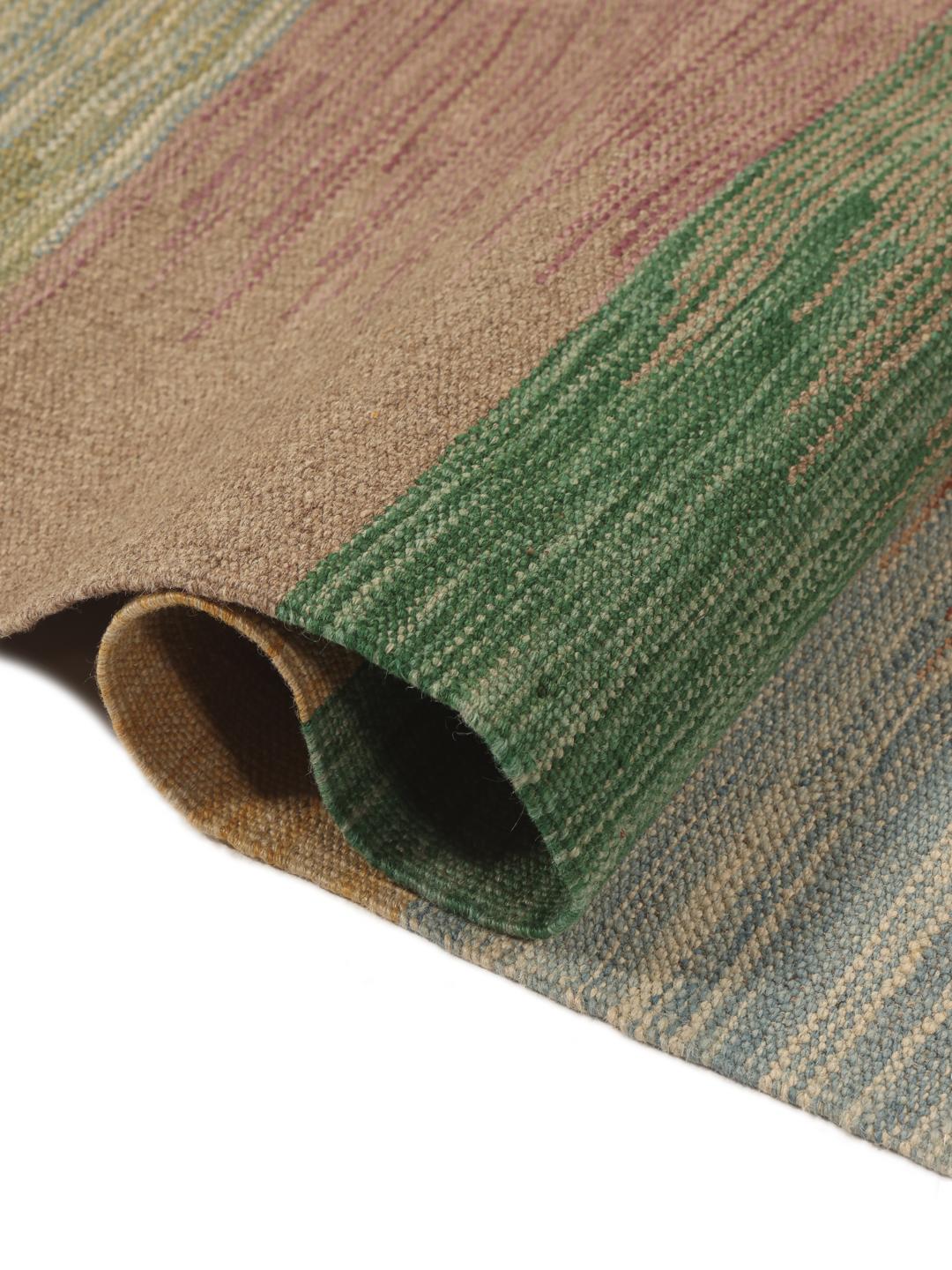
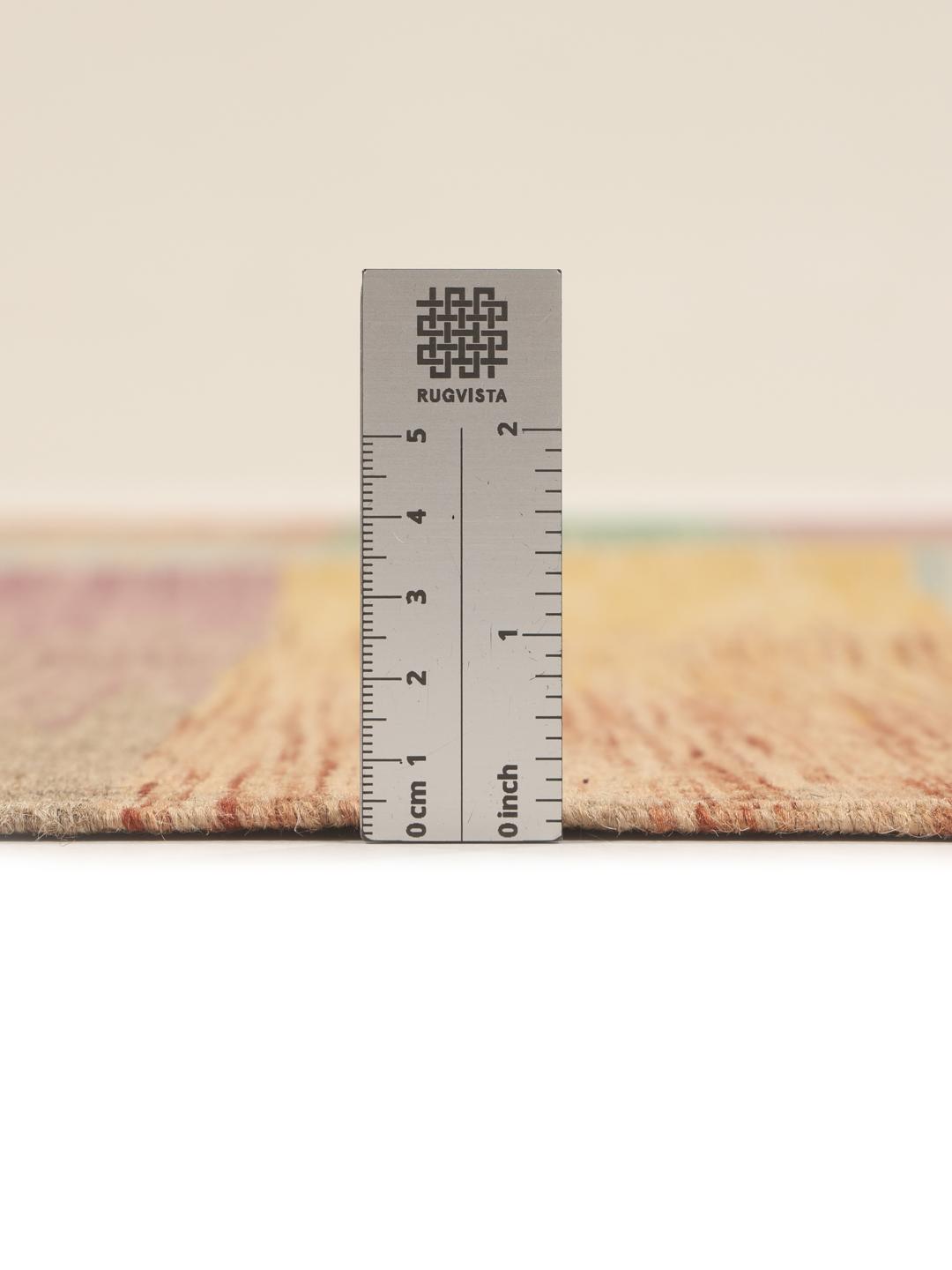
The term Kilim refers to the specific flat-weaving technique where the warp threads are completely hidden by the weft threads, creating a smooth surface without a raised pile. This construction method allows for sharp, geometric patterns and bold colour transitions that define the style. The absence of pile makes these rugs lightweight and reversible, contributing to their popularity in contemporary homes where versatility is highly valued.
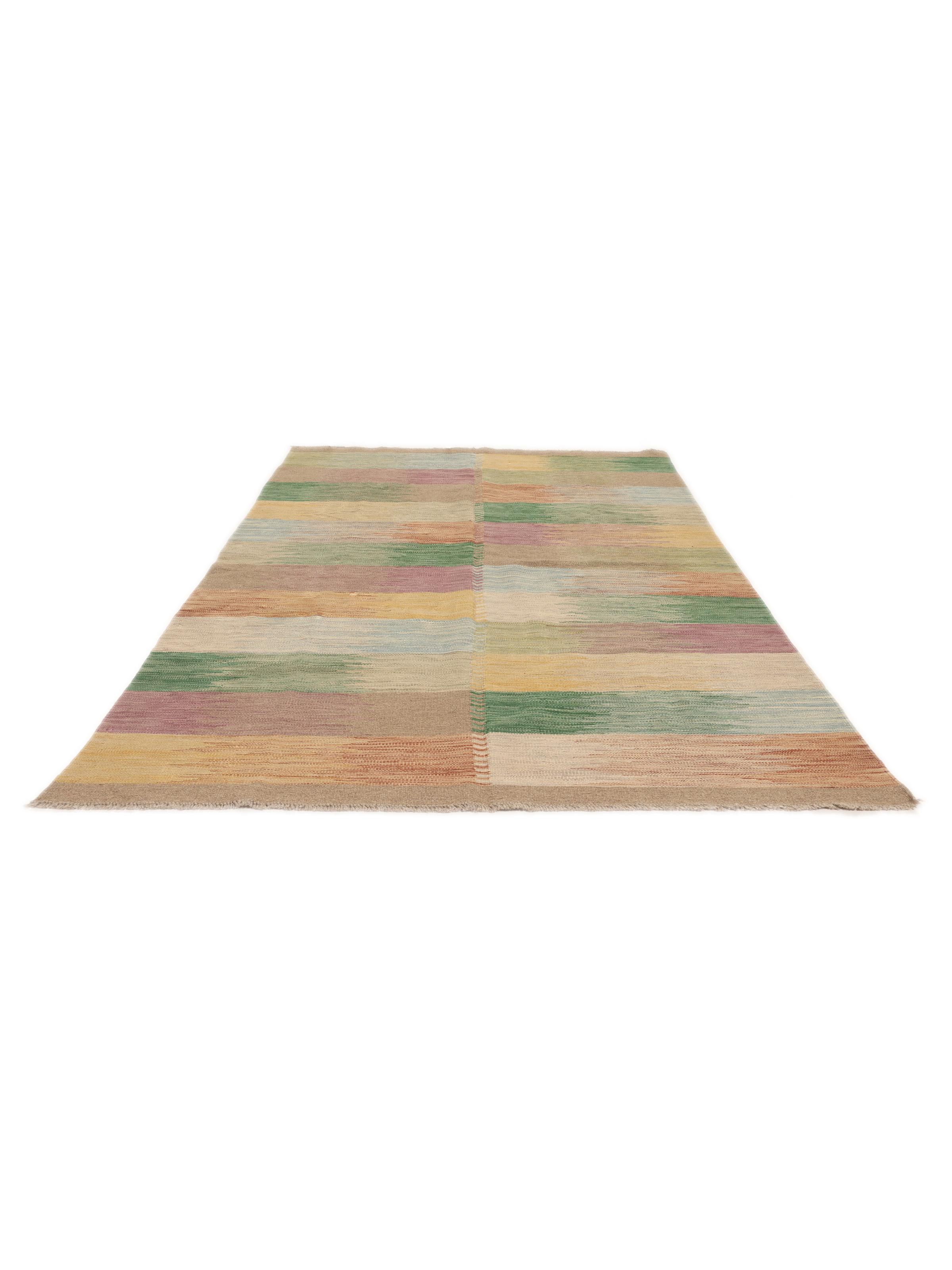
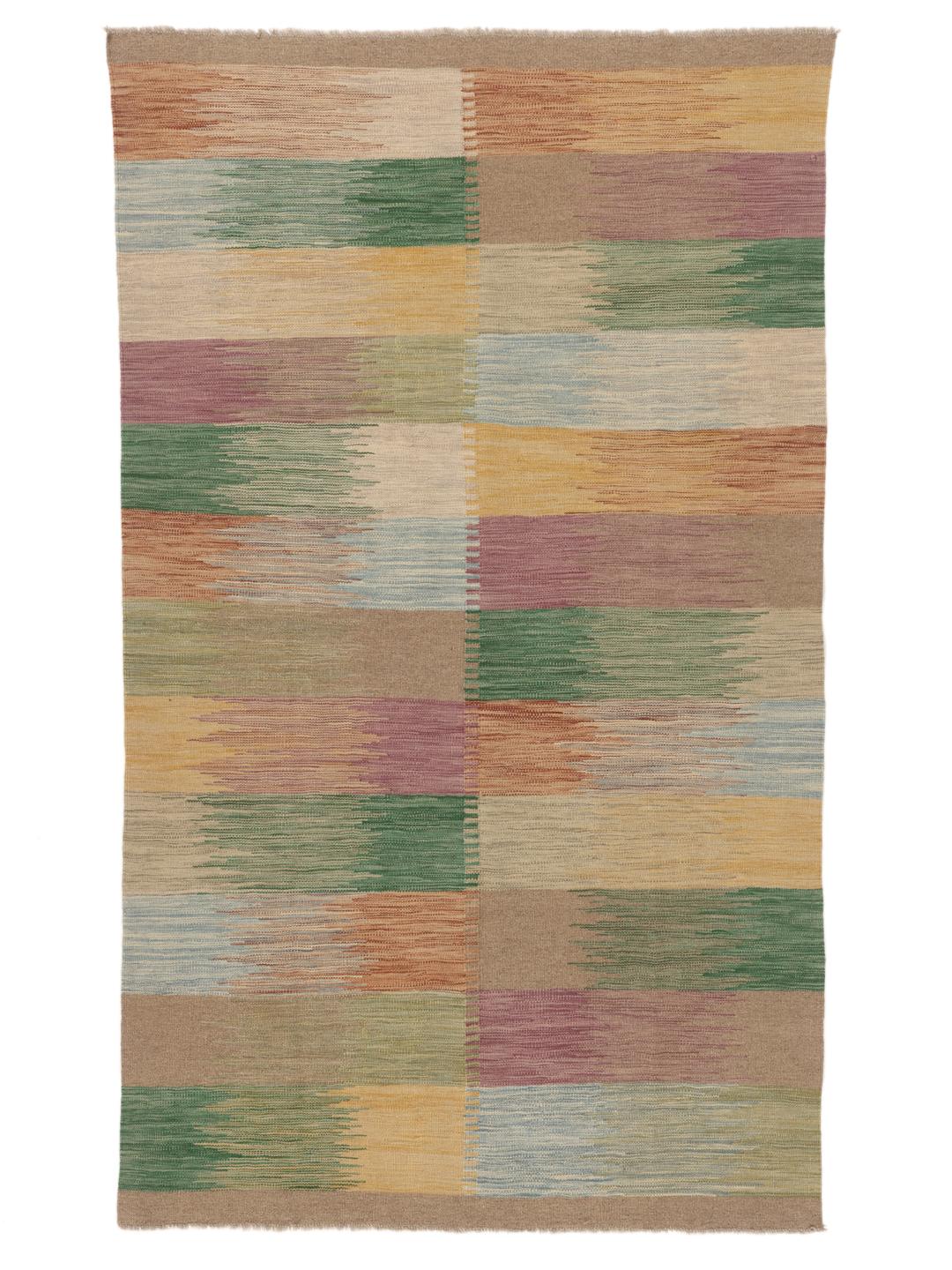
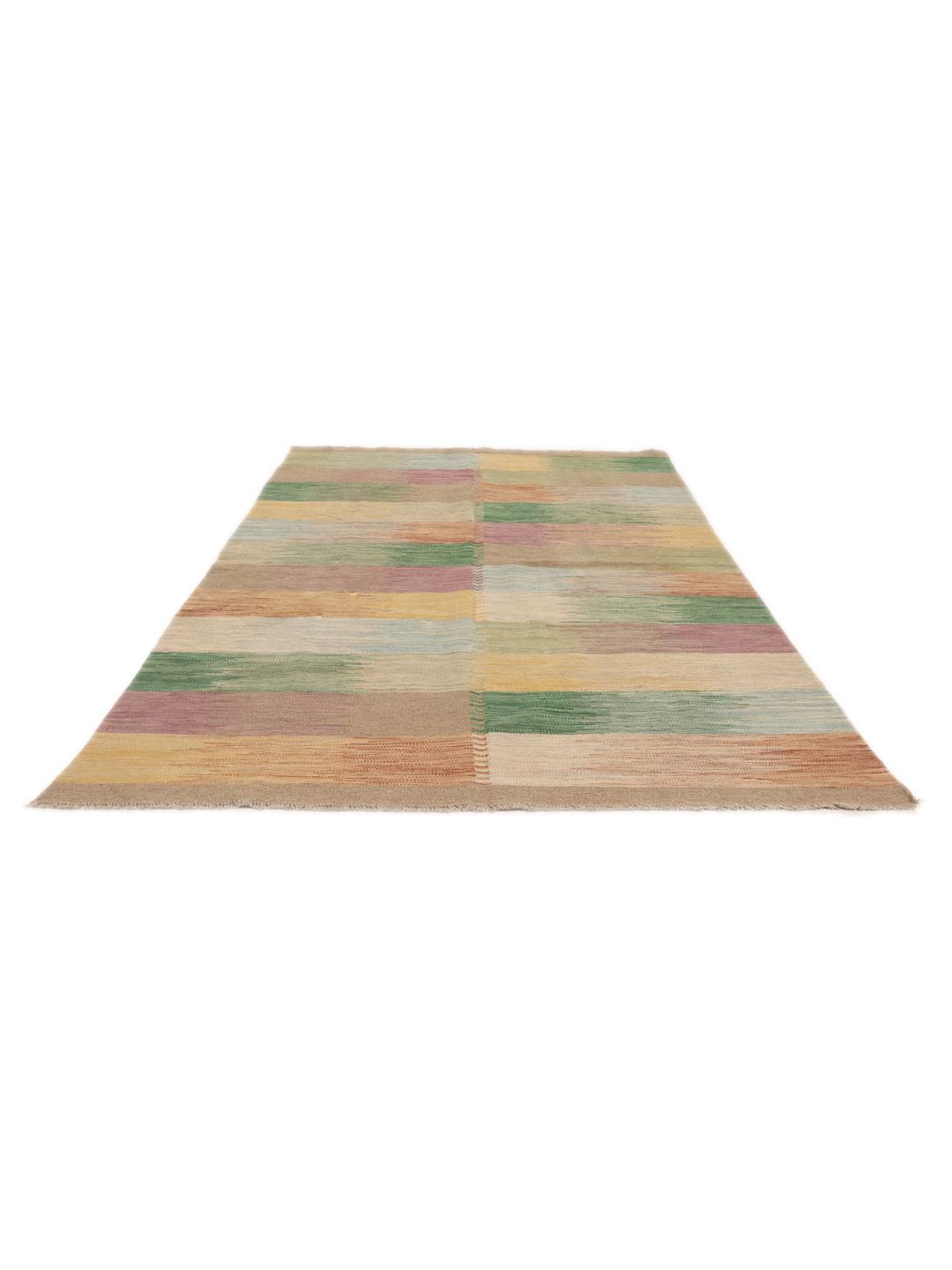
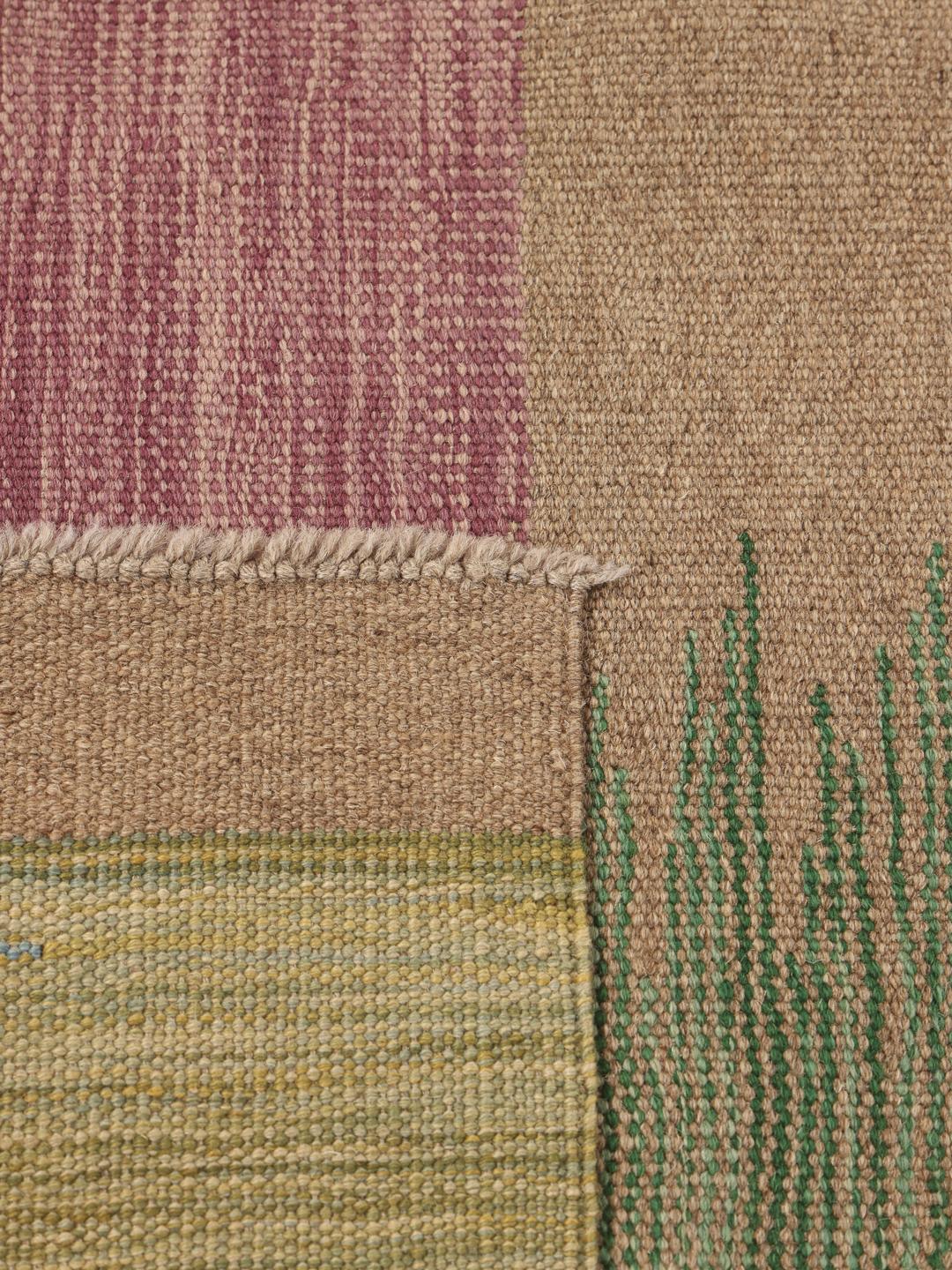
Signature design elements of modern Kilims often involve the use of vibrant, contrasting colour blocks or abstract shapes, though they remain rooted in traditional weaving patterns. While traditional rugs may focus on intricate tribal motifs, the modern interpretation seen here emphasises a clean, artistic layout that highlights the natural beauty of the wool. This specific piece stands out for its balanced, rhythmic colour distribution, which creates a sense of movement across the surface.
Collecting a Kilim is an investment in cultural heritage and human skill. Each rug tells the story of the weaver and the regional traditions that have been passed down through generations. Because they are not mass-produced, these rugs hold a distinct value for those who appreciate the intersection of history, design, and authentic craftsmanship. Owning this piece connects your home to a long-standing legacy of textile excellence.