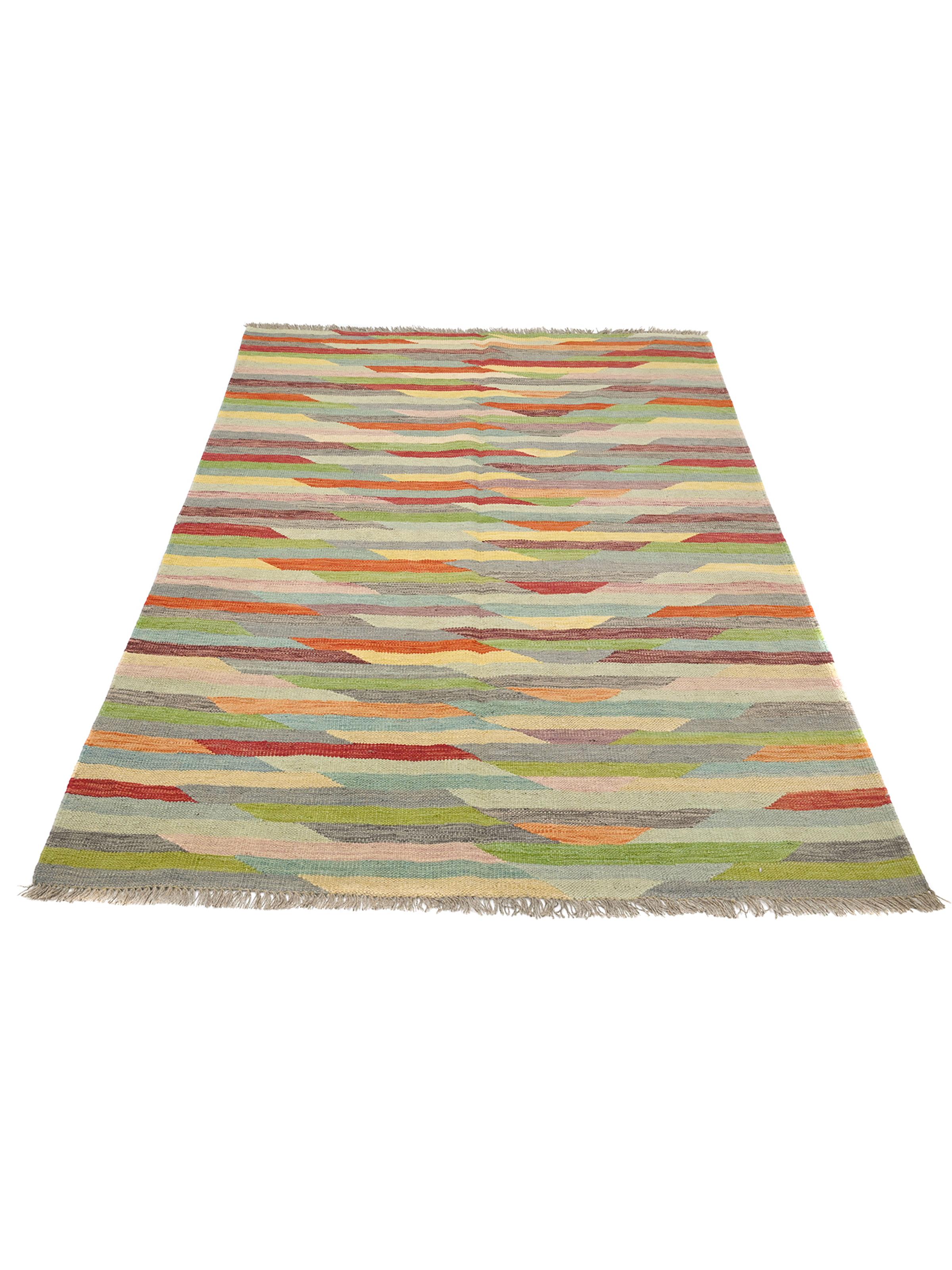
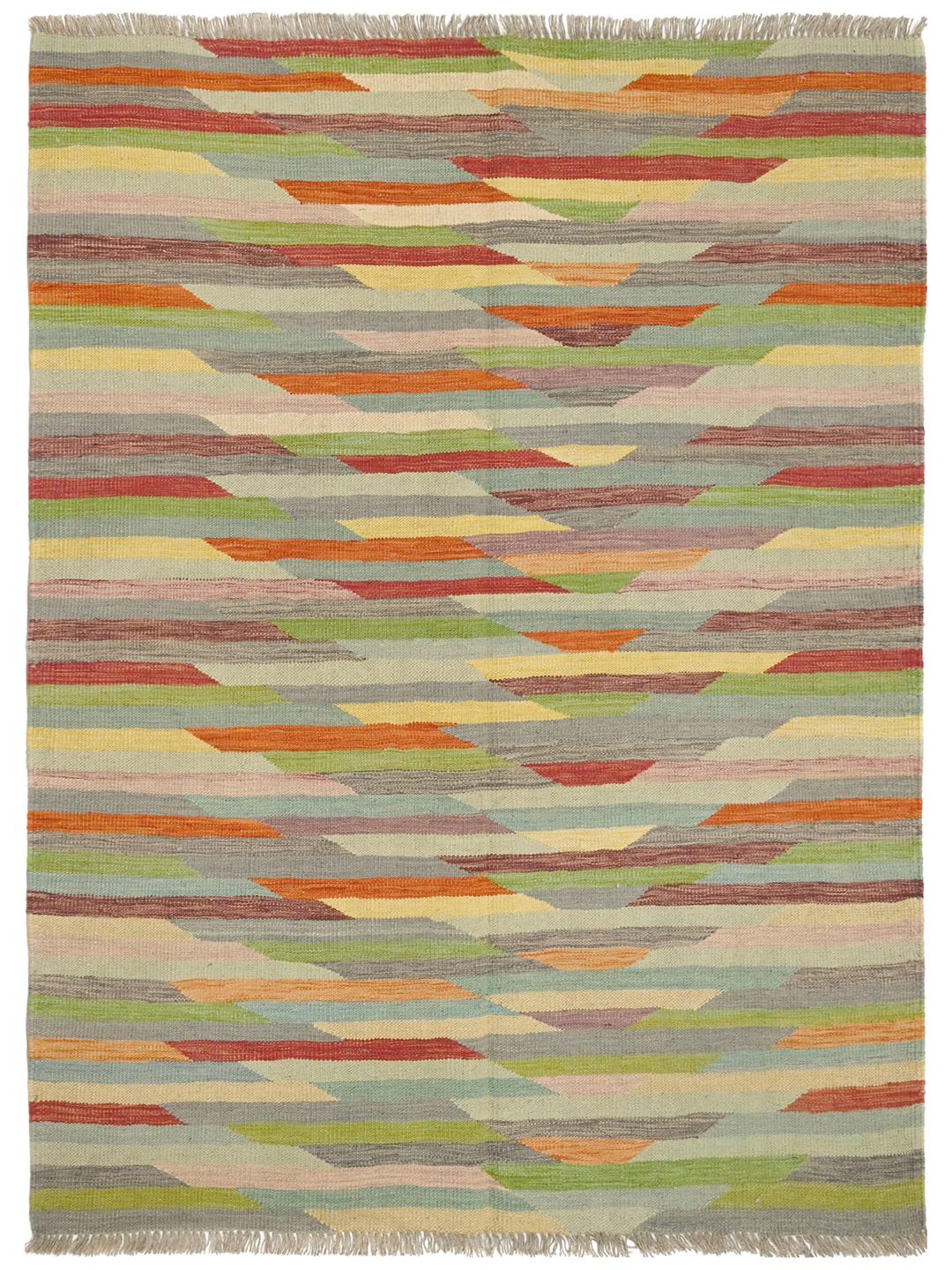
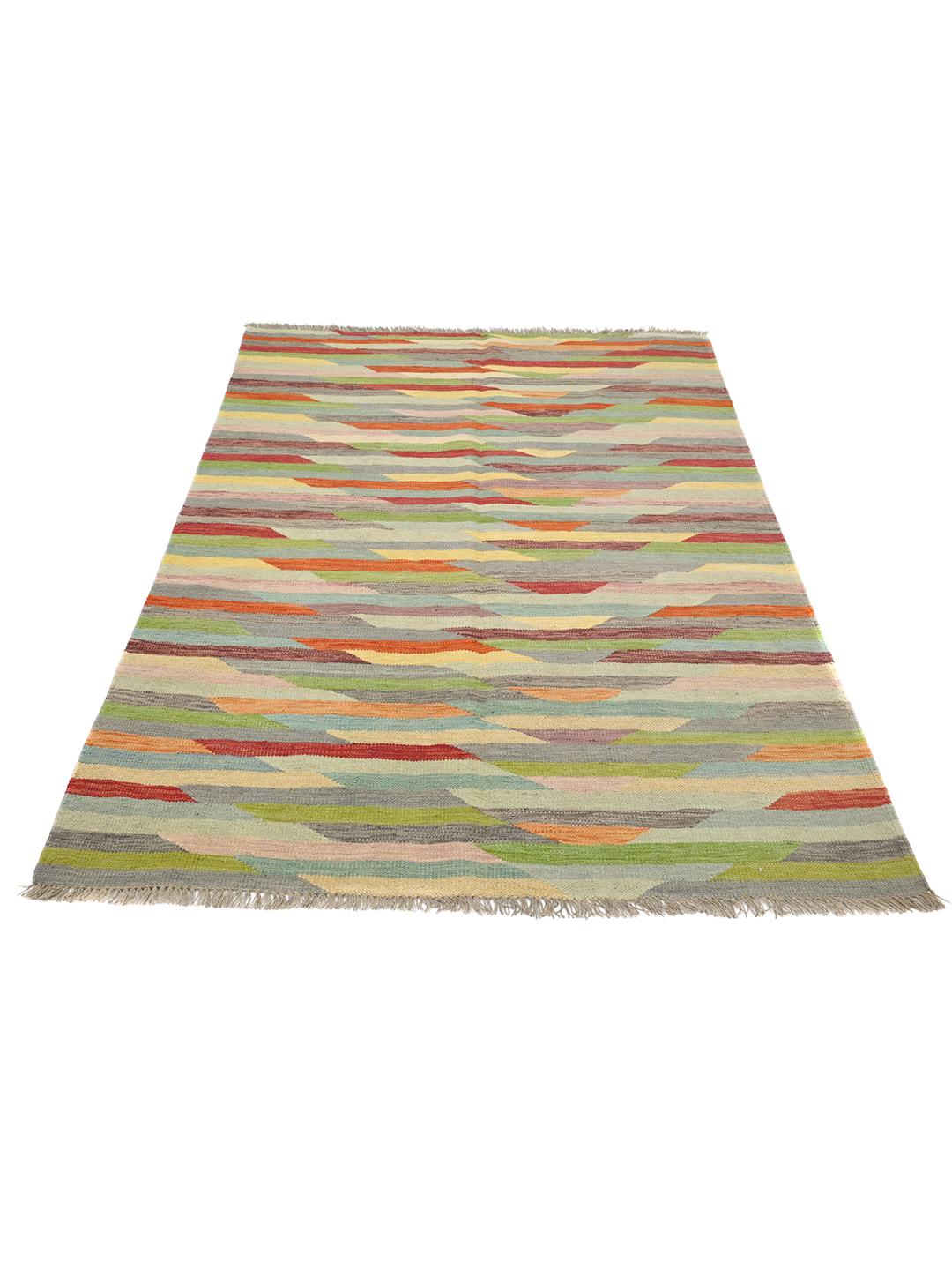
Kilim rugs are a storied tradition stemming from the nomadic cultures of the Middle East and Central Asia. Historically, these rugs were created as essential, portable items for life on the move, serving as floor coverings, wall hangings, and storage bags for tribal families. Today, the Middle East remains a vital hub for this craft, where weavers continue to uphold these ancient techniques while adapting them to contemporary design sensibilities.
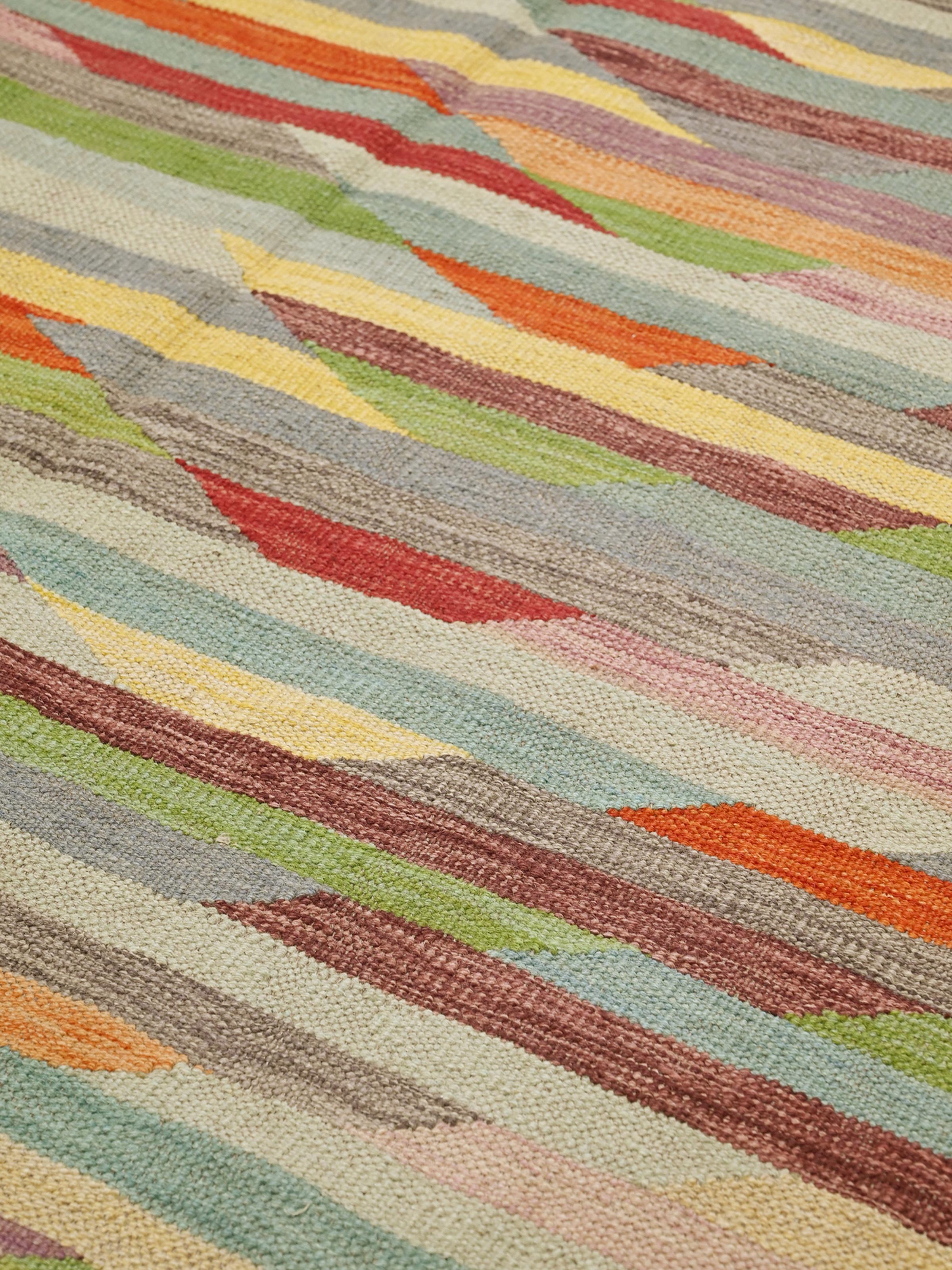
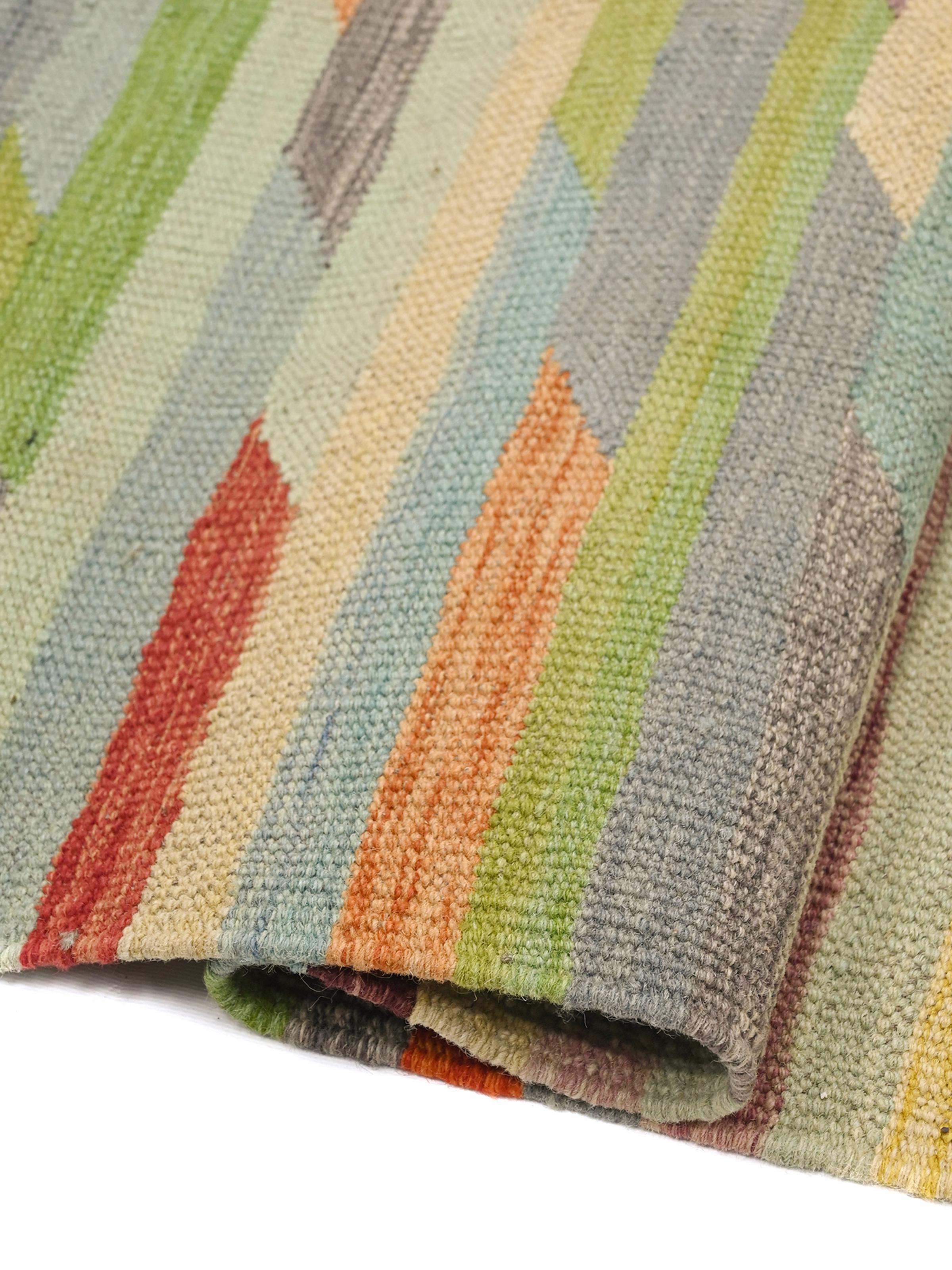
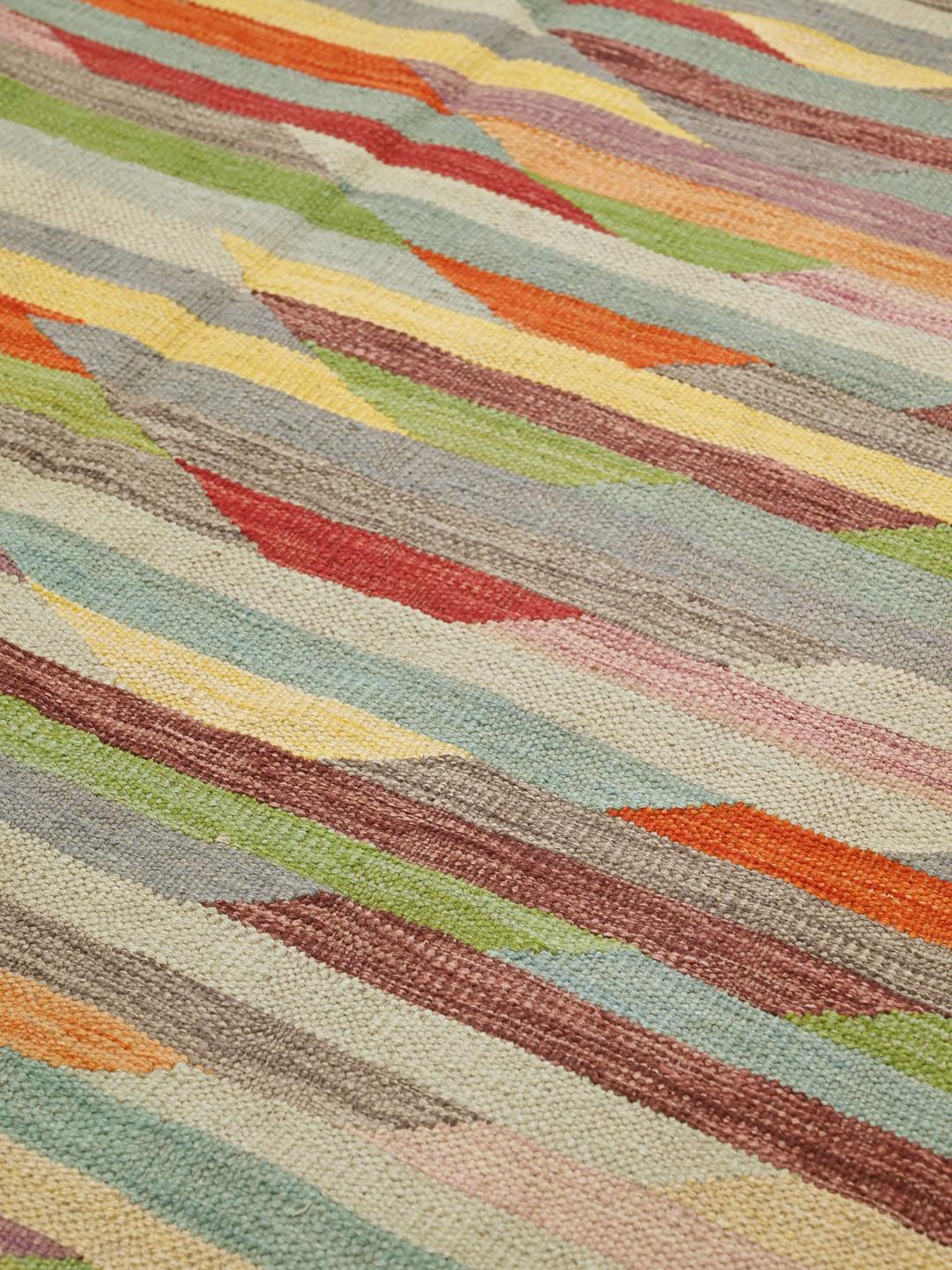
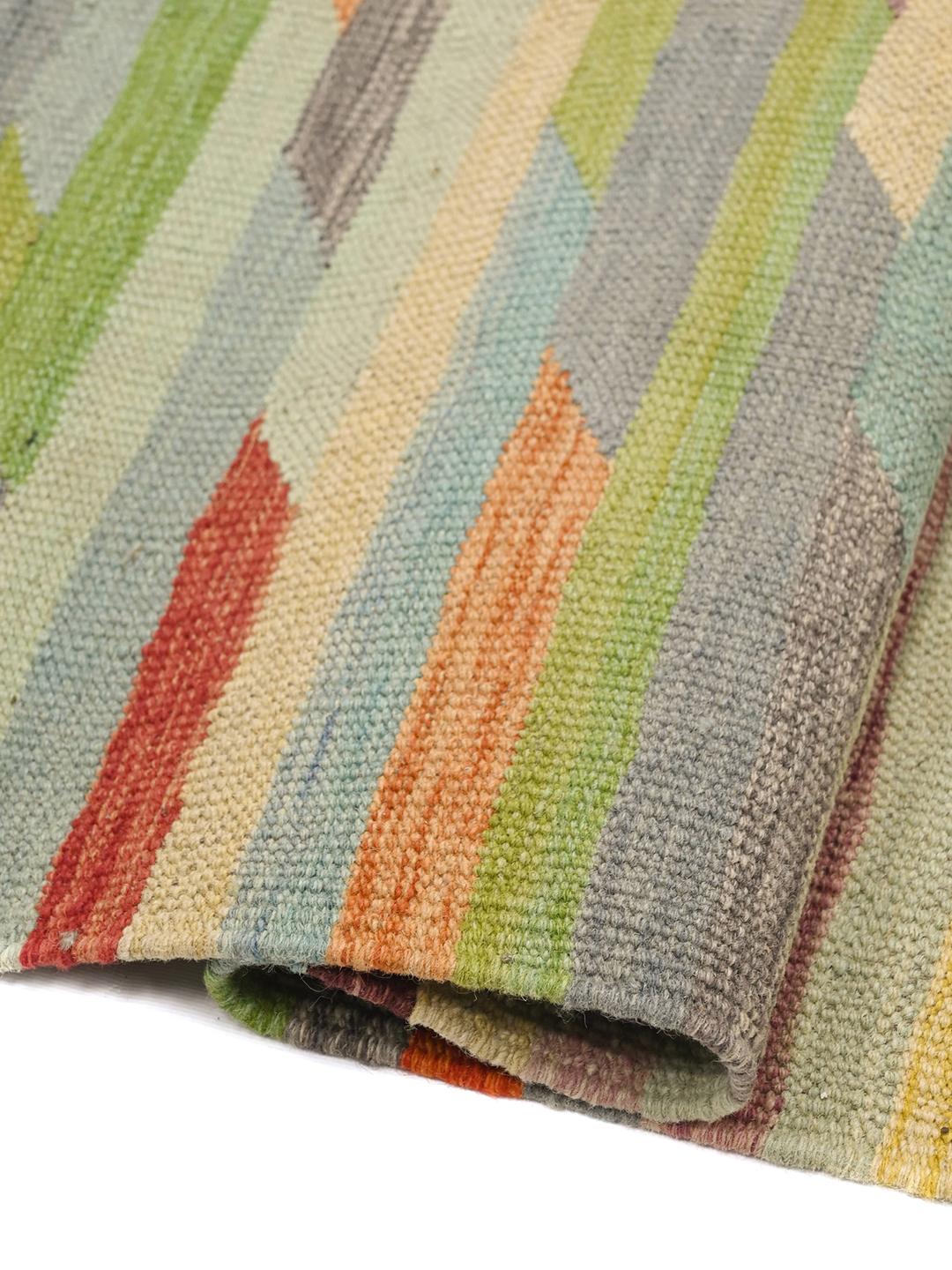
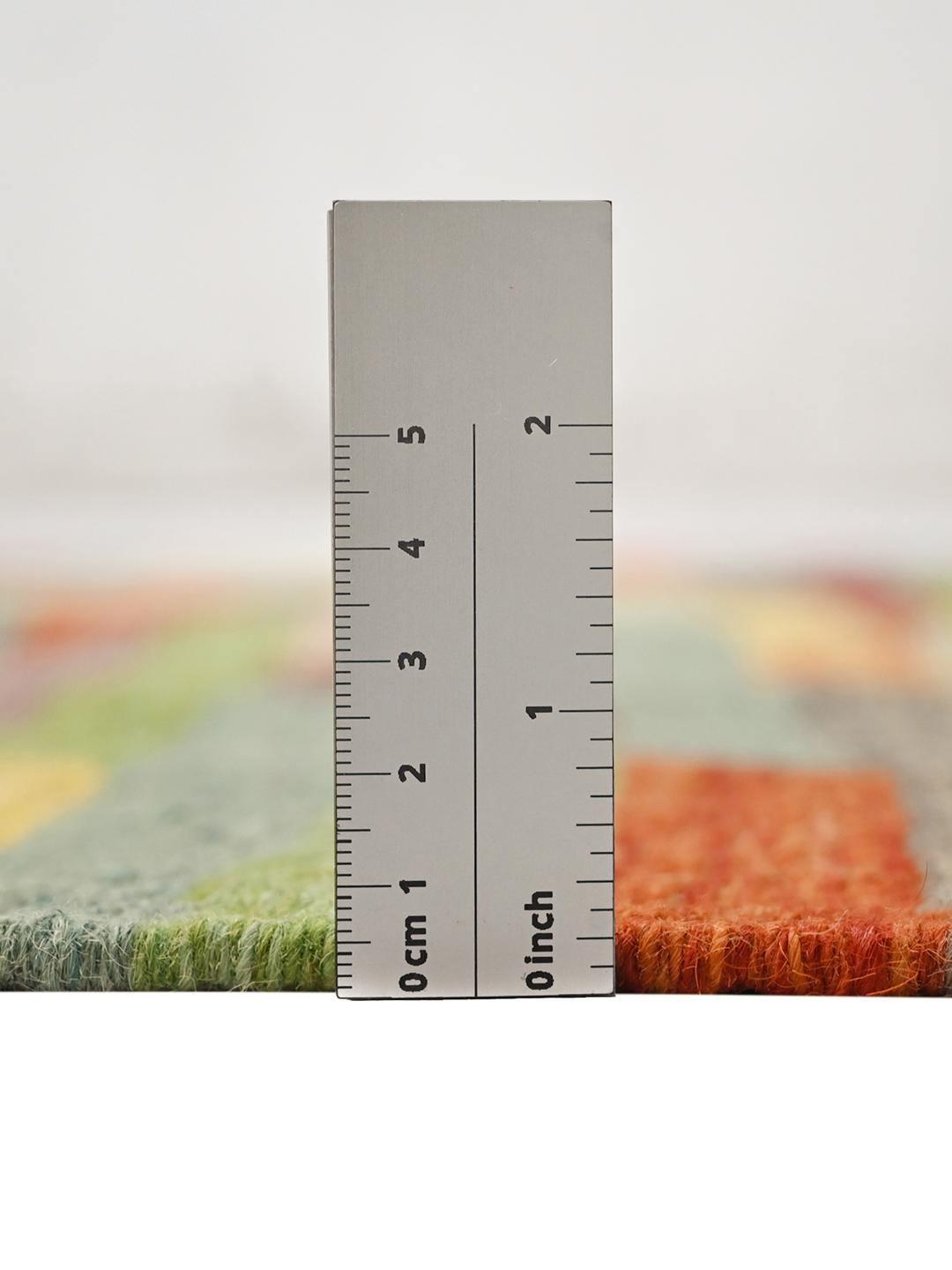
The term 'Kilim' refers to a specific flat-weaving technique where the weft strands are pulled tightly against the warp to create a smooth, pileless surface. This method is fundamental to the rug's durability and its signature crisp, graphic appearance. By focusing on the interplay of colour and tension, weavers can create intricate geometric patterns that remain sharp and clear even after years of use.
Signature design elements of these rugs often include bold geometric motifs such as triangles, diamonds, and zig-zags, which are deeply symbolic within their cultural context. While traditional pieces often relied on a specific set of earthy dyes, modern Middle Eastern Kilims like this one embrace a wider, more vibrant palette. This shift reflects a creative evolution, allowing the rugs to bridge the gap between historic craft and modern interior aesthetics.
Owning a hand-woven Kilim is an investment in cultural heritage and human skill. Because each rug is made without a pre-set pattern template, it represents the creative intuition of the artisan. Collectors value these pieces not only for their striking visual presence but for the connection they provide to a global lineage of textile arts, ensuring that this tradition of fine craftsmanship remains alive and relevant.