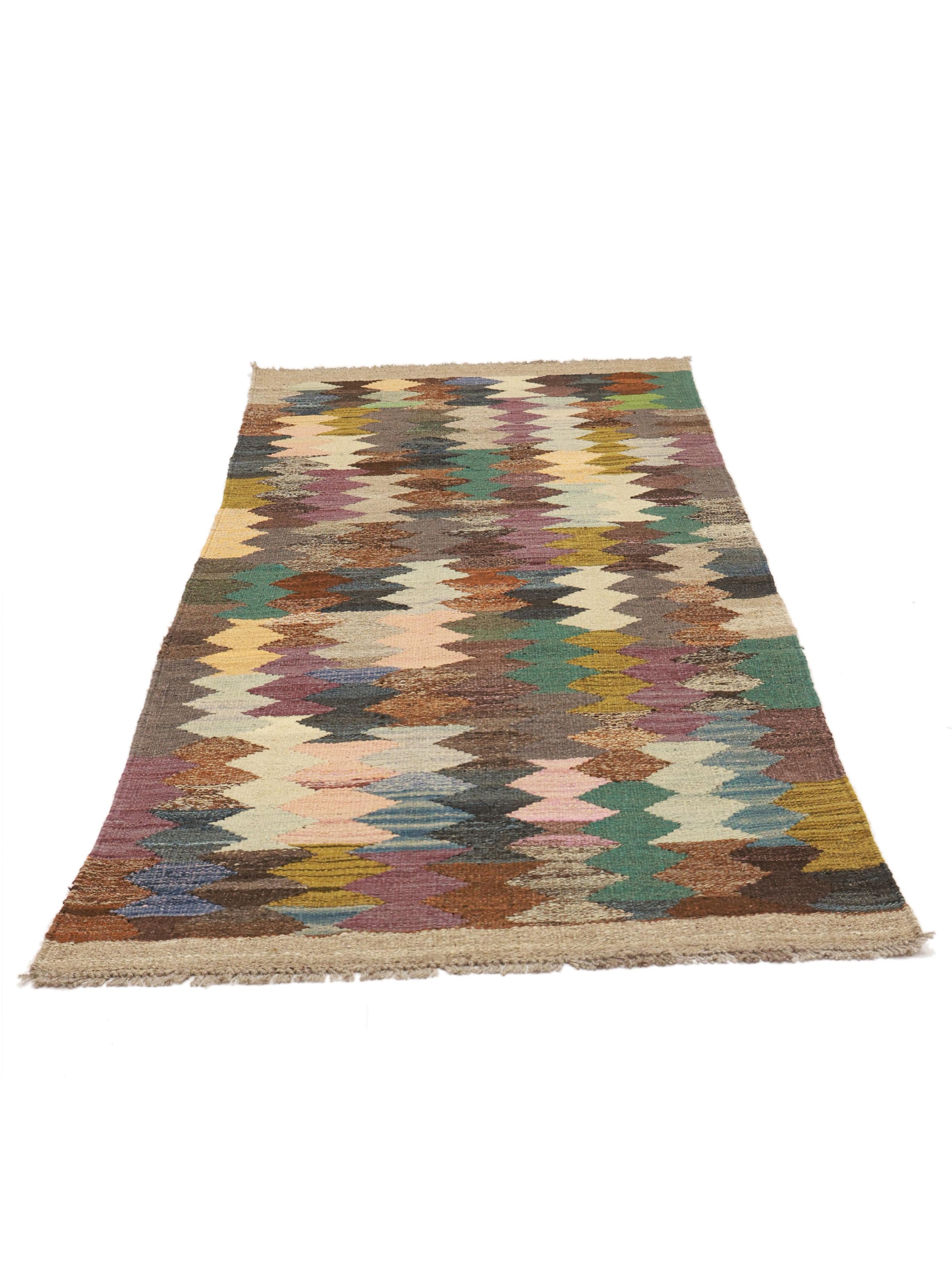
Flatwoven kilims have a rich history rooted in the nomadic and village traditions of the Middle East and Central Asia. Originally created by tribal weavers for practical household use as floor coverings, saddlebags, and blankets, these textiles relied on readily available natural materials and portable vertical looms. Over generations, these utilitarian weaves evolved into celebrated artistic traditions, with distinct regional styles emerging across Afghanistan and neighbouring areas.
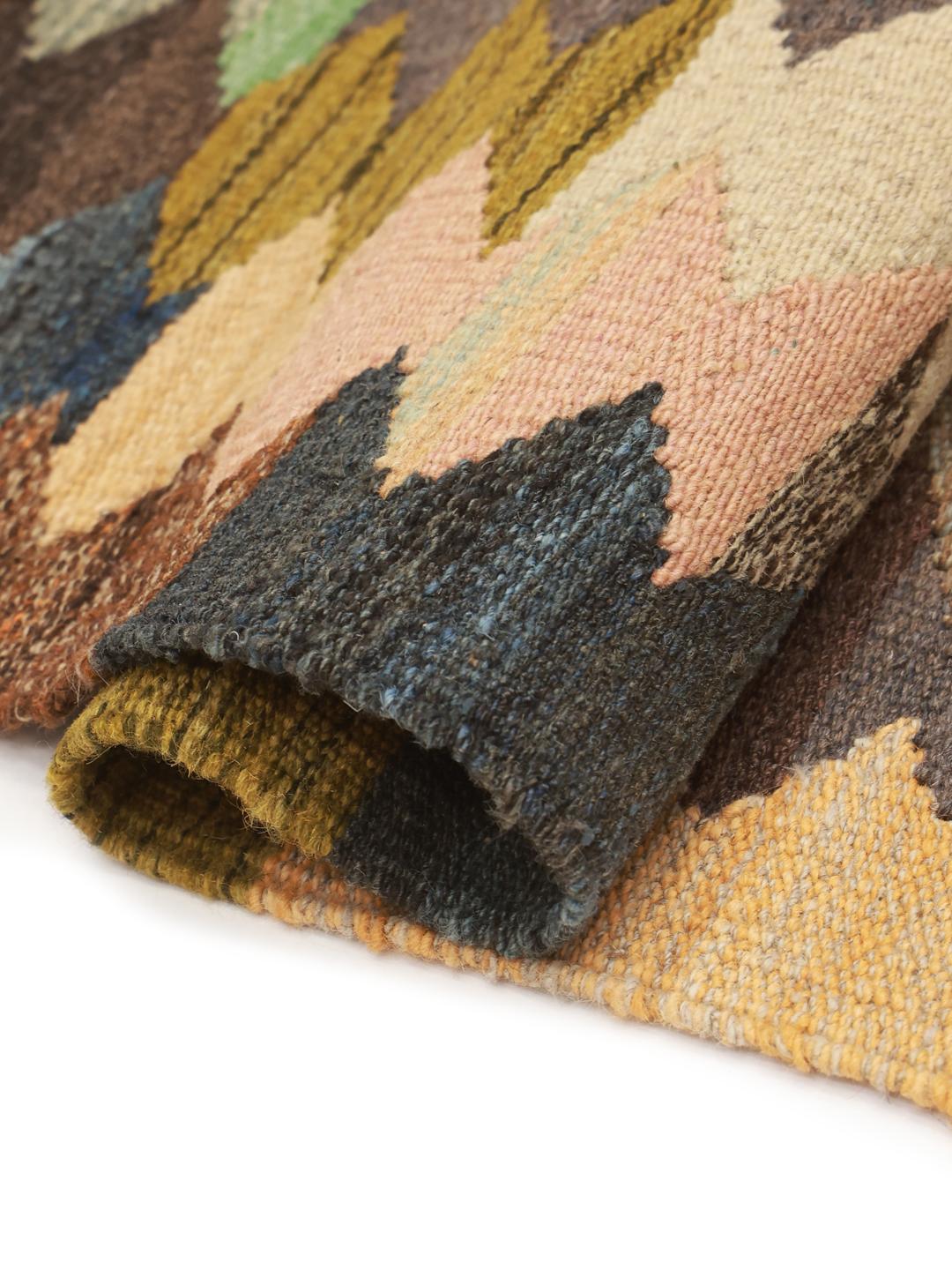
The Ariana style represents a bridge between ancient nomadic patterns and contemporary interior aesthetics. Weavers draw upon traditional geometric vocabulary, interpreting ancient motifs through considered colour palettes and balanced compositions. This specific tradition values the purity of flatweave construction, where pattern and structure merge into a single cohesive fabric without the addition of a knotted pile.
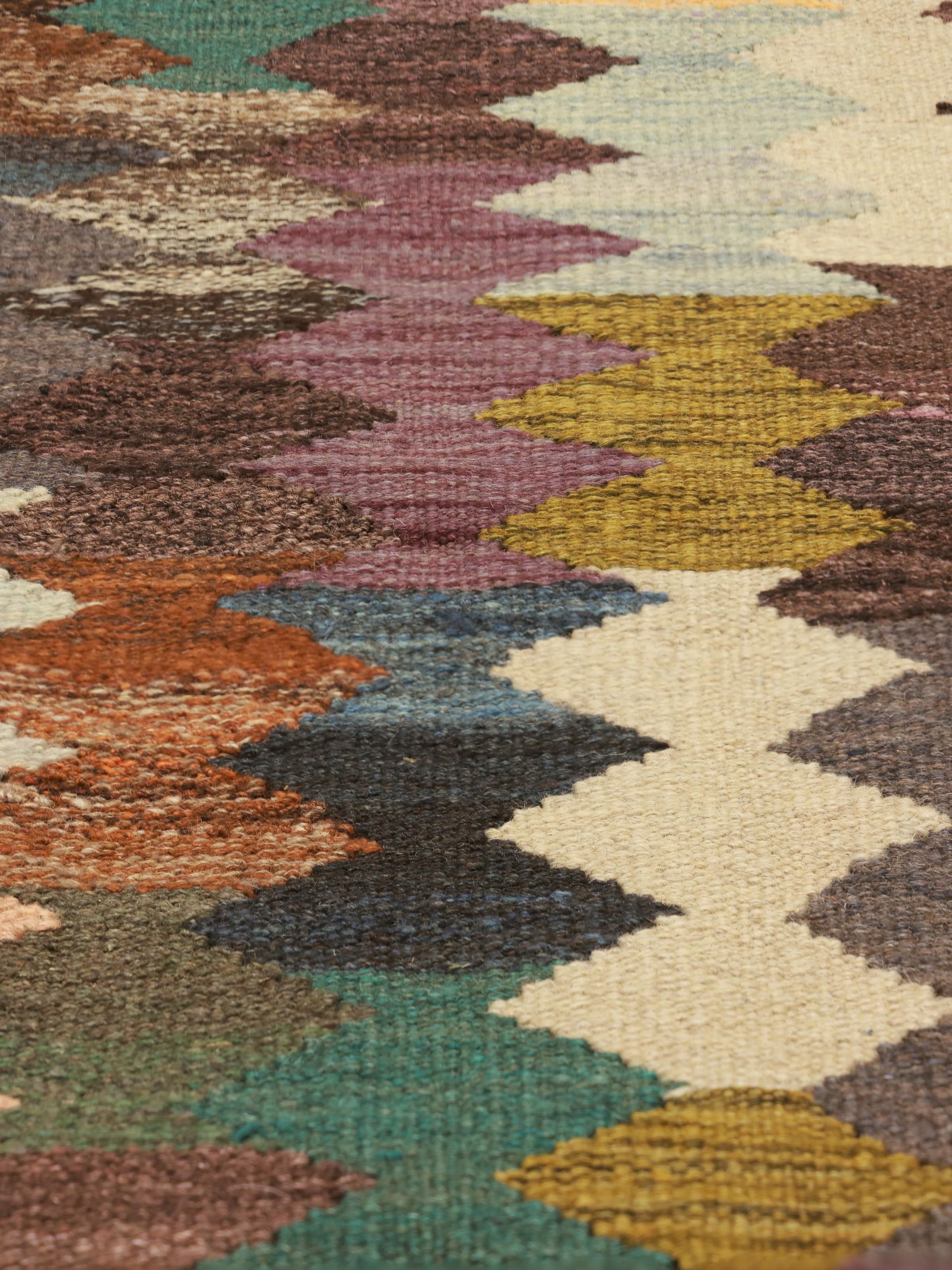
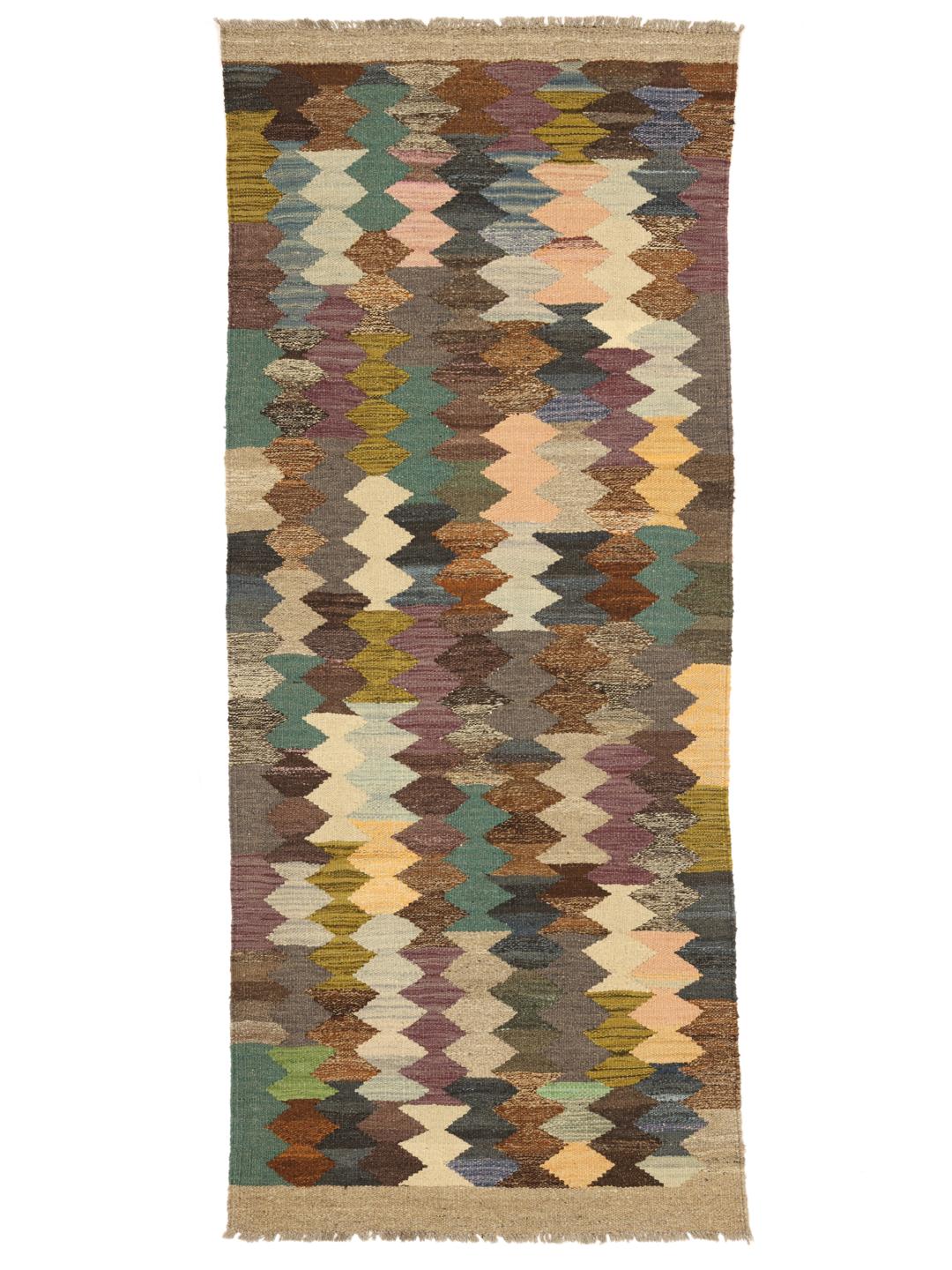
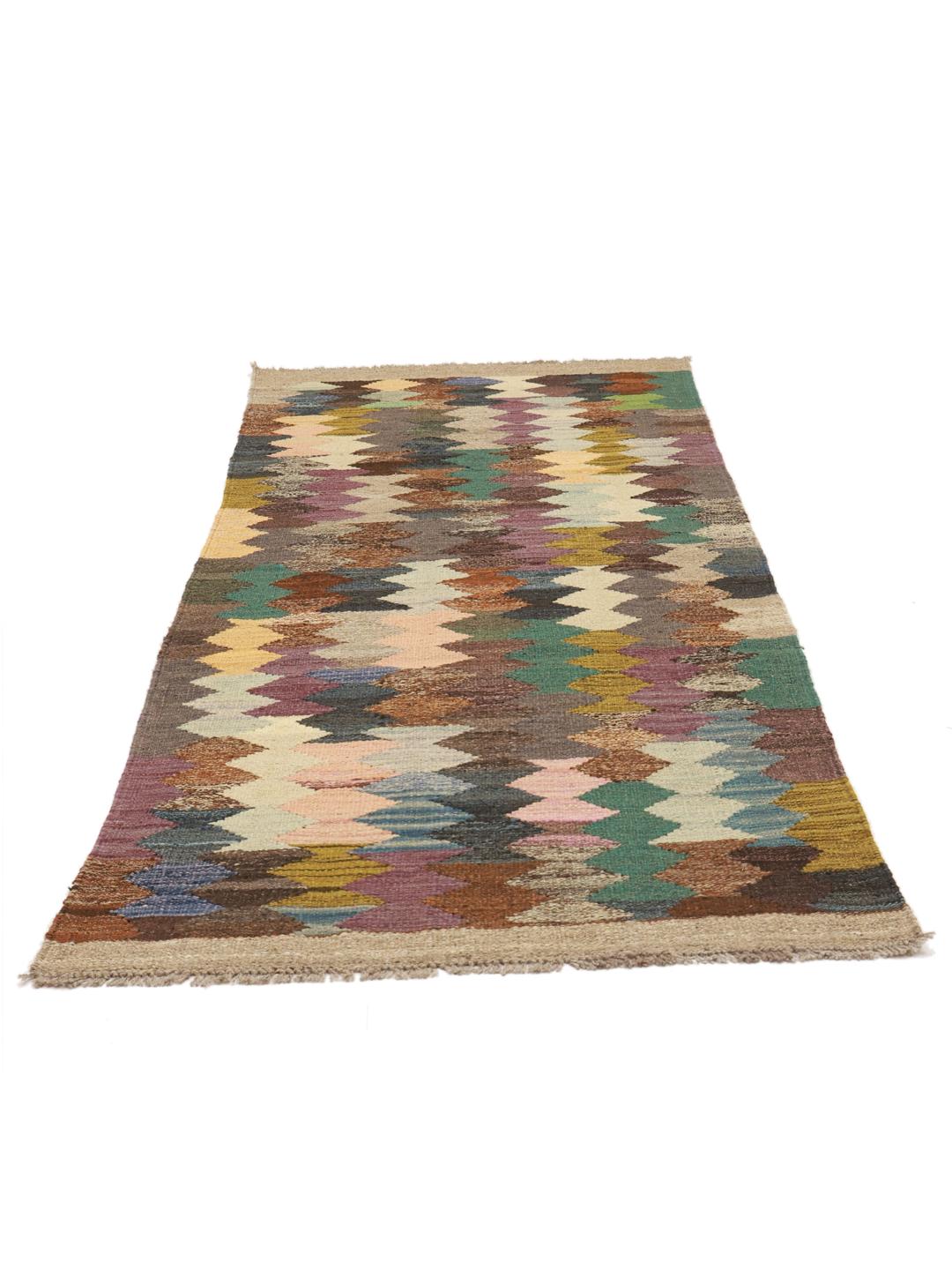
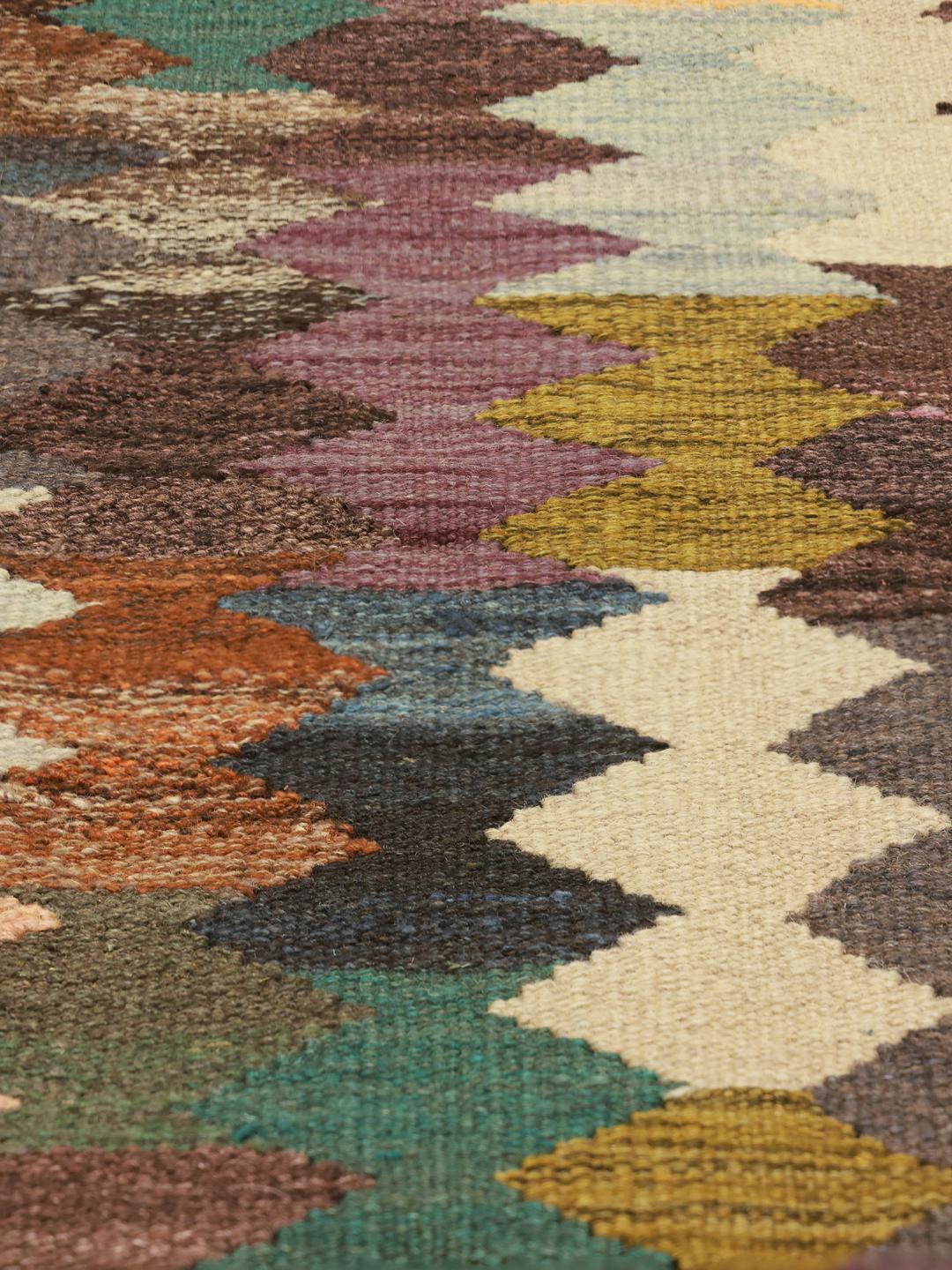
The visual language of this runner centres on repeating geometric motifs that create a harmonious rhythm across the field. Ariana kilims are particularly known for their earthy tones and subtle abrash, where hand-dyed wool absorbs colour with slight variations that give the surface a gentle, living depth. The structured layout provides a steady visual anchor while maintaining the organic character inherent to hand-crafted textiles.
Collecting a vintage or contemporary kilim from this region connects your home to a profound craft heritage. Each piece tells the story of the hands that shaped it, preserving ancient skills in a modern format. Owning such a textile means valuing the time, patience, and cultural continuity embedded in every thread.