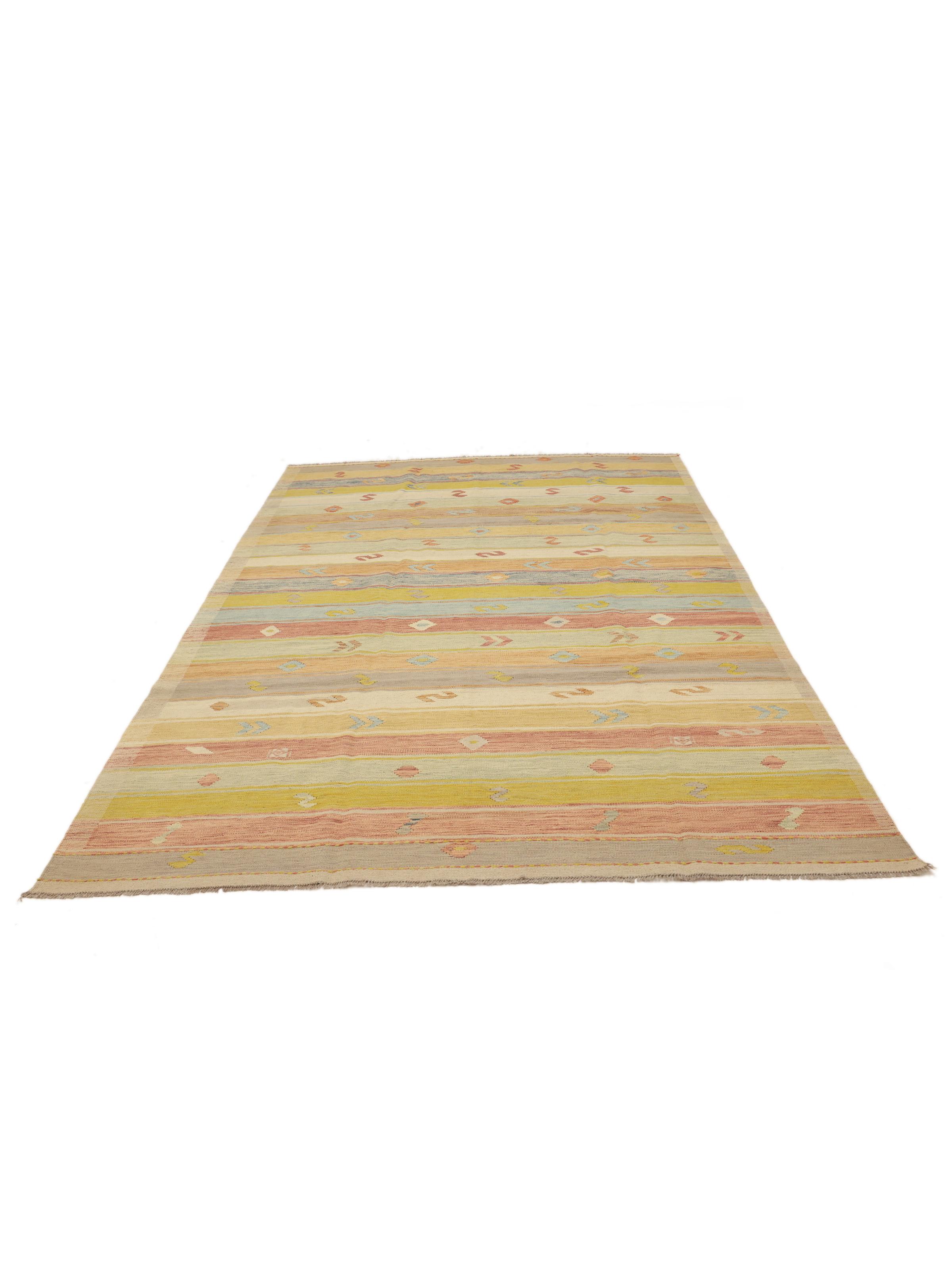
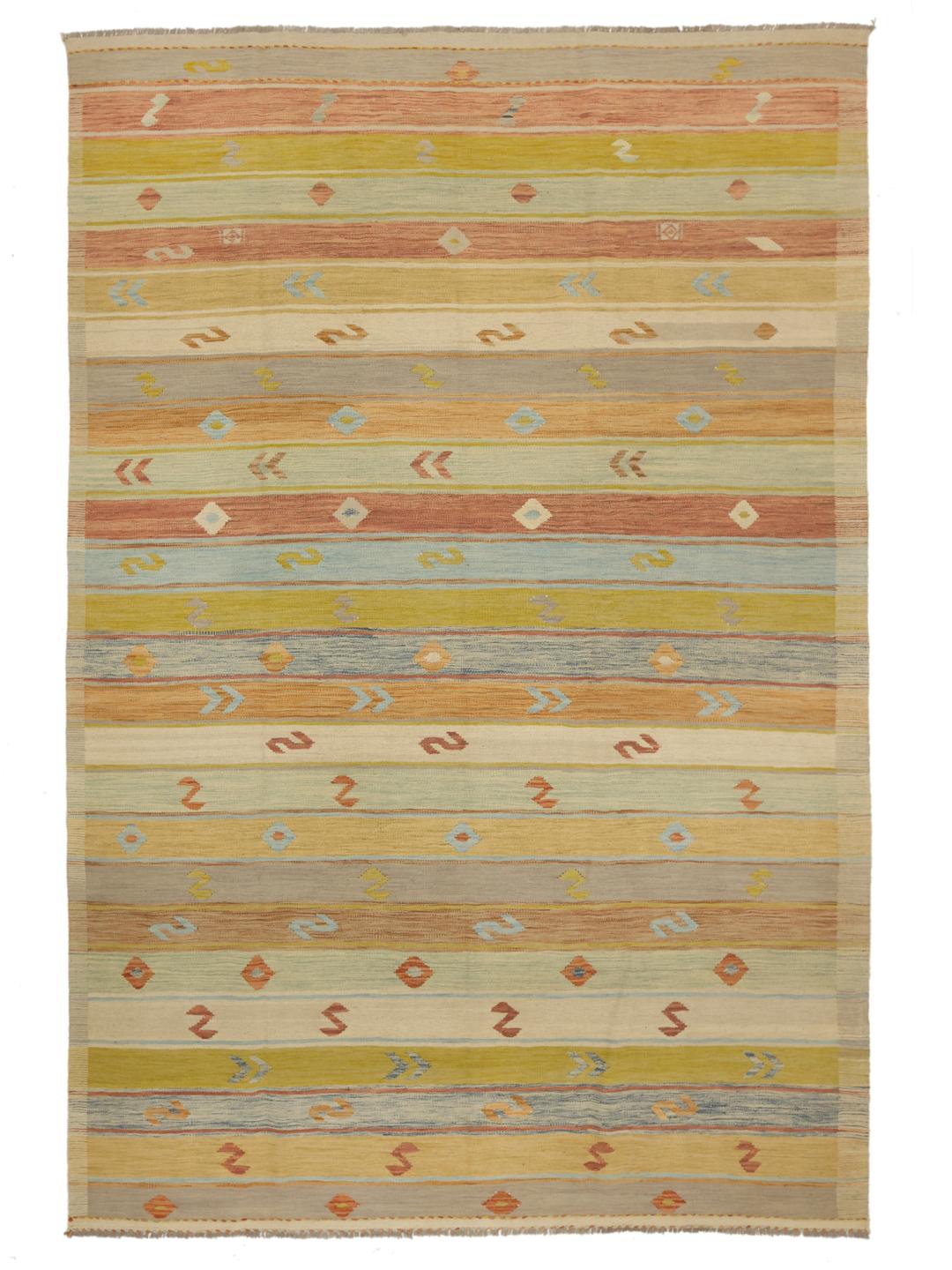
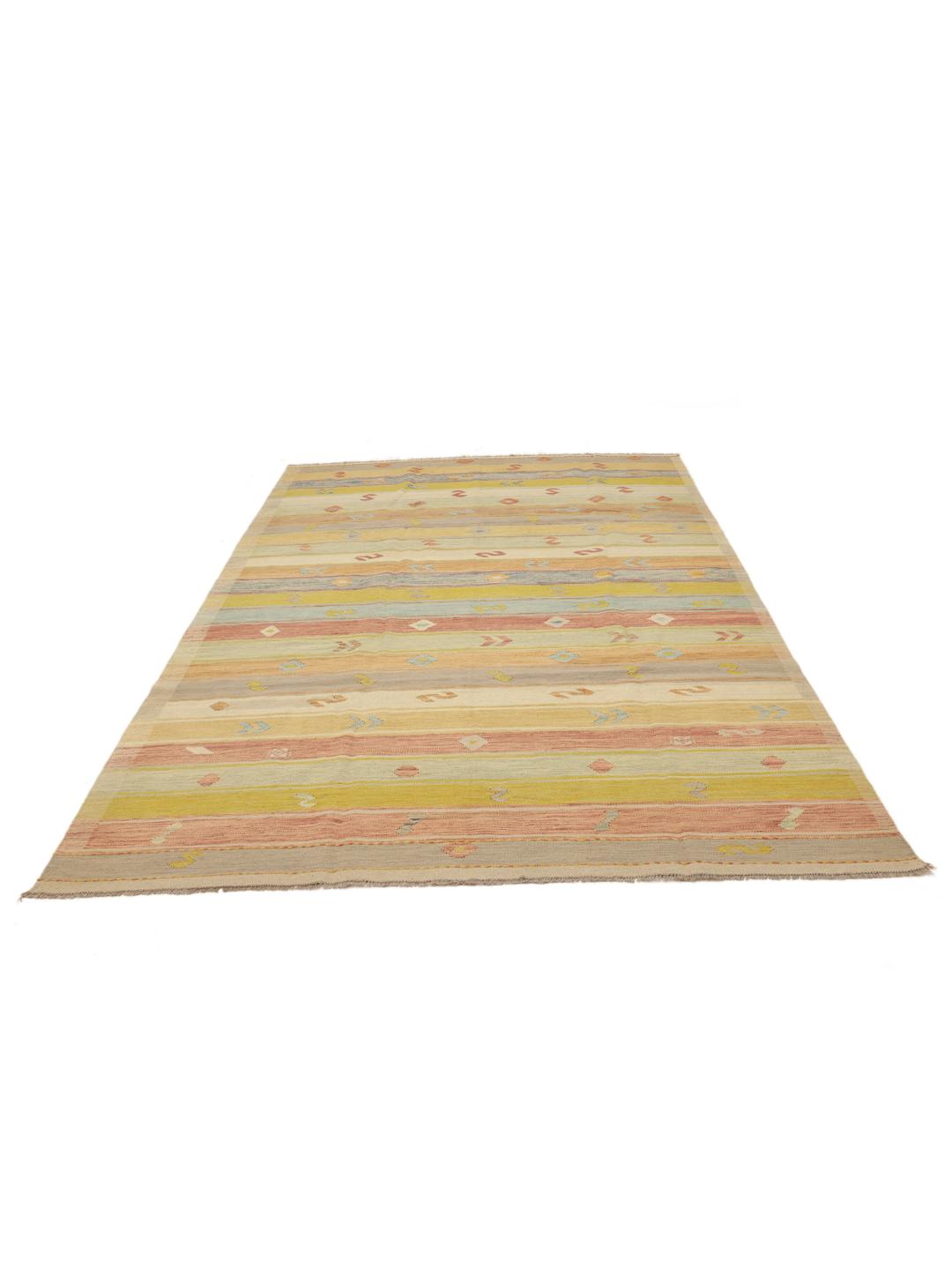
The Kilim Ariana tradition represents a sophisticated evolution in Middle Eastern rug-making. These rugs are deeply rooted in the textile history of Afghanistan, where nomadic and village weaving traditions have been refined over generations. The 'Ariana' style is known for its ability to bridge the gap between ancient techniques and contemporary design sensibilities, making it a favourite for those who appreciate history but desire a clean, modern look.
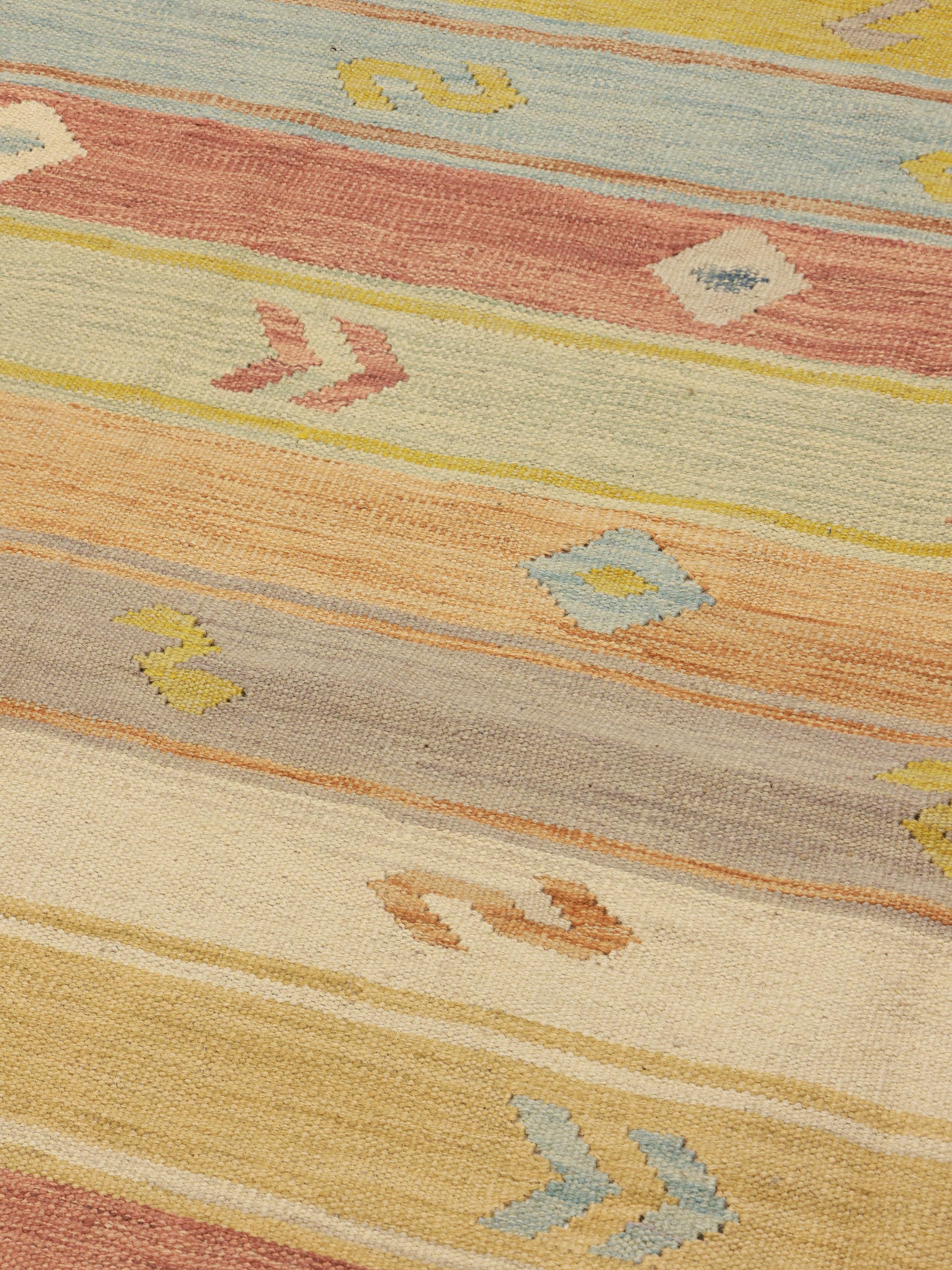
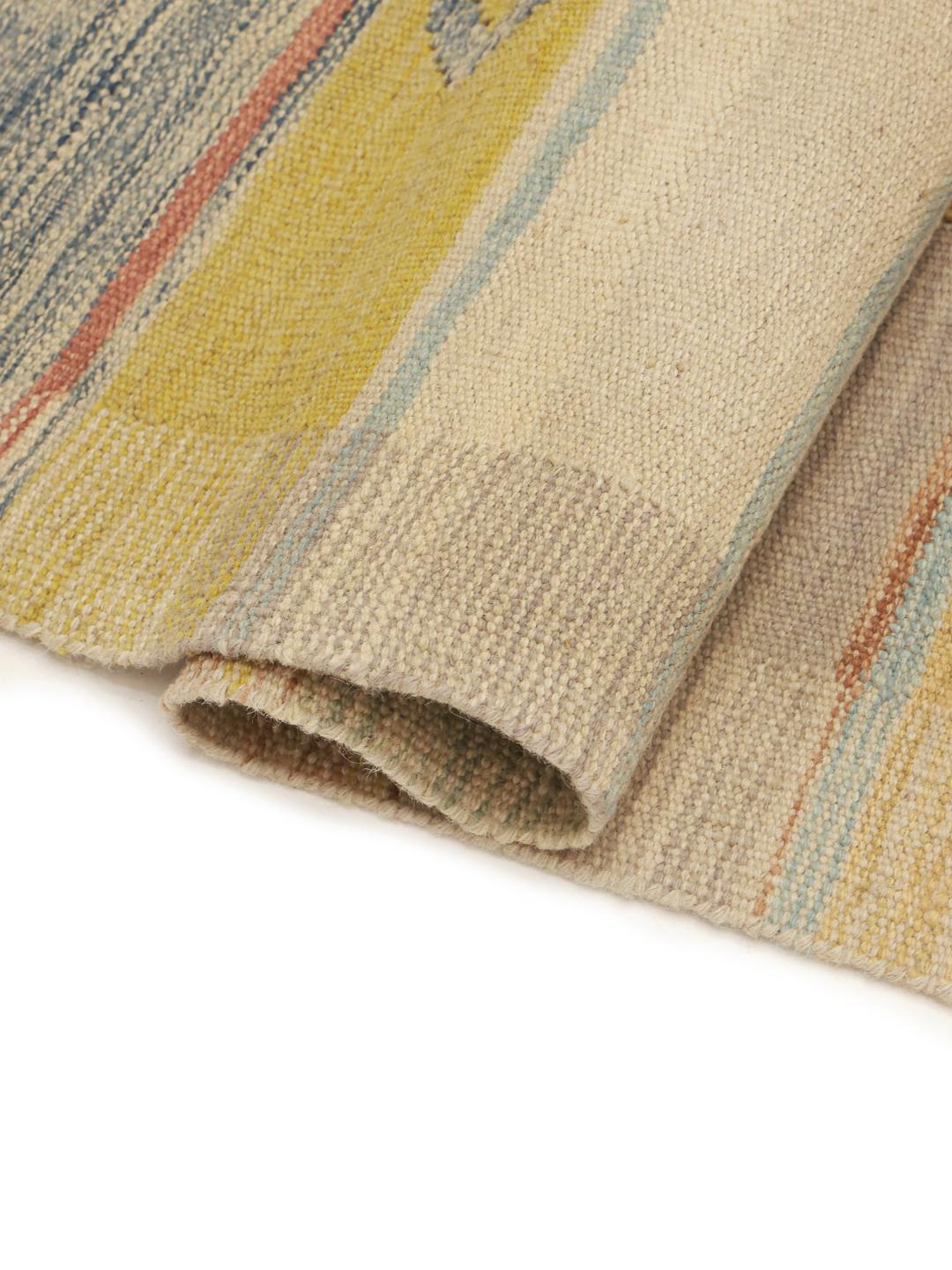
Kilim refers to a flat-weave technique where the weft strands are pulled tightly over the warp to create a smooth, pileless surface. This method is distinct from knotted rugs, resulting in a lighter and more versatile piece. The quality of a Kilim is determined by the consistency of this weave and the tension applied by the weaver, which creates a stable, long-lasting fabric that can be used on both sides.
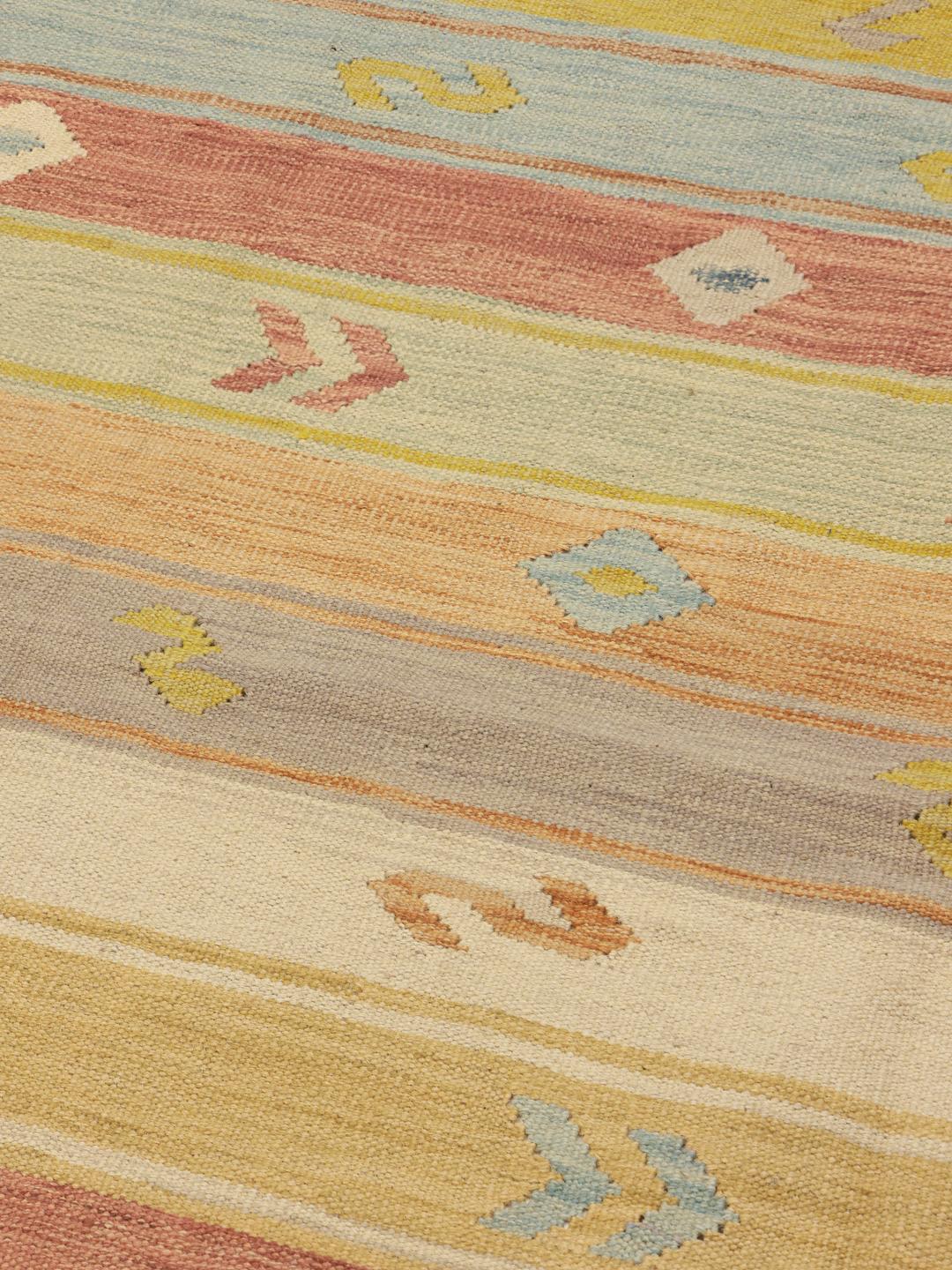
Visually, the Kilim Ariana is defined by its soft, abrash-rich colour palette and deliberate, often geometric or striped compositions. The dyes are chosen to evoke a sense of natural, lived-in warmth, with colours that appear to shift slightly depending on the light. The inclusion of small, recurring motifs across the field adds a layer of depth, reflecting a design language that honours traditional patterns while maintaining an uncluttered feel.
Collectors value Kilim Ariana rugs because they represent a living craft that remains connected to its origins while adapting to the needs of the modern home. Owning one is an investment in cultural heritage, as the skill required to weave these pieces is passed down through generations. These rugs are not just floor coverings but are celebrated as individual works of art that carry the personality and dedication of their makers.