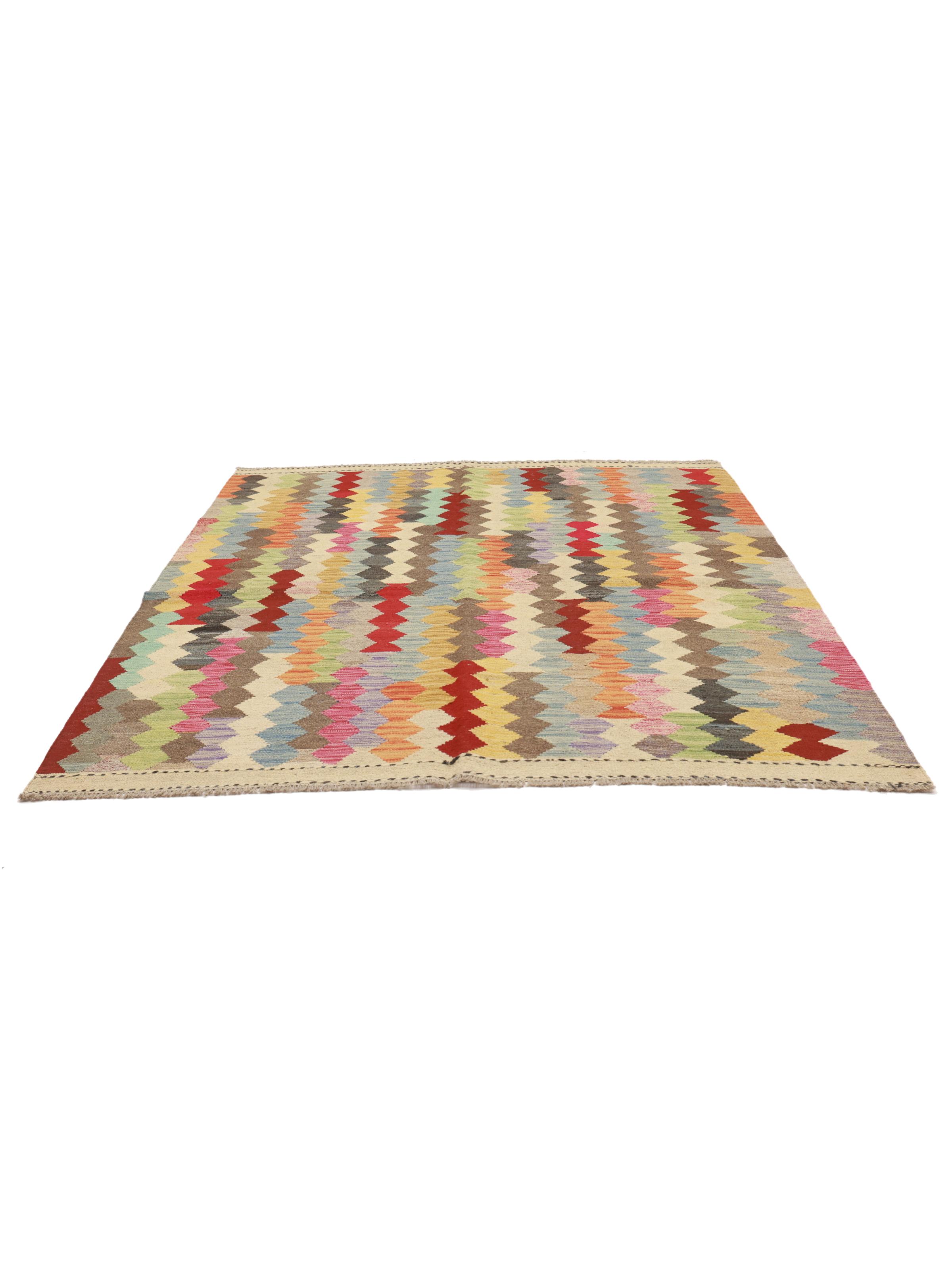
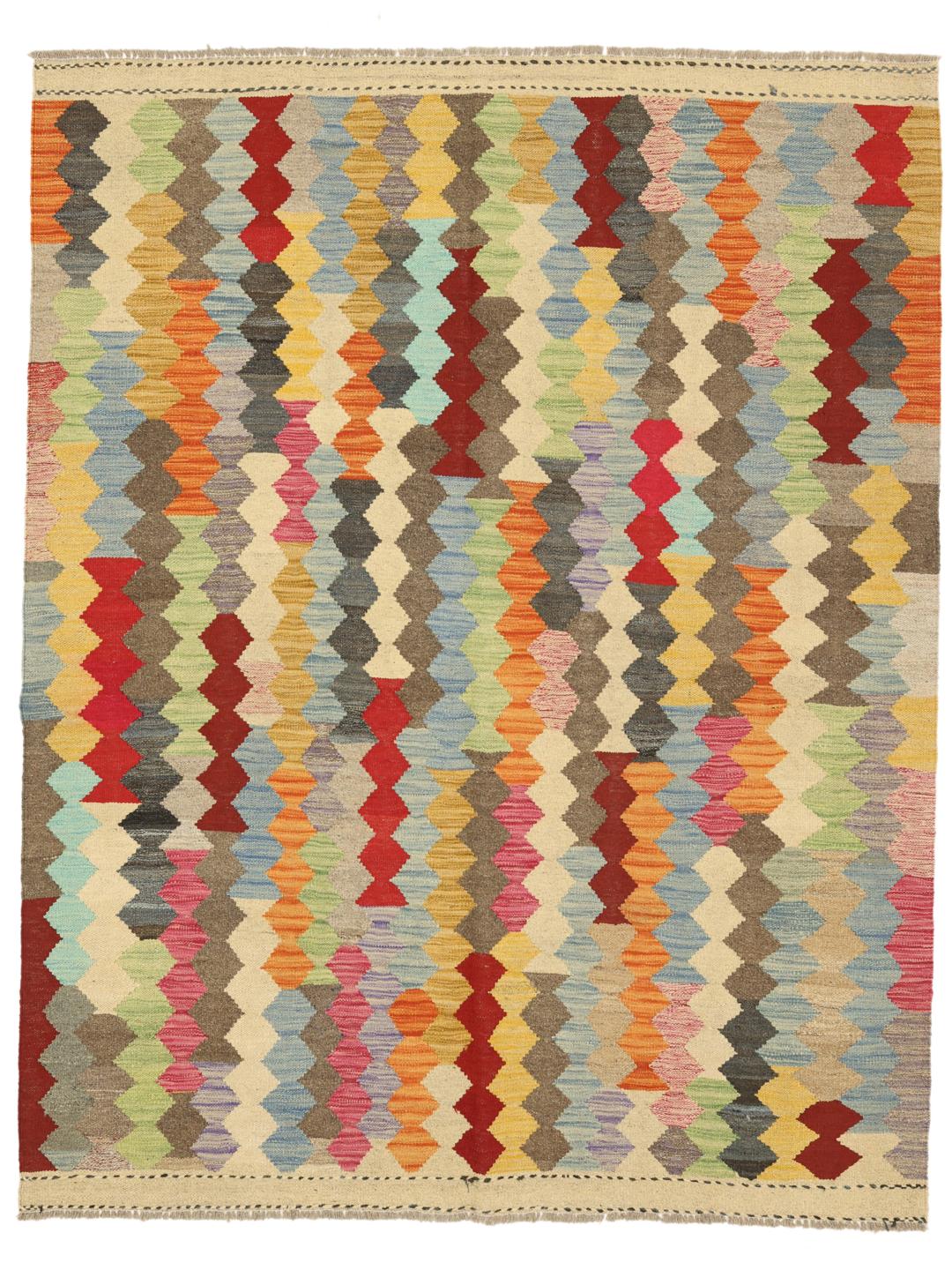
The tradition of flatweaving in Afghanistan is deeply rooted in nomadic and village cultures, where rugs were originally crafted for practical daily use rather than commercial trade. These flatwoven pieces, known as kilims, served as versatile floor coverings, blankets, and storage bags, designed to withstand the rigours of a mobile lifestyle. Over generations, these utilitarian textiles evolved into a highly expressive art form, reflecting the identity and stories of the weavers.
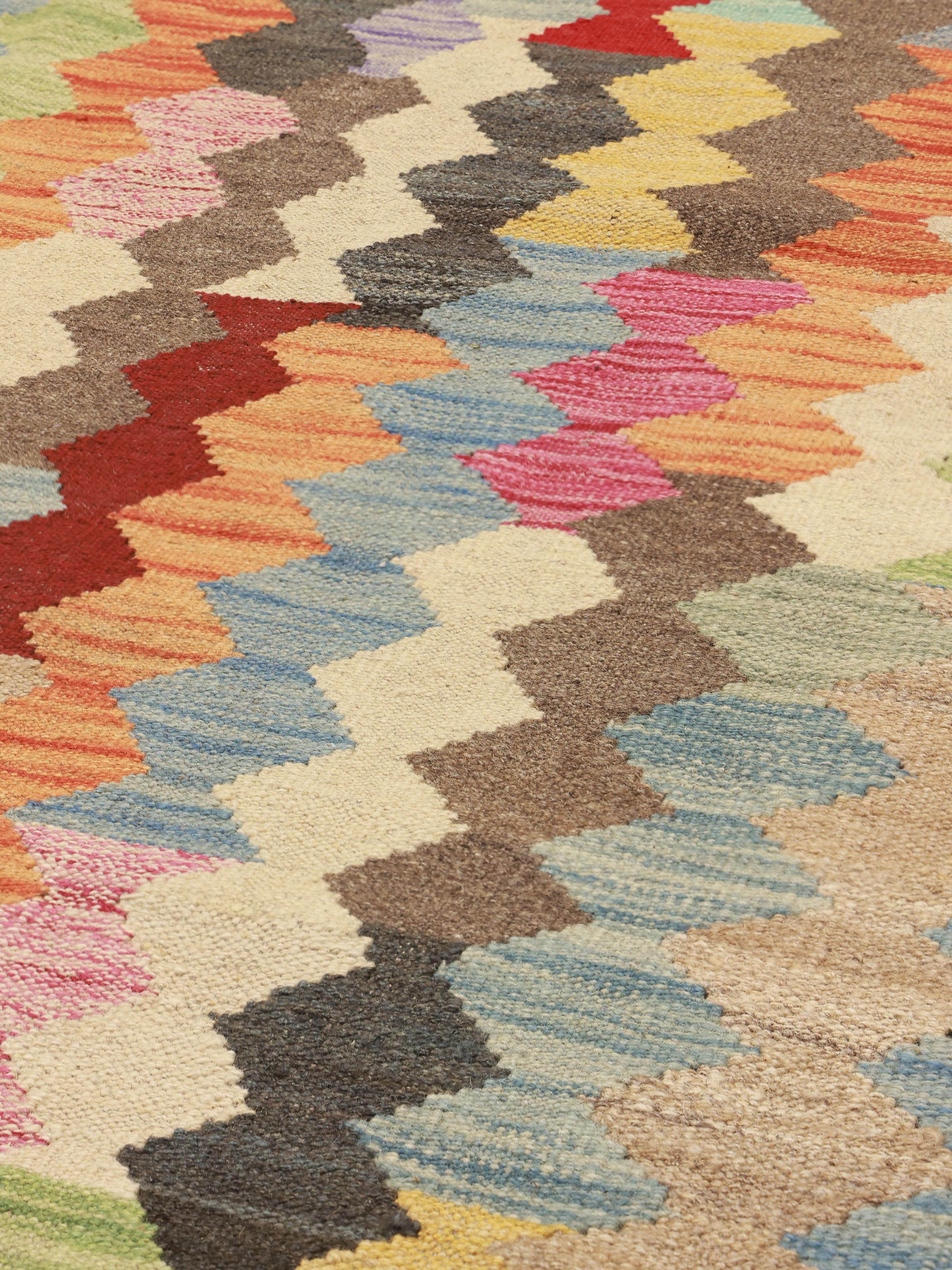
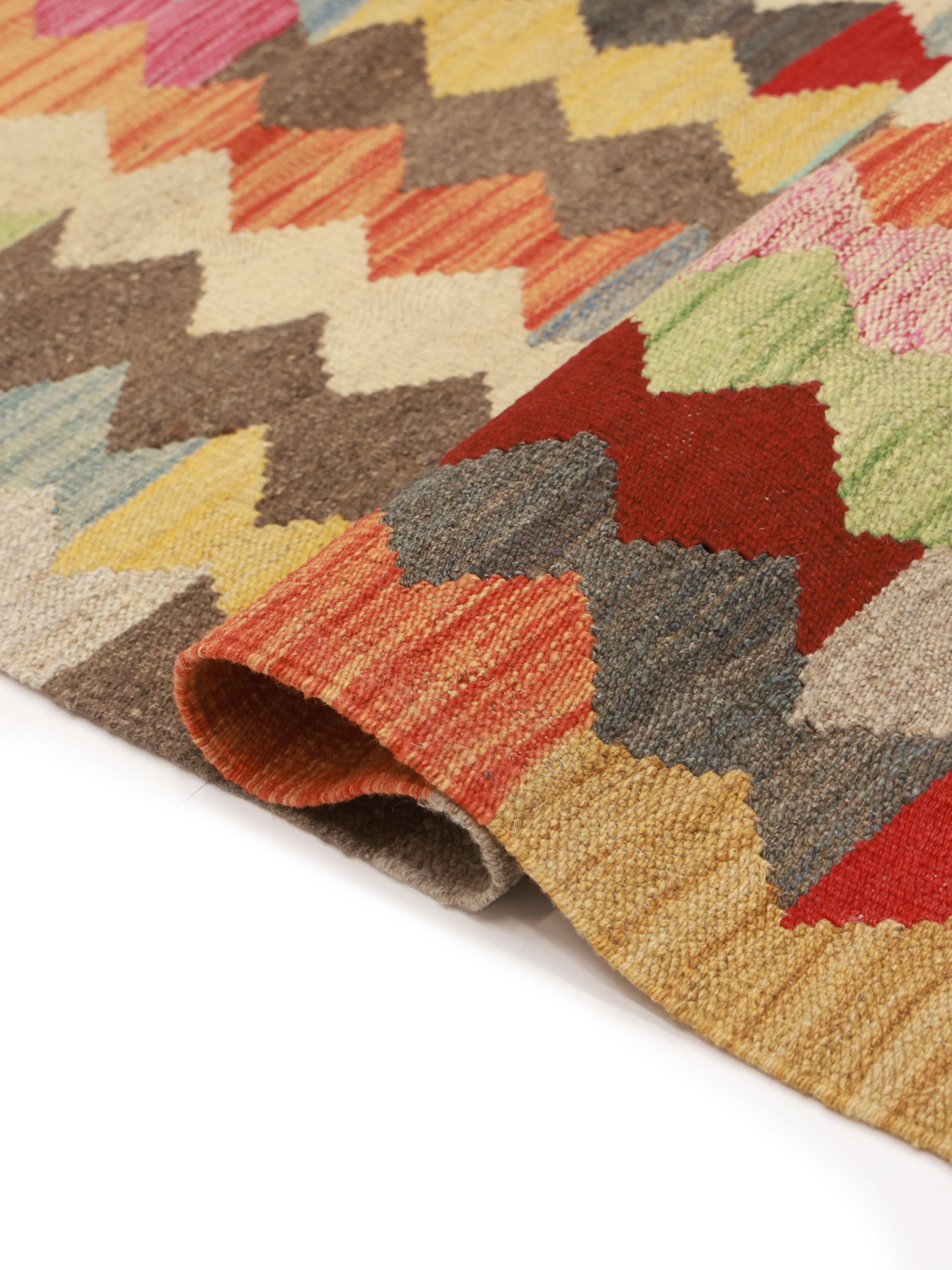
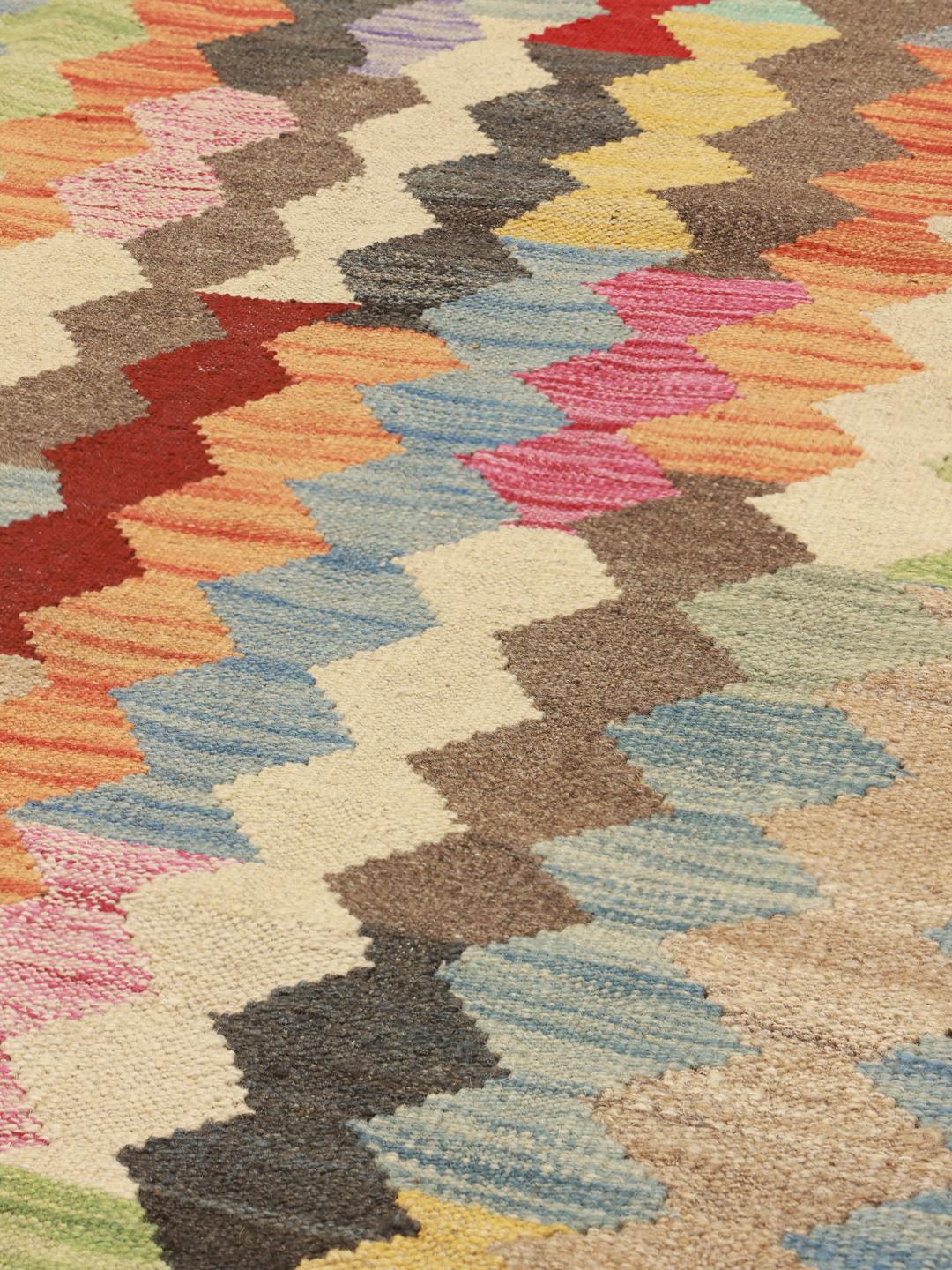
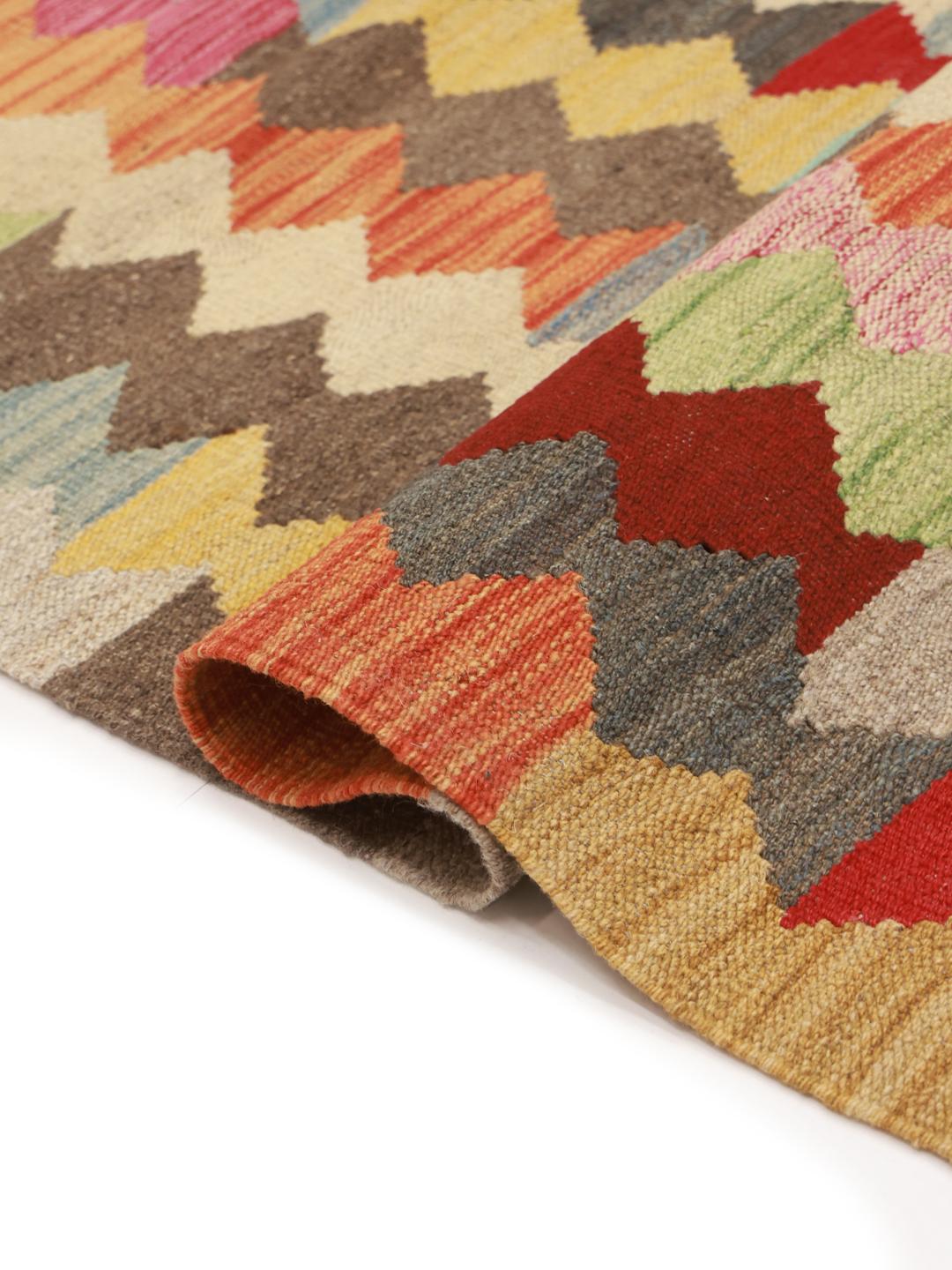
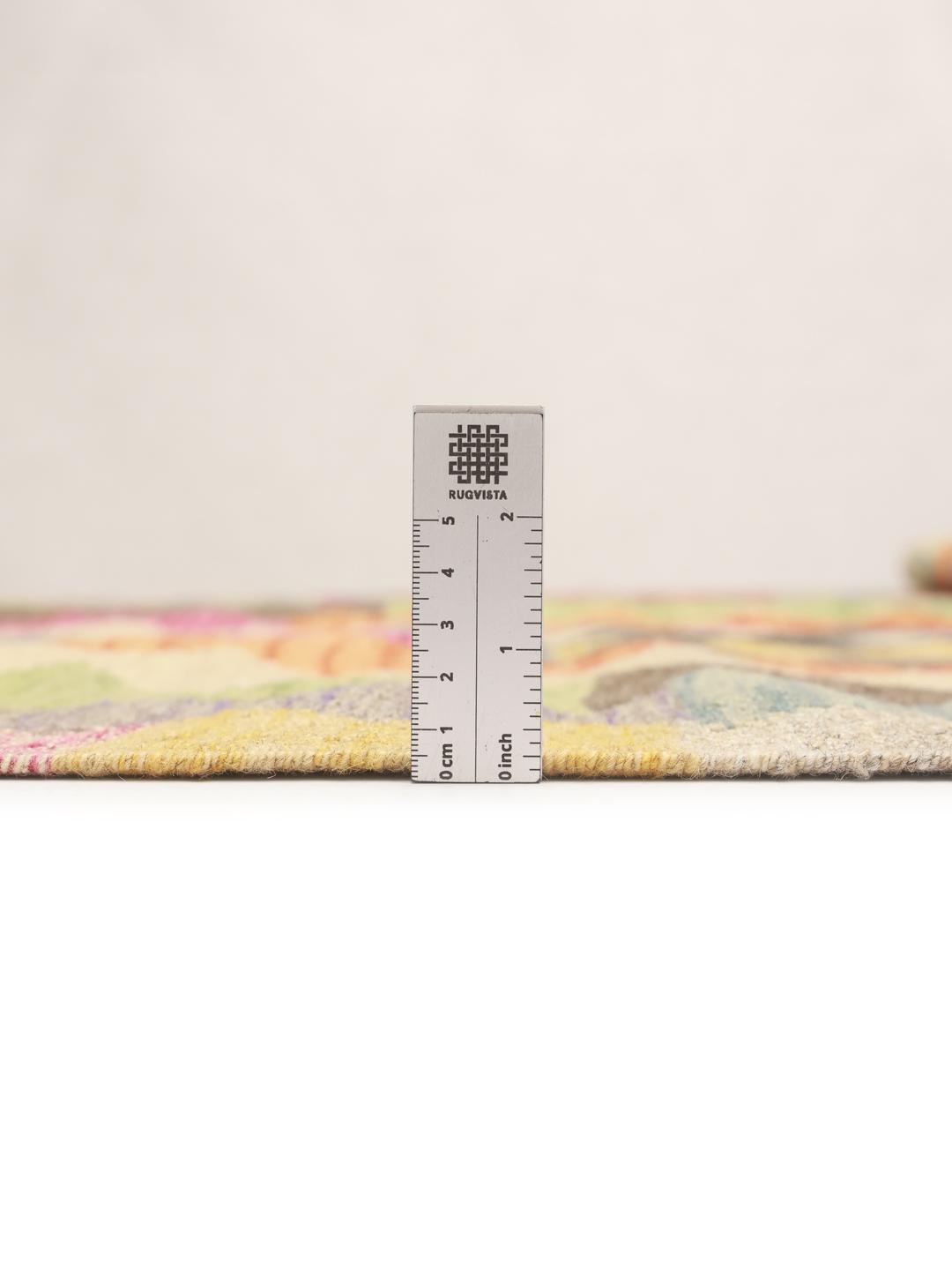
Unlike piled rugs, a kilim is created using a flatweave technique where the vertical and horizontal wool threads are tightly interwoven to form a smooth, pileless surface. This traditional method results in a lightweight yet incredibly durable textile that is reversible, offering two usable sides with slightly different visual textures. The tightness of the weave ensures that the intricate geometric patterns remain sharp and well-defined over decades of use.
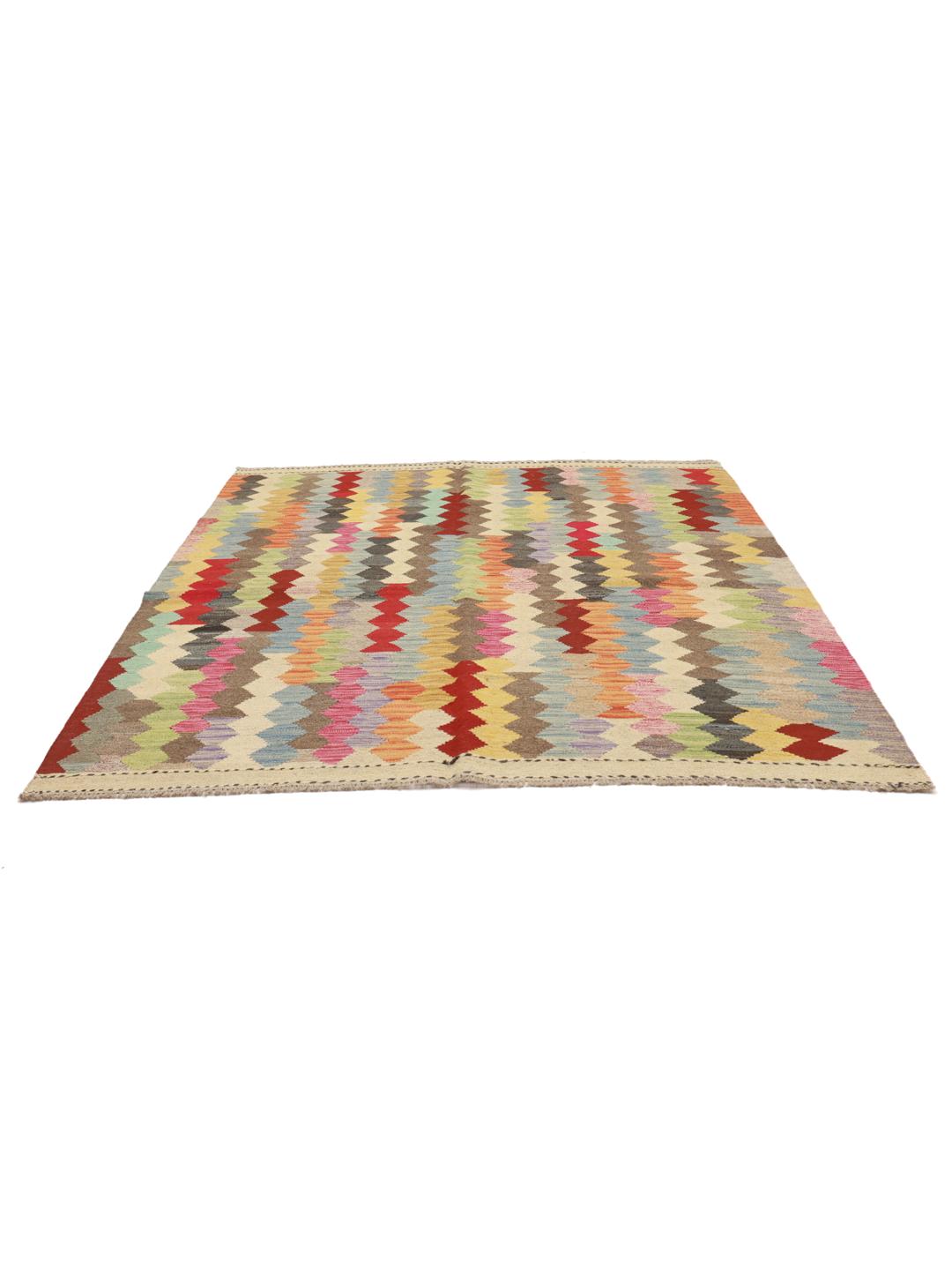
The Kelim Ariana Trend style is celebrated for its bold, repeating geometric motifs, often featuring interlocking diamonds and stepped patterns that run across the field. Traditionally, these designs carry symbolic meanings related to protection, fertility, and the natural world. While historical kilims often favoured earthy tones, contemporary Ariana pieces embrace a more vibrant, multicoloured palette, breathing new life into ancient design languages.
Today, Afghan kilims are highly sought after by collectors and interior design enthusiasts alike for their graphic appeal and cultural depth. Owning one of these handwoven pieces means bringing a slice of living history into your home, celebrating a craft tradition that has been passed down through families for centuries.