Afghan Kelims have a long and storied history rooted in the nomadic and semi-nomadic traditions of Central Asia and Afghanistan. Historically, these flatwoven textiles served multiple purposes beyond floor coverings, acting as tent hangings, storage bags, and blankets. The Old Style designation refers to the revival of traditional design aesthetics, celebrating the rustic charm and historic patterns developed by generations of weavers.
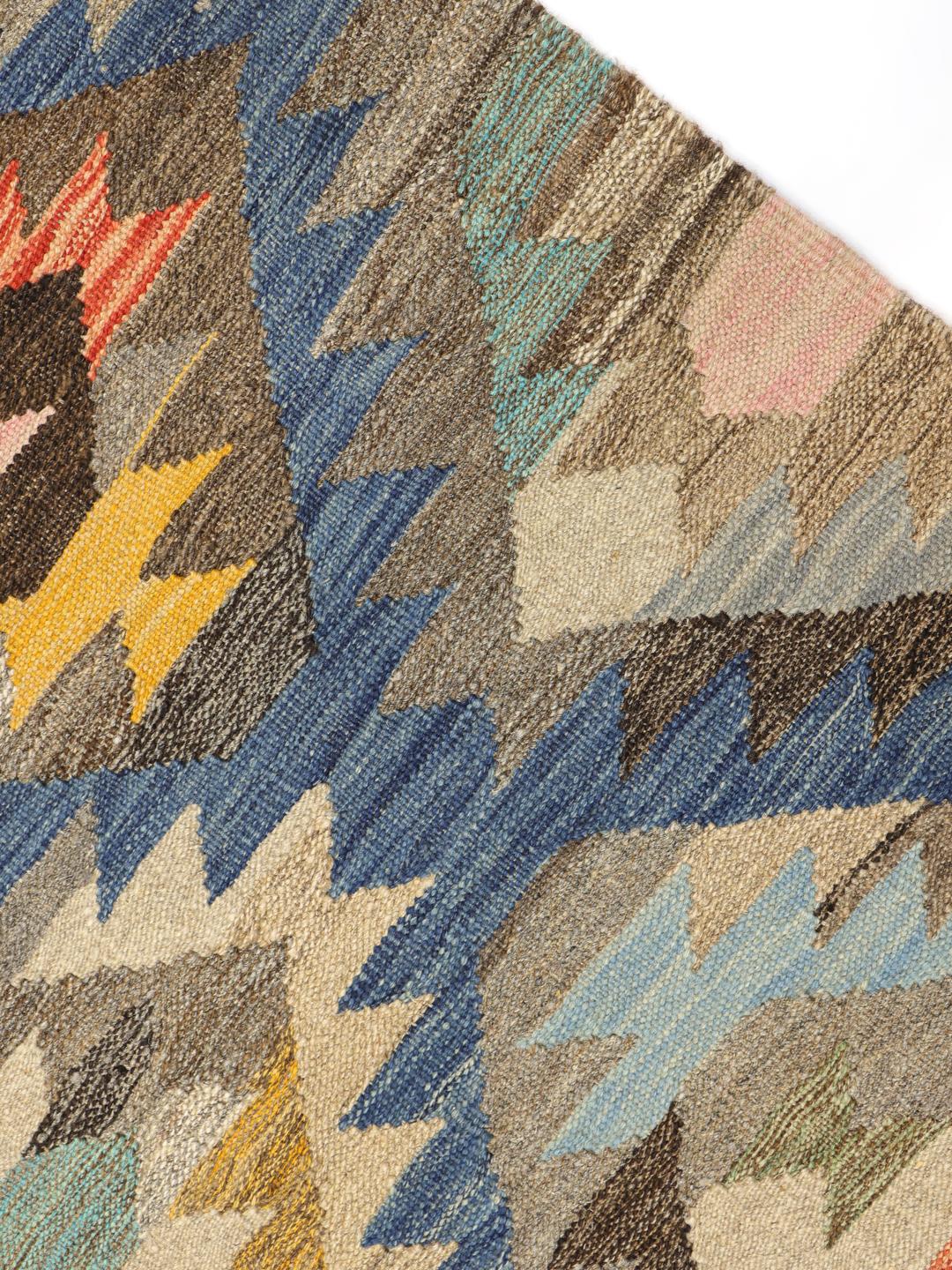
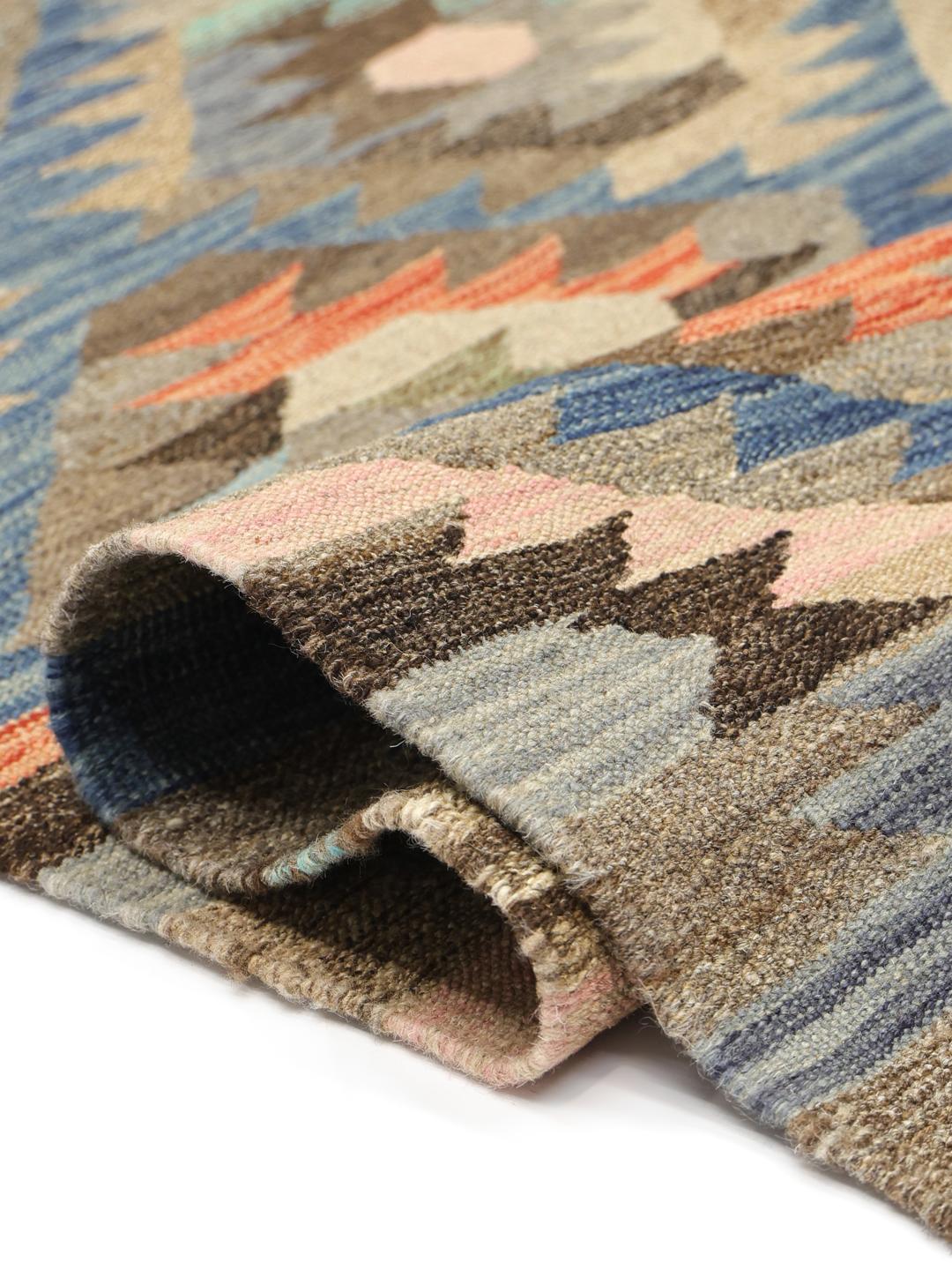
The term Kelim, or kilim, refers to a specific flatweaving technique where the weft strands are tightly interwoven with the warp, creating a pileless fabric. This method produces a lightweight yet exceptionally durable textile with a reversible pattern. Unlike piled rugs, Kelims rely on the intersection of horizontal and vertical threads to build their designs, resulting in characteristic stepped geometric edges.
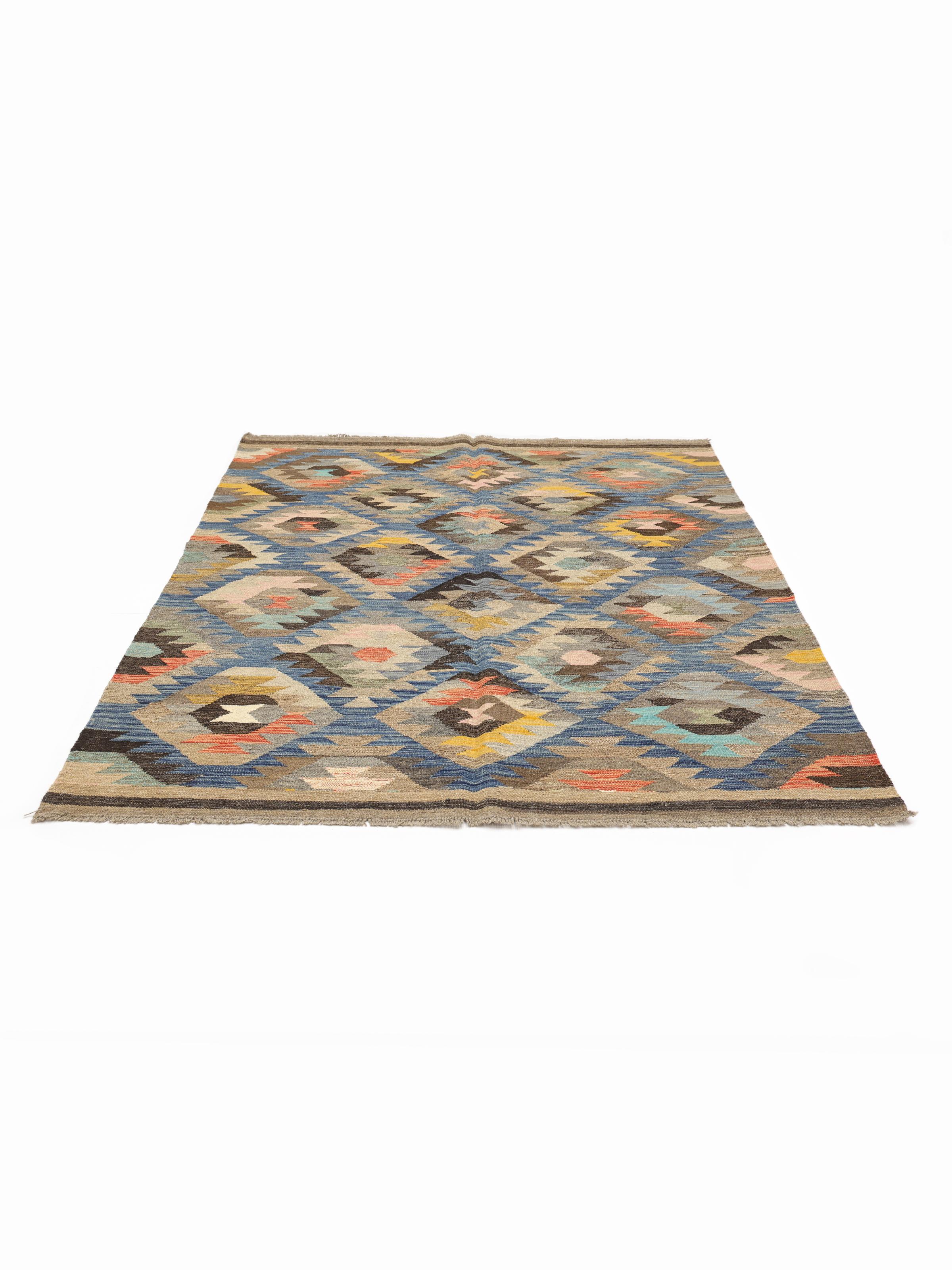
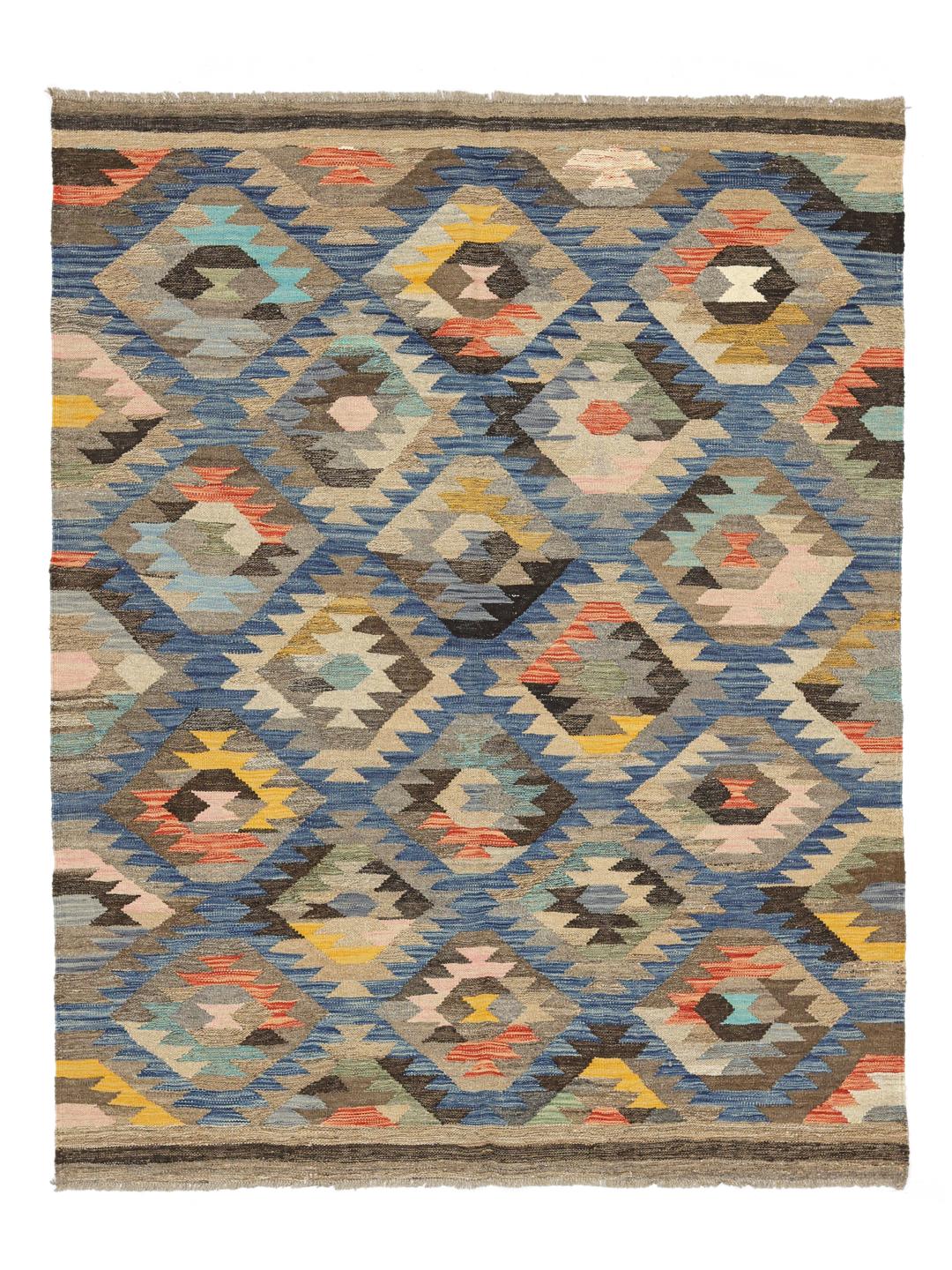
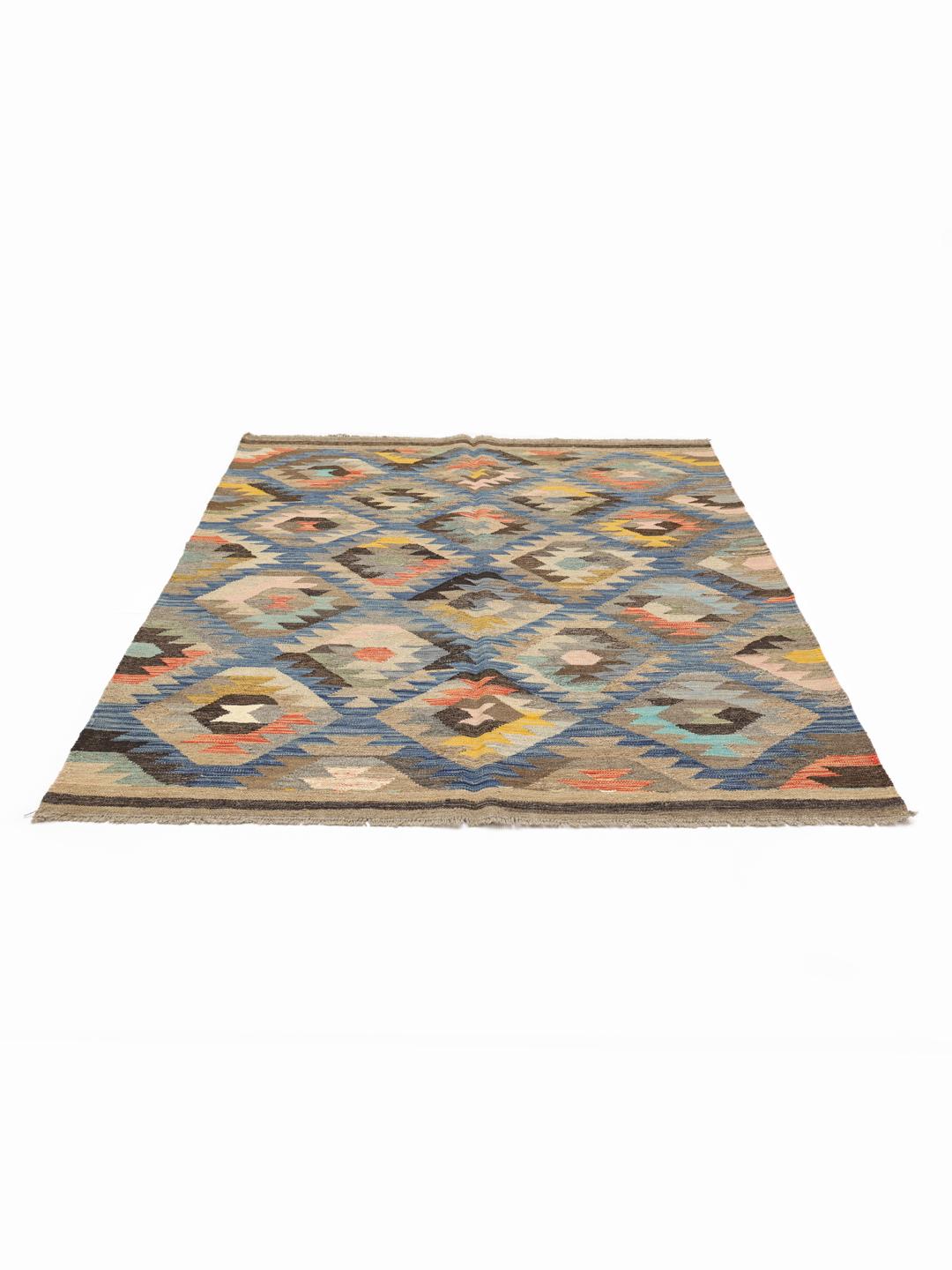
The visual identity of this rug is defined by its repeating diamond motifs and intricate geometric borders. These traditional patterns are deeply symbolic, often representing protection, fertility, and the natural landscape of the weaver's surroundings. The use of varied colours, from deep blues to warm earth tones, showcases the regional preference for balanced, harmonious palettes that age gracefully over time.
Today, these rugs are highly valued by collectors and homeowners alike for their cultural weight and artistic integrity. They represent a living link to ancient weaving traditions, carrying the stories and skills of Afghan artisans into contemporary interiors. Owning a hand-woven Kelim is an appreciation of slow craft and enduring design heritage.