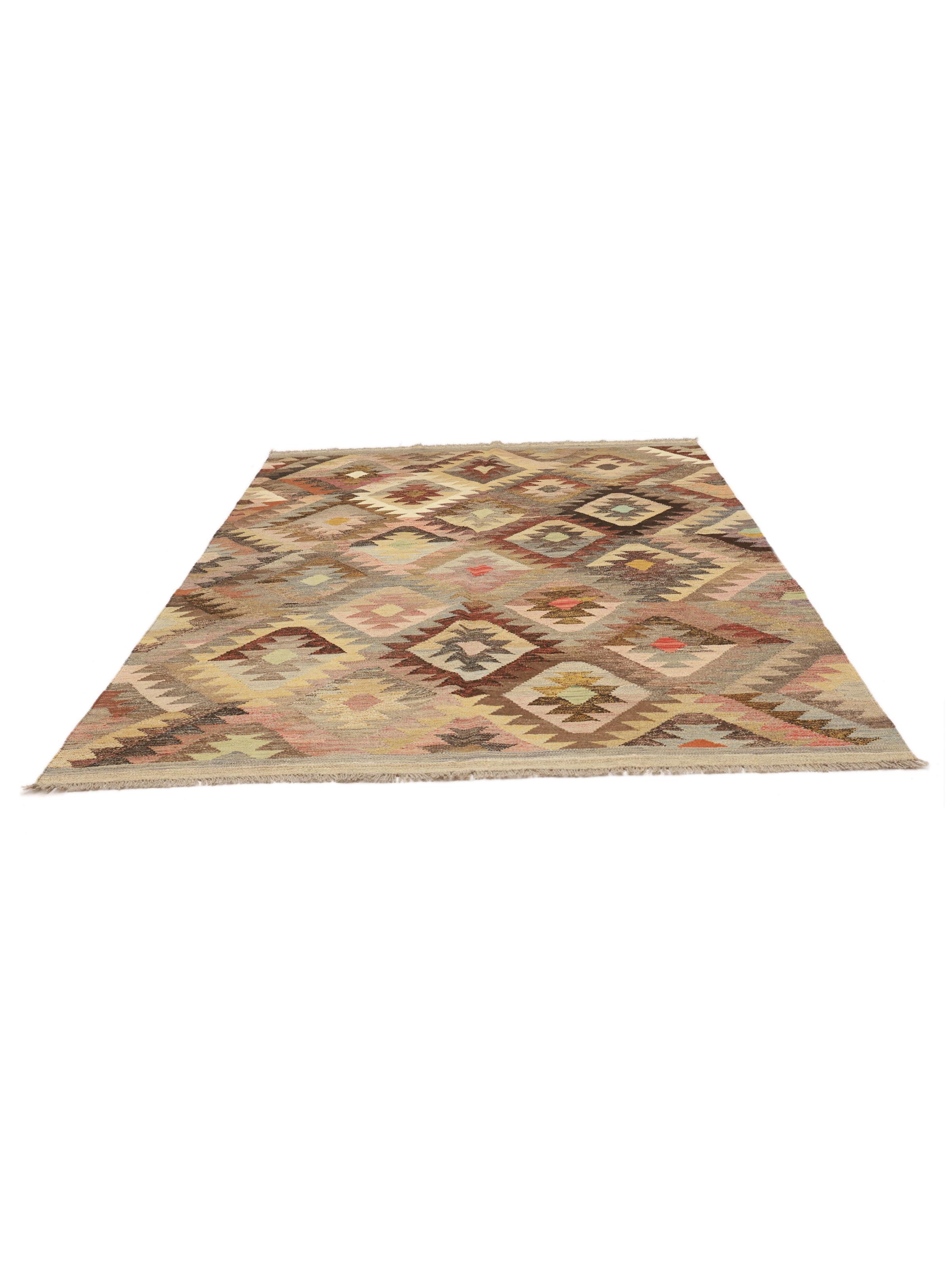
The tradition of flatweaving, or Kilim making, is deeply rooted in the nomadic and village cultures of Afghanistan and the wider Middle East. Historically, these versatile textiles were created not just as floor coverings, but as functional art for daily life, serving as blankets, saddlebags, and protective tent hangings. The Kelim Ariana tradition draws on these ancient roots, bringing regional patterns into a contemporary context.
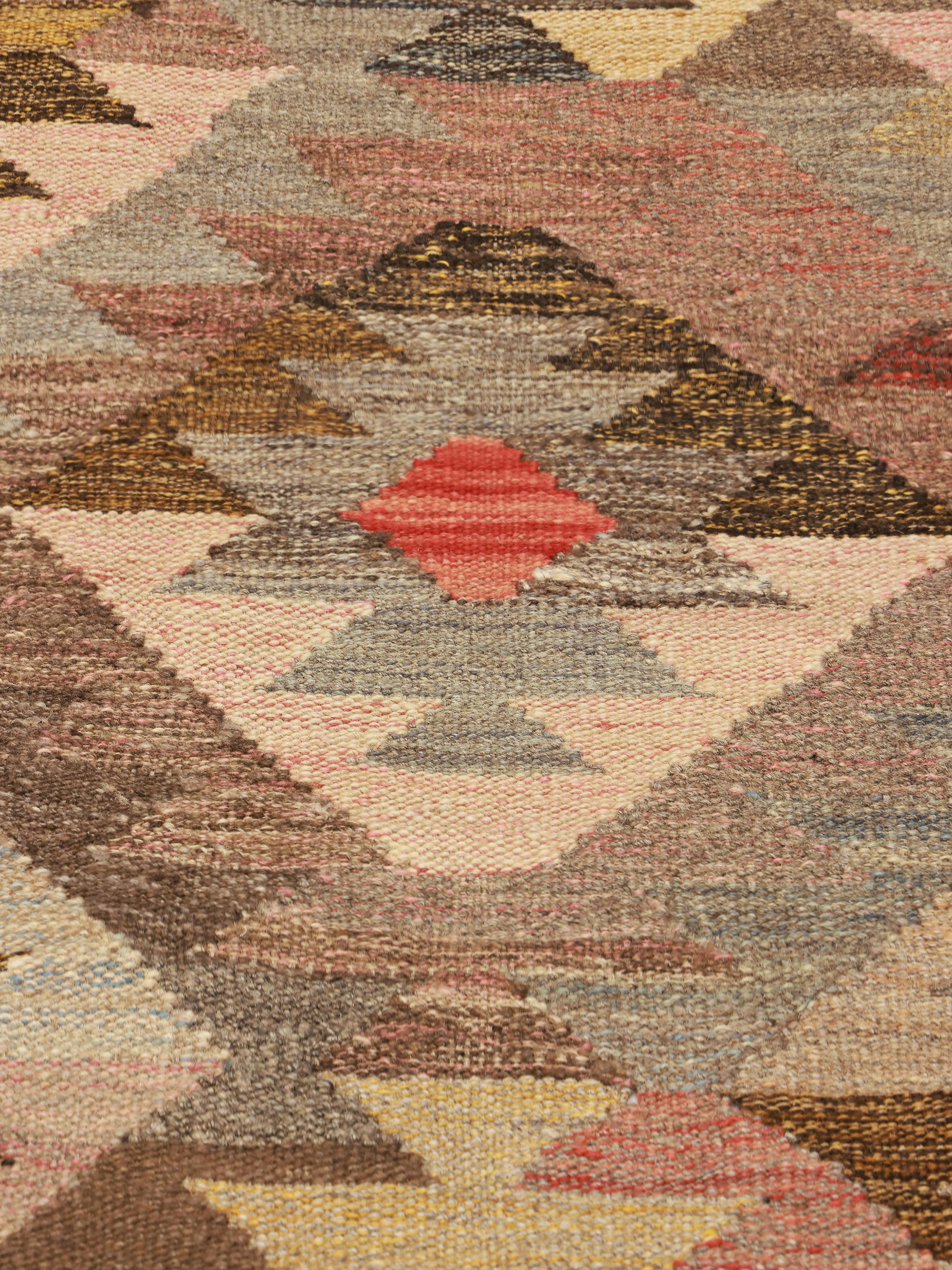
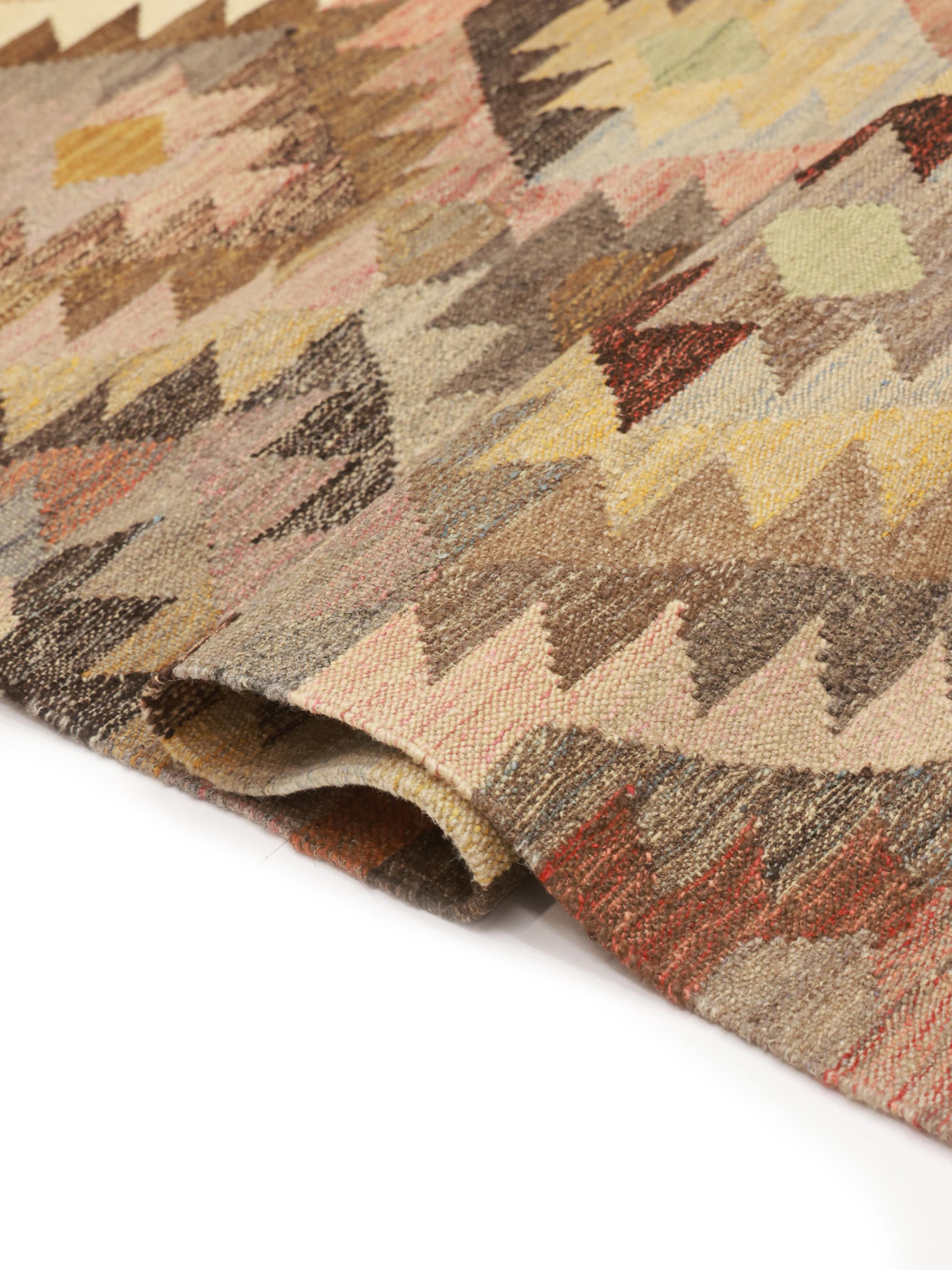
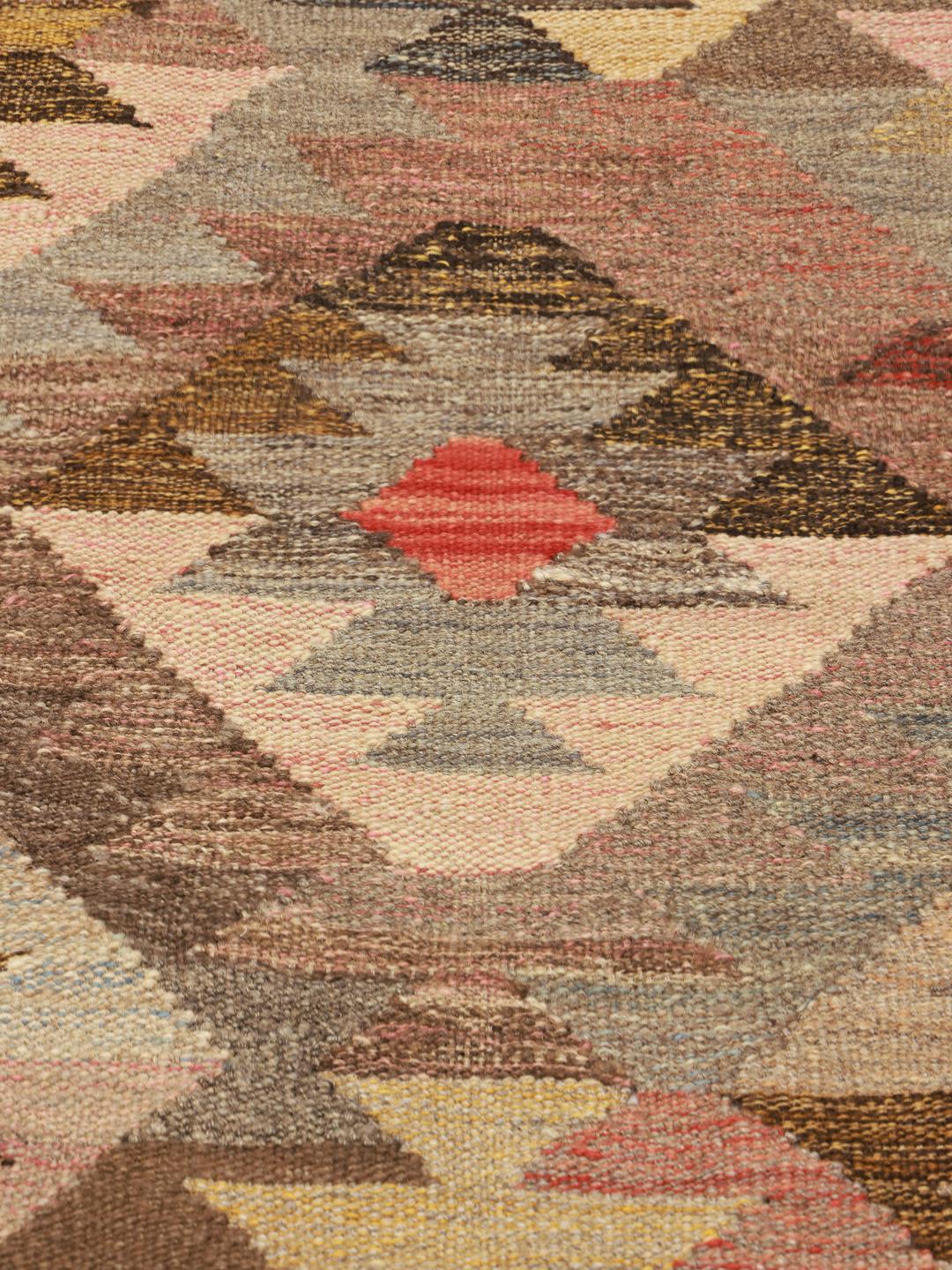
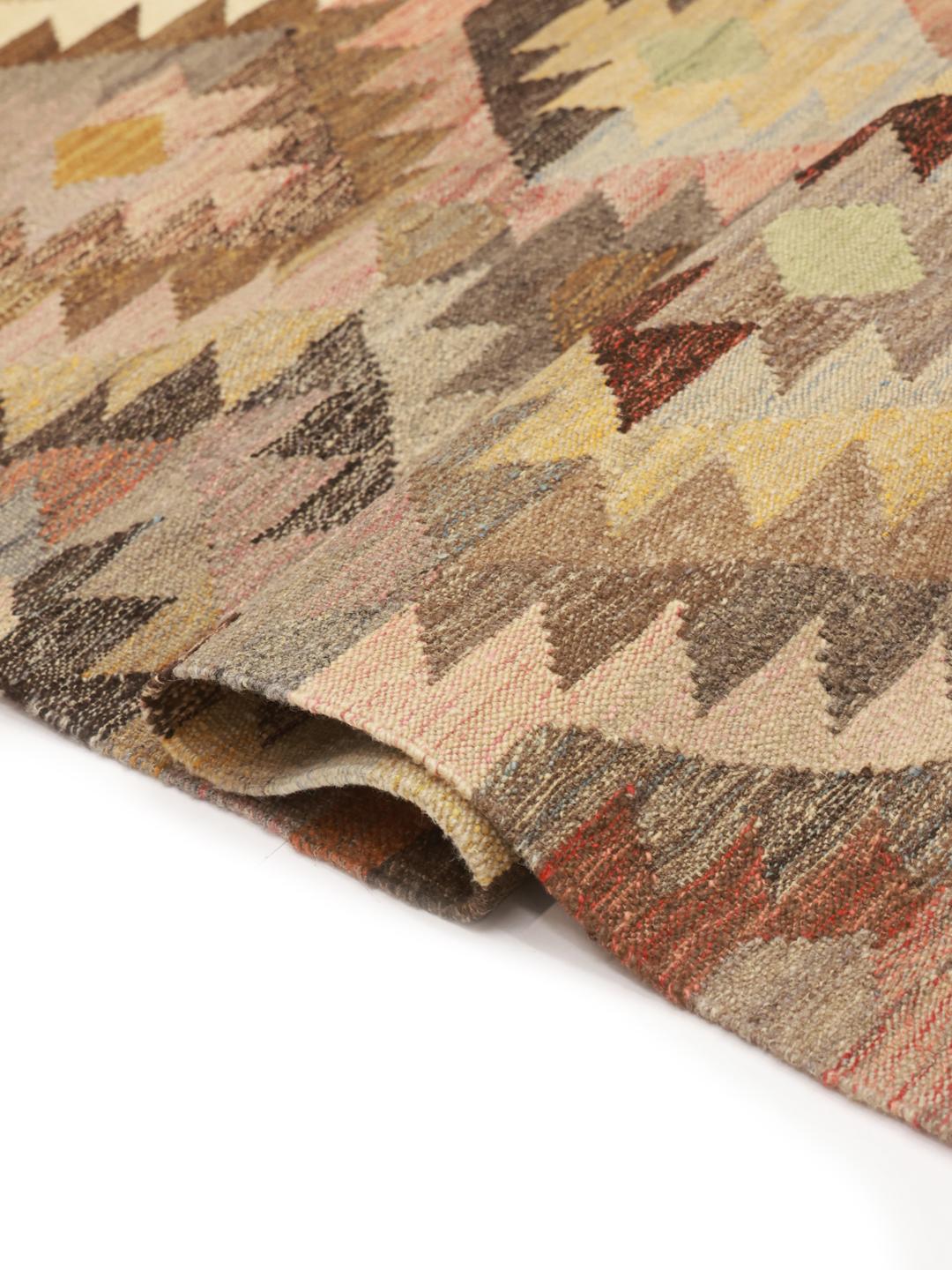
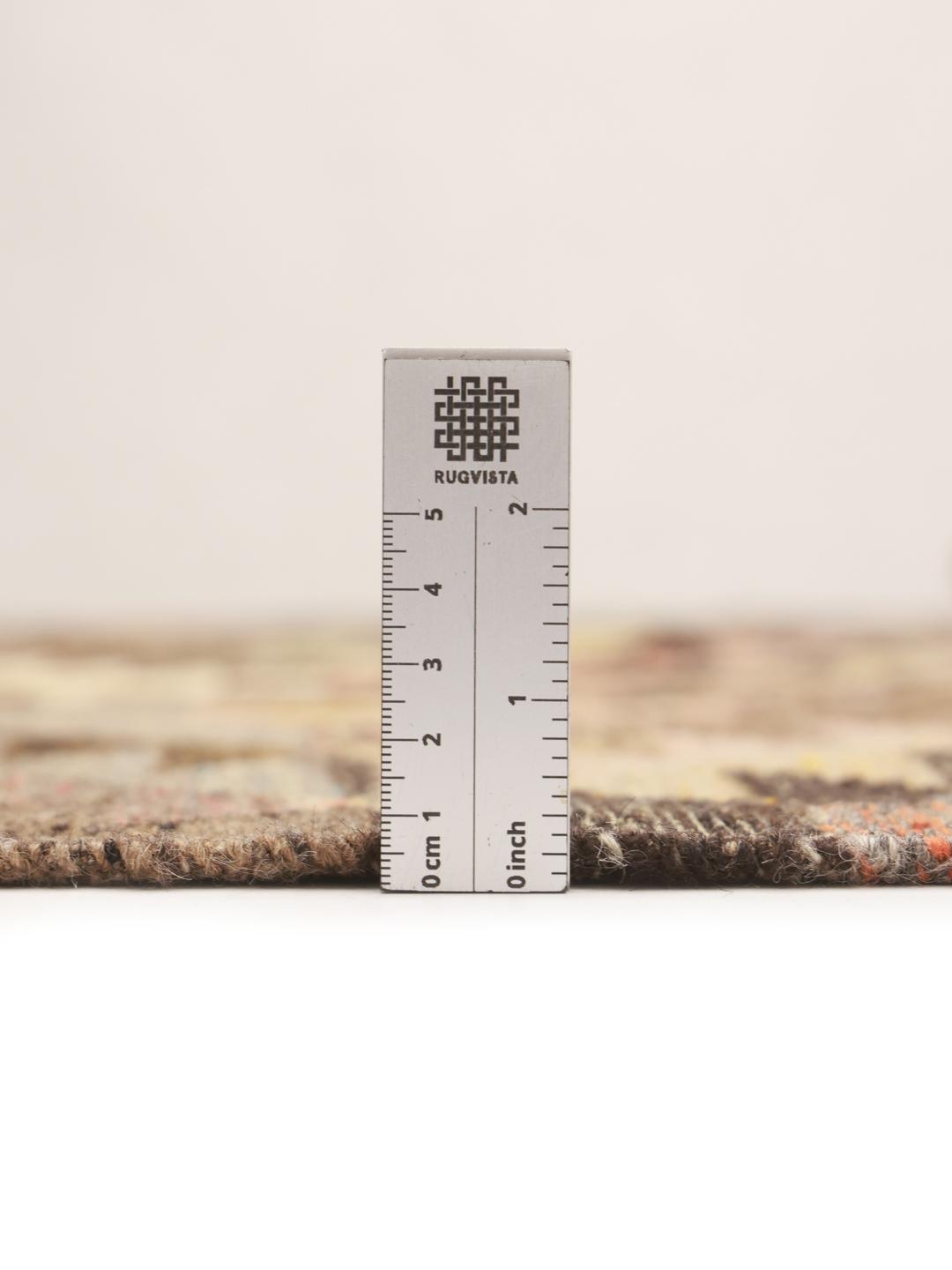
Unlike piled rugs, a Kilim is created using a flatweave technique where the horizontal and vertical threads are tightly interwoven. This method produces a lightweight, reversible textile with no pile, celebrated for its clean lines and structural integrity. The flat construction makes the rug highly durable and easy to handle, offering a different tactile experience compared to heavy knotted pieces.
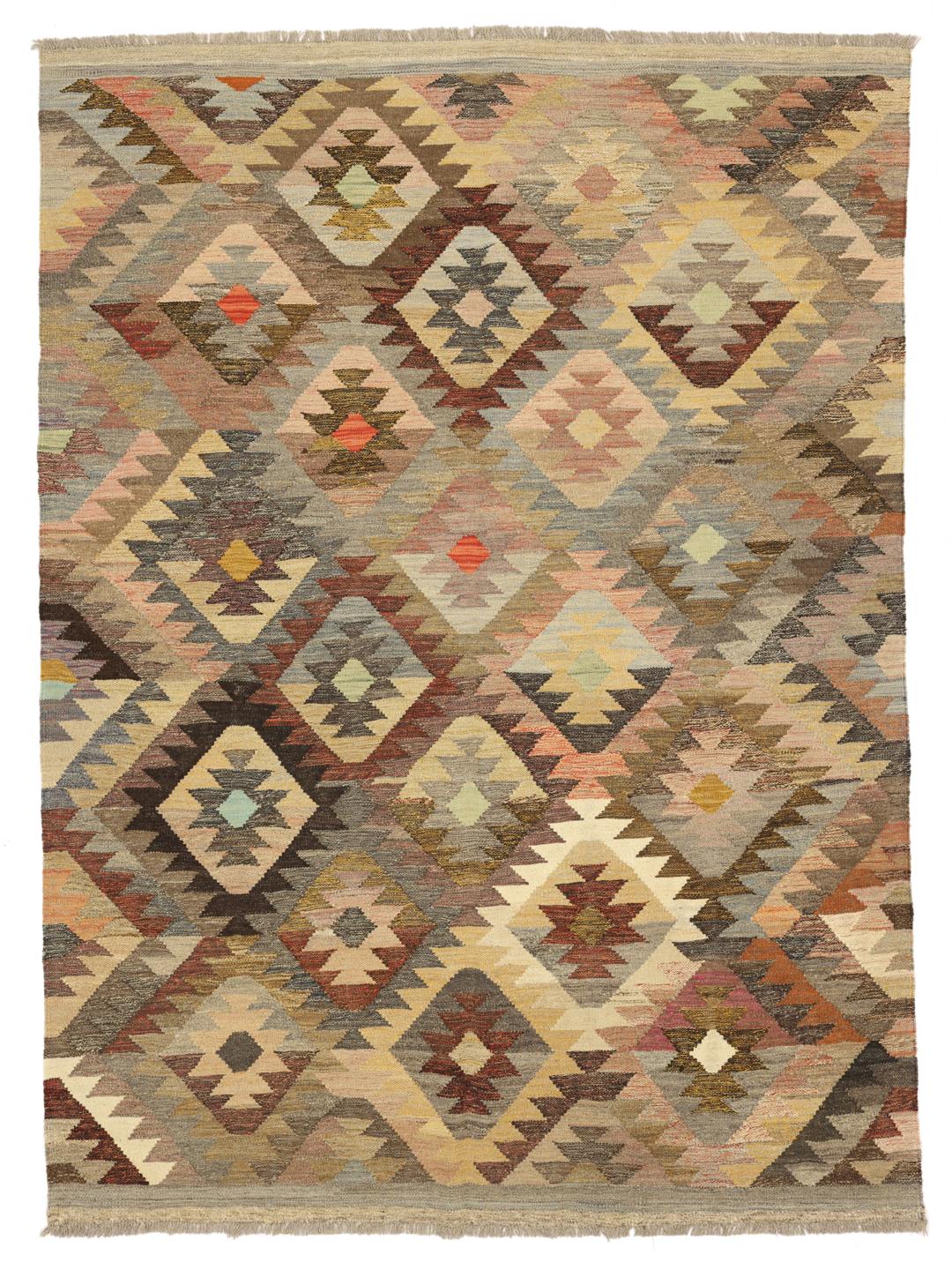
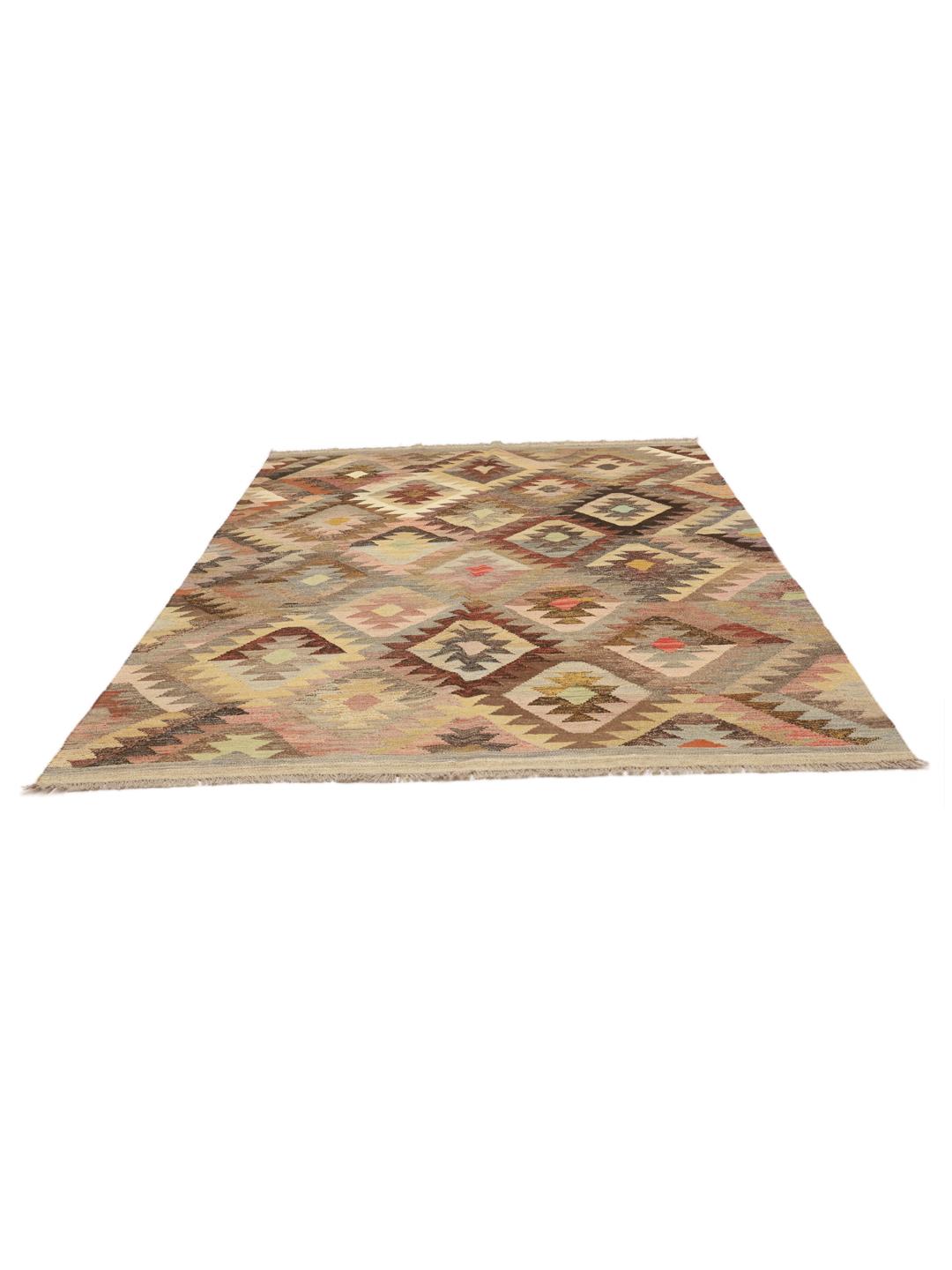
The visual language of the Ariana style is defined by its striking geometric patterns, particularly the repeating diamond motifs and stepped borders seen across the field. These shapes are traditional symbols representing protection, fertility, and the natural world, rendered in a harmonious palette of warm earth tones and soft neutrals. The balanced arrangement of the patterns creates a sense of rhythm and calm across the floor.
Today, Afghan Kilims are highly valued by collectors and homeowners alike for their graphic appeal and honest craftsmanship. Owning a piece from this region is a way to preserve and support a living craft tradition that has been passed down through generations of weavers, making it a meaningful addition to any thoughtful home.