The history of the Afghan Kelim is deeply rooted in the nomadic and semi-nomadic traditions of the Middle East. For centuries, these flat-woven rugs have been essential to life in the region, serving as versatile floor coverings, wall hangings, and even storage bags for travelling tribes. The art of the Kelim is defined by its lack of a knotted pile, relying instead on the interlacing of warp and weft to create intricate, durable textiles that can be easily transported across rugged terrains.
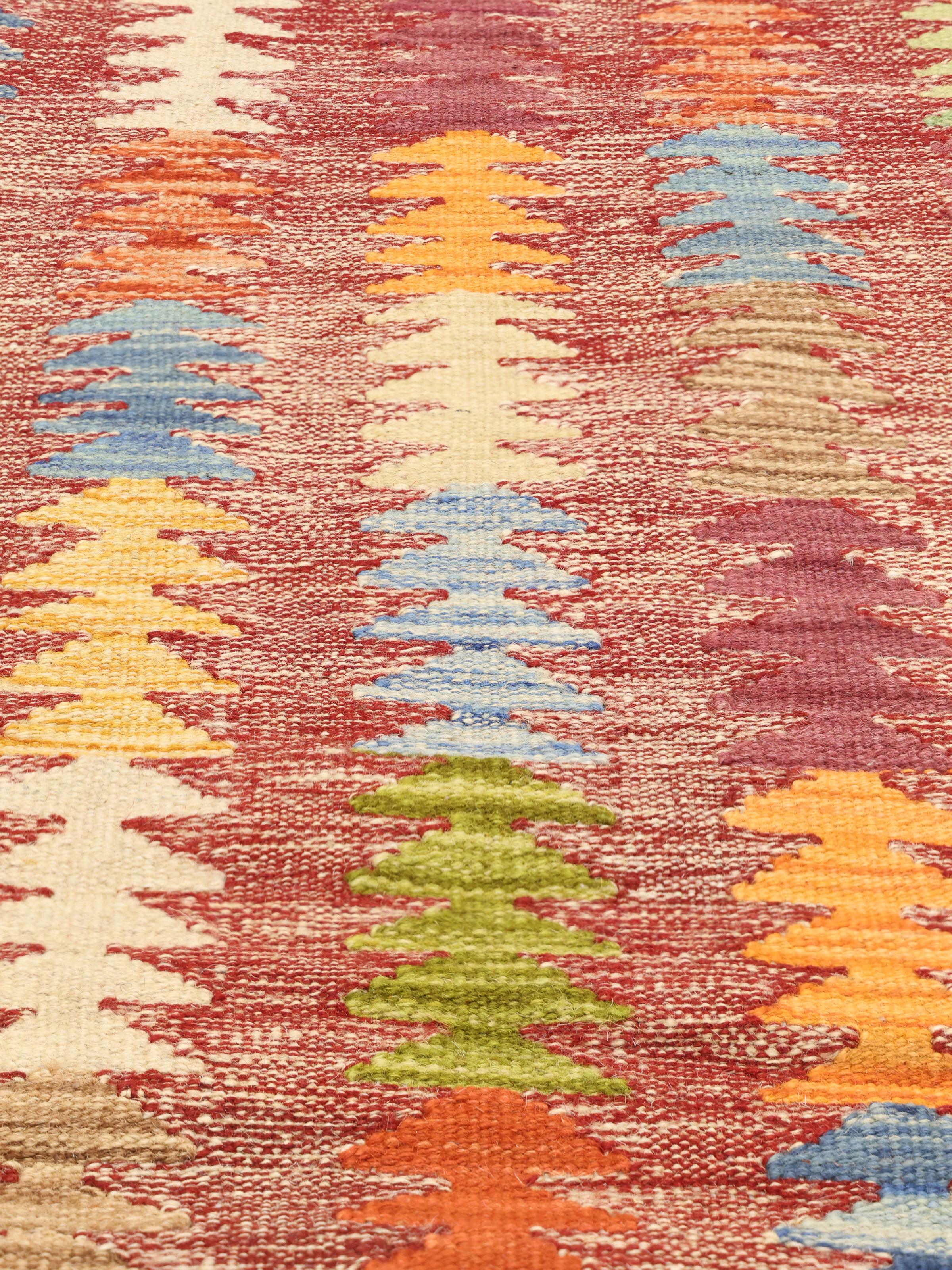
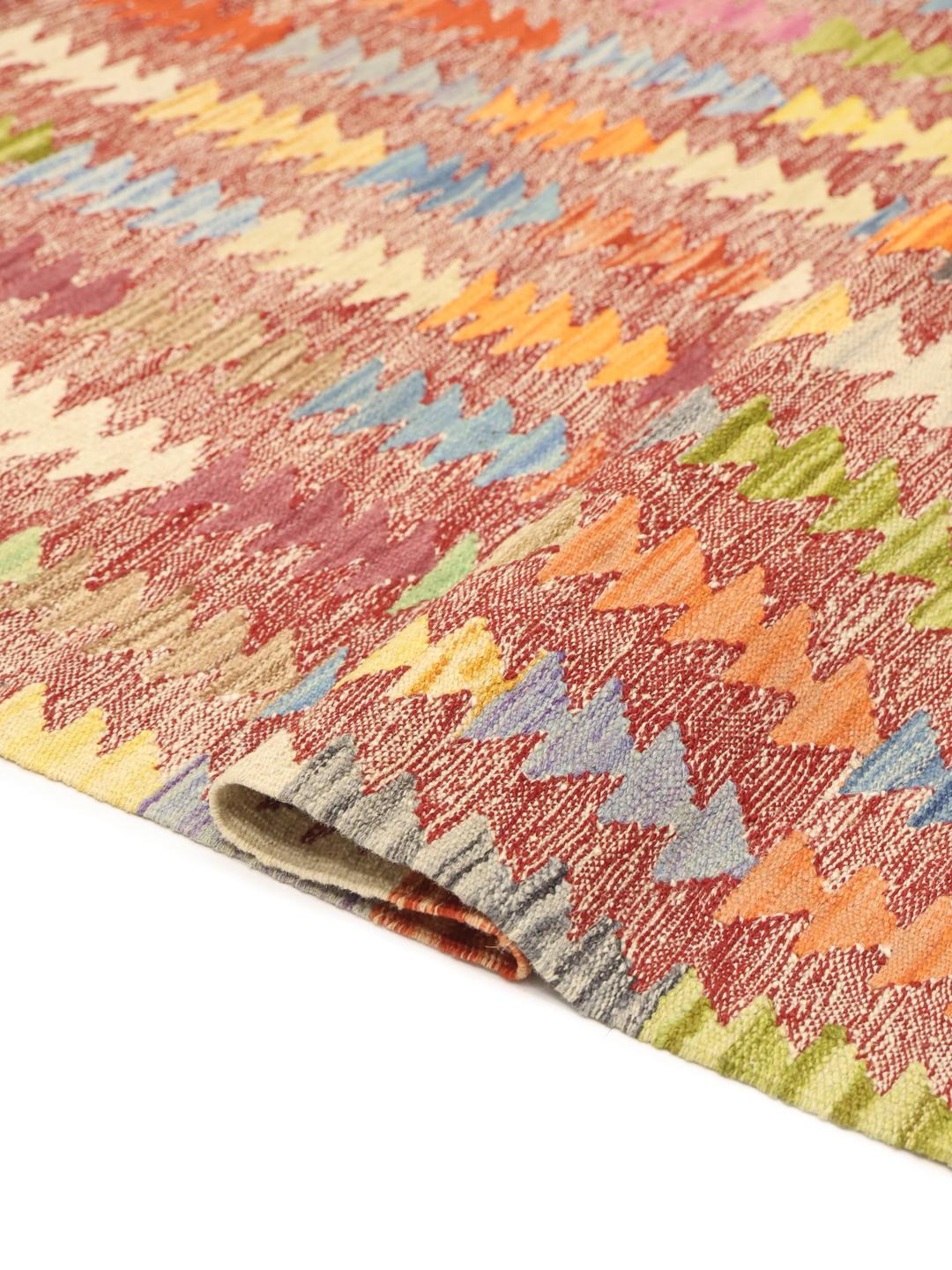
The term 'Kelim' refers to the specific flat-weave technique where the weft threads are pulled tightly over the warp threads to hide the foundation completely. This method is what gives the rug its smooth, low-profile surface. Because no knots are used, the pattern is created by changing the colour of the weft yarn, which requires the weaver to have a precise understanding of colour placement and tension to ensure the geometric shapes remain sharp and uniform throughout the piece.
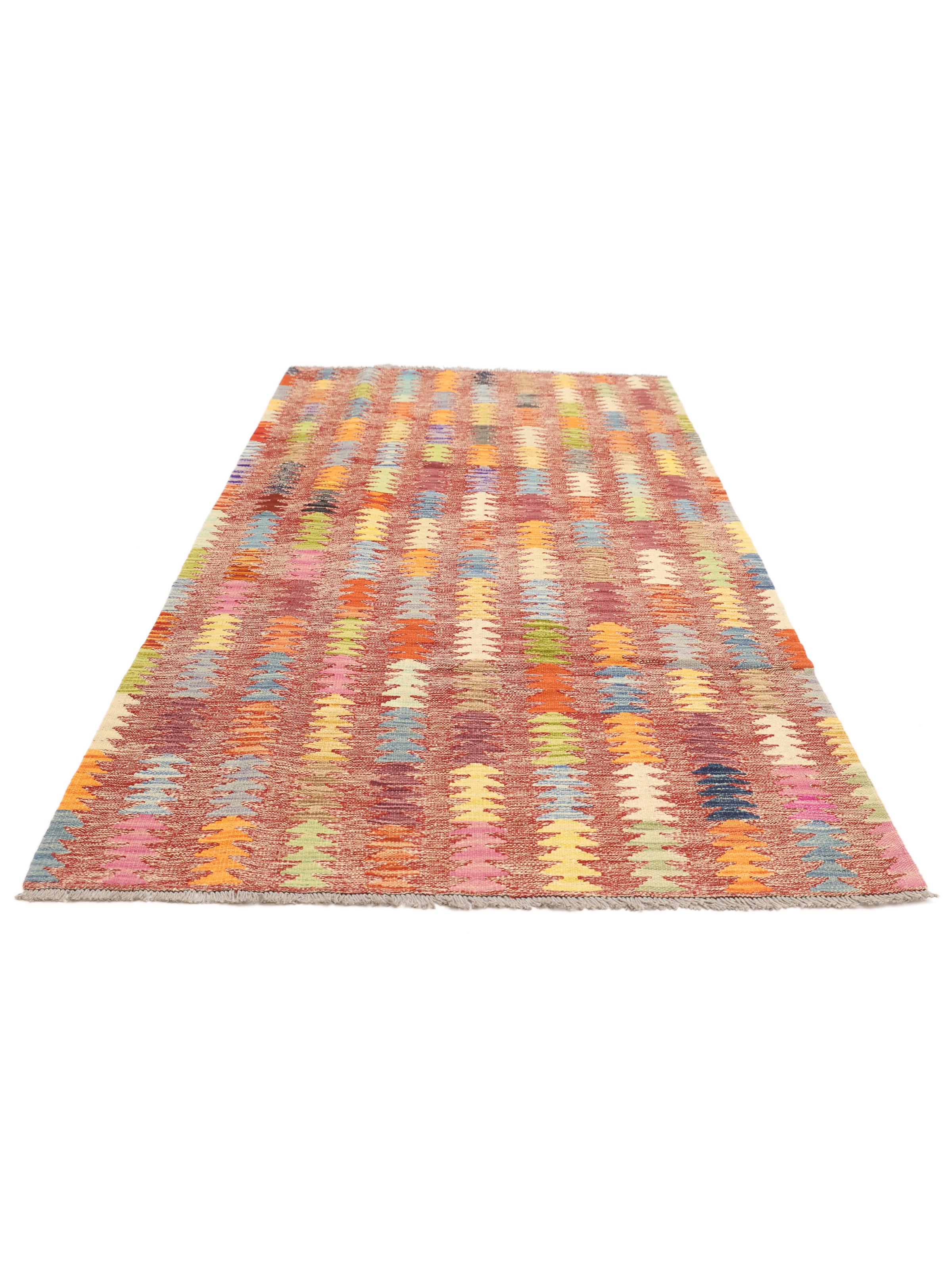
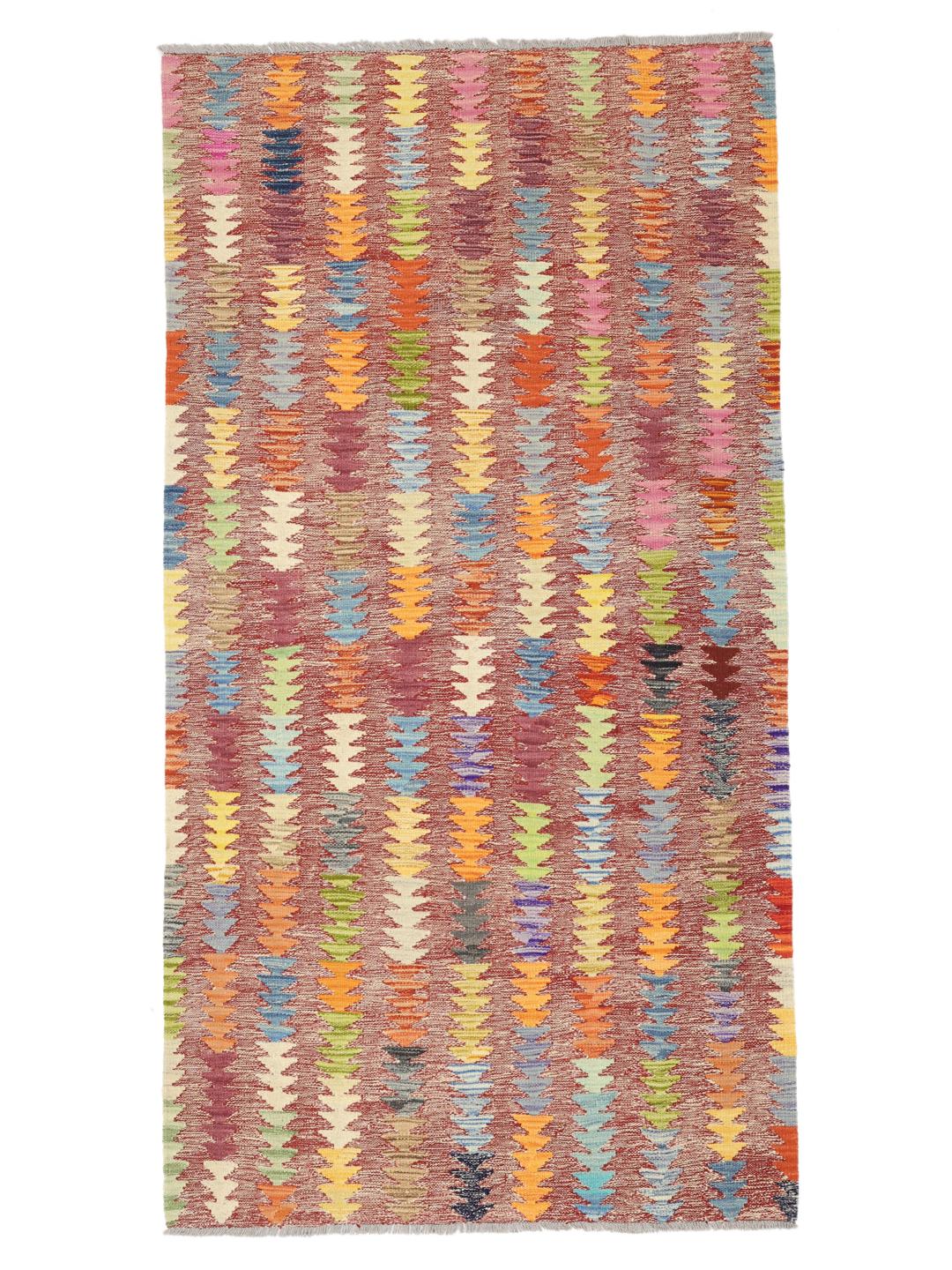
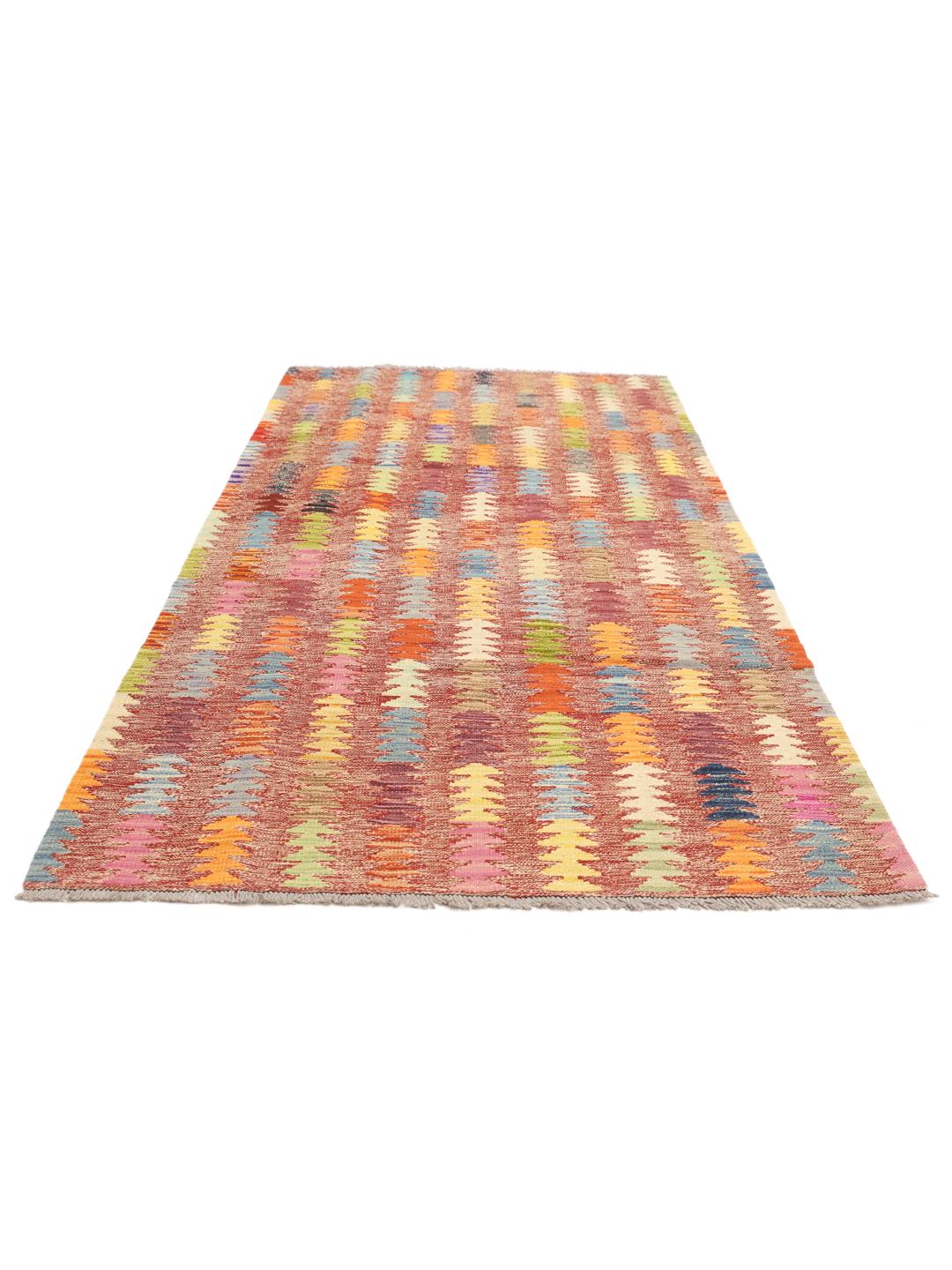
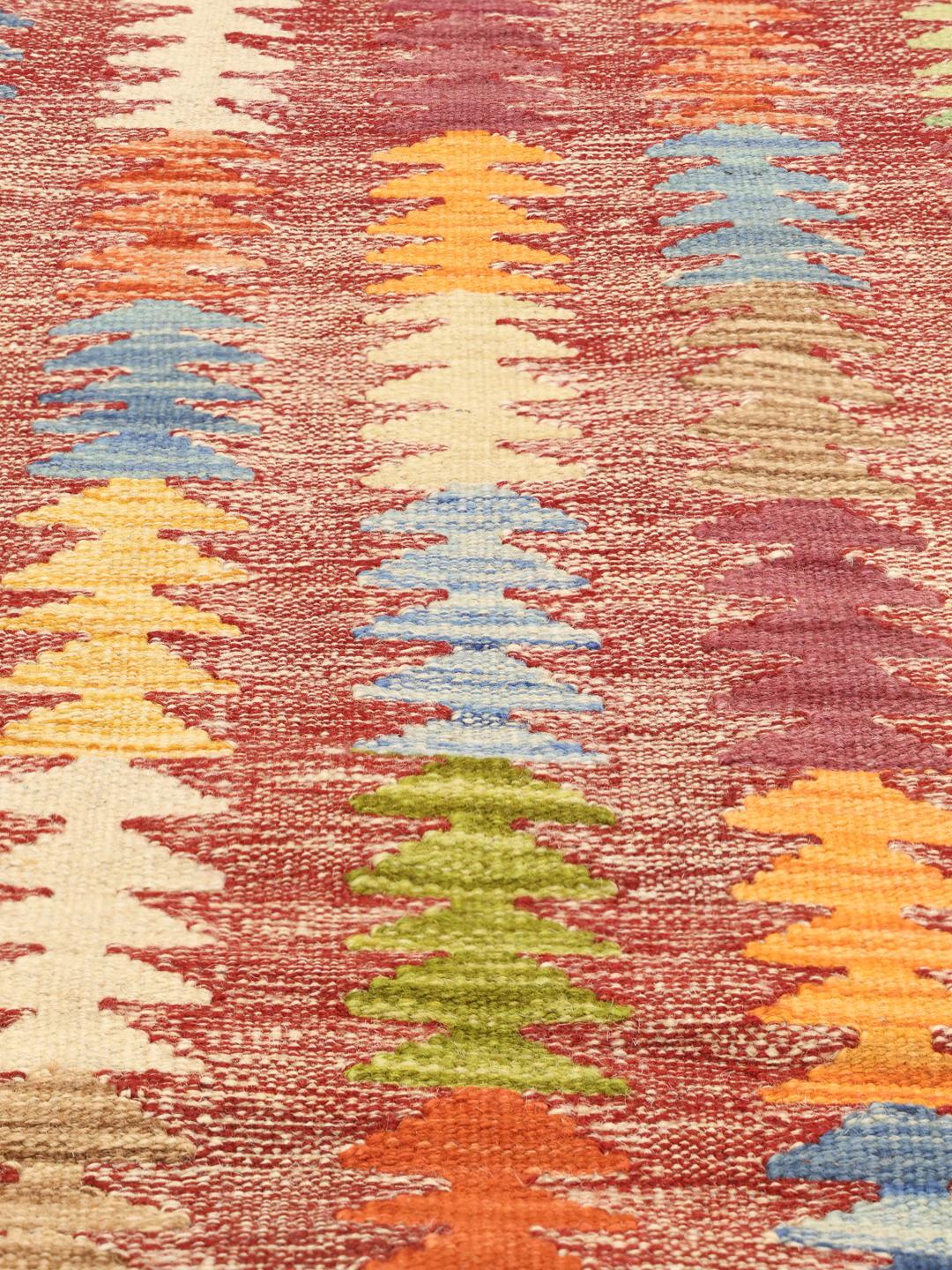
Visually, Afghan Kelims are celebrated for their bold, geometric language. Traditional designs often utilise repeating motifs such as diamonds, triangles, or stylised symbols that hold cultural significance and vary between different weaving communities. This particular piece showcases a vibrant colour palette, which is a hallmark of the tradition, demonstrating how weavers use natural dyes to create contrasts that feel both energetic and deeply connected to their regional heritage.
Valued by collectors and interior designers alike, the Afghan Kelim is more than just a floor covering. It is a testament to a resilient craft tradition that has survived and evolved through generations. Owning an authentic, hand-woven Kelim is an opportunity to preserve a piece of living history, bringing the skill, patience, and cultural narrative of the artisan into your own home.