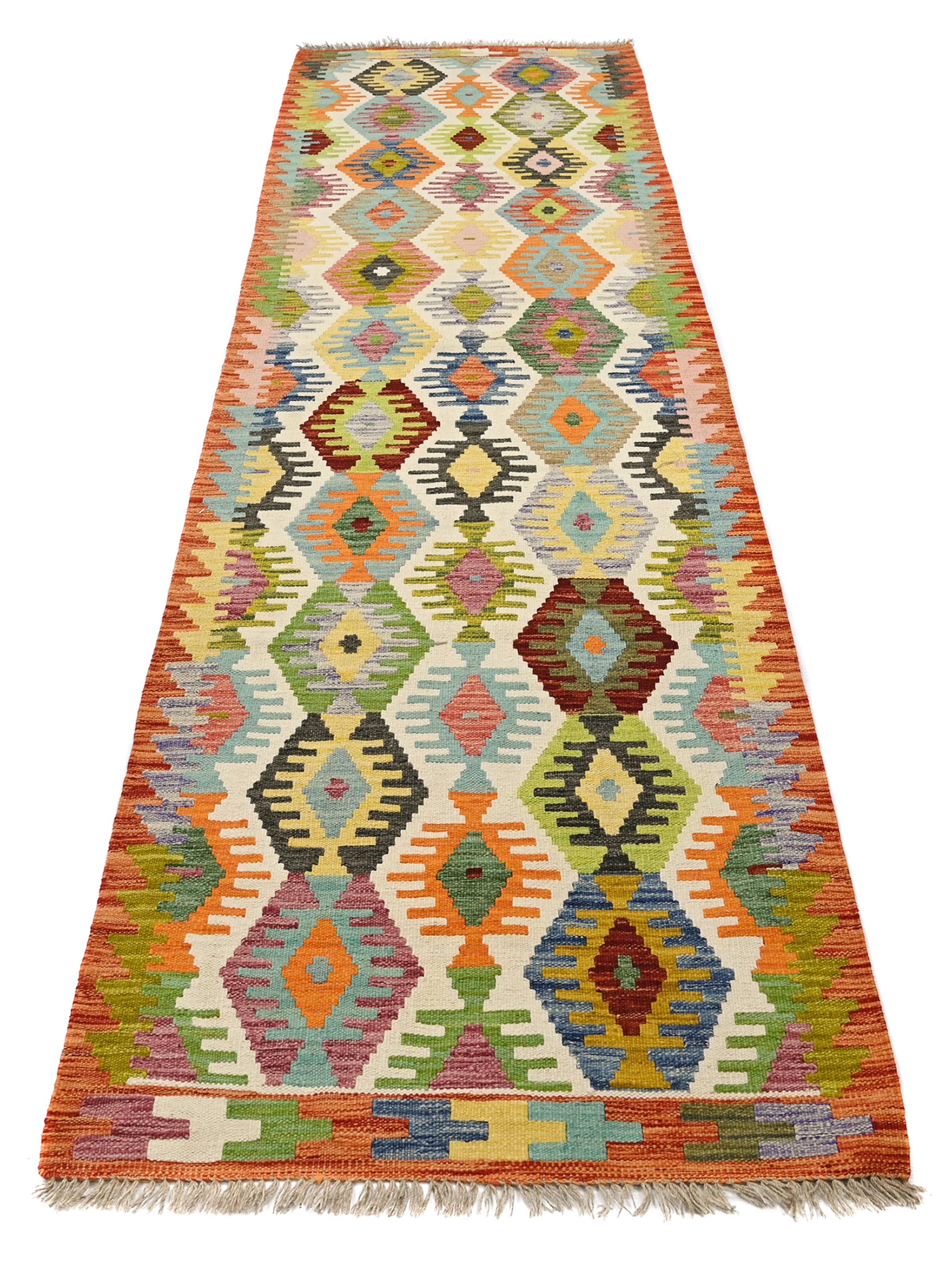
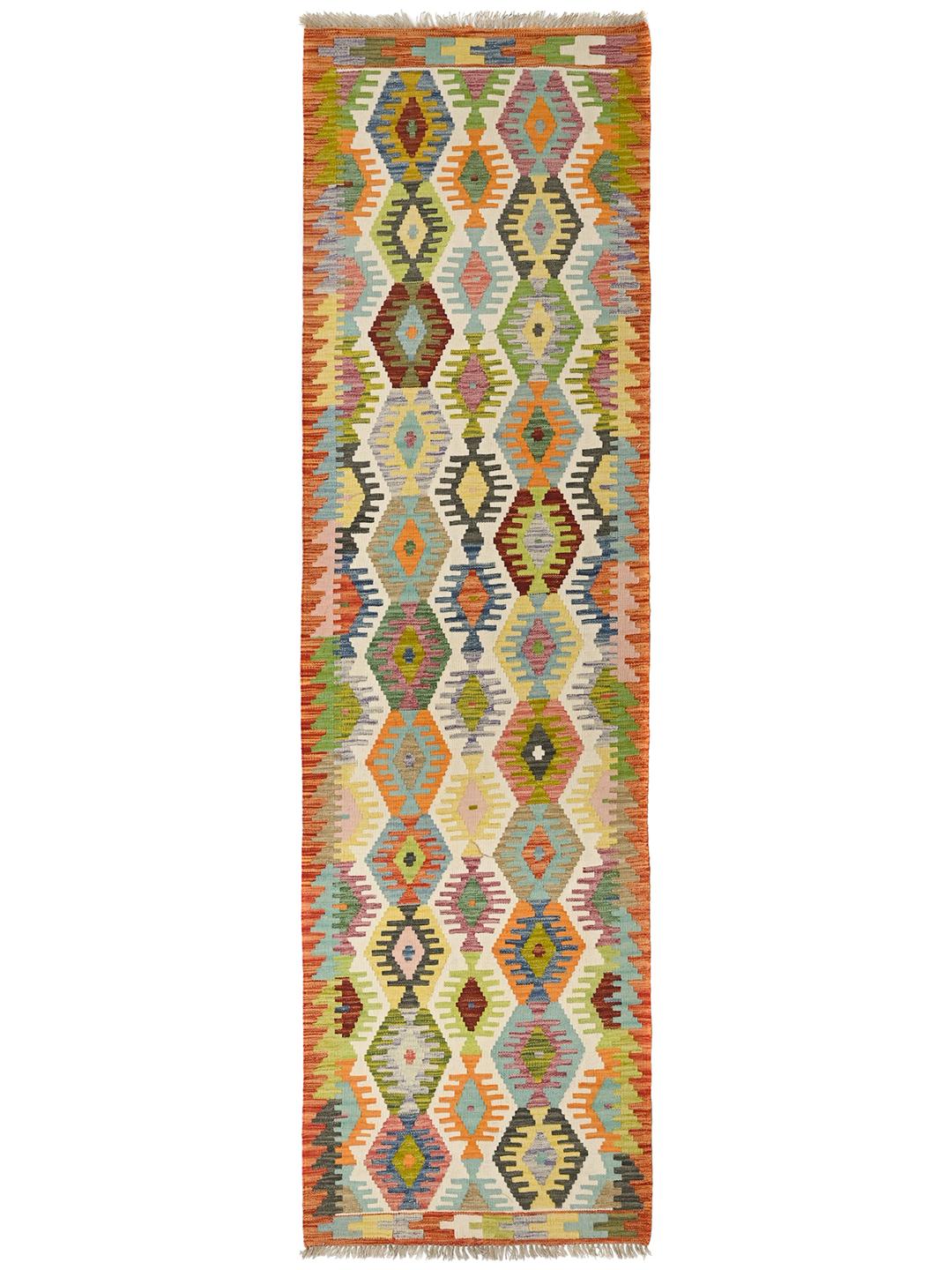
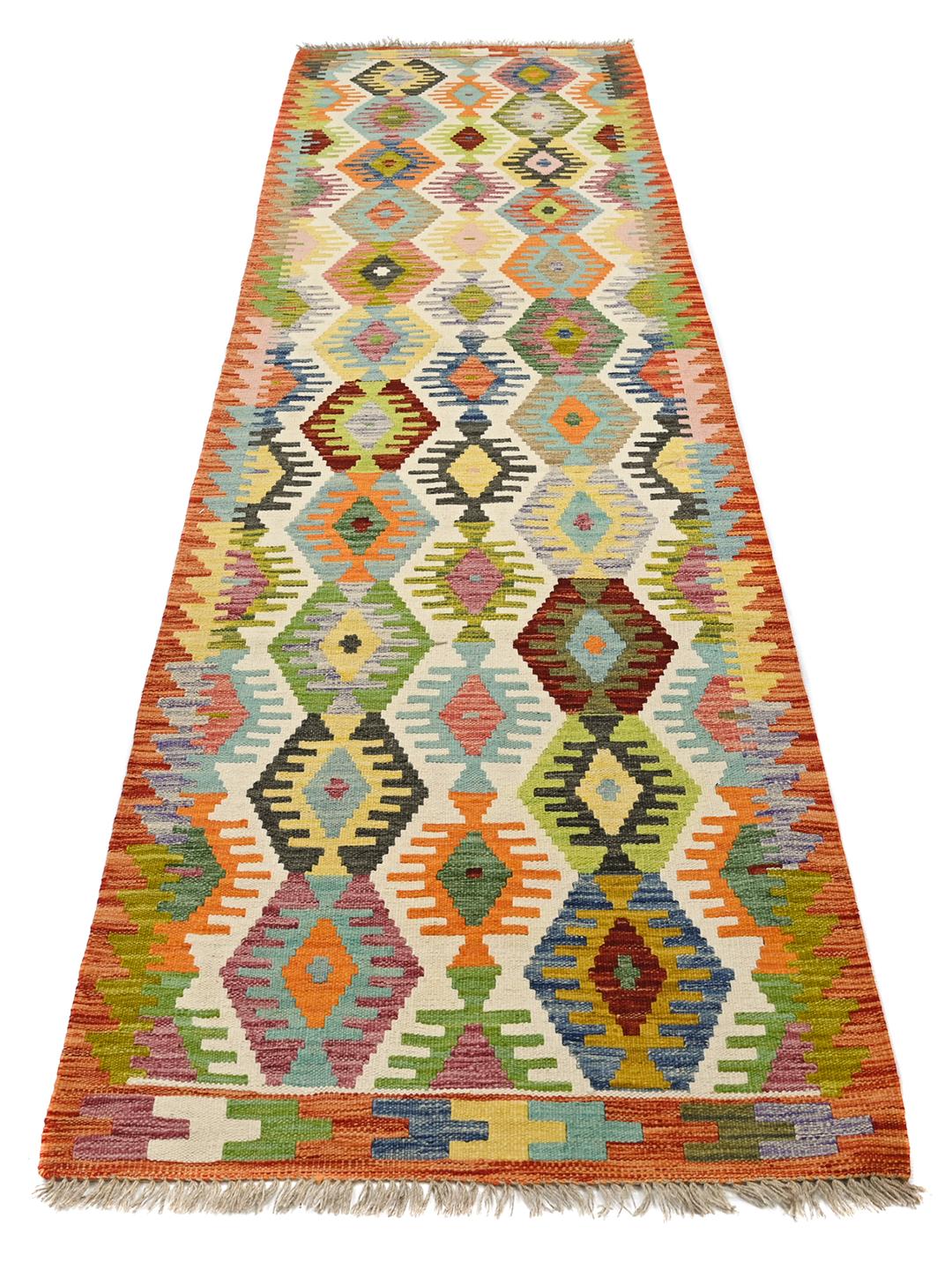
Kelim rugs from Afghanistan are deeply rooted in the nomadic traditions of the Middle East, where weaving served both functional and expressive purposes. These flat-woven textiles were originally created by tribal communities as portable floor coverings, storage bags, and wall hangings, designed to be durable enough for life on the move while incorporating the aesthetic values of the weaver's culture.
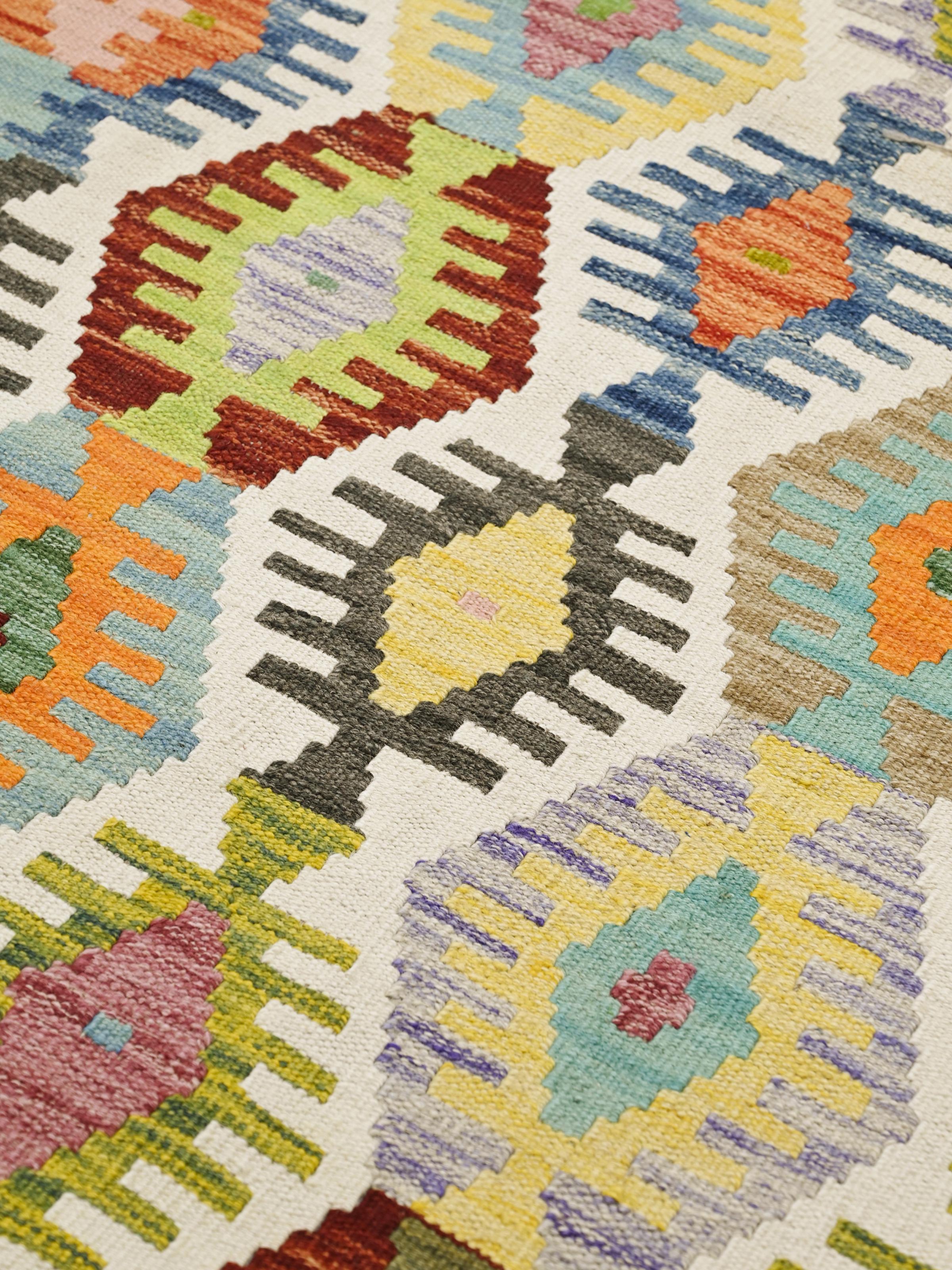
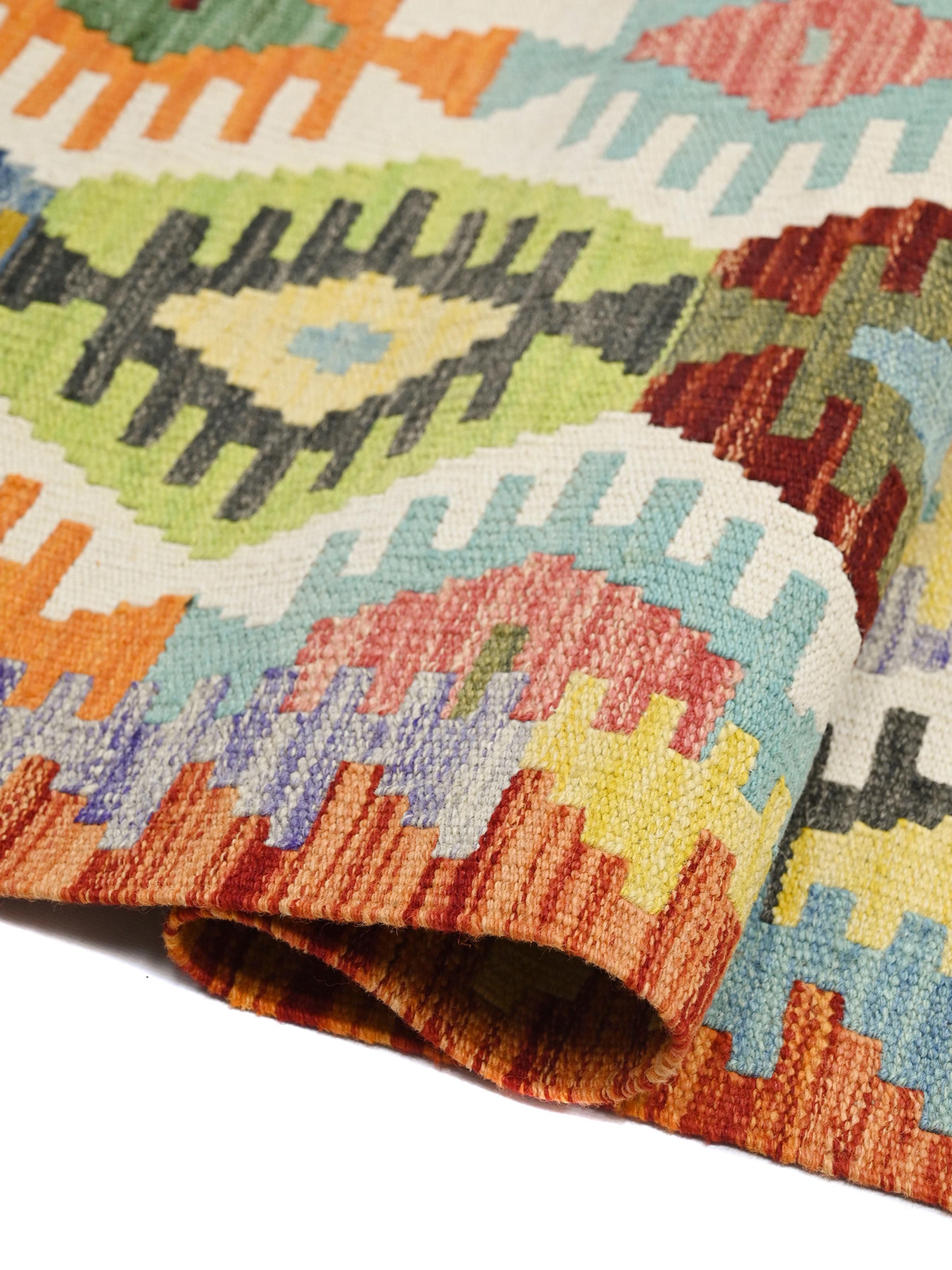
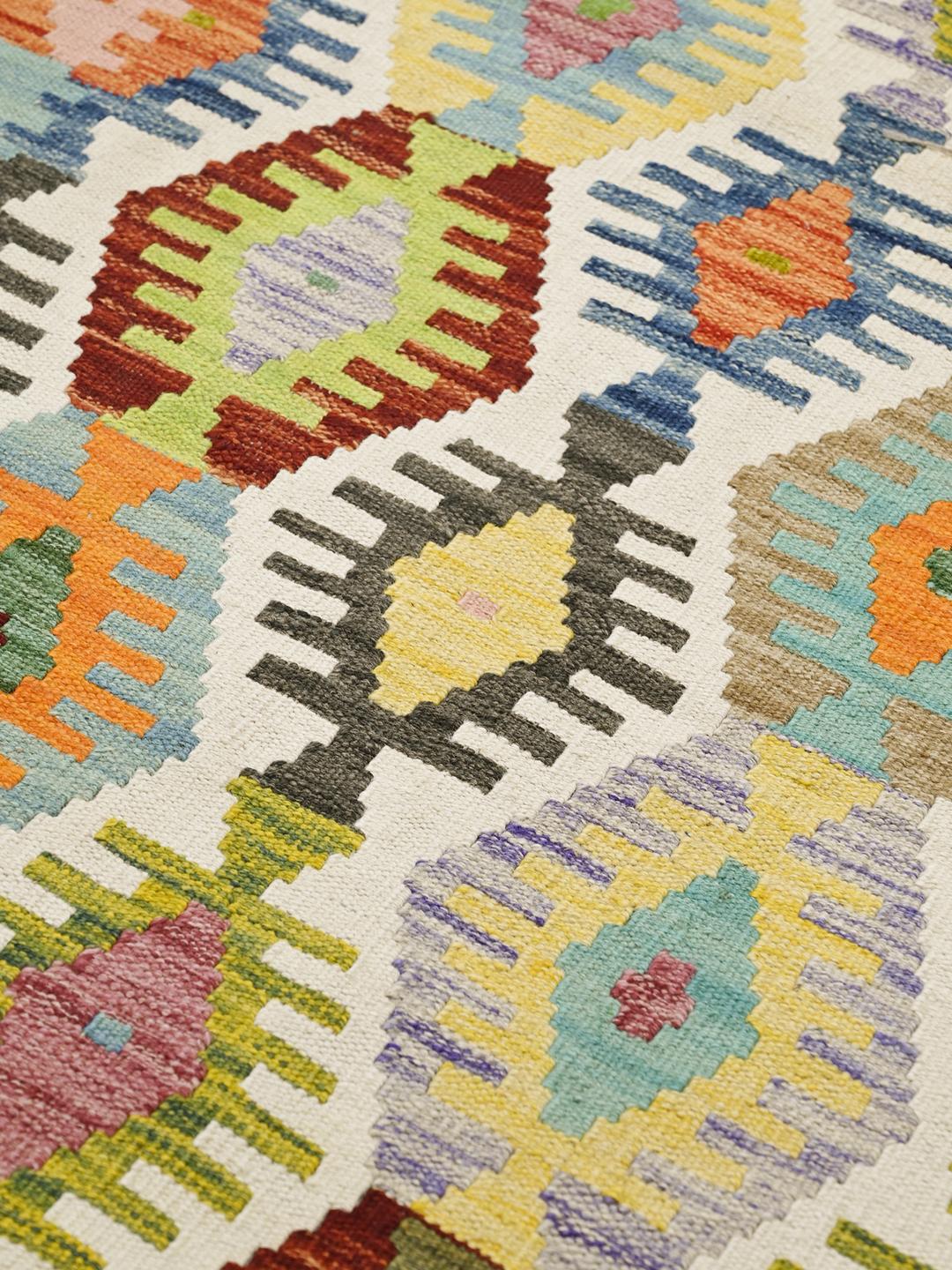
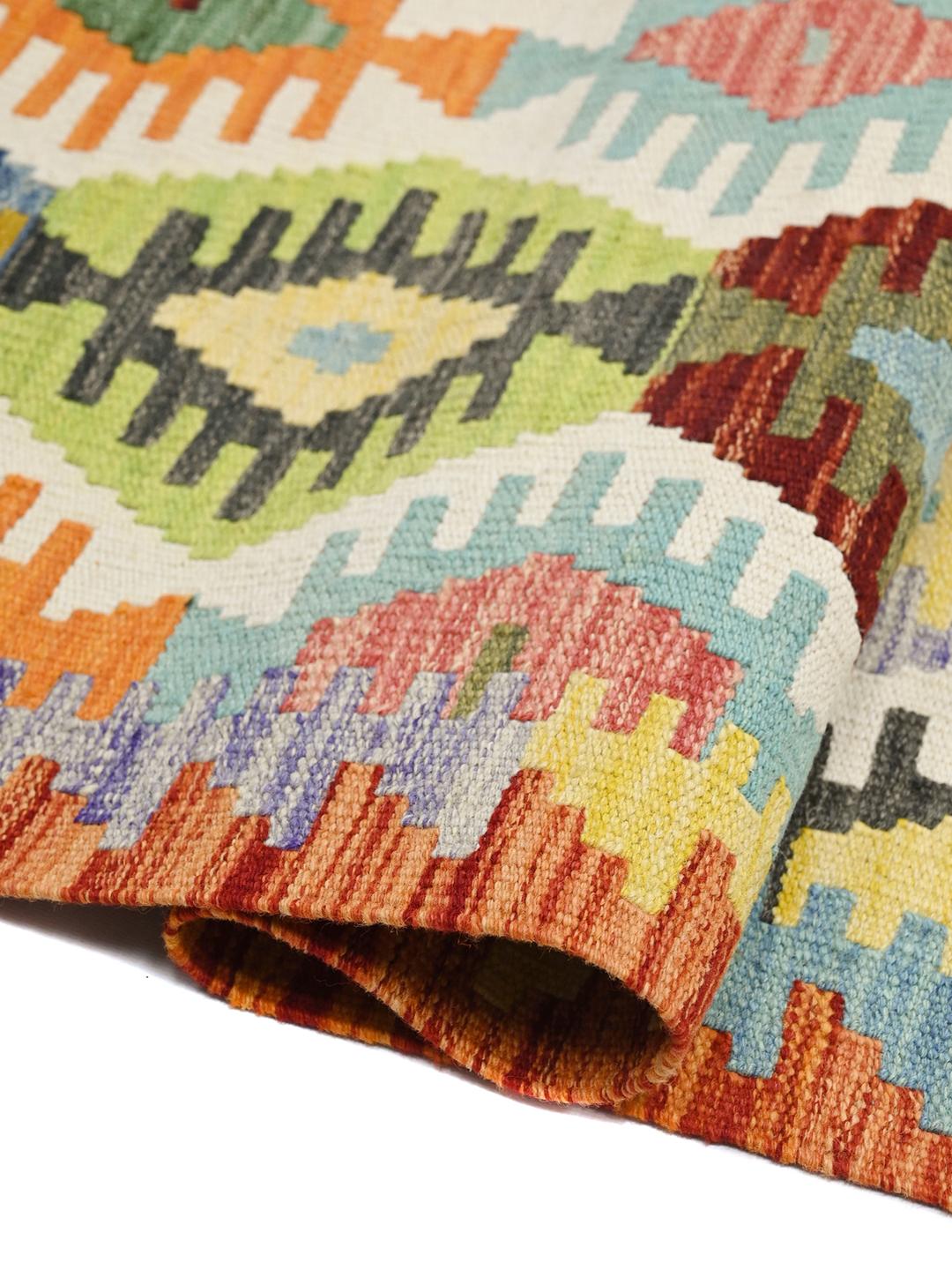
The term Kelim refers specifically to the tapestry-weave technique, where the warp and weft threads are woven tightly to create a reversible, pile-less surface. This method is highly valued for its crisp pattern definition and structural strength. By excluding a knotted pile, the weaver relies on the tension and intersection of the threads to form intricate designs, showcasing a level of technical skill that is both subtle and sophisticated.
The signature design elements often feature bold geometric shapes, with the diamond and medallion motifs seen here being classic examples of the regional visual language. These patterns are not merely decorative but are often symbolic, representing protection, fertility, or the natural landscape of the Afghan highlands. The vibrant colour palette is typically achieved through traditional dyeing methods, resulting in hues that age gracefully and retain their character over time.
Today, these rugs are highly sought after by collectors and interior enthusiasts who value authenticity and human connection. Owning an Afghan Kelim is an investment in a living tradition, representing a link to the ancient Silk Road and the continued relevance of manual craft in a modern world. Each piece tells a story of its origin, preserving cultural narratives within its interwoven threads.