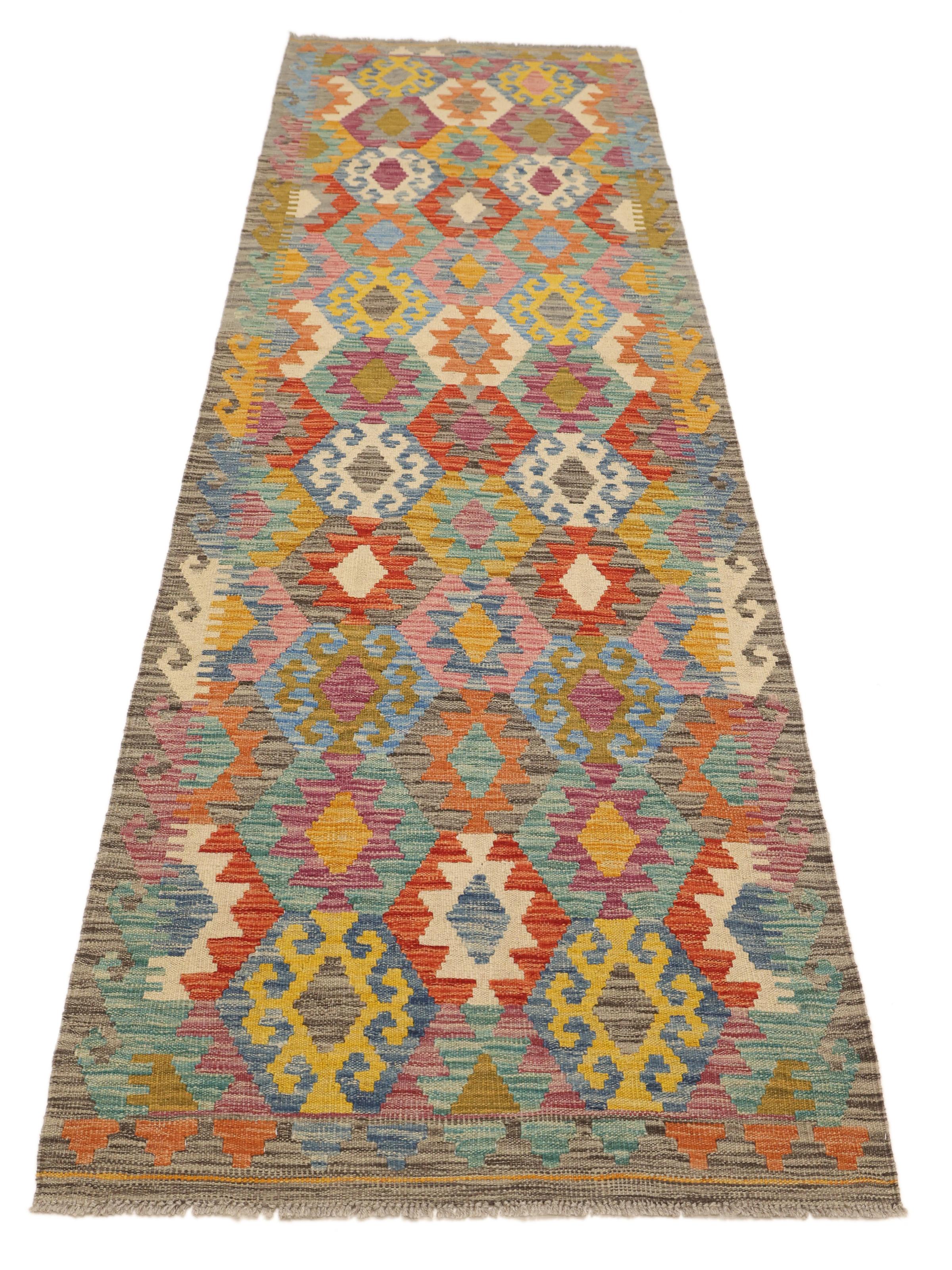
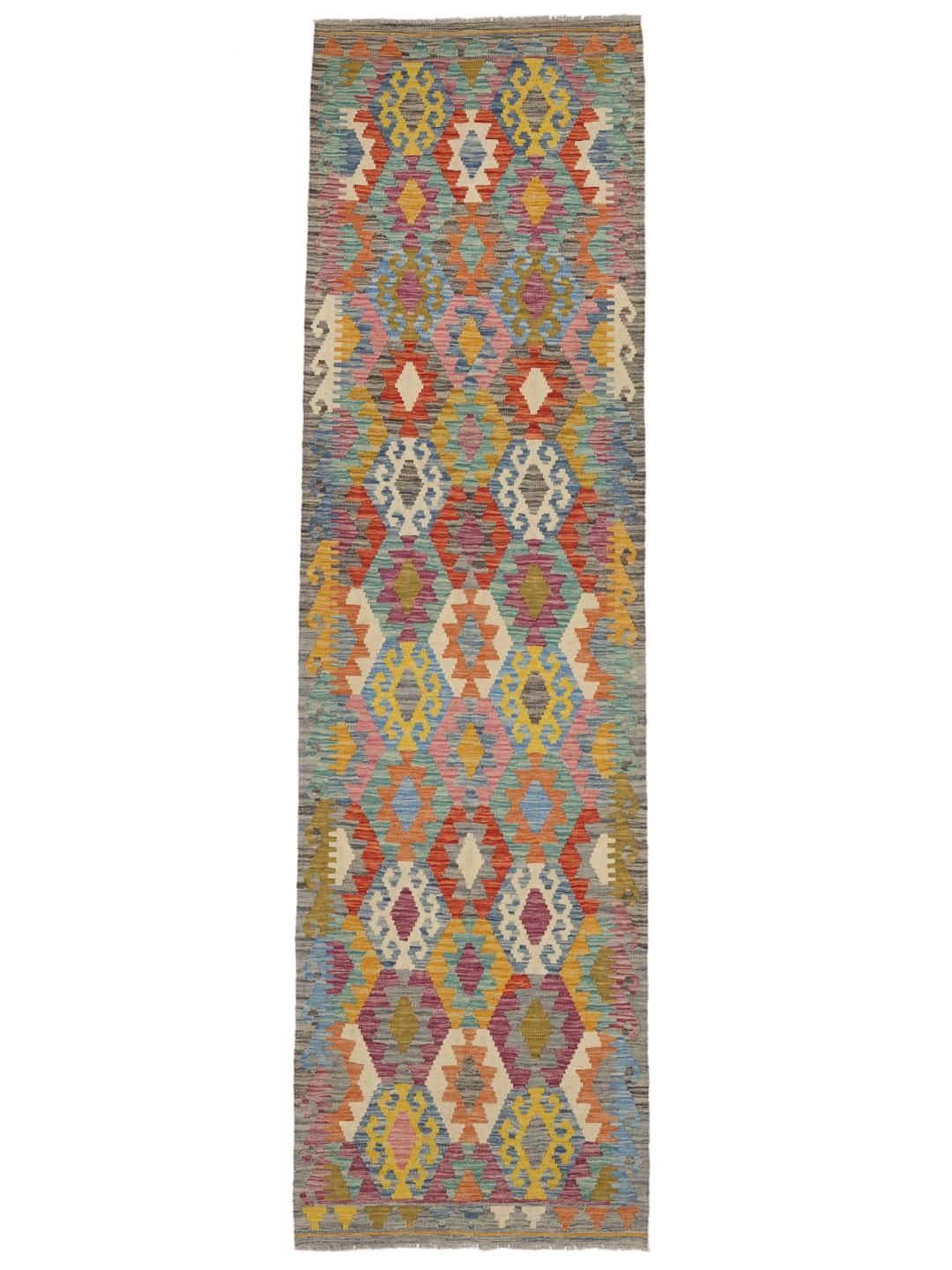
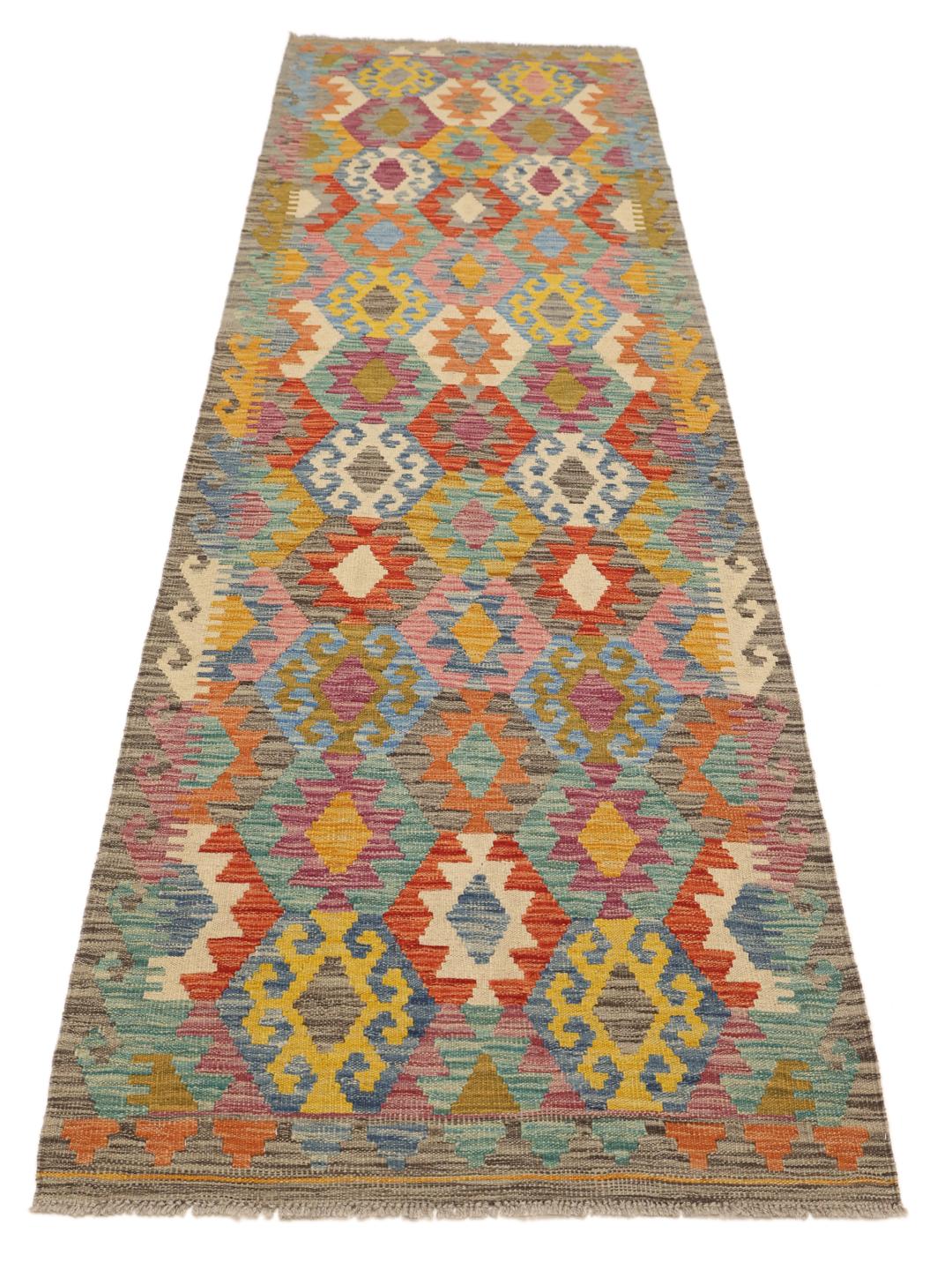
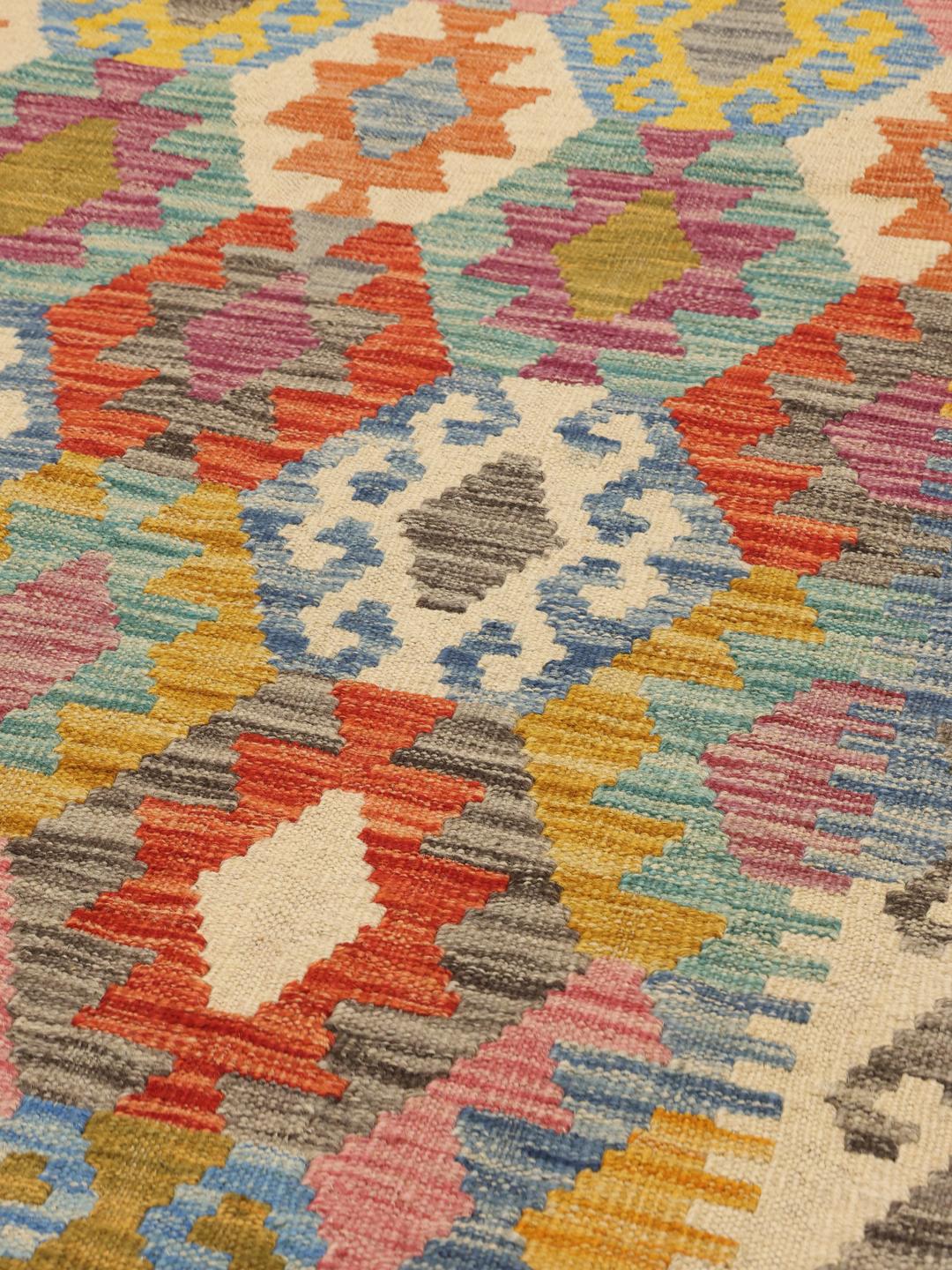
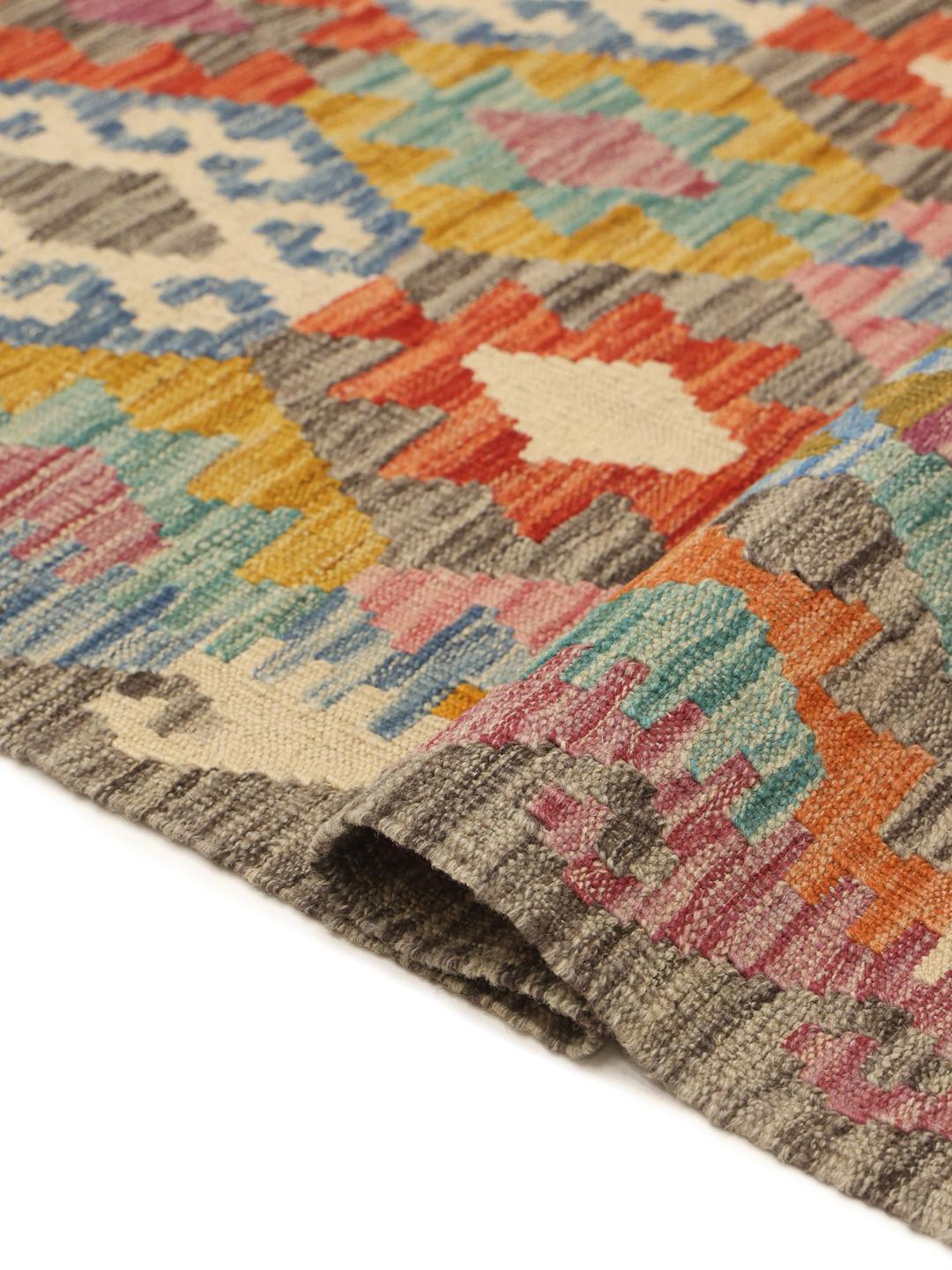
The Kelim tradition in Afghanistan is deeply rooted in the nomadic history of the region. These flat-woven rugs were historically created by tribal groups for practical use in tents, serving as floor coverings, blankets, or wall hangings. Over centuries, these functional textiles evolved into the intricate, decorative pieces we appreciate today, reflecting the migration and exchange of design ideas along the historic Silk Road.
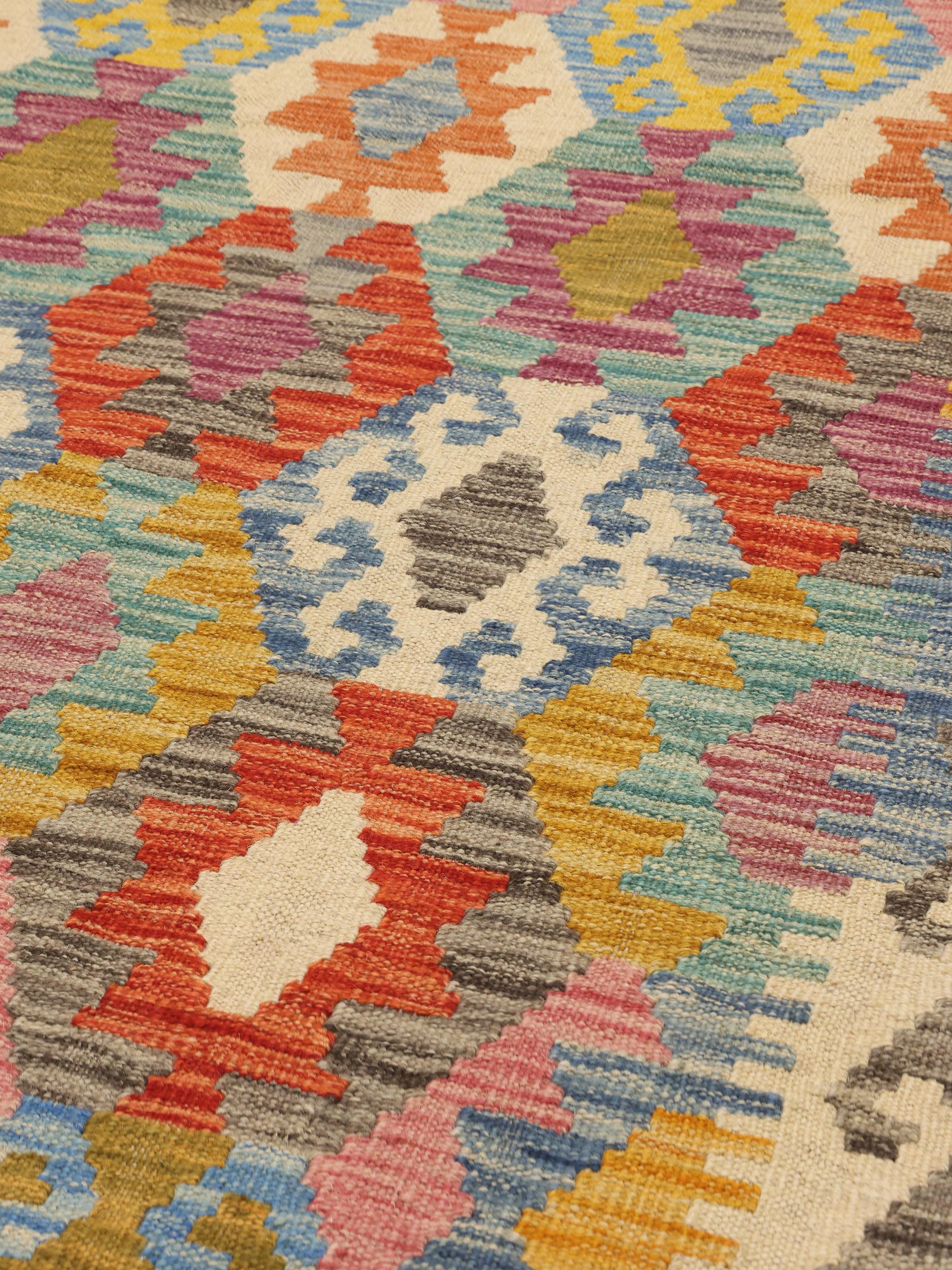
The term Kelim refers to a tapestry-weave construction where the weft threads are woven tightly over the warp threads. By omitting a pile, the artisan creates a reversible, lightweight, and incredibly durable textile. This technical approach allows for the sharp, angular geometric motifs that define the aesthetic, as the pattern is created directly by the weave rather than by knotted yarn.
Signature elements of Afghan Kelims often include repeating diamond or medallion shapes, which are frequently arranged in complex, interlocking grids. The colour palette is traditionally derived from natural dyes, resulting in rich, earthy tones that age beautifully over time. This particular piece displays a lively use of colour, showcasing the expressive potential of the regional design language.
Collecting Afghan Kelims is an investment in both cultural history and human skill. These pieces are valued for their authenticity and the way they bridge the gap between ancient nomadic utility and modern interior design. By bringing one into your home, you are preserving a piece of heritage and celebrating the enduring artistry of the weavers who continue this time-honoured practice.