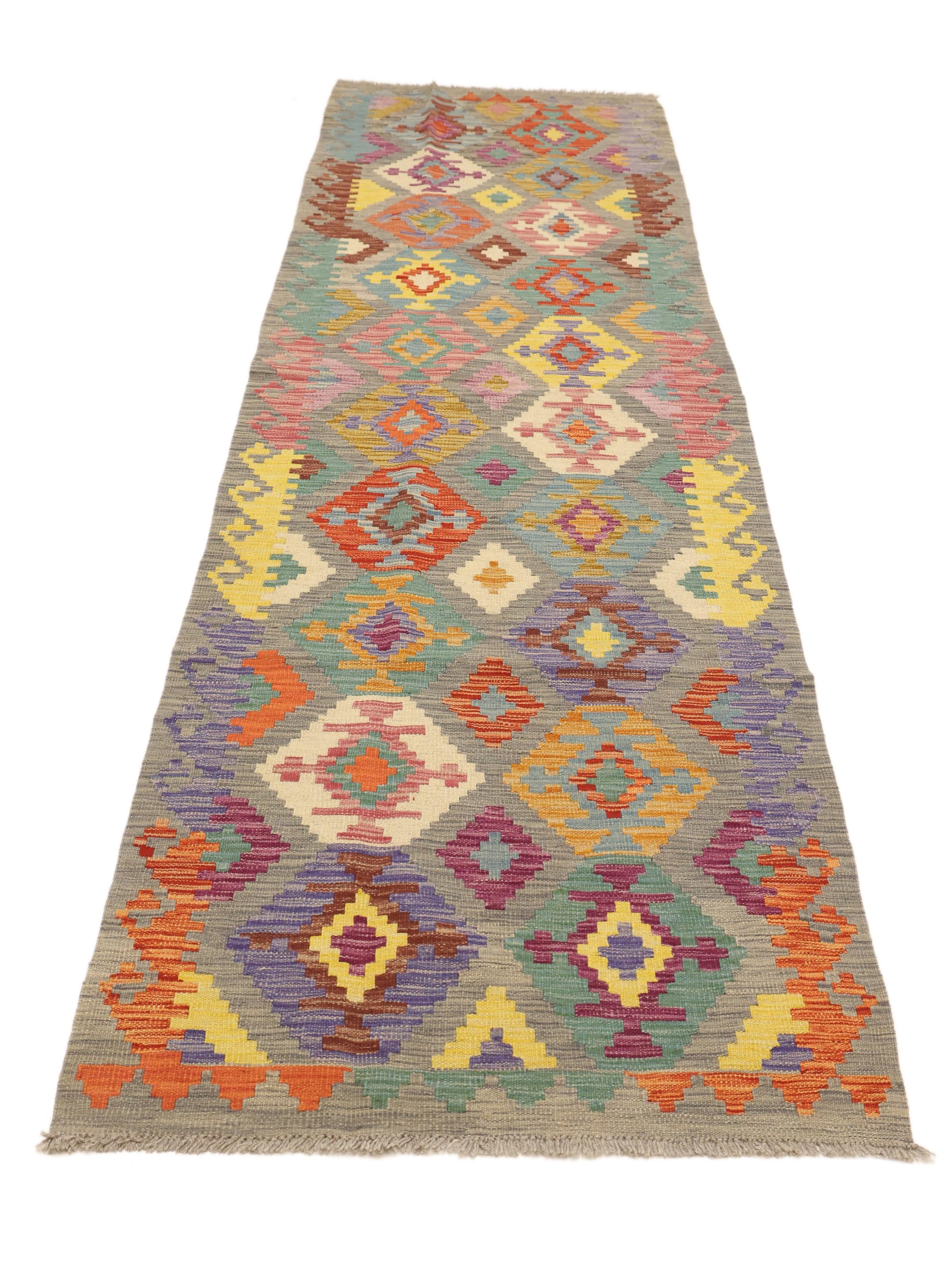
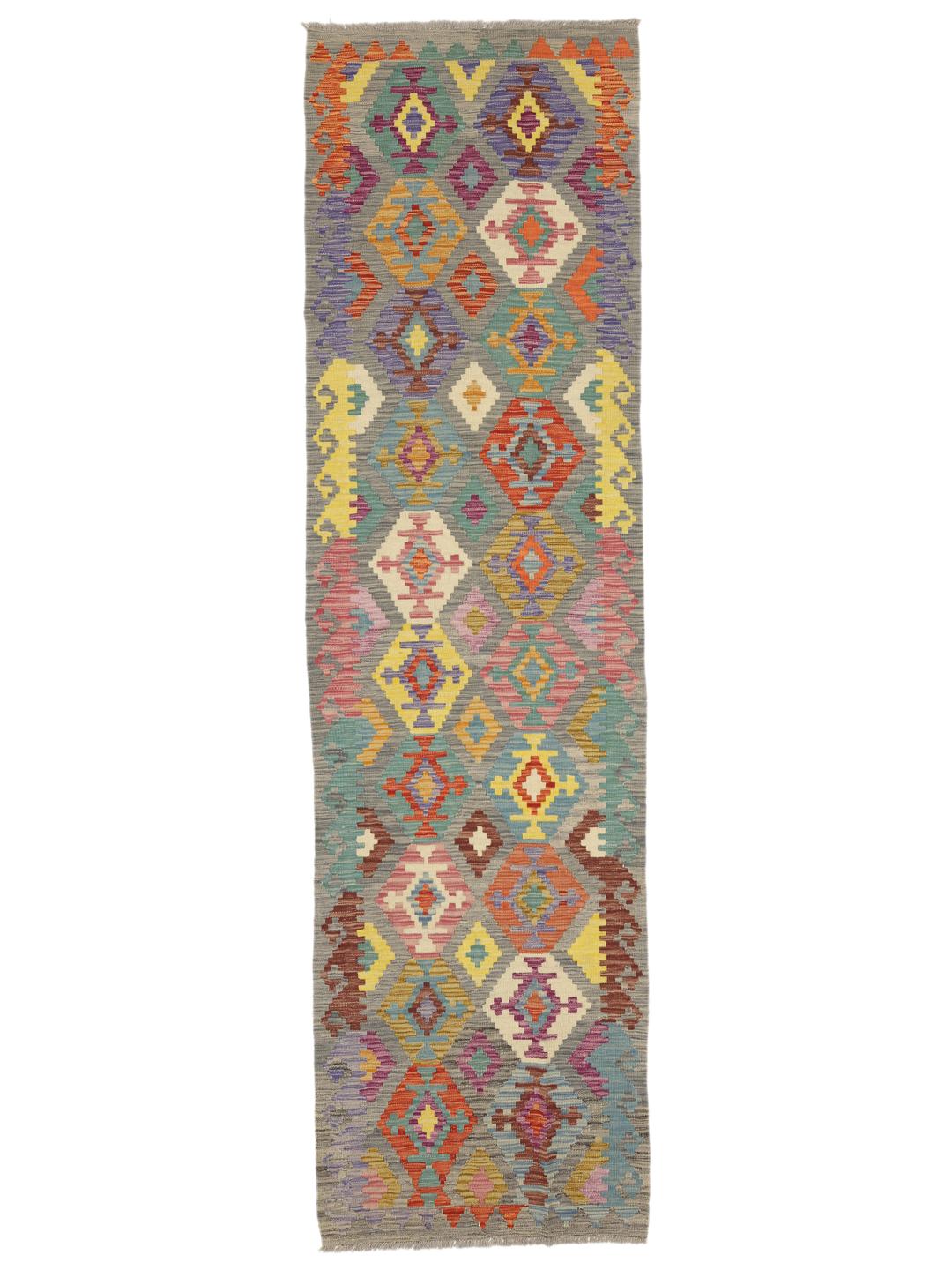
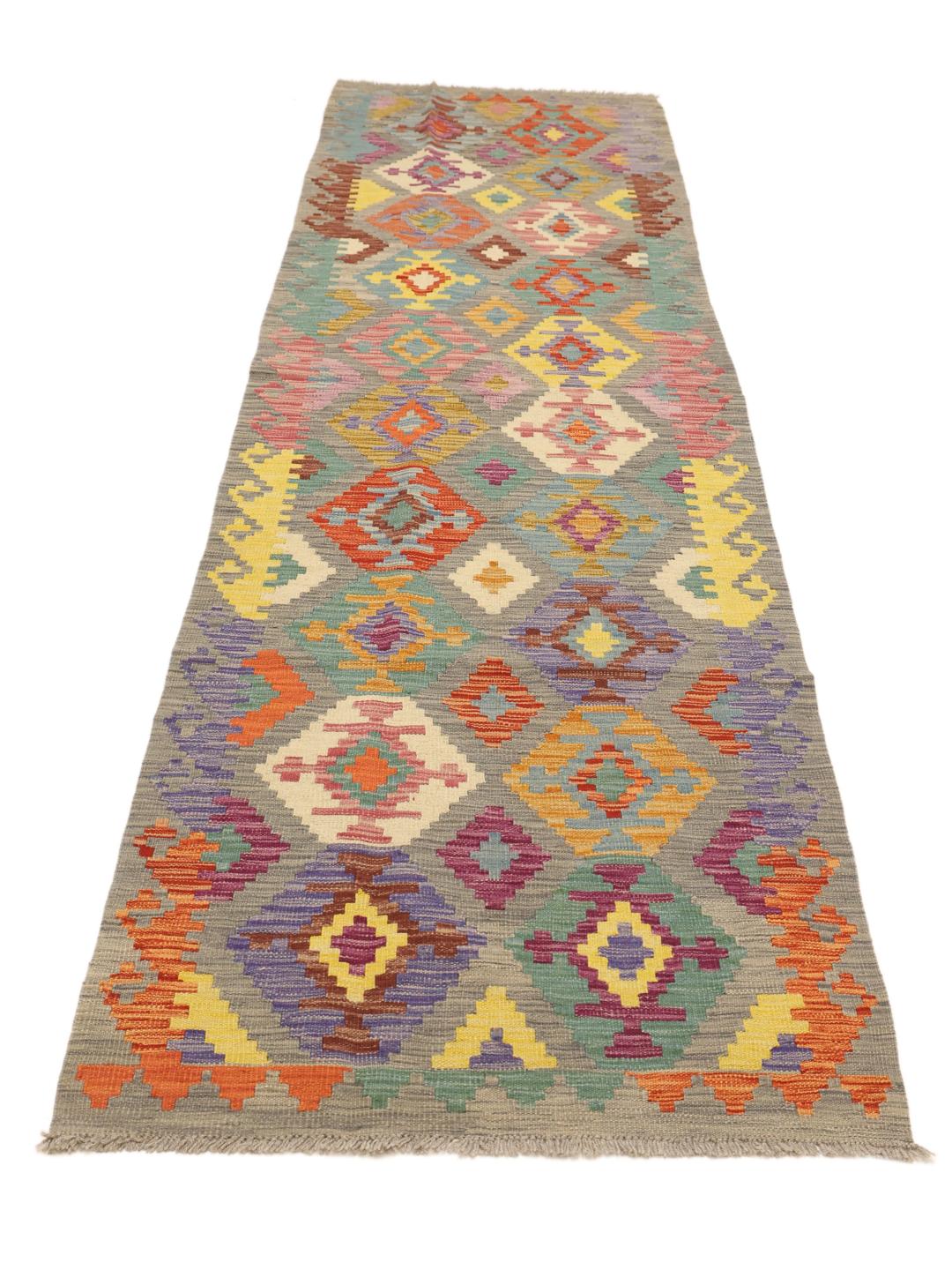
The Kelim Afghan Old Style is rooted in the rich textile traditions of the Middle East, where weaving has served as a central cultural practice for centuries. These rugs are born from a long lineage of nomadic and semi-nomadic craft, designed originally to be lightweight, portable, and versatile enough for life on the move. Over time, these traditions have evolved into the sophisticated, refined patterns we see today, maintaining their connection to ancient techniques while adapting to the needs of the modern home.
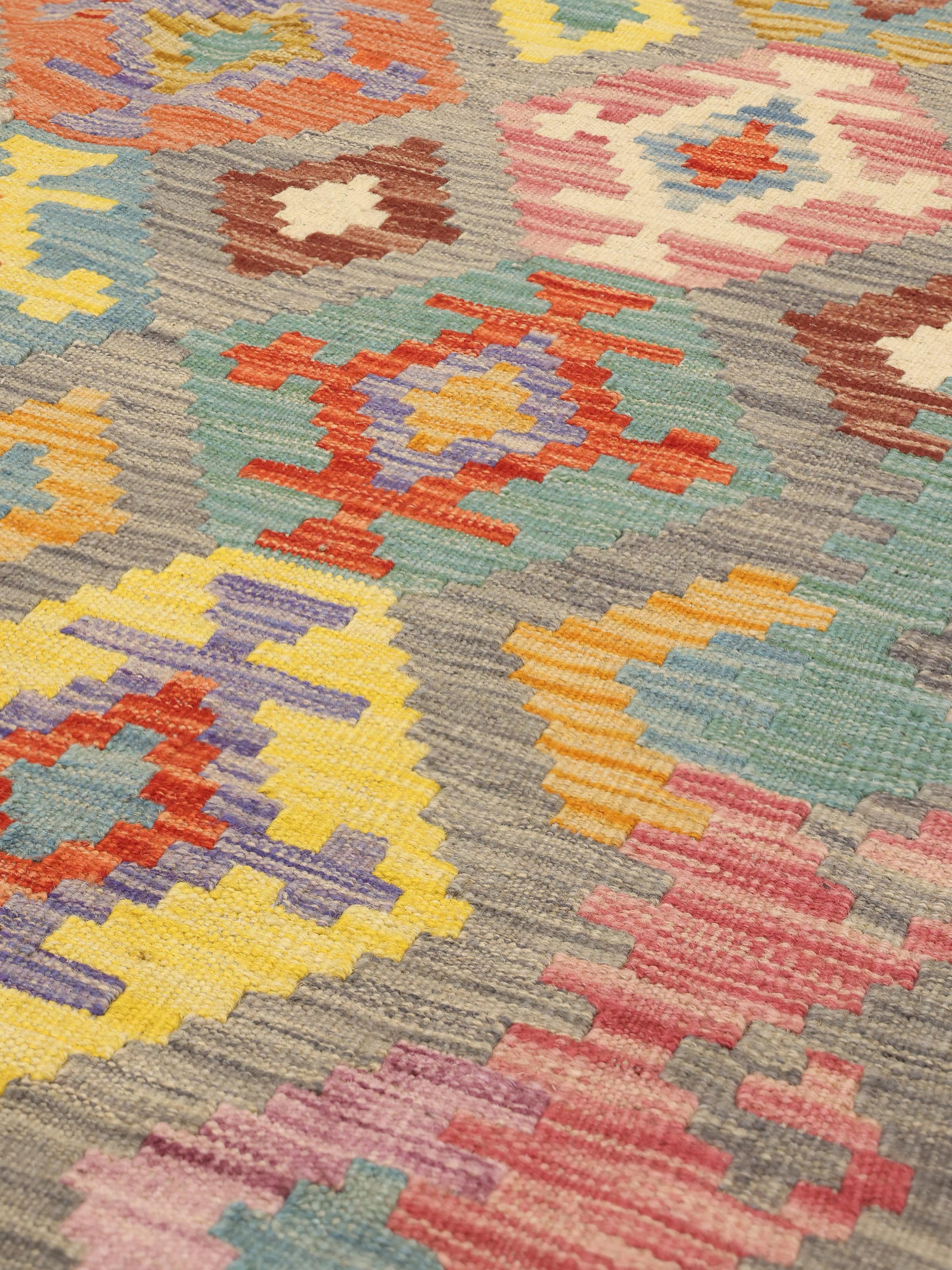
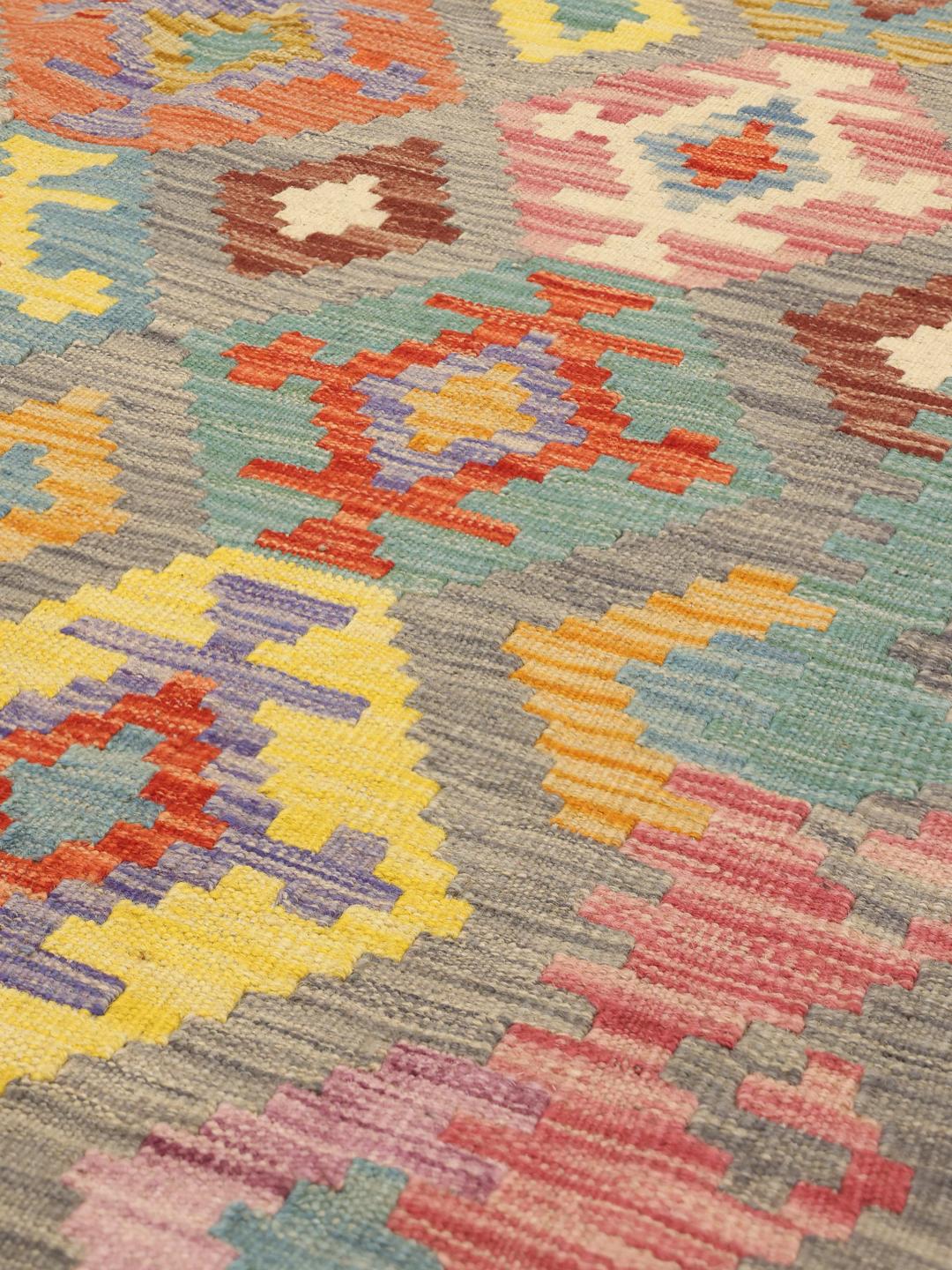
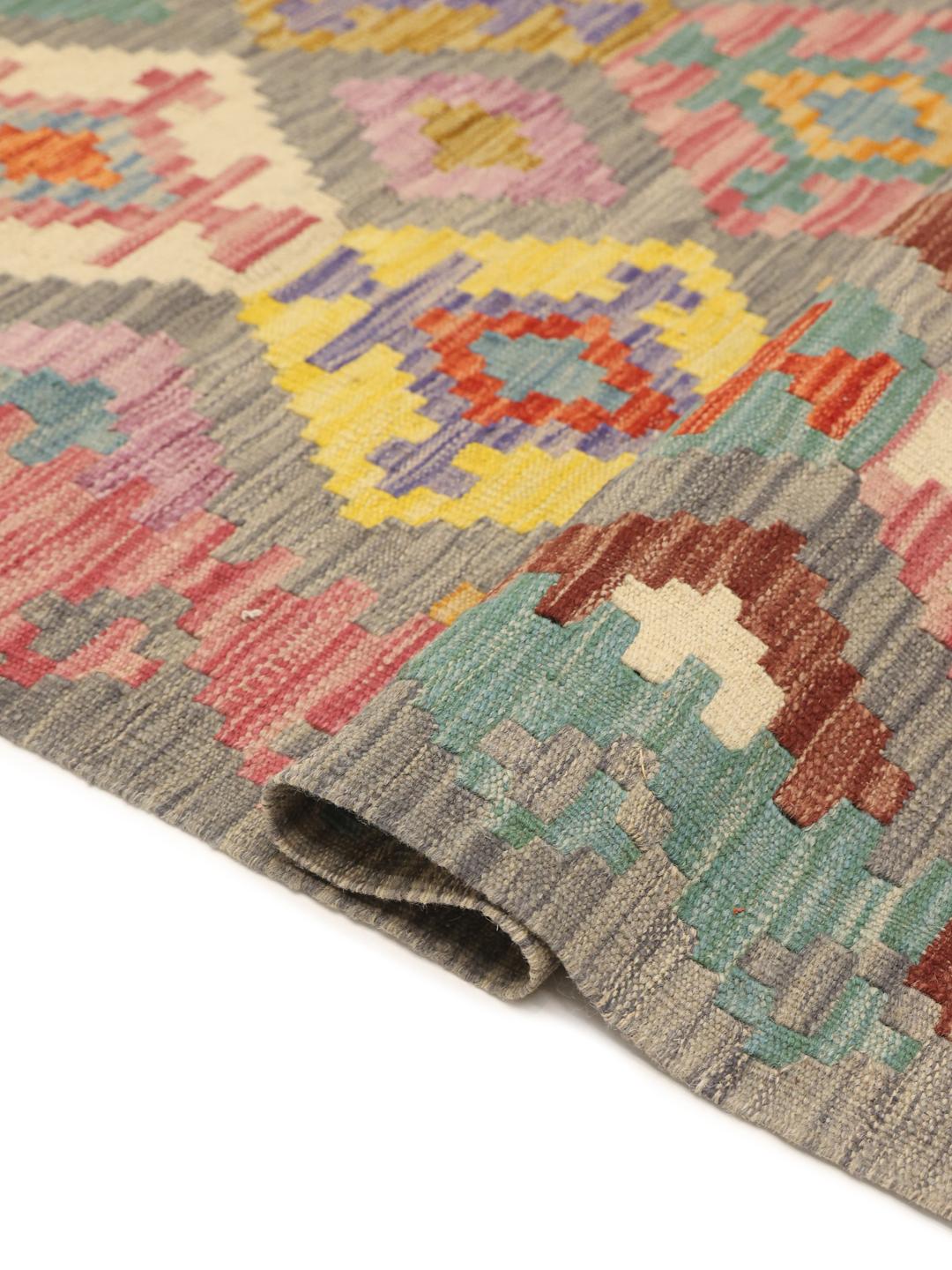
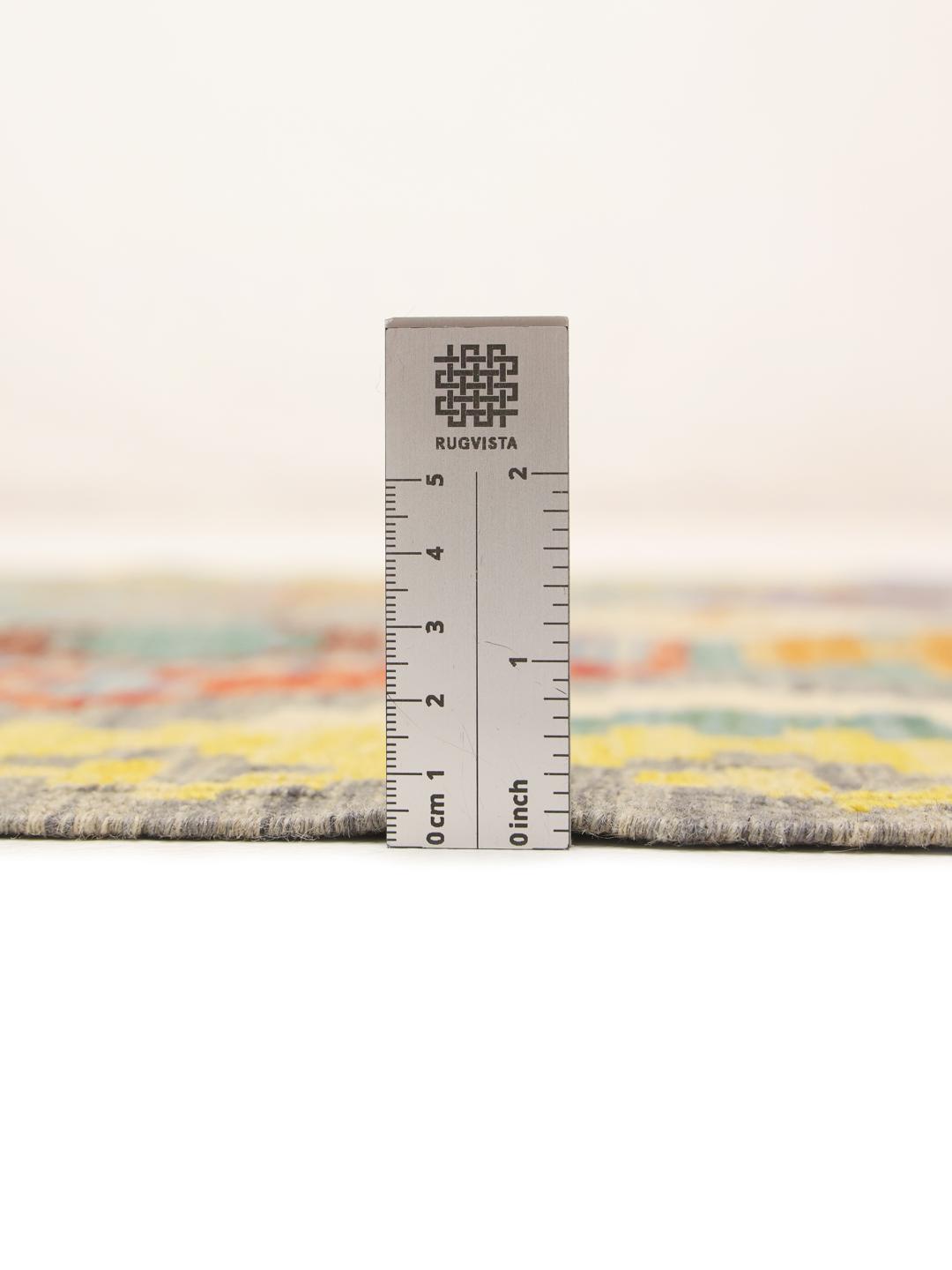
A kelim is distinguished by its flat-weave construction, meaning it is created without a pile. By interweaving the coloured weft threads directly through the warp, the weaver creates a reversible, thin fabric that is exceptionally strong. This technique is what gives the rug its clean, sharp lines and distinctive geometric clarity, allowing for intricate designs that remain flat and easy to maintain.
The signature design language of this style is built upon geometric medallions and sharp, angular motifs. You will often find diamonds, triangles, and stepped patterns that represent traditional symbols passed down through families. The use of vibrant, contrasting colours is a hallmark of this tradition, designed to bring life and energy to the interiors of traditional homes and now, contemporary spaces alike.
Collectors value these rugs for their authenticity and the human story woven into every thread. Owning a piece from this tradition is an act of preserving a craft that has survived through shifting borders and changing times. It represents a commitment to enduring quality and an appreciation for the skill required to transform raw, natural materials into a piece of cultural heritage that feels both grounded and timeless.