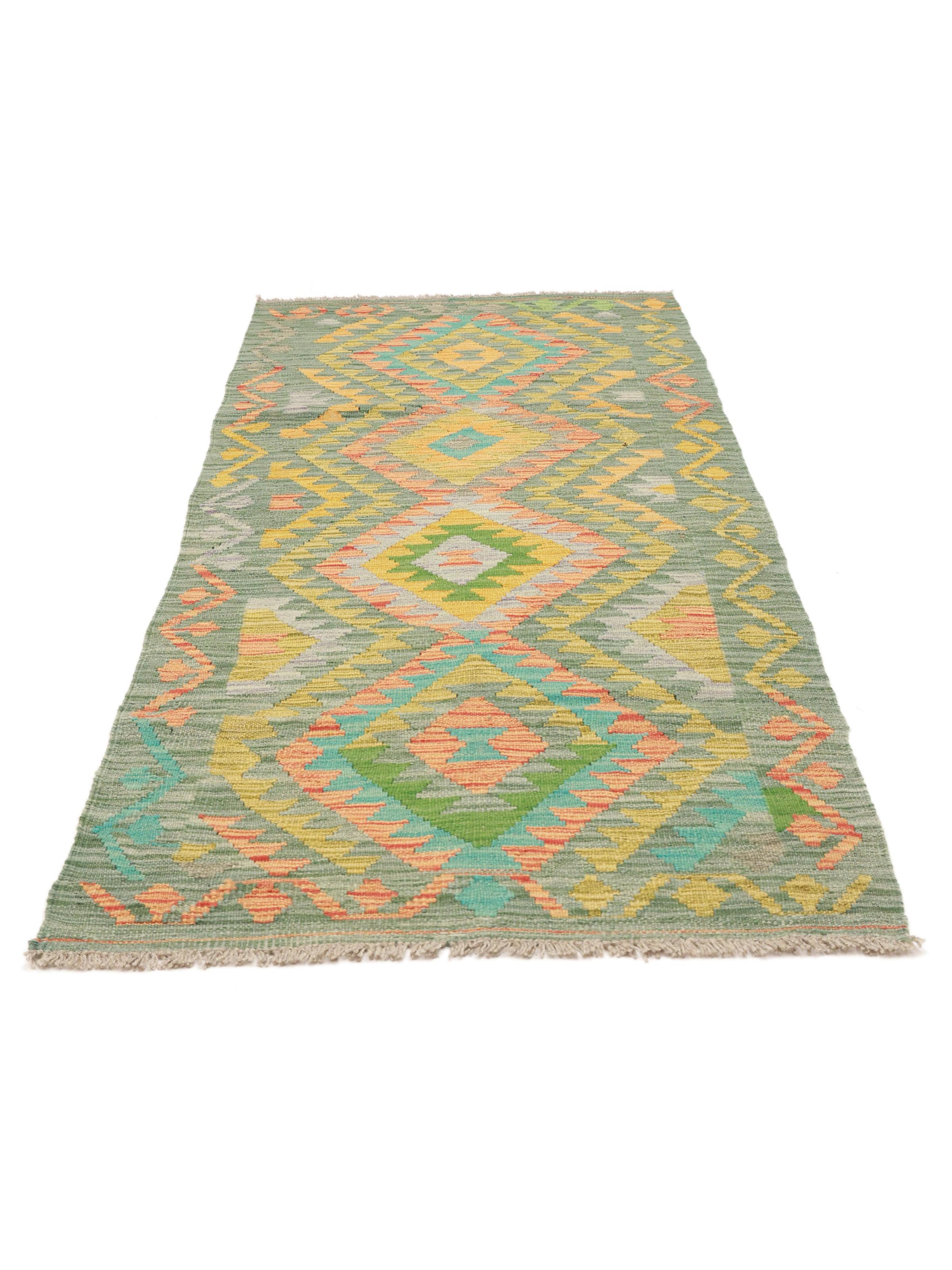
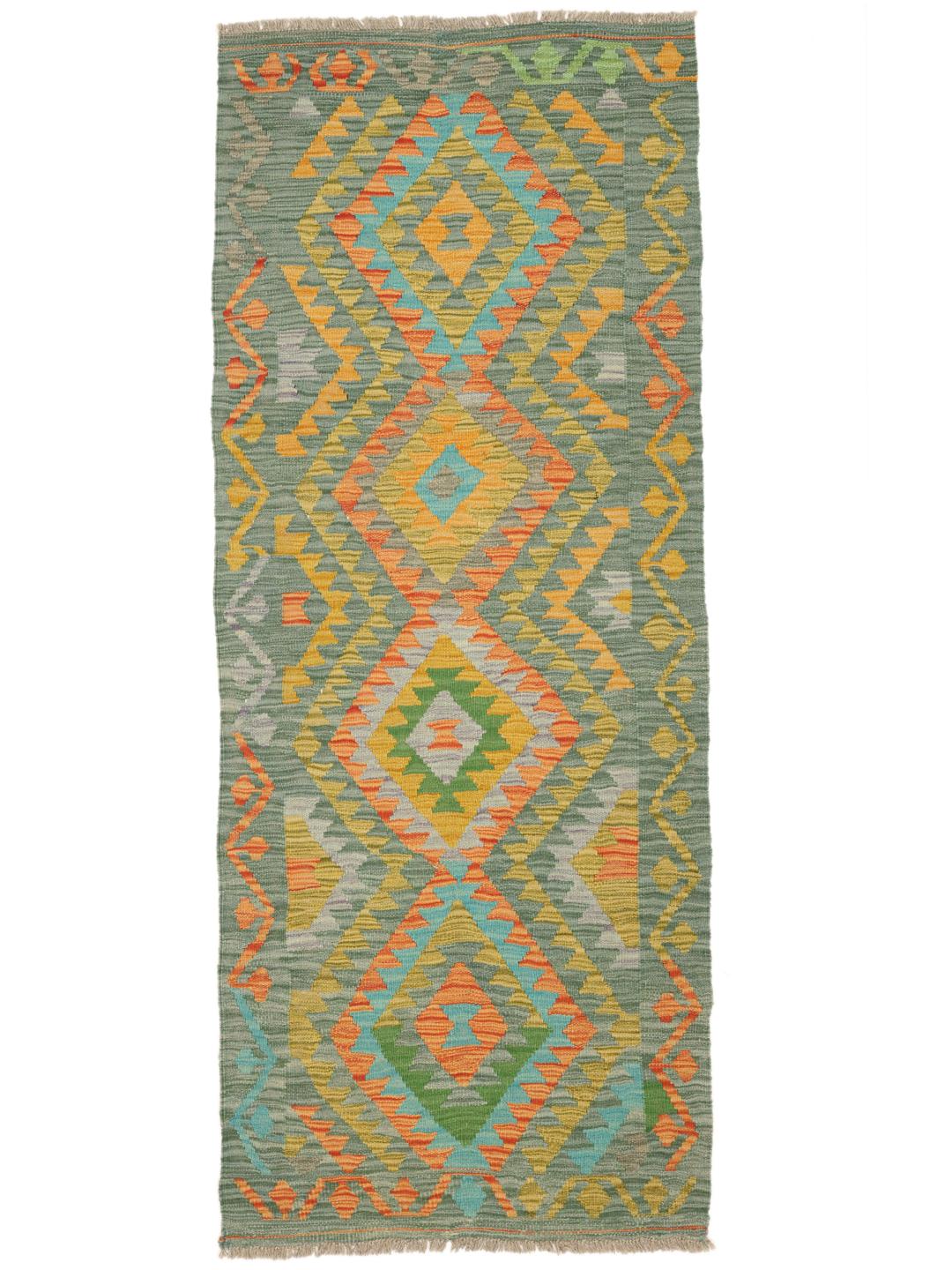
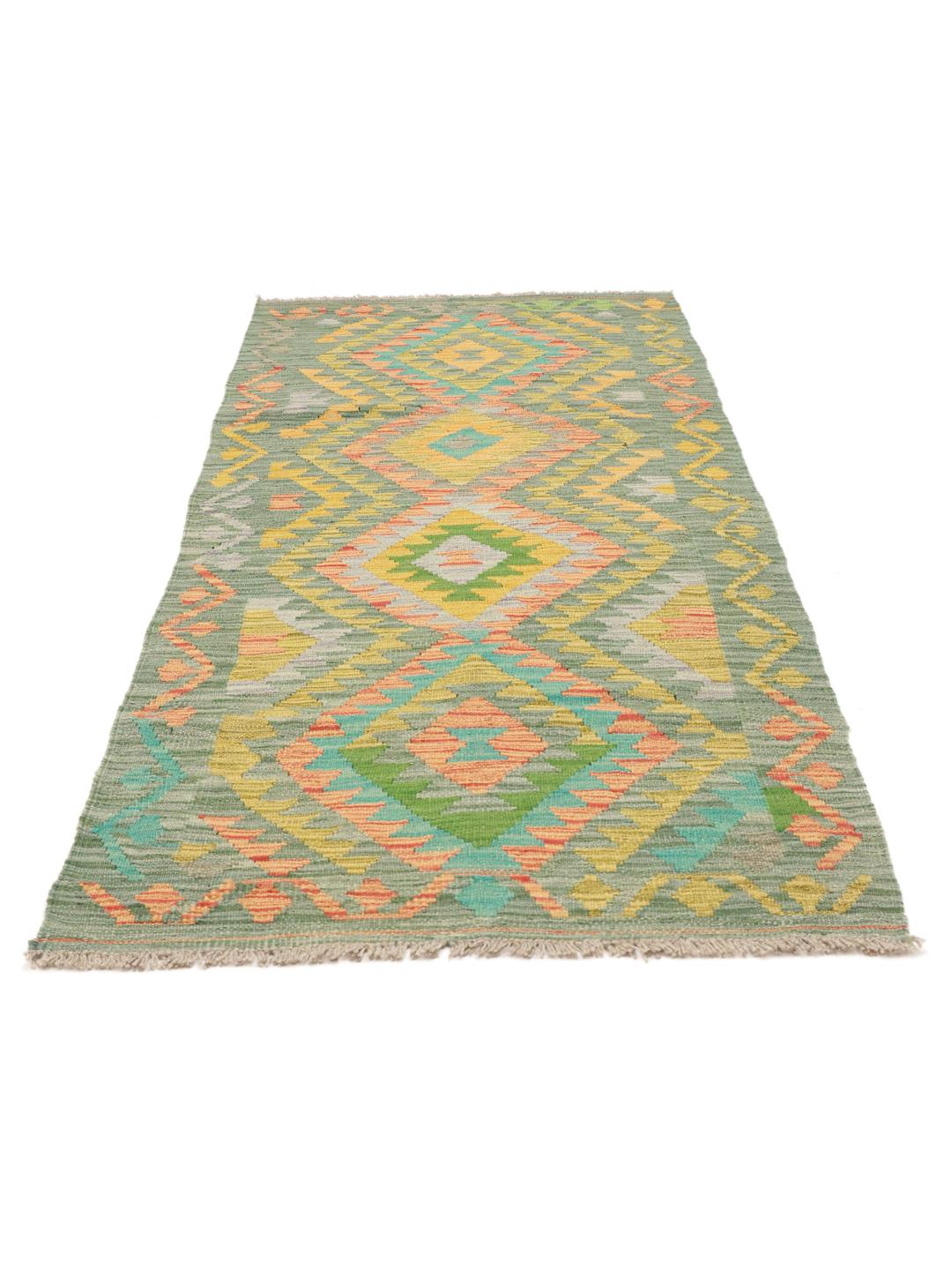
The Kelim tradition in Afghanistan is deeply rooted in the nomadic lifestyle of the region, where flat-woven rugs served as essential, portable furnishings. Historically, these textiles were used not only as floor coverings but also as decorative wall hangings, sleeping mats, and storage bags. The transition from purely functional utility to the sophisticated art form we see today reflects a centuries-old evolution of craft passed down through generations of tribal weavers.
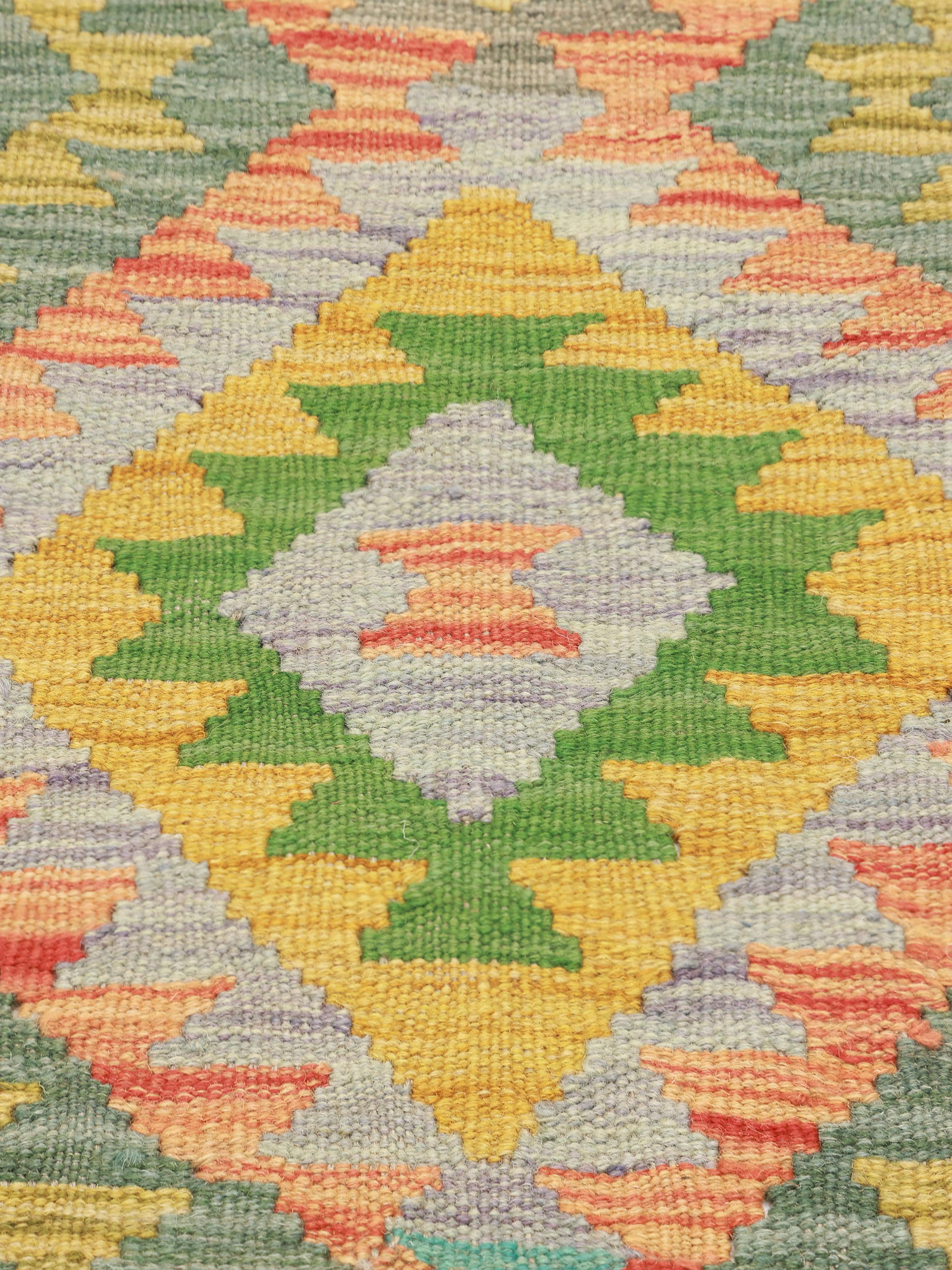
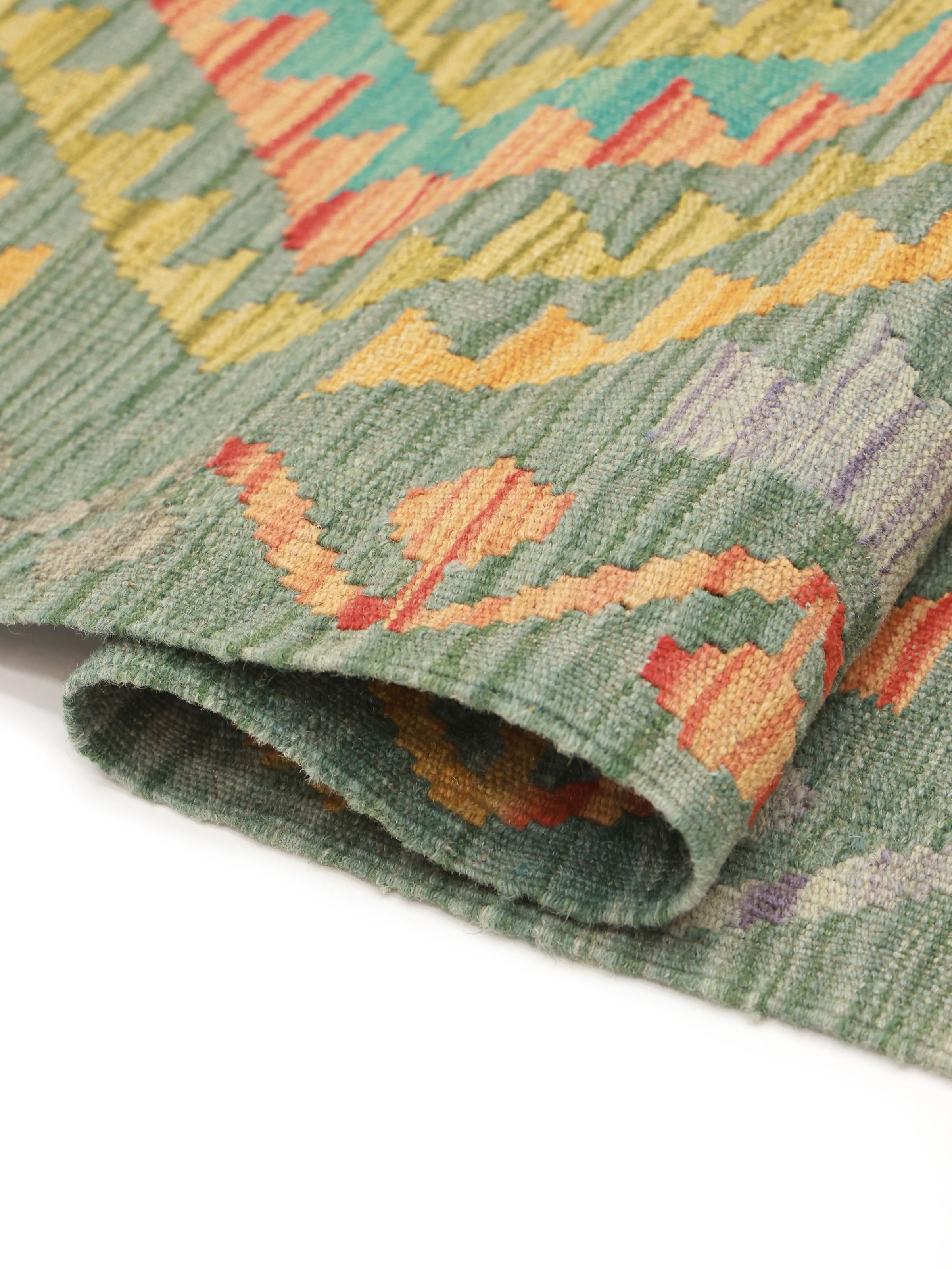
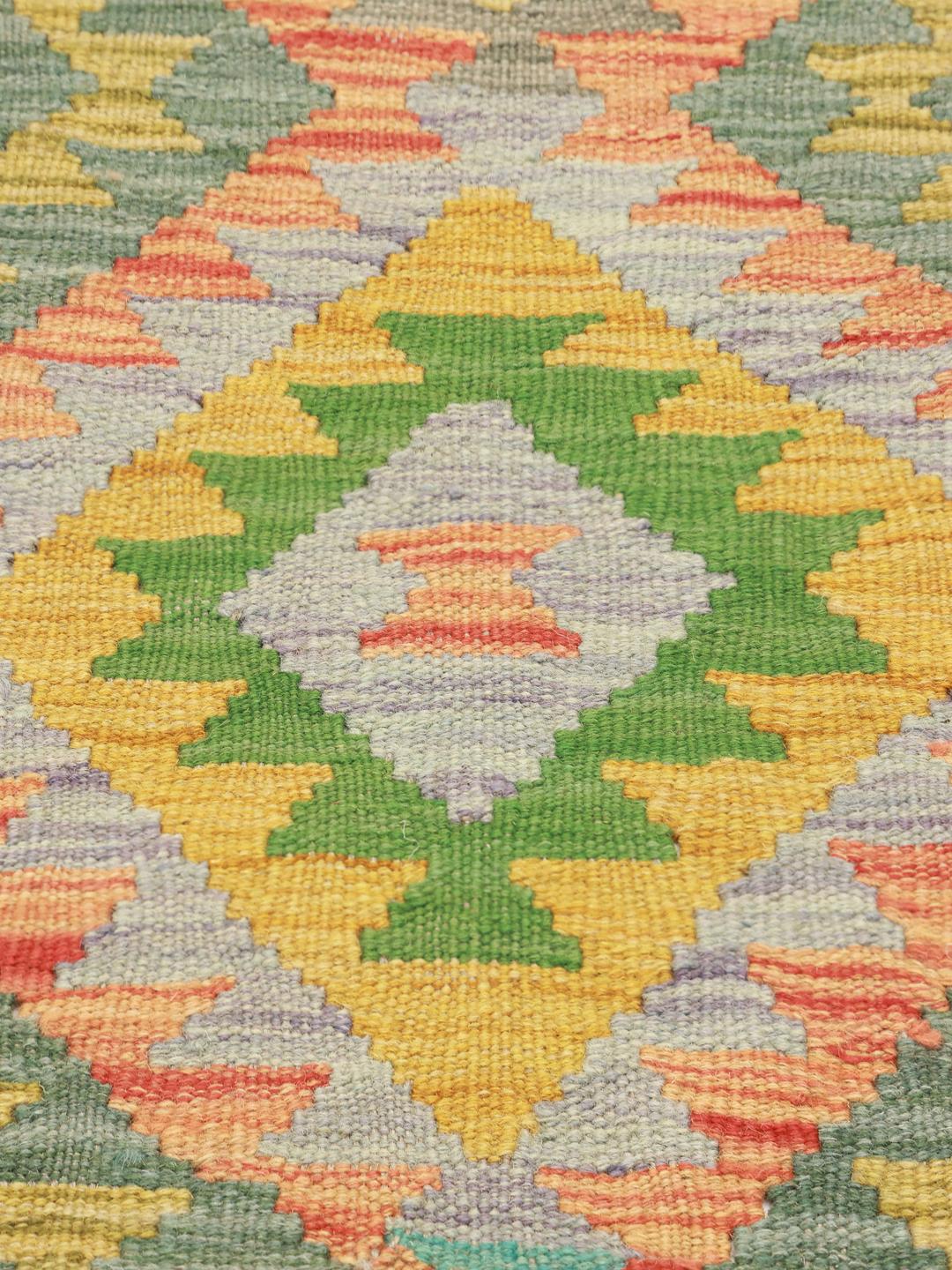
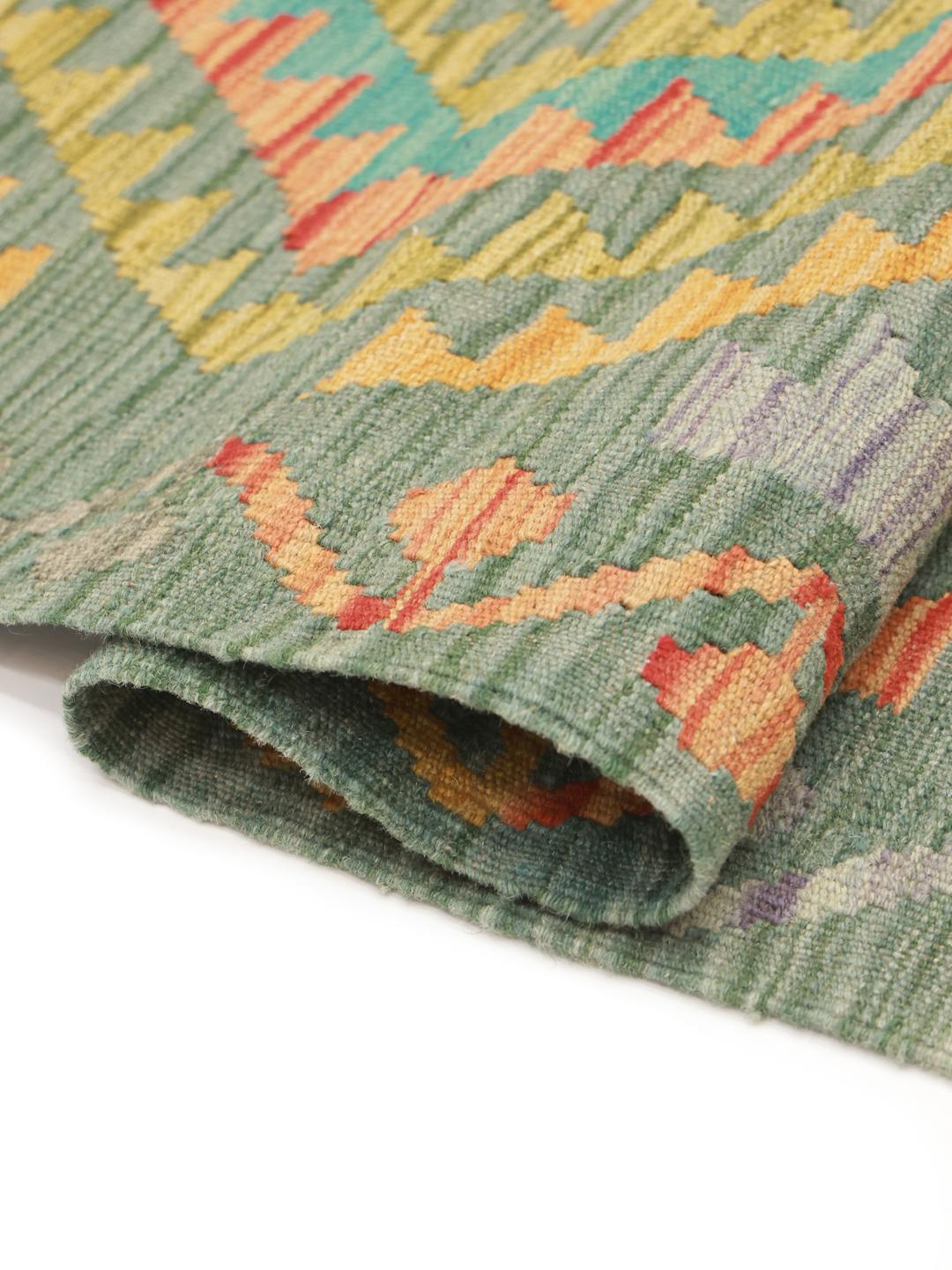
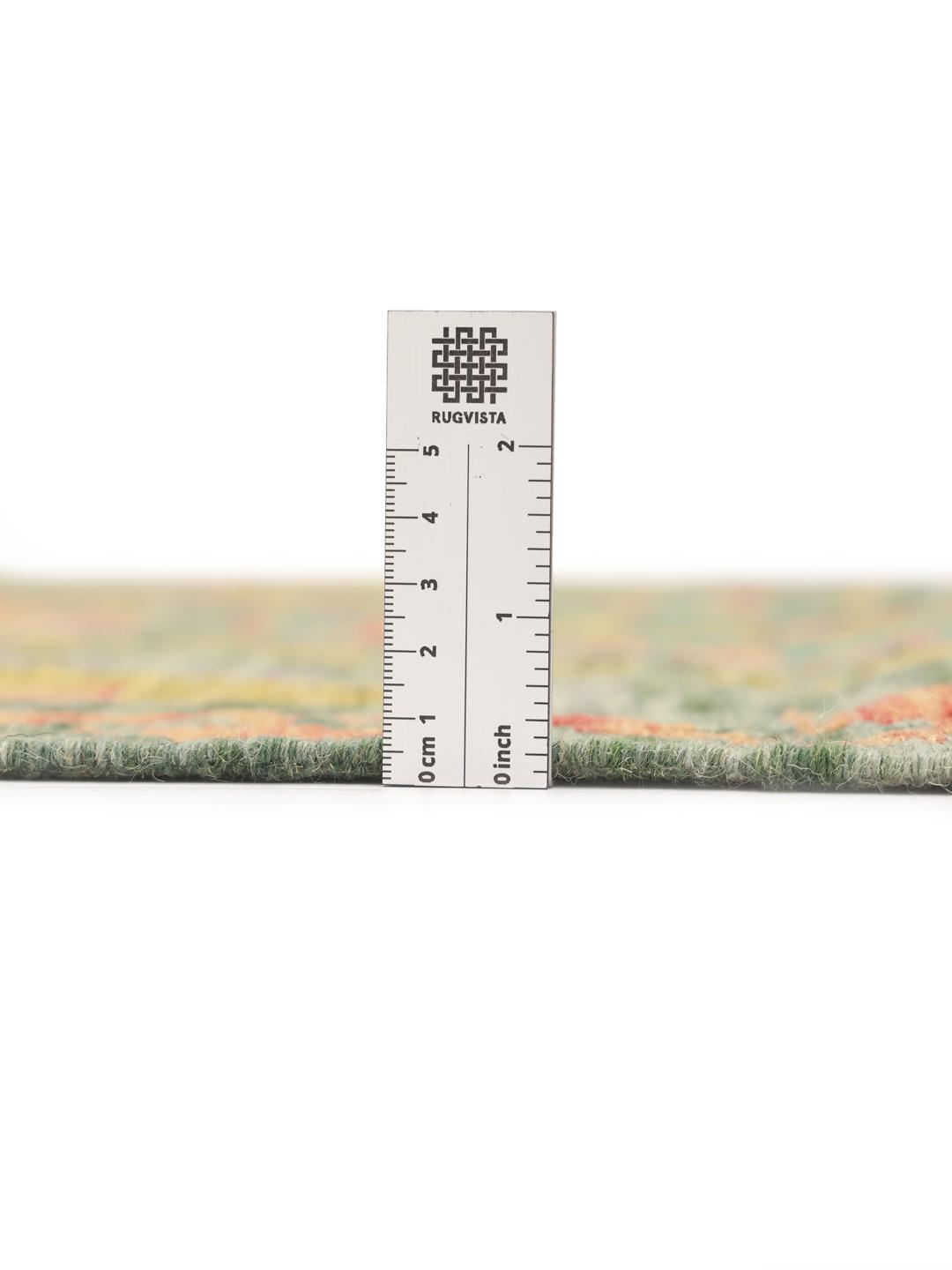
A Kelim is defined by its flat-weave technique, which lacks a pile. Instead of knotting individual strands to a foundation, the artisan interweaves the warp and weft yarns to create the pattern directly into the structure of the rug. This technique produces a reversible, durable textile that is notably lighter and thinner than pile rugs. This specific construction method is what gives the rug its clean, sharp lines and distinctive geometric clarity.
The design language of these rugs is dominated by tribal iconography, often featuring diamonds, triangles, and stepped medallions. These shapes are not merely decorative; they often carry symbolic meanings related to protection, fertility, or the natural landscape of the Afghan mountains. The use of vibrant, contrasting colours is a hallmark of the style, traditionally derived from local natural dyes that have been used by weavers for generations to achieve deep, lasting hues.
Collecting a Kelim means preserving a legacy of human skill that remains largely unchanged by modern technology. These rugs are highly valued for their raw, authentic aesthetic and their ability to bring warmth and texture to any interior. By choosing such a piece, you are acquiring a tangible connection to the cultural heritage of the Middle East, a testament to the enduring beauty of traditional handmade craftsmanship.