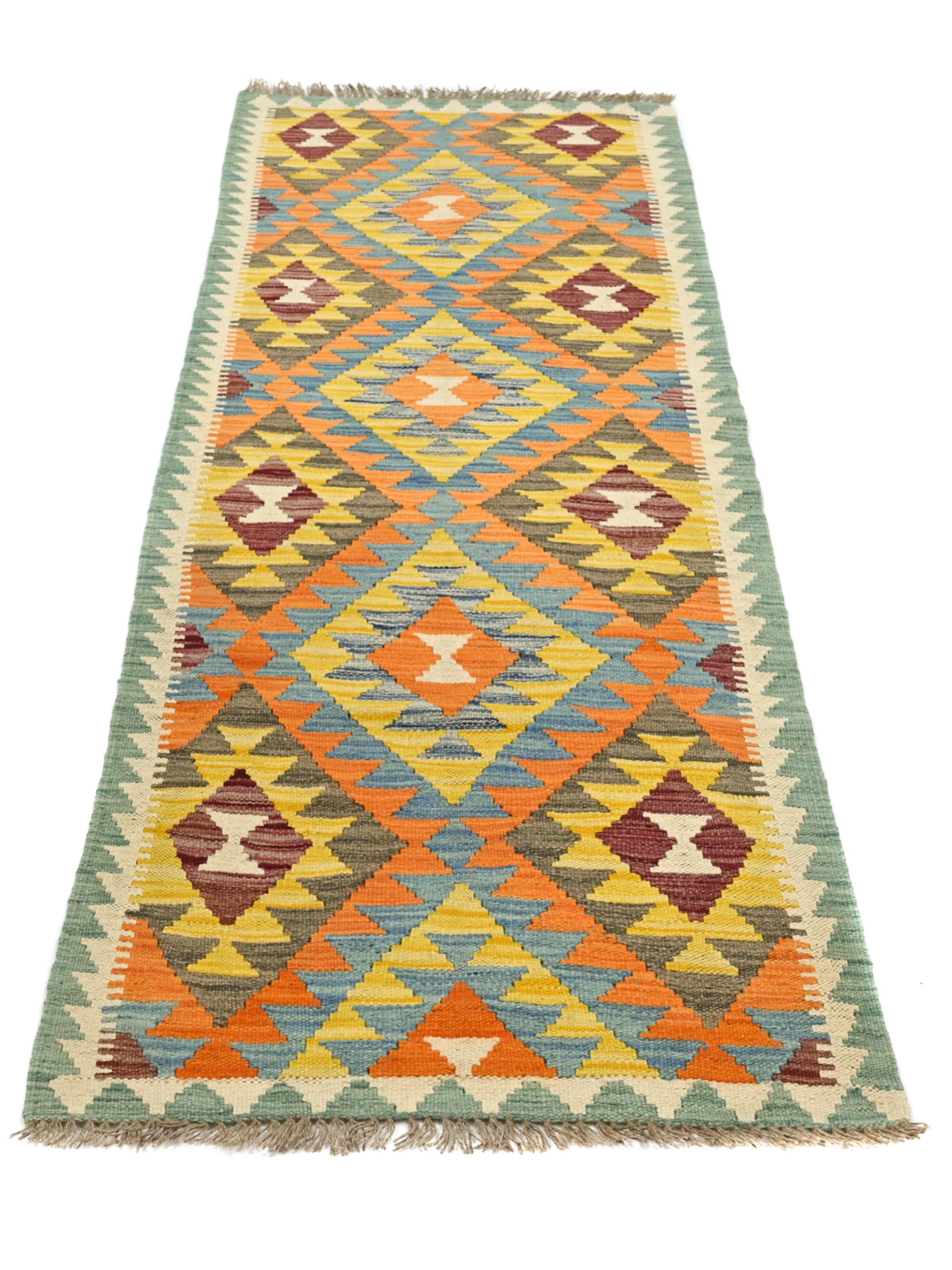
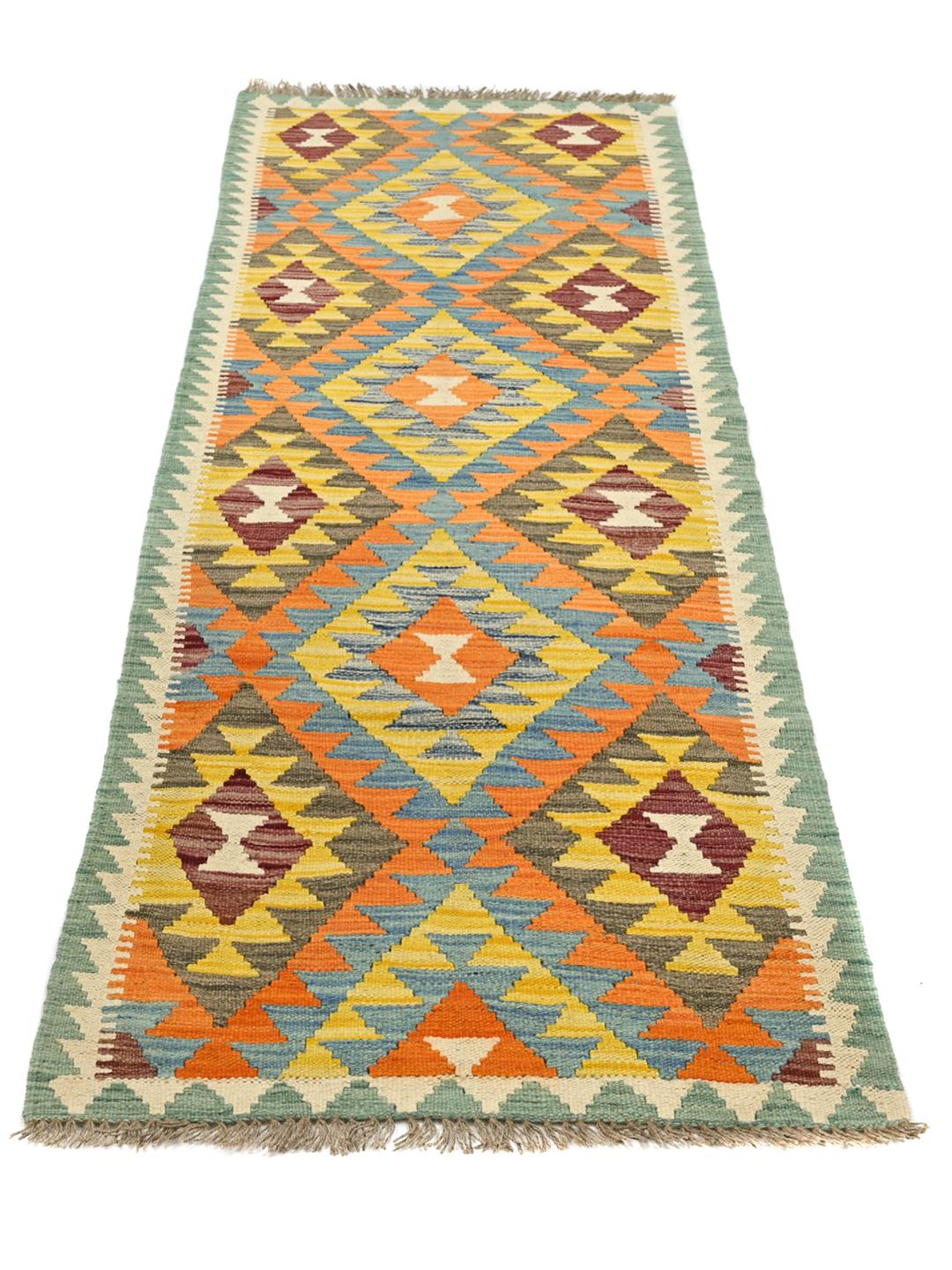
The Kelim tradition in the Middle East is deeply rooted in the nomadic and semi-nomadic cultures of the region. These rugs were historically produced for practical use within the home, serving as floor coverings, wall hangings, or even saddlebags. Over time, these functional objects evolved into the highly regarded, artistic pieces we recognise today, celebrated for their ability to carry the cultural narratives of the regions where they are created.
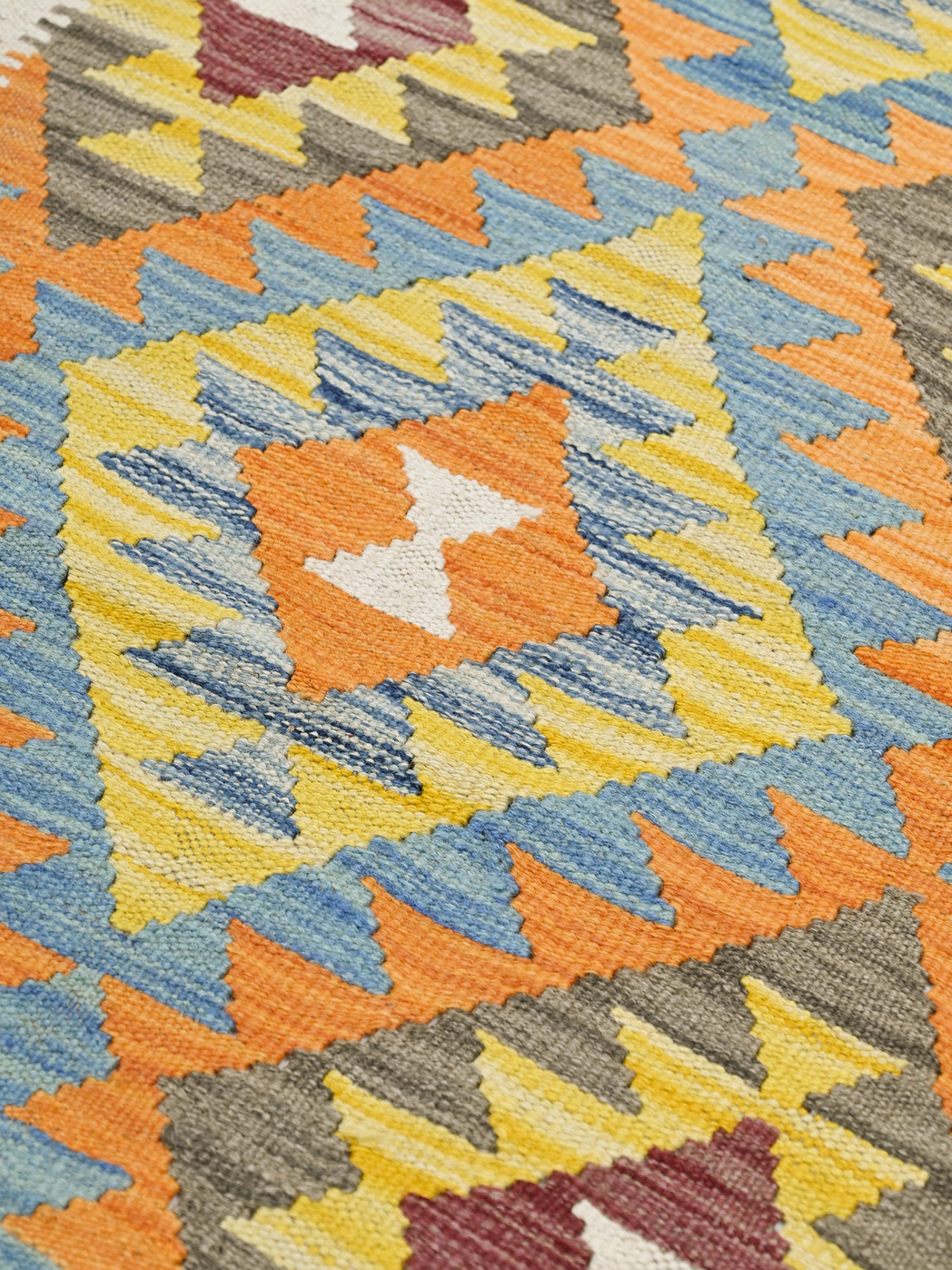
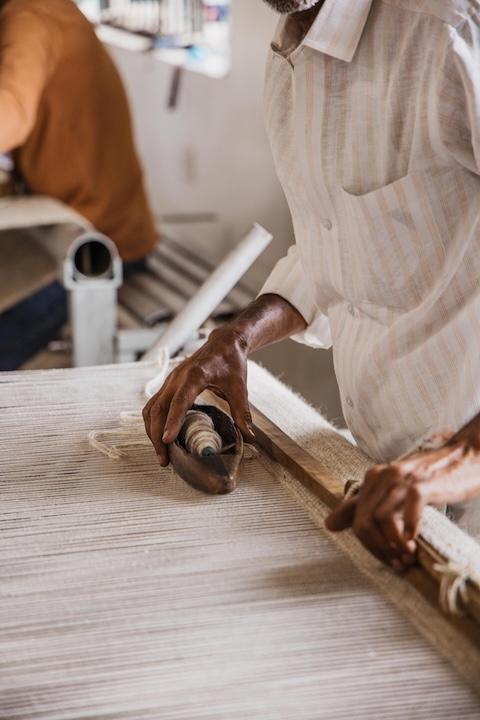
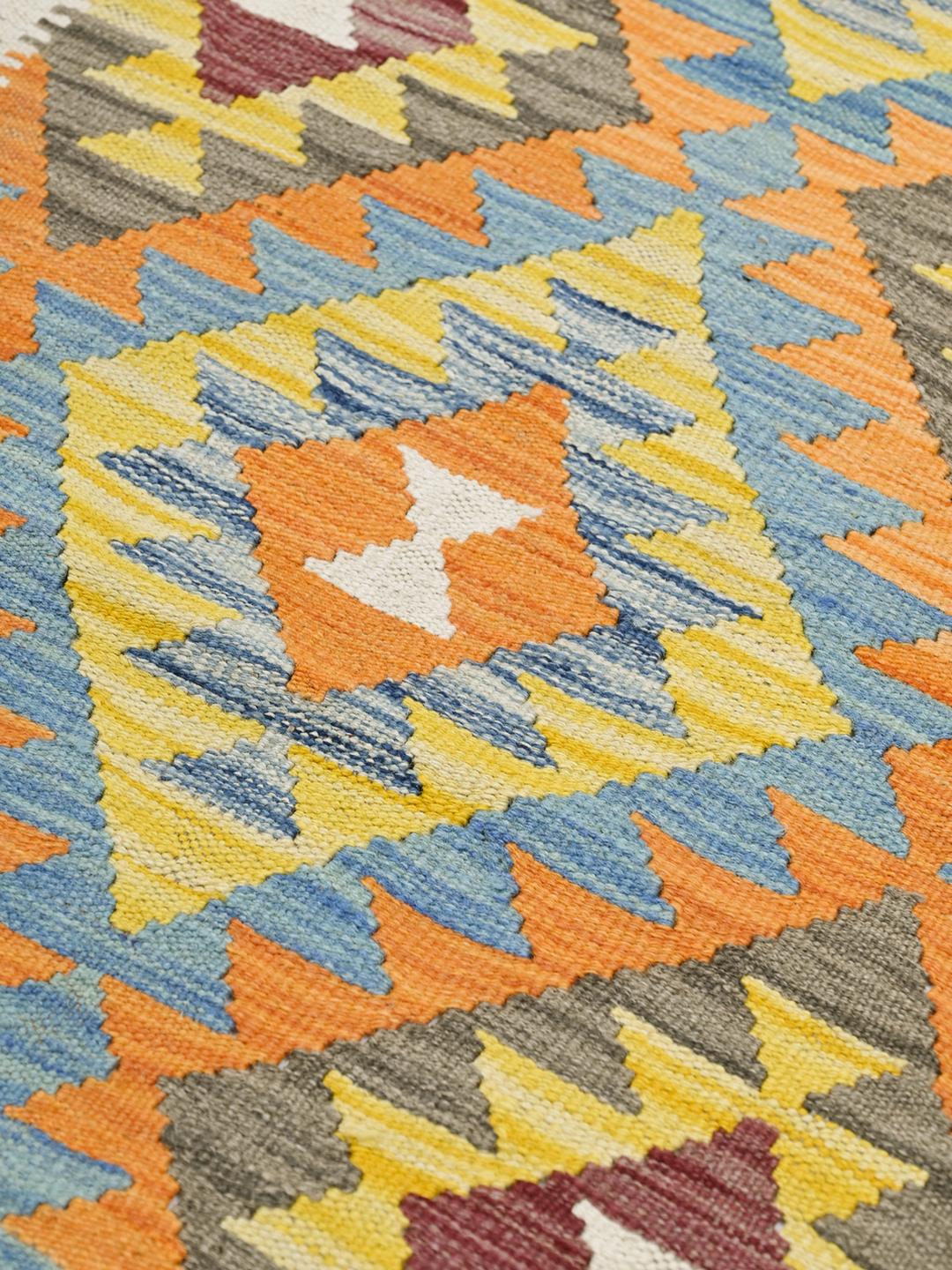
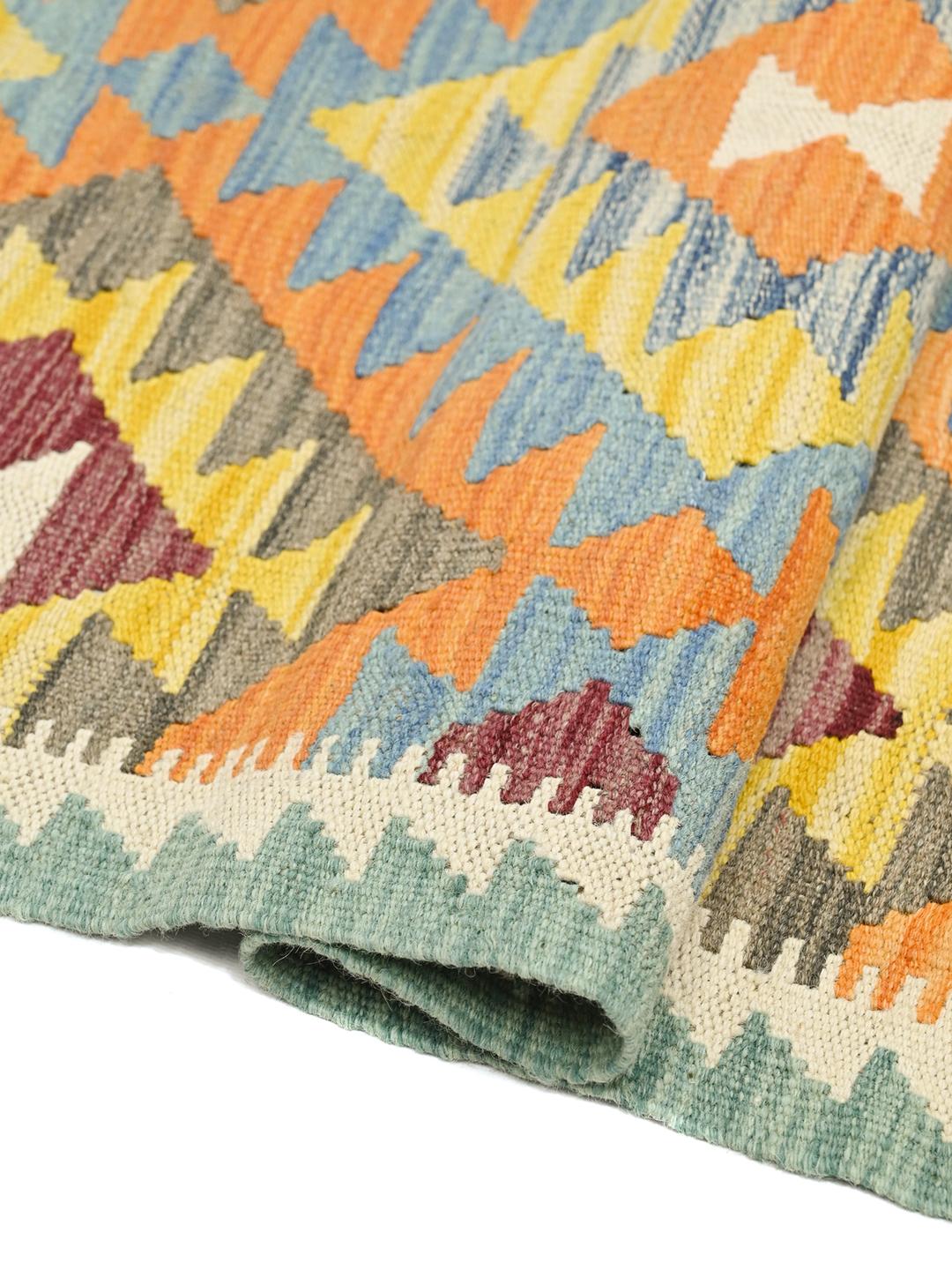
The term Kelim refers to a flat-weaving technique that does not use a pile. By interweaving the coloured weft threads through the warp, the weaver creates a smooth, reversible surface that is both lightweight and incredibly strong. This method allows for sharp, clear geometric designs that are iconic to the style, showcasing the precision and skill required to maintain consistent tension across the entire width of the loom.
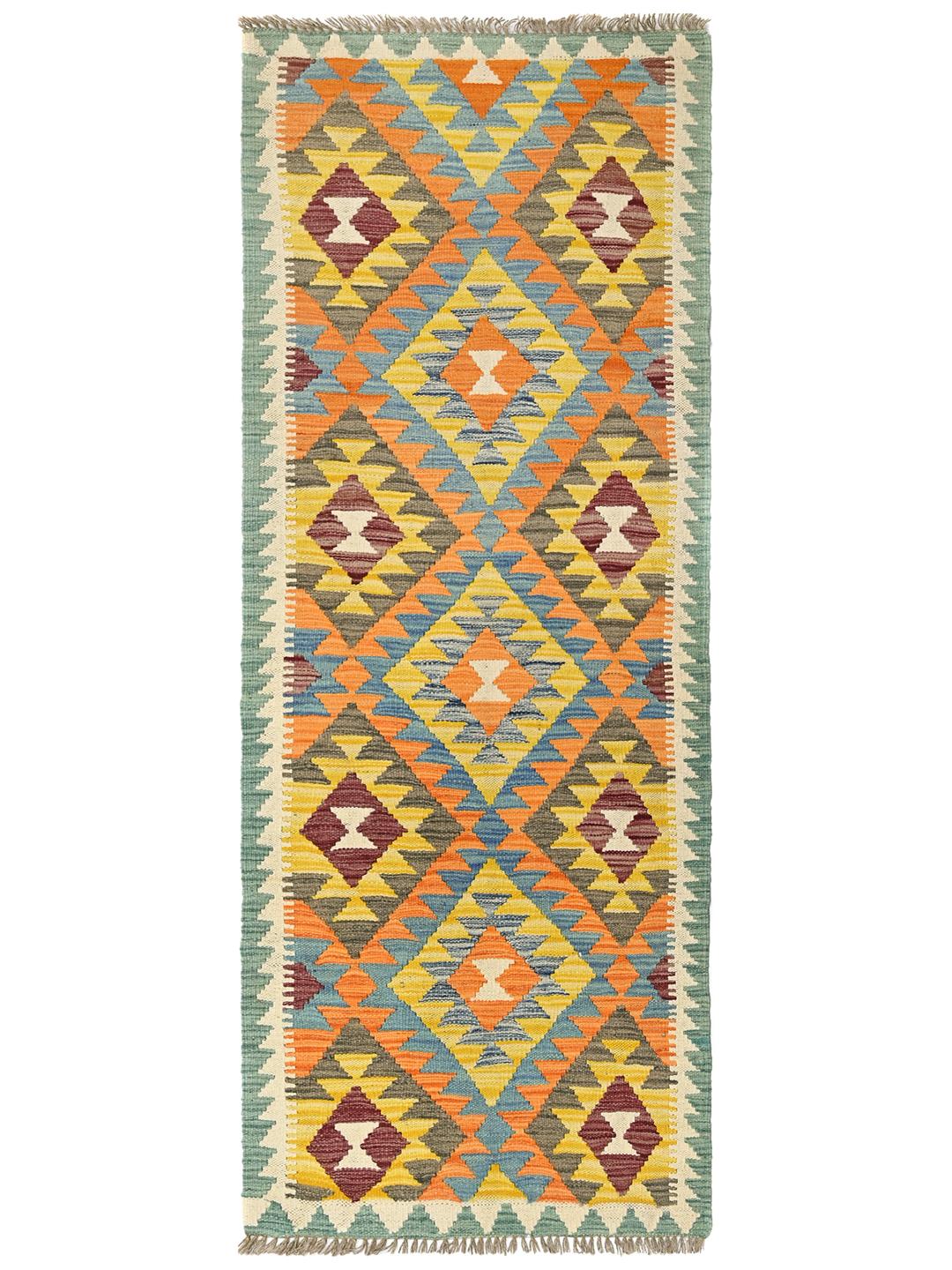
Signature design elements in these rugs often include bold geometric motifs such as diamonds, triangles, and stylised floral patterns. The colour palettes are typically vibrant, drawing inspiration from natural dyes historically sourced from local plants and minerals. This specific runner highlights these traditional patterns in a way that feels both authentic and visually engaging, making it a standout example of the craft.
Collectors value these rugs not only for their beauty but for the connection they provide to a rich, historical lineage. Owning a hand-woven piece is an investment in human skill and a commitment to preserving traditional craft. Each rug acts as a bridge between the past and the present, offering a tangible link to the artisans and the cultural heritage of the Middle East.